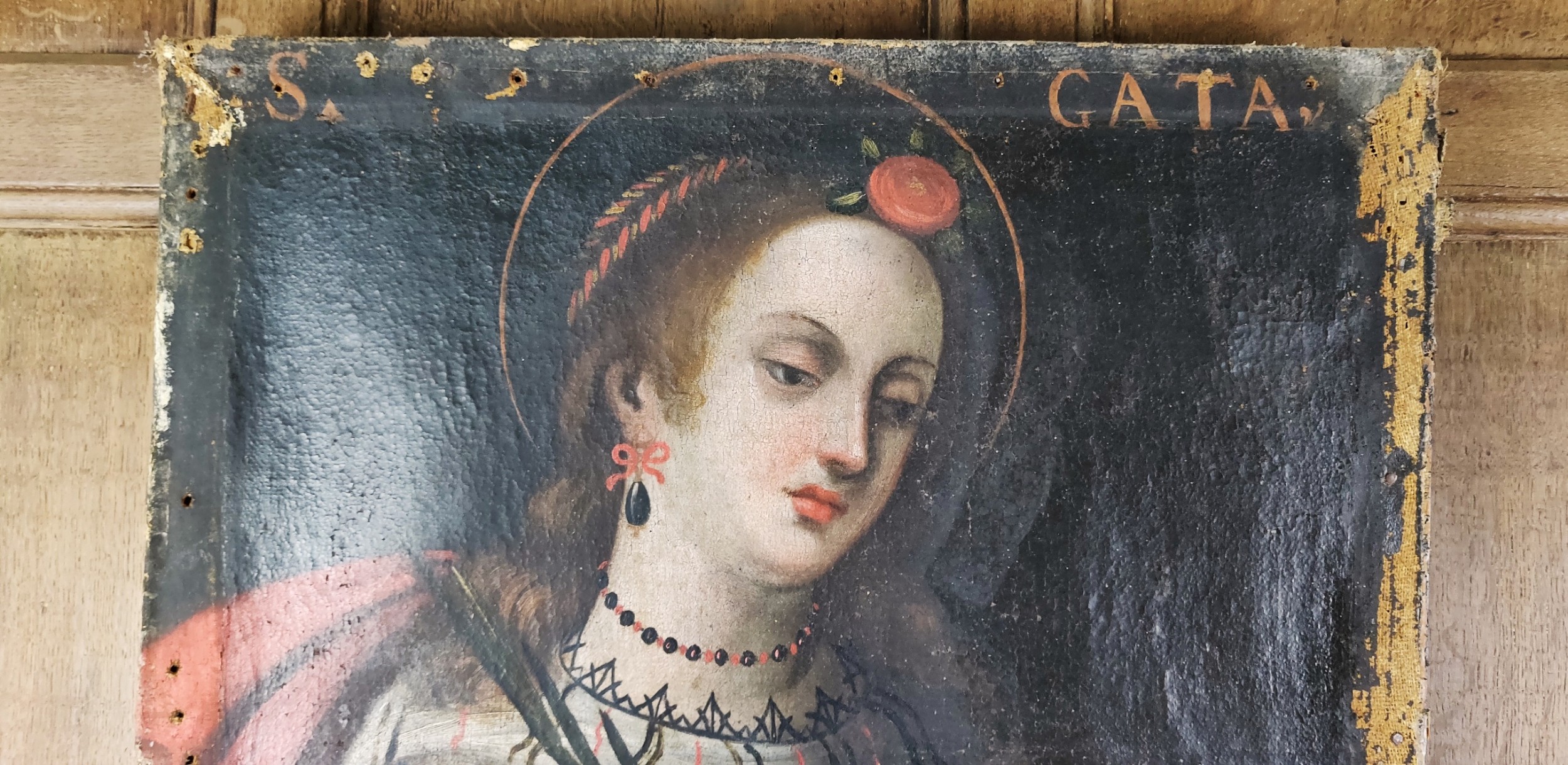
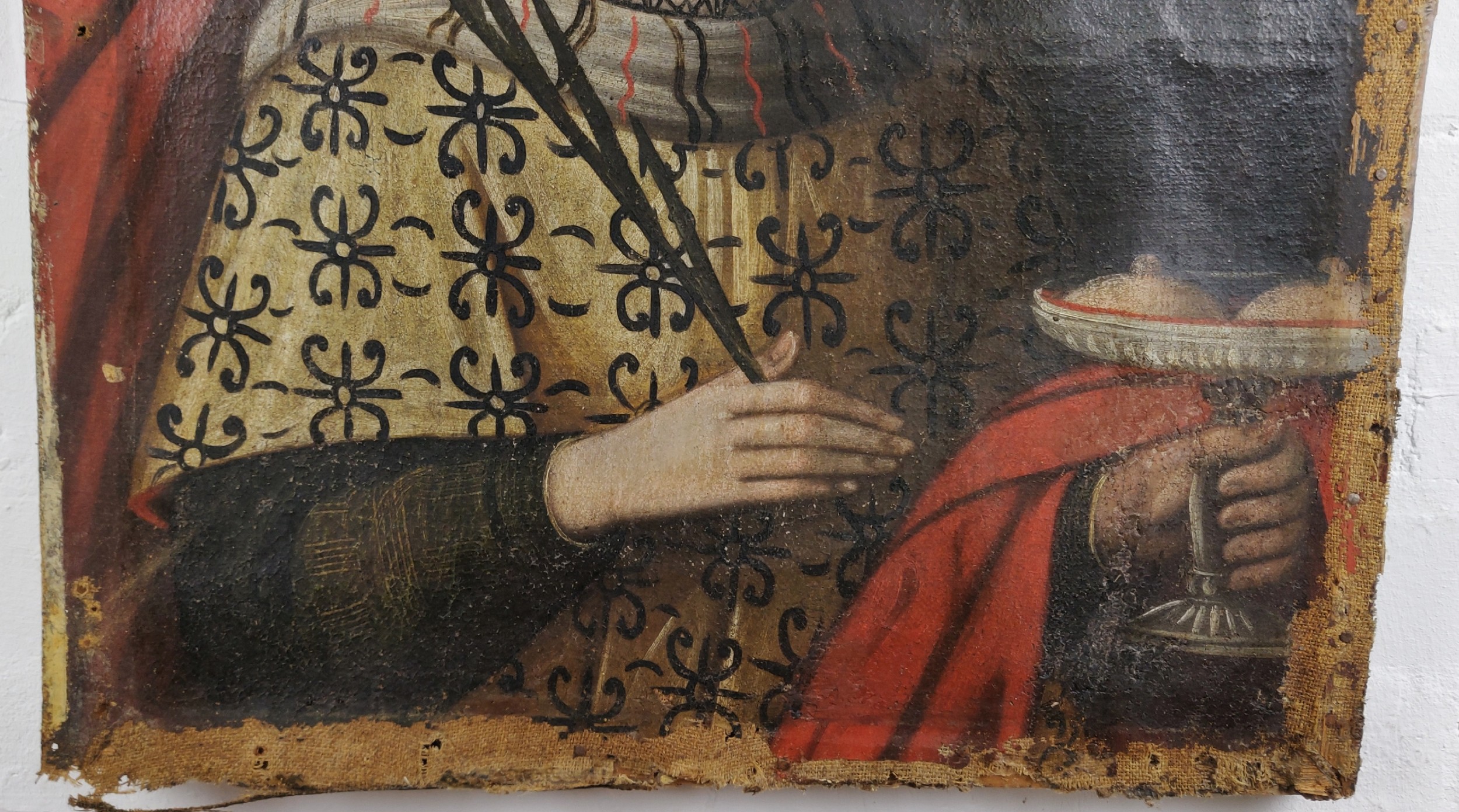
Youngs Antiques has dated this piece to the 17th Century.
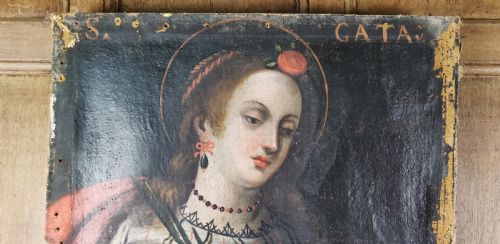
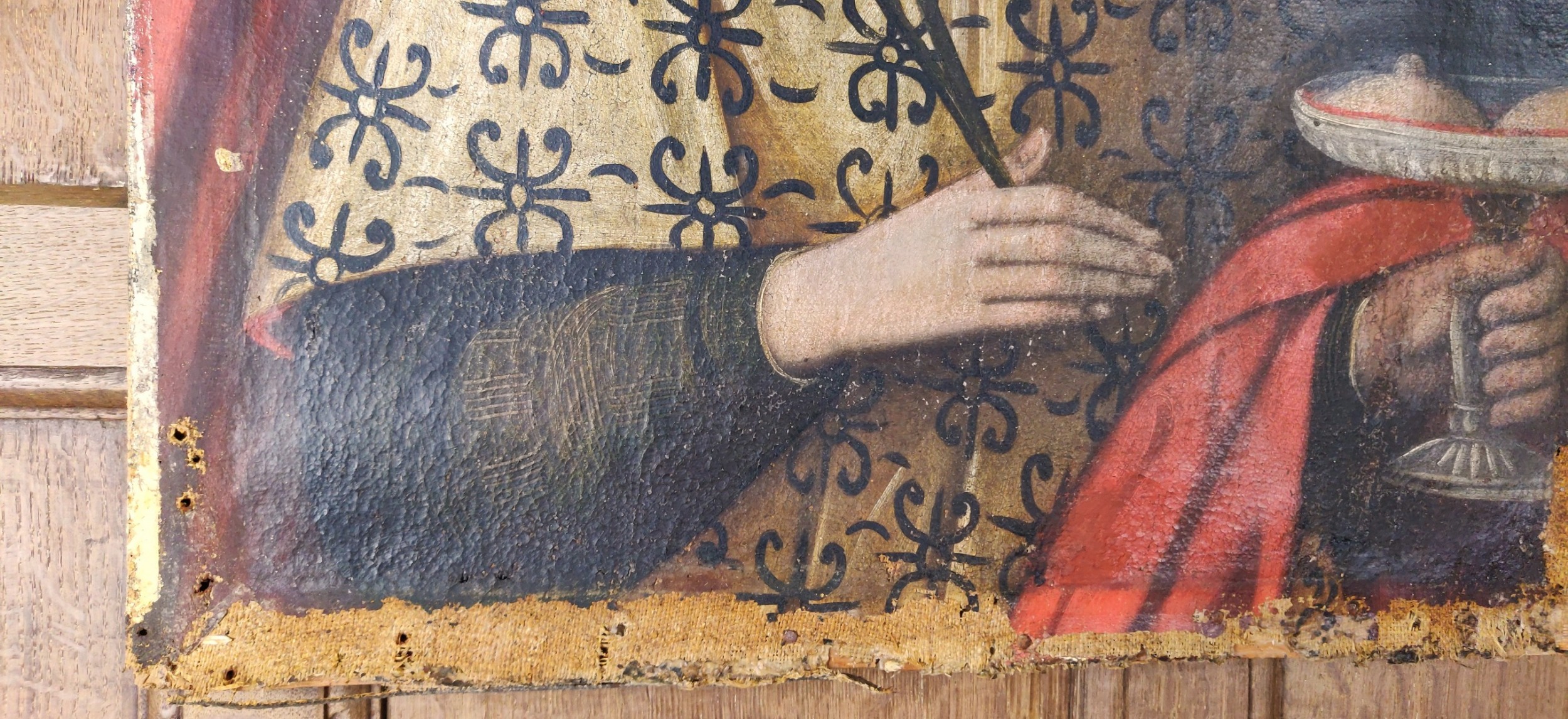
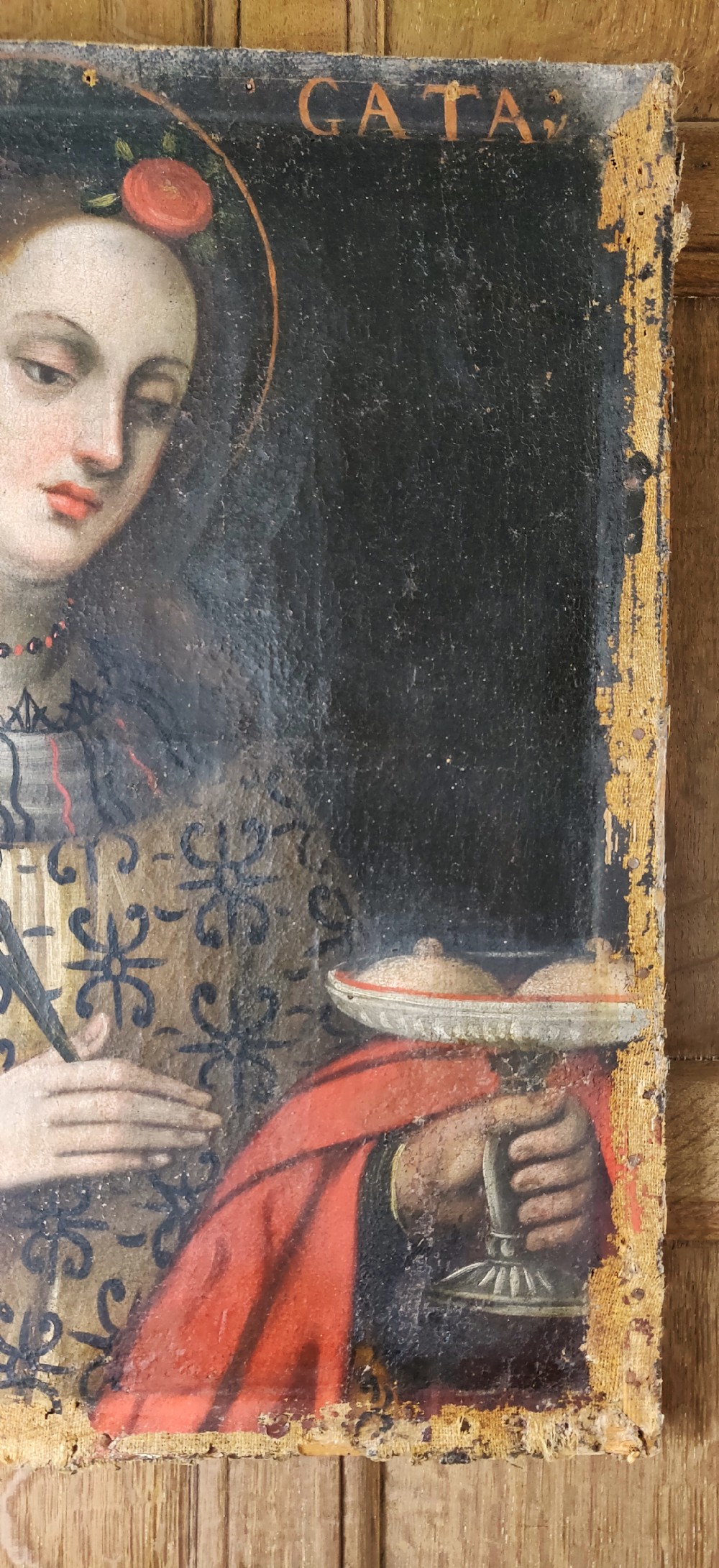
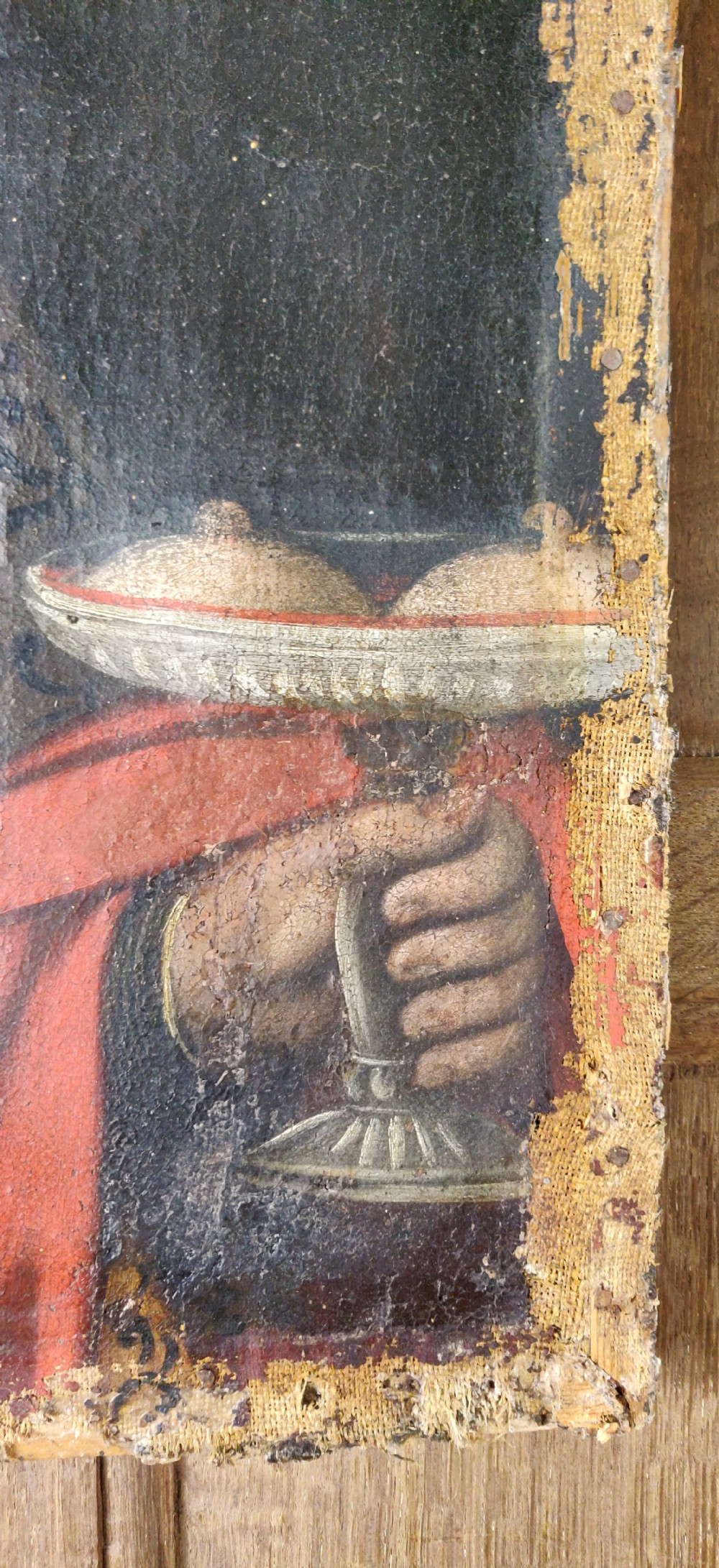
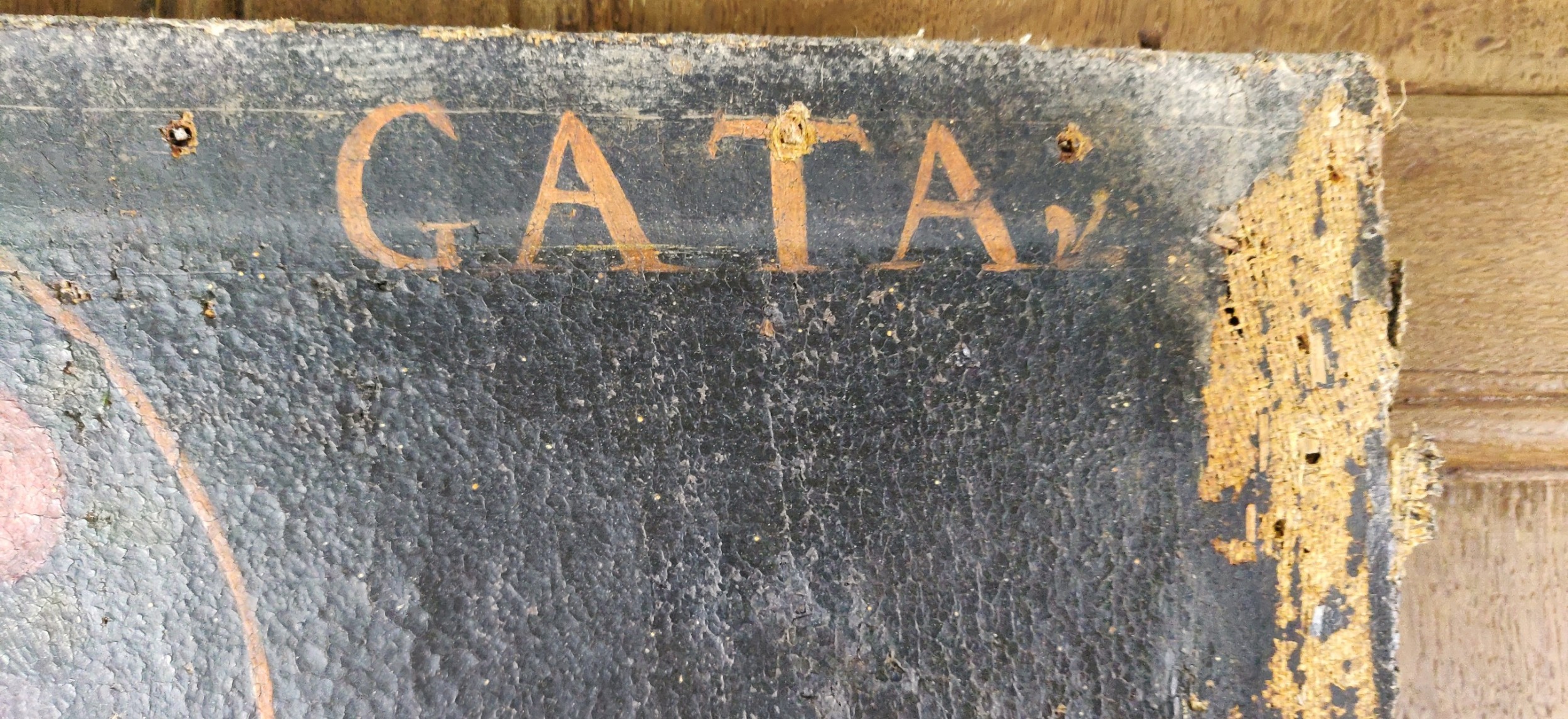
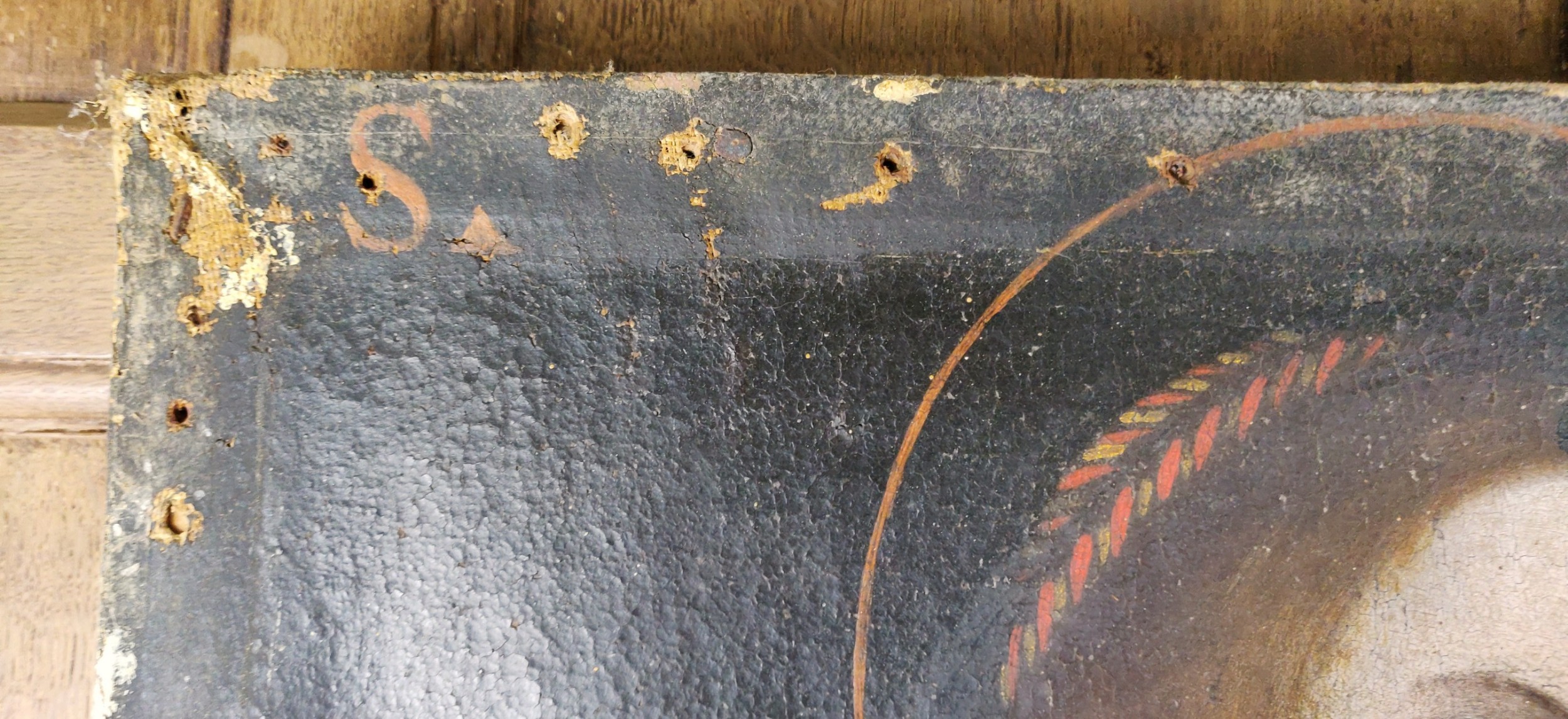
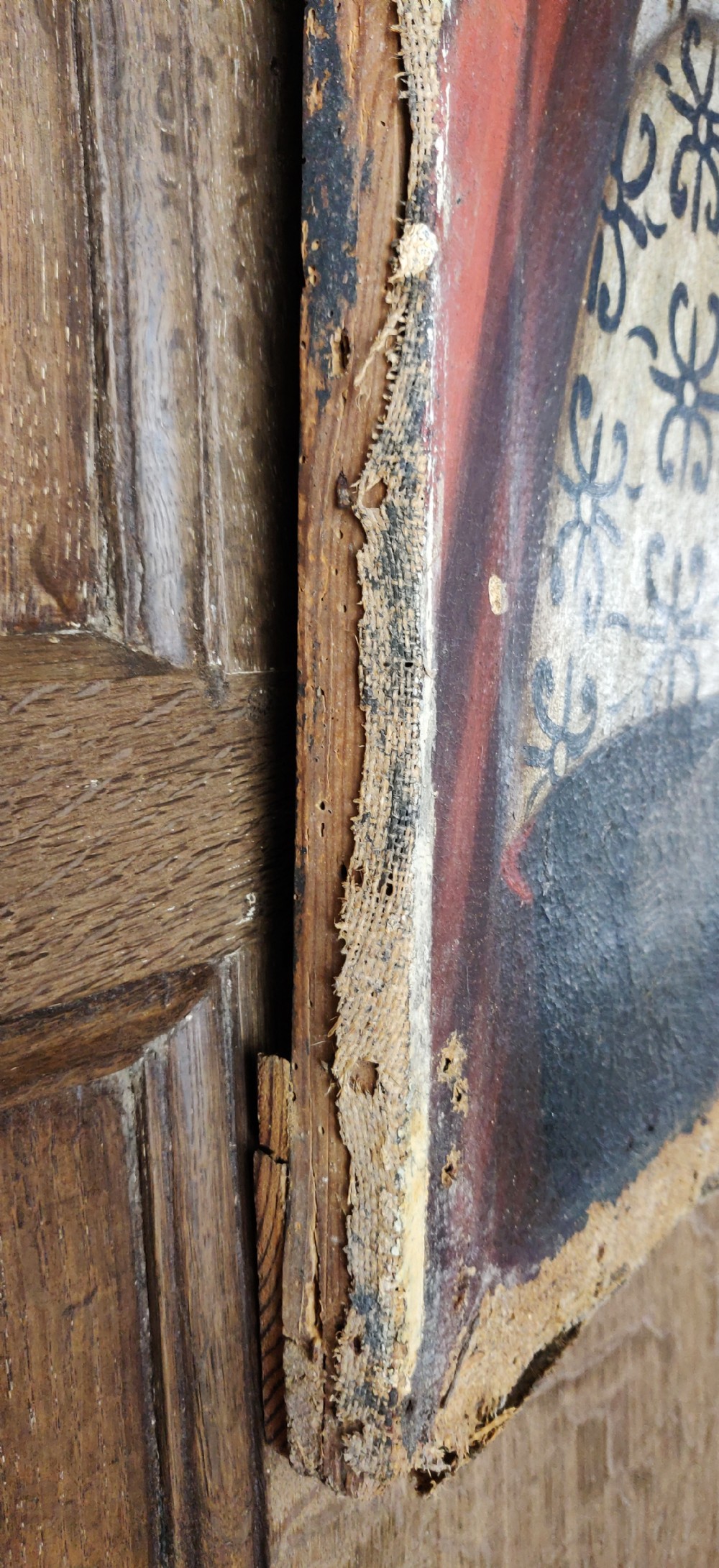
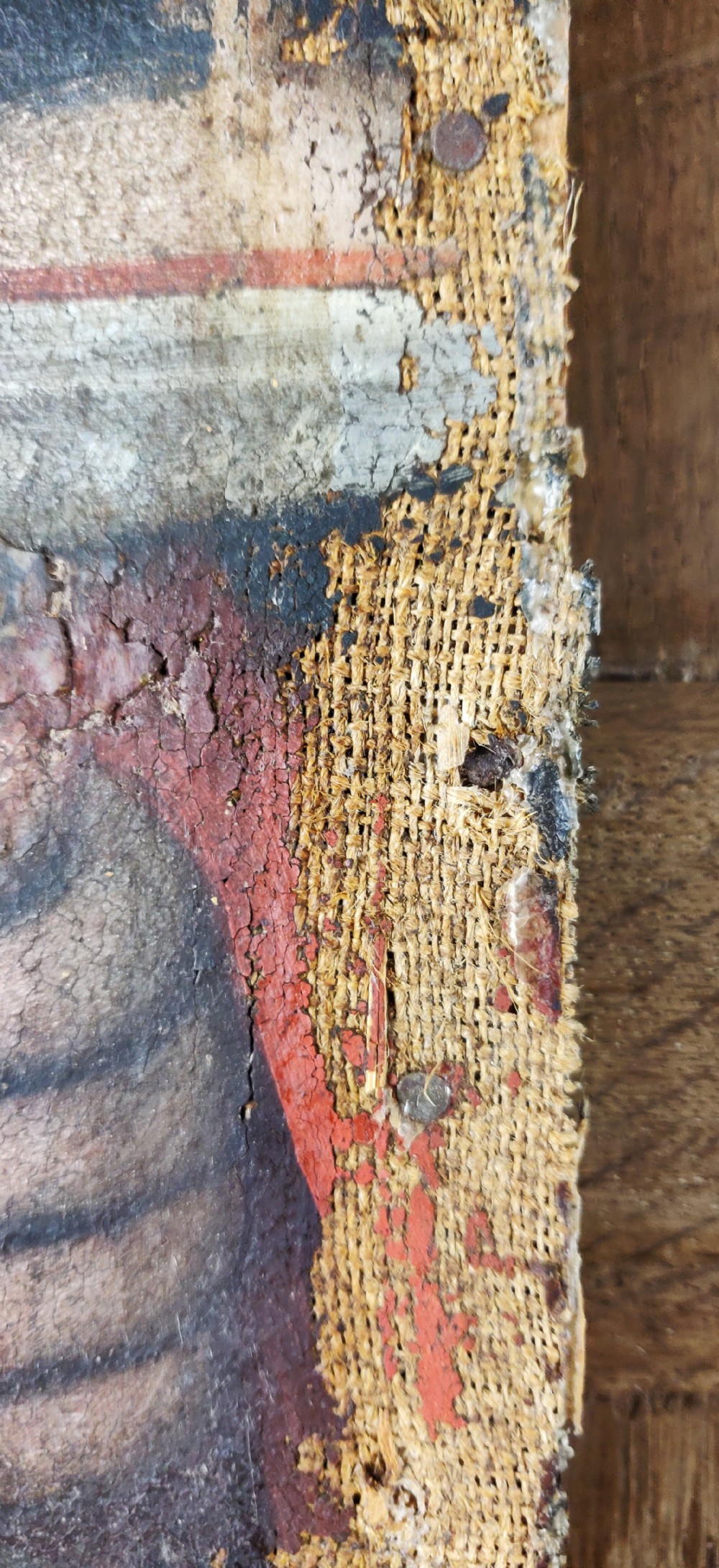
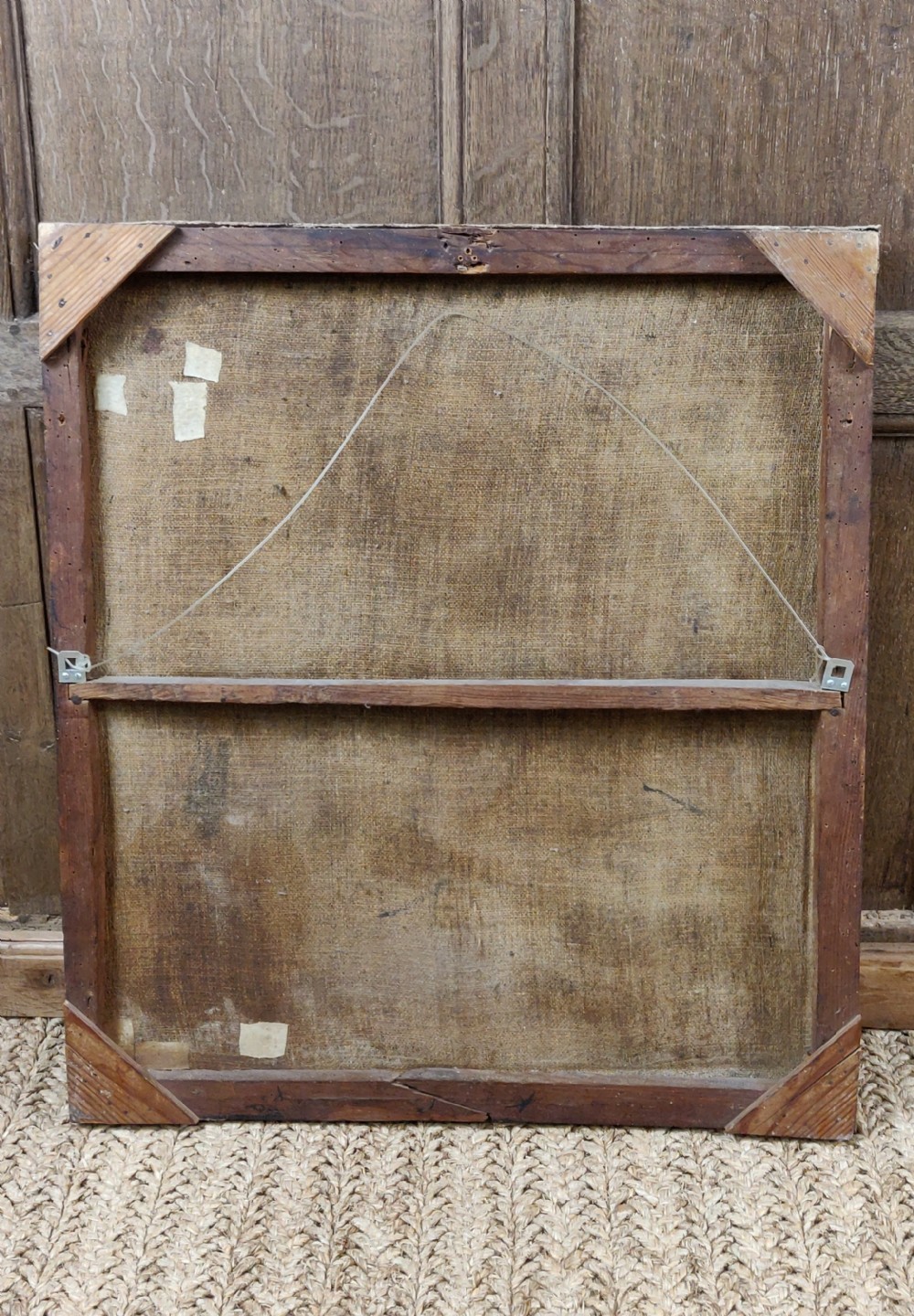
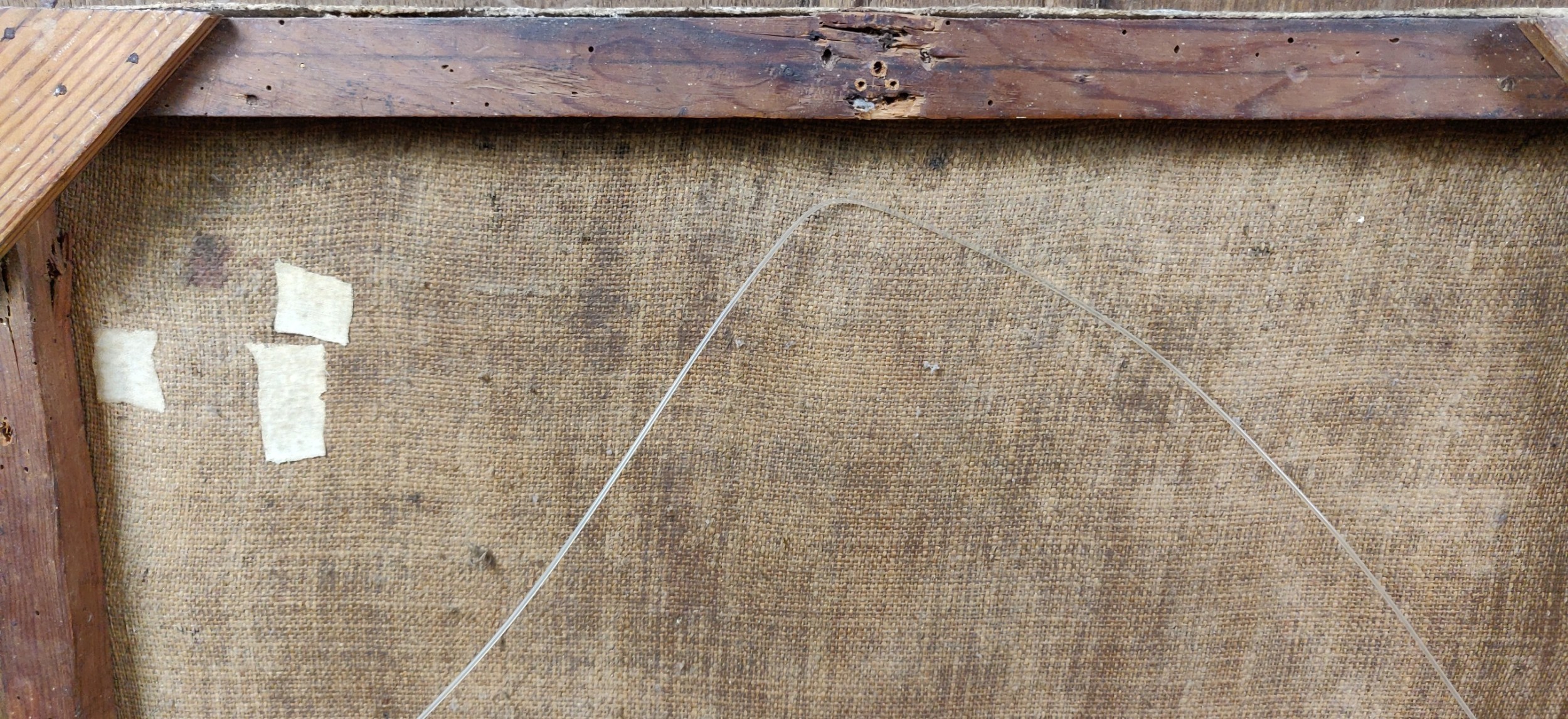
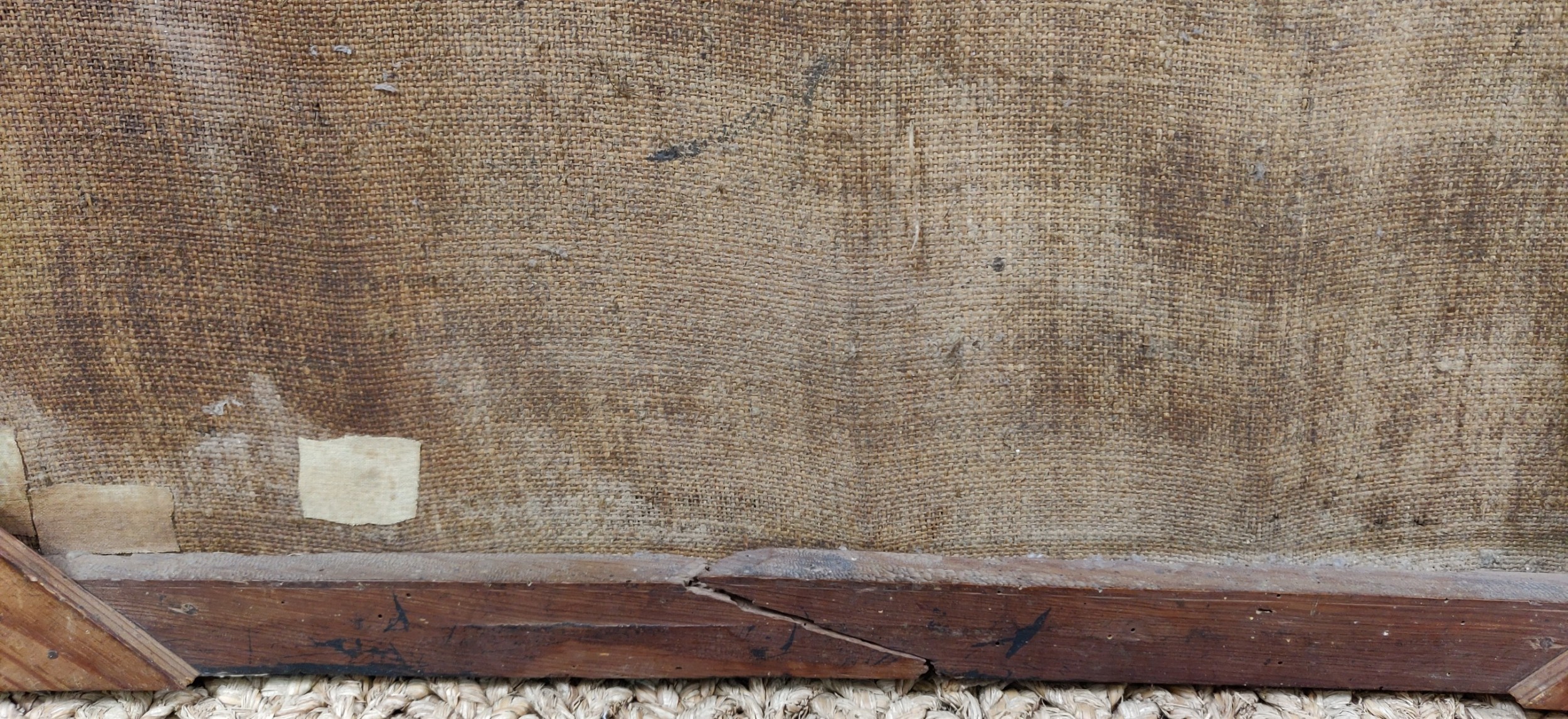
The portrait is in need of restoration, the canvas has paint losses and has started to come away from the stretcher and at some stage the canvas has been nailed to the stretcher. The bottom rail of the stretcher frame has snapped.
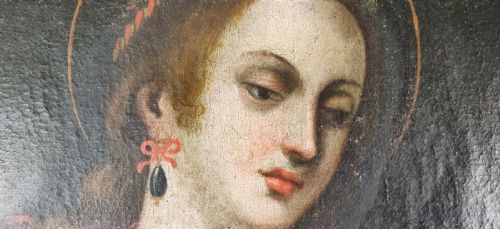
This is a lovely interesting painting and is in completely untouched country house condition.
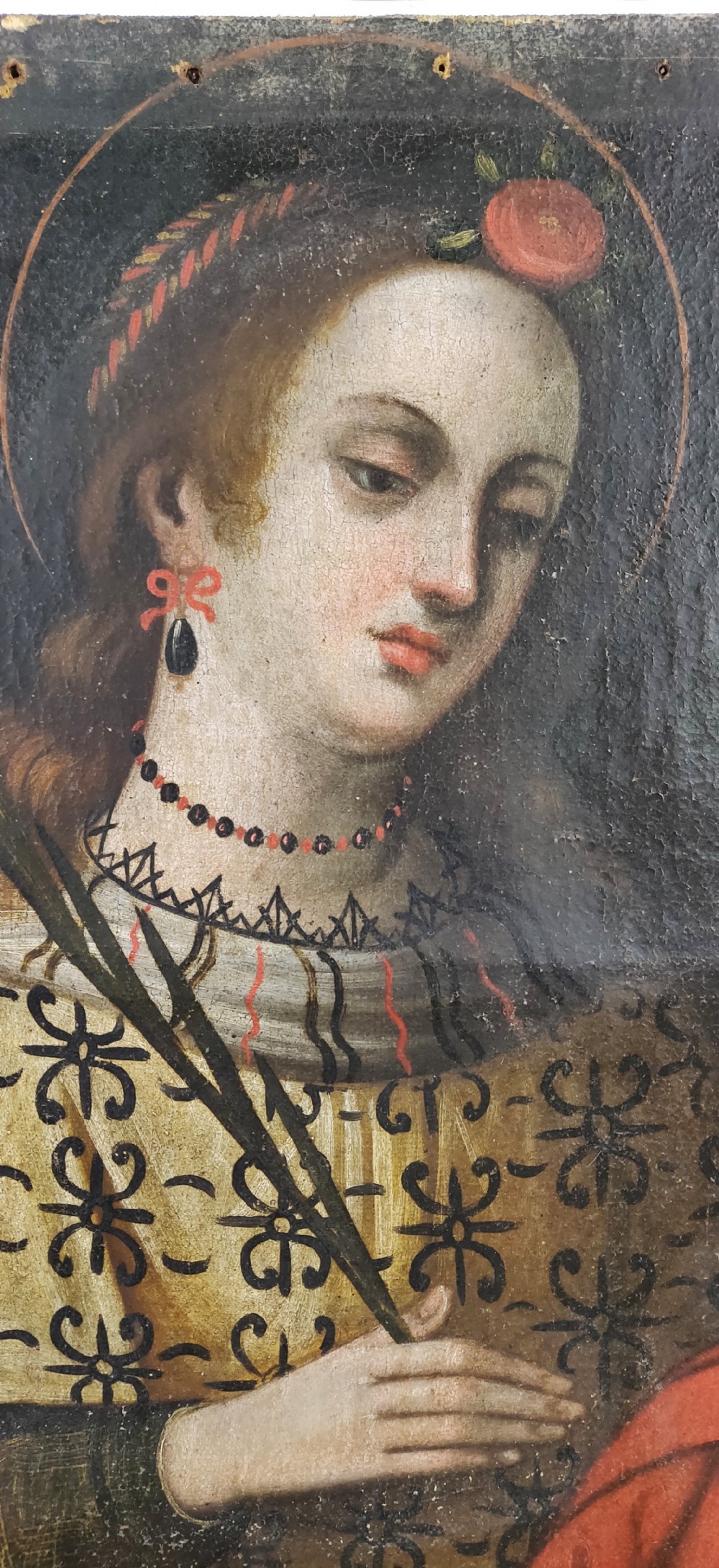
Saint Agatha of Sicily -
Saint Agatha died for her virginity. She was not unique in this. Having espoused herself to Christ by a vow of virginity, she refused to marry. For this, the judge Quintian, who wanted to marry her himself, declared her a Christian. Owing to the persecution of Decius (249-251) then raging, this public accusation meant apostasy or martyrdom. When the virgin would not be overcome by threats and torture, she was given, and chose, the grace of martyrdom.
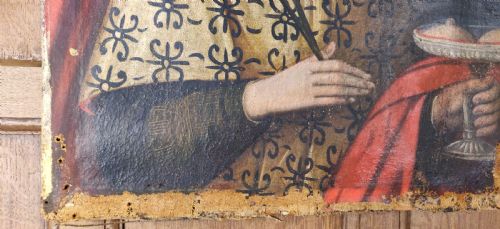
One detail of her martyrdom was the cutting off of her breasts (or one breast, depending on the account). This was not unique. It was done to other martyrs. Saint Peter visited her in prison and healed these wounds. But she was again tortured and this time died of it.
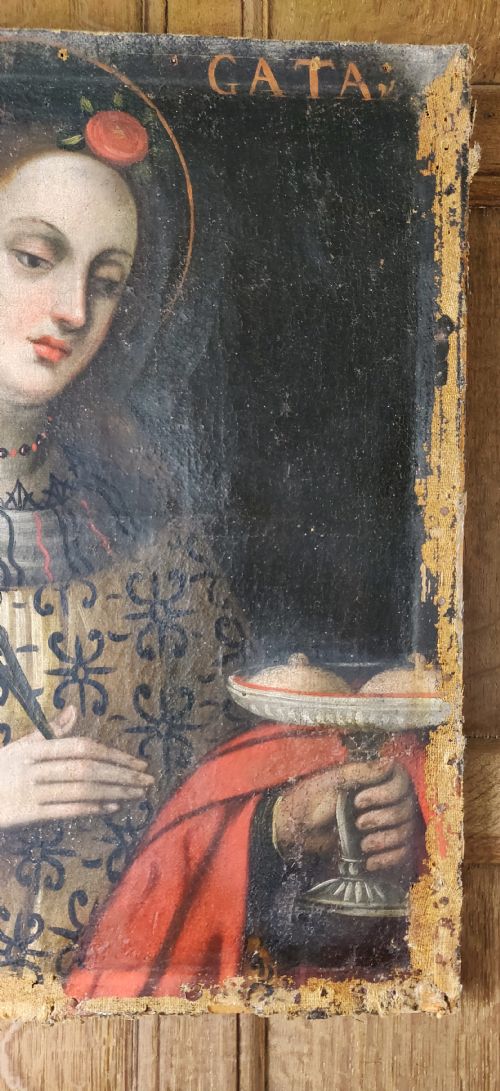
Agatha is buried at the Badia di Sant'Agata, Catania.[7] She is listed in the late 6th-century Martyrologium Hieronymianum associated with Jerome,[8] and the Synaxarion, the calendar of the church of Carthage, ca. 530.[9] Agatha also appears in one of the carmina of Venantius Fortunatus.[10]
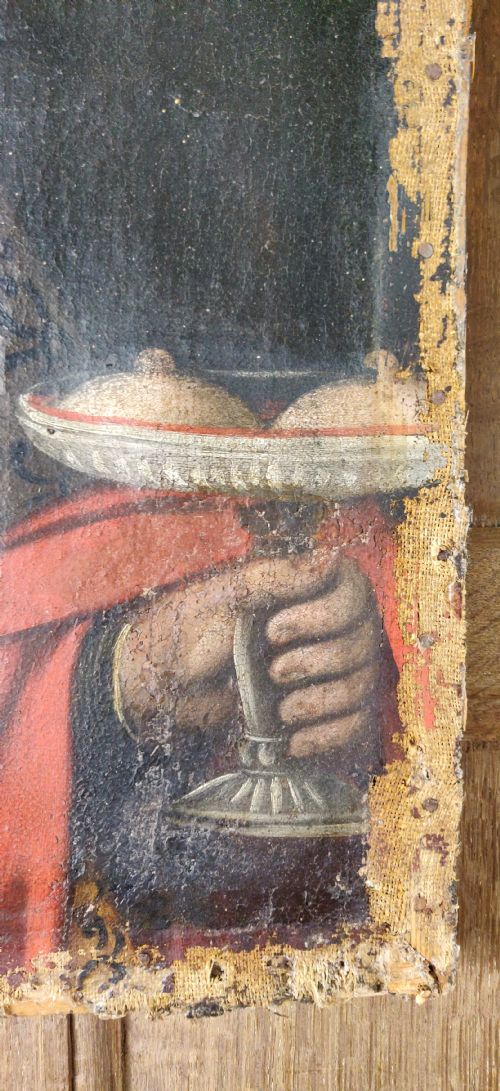
Two early churches were dedicated to her in Rome,[11] notably the Church of Sant'Agata dei Goti in Via Mazzarino, a titular church with apse mosaics of ca. 460 and traces of a fresco cycle,[12] overpainted by Gismondo Cerrini in 1630. In the 6th century AD, the church was adapted to Arianism, hence its name "Saint Agatha of Goths", and later reconsecrated by Gregory the Great, who confirmed her traditional sainthood.
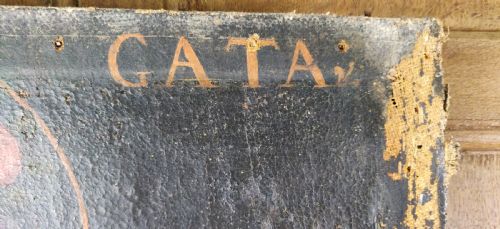
Agatha is also depicted in the mosaics of Sant'Apollinare Nuovo in Ravenna, where she appears, richly dressed, in the procession of female martyrs along the north wall. Her image forms an initial I in the Sacramentary of Gellone, which dates from the end of the 8th century.
Youngs Antiques has dated this piece to the 17th Century.
Specialist in fine art and antiques.
You can view the stock and full dealer information on the Youngs Antiques Profile Page
Youngs Antiques is a registered member of LAPADA
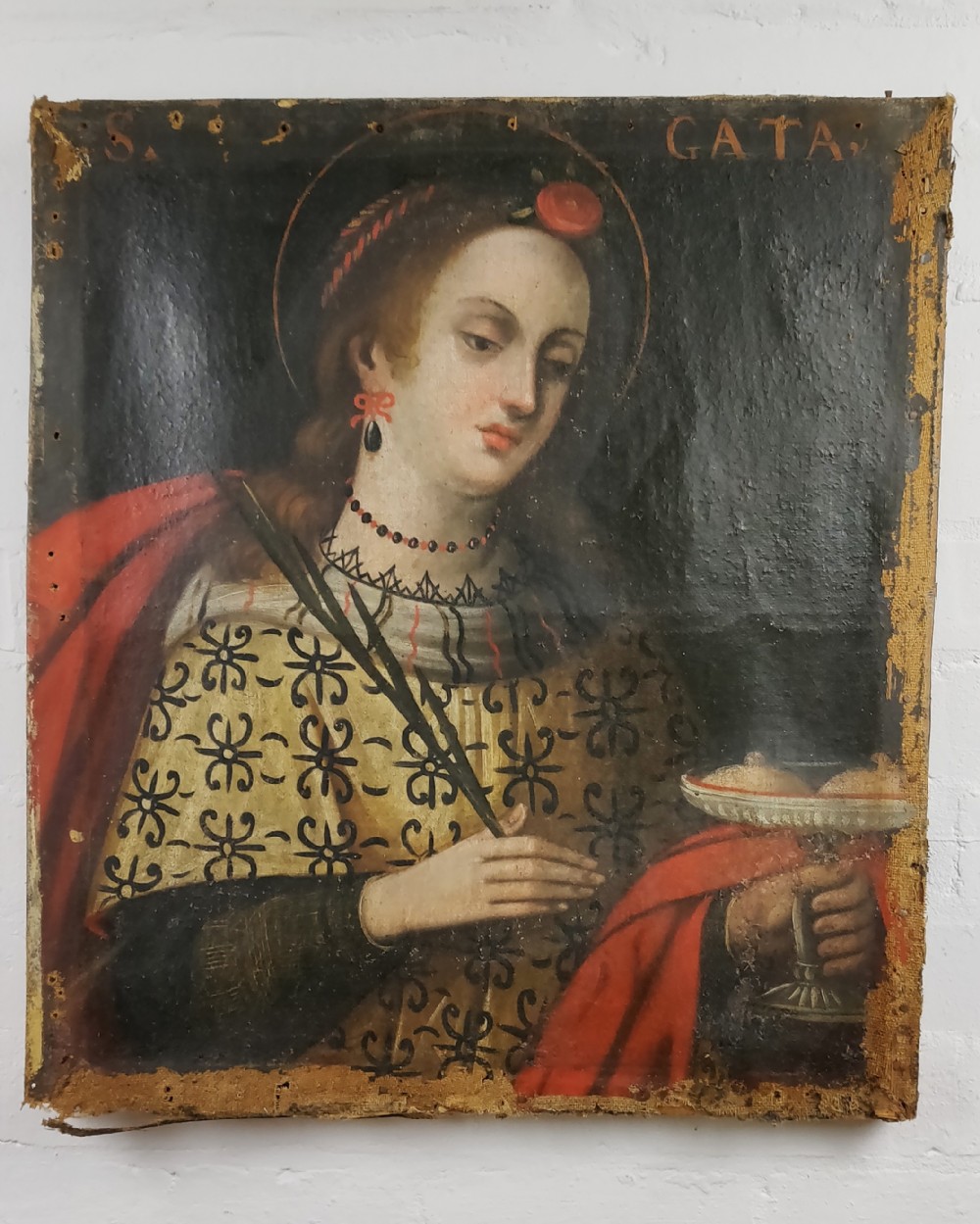
An Early 17th Century Portrait of St Agatha