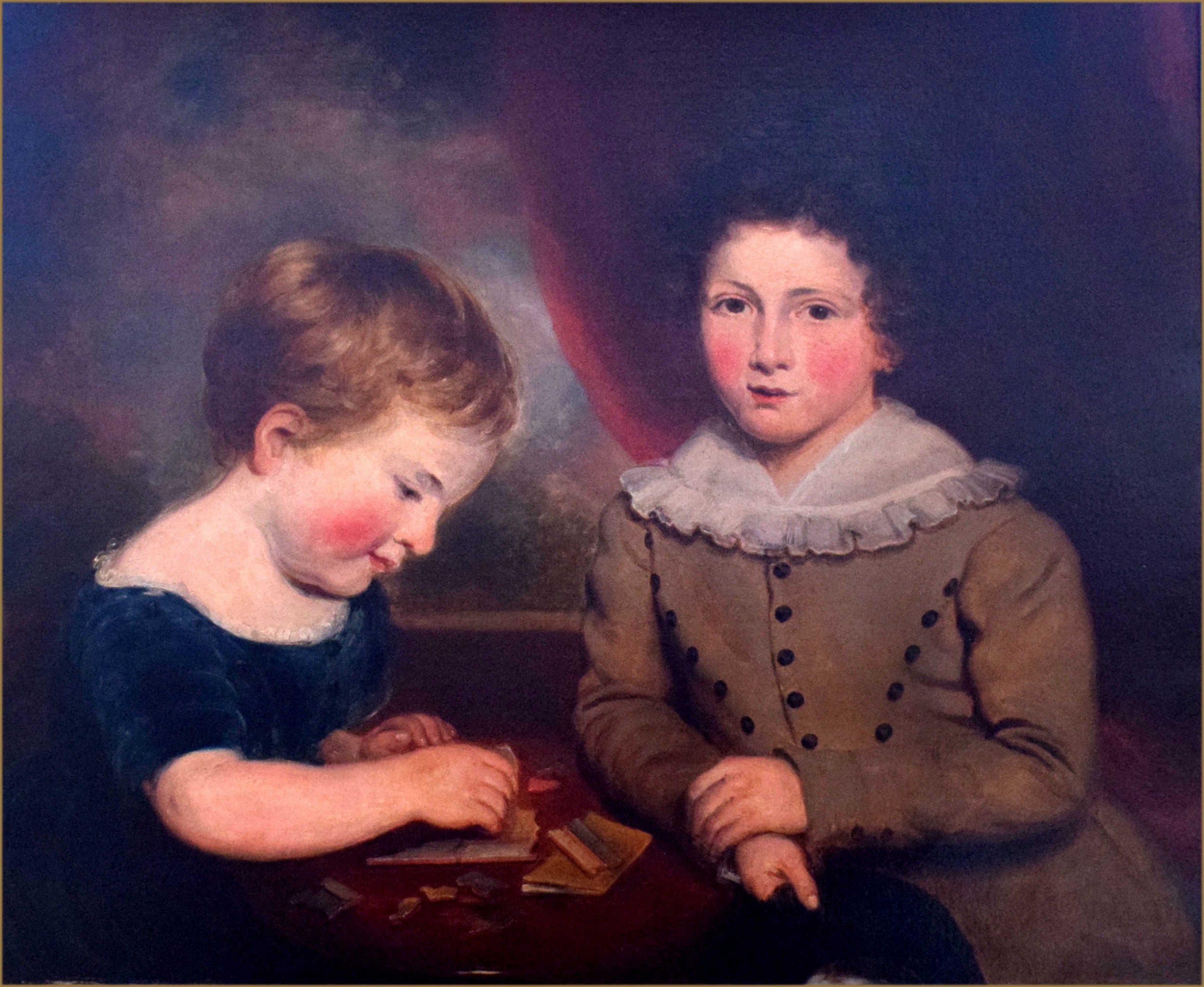
John Russell, RA, 1745-1806
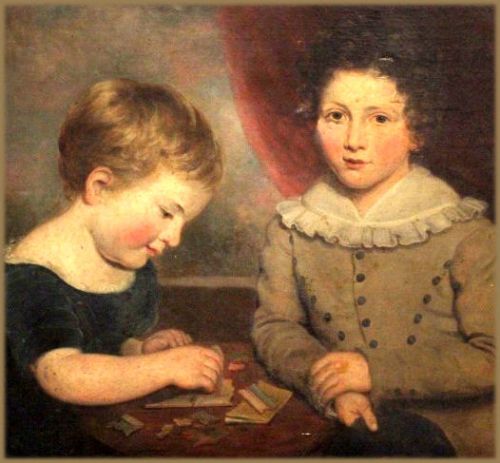
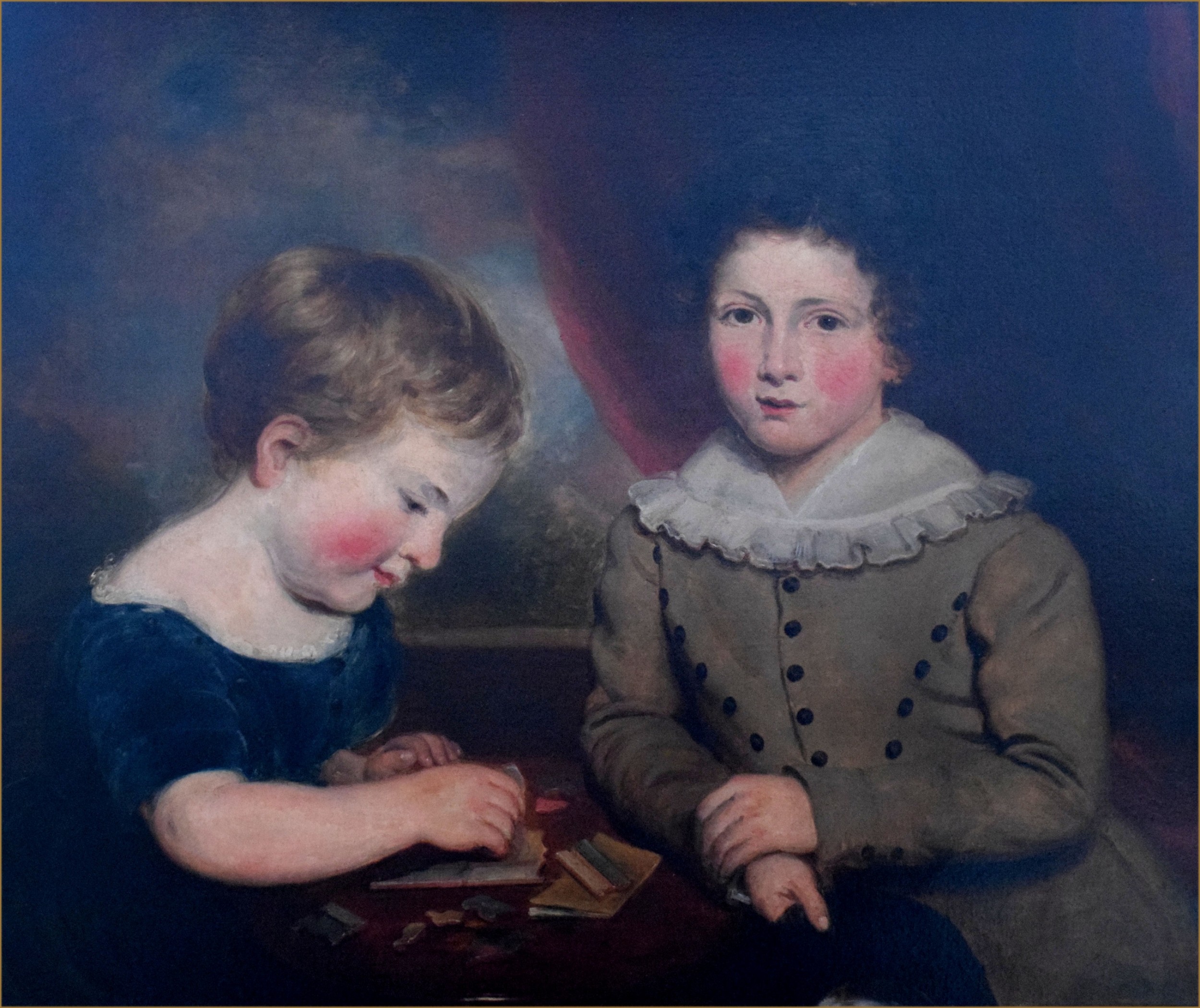
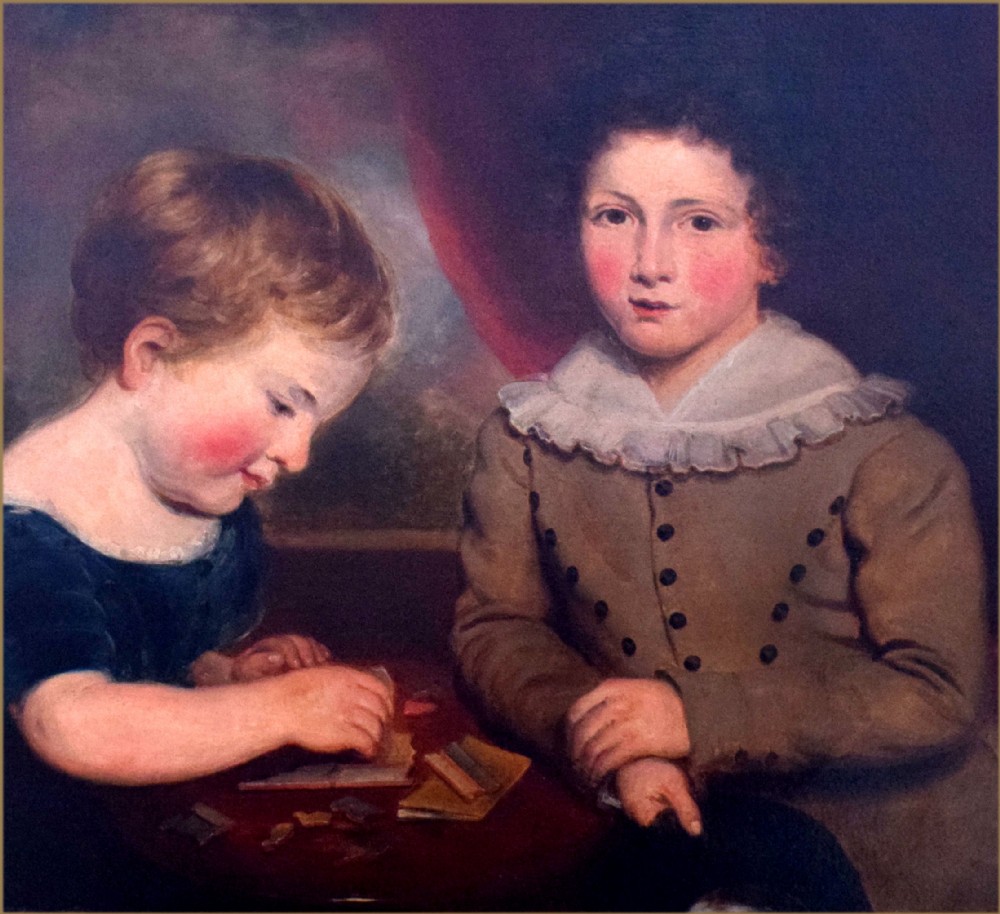
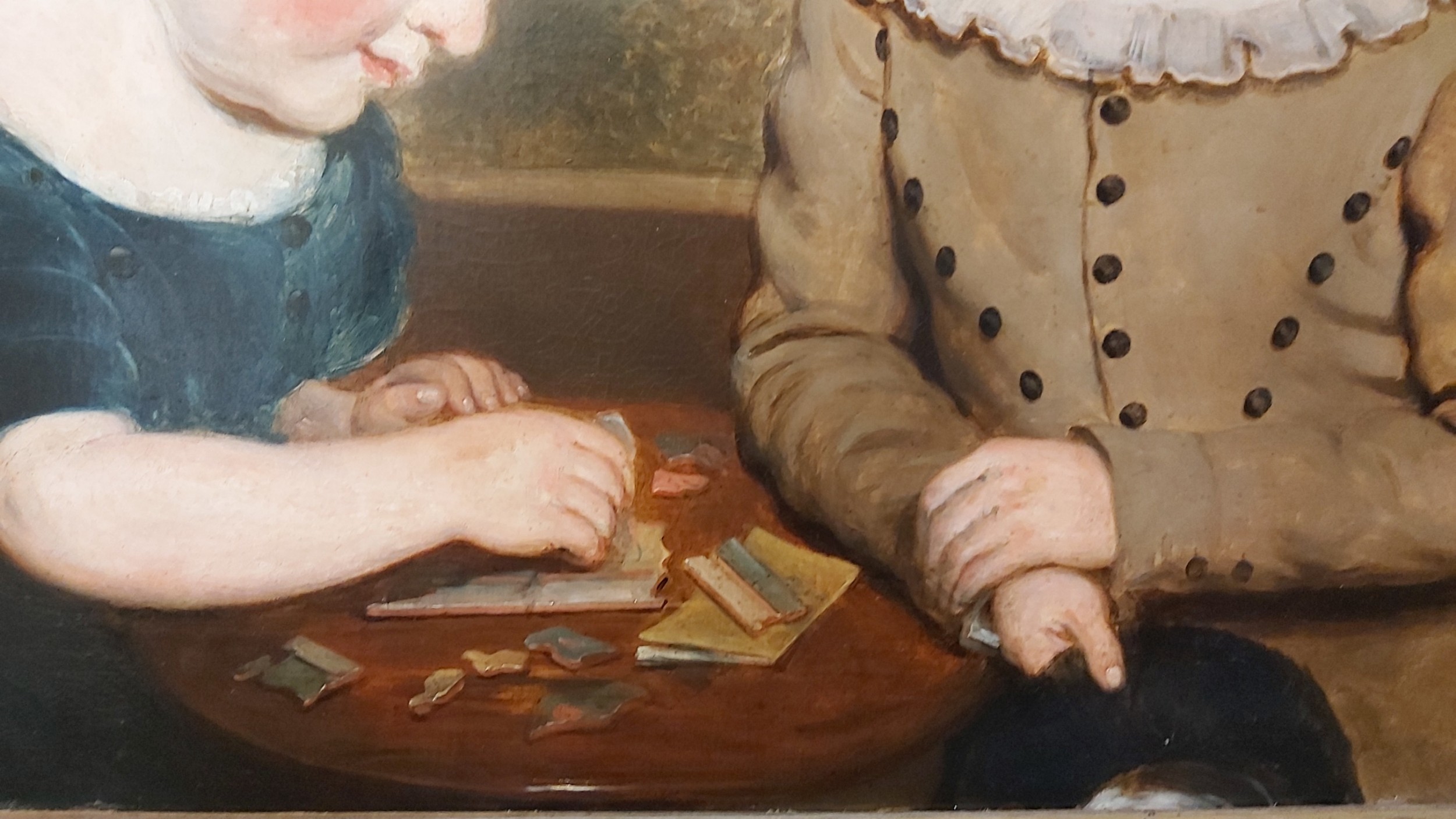
Portrait of a Young Boy with a Map Jigsaw Puzzle & His Brother seated at a Table
oil on canvas
64 x 76 cm. (25 x 30 in.)
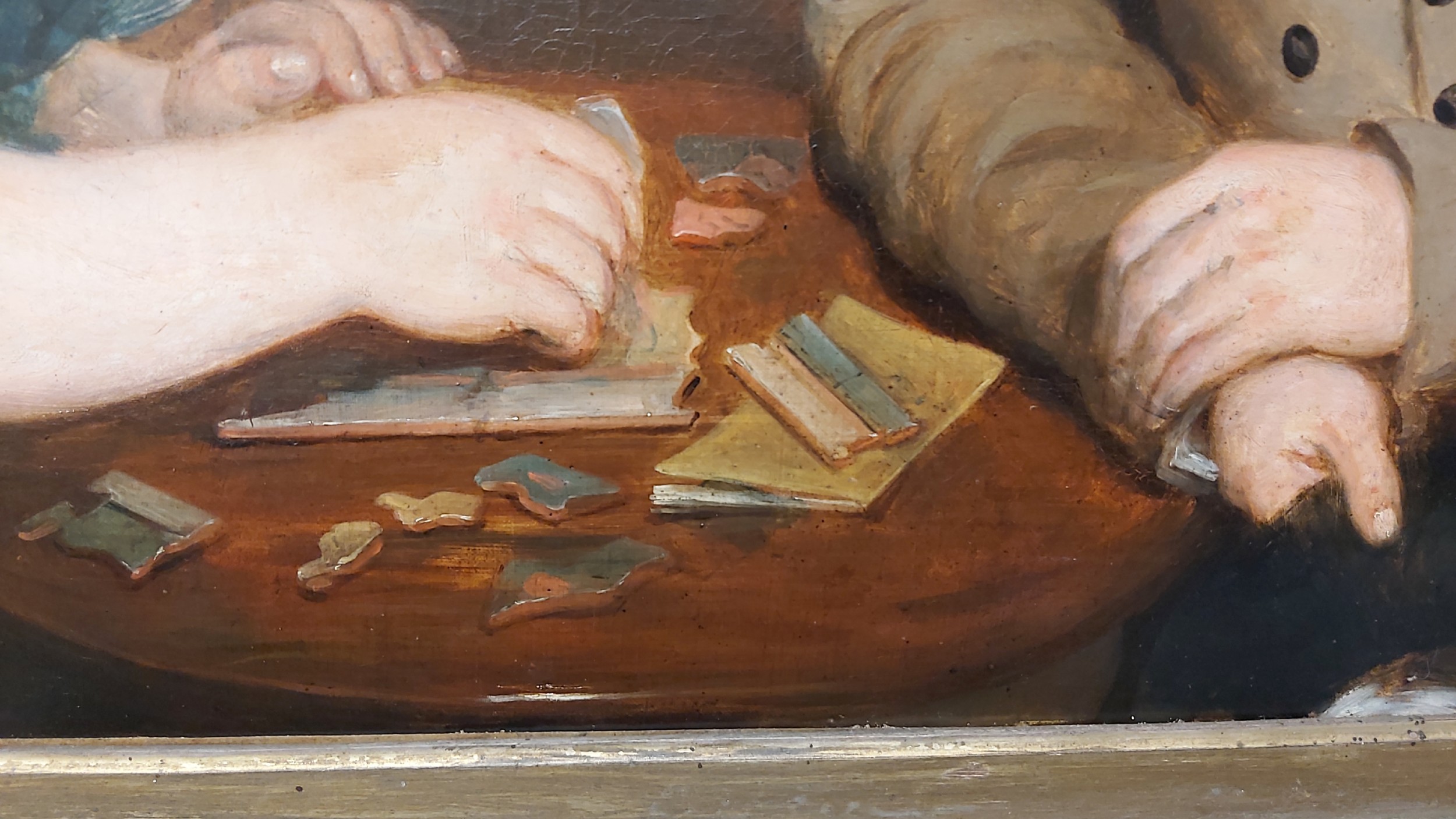
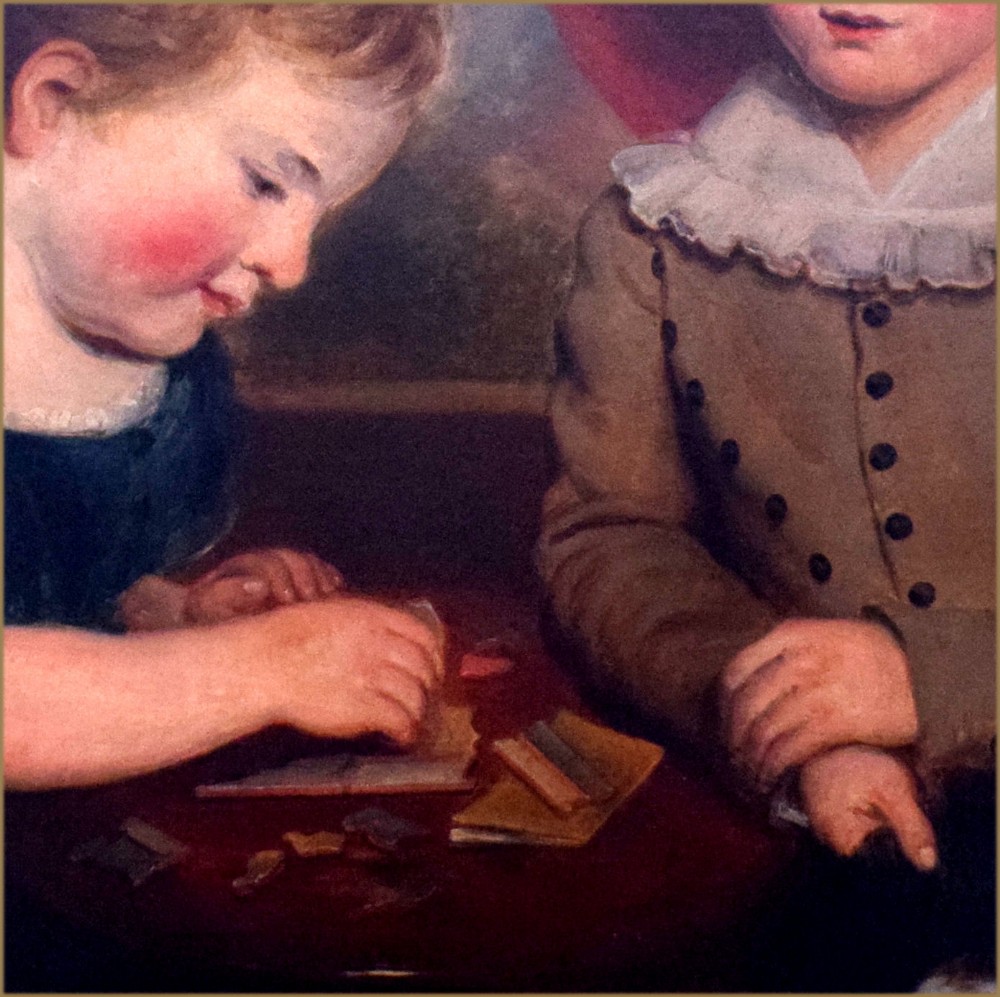
The Puzzle that the two boys are playing with is a geographical puzzle. However to the left there is an interlocking piece, and according to Linda Hannas “The English Jigsaw Puzzle, 1760 to 1890”, Wayland Publishers, London, 1972; interlocking border pieces (very useful) are a somewhat later invention, c. 1785. and that’s the time that explanatory books came with the didactical puzzles when they were sold. Such a booklet is depicted in the portrait.
A jigsaw puzzle is a tiling puzzle that requires the assembly of often oddly shaped interlocking and tessellating pieces. Each piece usually has a small part of a picture on it; when complete, a jigsaw puzzle produces a complete picture. In some cases, more advanced types have appeared on the market, such as spherical jigsaws and puzzles showing optical illusions.
Jigsaw puzzl
...es were originally created by painting a picture on a flat, rectangular piece of wood, and then cutting that picture into small pieces with a jigsaw, hence the name. John Spilsbury, a London cartographer and engraver, is credited with commercializing jigsaw puzzles around 1760. Jigsaw puzzles have since come to be made primarily of cardboard.
Typical images found on jigsaw puzzles include scenes from nature, buildings, and repetitive designs. Castles and mountains are two traditional subjects. However, any kind of picture can be used to make a jigsaw puzzle; some companies offer to turn personal photographs into puzzles. Completed puzzles can also be attached to a backing with adhesive to be used as artwork.
During recent years, a range of jigsaw puzzle accessories including boards, cases, frames, and roll-up mats has become available that are designed to assist jigsaw puzzle enthusiasts. The engraver and cartographer John Spilsbury, of London, is believed to have produced the first jigsaw puzzle around 1760, using a marquetry saw. Early jigsaws, known as dissections, were produced by mounting maps on sheets of hardwood and cutting along national boundaries, creating a puzzle useful for the teaching of geography. Such ''dissected maps'' were used to teach the children of King George III and Queen Charlotte by royal governess Lady Charlotte Finch. The end product was an educational pastime, designed as an aid in teach British children their geography. The idea caught on and, until about 1820, jigsaw puzzles remained primarily educational tools.
Vermeer Jigsaw Puzzle, from PiatnikIn 1880, with the introduction of the treadle saw, what had previously been known as dissections (not a word with particularly enjoyable connotations in our own time) came to be known as jigsaw puzzles, although they were actually cut by a fretsaw, not a true jigsaw. Towards the end of the century plywood came to be used. With illustrations glued or painted on the front of the wood, pencil tracings of where to cut were made on the back. These pencil tracings can still be found on some of these older puzzles.
Cardboard puzzles were first introduced in the late 1800''s, and were primarily used for children''s puzzles. It was not until the 20th century that cardboard puzzles came to be die-cut, a process whereby thin strips of metal with sharpened edges - rather like a giant cookie-cutter - are twisted into intricate patterns and fastened to a plate. The ''die'' (which refers to this assembly of twisted metal on the plate) is placed in a press, which is pressed down on the cardboard to make the cut.
The name ''jigsaw'' came to be associated with the puzzle around 1880 when fretsaws became the tool of choice for cutting the shapes. Since fretsaws are distinct from jigsaws, the name appears to be a misnomer. Cardboard jigsaw puzzles appeared during the late 1800s, but were slow to replace the wooden jigsaw due to the manufacturer''s belief that cardboard puzzles would be
Internal Reference: 4034
Antique ID Number (AIDN): SA599651
Dateline of this antique is 18th Century
Height is 64cm (25.2inches)Width is 76cm (29.9inches)Depth is 3cm (1.2inches)




Thank you.
Your comment has been sent to Sellingantiques.