32,594  PAGES BROWSED TODAY PAGES TODAY 90  ANTIQUES UPLOADED TODAY NEW ARRIVALS
ID #SA599211
FOR SALE
£4,500
Email
Save
John Seymour Lucas, 1849 - 1923 Portrait of Arthur James Balfour (1848-1930), First Earl Balfour
Artware Fineart
for sale €5,265     $5,715
£4,500

Artware Fineart

Sellingantiques Verified Since Sep 2008
View Dealers Stock Page
Id #SA599211
PDF SHARE
SAVE

John Seymour Lucas, 1849 - 1923 Portrait of Arthur James Balfour (1848-1930), First Earl Balfour

1900 - 1920
For Sale by Artware Fineart
Description

John Seymour Lucas, 1849 - 1923

Portrait of Arthur James Balfour (1848-1930), First Earl Balfour

Signed/Inscribed:

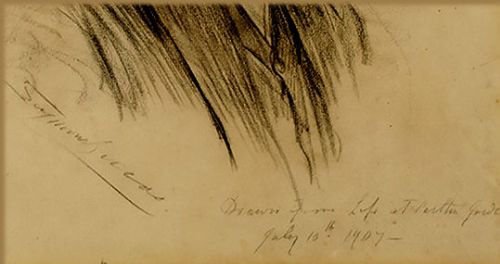
signed lower left and inscribed "Drawn from life at Carlton Gardens, July 10th, 1907",

charcoal and sanguine drawing
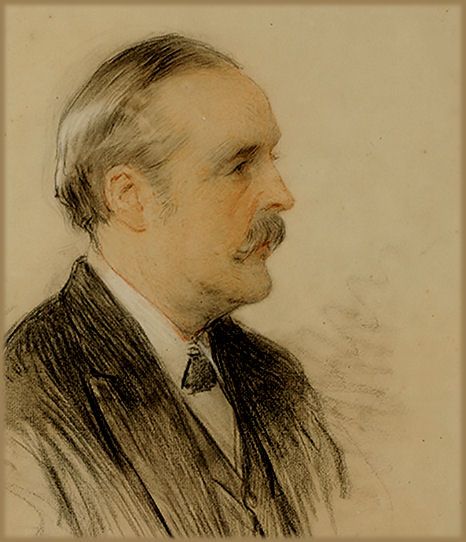
38.50 x 30 cm. (15.1/4 x 11.3/4 in.)

Arthur James Balfour, first earl of Balfour(1848–1930), prime minister and philosopher, was born on 25 July 1848 at Whittingehame House, East Lothian, the third of eight children and eldest son of James Maitland Balfour (1820–1856), landowner (and MP, 1841–7), and his wife, Lady Blanche Mary Harriet (d. 1872, aged forty-seven), second daughter of the second marquess of Salisbury and sister of Robert Cecil, later third marquess of Salisbury and prime minister. Arthur had four brothers and three sisters. The intellectual vigour of Lady Blanche was markedly imparted not only to Arthur but also to her eldest child, Eleanor Mildred (Nora; 1845–1936) [see Sidgwick, Eleanor Mildred], who became a leader in women's education; also to her sixth child, Francis Maitland (Frank) Balfour (1851–1882), who was already, at thirty, professor of animal morphology at Cambridge and a fellow of the Royal Society when he died in a mountaineering accident; and to her seventh child, Gerald William Balfour (1853–1945), fellow of Trinity College, Cambridge, from 1878, and a cabinet minister from 1895 to 1905. Arthur Balfour was deeply but not simplistically influenced by his mother's religious certainties; she was the chief influence in his upbringing after his father's death from tuberculosis when he was eight.
Education

In 1859, aged ten, Balfour went to the Revd C. G. Chittenden's Hoddesdon Grange preparatory school in Hertfordshire, where his short-sightedness and apparently delicate health proved a handicap. However, like his brothers, he would grow to stand 6 feet tall, and as an adult he acquired an enduring love of tennis and golf, and gave proof of considerable physical stamina. Yet his first headmaster noted enduring characteristics when he found the boy lacking in 'vital energy' and 'always pondering' (Dugdale, 1.21).

From 1861 until 1866 Balfour coasted imperturbably through Eton College, where he was in Mr Birch's house (succeeded in 1864 by Mr Thackeray). There he was, in the name of manliness, denied the spectacles that could have corrected his myopia. He made no great impact at Eton, but impressed William Johnson Cory. At Trinity College, Cambridge (1866–9), he soon adopted spectacles and became addicted to court tennis. Otherwise his intense interest in the philosophical basis of scientific knowledge led him to Henry Sidgwick (1838–1900) as his tutor. In view of his later reputation as a philosopher it occasions surprise to find that Balfour achieved only a second class in his final moral sciences tripos. However, a Cambridge friend later explained to his youngest sister, Alice (1850–1936), that her brother 'was considered in those days very indolent, as indolent in fact as clever'. He was not thought 'to be a great reader, but to have a wonderful capacity for picking the brains of other people' (Mackay, Balfour, 6). According to Sidgwick, at the time, his examination answers were somewhat lacking in weight. For this the likely explanation is Balfour's lifelong antipathy to the physical process of handwriting. He may also have spent too much time cogitating about his projected philosophical book. He had, his friend and contemporary John Strutt recalled, 'a mind which could ill submit to the bondage of following a prescribed course of study' (Rayleigh, 11).

Balfour's aversion to driving a pen led him to develop a remarkable ability to dictate lucid memoranda on complicated subjects. These required little subsequent amendment. Once the typewriter came into use, he would read over the double-spaced product and use a pen to insert or su

Physical Dimensions
Height
38.5cm (15.16")
Width
30cm (11.81")
Depth
0.5cm (0.20")
Declaration

Artware Fineart has dated this Edwardian Male Portrait Drawing to the 1900s.

Reference Numbers
Sellingantiques Reference
SA599211
Dealers Internal Reference
4033
Description
John Seymour Lucas, 1849 - 1923

Portrait of Arthur James Balfour (1848-1930), First Earl Balfour

Signed/Inscribed:

signed lower left and inscribed "Drawn from life at Carlton Gardens, July 10th, 1907",

charcoal and sanguine drawing

fig 1. An Edwardian profile portrait sketch on beige paper depicting a gentleman with a moustache in formal attire, signed and dated 1907.
fig 1. John Seymour Lucas, 1849 - 1923 Portrait of Arthur James Balfour (1848-1930), First Earl Balfour

38.50 x 30 cm. (15.1/4 x 11.3/4 in.)

Arthur James Balfour, first earl of Balfour(1848–1930), prime minister and philosopher, was born on 25 July 1848 at Whittingehame House, East Lothian, the third of eight children and eldest son of James Maitland Balfour (1820–1856), landowner (and MP, 1841–7), and his wife, Lady Blanche Mary Harriet (d.

1872, aged forty-seven), second daughter of the second marquess of Salisbury and sister of Robert Cecil, later third marquess of Salisbury and prime minister.
Artware Fineart

Arthur had four brothers and three sisters. The intellectual vigour of Lady Blanche was markedly imparted not only to Arthur but also to her eldest child, Eleanor Mildred (Nora; 1845–1936) [see Sidgwick, Eleanor Mildred], who became a leader in women's education; also to her sixth child, Francis Maitland (Frank) Balfour (1851–1882), who was already, at thirty, professor of animal morphology at Cambridge and a fellow of the Royal Society when he died in a mountaineering accident; and to her seventh child, Gerald William Balfour (1853–1945), fellow of Trinity College, Cambridge, from 1878, and a cabinet minister from 1895 to 1905. Arthur Balfour was deeply but not simplistically influenced by his mother's religious certainties; she was the chief influence in his upbringing after his father's death from tuberculosis when he was eight.

fig 2. An Edwardian profile portrait sketch on beige paper depicting a gentleman with a moustache in formal attire, signed and dated 1907.
fig 2. John Seymour Lucas, 1849 - 1923 Portrait of Arthur James Balfour (1848-1930), First Earl Balfour

Education

In 1859, aged ten, Balfour went to the Revd C. G. Chittenden's Hoddesdon Grange preparatory school in Hertfordshire, where his short-sightedness and apparently delicate health proved a handicap. However, like his brothers, he would grow to stand 6 feet tall, and as an adult he acquired an enduring love of tennis and golf, and gave proof of considerable physical stamina. Yet his first headmaster noted enduring characteristics when he found the boy lacking in 'vital energy' and 'always pondering' (Dugdale, 1.21).

From 1861 until 1866 Balfour coasted imperturbably through Eton College, where he was in Mr Birch's house (succeeded in 1864 by Mr Thackeray). There he was, in the name of manliness, denied the spectacles that could have corrected his myopia. He made no great impact at Eton, but impressed William Johnson Cory. At Trinity College, Cambridge (1866–9), he soon adopted spectacles and became addicted to court tennis. Otherwise his intense interest in the philosophical basis of scientific knowledge led him to Henry Sidgwick (1838–1900) as his tutor. In view of his later reputation as a philosopher it occasions surprise to find that Balfour achieved only a second class in his final moral sciences tripos. However, a Cambridge friend later explained to his youngest sister, Alice (1850–1936), that her brother 'was considered in those days very indolent, as indolent in fact as clever'. He was not thought 'to be a great reader, but to have a wonderful capacity for picking the brains of other people' (Mackay, Balfour, 6). According to Sidgwick, at the time, his examination answers were somewhat lacking in weight. For this the likely explanation is Balfour's lifelong antipathy to the physical process of handwriting. He may also have spent too much time cogitating about his projected philosophical book. He had, his friend and contemporary John Strutt recalled, 'a mind which could ill submit to the bondage of following a prescribed course of study' (Rayleigh, 11).

Balfour's aversion to driving a pen led him to develop a remarkable ability to dictate lucid memoranda on complicated subjects. These required little subsequent amendment. Once the typewriter came into use, he would read over the double-spaced product and use a pen to insert or su

Height
38.5cm (15.16")
Width
30cm (11.81")
Depth
0.5cm (0.20")
Date of Manufacture

Artware Fineart has dated this Edwardian Male Portrait Drawing to the 1900s.

Reference Numbers
Sellingantiques Ref
SA599211
Dealers Internal Ref
4033
Artware Fineart
Sellingantiques verified Since Sep 2008
Dealer Profile

You can view the stock and full dealer information on the Artware Fineart Profile Page

PDF SHARE
SAVE
An Edwardian profile portrait sketch on beige paper depicting a gentleman with a moustache in formal attire, signed and dated 1907.
1 / 3
Archive I An Edwardian profile portrait sketch on beige paper depicting a gentleman with a moustache in formal attire, signed and dated 1907.

John Seymour Lucas, 1849 - 1923 Portrait of Arthur James Balfour (1848-1930), First Earl Balfour

Archive II An Edwardian profile portrait sketch on beige paper depicting a gentleman with a moustache in formal attire, signed and dated 1907. View II
Archive III An Edwardian profile portrait sketch on beige paper depicting a gentleman with a moustache in formal attire, signed and dated 1907. View III
Enlarged Archival View
Telephone 07958 699 645
Location
18 La Gare
51 Surrey Row
London
SE1 0BZ
United Kingdom
Verified Since Sep 2008
Items For Sale 243
Items Sold 223
Artware Fineart
Verified Since Sep 2008
View Dealer Info
Location: 18 La Gare , 51 Surrey Row , London , SE1 0BZ , United Kingdom
Verified
Sep 2008
For Sale
243
Sold
223
An Edwardian profile portrait sketch on beige paper depicting a gentleman with a moustache in formal attire, signed and dated 1907.
John Seymour Lucas, 1849 - 1923 Portrait of Arthur James Balfour (1848-1930), First Earl Balfour
Ref: SA599211
An Edwardian profile portrait sketch on beige paper depicting a gentleman with a moustache in formal attire, signed and dated 1907.
Detail View 1
Detail View 2
Archival Detail
Every single antique dealer on our platform is individually approved by our internal team. We verify their professional trade history, ethical standards, and photographic quality to ensure a secure, high-standard buying environment. Upon joining, every dealer agrees to a strict 9-point code of conduct. While issues can occasionally arise, our dealers typically resolve them swiftly and directly with the buyer. In fact, since our founding in 2002, Sellingantiques has only had to step in to help resolve an issue on roughly five occasions—a true testament to the quality of our dealers and their dedication to your happiness.
Our dealers are highly experienced in packing and shipping fragile, high-value antiques. Because you are in direct contact with the dealer, you will be able to easily go through all available shipping and insurance options together to ensure your item arrives safely.
Antiques are the ultimate green purchase. By choosing historical pieces over newly manufactured goods, you completely eliminate the carbon footprint of modern mass production while preserving exceptional, timeless craftsmanship.

British portrait drawings from the early 20th century often reflect academic realism, utilizing precise line work and subtle tone in mediums like charcoal, chalk, or graphite to capture formal sitters.

Artists during the Edwardian period typically employed charcoal, graphite, chalk, or pastels on heavy woven or laid paper, often working on tinted or cream backgrounds.

Authentic period drawings display natural paper aging, such as light foxing or toning, period-appropriate signatures or inscriptions, and technique consistent with the artists known oeuvre.

Portrait drawings pair well with modern minimalist framing to create a balanced focal point in contemporary spaces, or incorporated into gallery wall arrangements in traditional studies.

Works on paper should be framed using acid-free mounting materials and UV-filtering glass, kept away from direct sunlight, and displayed in stable humidity environments.
items
Add keywords to the filter
Price
£100
£250000
Era
Movements
Material
Origin
Stock Location
Freshness
Online Payments
Categories