18,863  PAGES BROWSED TODAY PAGES TODAY 36  ANTIQUES UPLOADED TODAY NEW ARRIVALS
ID #SA575410
FOR SALE
£2,500
Email
Save
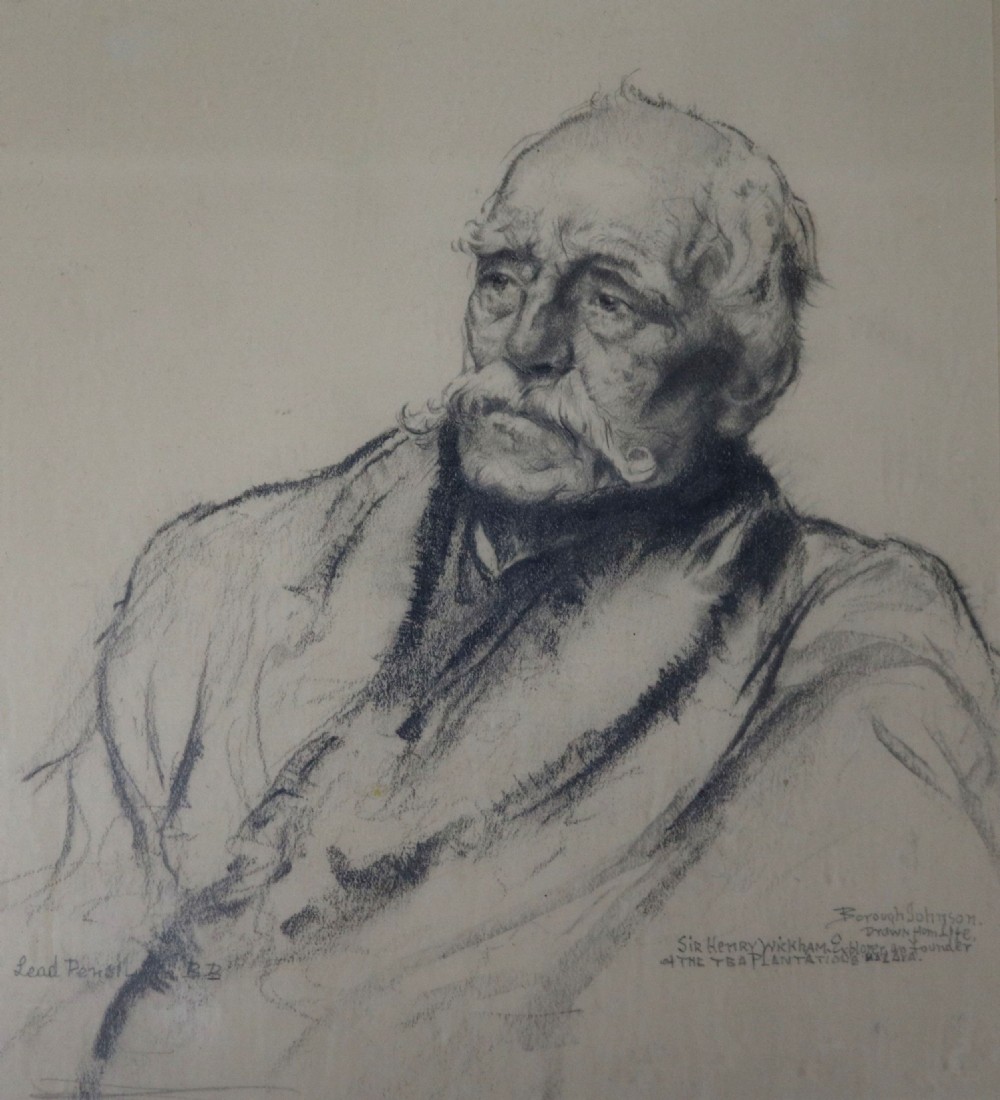
Ernest Borough Johnson, 1866-1939 Portrait of Sir Henry Alexander Wickham 1846 – 1928, Explorer and Bio-pirate
Artware Fineart
for sale €2,925     $3,175
£2,500

Artware Fineart

Sellingantiques Verified Since Sep 2008
View Dealers Stock Page
Id #SA575410
PDF SHARE
SAVE

Ernest Borough Johnson, 1866-1939 Portrait of Sir Henry Alexander Wickham 1846 – 1928, Explorer and Bio-pirate

1900 - 1920
For Sale by Artware Fineart
Description

Ernest Borough Johnson, 1866-1939

Portrait of Sir Henry Alexander Wickham 1846 – 1928, Explorer and Bio-Pirate

Signed/Inscribed:

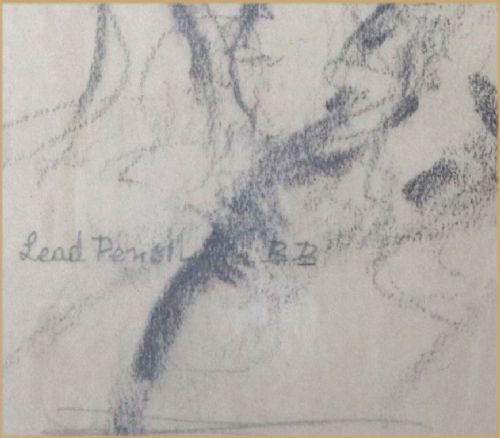
"Borough Johnson/Drawn from life/Sir Henry Wickham. Explorer and founder / of the Tea Plantations Malaya " " Lead Pencil BB"
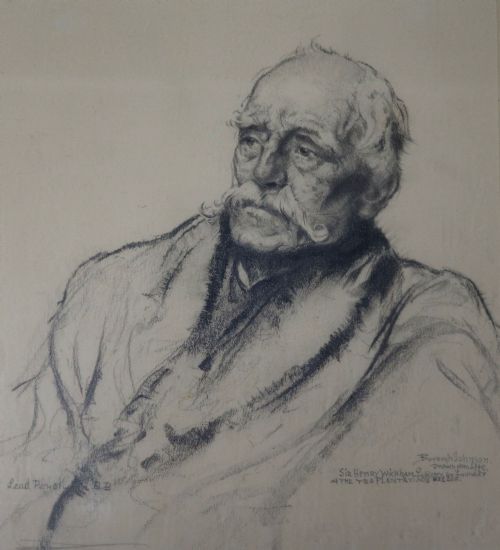
black chalk

17 x 15 cm. (7 x 6 .in)

Sir Henry Alexander Wickham, (1846–1928), plant collector and planter, was born on 29 May 1846, the son of Henry Wickham, solicitor. His father died when he was four, and he was raised by his mother. He was talented at drawing and undertook some training as an artist.
At twenty Wickham went to Central America, where for three years he engaged in the trade in bird plumage. He returned to England, but a year later was in Colombia and Venezuela dealing in rubber. He made a journey up the Orinoco and down the Rio Negro and Amazon that ended at Santarém in Pará, where he was befriended by some English residents and American Confederate exiles. After returning to England again in 1871, on 29 May he married Violet Cave Carter, daughter of W. H. J. Carter, a Regent Street bookseller who published Wickham's account of his journey. With his wife, his mother, brother, sister, and brother-in-law he sailed out to Santarém to commence life as a sugar and tobacco planter, perhaps financed by his father-in-law.
In 1872 Wickham wrote offering his services as a collector to Sir Joseph Hooker at the Royal Botanic Gardens at Kew. In May 1873 Hooker was approached by Clements Markham of the India Office for assistance in introducing the Pará rubber tree Hevea Brasiliensis into India, and thought of Wickham. Encouraged to obtain as many seeds as possible at £10 per 1000, Wickham seized the opportunity not only to gather but to accompany the seeds to England and escape a life that had become unsustainable. His mother and sister had died at Santarém; his plantation was a failure. In desperate straits it is likely that his and his wife's passages aboard the Amazonas were obtained on a promissory note. The seeds had been collected probably in great haste from stands near Boim on the Rio Tapajós, not far from Santarém, in April and May 1876.

To the Brazilian customs Wickham declared his baskets to contain 'exceedingly delicate botanical specimens specially designated for delivery to Her Britannic Majesty's own Royal Gardens'. Though the very size of the shipment might have caused the local Brazilian officials to pause or seek authorization, the deception was more of a precaution. No one on the Amazon at the time could have foreseen that the massive industry about them might one day be eclipsed, or that Hevea could be successfully cultivated elsewhere. There was no Brazilian regulation to prevent the export of seed. Wickham later dramatized the deed as a tale of successful smuggling, making the arrival of the Amazonas providential—it was actually on a scheduled voyage to Liverpool—and adding a threatening Brazilian gunboat. One thing is certain—that speed had been essential to success, as the oily rubber seeds have brief viability.

Wickham arrived in England with the cargo of 70,000 seeds on 14 June 1876. These were planted in specially prepared beds at Kew, and by August fewer than 4000 had germinated. He received £743 from the India Office and sought a further commission to take the plants to Ceylon. When a response was delayed he decided to take his fee and a quantity of coffee seedlings obtained at Kew and emigrate to Queensland. Acquiring land on the Herbert River north of Townsville he decided on tobacco cultivation. Dogged yet again by misfortune as well as mismanagement he was forced to abandon this venture with little more than the fare home remaining.

In 1886 Wickham returned to Central America. In British Honduras he obtained work initially as an inspector of forests before proceeding to establish a plantation on the Temash Ri

Physical Dimensions
Height
17cm (6.69")
Width
15cm (5.91")
Depth
0.5cm (0.20")
Declaration

Artware Fineart has dated this Antique Pencil Portrait Drawing to the 1920s.

Reference Numbers
Sellingantiques Reference
SA575410
Dealers Internal Reference
4017
Description
Ernest Borough Johnson, 1866-1939

Portrait of Sir Henry Alexander Wickham 1846 – 1928, Explorer and Bio-Pirate

Signed/Inscribed:

"Borough Johnson/Drawn from life/Sir Henry Wickham. Explorer and founder / of the Tea Plantations Malaya " " Lead Pencil BB"

fig 1. A monochrome lead pencil portrait drawing depicting an elderly man with a large moustache, rendered on off-white paper with handwritten inscriptions.
fig 1. Ernest Borough Johnson, 1866-1939 Portrait of Sir Henry Alexander Wickham 1846 – 1928, Explorer and Bio-pirate

black chalk

17 x 15 cm. (7 x 6 .in)

Sir Henry Alexander Wickham, (1846–1928), plant collector and planter, was born on 29 May 1846, the son of Henry Wickham, solicitor.
Artware Fineart

His father died when he was four, and he was raised by his mother. He was talented at drawing and undertook some training as an artist.

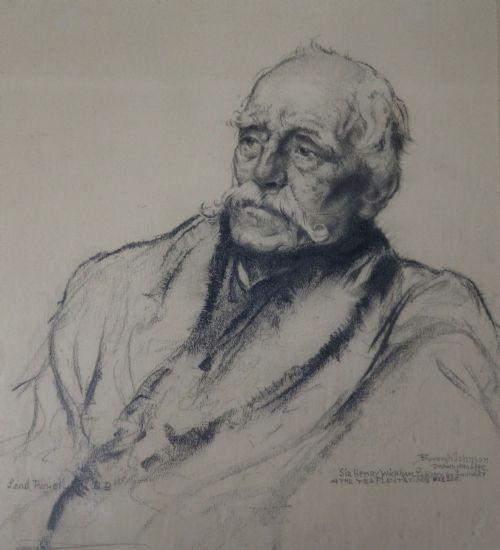
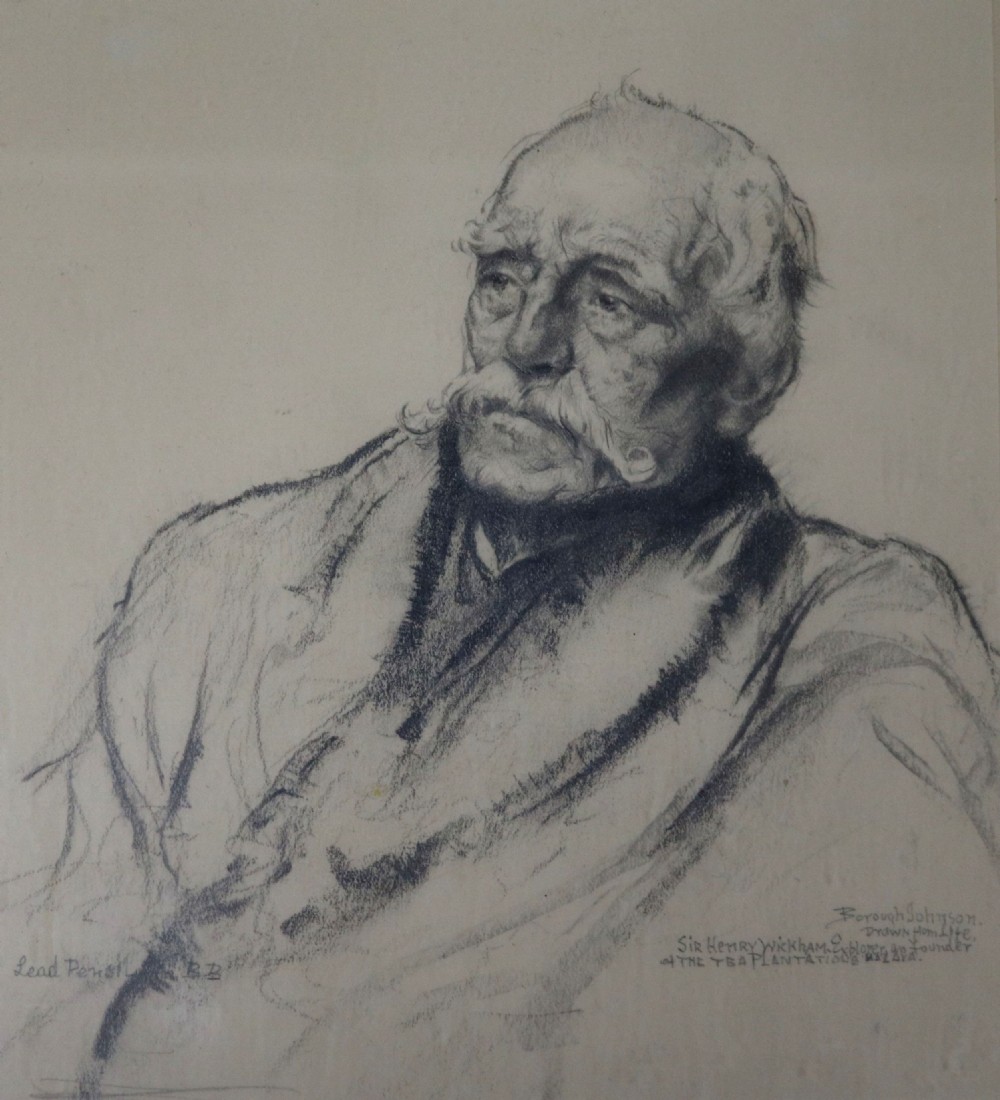
fig 2. A monochrome lead pencil portrait drawing depicting an elderly man with a large moustache, rendered on off-white paper with handwritten inscriptions.
fig 2. Ernest Borough Johnson, 1866-1939 Portrait of Sir Henry Alexander Wickham 1846 – 1928, Explorer and Bio-pirate

At twenty Wickham went to Central America, where for three years he engaged in the trade in bird plumage. He returned to England, but a year later was in Colombia and Venezuela dealing in rubber. He made a journey up the Orinoco and down the Rio Negro and Amazon that ended at Santarém in Pará, where he was befriended by some English residents and American Confederate exiles. After returning to England again in 1871, on 29 May he married Violet Cave Carter, daughter of W. H. J. Carter, a Regent Street bookseller who published Wickham's account of his journey. With his wife, his mother, brother, sister, and brother-in-law he sailed out to Santarém to commence life as a sugar and tobacco planter, perhaps financed by his father-in-law.

fig 3. A monochrome lead pencil portrait drawing depicting an elderly man with a large moustache, rendered on off-white paper with handwritten inscriptions.
fig 3. Ernest Borough Johnson, 1866-1939 Portrait of Sir Henry Alexander Wickham 1846 – 1928, Explorer and Bio-pirate

In 1872 Wickham wrote offering his services as a collector to Sir Joseph Hooker at the Royal Botanic Gardens at Kew. In May 1873 Hooker was approached by Clements Markham of the India Office for assistance in introducing the Pará rubber tree Hevea Brasiliensis into India, and thought of Wickham. Encouraged to obtain as many seeds as possible at £10 per 1000, Wickham seized the opportunity not only to gather but to accompany the seeds to England and escape a life that had become unsustainable. His mother and sister had died at Santarém; his plantation was a failure. In desperate straits it is likely that his and his wife's passages aboard the Amazonas were obtained on a promissory note. The seeds had been collected probably in great haste from stands near Boim on the Rio Tapajós, not far from Santarém, in April and May 1876.

To the Brazilian customs Wickham declared his baskets to contain 'exceedingly delicate botanical specimens specially designated for delivery to Her Britannic Majesty's own Royal Gardens'. Though the very size of the shipment might have caused the local Brazilian officials to pause or seek authorization, the deception was more of a precaution. No one on the Amazon at the time could have foreseen that the massive industry about them might one day be eclipsed, or that Hevea could be successfully cultivated elsewhere. There was no Brazilian regulation to prevent the export of seed. Wickham later dramatized the deed as a tale of successful smuggling, making the arrival of the Amazonas providential—it was actually on a scheduled voyage to Liverpool—and adding a threatening Brazilian gunboat. One thing is certain—that speed had been essential to success, as the oily rubber seeds have brief viability.

Wickham arrived in England with the cargo of 70,000 seeds on 14 June 1876. These were planted in specially prepared beds at Kew, and by August fewer than 4000 had germinated. He received £743 from the India Office and sought a further commission to take the plants to Ceylon. When a response was delayed he decided to take his fee and a quantity of coffee seedlings obtained at Kew and emigrate to Queensland. Acquiring land on the Herbert River north of Townsville he decided on tobacco cultivation. Dogged yet again by misfortune as well as mismanagement he was forced to abandon this venture with little more than the fare home remaining.

In 1886 Wickham returned to Central America. In British Honduras he obtained work initially as an inspector of forests before proceeding to establish a plantation on the Temash Ri

Height
17cm (6.69")
Width
15cm (5.91")
Depth
0.5cm (0.20")
Date of Manufacture

Artware Fineart has dated this Antique Pencil Portrait Drawing to the 1920s.

Reference Numbers
Sellingantiques Ref
SA575410
Dealers Internal Ref
4017
Artware Fineart
Sellingantiques verified Since Sep 2008
Dealer Profile

You can view the stock and full dealer information on the Artware Fineart Profile Page
PDF SHARE
SAVE
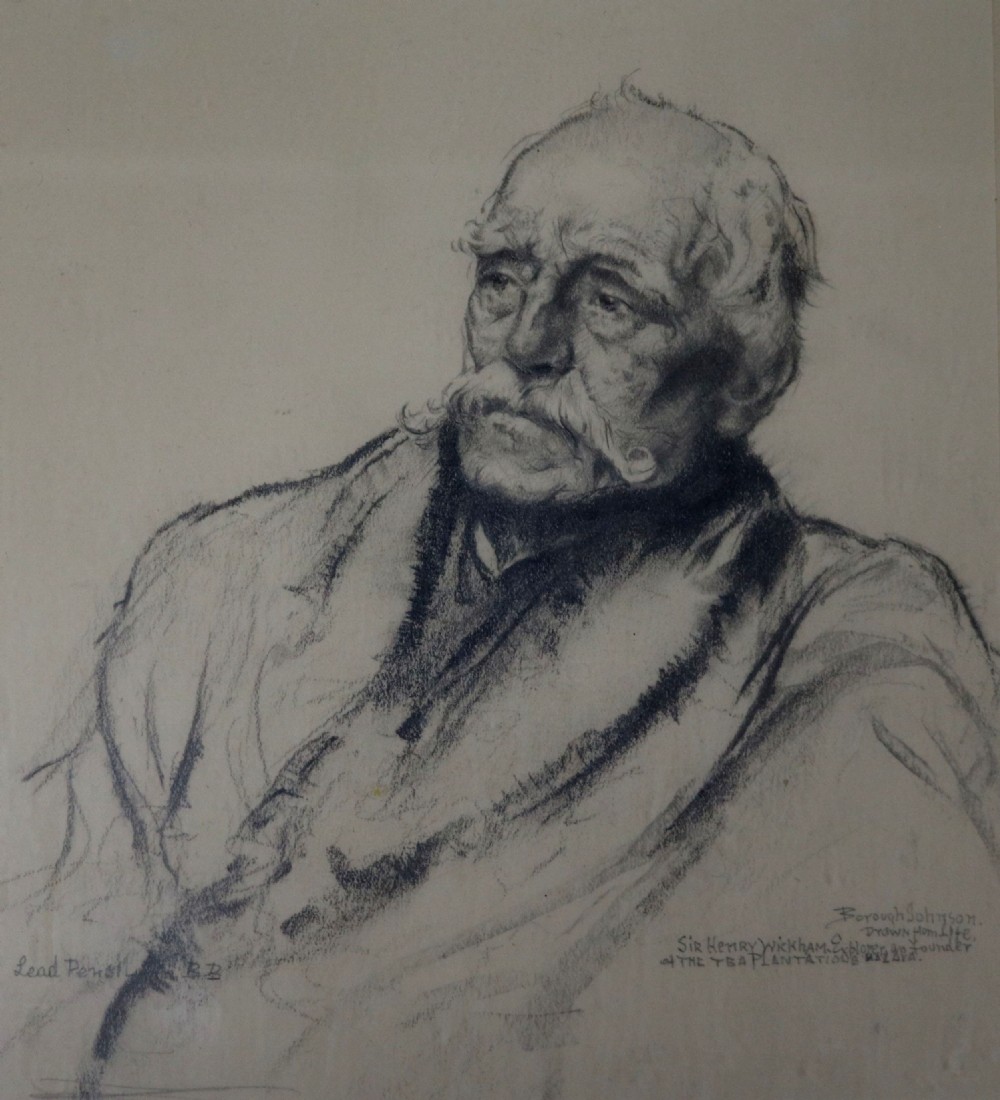
A monochrome lead pencil portrait drawing depicting an elderly man with a large moustache, rendered on off-white paper with handwritten inscriptions.
1 / 4
Archive I A monochrome lead pencil portrait drawing depicting an elderly man with a large moustache, rendered on off-white paper with handwritten inscriptions.

Ernest Borough Johnson, 1866-1939 Portrait of Sir Henry Alexander Wickham 1846 – 1928, Explorer and Bio-pirate
Archive II A monochrome lead pencil portrait drawing depicting an elderly man with a large moustache, rendered on off-white paper with handwritten inscriptions. View II
Archive III A monochrome lead pencil portrait drawing depicting an elderly man with a large moustache, rendered on off-white paper with handwritten inscriptions. View III
Archive IV A monochrome lead pencil portrait drawing depicting an elderly man with a large moustache, rendered on off-white paper with handwritten inscriptions. View IV
Enlarged Archival View
Telephone 07958 699 645
Location
18 La Gare
51 Surrey Row
London
SE1 0BZ
United Kingdom
Verified Since Sep 2008
Items For Sale 243
Items Sold 223
Artware Fineart
Verified Since Sep 2008
View Dealer Info
Location: 18 La Gare , 51 Surrey Row , London , SE1 0BZ , United Kingdom
Verified
Sep 2008
For Sale
243
Sold
223
A monochrome lead pencil portrait drawing depicting an elderly man with a large moustache, rendered on off-white paper with handwritten inscriptions.
Ernest Borough Johnson, 1866-1939 Portrait of Sir Henry Alexander Wickham 1846 – 1928, Explorer and Bio-Pirate
Ref: SA575410
A monochrome lead pencil portrait drawing depicting an elderly man with a large moustache, rendered on off-white paper with handwritten inscriptions.
Detail View 1
Detail View 2
Detail View 3
Archival Detail
Every single antique dealer on our platform is individually approved by our internal team. We verify their professional trade history, ethical standards, and photographic quality to ensure a secure, high-standard buying environment. Upon joining, every dealer agrees to a strict 9-point code of conduct. While issues can occasionally arise, our dealers typically resolve them swiftly and directly with the buyer. In fact, since our founding in 2002, Sellingantiques has only had to step in to help resolve an issue on roughly five occasions—a true testament to the quality of our dealers and their dedication to your happiness.
Our dealers are highly experienced in packing and shipping fragile, high-value antiques. Because you are in direct contact with the dealer, you will be able to easily go through all available shipping and insurance options together to ensure your item arrives safely.
Antiques are the ultimate green purchase. By choosing historical pieces over newly manufactured goods, you completely eliminate the carbon footprint of modern mass production while preserving exceptional, timeless craftsmanship.

Early 20th-century British portrait drawings often feature realistic draughtsmanship executed directly from life using dry media such as graphite, charcoal, or lead pencil. Artists focused on capturing character and form through controlled tonal shading and expressive line work.

Original portrait sketches from this era were typically created using lead pencil, graphite, or charcoal applied to woven or laid paper. Artists selected soft to medium lead grades to achieve deep tonal contrasts and varied textures.

Authentic pencil drawings display visible paper grain, varied line pressure from hand movement, and natural age-related characteristics such as foxing or subtle toning, distinct from modern mechanical reproduction prints.

Mount the artwork using an acid-free mat within a slim timber or dark frame, then position it within a gallery wall arrangement or above an occasional cabinet to introduce historical depth.

Display paper works away from direct sunlight and areas of fluctuating humidity. Protect the artwork using UV-filtering glass and archival mounting materials to prevent fading and discolouration over time.
items
Add keywords to the filter
Price
£100
£250000
Era
Movements
Material
Origin
Stock Location
Freshness
Online Payments
Categories