11,311  PAGES BROWSED TODAY PAGES TODAY 36  ANTIQUES UPLOADED TODAY NEW ARRIVALS
ID #SA552289
FOR SALE
£2,500
Email
Save
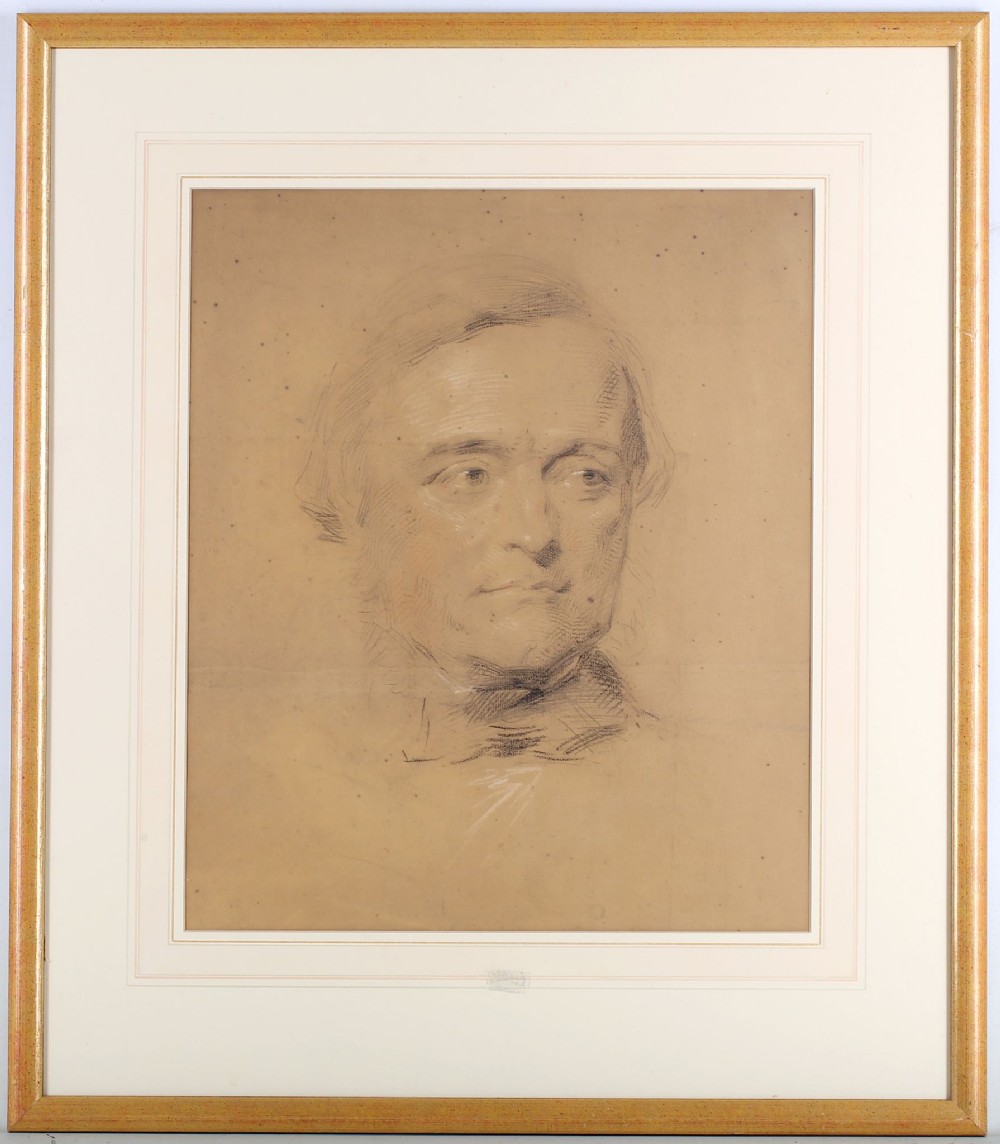
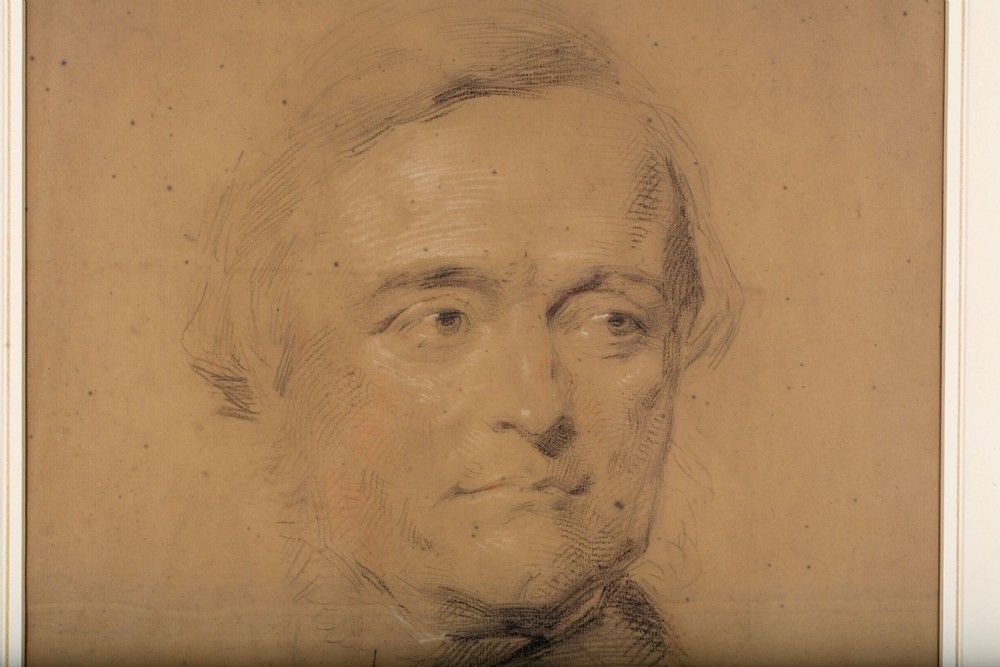
George Richmond, Ra, 1809 - 1896 Portrait of Charles Kingsley 1819 - 1875
Artware Fineart
for sale €2,925     $3,175
£2,500

Artware Fineart

Sellingantiques Verified Since Sep 2008
View Dealers Stock Page
Id #SA552289
PDF SHARE
SAVE

George Richmond, Ra, 1809 - 1896 Portrait of Charles Kingsley 1819 - 1875

19th century
For Sale by Artware Fineart
Description

George Richmond, RA, 1809 - 1896

Portrait of Charles Kingsley 1819 - 1875

coloured chalks on buff paper

42.5 x 35.3 cm. (16.3/4 x 13.3/4in.)

Kingsley, Charles (1819–1875), novelist, Church of England clergyman, and controversialist, was born on 12 June 1819 at Holne vicarage, Devon, on the eastern edge of Dartmoor. He was the eldest of the six surviving children of Revd Charles Kingsley (1781–1860), then (briefly) curate of Holne, a Hampshire country gentleman from an old family, including soldiers who had fought at Naseby and at Minden, who had taken orders only at the age of thirty-five, three years previously, after his mismanaged inheritance was exhausted. His mother, Mary Lucas (1787–1873), was born in Barbados, the daughter of a judge who had inherited slave-run sugar plantations. But any prospect of substantial wealth from this source eventually passing to the Kingsley family vanished with the decline of the West Indian sugar trade and the abolition of slavery in 1833. His father's subsequent career in the church took the family to Nottinghamshire, to Barnack, near Stamford (1824–30), close to the fen country which later supplied background for his historical novel Hereward the Wake, to Clovelly on the north Devon coast (1830–36), which inspired an enduring fascination with sea and shore later reflected in Westward Ho! and The Water-Babies, and, finally, in 1836, to St Luke's rectory, Chelsea (1836–60).
A delicate, nervous, imaginative child afflicted with a stutter which persisted into adult life, Kingsley nevertheless shared his father's passion for country sports and natural history. His education started at home, where he showed a precocious interest in writing sermons and poems. In 1831 he and his brother Herbert were sent to a preparatory school at Clifton, where he was a horrified and fascinated witness to the Bristol riots associated with the Reform Bill agitation, an experience which influenced his ambivalent attitude towards popular politics in later years. The following year the boys went to Helston grammar school in Cornwall, a small school run by Revd Derwent Coleridge, second son of the poet. Kingsley had an attack of cholera at the school (English cholera rather than the more virulent Asiatic cholera then ravaging Cornwall), which left him with a lifelong intestinal weakness but also stimulated his passion for sanitary reform as a way of containing and preventing disease. He seems to have learnt a great deal from informal botanizing expeditions with one of the masters, C. A. Johns, later a distinguished naturalist, and from browsing in the headmaster's library, where he encountered arcane treasures such as Iamblichus and Porphyry, but his formal instruction in classics and mathematics was rather neglected until he and his family moved to London in 1836. He studied at King's College, London (1836–8), where he worked hard and engaged in extensive private reading. Living at home, he became increasingly bored and irritated with the puritanical restrictions of rectory life and the endless fuss of church business and district visiting in his father's large and active evangelical parish.
In October 1838 Kingsley went up to Magdalene College, Cambridge. Lonely, intensely shy, and physically restless, he gradually found companionship through rowing and riding to hounds, and acquired a close friend in the brilliantly eccentric athlete and amateur scientist Charles Mansfield, another clergyman's son. He discovered the calming effects of tobacco and was soon addicted, though he had already suffered from lung disease. More significantly, he developed religious doubts. He managed to win a scholarship in the May examinations at the end of his first year, and during the long vacation of 1839 met his future wife, Frances Eliza Grenfell, known as Fanny [see Kingsley, Frances Eliza (1814-1891)], devout da

Physical Dimensions
Height
42cm (16.54")
Width
35cm (13.78")
Depth
2cm (0.79")
Declaration

Artware Fineart has dated this Victorian Portrait Sketch Drawing to the 19th Century.

Reference Numbers
Sellingantiques Reference
SA552289
Dealers Internal Reference
4000
Description
George Richmond, RA, 1809 - 1896

Portrait of Charles Kingsley 1819 - 1875

coloured chalks on buff paper

42.5 x 35.3 cm. (16.3/4 x 13.3/4in.)

Kingsley, Charles (1819–1875), novelist, Church of England clergyman, and controversialist, was born on 12 June 1819 at Holne vicarage, Devon, on the eastern edge of Dartmoor.
Artware Fineart

He was the eldest of the six surviving children of Revd Charles Kingsley (1781–1860), then (briefly) curate of Holne, a Hampshire country gentleman from an old family, including soldiers who had fought at Naseby and at Minden, who had taken orders only at the age of thirty-five, three years previously, after his mismanaged inheritance was exhausted. His mother, Mary Lucas (1787–1873), was born in Barbados, the daughter of a judge who had inherited slave-run sugar plantations. But any prospect of substantial wealth from this source eventually passing to the Kingsley family vanished with the decline of the West Indian sugar trade and the abolition of slavery in 1833. His father's subsequent career in the church took the family to Nottinghamshire, to Barnack, near Stamford (1824–30), close to the fen country which later supplied background for his historical novel Hereward the Wake, to Clovelly on the north Devon coast (1830–36), which inspired an enduring fascination with sea and shore later reflected in Westward Ho! and The Water-Babies, and, finally, in 1836, to St Luke's rectory, Chelsea (1836–60).

fig 1. A monochromatic Victorian portrait sketch in black chalk on warm brown paper depicting a gentleman in three-quarter profile.
fig 1. George Richmond, Ra, 1809 - 1896 Portrait of Charles Kingsley 1819 - 1875

A delicate, nervous, imaginative child afflicted with a stutter which persisted into adult life, Kingsley nevertheless shared his father's passion for country sports and natural history. His education started at home, where he showed a precocious interest in writing sermons and poems. In 1831 he and his brother Herbert were sent to a preparatory school at Clifton, where he was a horrified and fascinated witness to the Bristol riots associated with the Reform Bill agitation, an experience which influenced his ambivalent attitude towards popular politics in later years. The following year the boys went to Helston grammar school in Cornwall, a small school run by Revd Derwent Coleridge, second son of the poet. Kingsley had an attack of cholera at the school (English cholera rather than the more virulent Asiatic cholera then ravaging Cornwall), which left him with a lifelong intestinal weakness but also stimulated his passion for sanitary reform as a way of containing and preventing disease. He seems to have learnt a great deal from informal botanizing expeditions with one of the masters, C. A. Johns, later a distinguished naturalist, and from browsing in the headmaster's library, where he encountered arcane treasures such as Iamblichus and Porphyry, but his formal instruction in classics and mathematics was rather neglected until he and his family moved to London in 1836. He studied at King's College, London (1836–8), where he worked hard and engaged in extensive private reading. Living at home, he became increasingly bored and irritated with the puritanical restrictions of rectory life and the endless fuss of church business and district visiting in his father's large and active evangelical parish.

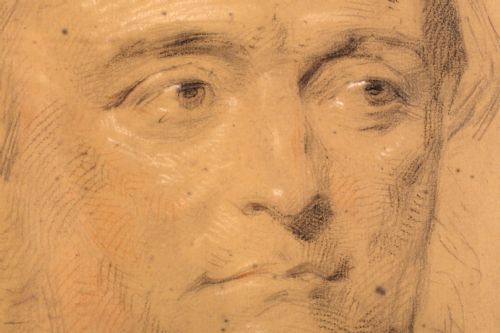
fig 2. A monochromatic Victorian portrait sketch in black chalk on warm brown paper depicting a gentleman in three-quarter profile.
fig 2. George Richmond, Ra, 1809 - 1896 Portrait of Charles Kingsley 1819 - 1875

In October 1838 Kingsley went up to Magdalene College, Cambridge. Lonely, intensely shy, and physically restless, he gradually found companionship through rowing and riding to hounds, and acquired a close friend in the brilliantly eccentric athlete and amateur scientist Charles Mansfield, another clergyman's son. He discovered the calming effects of tobacco and was soon addicted, though he had already suffered from lung disease. More significantly, he developed religious doubts. He managed to win a scholarship in the May examinations at the end of his first year, and during the long vacation of 1839 met his future wife, Frances Eliza Grenfell, known as Fanny [see Kingsley, Frances Eliza (1814-1891)], devout da

Height
42cm (16.54")
Width
35cm (13.78")
Depth
2cm (0.79")
Date of Manufacture

Artware Fineart has dated this Victorian Portrait Sketch Drawing to the 19th Century.

Reference Numbers
Sellingantiques Ref
SA552289
Dealers Internal Ref
4000
Artware Fineart
Sellingantiques verified Since Sep 2008
Dealer Profile

You can view the stock and full dealer information on the Artware Fineart Profile Page

PDF SHARE
SAVE
A monochromatic Victorian portrait sketch in black chalk on warm brown paper depicting a gentleman in three-quarter profile.
1 / 4
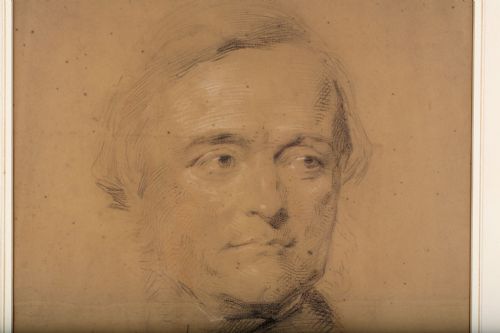
Archive I A monochromatic Victorian portrait sketch in black chalk on warm brown paper depicting a gentleman in three-quarter profile.

George Richmond, Ra, 1809 - 1896 Portrait of Charles Kingsley 1819 - 1875
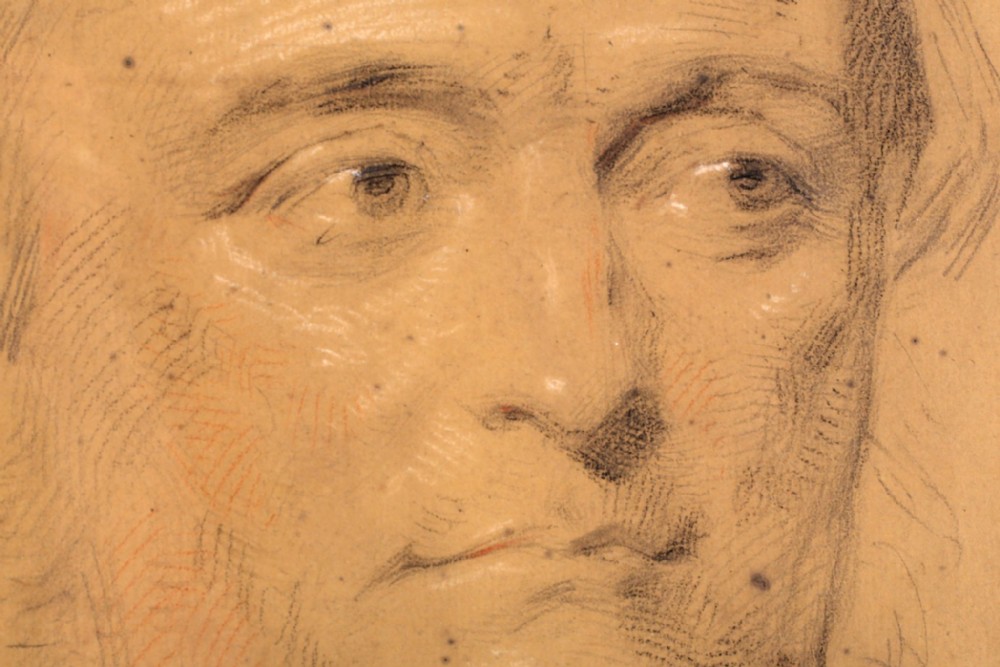
Archive II A monochromatic Victorian portrait sketch in black chalk on warm brown paper depicting a gentleman in three-quarter profile. View II
Archive III A monochromatic Victorian portrait sketch in black chalk on warm brown paper depicting a gentleman in three-quarter profile. View III
Archive IV A monochromatic Victorian portrait sketch in black chalk on warm brown paper depicting a gentleman in three-quarter profile. View IV
Enlarged Archival View
Telephone 07958 699 645
Location
18 La Gare
51 Surrey Row
London
SE1 0BZ
United Kingdom
Verified Since Sep 2008
Items For Sale 243
Items Sold 223
Artware Fineart
Verified Since Sep 2008
View Dealer Info
Location: 18 La Gare , 51 Surrey Row , London , SE1 0BZ , United Kingdom
Verified
Sep 2008
For Sale
243
Sold
223
A monochromatic Victorian portrait sketch in black chalk on warm brown paper depicting a gentleman in three-quarter profile.
George Richmond, RA, 1809 - 1896 Portrait of Charles Kingsley 1819 - 1875
Ref: SA552289
A monochromatic Victorian portrait sketch in black chalk on warm brown paper depicting a gentleman in three-quarter profile.
Detail View 1
Detail View 2
Detail View 3
Archival Detail
Every single antique dealer on our platform is individually approved by our internal team. We verify their professional trade history, ethical standards, and photographic quality to ensure a secure, high-standard buying environment. Upon joining, every dealer agrees to a strict 9-point code of conduct. While issues can occasionally arise, our dealers typically resolve them swiftly and directly with the buyer. In fact, since our founding in 2002, Sellingantiques has only had to step in to help resolve an issue on roughly five occasions—a true testament to the quality of our dealers and their dedication to your happiness.
Our dealers are highly experienced in packing and shipping fragile, high-value antiques. Because you are in direct contact with the dealer, you will be able to easily go through all available shipping and insurance options together to ensure your item arrives safely.
Antiques are the ultimate green purchase. By choosing historical pieces over newly manufactured goods, you completely eliminate the carbon footprint of modern mass production while preserving exceptional, timeless craftsmanship.

Nineteenth-century British portrait drawings are characterised by academic precision, realistic tonal modelling, and expressive cross-hatching. Popularised by artists affiliated with the Royal Academy, these studies captured prominent historical, literary, and social figures with emphasis on personality and anatomical accuracy.

Artists during the Victorian era predominantly utilised black chalk, charcoal, graphite, or conte crayon on heavy woven or laid paper. Toned paper, ranging from warm tan to grey, was frequently selected to allow highlights to be added using white chalk.

Authentic pieces exhibit signs of period-appropriate paper aging, such as natural oxidisation, foxing, or watermark marks from historical paper mills. Examining the stroke techniques, artist monograms or signatures, and provenance documentation helps confirm authenticity.

Antique works on paper integrate seamlessly into modern interiors when layered into a gallery wall or framed in slim, modern moulding. Positioned in a study, library, or hallway, monochromatic portraiture adds historical depth alongside contemporary furnishings.

To prevent deterioration, frame paper works using acid-free mount boards and UV-filtering glass. Display the artwork away from direct sunlight, heating sources, and areas subject to moisture or fluctuating humidity levels.
items
Add keywords to the filter
Price
£100
£250000
Era
Movements
Material
Origin
Stock Location
Freshness
Online Payments
Categories