Camden Antiques has dated this piece to the 1880s.
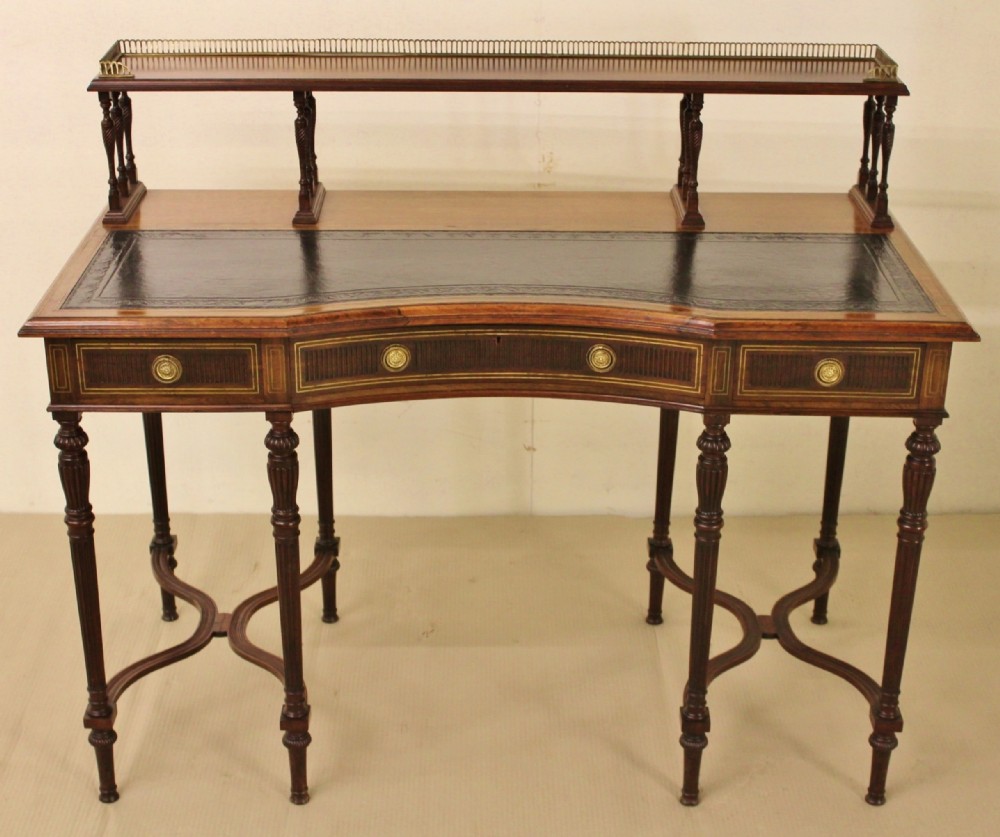
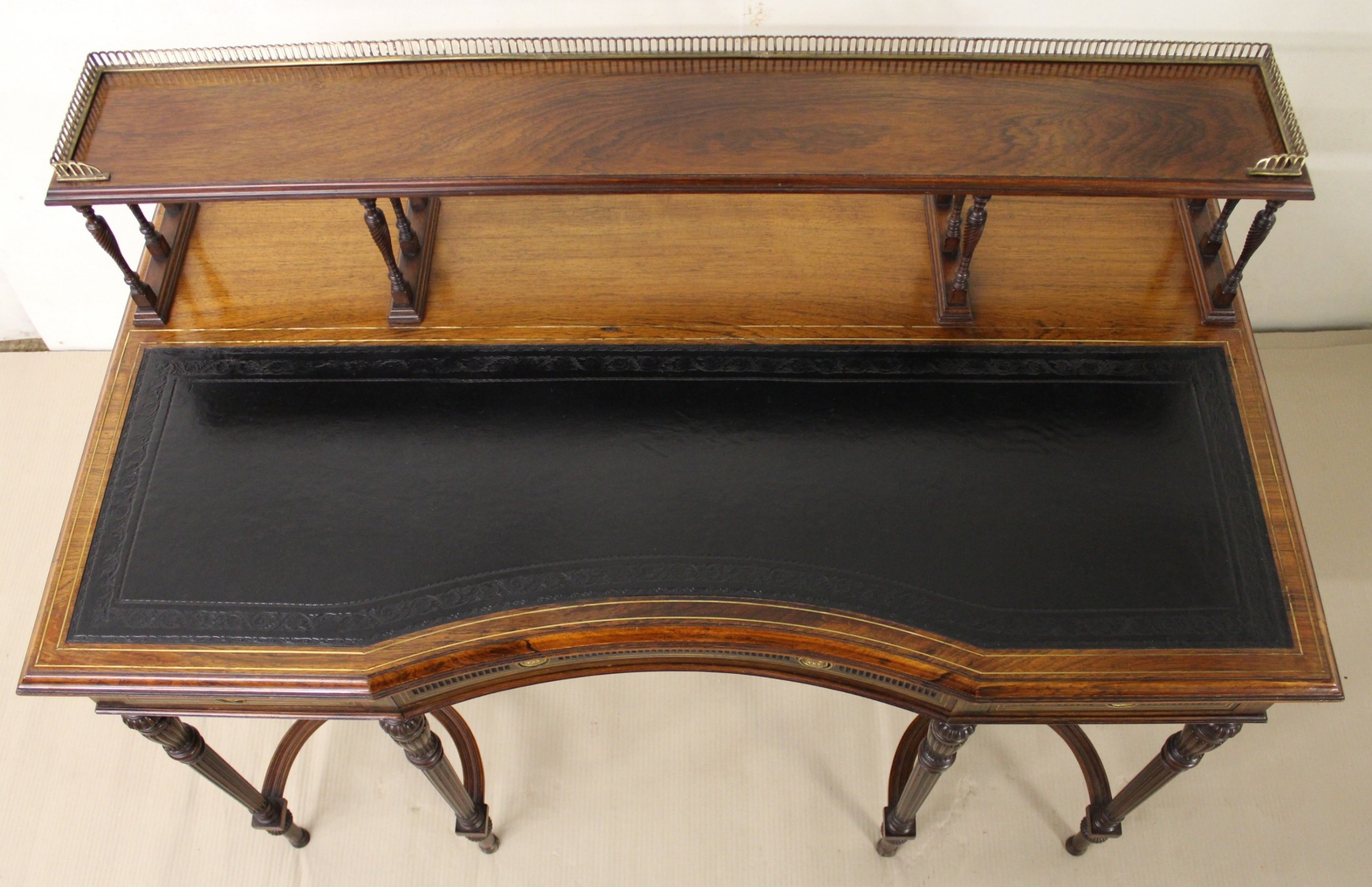
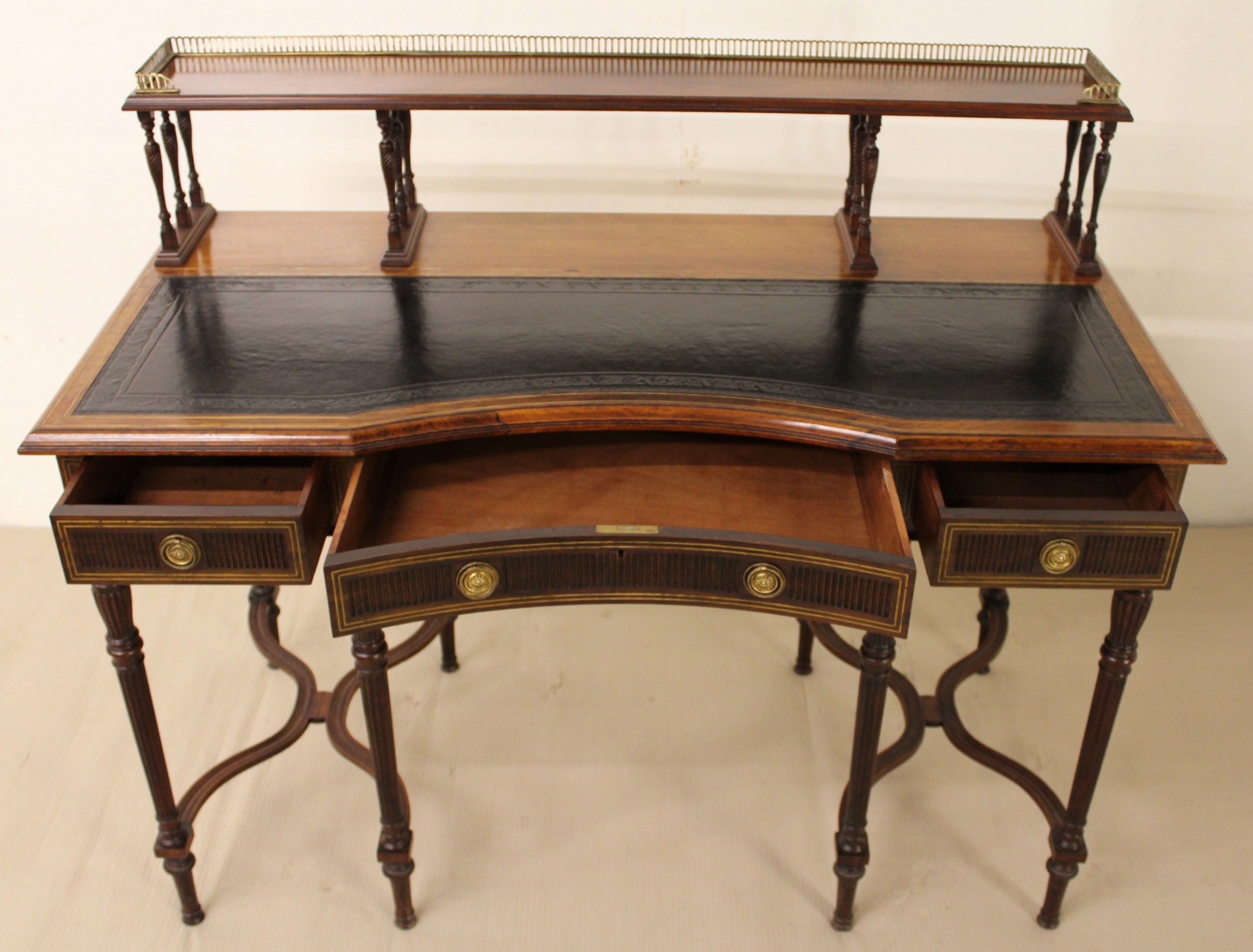
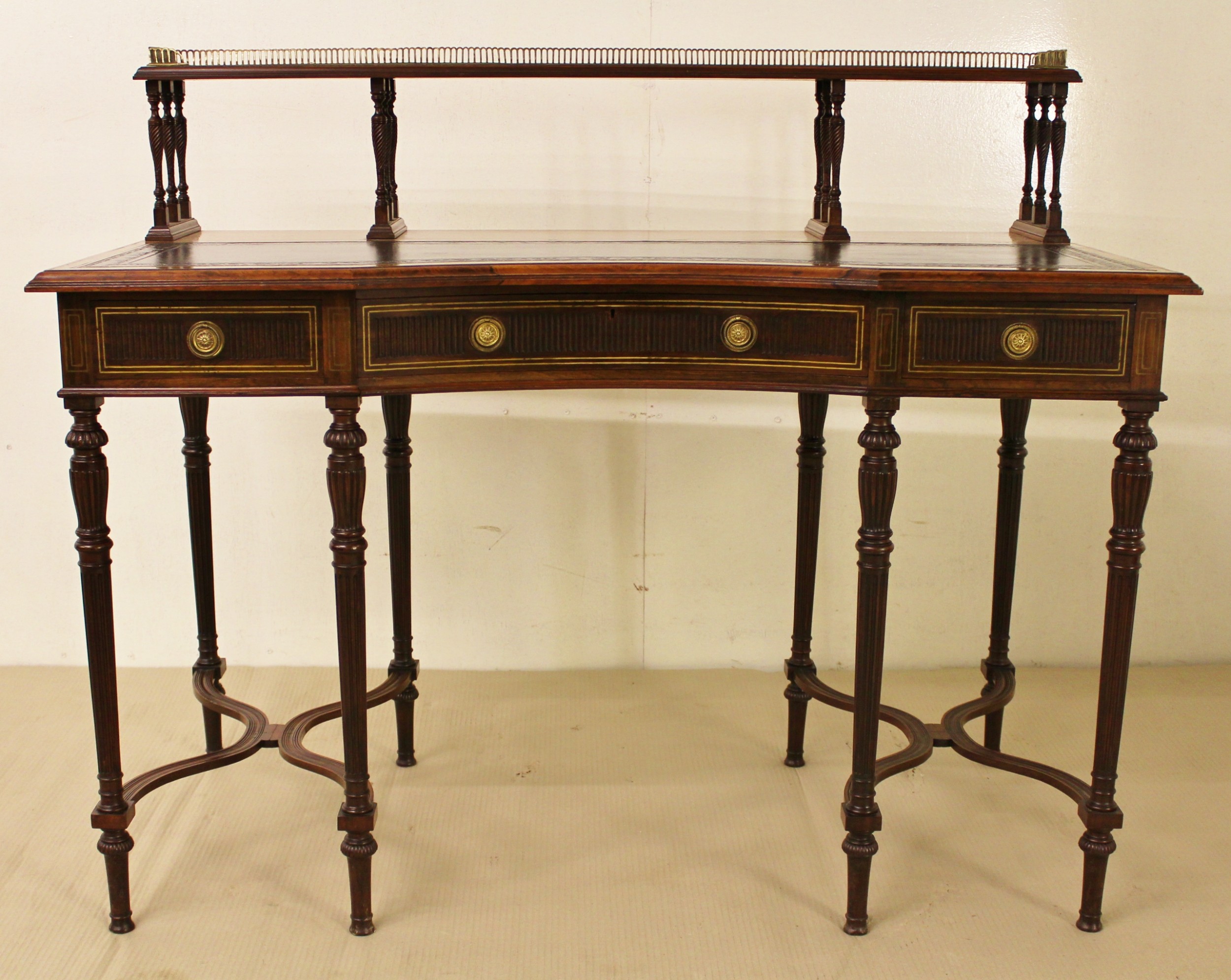
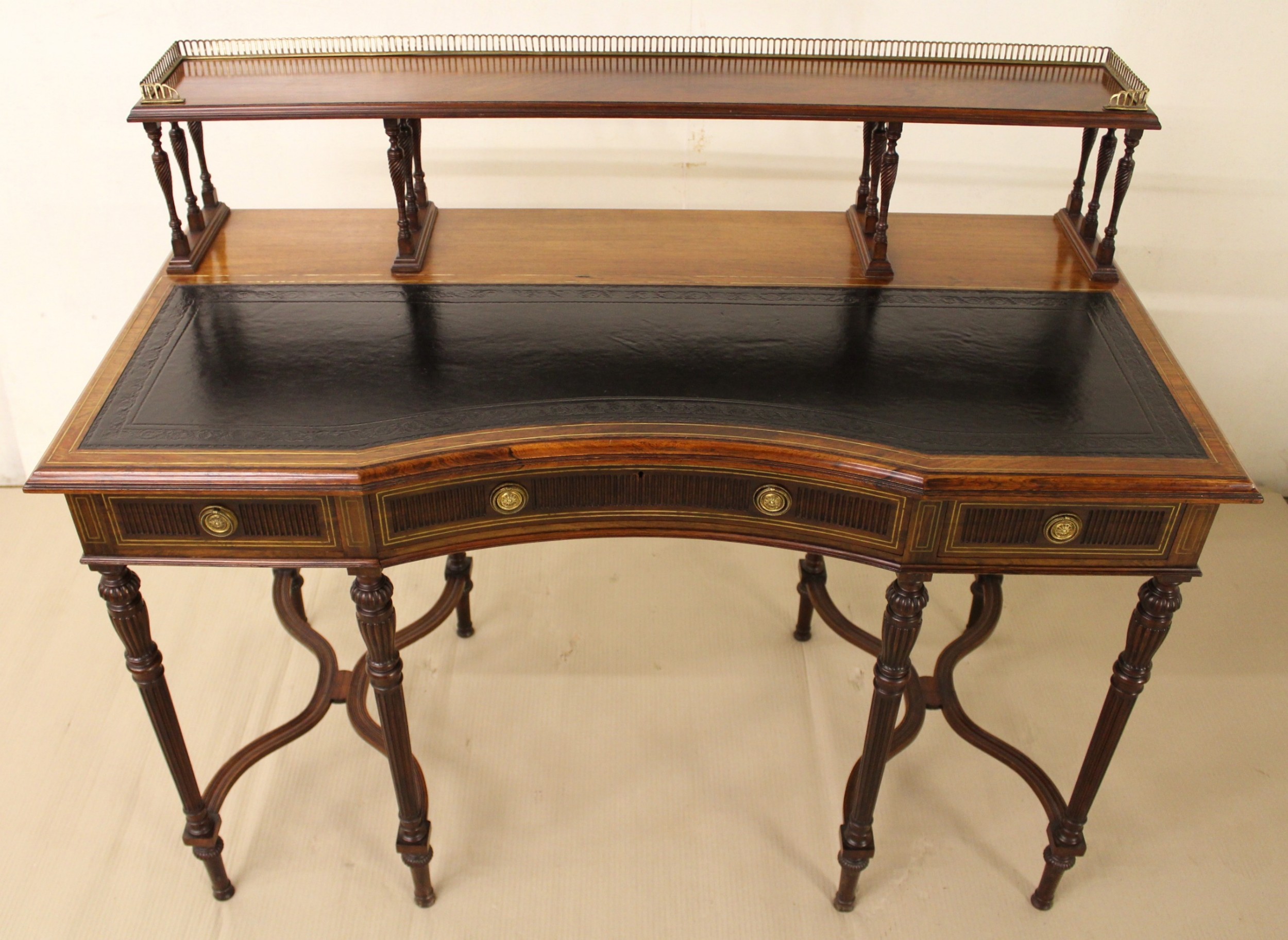
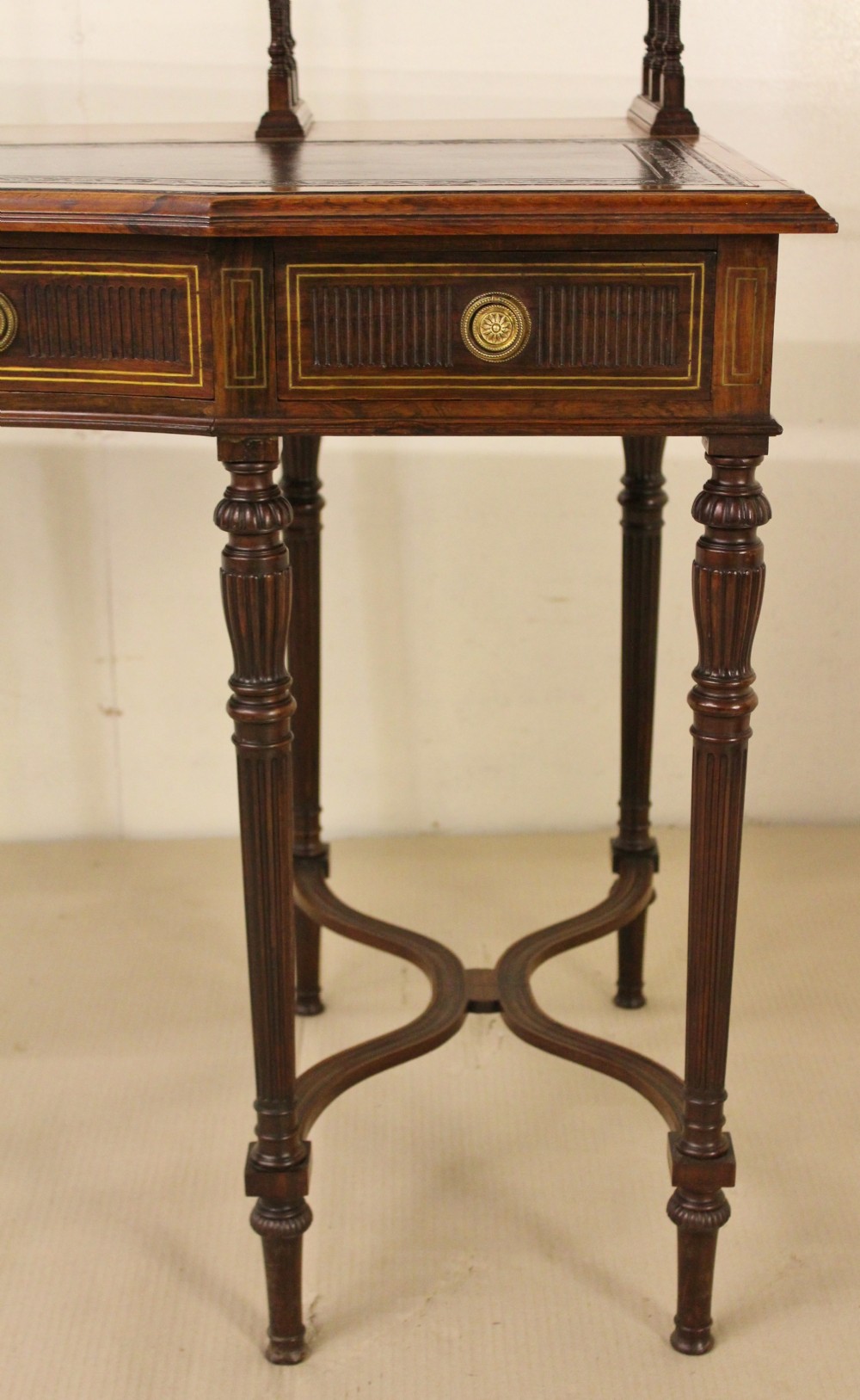
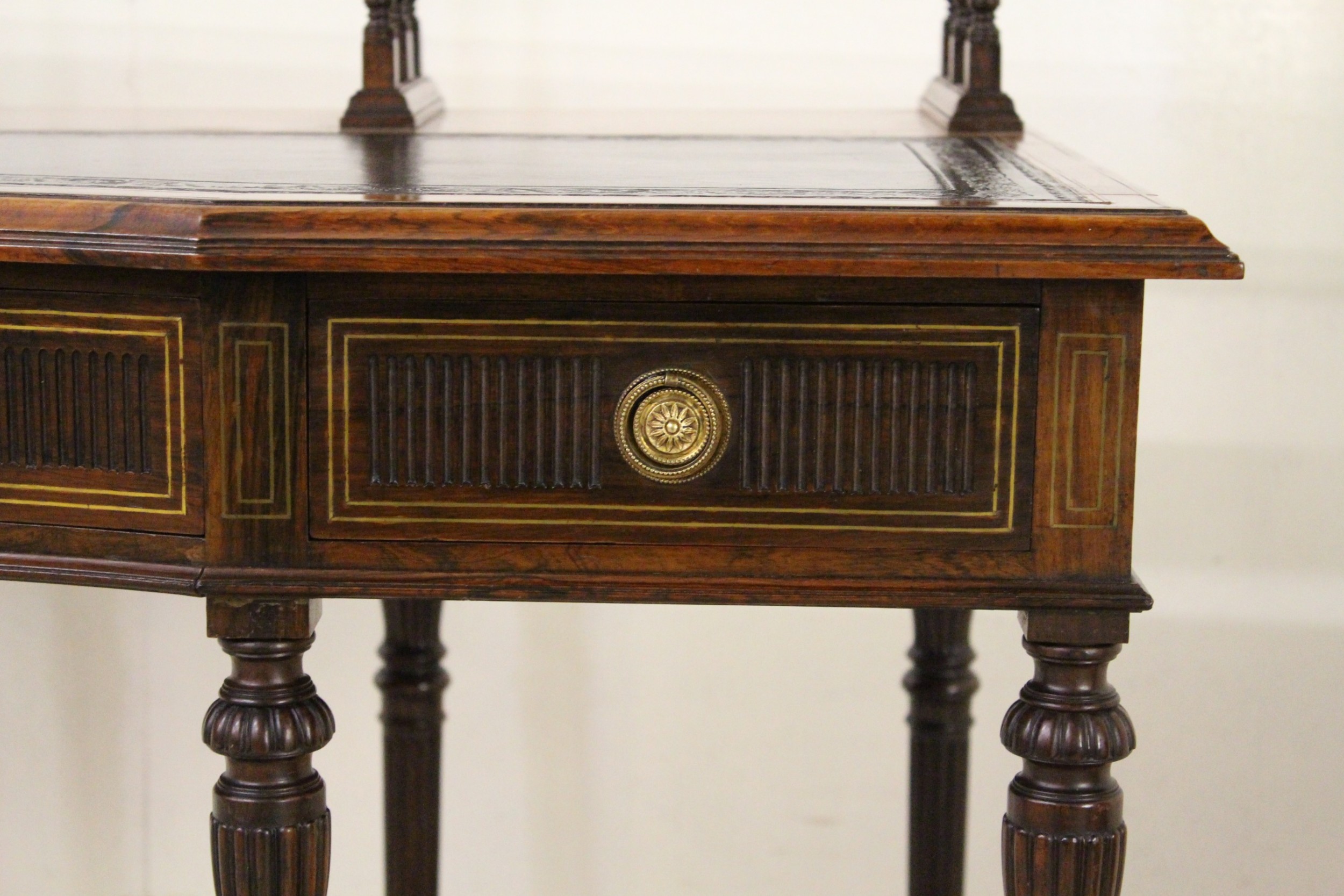
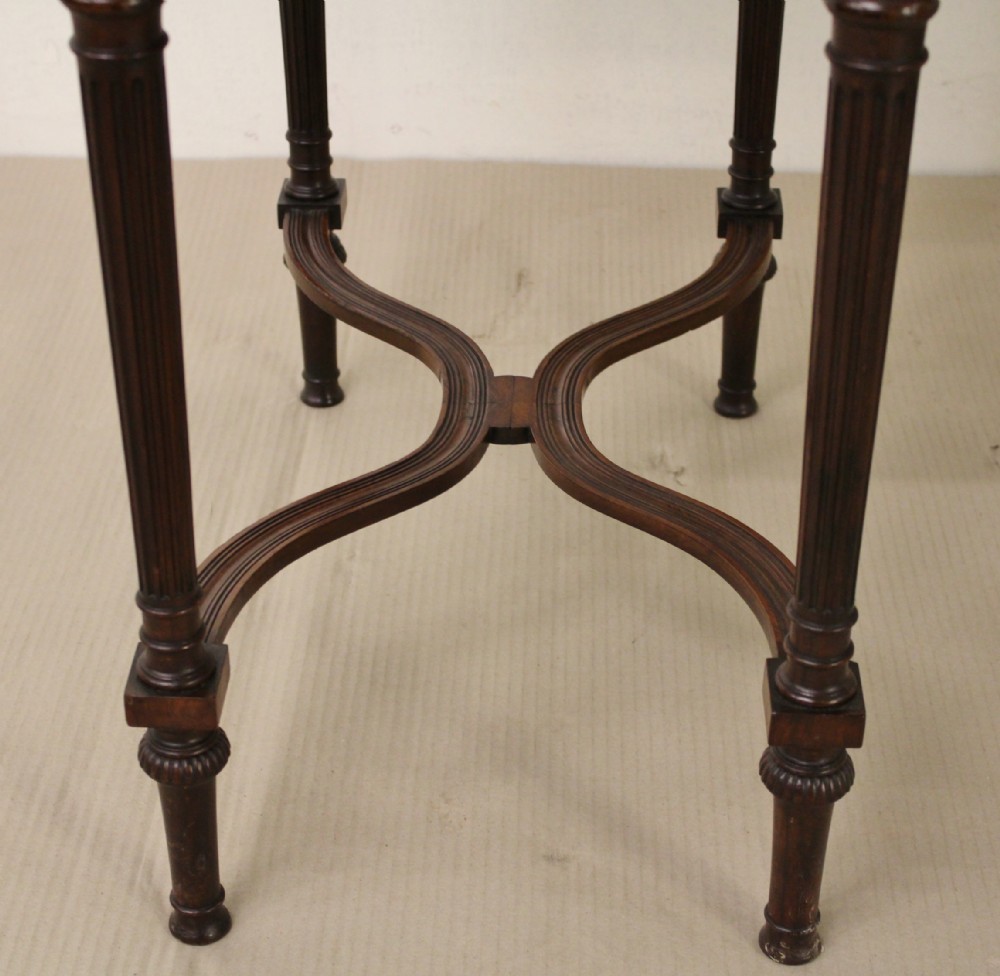
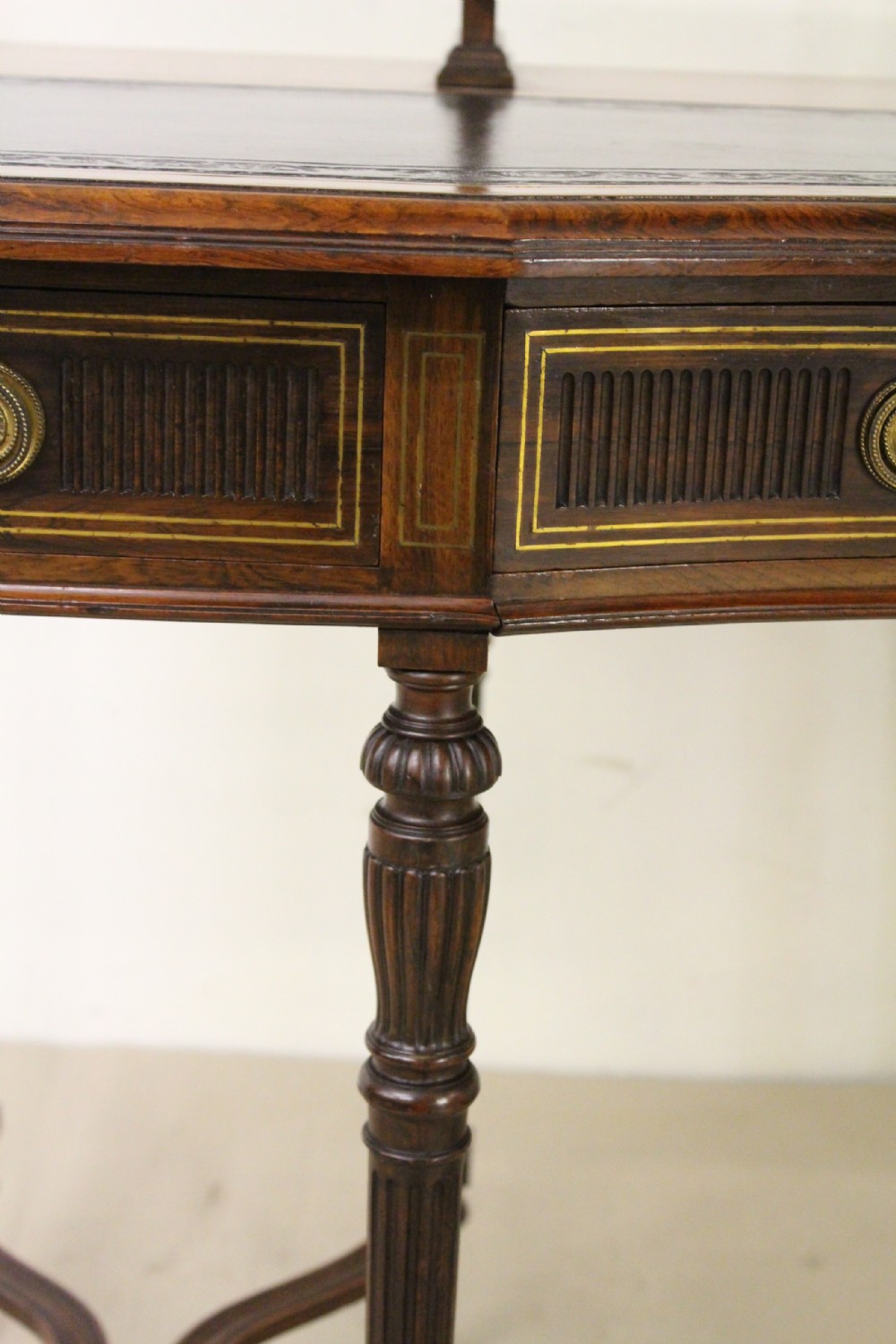
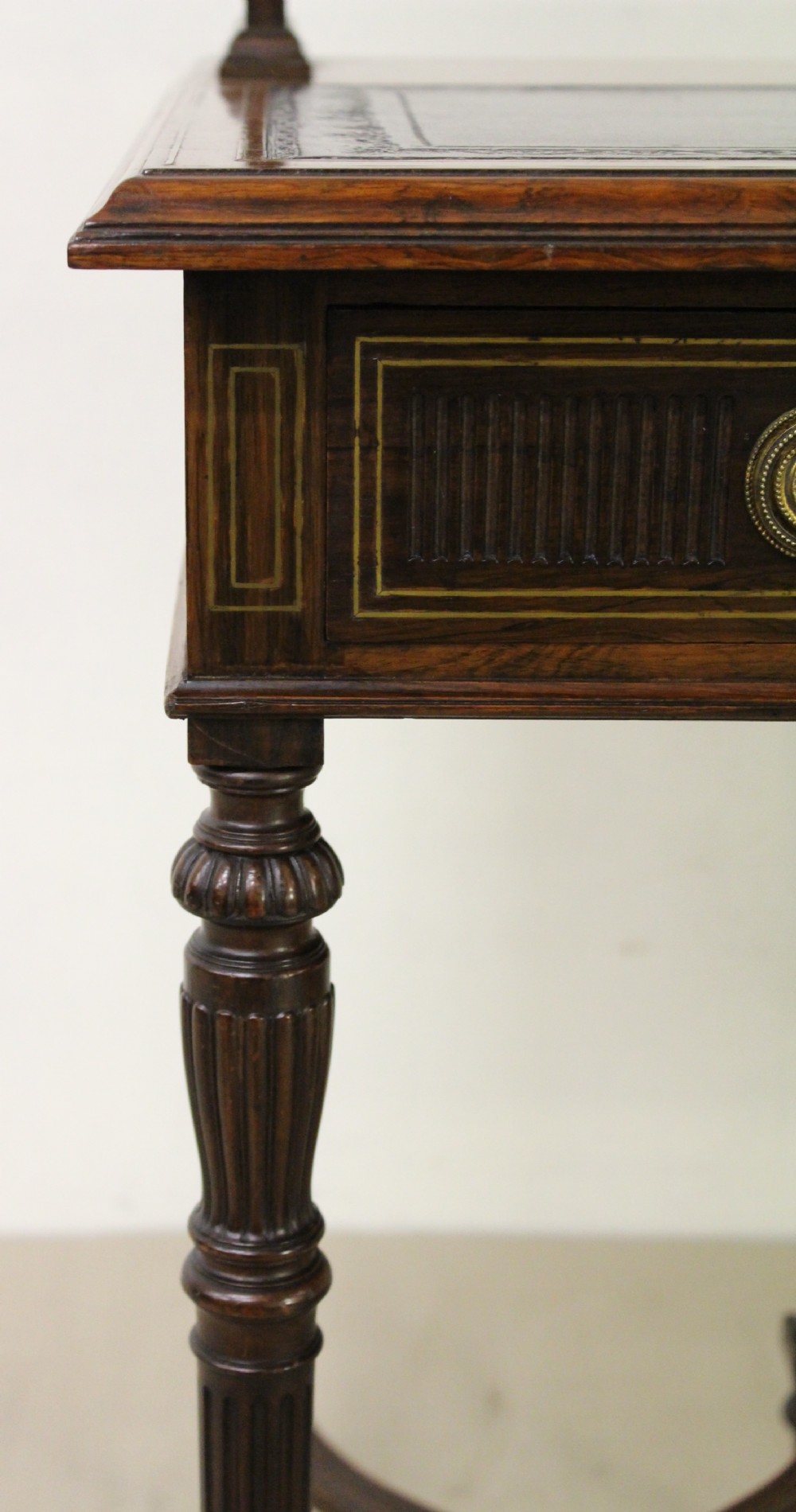
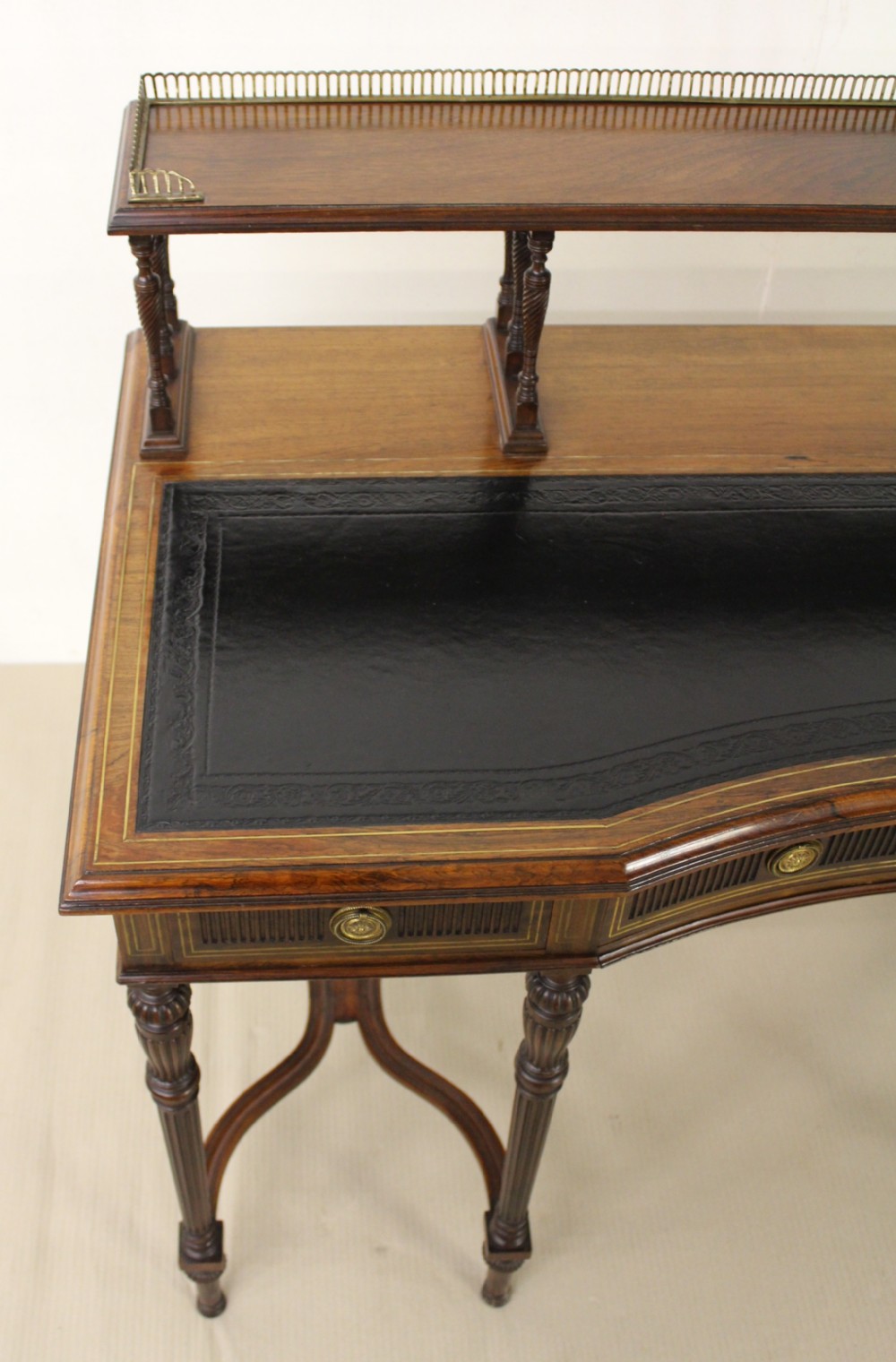
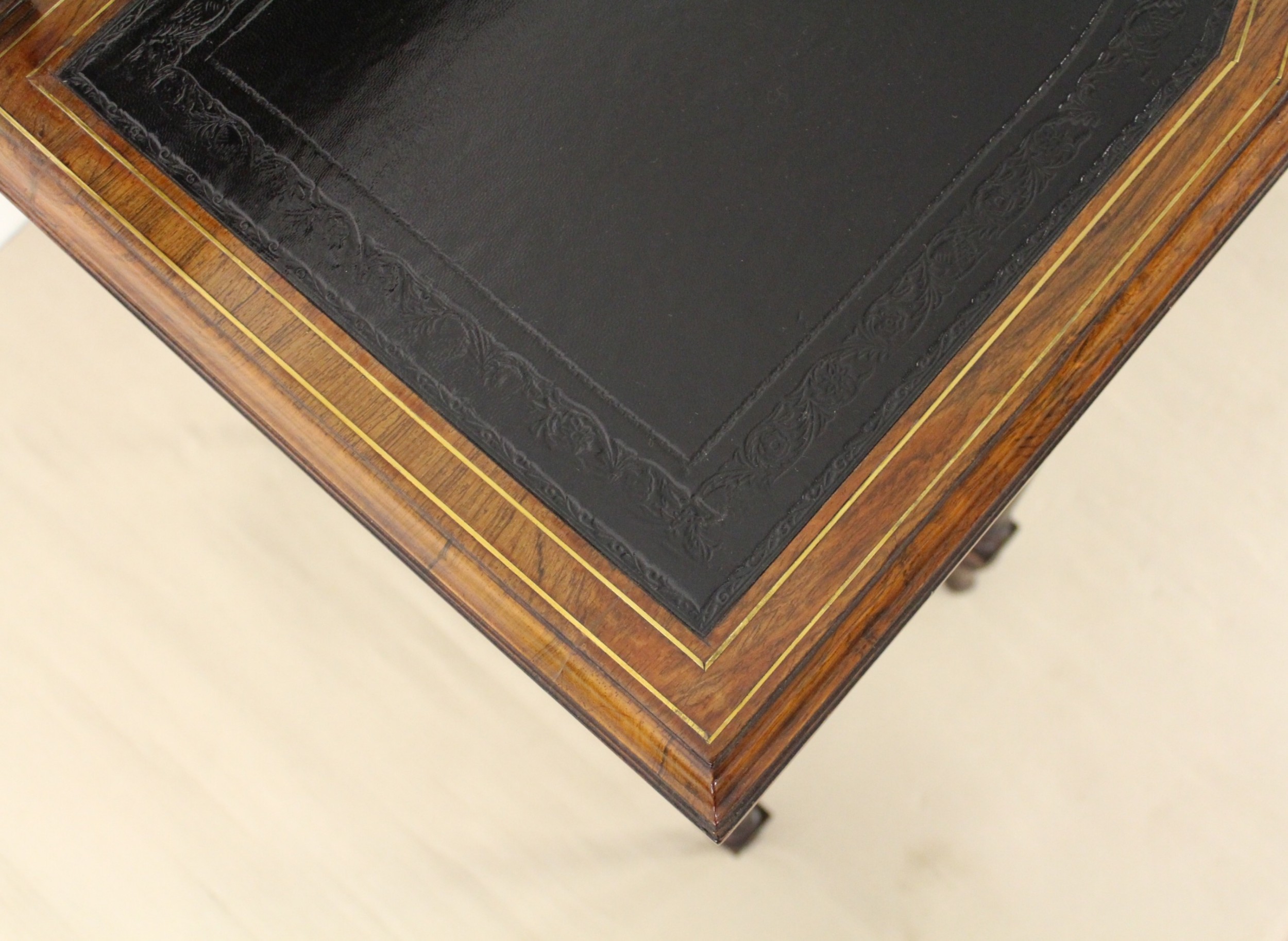
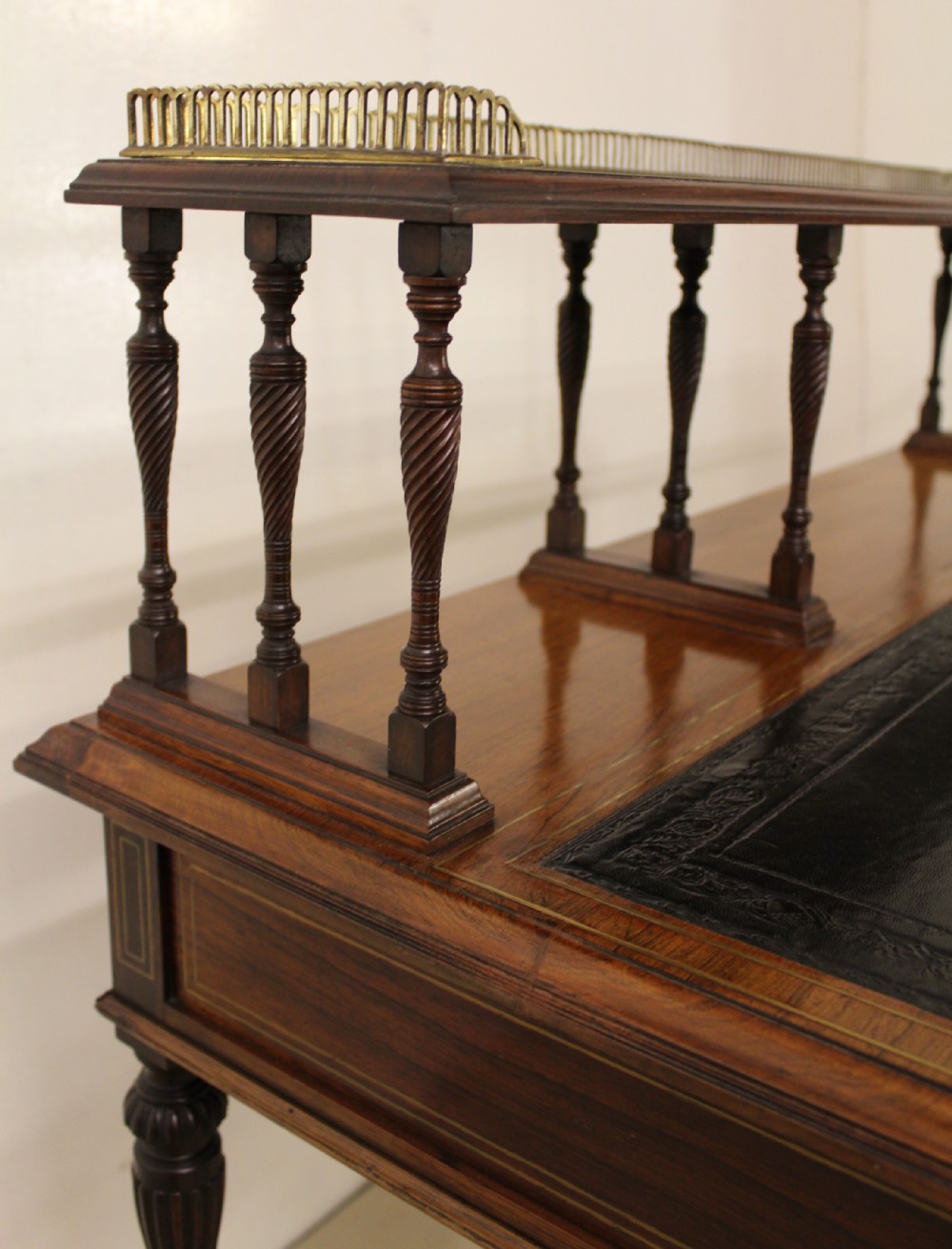
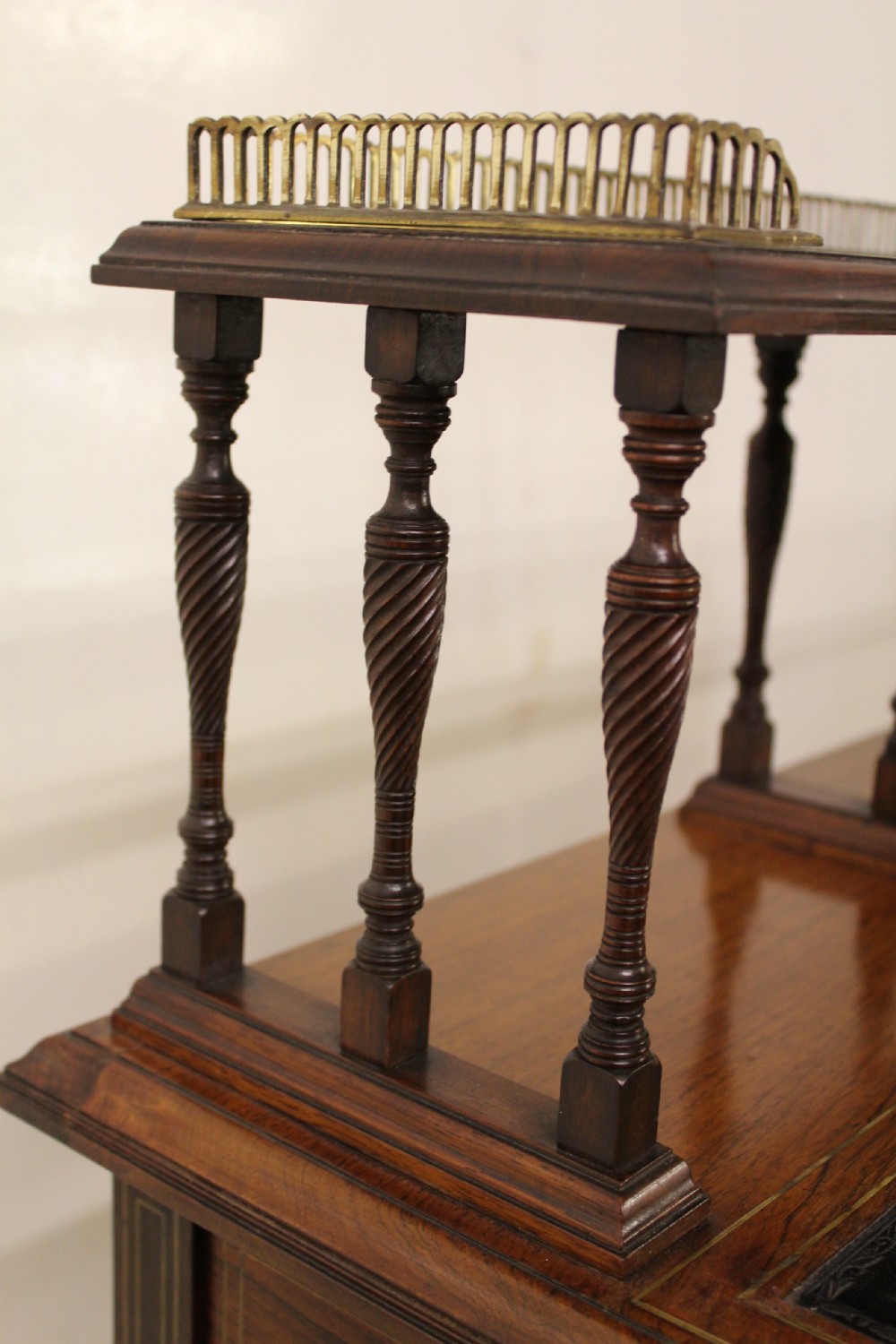
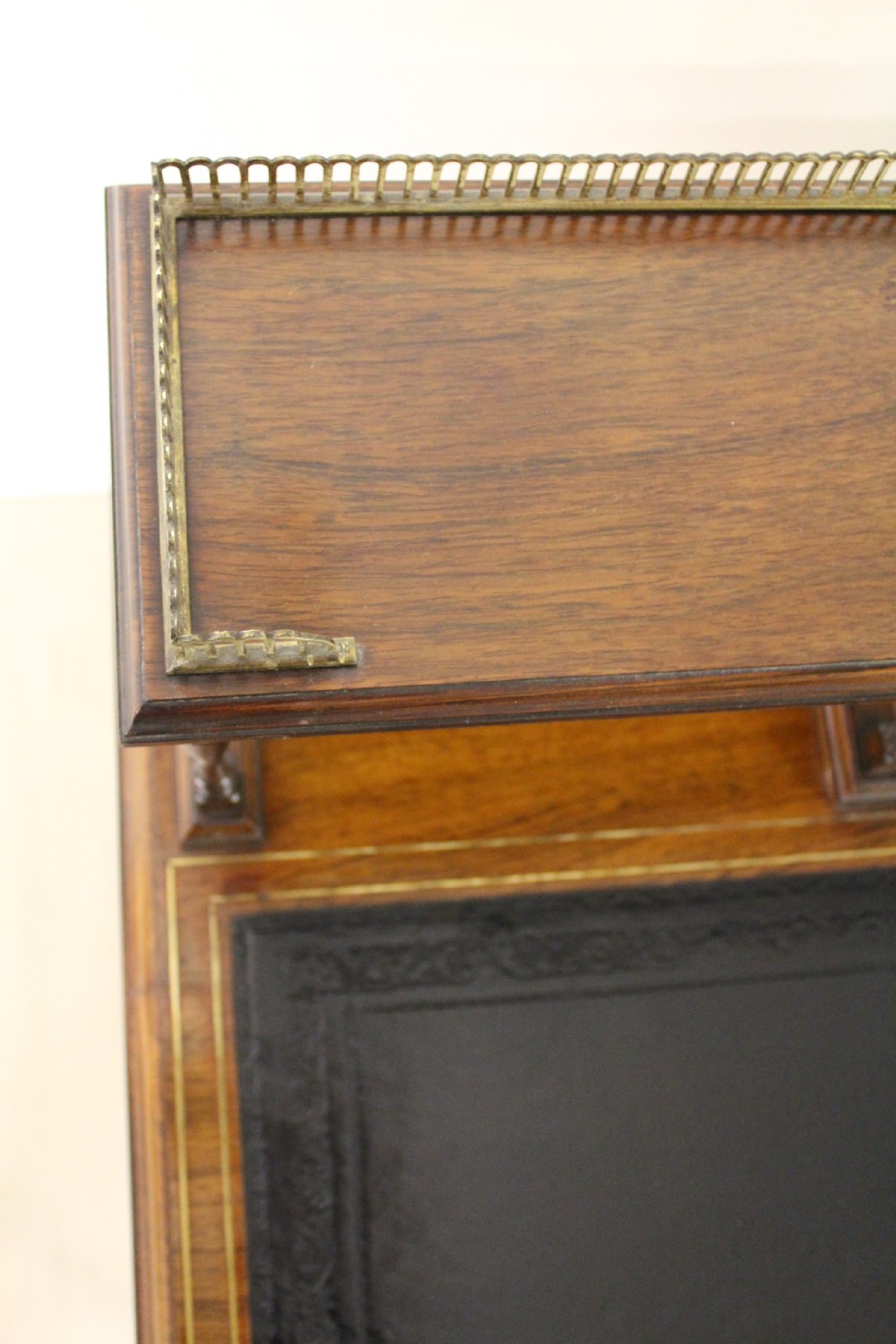
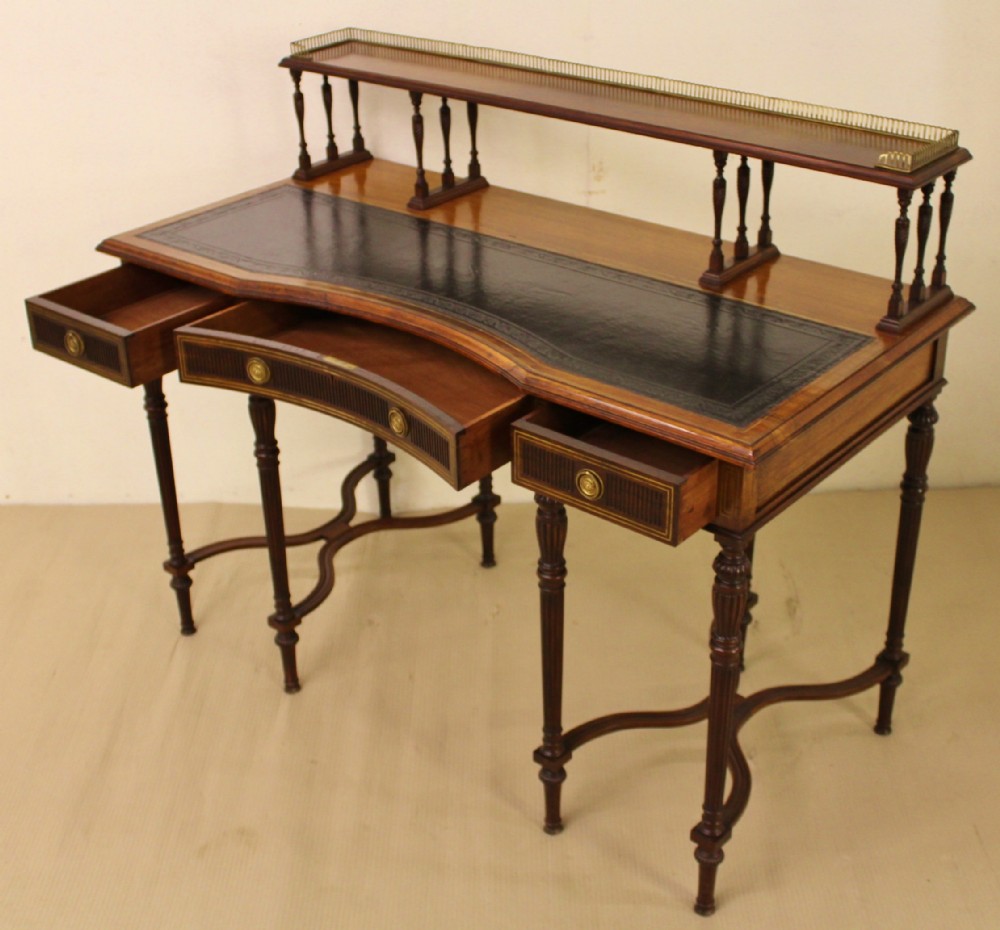
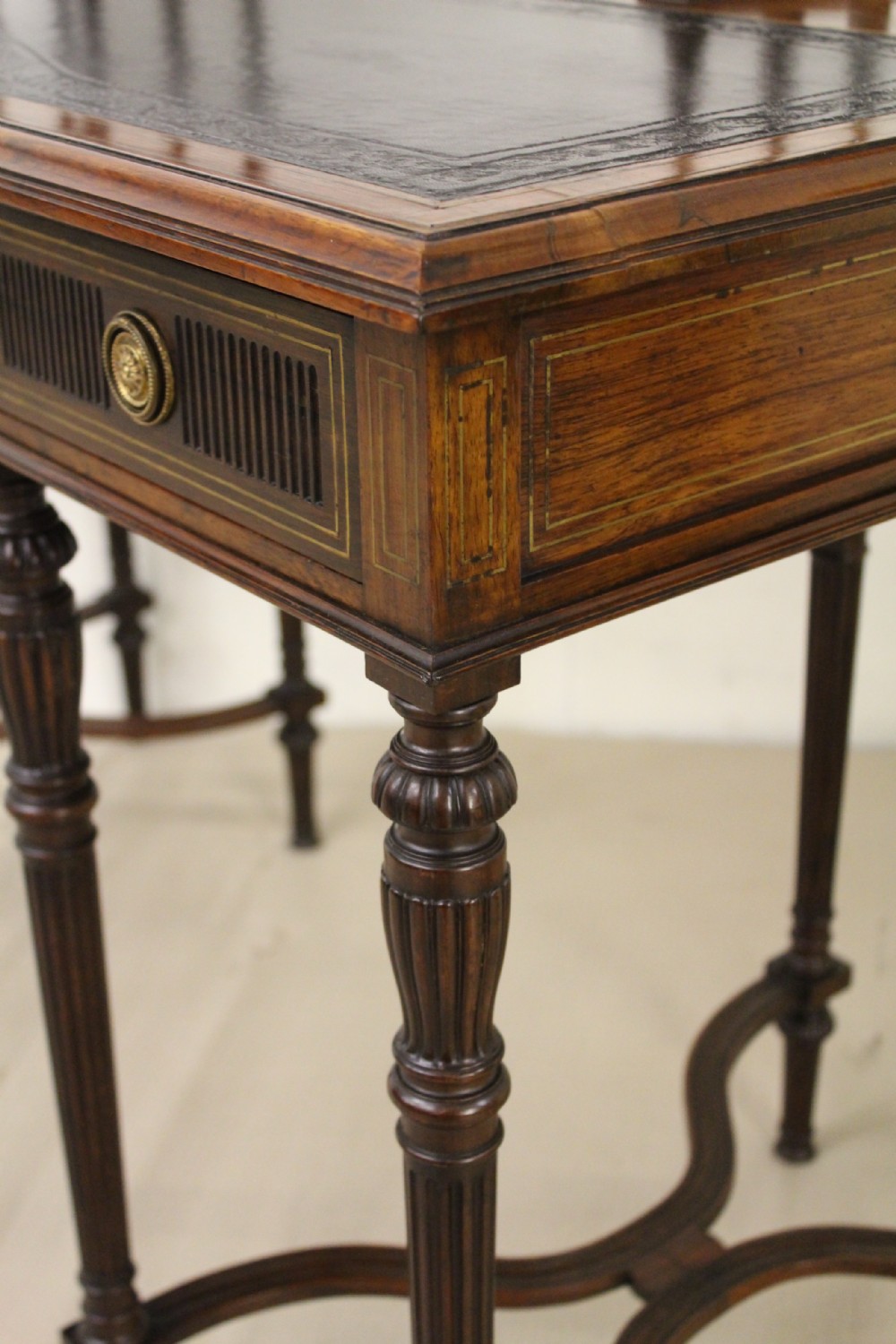
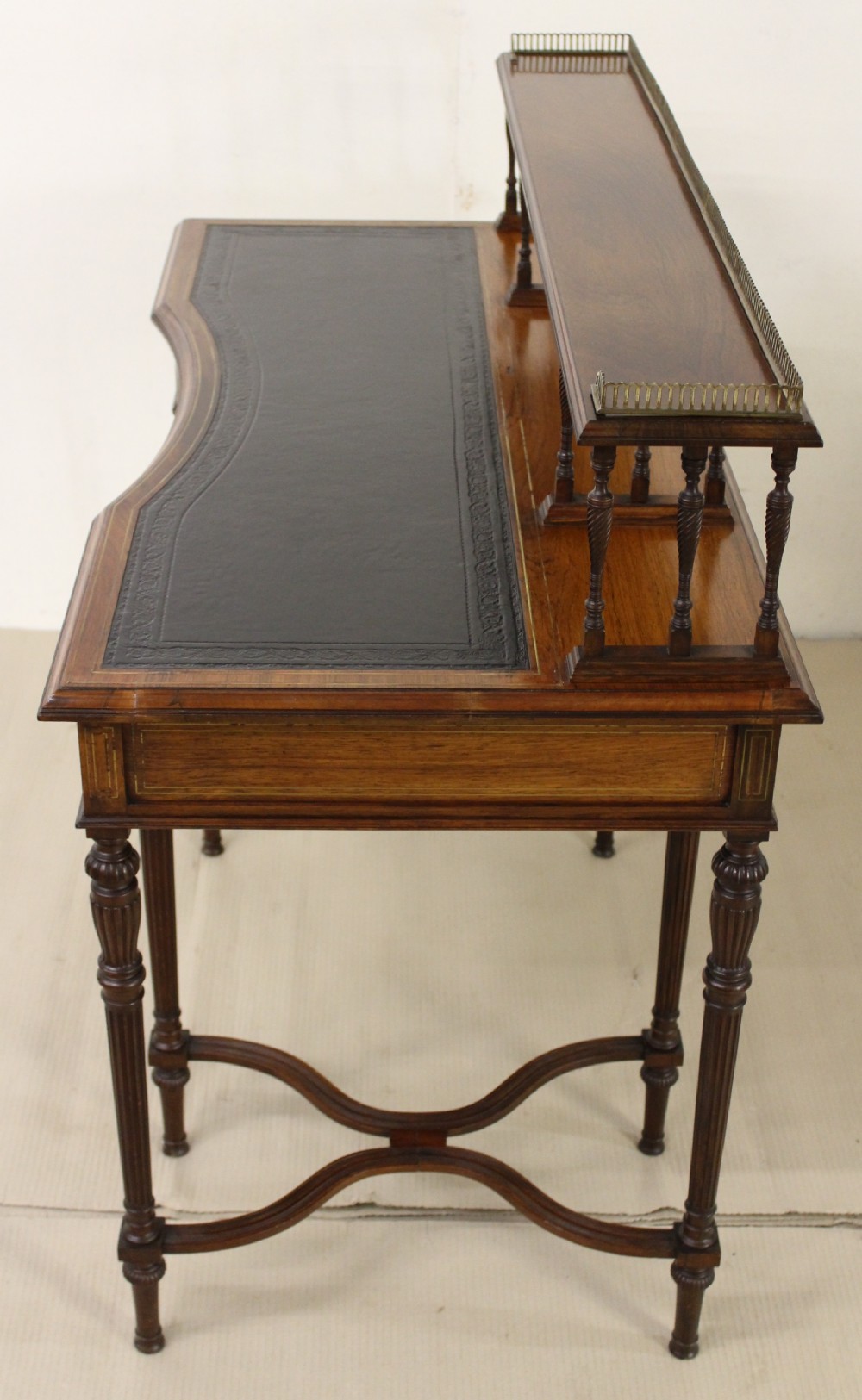
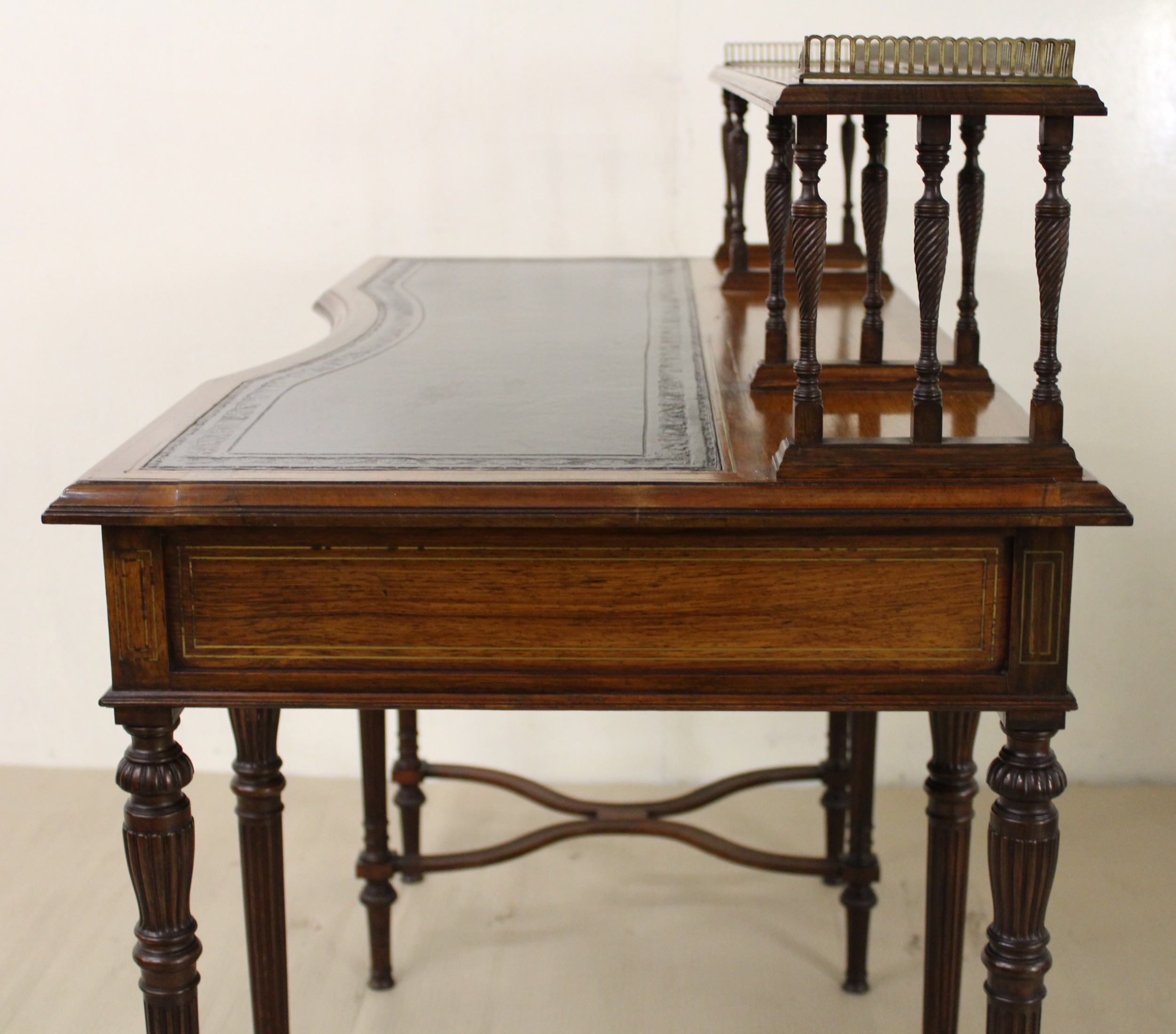
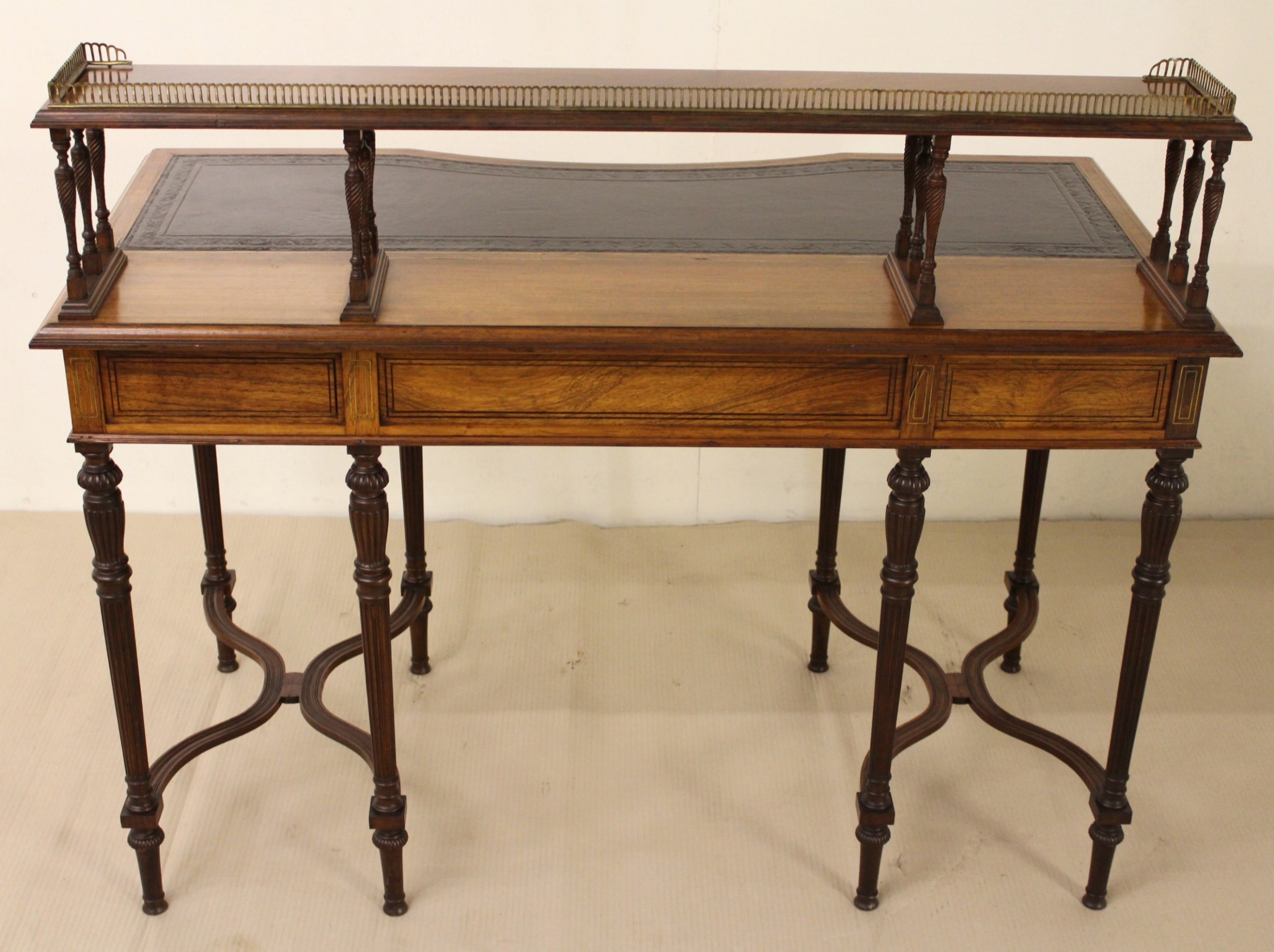
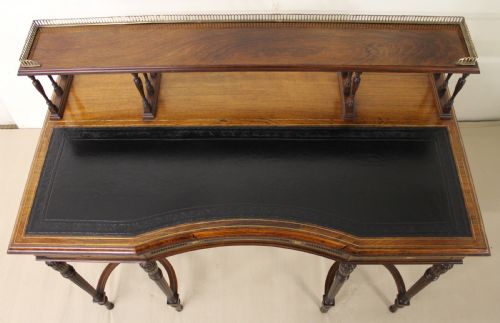
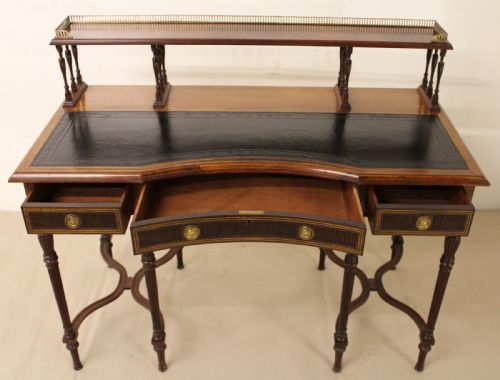
The raised superstructure is supported by a series of finely turned bobbin supports and also fitted with a solid brass gallery. The table itself has a sumptuous black leather writing surface (decorated with blind tooling) and a series of three drawers. The central, longer, drawer is of concave form. All of the drawer fronts are embellished with fluting and fitted with their original solid brass ring pull handles. The table stands on extremely elegant turned and reeded legs, which are tapered. They are united by wonderful x-frame under-stretchers giving stability as well as aesthetic appeal.
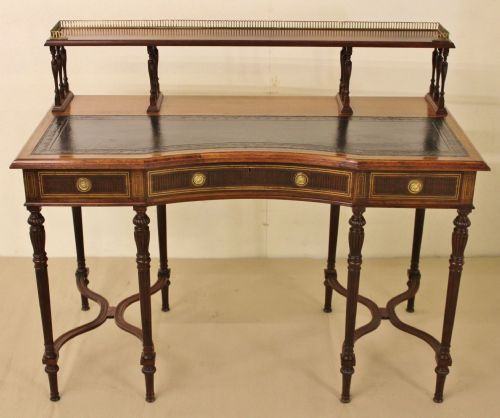
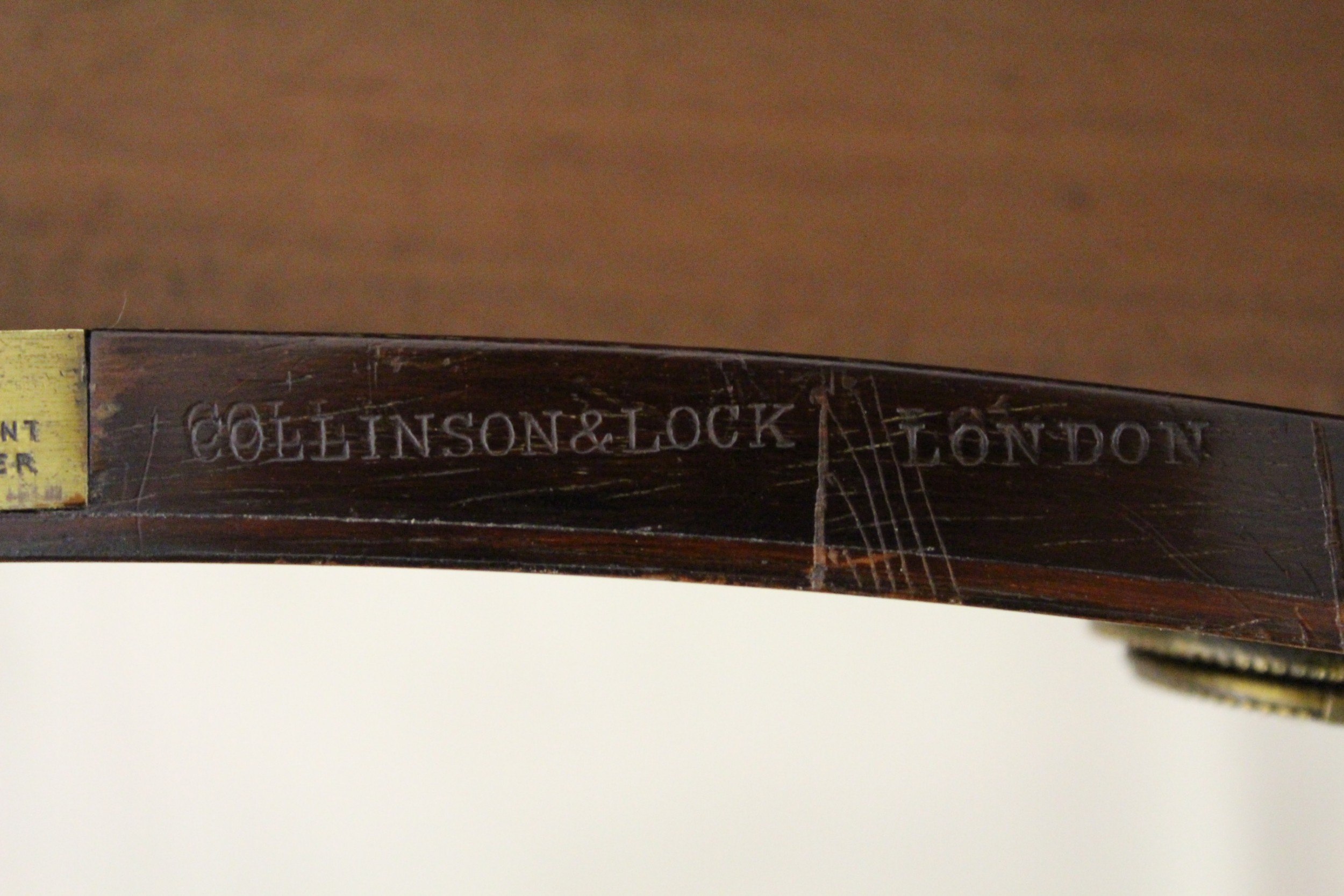
The central drawer bears the makers stamp for Collinson and Lock. The whole desk is presented for sale in excellent original condition. It has a wonderful colour and patina and is of the highest of quality. It is ready to go straight into the home , or office.
Dimensions:
Width 121 cms
Depth 60 cms
Overall Height 99cms
Table height 75cms
The firm of Collinson & Lock, successors to John Herring, an upholsterer and cabinet maker of Fleet Street, est 1782, was established in London in the third quarter of the 19th century, firstly at their old master’s premises, and thereafter at the premises of the recently closed firm of Jackson and Graham. They quickly achieved both commercial success and a leading position in the field of design. In 1871 the firm issued an impressive illustrated catalogue of 'Artistic Furniture', with plates by J. Moyr Smith, assistant to Christopher Dresser, and in 1873 was trading from extensive newly built premises in St Bride Street, designed by T.E. Collcutt, who was retained as an advisor. E.W. Godwin was also employed, between 1872-1874..
The firm continued to produce very high quality items of furniture and soon began to experiment with new materials and designs, becoming especially renowned for their distinctive combinations of rosewood and ivory and their intricate Italianate arabesques, chimeric figures and scrolling foliage. This form of decoration clearly points to the involvement of Stephen Webb, Collinson & Lock’s chief designer who was later appointed Professor of Sculpture at the Royal College of Art. The company was merged with Gillows in 1897, just prior to their own merger with S.J.Waring of Liverpool.
Camden Antiques has dated this piece to the 1880s.
You can view the stock and full dealer information on the Camden Antiques Profile Page
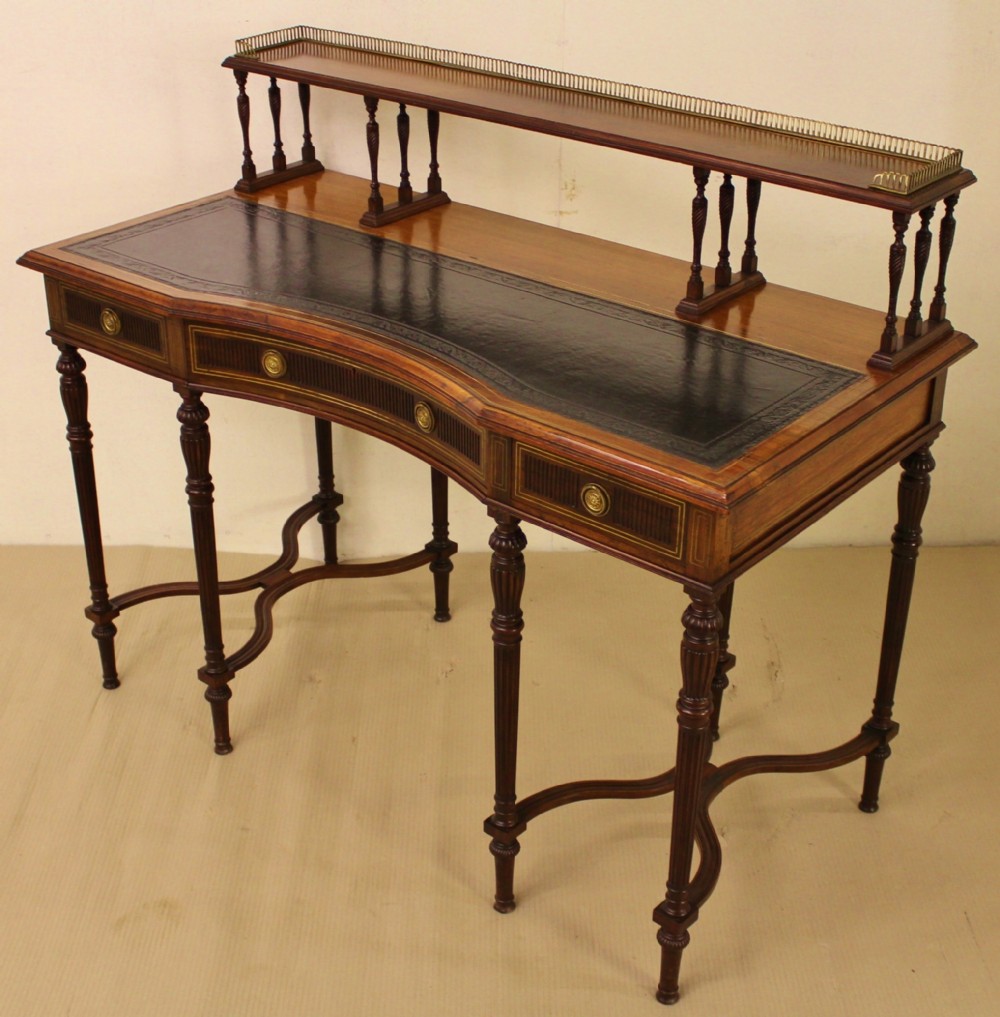
Inlaid Rosewood Writing Desk by Collinson and Lock