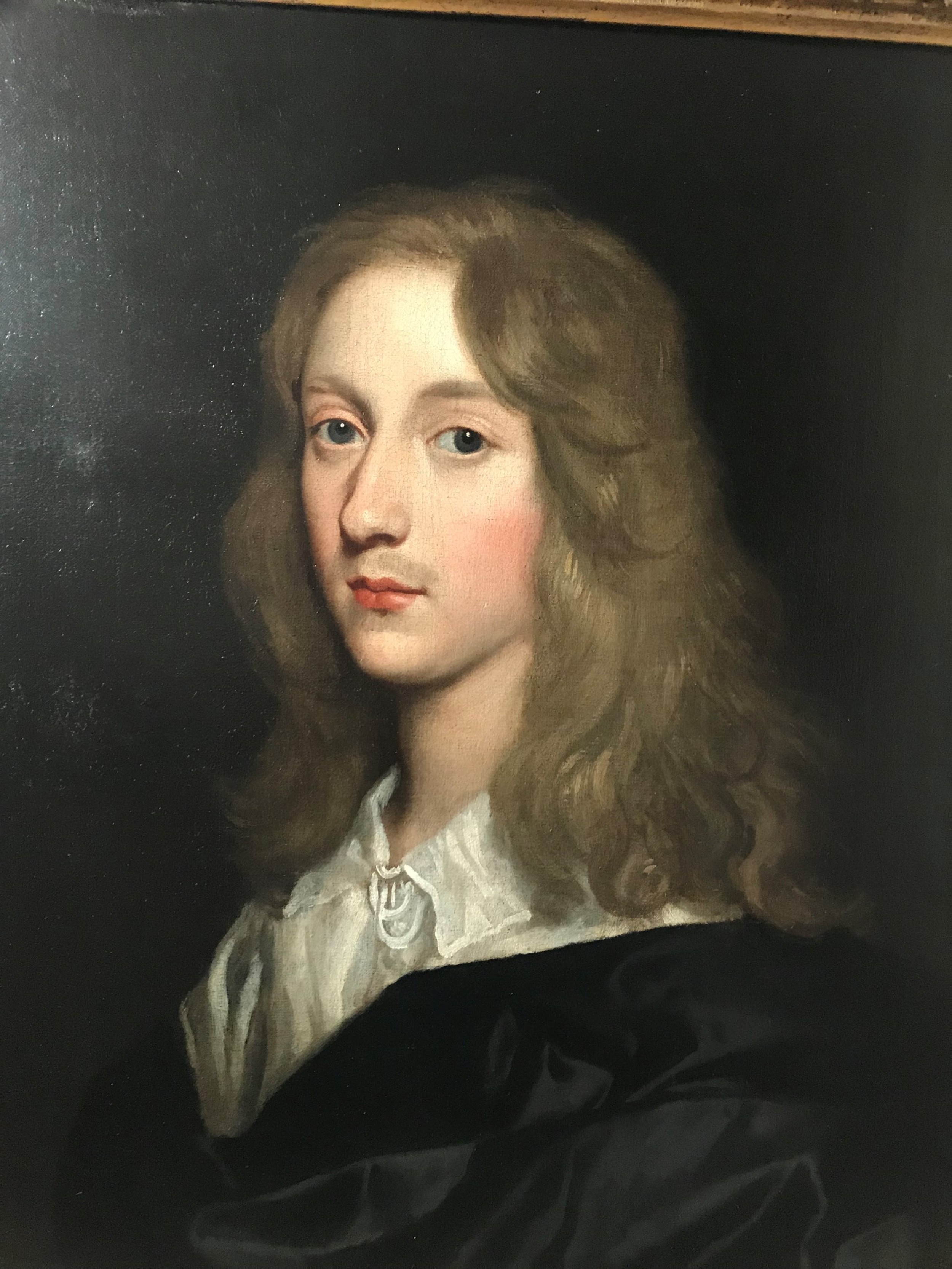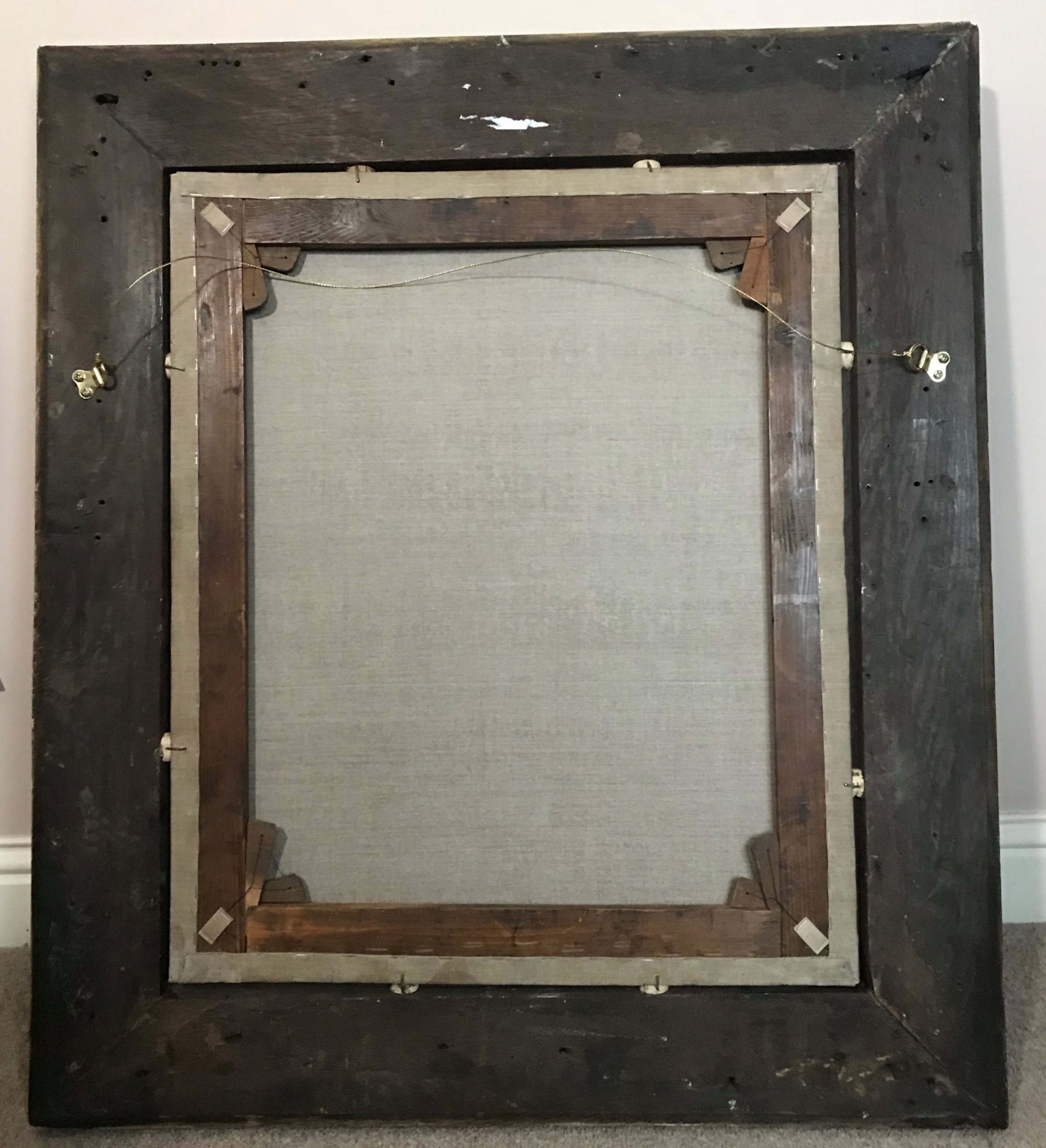
Roy Precious - Antiques & Fine Art has dated this piece to the 17th Century.

Difficult to date precisely, most of these copies were produced around the middle of the 17th century, particularly during the time of the English Civil War and the King's execution in 1649. They were much in demand to adorn the private walls of Royalist supporters.
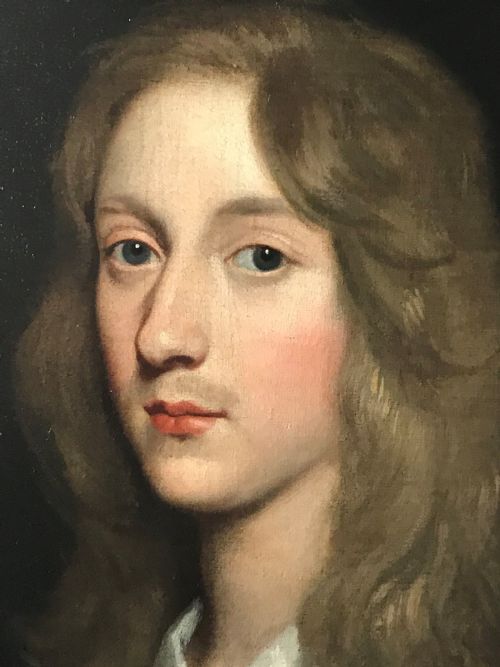
Rupert, Count Palatine of the Rhine, Duke of Bavaria, Duke of Cumberland, Earl of Holderness, commonly called PRINCE RUPERT OF THE RHINE, KG, PC, FRS ( 1619 – 1682), was a noted German soldier, admiral, scientist, sportsman, colonial governor and amateur artist during the 17th century. Rupert was a younger son of the German prince Frederick V, Elector Palatine and his wife Elizabeth, the eldest daughter of James I of England. Thus Rupert was the nephew of King Charles I of England, who made him Duke of Cumberland and Earl of Holderness, and the first cousin of King Charles II of England. His sister Electress Sophia was the mother of George I of Great Britain.
Prince Rupert had a varied career. He was a soldier from a young age, fighting against Spain in the Netherlands during the Eighty Years' War (1568–1648), and against the Holy Roman Emperor in Germany during the Thirty Years' War (1618–48). Aged 23, he was appointed commander of the Royalist cavalry during the English Civil War (1642–46), becoming the archetypal Cavalier of the war and ultimately the senior Royalist general. He surrendered after the fall of Bristol and was banished from England. He served under Louis XIV of France against Spain, and then as a Royalist privateer in the Caribbean. Following the Restoration, Rupert returned to England, becoming a senior British naval commander during the Second and Third Anglo-Dutch wars, engaging in scientific invention, art, and serving as the first Governor of the Hudson's Bay Company. Rupert died in England in 1682, aged 62.
Rupert is considered to have been a quick-thinking and energetic cavalry general, but ultimately undermined by his youthful impatience in dealing with his peers during the Civil War. In the Interregnum, Rupert continued the conflict against Parliament by sea from the Mediterranean to the Caribbean, showing considerable persistence in the face of adversity. As the head of the Royal Navy in his later years, he showed greater maturity and made impressive and long-lasting contributions to the Royal Navy's doctrine and development. As a colonial governor, Rupert shaped the political geography of modern Canada—Rupert's Land was named in his honour. Rupert's varied and numerous scientific and administrative interests combined with his considerable artistic skills made him one of the more colourful individuals of the Restoration period.
GERRIT VAN HONTHORST (1592 – 1656) was a Dutch Golden Age painter; born in Utrecht,
He built a considerable reputation both in the Dutch Republic and abroad. Queen Elizabeth of Bohemia, mother of Prince Rupert, sister of Charles I of England, then in exile in the Netherlands, commissioned Honthorst as a painter. Through her he became known to King Charles, who invited him to England in 1628.
After his return to Utrecht, Honthorst retained the patronage of the English monarch, painting for him, in 1631, a large picture of the king and queen of Bohemia and all their children. His popularity in the Netherlands was such that he opened a second studio in the Hague, where he painted portraits of members of the court. These were large studios, where the work of his assistants included making replicas of Honthorst's royal portraits.
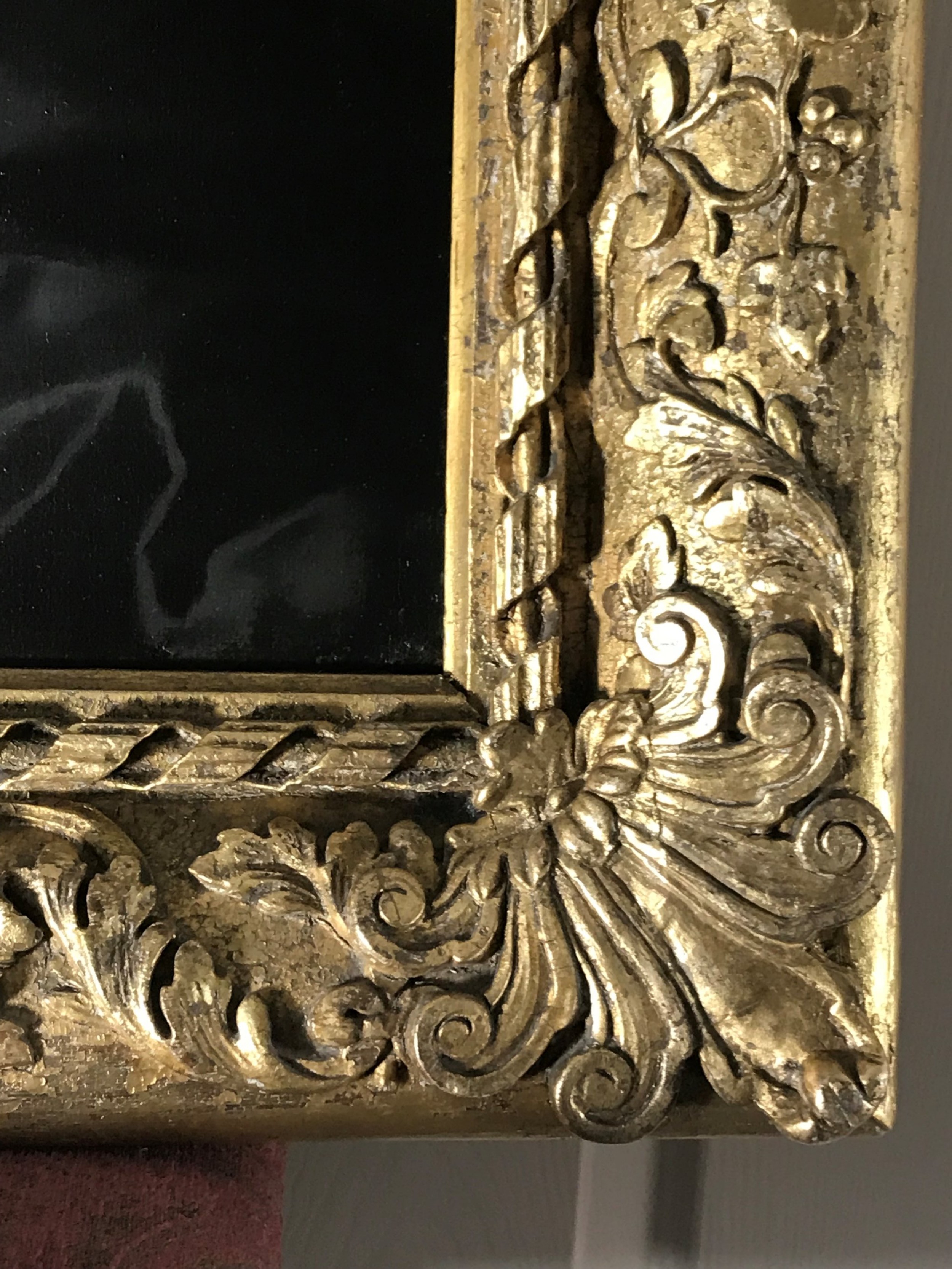
SIZE: 32.5 x 28.5 inches including frame.
PROVENANCE: Wiltshire Private Collection.
Roy Precious - Antiques & Fine Art has dated this piece to the 17th Century.
Roy and nadine precious: specialists in portraiture from the 16th to the 20th century. Established in 1972.
You can view the stock and full dealer information on the Roy Precious - Antiques & Fine Art Profile Page
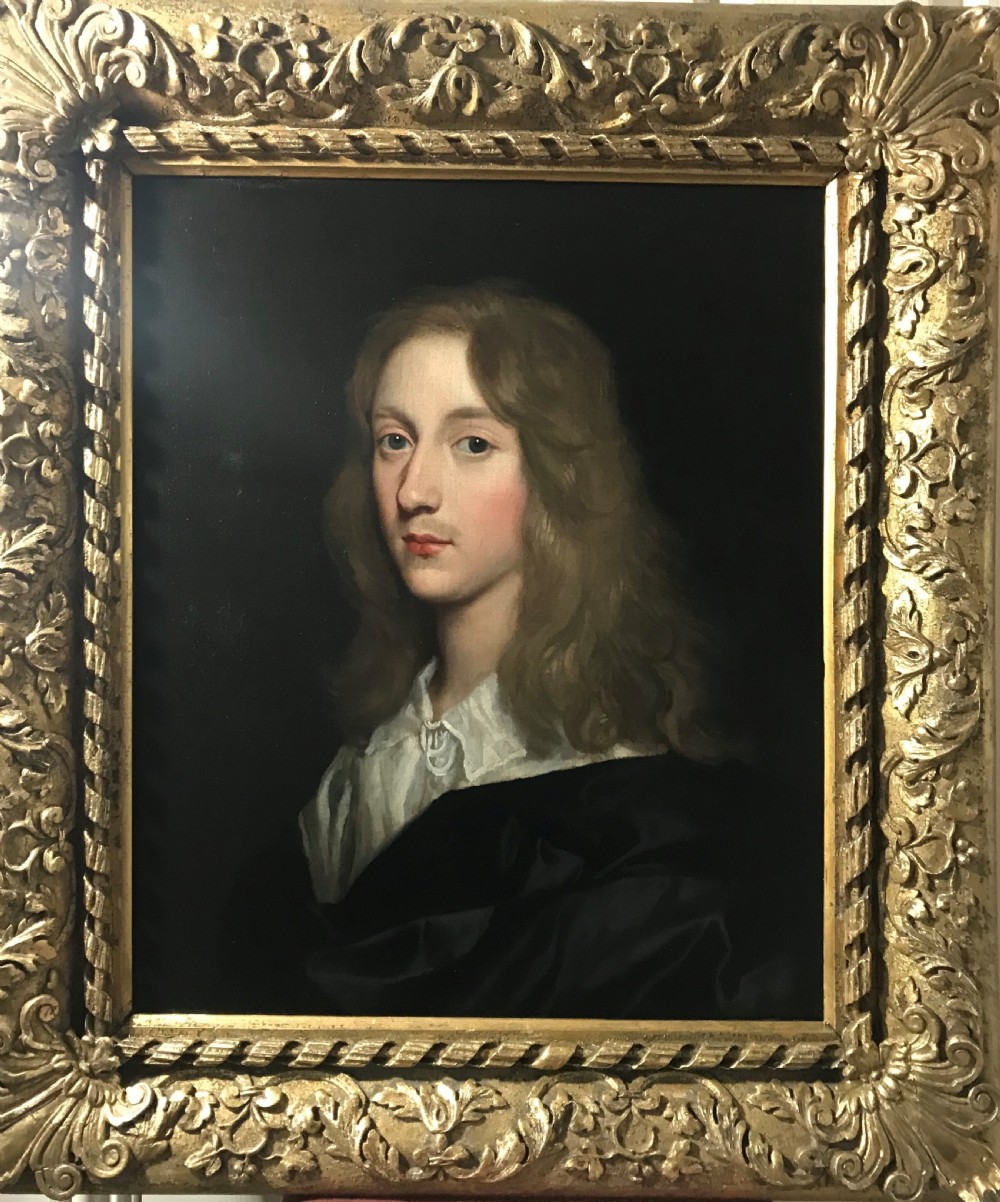

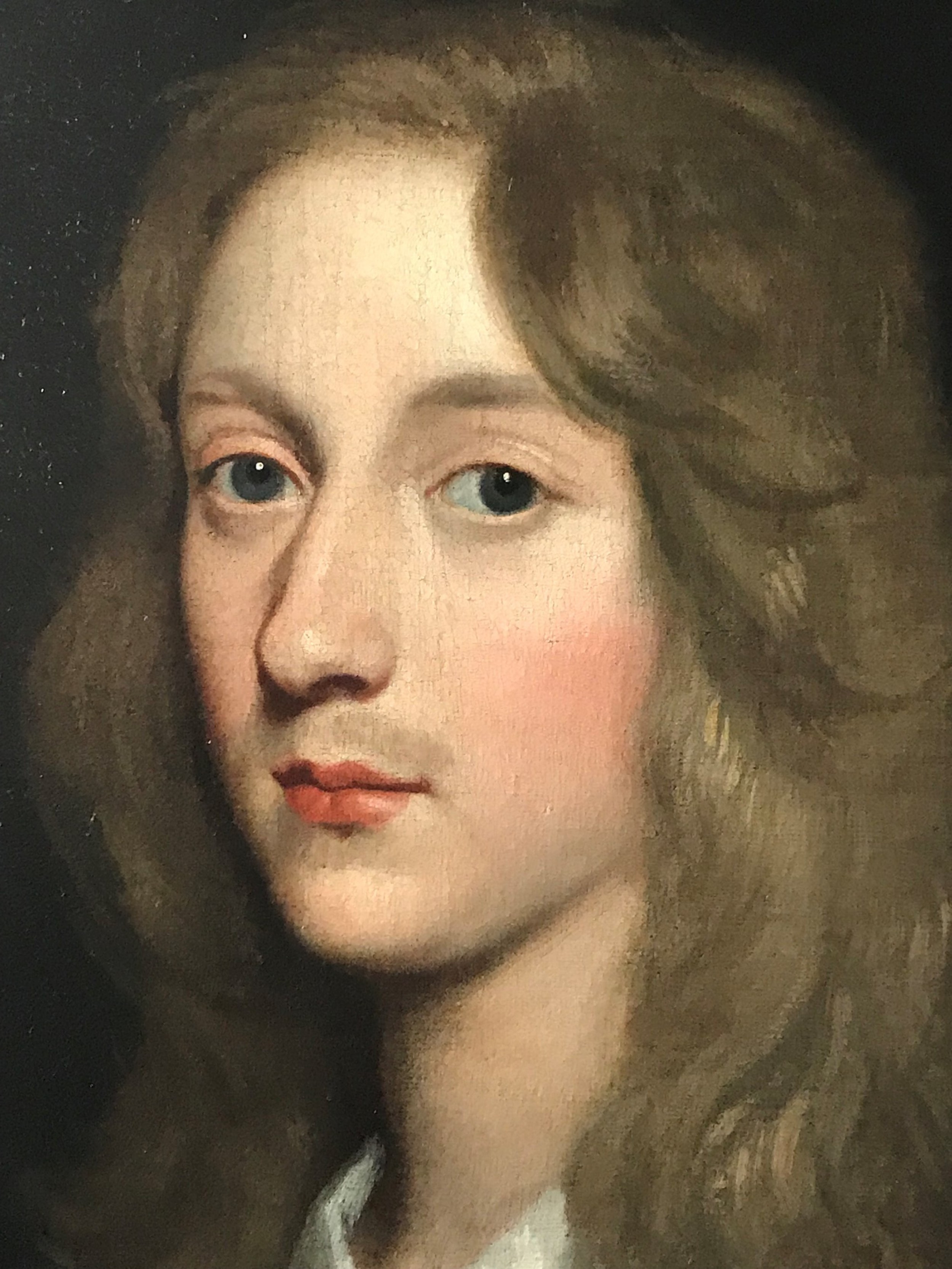
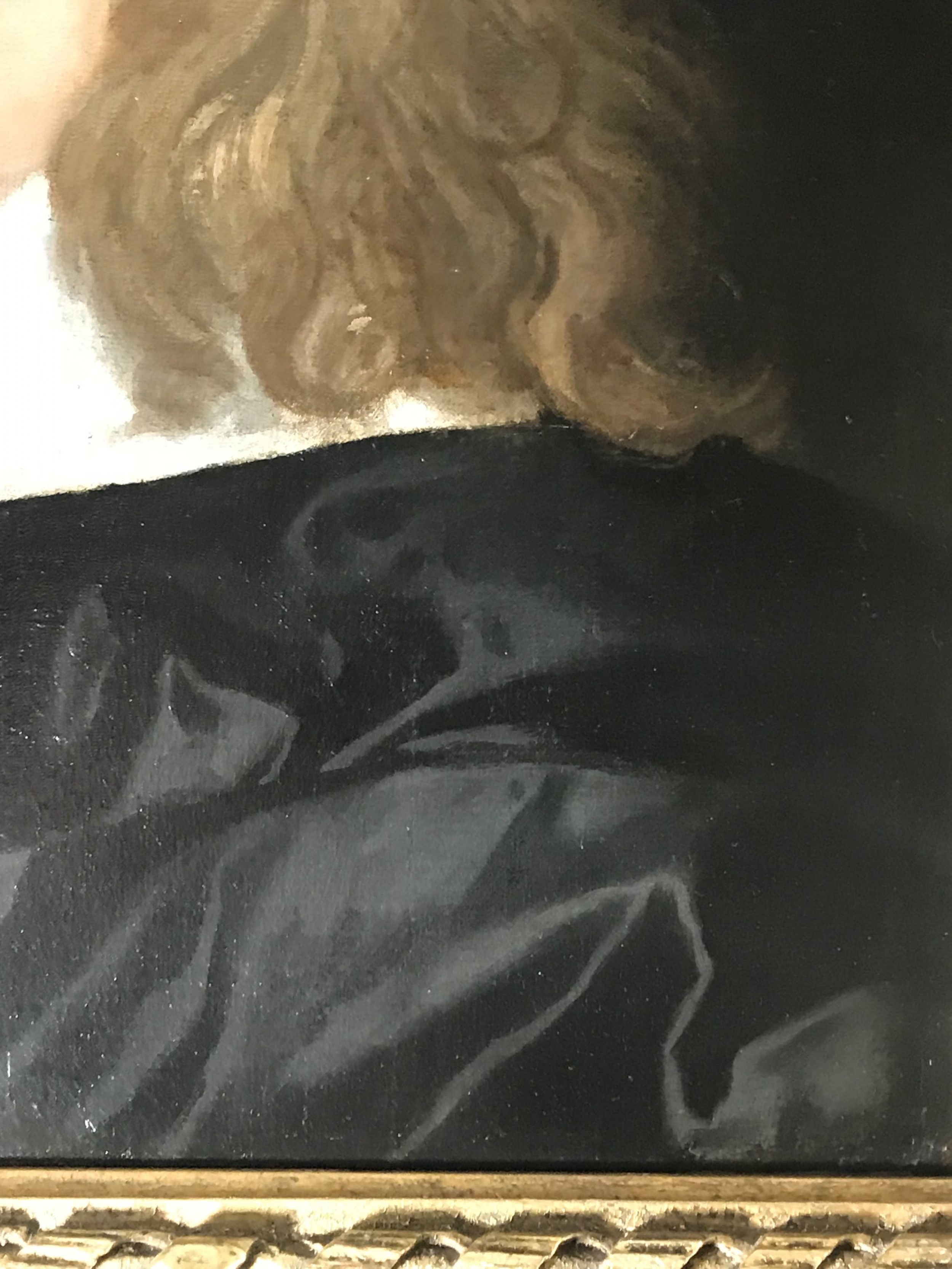
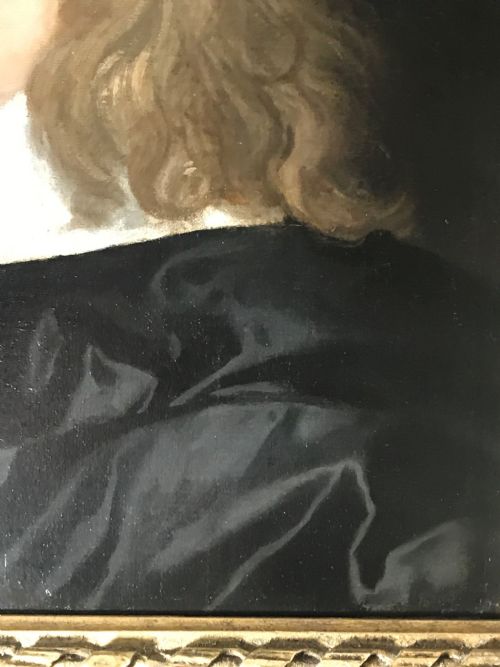
Portrait of Prince Rupert, Mid 17th Century; Studio or Circle of Van Honthorst.