Roy Precious - Antiques & Fine Art has dated this piece to the 17th Century.
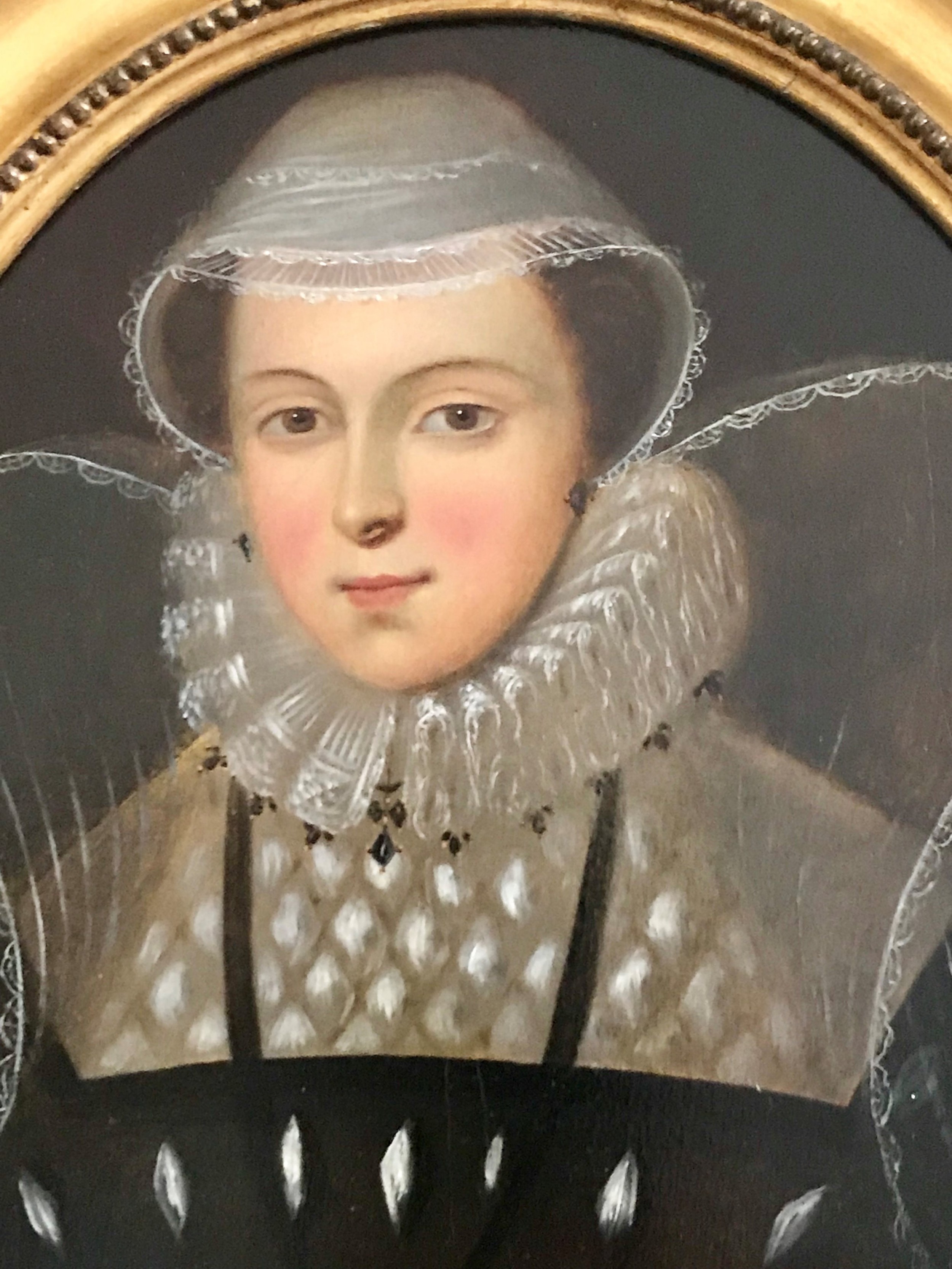
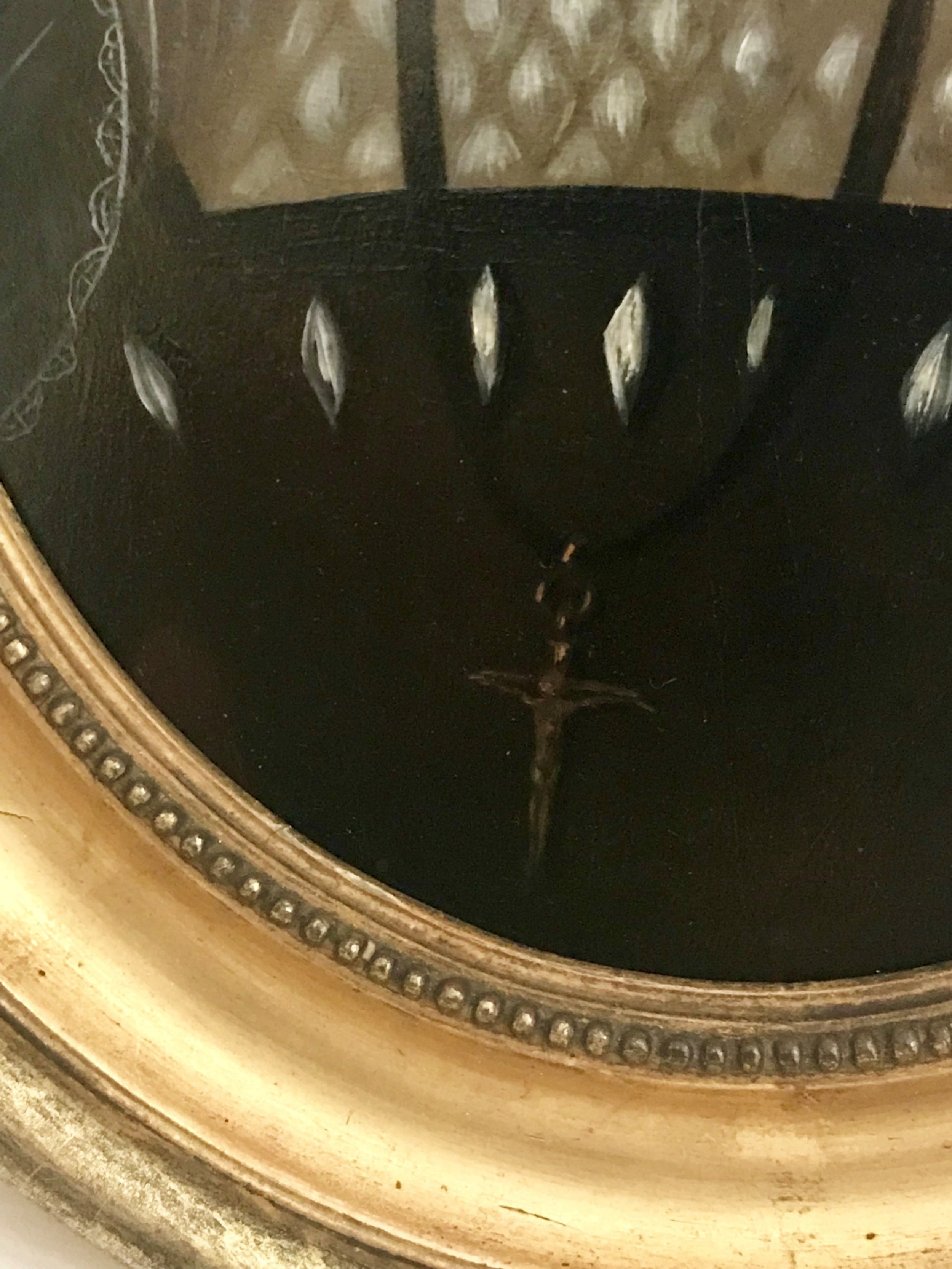
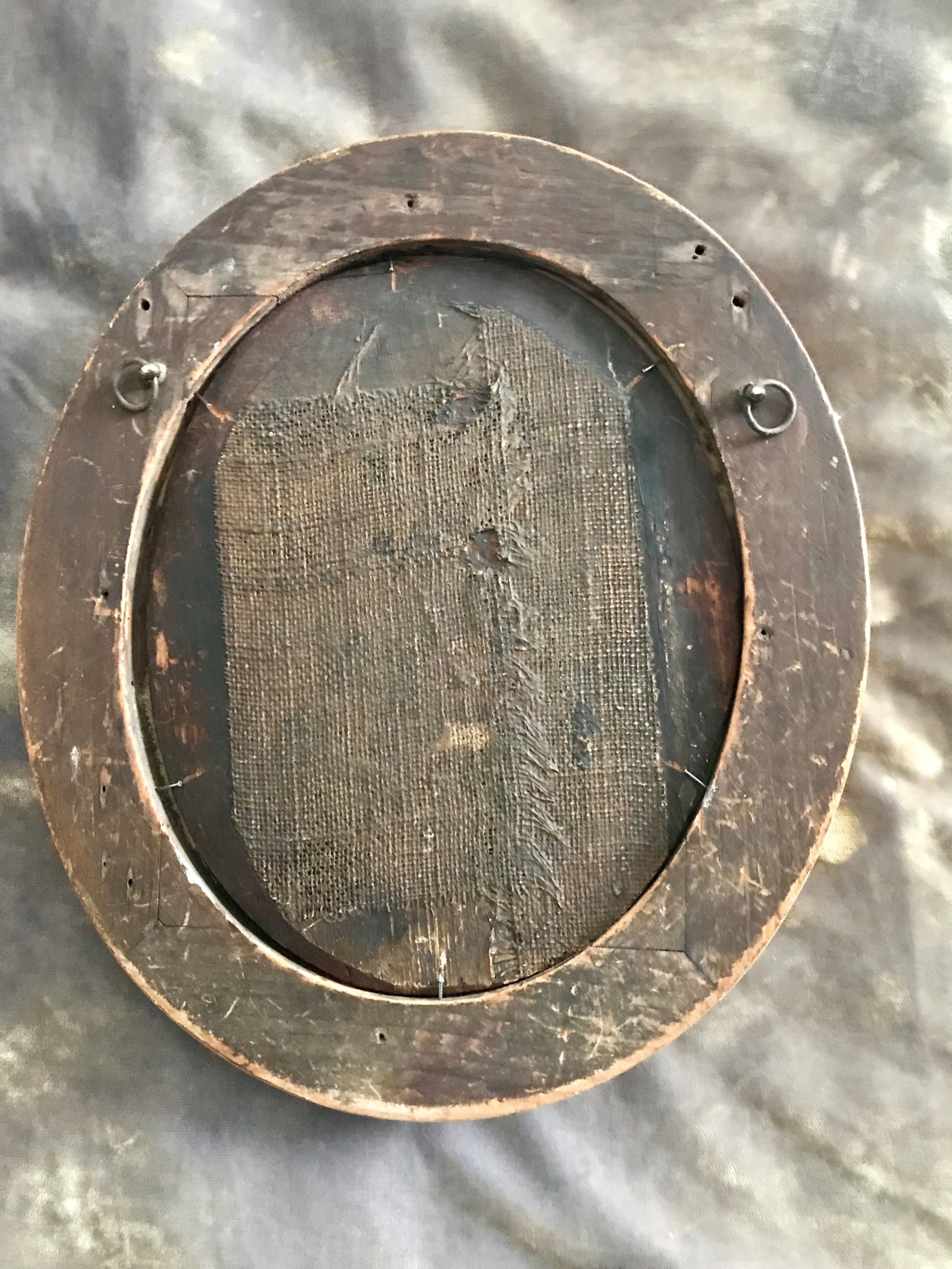
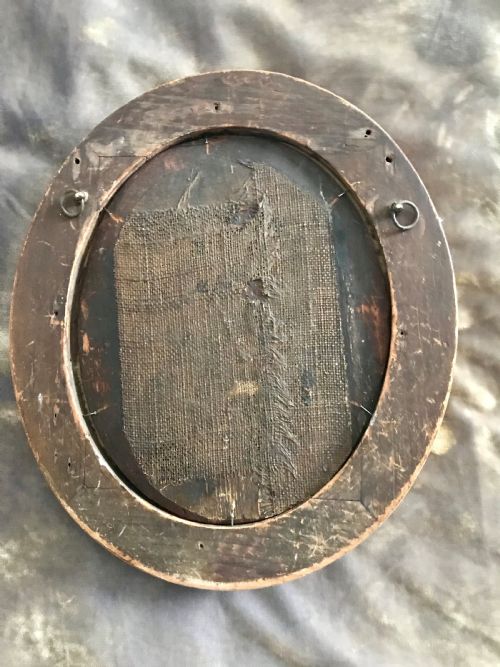
This is an exquisite image of Mary, only eleven and a quarter inches tall including the frame. Many posthumous images of Mary survive but this is a rare early one painted on an oak panel; originally rectangular, it was altered in the past to fit within this simple and elegant Georgian frame of c.1780.
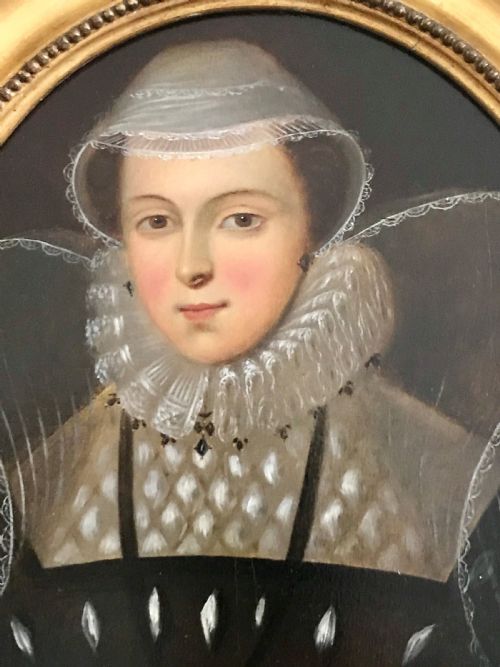
This portrait was painted in the 17th century, based on a miniature of 1578 by Nicholas Hilliard.
All through the 17th century, and later, portraits of Mary were created.
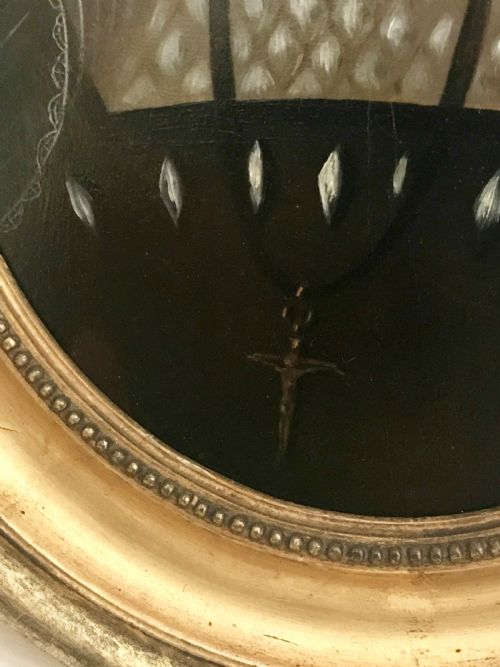
Mary had been called an adulteress and traitor by the English and was beheaded for plotting to assassinate her cousin Elizabeth I, but under the Stuarts she was presented as a beautiful and religious princess unjustly executed for her Catholic faith.
MARY, QUEEN OF SCOTS (born as Mary Stewart and known in French as Marie Stuart; 1542 – 1587), was Scottish queen regnant from 14 December 1542 to 24 July 1567. In the lists of Scottish sovereigns, she is recognized as Mary I. (Not to be confused with Mary I of England.) Her great-great-granddaughter was Mary II of England.
She was the only surviving legitimate child of King James V. She was six days old when her father died and she was crowned nine months later. In 1558, she married Francis, Dauphin of France, who ascended the French throne as Francis II in 1559. Mary was not Queen of France for long; she was widowed on 5 December 1560. After her husband's death, Mary returned to Scotland, arriving in Leith on 19 August 1561. Four years later, she married her first cousin, Henry Stuart, Lord Darnley. Their union was unhappy and in February 1567, there was a huge explosion at their house, and Darnley was found dead, apparently strangled, in the garden.
She soon married James Hepburn, 4th Earl of Bothwell, who was generally believed to be Darnley's murderer. Following an uprising against the couple, Mary was imprisoned in Loch Leven Castle on 15 June and forced to abdicate in favour of her one-year-old son, James VI. After an unsuccessful attempt to regain the throne, Mary fled to England seeking protection from her first cousin once removed, Queen Elizabeth I, whose kingdom she hoped to inherit. Elizabeth ordered her arrest because of the threat presented by Mary, who had previously claimed Elizabeth's throne as her own and was considered the legitimate sovereign of England by many English Catholics, including participants in the Rising of the North. After 19 years in custody in a number of castles and manor houses in England, she was tried and executed for treason for her involvement in three plots to assassinate Elizabeth.
When Elizabeth died childless in 1603, Mary's son James VI of Scotland became James I of England. (James was a descendant of Henry VII of England through his great-grandmother Margaret Tudor, older sister of Henry VIII.)
SIZE: 11.25 x 9.75 inches including the frame.
PROVENANCE: An old Buckinghamshire Private Collection.
Roy Precious - Antiques & Fine Art has dated this piece to the 17th Century.
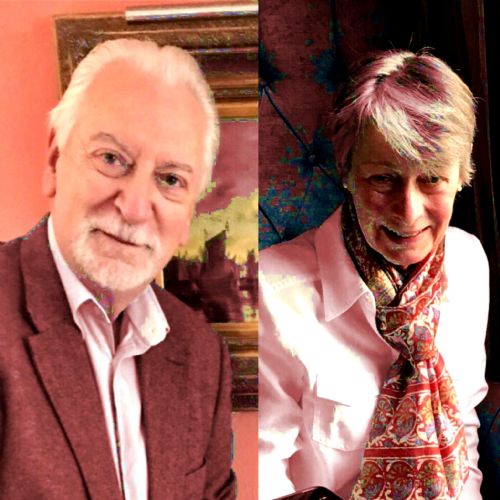
Roy and nadine precious: specialists in portraiture from the 16th to the 20th century. Established in 1972.
You can view the stock and full dealer information on the Roy Precious - Antiques & Fine Art Profile Page
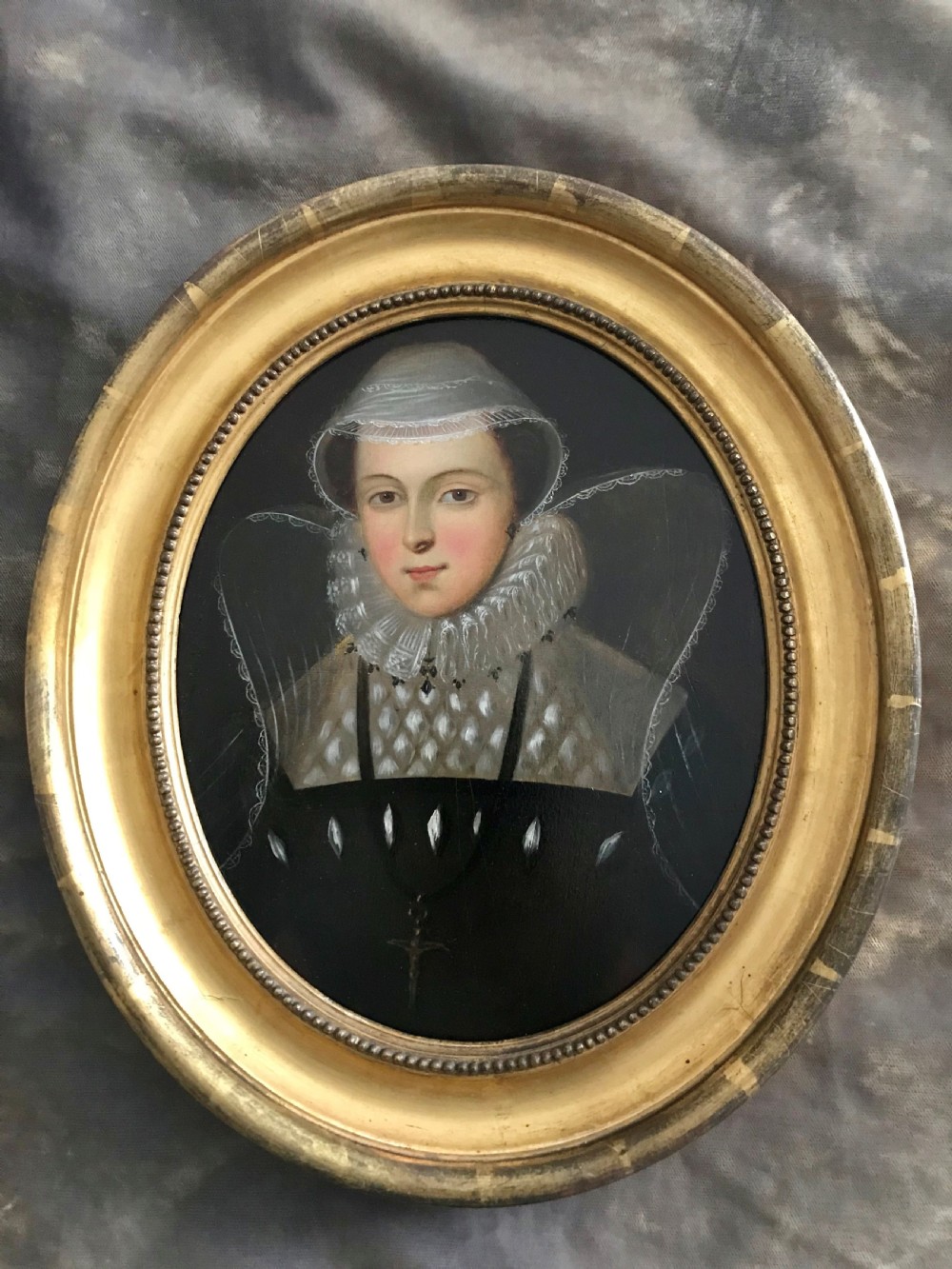
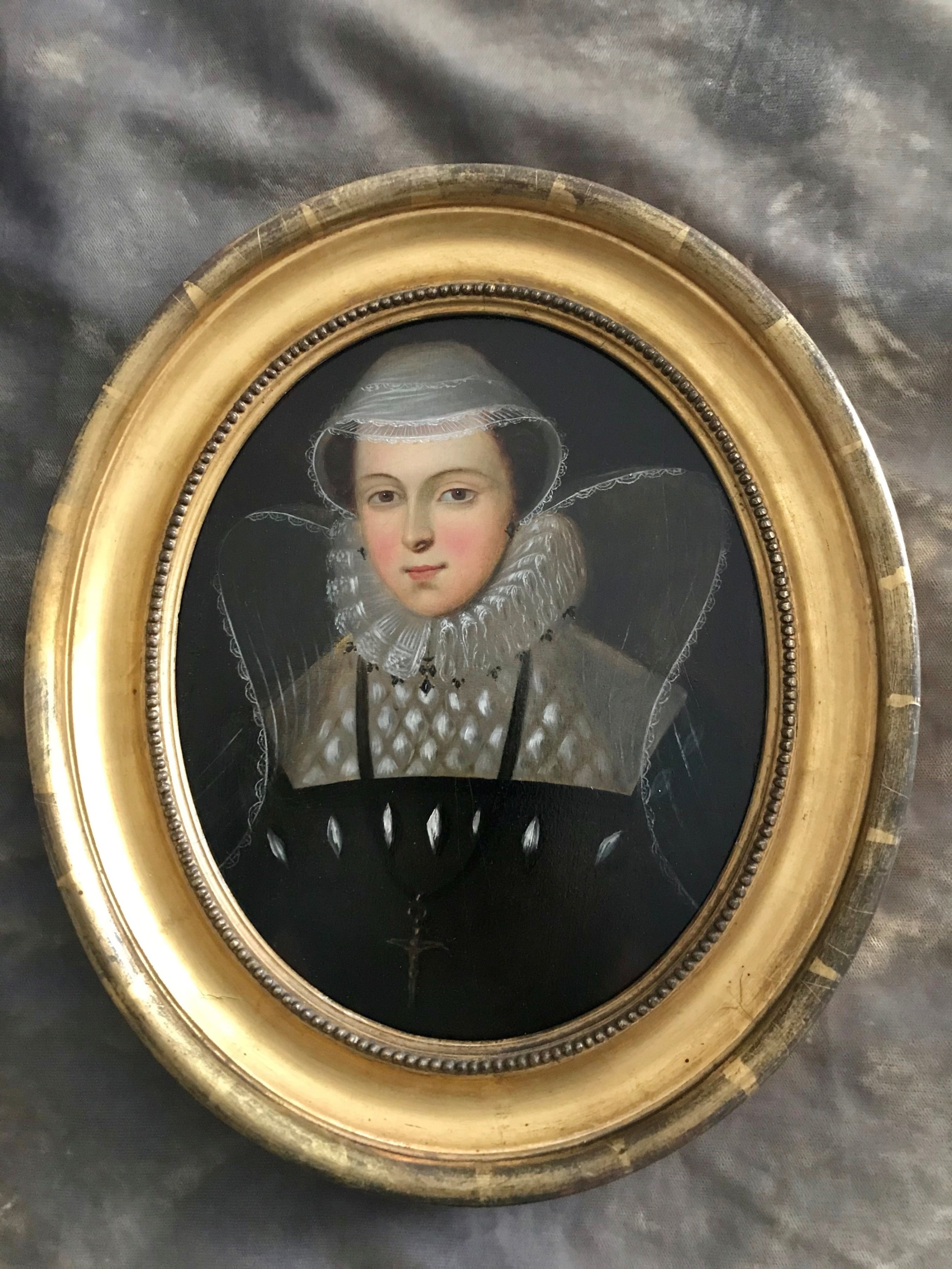
Mary, Queen of Scots, 17th Century.