37,006  PAGES BROWSED TODAY PAGES TODAY 90  ANTIQUES UPLOADED TODAY NEW ARRIVALS
ID #SA534625
FOR SALE
£3,800
Email
Save
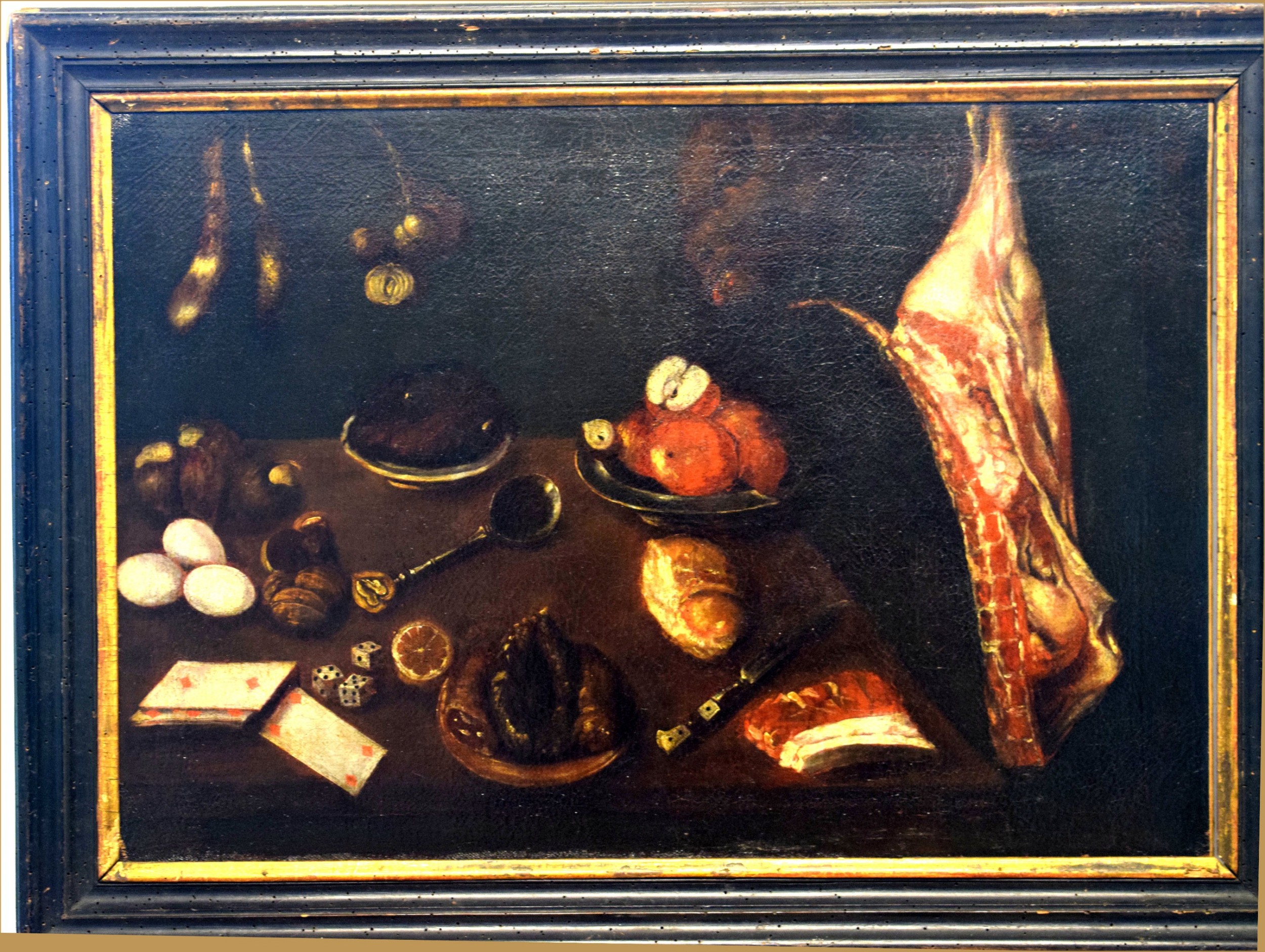
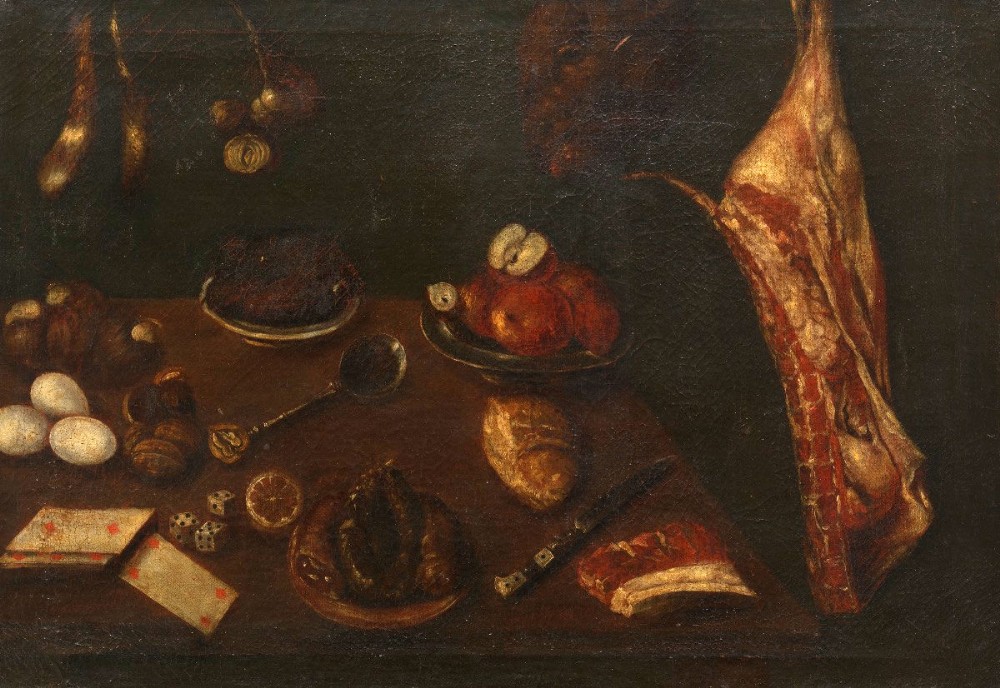
Spanish School 17th Century a Still Life of a Larder, Including : Eggs, Walnuts, Lamb, Apples, Playing Cards, Dice, Lemon, Snails, Onion, & Bread
Artware Fineart
for sale €4,446     $4,826
£3,800

Artware Fineart

Sellingantiques Verified Since Sep 2008
View Dealers Stock Page
Id #SA534625
PDF SHARE
SAVE

Spanish School 17th Century a Still Life of a Larder, Including : Eggs, Walnuts, Lamb, Apples, Playing Cards, Dice, Lemon, Snails, Onion, & Bread

18th century
For Sale by Artware Fineart
Description

Spanish School 17/18th Century

A Still Life of a Larder, including : Eggs, Walnuts, Lamb, Apples, Playing Cards, Dice, Lemon, Snails, Onion, & Bread

oil on canvas

49 x 68 cm. (19 x 27 in.)

Although still life painting was practiced in other European countries, only in Spain did it transcend its traditional status and rise to the same heights as other genres. Bodegón is the Spanish term for still life (from bodega, a storeroom or tavern). Taken more generally, bodegón refers to the representation of common objects of daily life, frequently including food. The still life image may contain piles of fruit, silvery fish lying on a plate, game birds hanging on a wall, or arrangements of flowers. Still lifes may also contain shiny pewter vessels, transparent glasses, woven rugs, books, jars, pipes, a writer’s inkwell, or the painter’s brush and palette. There are works that display the ingredients for an upcoming meal. All manner of inanimate objects are suitable subjects for still lifes, for the painter’s skill suddenly makes us aware of the artistic properties of ordinary things.
Still lifes can also carry a moral message, striking a serious, almost tragic note. The presence of a skull amid the beautifully painted objects is a reference to the transience of all things. These paintings, known as vanitas, are reminders of the vain emptiness of worldly things.
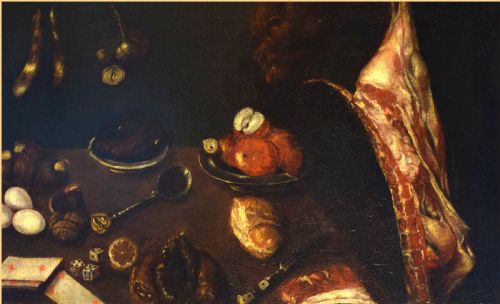
The emergence throughout Europe of the modern still life toward the end of the sixteenth century was a phenomenon related to rapidly evolving conditions in a society on the threshold of the modern age in politics, science, philosophy, and art. From that time on, no longer conceived as merely decorative or symbolic, the depiction of such things became the focus of a new relationship between the painter’s eye, his brush, and his mind. This approach seems to foreshadow the Cubist painters of the twentieth century, who used the potential of the still life to explore the very boundaries of art. Their concern with purely formal values was the ultimate extension of an attitude that, more than three hundred years before them, led another generation of radical young artists to paint the first such pictures without narrative content—works in which the perception of nature, the endurance of art, and the power of the artist were the principal subjects.
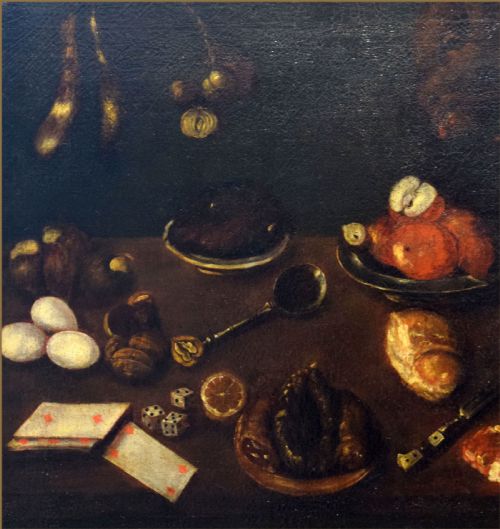
"Tell me what you eat, I will tell you who you are," boasted famed gastronome Jean Anthelme Brillat-Savarin (1755–1826) (1). A man of many interests, among them archaeology, astronomy, and chemistry, Savarin wrote treatises on economics and history, but his fascination with food was what most informed and entertained readers and followers in his native France and around the world. In nature and on the table, quite apart from its direct link to human survival, food has been an object of intrigue featured prominently in art throughout history. From ancient times and particularly during the development of genre painting in the Middle Ages and later, food—its appearance, abundance, or decay—has been a popular subject.
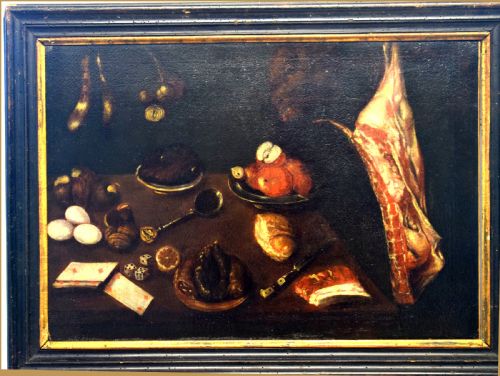
In 17th-century Spain, genre painting (scenes of everyday life) reached new heights with the work of Diego Velázquez. In a style reminiscent of Caravaggio, Velázquez created and popularized a new genre, the kitchen or tavern scene (bodegón), which showed peasants eating or preparing meals and the objects they used to assemble and serve them. These objects (still life), prominently displayed in realistic terms including their imperfections, assumed a life of their own, introducing a new naturalism in Spanish painting, which had been dominated by the ideal beauty of classical and academic themes.
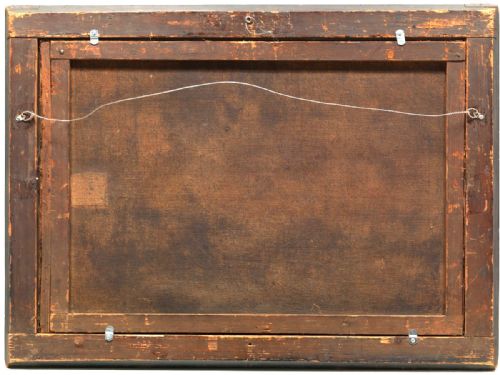
Velázquez grew up in the cosmopolitan climate of Seville, southern Spain, along the banks of the Guadalquivir, an area also home to Cervantes, Lope de Vega, and other luminaries of the Spanish Golden Age. Like the gre

Physical Dimensions
Height
49cm (19.29")
Width
68cm (26.77")
Depth
4cm (1.57")
Declaration

Artware Fineart has dated this Spanish Baroque Still Life to the 18th Century.

Reference Numbers
Sellingantiques Reference
SA534625
Dealers Internal Reference
3977
Description
Spanish School 17/18th Century
A Still Life of a Larder, including : Eggs, Walnuts, Lamb, Apples, Playing Cards, Dice, Lemon, Snails, Onion, & Bread.
Artware Fineart

oil on canvas

49 x 68 cm. (19 x 27 in.)

Although still life painting was practiced in other European countries, only in Spain did it transcend its traditional status and rise to the same heights as other genres. Bodegón is the Spanish term for still life (from bodega, a storeroom or tavern). Taken more generally, bodegón refers to the representation of common objects of daily life, frequently including food. The still life image may contain piles of fruit, silvery fish lying on a plate, game birds hanging on a wall, or arrangements of flowers. Still lifes may also contain shiny pewter vessels, transparent glasses, woven rugs, books, jars, pipes, a writer’s inkwell, or the painter’s brush and palette. There are works that display the ingredients for an upcoming meal. All manner of inanimate objects are suitable subjects for still lifes, for the painter’s skill suddenly makes us aware of the artistic properties of ordinary things.

fig 1. A 17th-century Spanish Baroque oil painting depicting a tabletop larder scene with meat, eggs, walnuts, bread, dice, playing cards, and utensils against a dark background.
fig 1. Spanish School 17th Century a Still Life of a Larder, Including : Eggs, Walnuts, Lamb, Apples, Playing Cards, Dice, Lemon, Snails, Onion, & Bread

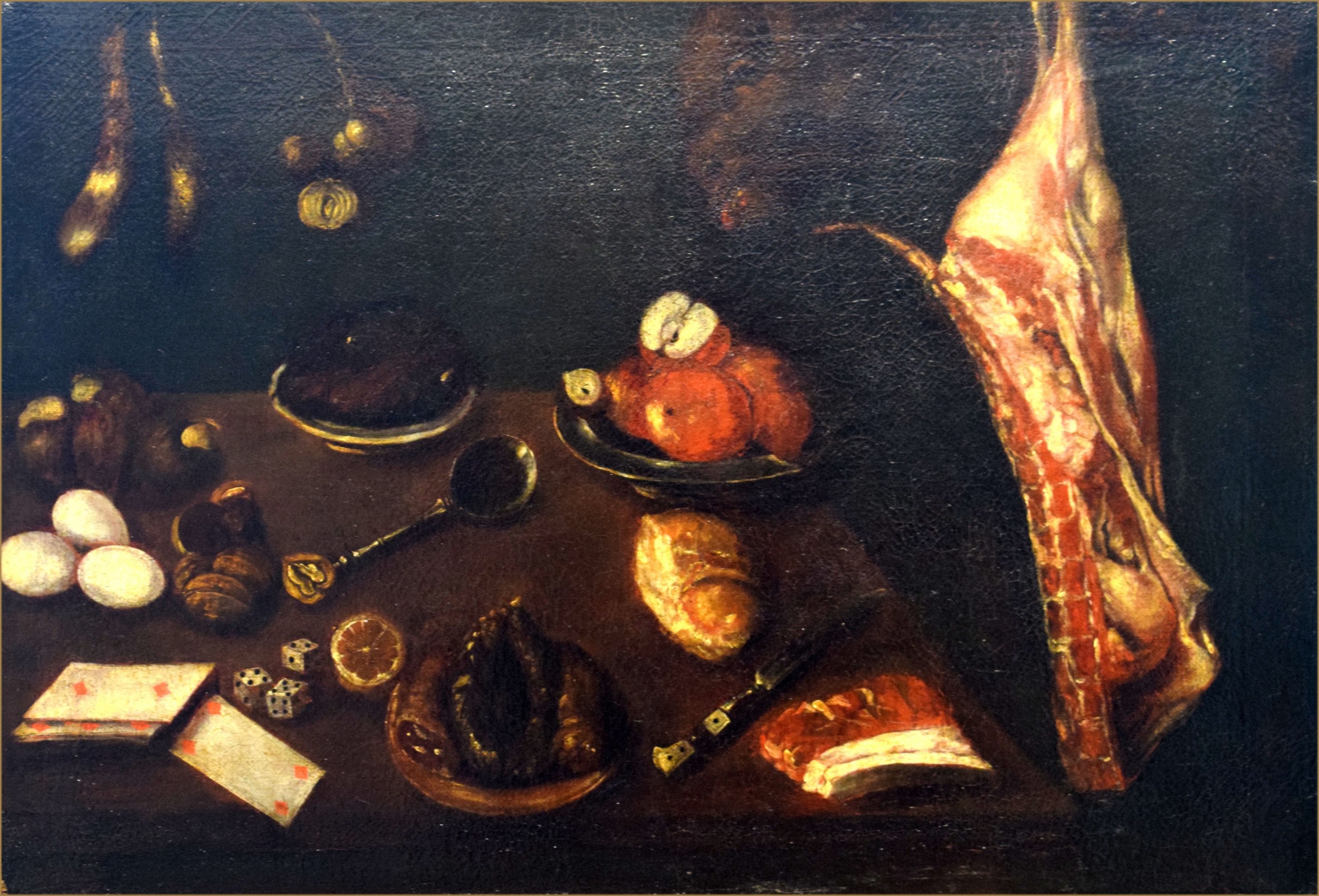
Still lifes can also carry a moral message, striking a serious, almost tragic note. The presence of a skull amid the beautifully painted objects is a reference to the transience of all things. These paintings, known as vanitas, are reminders of the vain emptiness of worldly things.

fig 2. A 17th-century Spanish Baroque oil painting depicting a tabletop larder scene with meat, eggs, walnuts, bread, dice, playing cards, and utensils against a dark background.
fig 2. Spanish School 17th Century a Still Life of a Larder, Including : Eggs, Walnuts, Lamb, Apples, Playing Cards, Dice, Lemon, Snails, Onion, & Bread

The emergence throughout Europe of the modern still life toward the end of the sixteenth century was a phenomenon related to rapidly evolving conditions in a society on the threshold of the modern age in politics, science, philosophy, and art. From that time on, no longer conceived as merely decorative or symbolic, the depiction of such things became the focus of a new relationship between the painter’s eye, his brush, and his mind. This approach seems to foreshadow the Cubist painters of the twentieth century, who used the potential of the still life to explore the very boundaries of art. Their concern with purely formal values was the ultimate extension of an attitude that, more than three hundred years before them, led another generation of radical young artists to paint the first such pictures without narrative content—works in which the perception of nature, the endurance of art, and the power of the artist were the principal subjects.

fig 3. A 17th-century Spanish Baroque oil painting depicting a tabletop larder scene with meat, eggs, walnuts, bread, dice, playing cards, and utensils against a dark background.
fig 3. Spanish School 17th Century a Still Life of a Larder, Including : Eggs, Walnuts, Lamb, Apples, Playing Cards, Dice, Lemon, Snails, Onion, & Bread

"Tell me what you eat, I will tell you who you are," boasted famed gastronome Jean Anthelme Brillat-Savarin (1755–1826) (1). A man of many interests, among them archaeology, astronomy, and chemistry, Savarin wrote treatises on economics and history, but his fascination with food was what most informed and entertained readers and followers in his native France and around the world. In nature and on the table, quite apart from its direct link to human survival, food has been an object of intrigue featured prominently in art throughout history. From ancient times and particularly during the development of genre painting in the Middle Ages and later, food—its appearance, abundance, or decay—has been a popular subject.

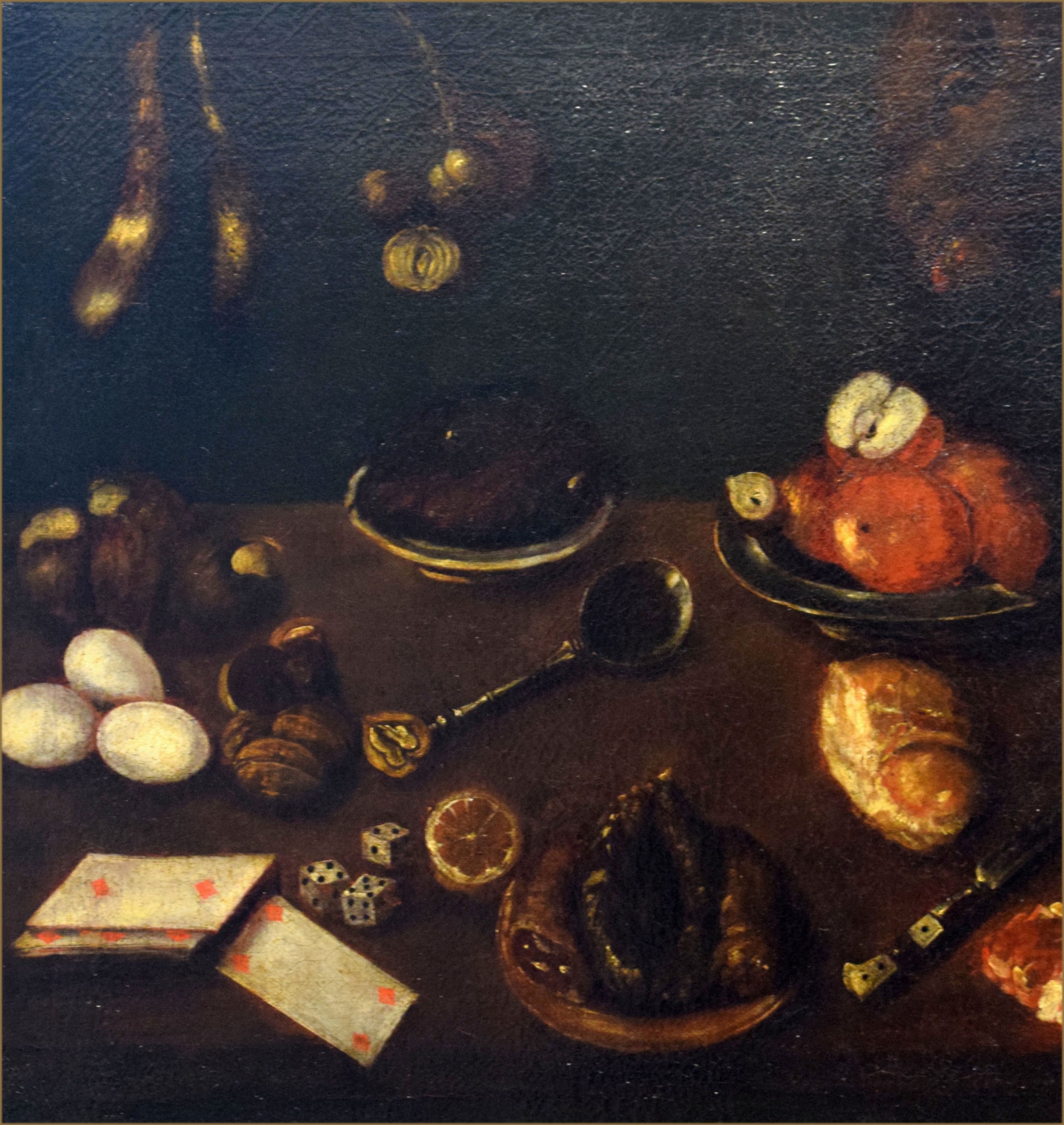
fig 4. A 17th-century Spanish Baroque oil painting depicting a tabletop larder scene with meat, eggs, walnuts, bread, dice, playing cards, and utensils against a dark background.
fig 4. Spanish School 17th Century a Still Life of a Larder, Including : Eggs, Walnuts, Lamb, Apples, Playing Cards, Dice, Lemon, Snails, Onion, & Bread

In 17th-century Spain, genre painting (scenes of everyday life) reached new heights with the work of Diego Velázquez. In a style reminiscent of Caravaggio, Velázquez created and popularized a new genre, the kitchen or tavern scene (bodegón), which showed peasants eating or preparing meals and the objects they used to assemble and serve them. These objects (still life), prominently displayed in realistic terms including their imperfections, assumed a life of their own, introducing a new naturalism in Spanish painting, which had been dominated by the ideal beauty of classical and academic themes.

fig 5. A 17th-century Spanish Baroque oil painting depicting a tabletop larder scene with meat, eggs, walnuts, bread, dice, playing cards, and utensils against a dark background.
fig 5. Spanish School 17th Century a Still Life of a Larder, Including : Eggs, Walnuts, Lamb, Apples, Playing Cards, Dice, Lemon, Snails, Onion, & Bread

Velázquez grew up in the cosmopolitan climate of Seville, southern Spain, along the banks of the Guadalquivir, an area also home to Cervantes, Lope de Vega, and other luminaries of the Spanish Golden Age. Like the gre

Height
49cm (19.29")
Width
68cm (26.77")
Depth
4cm (1.57")
Date of Manufacture

Artware Fineart has dated this Spanish Baroque Still Life to the 18th Century.

Reference Numbers
Sellingantiques Ref
SA534625
Dealers Internal Ref
3977
Artware Fineart
Sellingantiques verified Since Sep 2008
Dealer Profile

You can view the stock and full dealer information on the Artware Fineart Profile Page
PDF SHARE
SAVE
A 17th-century Spanish Baroque oil painting depicting a tabletop larder scene with meat, eggs, walnuts, bread, dice, playing cards, and utensils against a dark background.
1 / 7
Archive I A 17th-century Spanish Baroque oil painting depicting a tabletop larder scene with meat, eggs, walnuts, bread, dice, playing cards, and utensils against a dark background.

Spanish School 17th Century a Still Life of a Larder, Including : Eggs, Walnuts, Lamb, Apples, Playing Cards, Dice, Lemon, Snails, Onion, & Bread
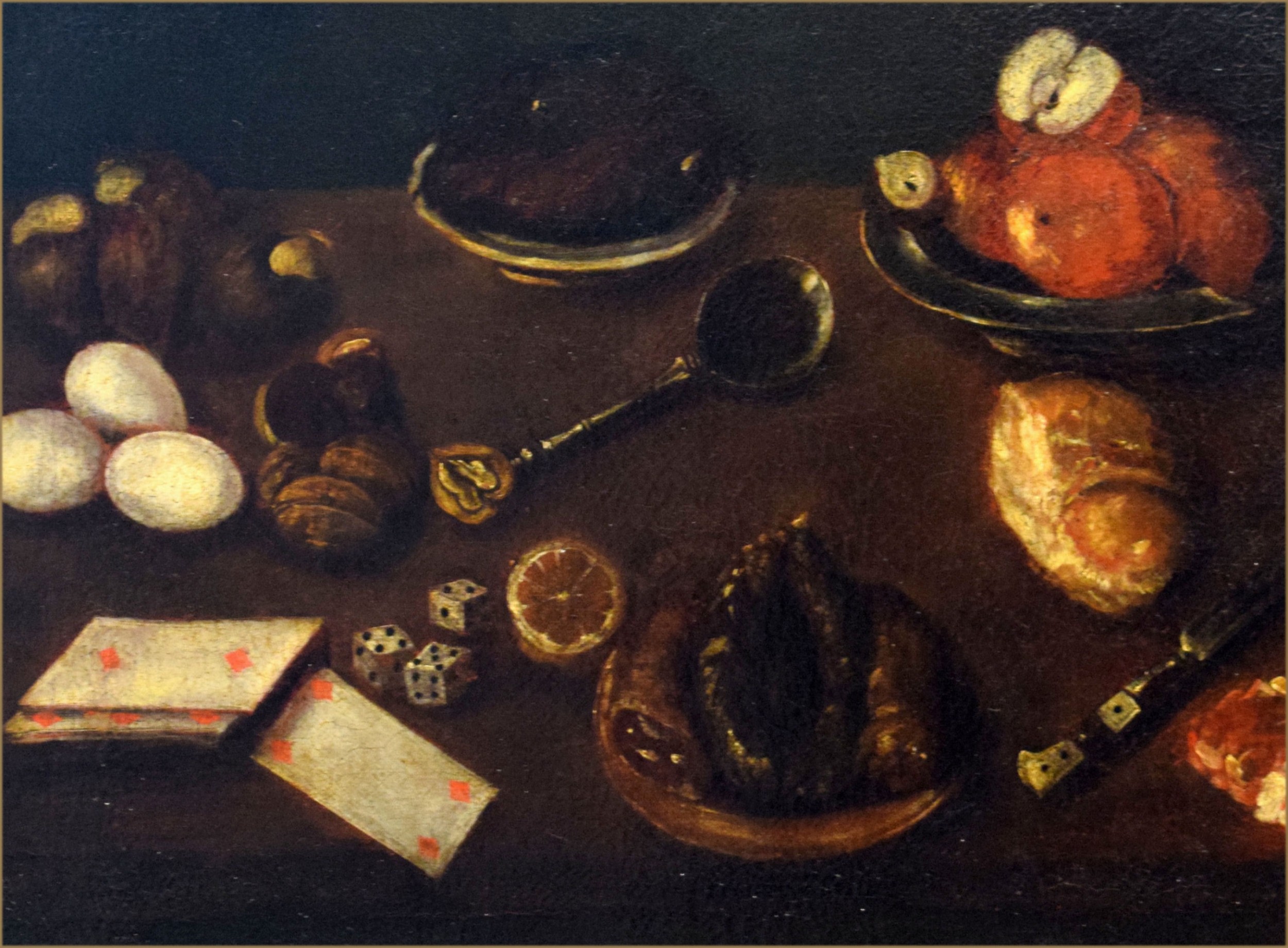
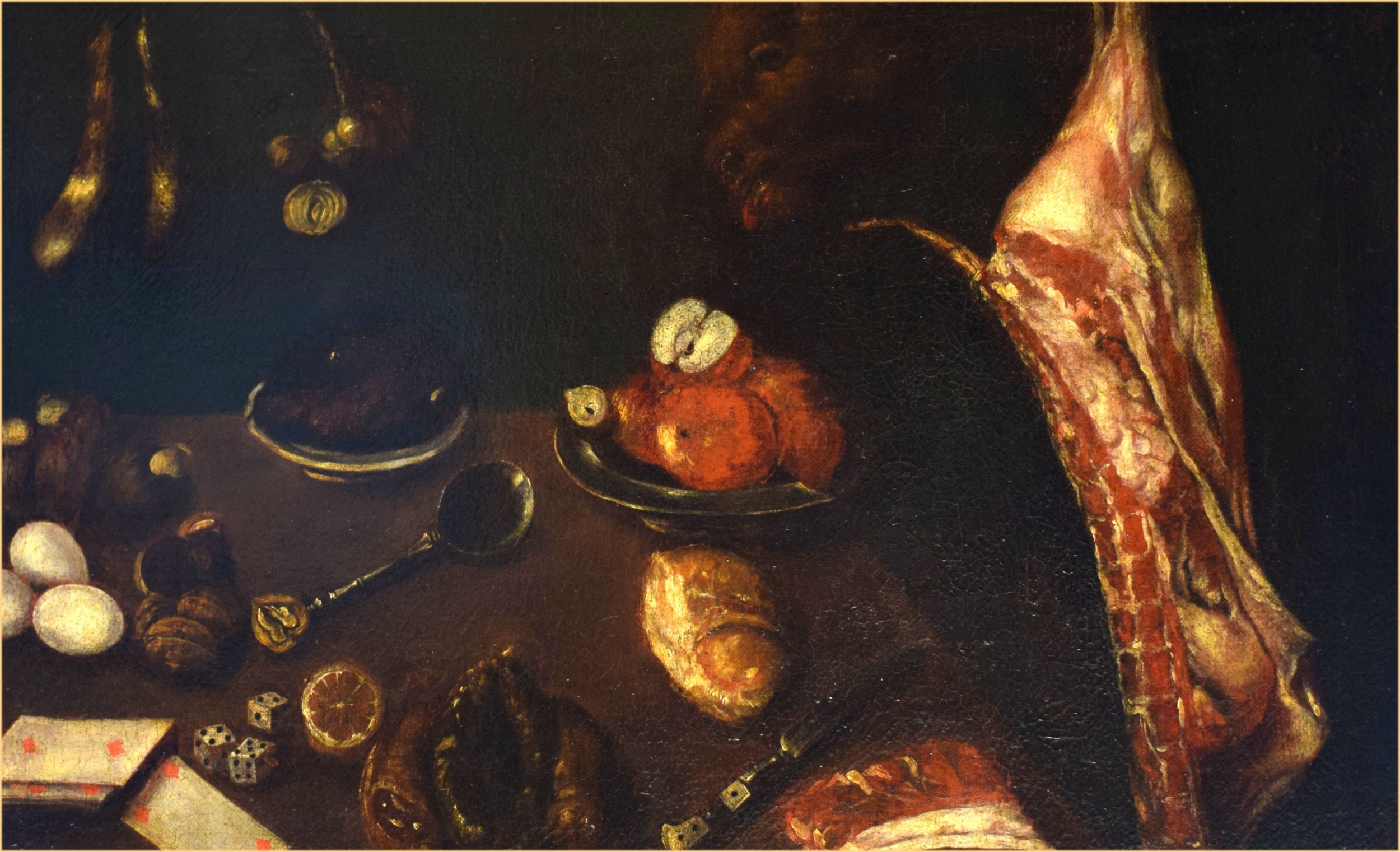
Archive II A 17th-century Spanish Baroque oil painting depicting a tabletop larder scene with meat, eggs, walnuts, bread, dice, playing cards, and utensils against a dark background. View II
Archive III A 17th-century Spanish Baroque oil painting depicting a tabletop larder scene with meat, eggs, walnuts, bread, dice, playing cards, and utensils against a dark background. View III
Archive IV A 17th-century Spanish Baroque oil painting depicting a tabletop larder scene with meat, eggs, walnuts, bread, dice, playing cards, and utensils against a dark background. View IV
Archive V A 17th-century Spanish Baroque oil painting depicting a tabletop larder scene with meat, eggs, walnuts, bread, dice, playing cards, and utensils against a dark background. View V
Archive VI A 17th-century Spanish Baroque oil painting depicting a tabletop larder scene with meat, eggs, walnuts, bread, dice, playing cards, and utensils against a dark background. View VI
Archive VII A 17th-century Spanish Baroque oil painting depicting a tabletop larder scene with meat, eggs, walnuts, bread, dice, playing cards, and utensils against a dark background. View VII
Enlarged Archival View
Telephone 07958 699 645
Location
18 La Gare
51 Surrey Row
London
SE1 0BZ
United Kingdom
Verified Since Sep 2008
Items For Sale 243
Items Sold 223
Artware Fineart
Verified Since Sep 2008
View Dealer Info
Location: 18 La Gare , 51 Surrey Row , London , SE1 0BZ , United Kingdom
Verified
Sep 2008
For Sale
243
Sold
223
A 17th-century Spanish Baroque oil painting depicting a tabletop larder scene with meat, eggs, walnuts, bread, dice, playing cards, and utensils against a dark background.
Spanish School 17th Century A Still Life of a Larder, including : Eggs, Walnuts, Lamb, Apples, Playing Cards, Dice, Lemon, Snails, Onion, & Bread
Ref: SA534625
A 17th-century Spanish Baroque oil painting depicting a tabletop larder scene with meat, eggs, walnuts, bread, dice, playing cards, and utensils against a dark background.
Detail View 1
Detail View 2
Detail View 3
Detail View 4
Detail View 5
Detail View 6
Archival Detail
Every single antique dealer on our platform is individually approved by our internal team. We verify their professional trade history, ethical standards, and photographic quality to ensure a secure, high-standard buying environment. Upon joining, every dealer agrees to a strict 9-point code of conduct. While issues can occasionally arise, our dealers typically resolve them swiftly and directly with the buyer. In fact, since our founding in 2002, Sellingantiques has only had to step in to help resolve an issue on roughly five occasions—a true testament to the quality of our dealers and their dedication to your happiness.
Our dealers are highly experienced in packing and shipping fragile, high-value antiques. Because you are in direct contact with the dealer, you will be able to easily go through all available shipping and insurance options together to ensure your item arrives safely.
Antiques are the ultimate green purchase. By choosing historical pieces over newly manufactured goods, you completely eliminate the carbon footprint of modern mass production while preserving exceptional, timeless craftsmanship.

Spanish 17th-century still life paintings, often termed bodegones, depict everyday larder items, game, and kitchenware with realistic detail. These works originated during the Baroque period, reflecting a movement towards sombre, naturalistic compositions.

Artists during this period typically applied hand-ground pigments mixed with linseed or walnut oil onto coarse linen or hemp canvas. Canvas stretching and priming involved natural animal glues and gesso bases to create a durable ground.

Appraisers evaluate craquelure patterns, canvas weave density, ground layer composition, and signs of historical restoration under ultraviolet light. Pigment analysis also confirms the absence of synthetic colours created after the 17th century.

Position the artwork above a dark wood sideboard or mantelpiece to anchor a traditional or moody contemporary scheme. Complement the deep tones with muted directional lighting and natural textures such as timber and brass.

Keep the canvas in a climate-controlled environment away from direct sunlight, high humidity, and heat sources. Remove light surface dust using a soft, dry brush, and consult a qualified conservator for structural or varnish restoration.
items
Add keywords to the filter
Price
£100
£250000
Era
Movements
Material
Origin
Stock Location
Freshness
Online Payments
Categories