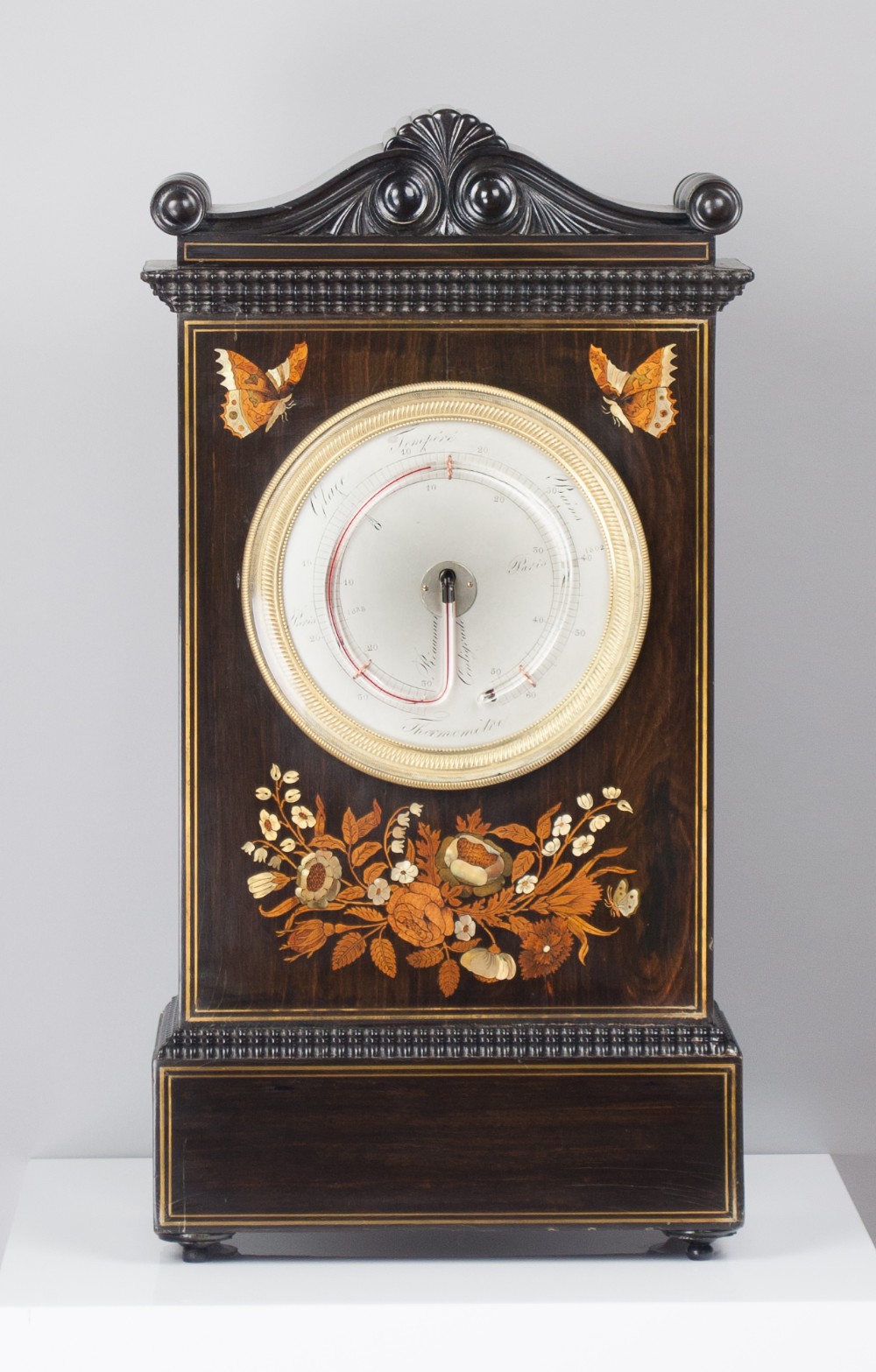
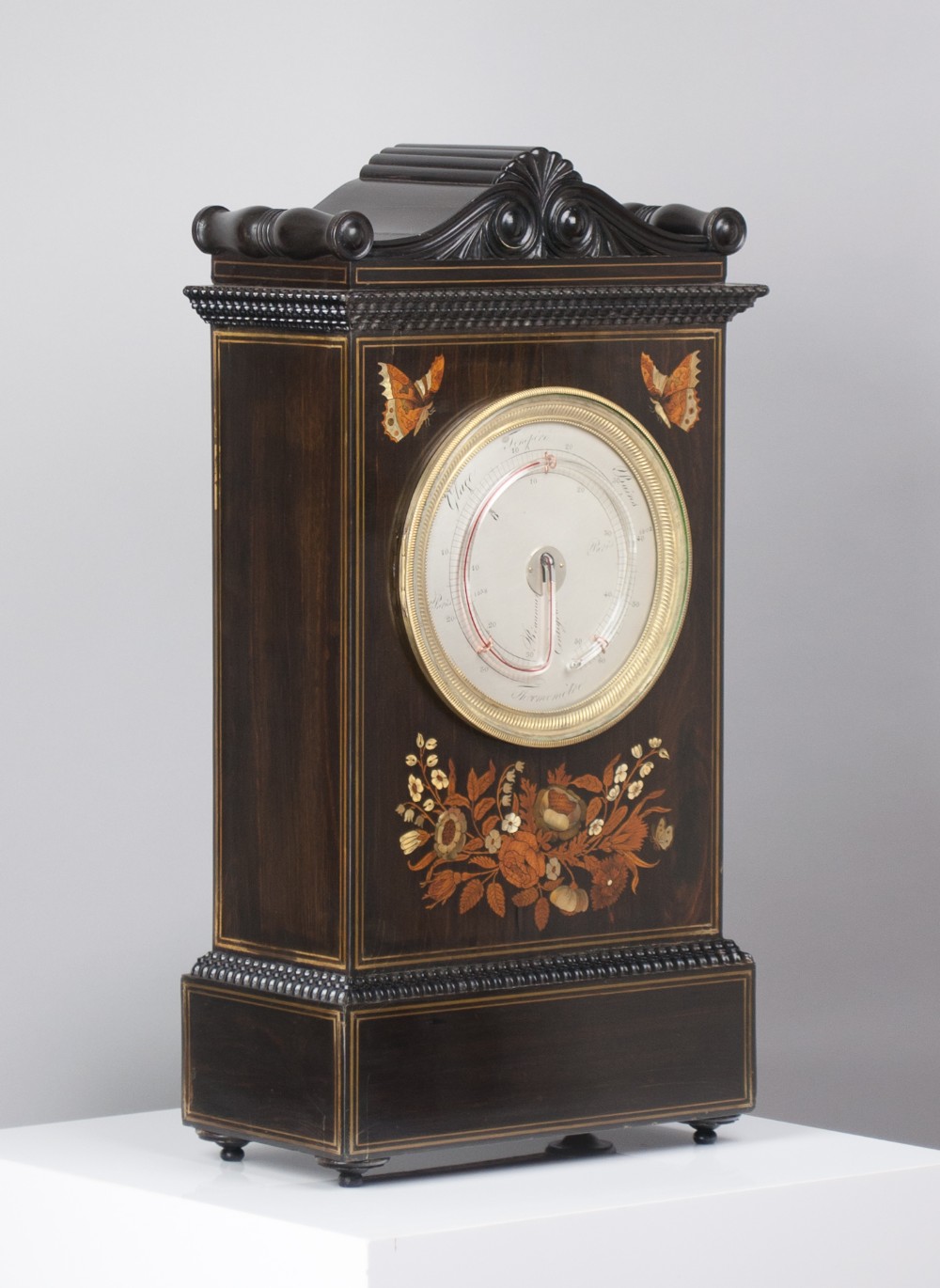
FJ & RD Story Antique Clocks has dated this piece to the 19th Century.
Auguste Breul, clockmaker and bronze-worker active in Paris in the mid-19th century, in his workshop executed centerpieces, candelabra, clocks and many other bronze objects which would embellish the dining rooms and the sitting rooms of the best noble families in Europe.
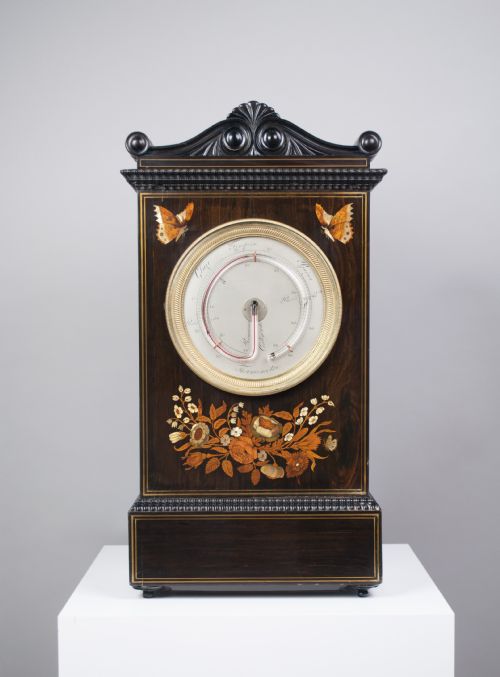
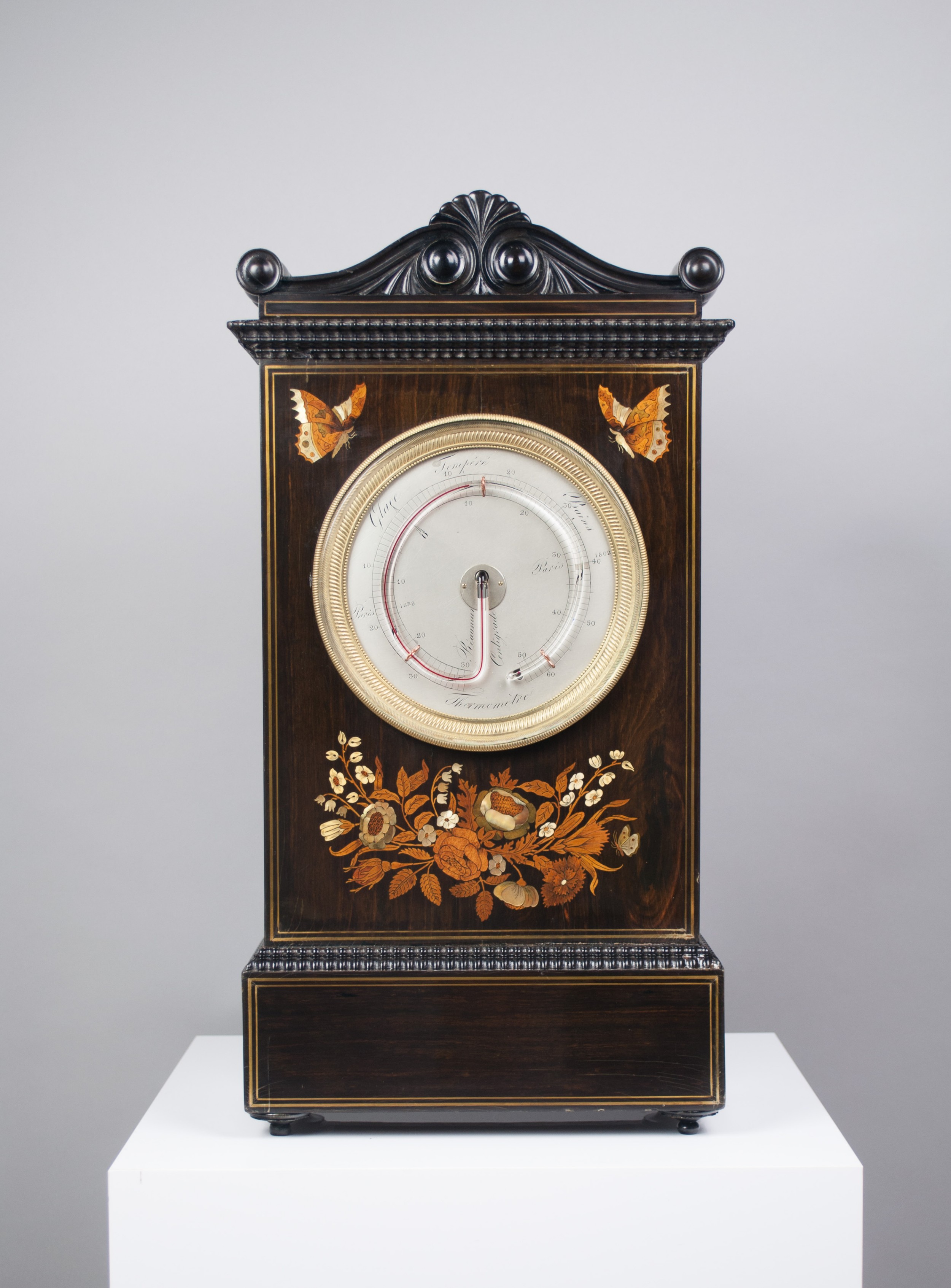
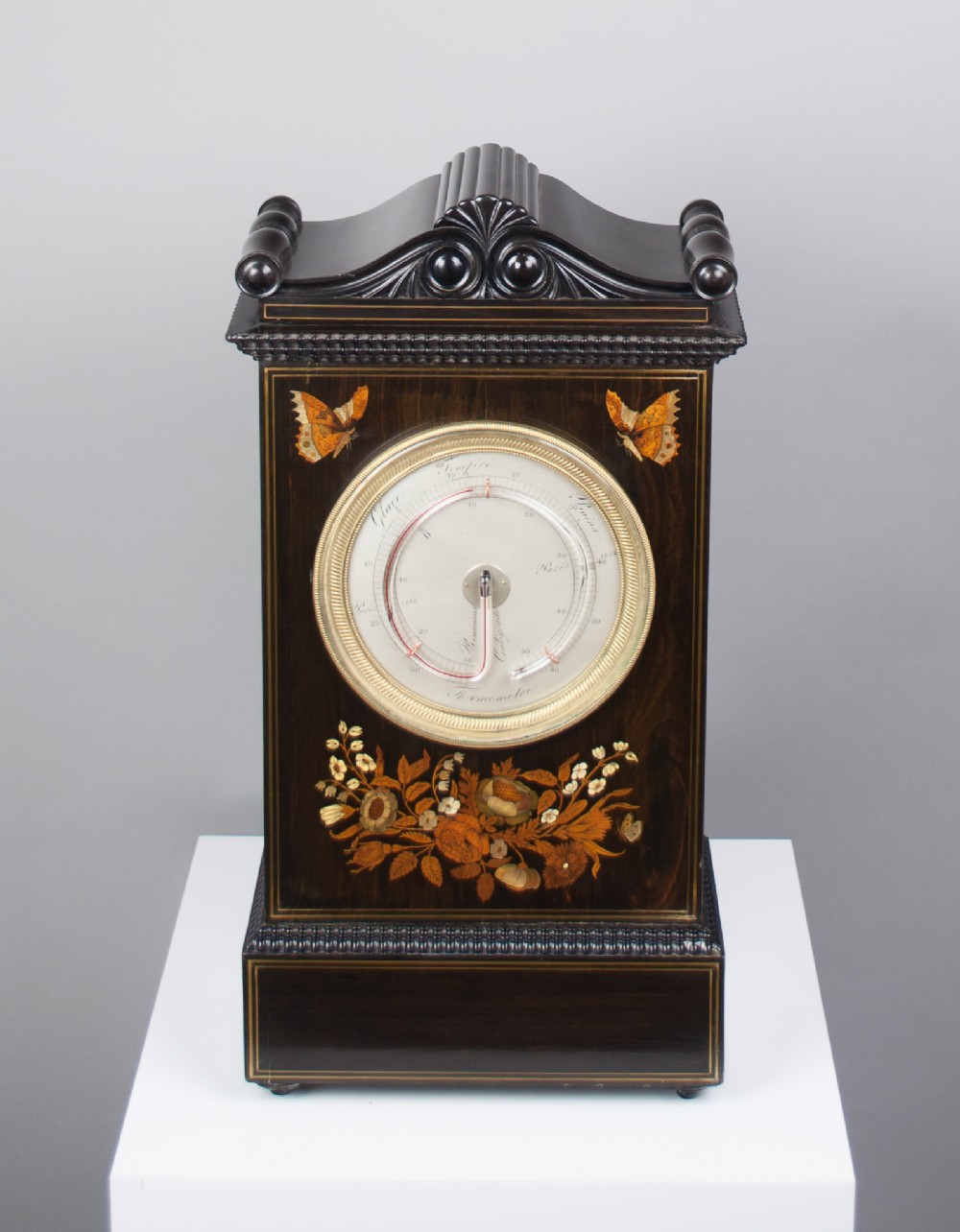
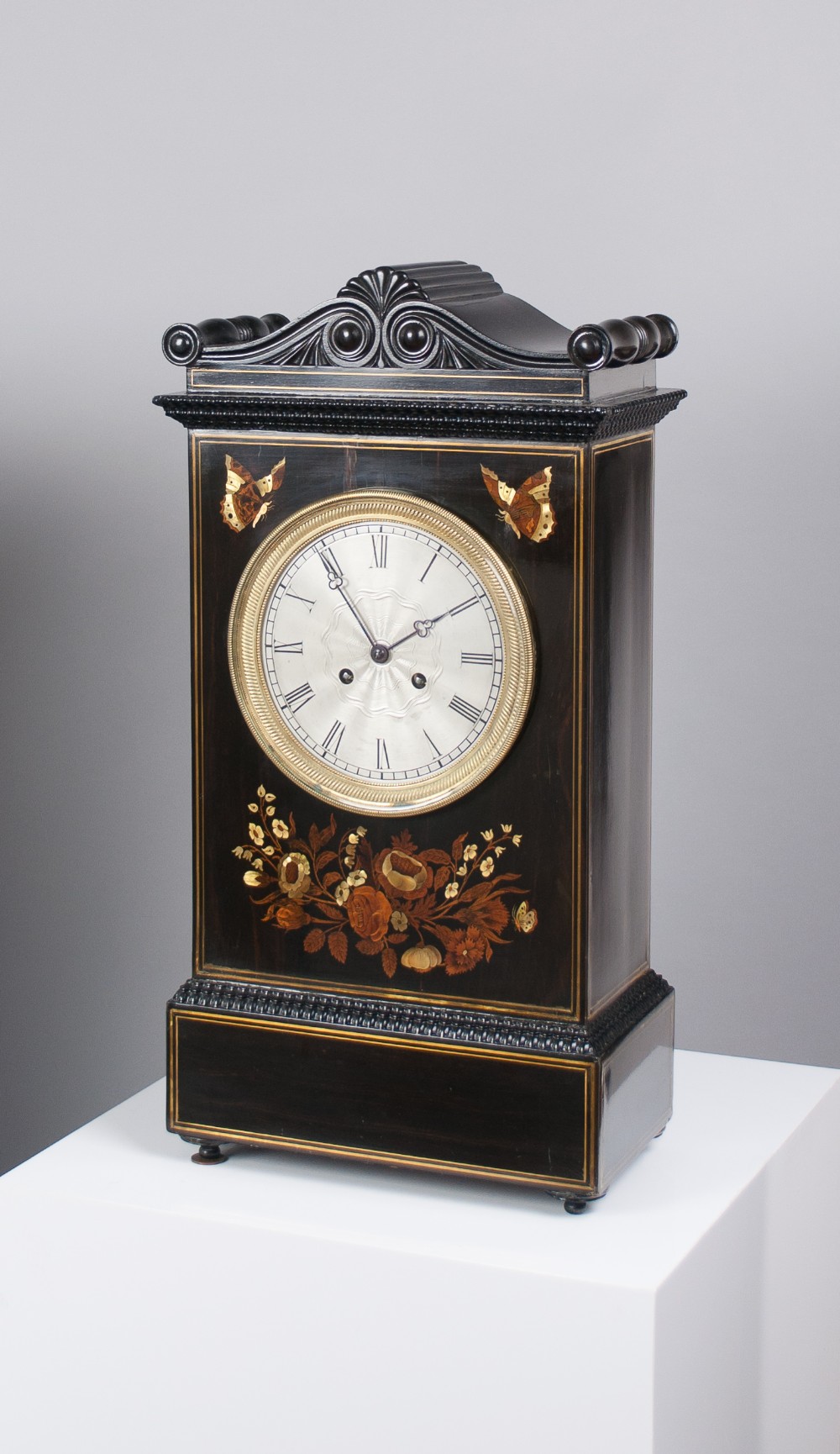
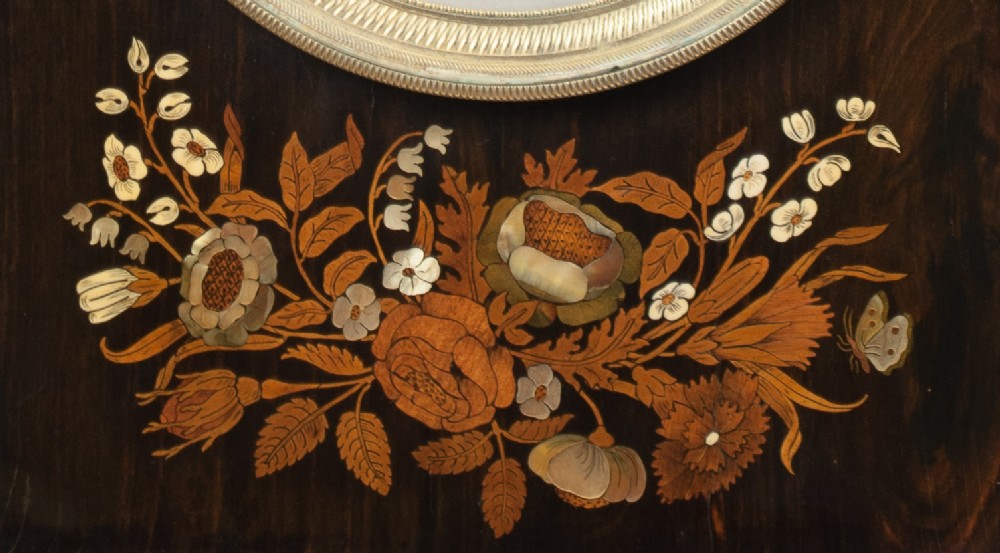
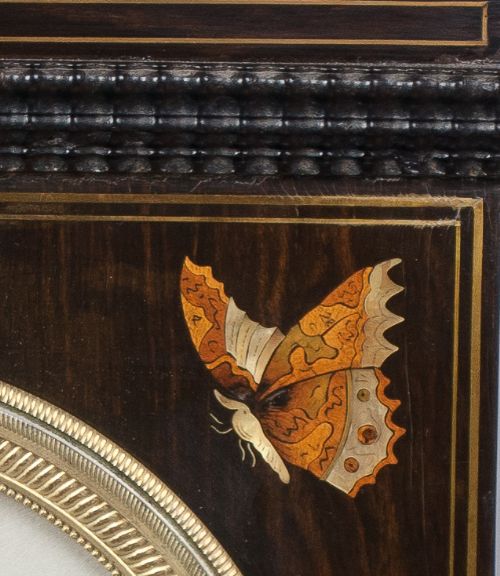
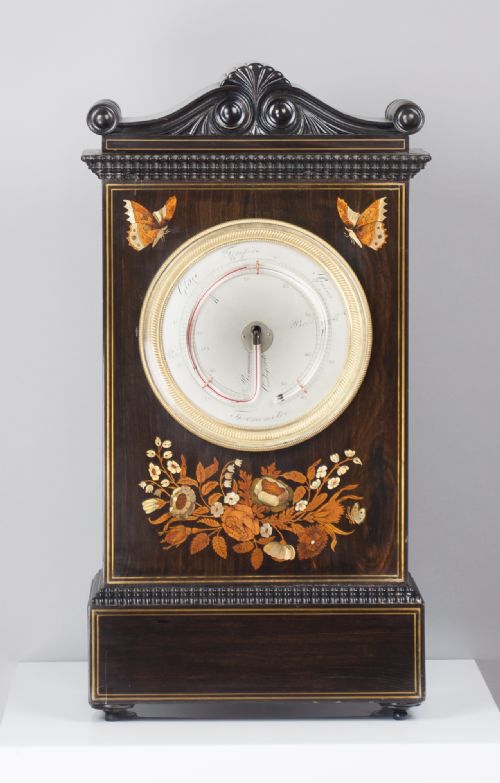
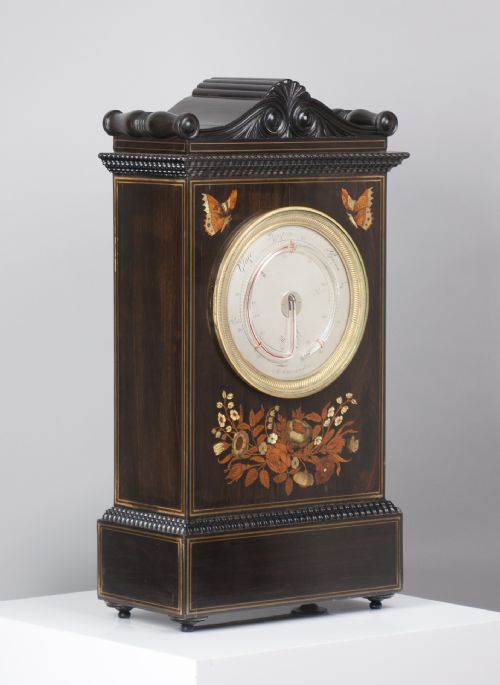
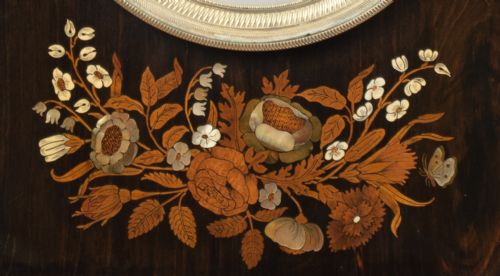
The inlays are in perfect condition, superbly executed and very detailed.
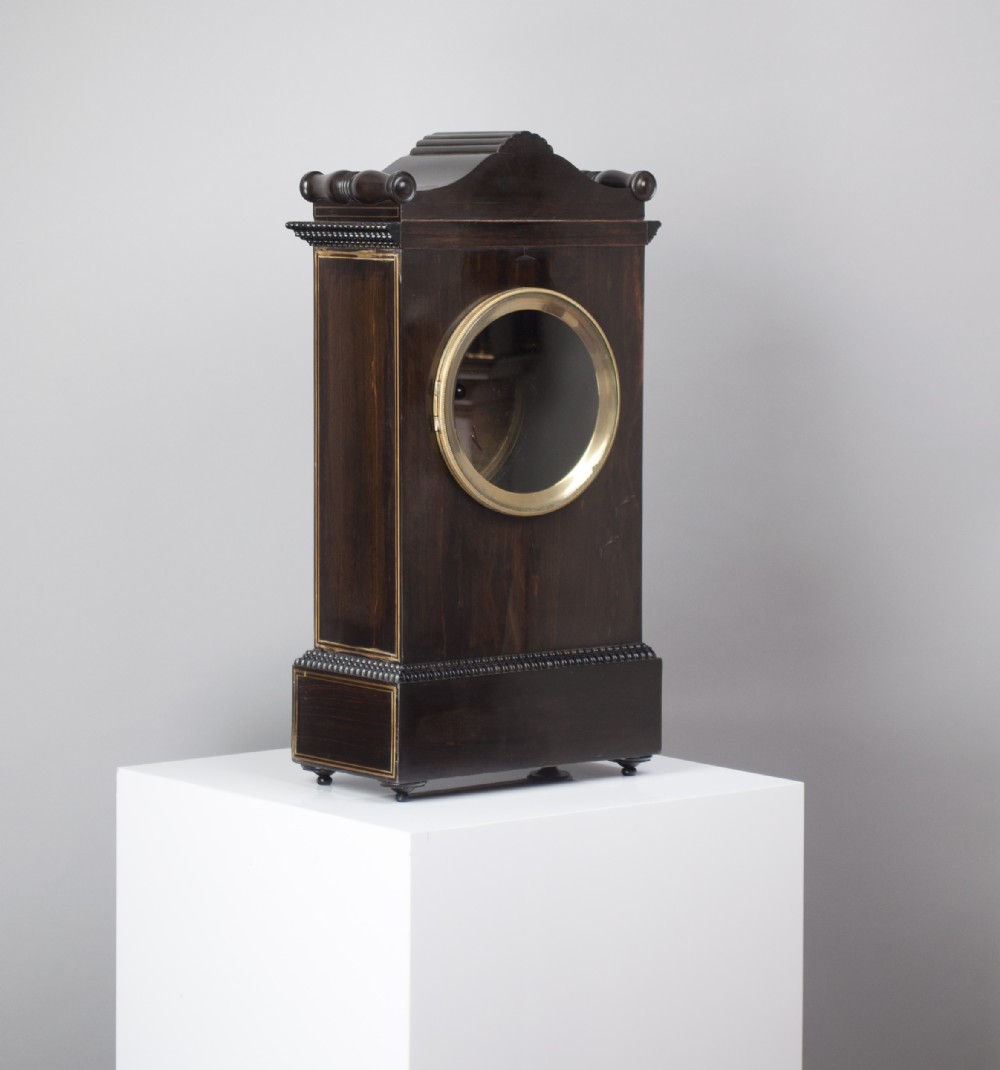
The scrolled and carved pediments with finely cast and decorated brass bezels beneath.
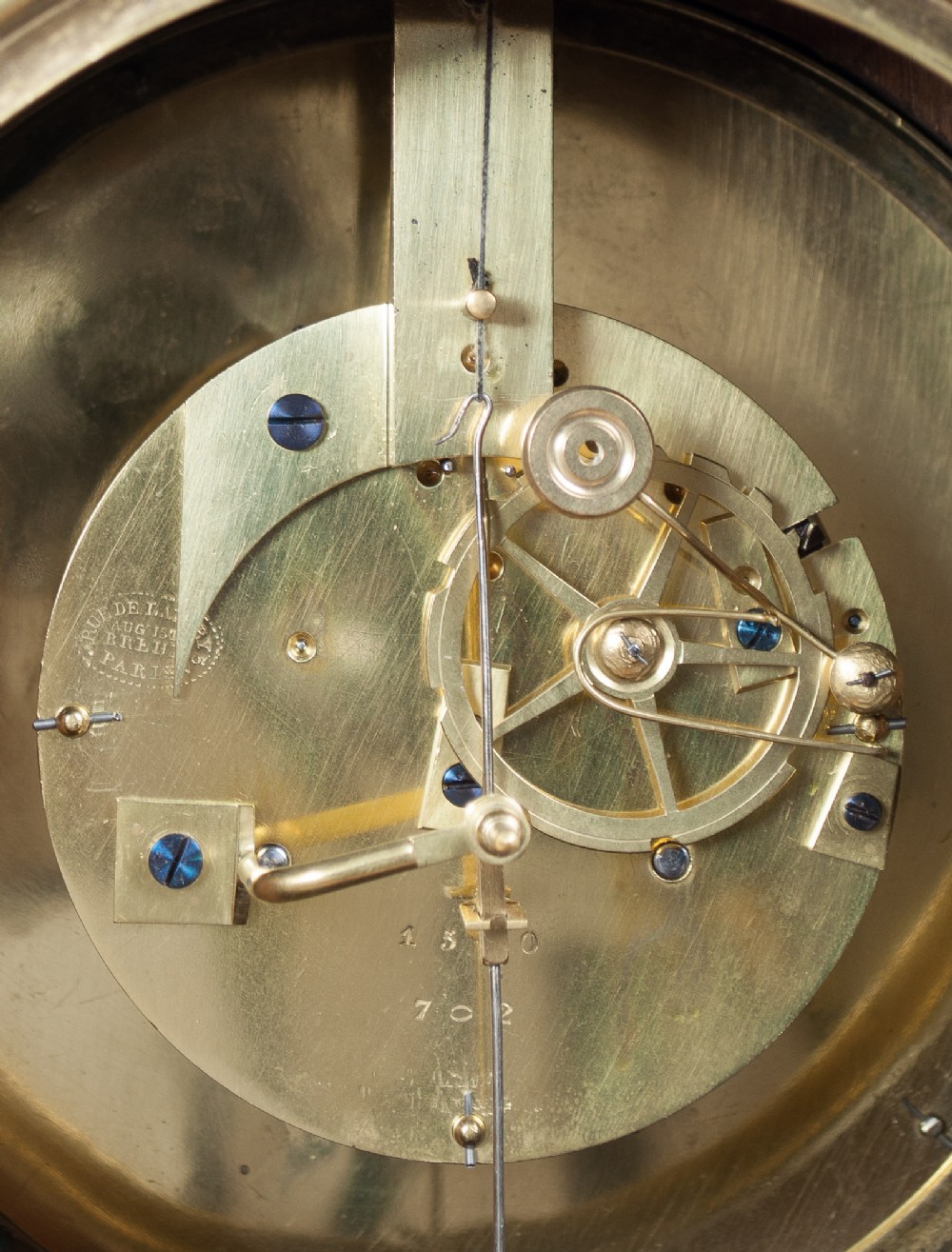
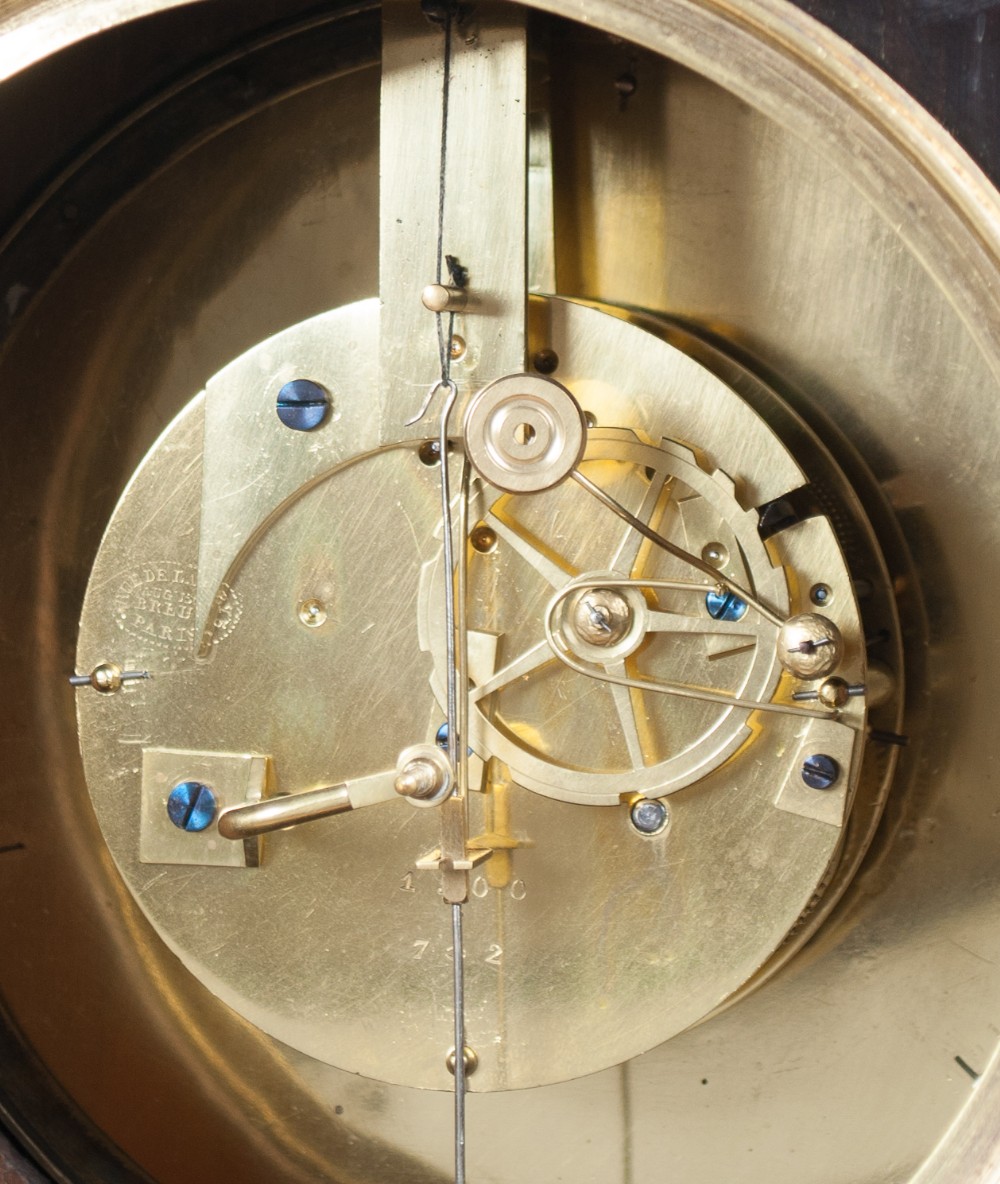
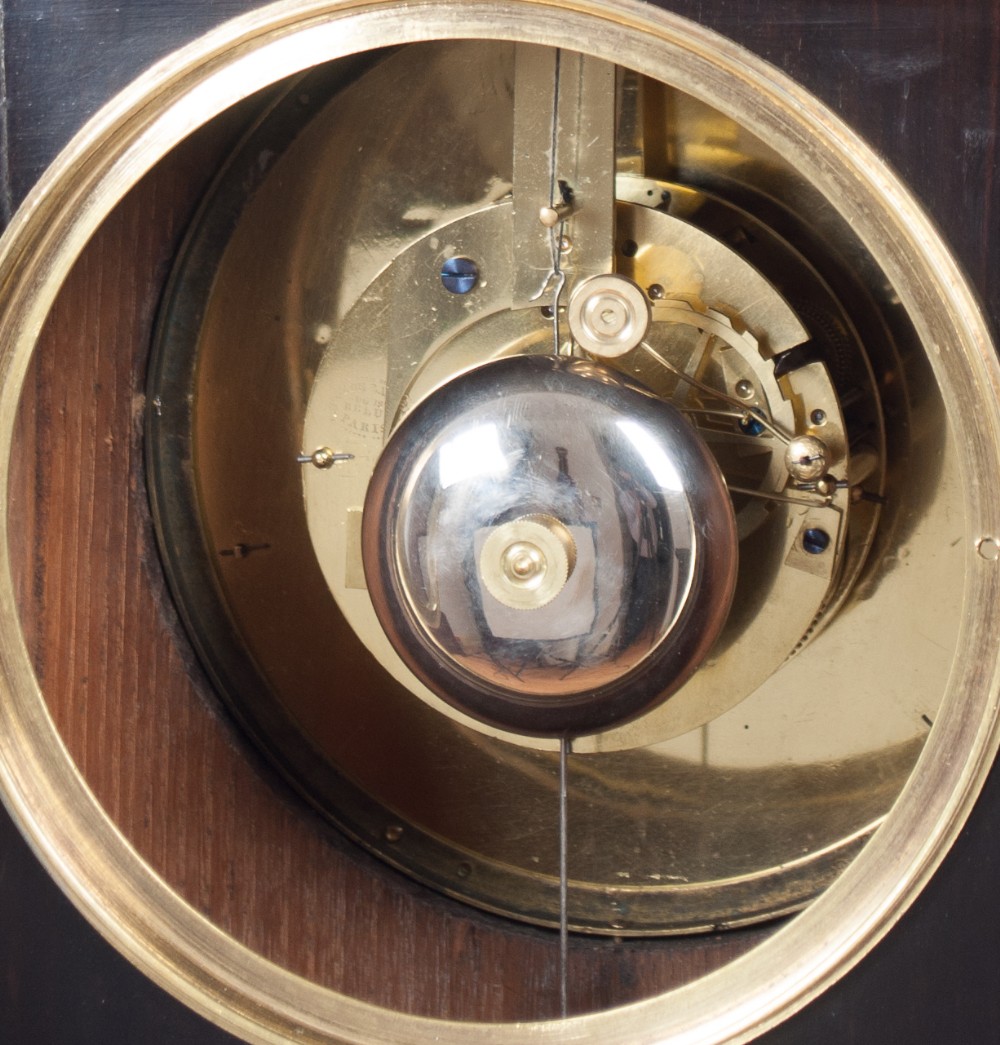
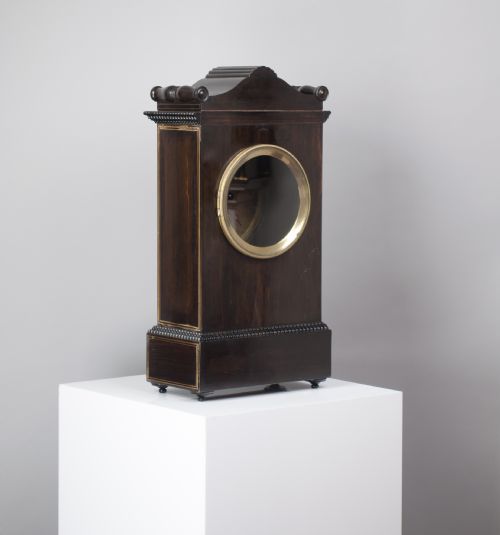
The fully restored fine quality spring driven 8 day silk suspension movement, count wheel striking the hours and half hour on a single bell, stamped for the maker to the back plate, Auguste Breul, Rue De Lancry 5, Paris.
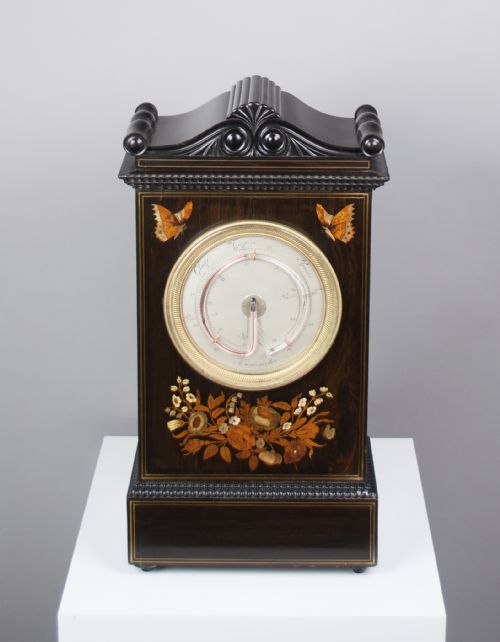
The silvered brass dial with decorated centre and trefoil blued steel hands.
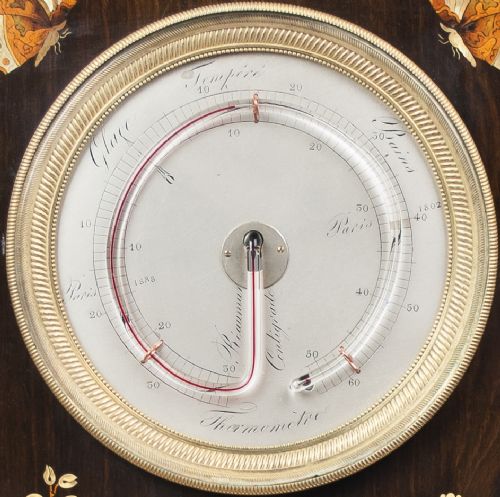
The finely engraved silvered brass thermometer with circular alcohol thermometer indicating the centigrade and Reaumur scale, signed Paris.
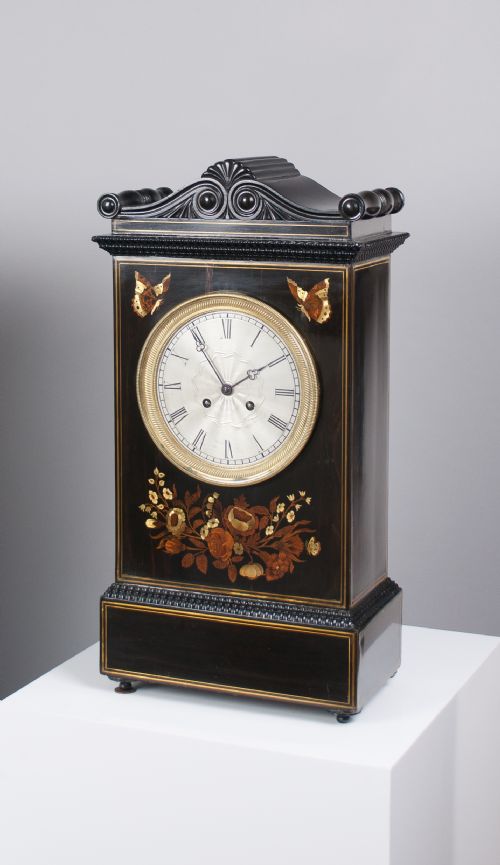
Overall a very fine set in wonderful original condition, with fine patination and colour.
All of our clock movements are restored by our horologist who works exclusively for us.
Our horologist is a Fellow of the British Horological Institute (FBHI), having 35 years of full time professional engagement in the repair & restoration of clocks, watches, music boxes & barometers. He was the recipient of the 1977 Worshipful Company of Clockmakers Bronze Medal.
Please contact us for further details and delivery information.
Auguste Breul, clockmaker and bronze-worker active in Paris in the mid-19th century, in his workshop executed centerpieces, candelabra, clocks and many other bronze objects which would embellish the dining rooms and the sitting rooms of the best noble families in Europe. It was thanks to his lavishly ornate style, to the extremely refined workmanship along with the originality of his models that Breul became the most sought-after artist for those who wished to possess bronzes of the latest Parisian fashion.
The prestige Breul achieved in the mid-19th century is confirmed by the important commission he received in 1850 by the Austrian minister in Paris, Count Graf Hübner, who entrusted him with the execution of a dinner service for the young emperor Franz Joseph of Austria. The count, after visiting the laboratories of the bronze worker, sent the drawings of two projects to Vienna: the commission was assigned the same year, and the following April Breul delivered his centerpieces to the private abode of the Prince of Liechtenstein, which were later transferred to the Hofburg residence. Everything was conducted with the utmost secrecy: those were in fact the years following the 1848 revolution and finances were mainly directed at re-launching the economy of the country and at supporting the local manifactures: nevertheless, a surtout de table à la mode executed in the latest Parisian fashion from its most refined bronze worker was too prestigious an occasion to be missed.
Around the middle of the 19th century Francesco Filiberto Larderel also turned to Auguste Breul to furnish his newly built palace. Larderel was born in 1789 in Vienne, France, and had moved to Livorno in the Napoleonic era, where the 1814 almanacs described him as a “chincagliere” (= seller of knick-knacks). In the following fifteen years, exploiting the geological resources of the lagoni in the area of Volterra, he sponsored and developed the boric acid industry, accumulating a small fortune.
His ascent in the entrepreneurial field of the Grand Duchy of Tuscany coincided with the building of the impressive four storey residential palace along Via dei Condotti Nuovi, completed in 1832 with a cost of 70.000 lira: an event which opened up the doors of notoriet
FJ & RD Story Antique Clocks has dated this piece to the 19th Century.
You can view the stock and full dealer information on the FJ & RD Story Antique Clocks Profile Page
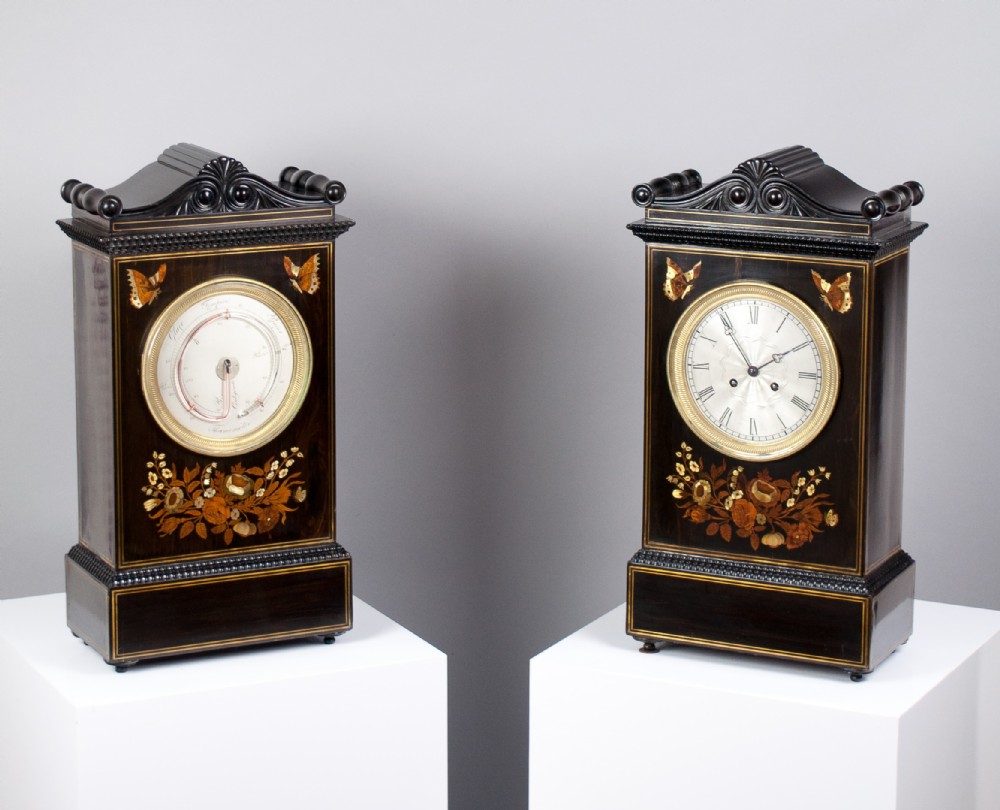
Inlaid French Mantel Clock & Matching Thermometer C.1841