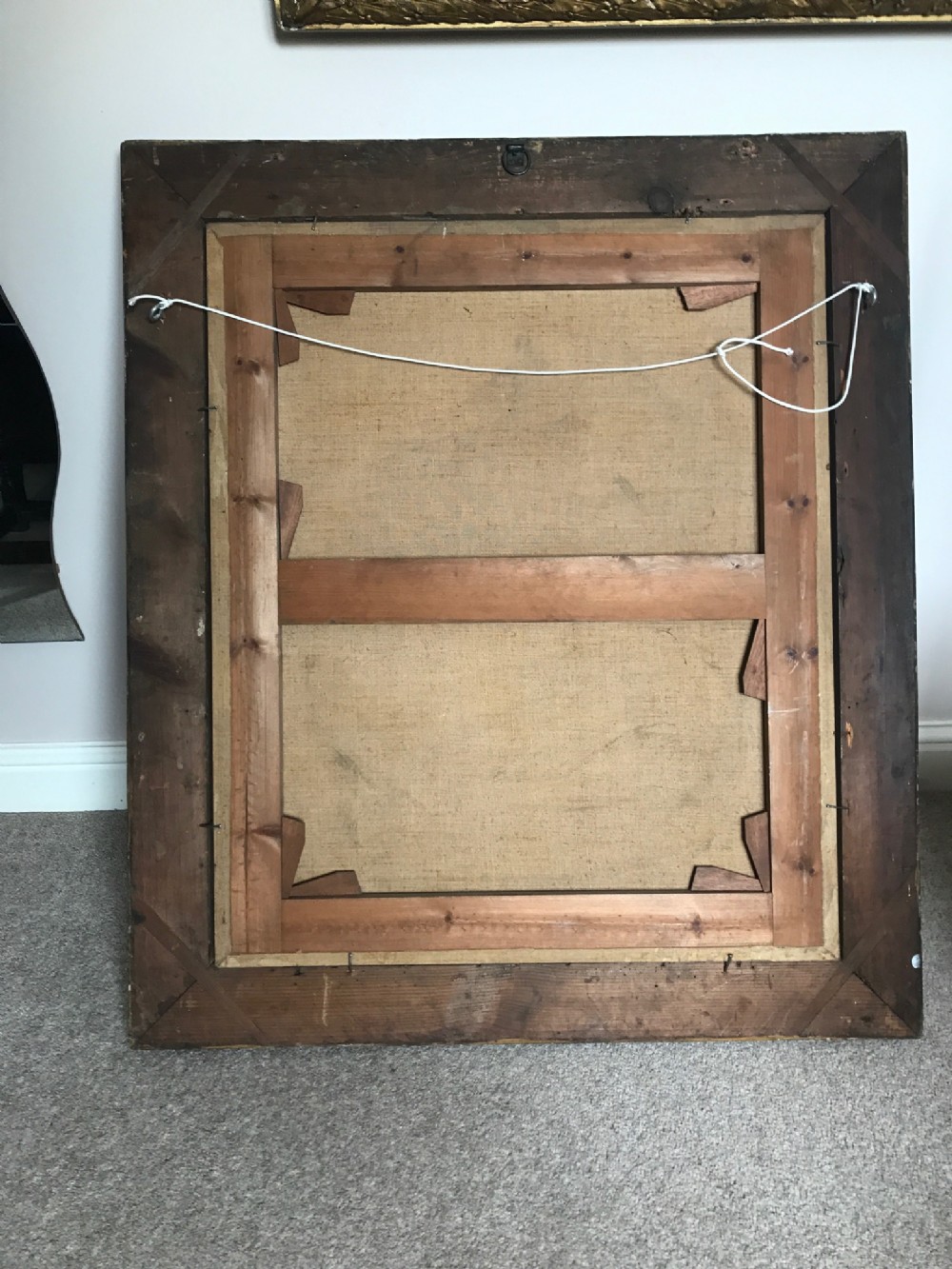
Roy Precious - Antiques & Fine Art has dated this piece to the 18th Century.
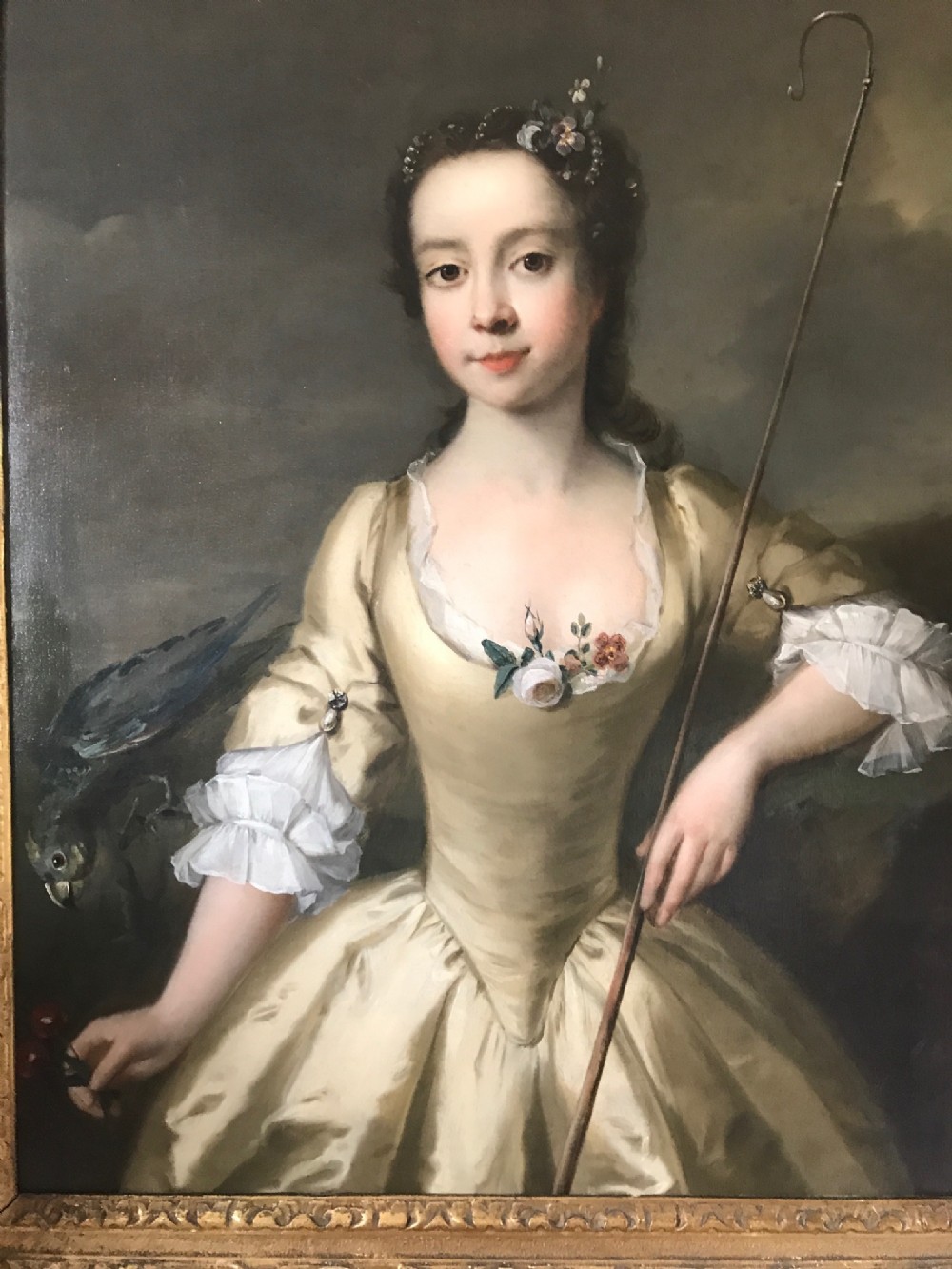
The sitter is depicted holding a shepherd's crook; clearly she is in the land of Arcady (Arcadia) which was a mythical domain where innocence, love and happiness reigned and was a fashionable setting for portraiture and literature.
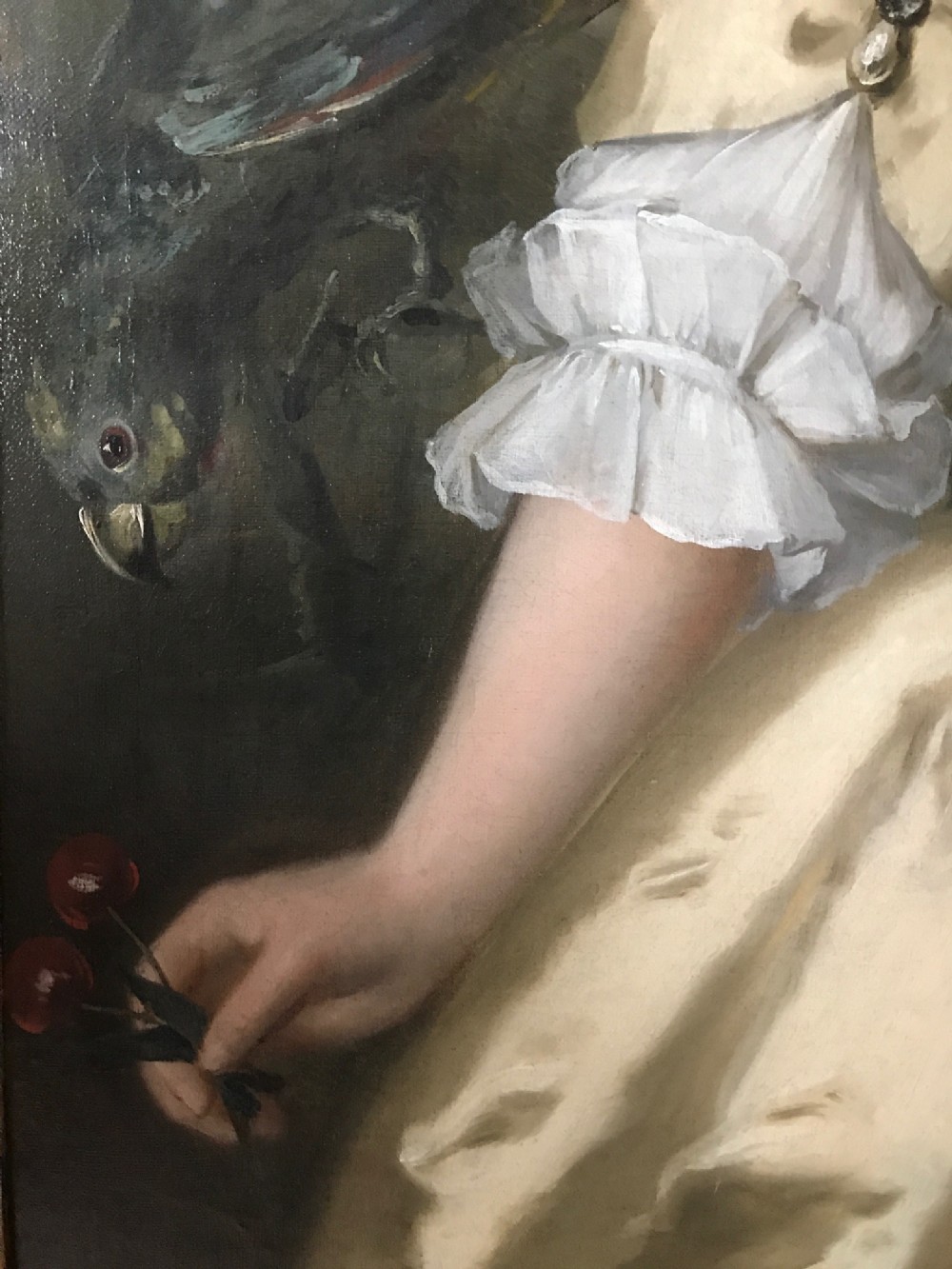
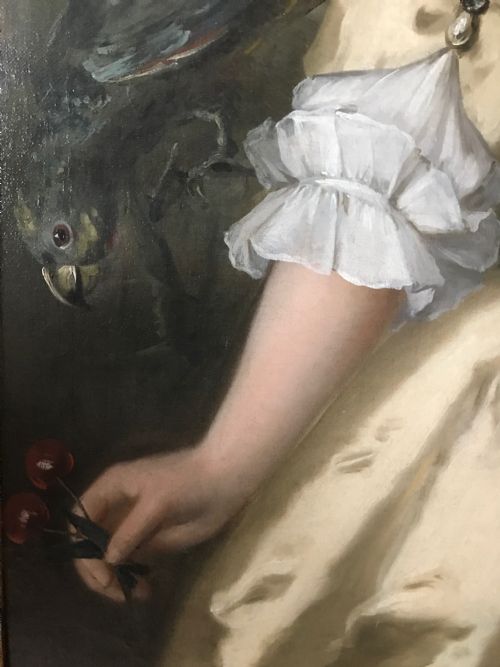
She holds cherries which symbolise the early summer of one's life.
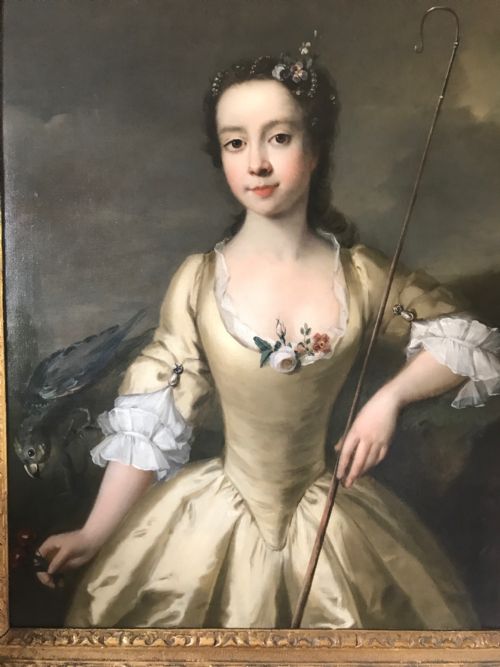
A green parrot, as well as demonstrating the wealth of the sitter to own such an exotic creature, also...curiously...symbolised virginity. This was probably because of its association with the Virgin Mary in earlier art.
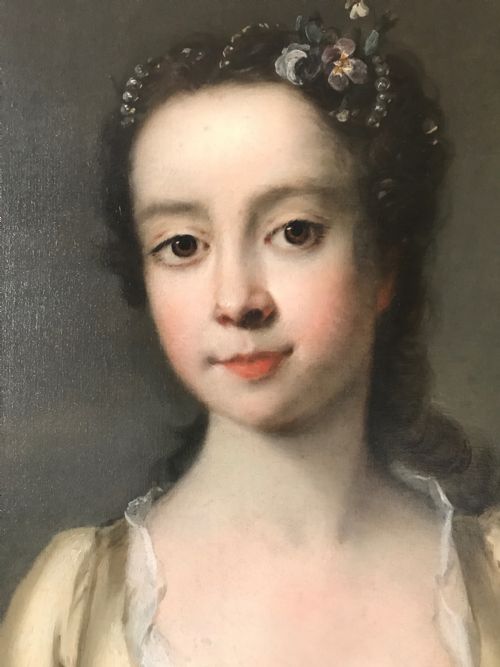
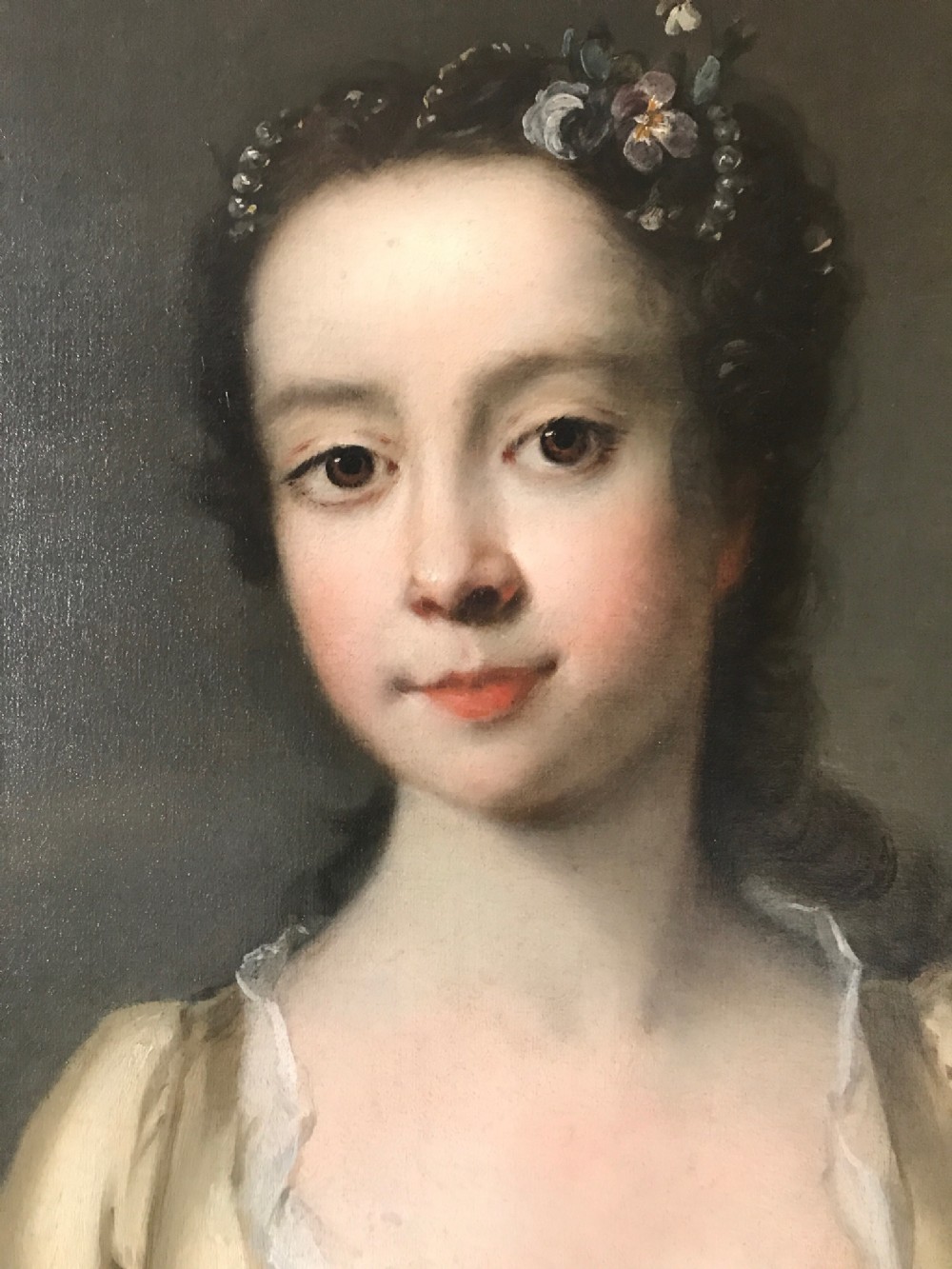
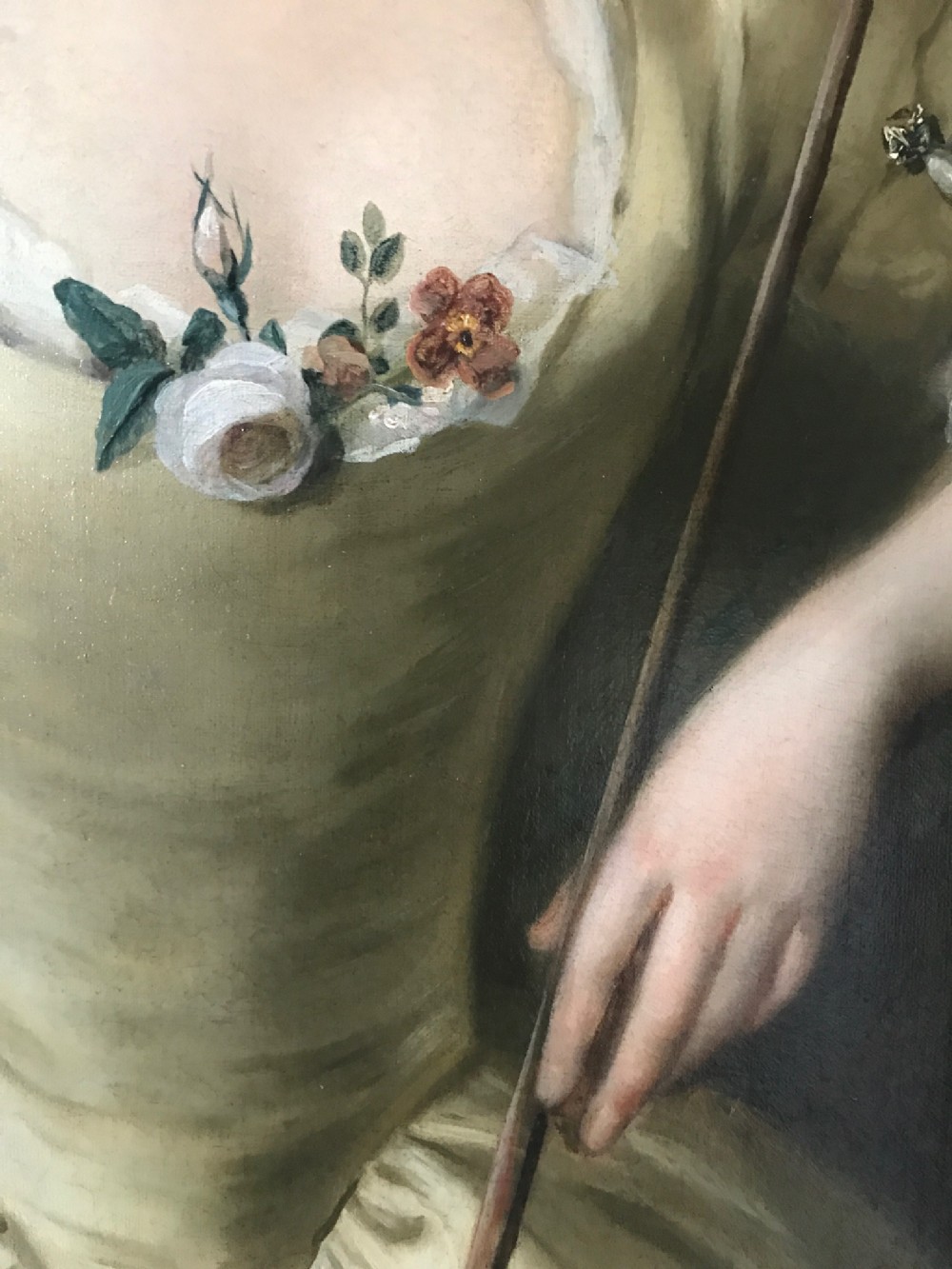
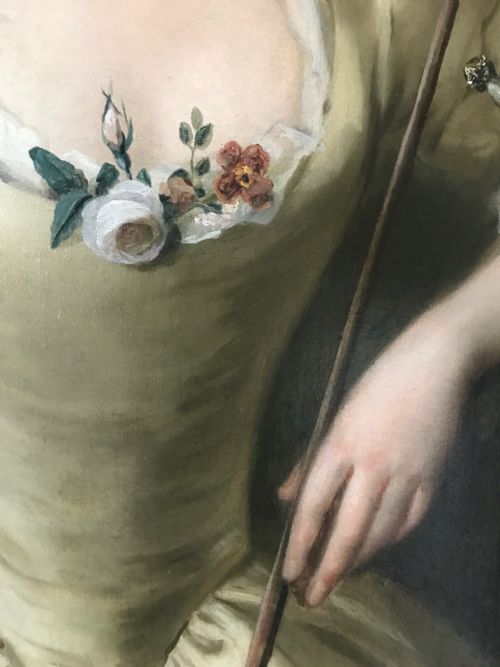
The flowers in her hair and dress represent youth and its fleeting nature and, in particular, the ones tucked into her dress symbolise future fecundity.
This is little doubt that this beautiful portrait was commissioned to commemorate the marriage of the this young woman.
PHILIP MERCIER (also known as Philippe Mercier; 1689 in Berlin – 18 July 1760 in London) was a French painter and etcher, who lived principally and was active in England. He was born in Berlin of French extraction, the son of a Huguenot tapestry-worker. He studied painting at the Akademie der Wissenschaften of Berlin and later under Antoine Pesne, who had arrived in Berlin in 1710. Later, he travelled in Italy and France before arriving in London—"recommended by the Court at Hannover"—probably in 1716. He married in London in 1719 and lived in Leicester Fields.
He was appointed Principal Painter and librarian to the Prince and Princess of Wales at their independent establishment in Leicester Fields, and while he was in favour he painted various portraits of the royals, and no doubt many of the nobility and gentry. Of the royal portraits, those of the Prince of Wales and of his three sisters, painted in 1728, were all engraved in mezzotint by Jean Pierre Simon, and that of the three elder children of the Prince of Wales by John Faber Junior in 1744.
Mercier introduced much of the vivacity and the colouring of the French rococo into British portraiture at this date. He was an admirer of the works of Watteau, and paintings such as The Schutz Family, 1725 (London, Tate Gallery) and Frederick Prince of Wales and his Sisters 1733 (example National Portrait Gallery) show the burgeoning rococo taste that can also be detected in the near-contemporary works of Francis Hayman.
Mercier became involved in a scandal of sorts and he lost favour. He left London around 1740 and settled in York, where he practiced portrait painting for over ten years, before returning to London in 1751. In 1752, Mercier went to Portugal at the request of several English merchants. He did not long remain there, however, but came back to London, where he died in 1760.
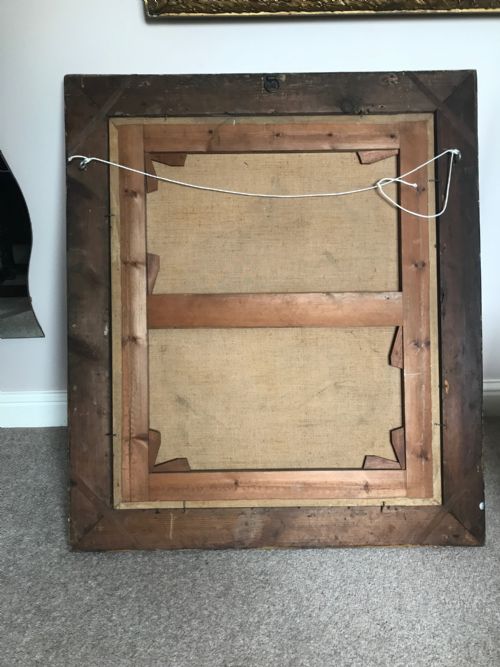
SIZE: 37 x 32 inches including frame.
Roy Precious - Antiques & Fine Art has dated this piece to the 18th Century.
Roy and nadine precious: specialists in portraiture from the 16th to the 20th century. Established in 1972.
You can view the stock and full dealer information on the Roy Precious - Antiques & Fine Art Profile Page
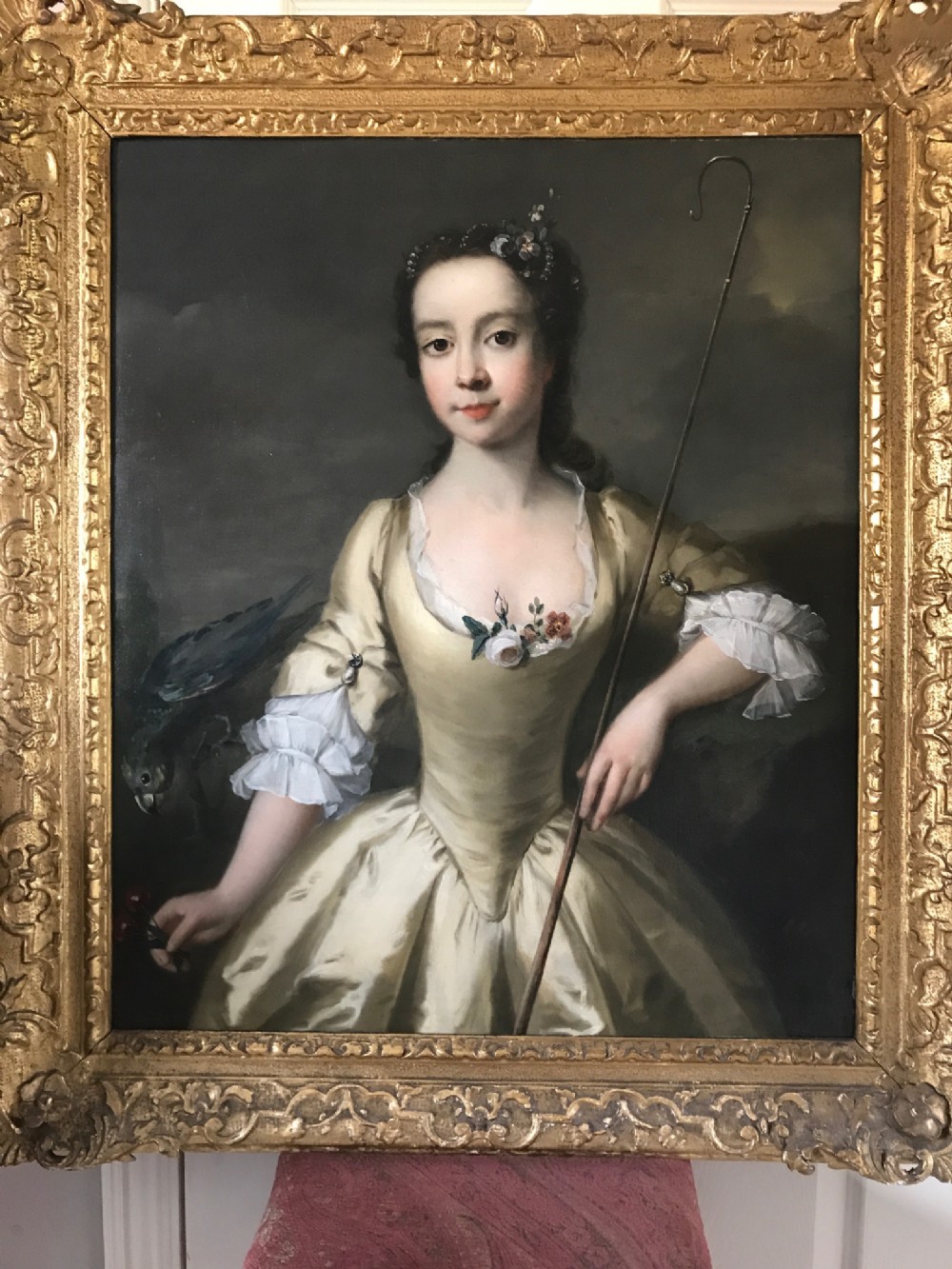
Portrait of a Young Lady C.1750; Attributed to Philip Mercier.