Marlborough Antiques & Interiors has dated this piece to the Victorian era.
Gustavo Bacarisas was Gibraltar's greatest and best known artist. He died in Seville in 1971. He was 98 years old. In his memory, the City of Seville gave a newly built street his name – Calle Gustavo Bacarisas. Appropriately the street was in that most typical district of Seville – El Barrio de Triana.
Peter Caruana – then Chief Minister of the Rock – spoke on the opening day. Gustavo Bacarisas, he said, was without doubt, one of the most important figures in the history of Gibraltarian art and culture. But he was more than that – he was something that the Chief Minister of Gibraltar chose to ignore. Bacarisas was a Gibraltarian who felt very much at home in Spain. He was an example of a different kind of Gibraltarian identity, a man who found it easy to embrace Spain and its culture without finding it in anyway incompatible with being a native born Gibraltarian.
In 1905 he took part in the Venice Biennale where he may have been pleased to have his work admired by the King and Queen of Italy – however dubious their art critic credentials . It was the success of this exhibition that probably enticed him to move to Paris. It was a good decision. His pictures were beginning to show signs of French impressionist influences. He stayed in the old study of James McNeil Whistler – a man whose work he must have admired. He didn't stay long but was obviously on his way up. The following year he found himself in London where he studied the works of classical English artists while finding time to exhibit at the Royal Academy. It was perhaps here that he managed to sell to a private American collector the picture of El Corso which he had exhibited previously in Barcelona. He got a thousand pounds for it - a considerable amount of money in those days.
In 1921 he returned to Madrid and exhibited no less than 50 pictures in the Museo De Arte Moderno which included portraits of Andalucian stereotypes as well as some of his most recognisable pictures – the Sevilla en Fiesta series. A few years later in 1922 he was on the move again, this time to Stockholm where he had been commissioned by the Swedish Government to design the scenery and costumes for a production of Bizet's Carmen in the Royal Dramatic Theatre – or Dramaten as it was known after its relocation in 1908. It would be his first of many artistic interventions in the world of the theatre and ballet. There was also an added bonus – it was here that he met his future wife Elsa Jernas who was herself a well know artist in Sweden. In 1925. he was also commissioned to design the scenery and decorations by the Trocadero Theatre in London for a production of Léo Delibes' comic ballet, Coppélia. In 1932 he took part in an international exhibition of modern art in the Baltimore Museum of Art which had been organised by the Carnegie Institute. The exhibition was visited by 30000 people. This was followed by another successful exhibition in the Museum of Fine Arts of St Louis. The Spanish newspaper ABC was glowing in its reports - although perhaps understandably forgetting his Gibraltarian origins. During this period he also designed the sets and costumes for a production of Léo Delibes' 'Coppelia' which was stgaged in London's Trocadero.The start of the Spanish Civil War found him in Madrid. He returned to Gibraltar. Here he painted some local scenes and took the opportunity to cross the straits to Tangier – yet again – and beyond.In 1940, and at the start of World War II he and his family – together with most of the local population – were forced to leave the Rock. The
Marlborough Antiques & Interiors has dated this piece to the Victorian era.
We display a variety of antiques at all price levels, including furniture, paintings and other decorative items
You can view the stock and full dealer information on the Marlborough Antiques & Interiors Profile Page
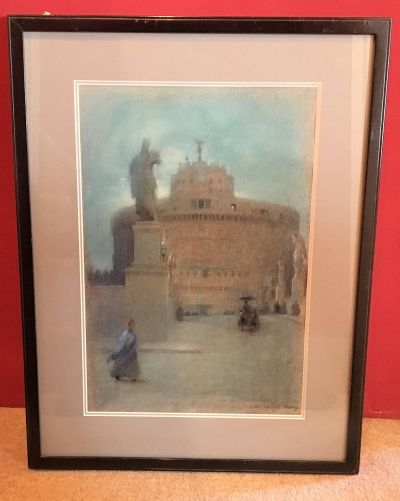
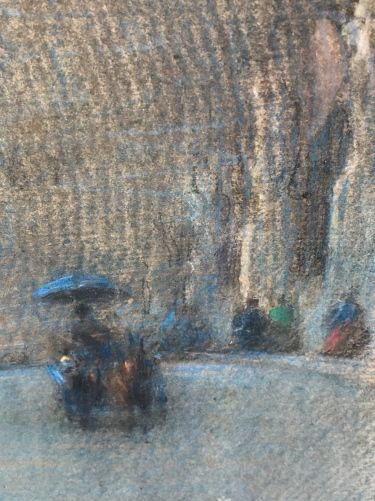
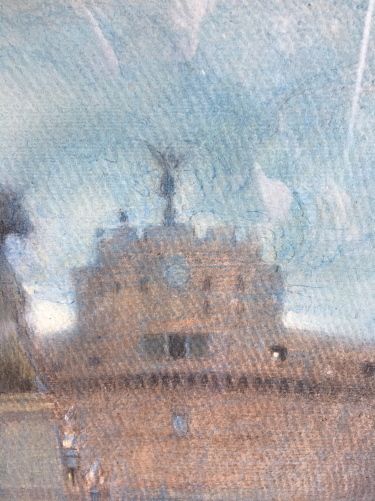
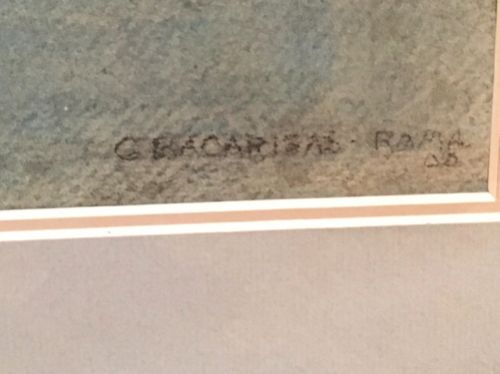
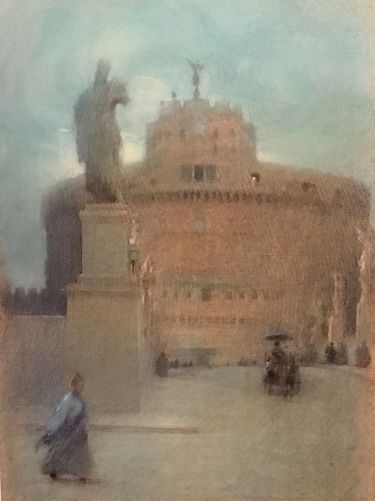
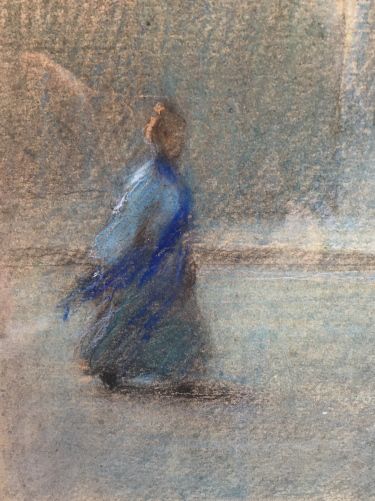
Gustavo Bacarisas - Pastel - Castel Sant Angelo - Signed & Dated