English School 19th, Century
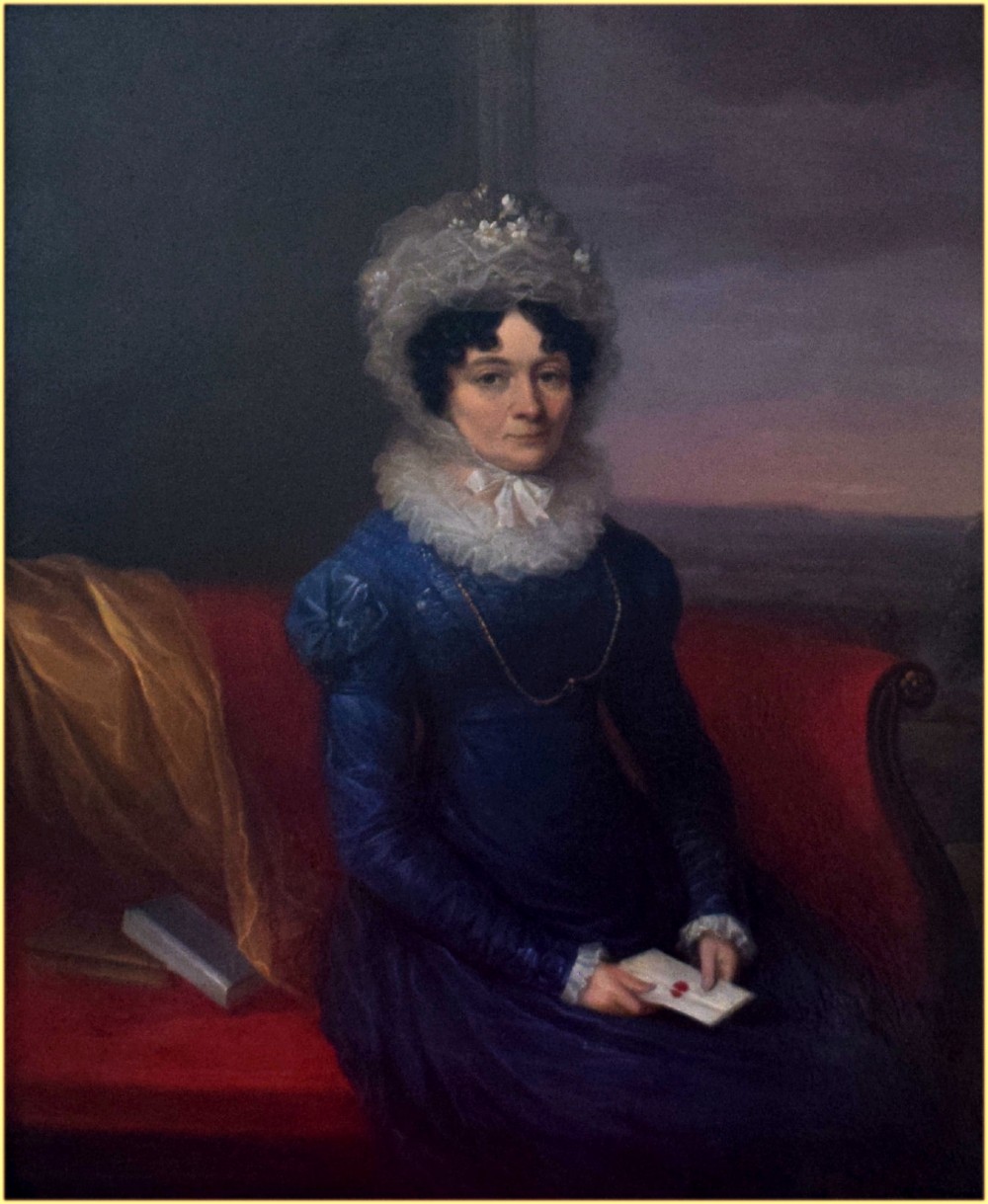
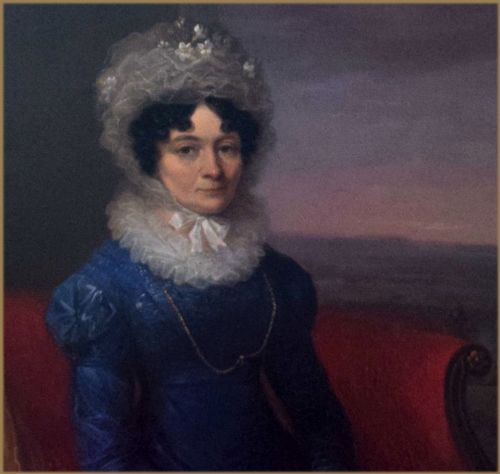
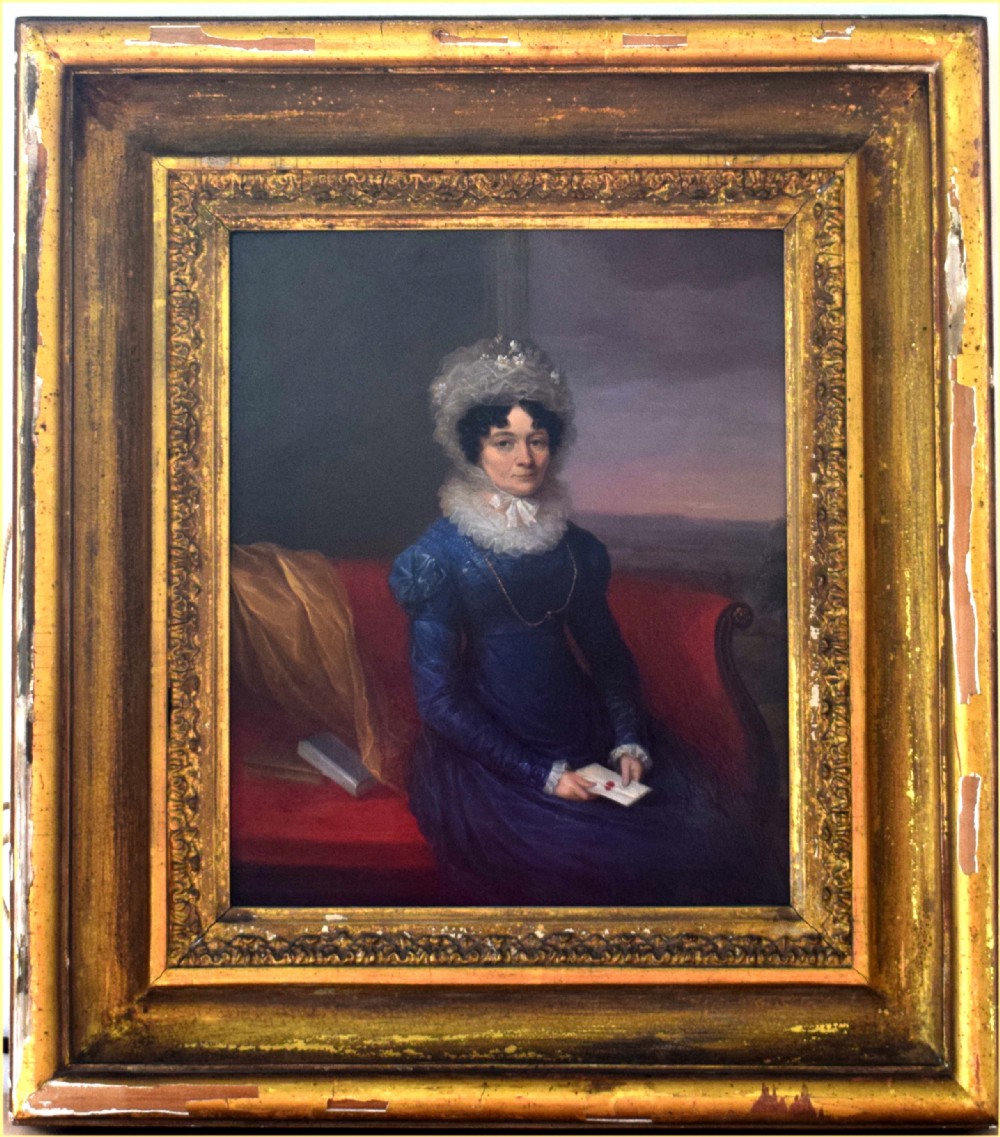
Portrait of Catherine Hutton 1756 – 1846, was an English novelist and letter-writer
oil on copper
11 x 9.3/4in. (28 x 24.38 cm.)
Catherine Hutton seated on a sofa holding a sealed letter with books beside her.
Provenance
The Hutton Family of Gate Burton
Notes
Catherine Hutton (11 February 1756 – 13 March 1846) was an English novelist and letter-writer.
Hutton, Catherine (1756–1846), novelist and letter-writer, was born on 11 February 1756, probably in Birmingham, the only surviving daughter of William Hutton (1723–1815), a Birmingham-based bookseller and topographer, and his wife, Sarah Cock (1731–1796). The family was a close and affectionate one, and, although she was tempted to marry, filial devotion prevented Catherine Hutton from ever leaving home. She nursed her mother through five years of illness before her death, and continued to care for her father in his old age. He repaid her with admiring sympathy: in his autobiograp
...hical Life, he praised both her character—she was ‘incapable of an ill-natured speech’—and her abilities—‘whatever lies within the bounds of female reach she ventures to undertake, and whatever she undertakes succeeds’ (Jewitt, 45).
From the ages of seven to fourteen Catherine Hutton attended an undistinguished day school in Birmingham; subsequently, she hoped to attend a boarding-school in Worcester, but was prevented by her father, and continued her own education at home. In Birmingham, she was in the midst of a stimulating scientific, intellectual, and religious community: her father, the author of a history of Birmingham, promoted the development of education and science in the city and, as a Unitarian, moved in progressive dissenting circles. Catherine herself joined Joseph Priestley''s congregation in the 1780s, and became a friend of the radical novelist Robert Bage. The confidence of both Catherine Hutton and her contemporaries was, however, severely dented by the 1791 Birmingham Church and King riots: rioters attacked both William Hutton''s town house and business, and his country house on the outskirts of Birmingham at Bennett''s Hill, Washwood Heath.
From an early age, Catherine Hutton was a keen letter-writer. The Coltman family of Leicester and Mrs Andre of Enfield, Middlesex, were lifelong correspondents. She also wrote to her cousin the mathematician Charles Hutton (1737–1823), Sarah Harriet Burney (Fanny Burney''s half-sister), the radical author Sir Richard Phillips, Eliza Cook, and, latterly, Edward Bulwer Lytton, and Charles Dickens. Her letters are full of anecdotes and shrewd observations on her acquaintance and are seasoned with a self-deprecating wit, their direct address and dry cheerfulness recalling the epistolary style of Jane Austen. Hutton delighted in Austen''s novels, and believed that ‘her character is either something like mine, or what I would wish mine to be’ (Reminiscences, 183).
In 1778 Catherine Hutton visited London (the first of twenty-six visits) and became a keen tourist, travelling throughout England and Wales in the course of her life. Although she described herself as ‘a worshipper of mountains’ (Reminiscences, 118), her reflections were not limited to romantic commonplaces. She commented on the condition of inns and boarding-houses and the eccentricities of her fellow guests, and she visited industrial towns, factories, and (in 1801) a slave ship in Liverpool. Her observations were characteristically frank. She described Aberystwyth, which she visited in 1787, as ‘a poor, petty place’, uninfluenced by having received two proposals of marriage during her stay (ibid., 52). The spa town of Malvern, which she first visited in 1802, was more to her taste; she revisited it annually for the next thirty-two years.
In 1813 Catherine Hutton published The Miser Married: a Novel, which she dedicated to her fa
Internal Reference: 3907
Antique ID Number (AIDN): SA486029
Dateline of this antique is 19th Century
Height is 28cm (11.0inches)Width is 25cm (9.8inches)Depth is 3cm (1.2inches)





Thank you.
Your comment has been sent to Sellingantiques.