68,757  PAGES BROWSED TODAY PAGES TODAY 0  ANTIQUES UPLOADED TODAY NEW ARRIVALS
Sort Order
Items Per Page
ID #SA485982
SOLD
Email
Save
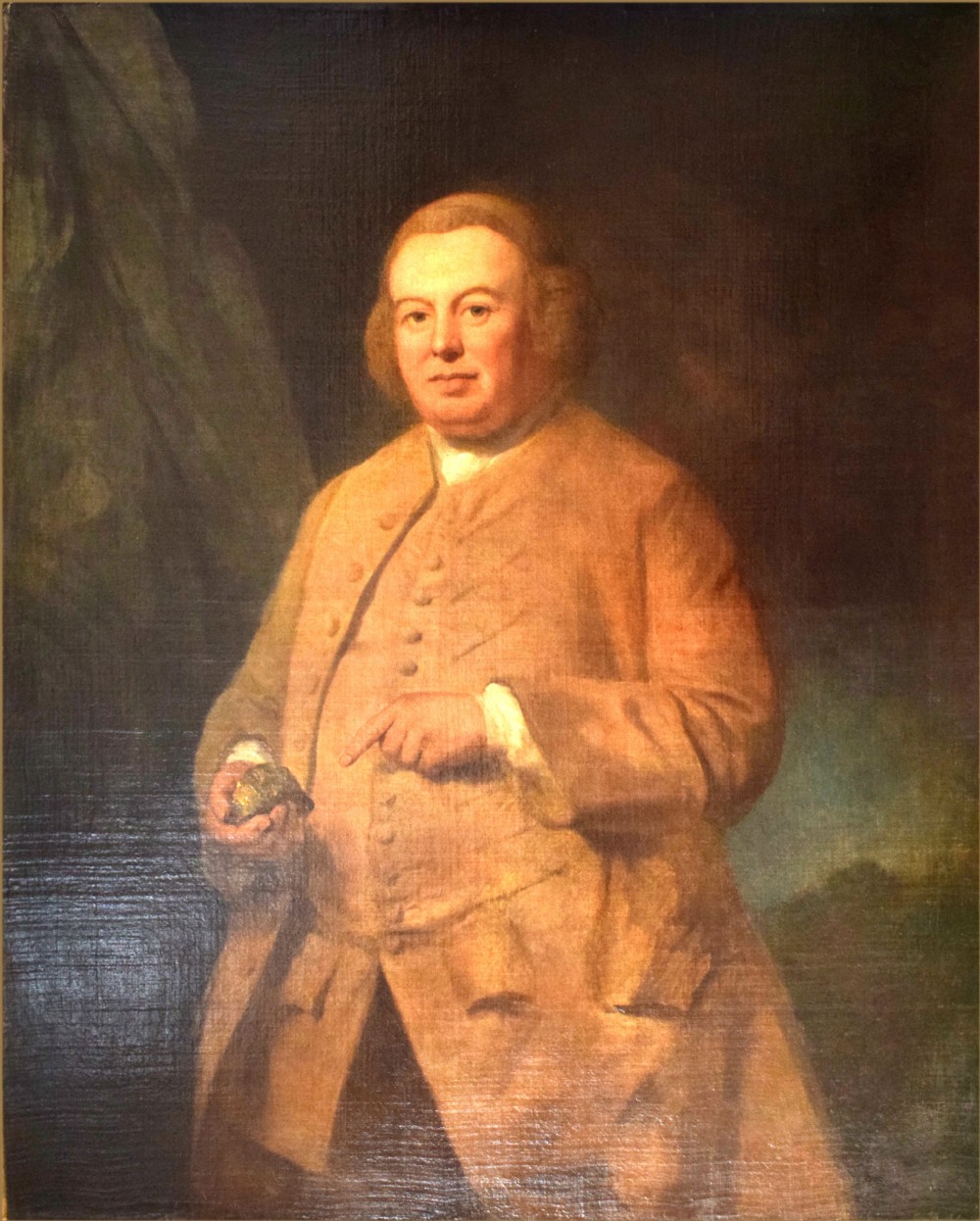
Attributed to Joseph Wright of Derby, Ara, 1734-1797 Portrait of Anthony Tissington F.r.s. (1703-1776), Holding a Piece of Chalcopyrite in His Hand , Standing in a Mine Shaft
Artware Fineart
sold SA485982
Sorry, but this item has been sold.

Artware Fineart

Sellingantiques Verified Since Sep 2008
View Dealers Stock Page
Id #SA485982
PDF SHARE
SAVE

Attributed to Joseph Wright of Derby, Ara, 1734-1797 Portrait of Anthony Tissington F.r.s. (1703-1776), Holding a Piece of Chalcopyrite in His Hand , Standing in a Mine Shaft

18th century
Description

Attributed to Joseph Wright of Derby, ARA, 1734-1797

Portrait of Anthony Tissington F.R.S. (1703-1776), holding a Piece of Chalcopyrite in his hand , standing in a Mine Shaft

Signed/Inscribed:

on the stretcher "Tissington"

oil on canvas

50 x 40 in. (127 x 102 cm.)

Description

It is interesting to note that there is a very similar specimen of Galena, with pyrite, chalcopyrite, malachite, and quartz in the Hull Museum collection, Accession No:KINCM:1966.101.74 which was formelry in the collection of Anthony Tissington and William Constabe, the label on the specimen reads 'lead and copper... mixed as i hear not... before... Anthony Tissington Esq'.

Notes

Anthony Tissington is shown in a mine shaft holding a large piece Chalcopyrite Ore and there is apparently a large vein of it behind his right shoulder. Copper was also exploited in Derbyshire and Staffordshire, the Ecton mine was historically very important. It is possible that the Tissingtons were shareholders in the company that leased Ecton up to 1760, when the Duke of Devonshire took the mine back and worked it on his own account. There were certainly large bits of chalcopyrite brought out of Ecton at that time. Accoding to the Mineral expert at the Natural History Museum the ore is almost certainly Chalcopyrite which is a brass-yellow mineral with a chemical composition of CuFeS2. It occurs in most sulfide mineral deposits throughout the world and has been the most important ore of copper for thousands of years. The surface of chalcopyrite loses its metallic luster and brass-yellow color upon weathering. It tarnishes to a dull, gray-green color, but in the presence of acids the tarnish can develop a red to blue to purple iridescence. The iridescent colors of weathered chalcopyrite attract attention. Some souvenir shops sell chalcopyrite that has been treated with acid as "peacock ore." But, "peacock ore" is a more appropriate name for the mineral bornite. The most obvious physical properties of chalcopyrite are its brassy yellow color, metallic luster, and high specific gravity. These give it a similar appearance to pyrite and gold. Distinguishing these minerals is easy. Gold is soft, has a yellow streak and has a much higher specific gravity. Chalcopyrite is brittle and has a greenish gray streak. Pyrite is hard enough that it cannot be scratched with a nail, but chalcopyrite is easily scratched with a nail. The name "fool's gold" is most often associated with pyrite because it is more common and more often confused with gold. Chalcopyrite is also confused with gold, so the name "fool's gold" is also applied and appropriate.

The only important use of chalcopyrite is as an ore of copper, but this single use should not be understated. Chalcopyrite has been the primary ore of copper since smelting began over five thousand years ago. Some chalcopyrite ores contain significant amounts of zinc substituting for iron. Others contain enough silver or gold that the precious metal content more than pays the costs of mining.

The family originated from Tissington in Derbyshire where they had an estate in the 12th Century. His grandfather was Anthony Tissington of Darley Dale 1638-1700 The family moved to Oaker Hill, Derbyshire, the family had interests in mining since then. Anthony and his younger brother George, were the sons of Anthony Tissington. George was also an agent to several mining companies and he settled in Winster. He was highly regarded for his knowledge in minerals , he died in 1760.

Anthony Tissington attended DerbySchool where he was tutored by the Rev Garmstow, teaching him Natural Philosophy and Science over and above mathematics and Grammer. He left school early to take on family responsibilities with the family mining and mineralogy. He claimed in a 1775 lead mining dispute that he was a working miner fro the age of 8 to 20.

Physical Dimensions
Height
127cm (50.00")
Width
102cm (40.16")
Depth
1cm (0.39")
Declaration

Artware Fineart has dated this piece to the 18th Century.

Reference Numbers
Sellingantiques Reference
SA485982
Dealers Internal Reference
3909
Description
Attributed to Joseph Wright of Derby, ARA, 1734-1797

Portrait of Anthony Tissington F.R.S. (1703-1776), holding a Piece of Chalcopyrite in his hand , standing in a Mine Shaft

Signed/Inscribed:

on the stretcher "Tissington"

fig 1. Attributed to Joseph Wright of Derby, ARA, 1734-1797
Portrait of Anthony Tissington F.R.S. (1703-1776), holding a Piece of Chalcopyrite in his hand , standing in a Mine Shaft
fig 1. Attributed to Joseph Wright of Derby, Ara, 1734-1797 Portrait of Anthony Tissington F.r.s. (1703-1776), Holding a Piece of Chalcopyrite in His Hand , Standing in a Mine Shaft

oil on canvas

50 x 40 in. (127 x 102 cm.)

Description

It is interesting to note that there is a very similar specimen of Galena, with pyrite, chalcopyrite, malachite, and quartz in the Hull Museum collection, Accession No:KINCM:1966.
Artware Fineart

101.74 which was formelry in the collection of Anthony Tissington and William Constabe, the label on the specimen reads 'lead and copper... mixed as i hear not... before... Anthony Tissington Esq'.

fig 2. Attributed to Joseph Wright of Derby, ARA, 1734-1797
Portrait of Anthony Tissington F.R.S. (1703-1776), holding a Piece of Chalcopyrite in his hand , standing in a Mine Shaft
fig 2. Attributed to Joseph Wright of Derby, Ara, 1734-1797 Portrait of Anthony Tissington F.r.s. (1703-1776), Holding a Piece of Chalcopyrite in His Hand , Standing in a Mine Shaft

Notes

Anthony Tissington is shown in a mine shaft holding a large piece Chalcopyrite Ore and there is apparently a large vein of it behind his right shoulder. Copper was also exploited in Derbyshire and Staffordshire, the Ecton mine was historically very important. It is possible that the Tissingtons were shareholders in the company that leased Ecton up to 1760, when the Duke of Devonshire took the mine back and worked it on his own account. There were certainly large bits of chalcopyrite brought out of Ecton at that time. Accoding to the Mineral expert at the Natural History Museum the ore is almost certainly Chalcopyrite which is a brass-yellow mineral with a chemical composition of CuFeS2. It occurs in most sulfide mineral deposits throughout the world and has been the most important ore of copper for thousands of years. The surface of chalcopyrite loses its metallic luster and brass-yellow color upon weathering. It tarnishes to a dull, gray-green color, but in the presence of acids the tarnish can develop a red to blue to purple iridescence. The iridescent colors of weathered chalcopyrite attract attention. Some souvenir shops sell chalcopyrite that has been treated with acid as "peacock ore." But, "peacock ore" is a more appropriate name for the mineral bornite. The most obvious physical properties of chalcopyrite are its brassy yellow color, metallic luster, and high specific gravity. These give it a similar appearance to pyrite and gold. Distinguishing these minerals is easy. Gold is soft, has a yellow streak and has a much higher specific gravity. Chalcopyrite is brittle and has a greenish gray streak. Pyrite is hard enough that it cannot be scratched with a nail, but chalcopyrite is easily scratched with a nail. The name "fool's gold" is most often associated with pyrite because it is more common and more often confused with gold. Chalcopyrite is also confused with gold, so the name "fool's gold" is also applied and appropriate.

fig 3. Attributed to Joseph Wright of Derby, ARA, 1734-1797
Portrait of Anthony Tissington F.R.S. (1703-1776), holding a Piece of Chalcopyrite in his hand , standing in a Mine Shaft
fig 3. Attributed to Joseph Wright of Derby, Ara, 1734-1797 Portrait of Anthony Tissington F.r.s. (1703-1776), Holding a Piece of Chalcopyrite in His Hand , Standing in a Mine Shaft

The only important use of chalcopyrite is as an ore of copper, but this single use should not be understated. Chalcopyrite has been the primary ore of copper since smelting began over five thousand years ago. Some chalcopyrite ores contain significant amounts of zinc substituting for iron. Others contain enough silver or gold that the precious metal content more than pays the costs of mining.

fig 4. Attributed to Joseph Wright of Derby, ARA, 1734-1797
Portrait of Anthony Tissington F.R.S. (1703-1776), holding a Piece of Chalcopyrite in his hand , standing in a Mine Shaft
fig 4. Attributed to Joseph Wright of Derby, Ara, 1734-1797 Portrait of Anthony Tissington F.r.s. (1703-1776), Holding a Piece of Chalcopyrite in His Hand , Standing in a Mine Shaft

The family originated from Tissington in Derbyshire where they had an estate in the 12th Century. His grandfather was Anthony Tissington of Darley Dale 1638-1700 The family moved to Oaker Hill, Derbyshire, the family had interests in mining since then. Anthony and his younger brother George, were the sons of Anthony Tissington. George was also an agent to several mining companies and he settled in Winster. He was highly regarded for his knowledge in minerals , he died in 1760.

fig 5. Attributed to Joseph Wright of Derby, ARA, 1734-1797
Portrait of Anthony Tissington F.R.S. (1703-1776), holding a Piece of Chalcopyrite in his hand , standing in a Mine Shaft
fig 5. Attributed to Joseph Wright of Derby, Ara, 1734-1797 Portrait of Anthony Tissington F.r.s. (1703-1776), Holding a Piece of Chalcopyrite in His Hand , Standing in a Mine Shaft

Anthony Tissington attended DerbySchool where he was tutored by the Rev Garmstow, teaching him Natural Philosophy and Science over and above mathematics and Grammer. He left school early to take on family responsibilities with the family mining and mineralogy. He claimed in a 1775 lead mining dispute that he was a working miner fro the age of 8 to 20.

Height
127cm (50.00")
Width
102cm (40.16")
Depth
1cm (0.39")
Date of Manufacture

Artware Fineart has dated this piece to the 18th Century.

Reference Numbers
Sellingantiques Ref
SA485982
Dealers Internal Ref
3909
Artware Fineart
Sellingantiques verified Since Sep 2008
Dealer Profile

You can view the stock and full dealer information on the Artware Fineart Profile Page
PDF SHARE
SAVE
Attributed to Joseph Wright of Derby, ARA, 1734-1797
Portrait of Anthony Tissington F.R.S. (1703-1776), holding a Piece of Chalcopyrite in his hand , standing in a Mine Shaft
1 / 6
Archive I Attributed to Joseph Wright of Derby, ARA, 1734-1797
Portrait of Anthony Tissington F.R.S. (1703-1776), holding a Piece of Chalcopyrite in his hand , standing in a Mine Shaft

Attributed to Joseph Wright of Derby, Ara, 1734-1797 Portrait of Anthony Tissington F.r.s. (1703-1776), Holding a Piece of Chalcopyrite in His Hand , Standing in a Mine Shaft

Archive II Attributed to Joseph Wright of Derby, ARA, 1734-1797
Portrait of Anthony Tissington F.R.S. (1703-1776), holding a Piece of Chalcopyrite in his hand , standing in a Mine Shaft View II
Archive III Attributed to Joseph Wright of Derby, ARA, 1734-1797
Portrait of Anthony Tissington F.R.S. (1703-1776), holding a Piece of Chalcopyrite in his hand , standing in a Mine Shaft View III
Archive IV Attributed to Joseph Wright of Derby, ARA, 1734-1797
Portrait of Anthony Tissington F.R.S. (1703-1776), holding a Piece of Chalcopyrite in his hand , standing in a Mine Shaft View IV
Archive V Attributed to Joseph Wright of Derby, ARA, 1734-1797
Portrait of Anthony Tissington F.R.S. (1703-1776), holding a Piece of Chalcopyrite in his hand , standing in a Mine Shaft View V
Archive VI Attributed to Joseph Wright of Derby, ARA, 1734-1797
Portrait of Anthony Tissington F.R.S. (1703-1776), holding a Piece of Chalcopyrite in his hand , standing in a Mine Shaft View VI
Enlarged Archival View
Telephone 07958 699 645
Location
18 La Gare
51 Surrey Row
London
SE1 0BZ
United Kingdom
Verified Since Sep 2008
Items For Sale 243
Items Sold 223
Artware Fineart
Verified Since Sep 2008
View Dealer Info
Location: 18 La Gare , 51 Surrey Row , London , SE1 0BZ , United Kingdom
Verified
Sep 2008
For Sale
243
Sold
223
Attributed to Joseph Wright of Derby, ARA, 1734-1797
Portrait of Anthony Tissington F.R.S. (1703-1776), holding a Piece of Chalcopyrite in his hand , standing in a Mine Shaft
Attributed to Joseph Wright of Derby, ARA, 1734-1797 Portrait of Anthony Tissington F.R.S. (1703-1776), holding a Piece of Chalcopyrite in his hand , standing in a Mine Shaft
Ref: SA485982
Attributed to Joseph Wright of Derby, ARA, 1734-1797
Portrait of Anthony Tissington F.R.S. (1703-1776), holding a Piece of Chalcopyrite in his hand , standing in a Mine Shaft
Detail View 1
Detail View 2
Detail View 3
Detail View 4
Detail View 5
Archival Detail
Every single antique dealer on our platform is individually approved by our internal team. We verify their professional trade history, ethical standards, and photographic quality to ensure a secure, high-standard buying environment. Upon joining, every dealer agrees to a strict 9-point code of conduct. While issues can occasionally arise, our dealers typically resolve them swiftly and directly with the buyer. In fact, since our founding in 2002, Sellingantiques has only had to step in to help resolve an issue on roughly five occasions—a true testament to the quality of our dealers and their dedication to your happiness.
Our dealers are highly experienced in packing and shipping fragile, high-value antiques. Because you are in direct contact with the dealer, you will be able to easily go through all available shipping and insurance options together to ensure your item arrives safely.
Antiques are the ultimate green purchase. By choosing historical pieces over newly manufactured goods, you completely eliminate the carbon footprint of modern mass production while preserving exceptional, timeless craftsmanship.
items
Add keywords to the filter
Price
£100
£250000
Era
Movements
Material
Origin
Stock Location
Freshness
Online Payments
Categories