Julie Cartwright Antiques has dated this piece to the Georgian era.
Dimensions:
Length: 4cm / 1.6 inches.
Width: 3cm / 1.2 inches.
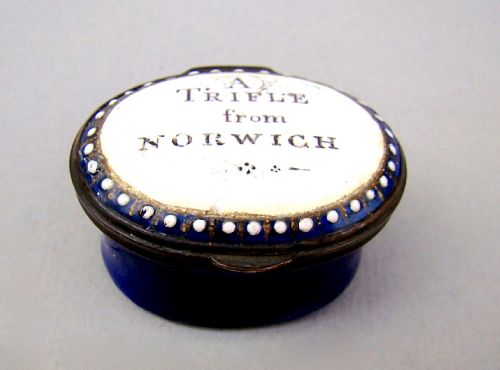
Height: 2.5cm / 1 inch.
Condition:
In good condition for its age.
Minor crack on lid.
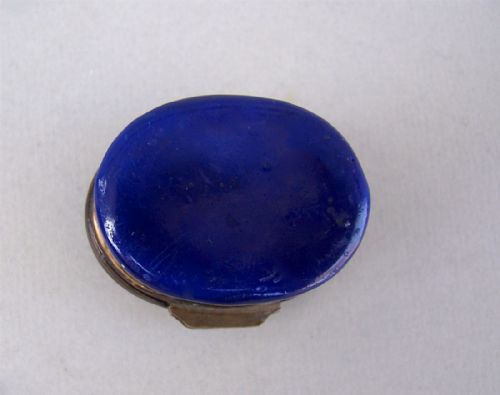
Original lead mirror pitted but not cracked.
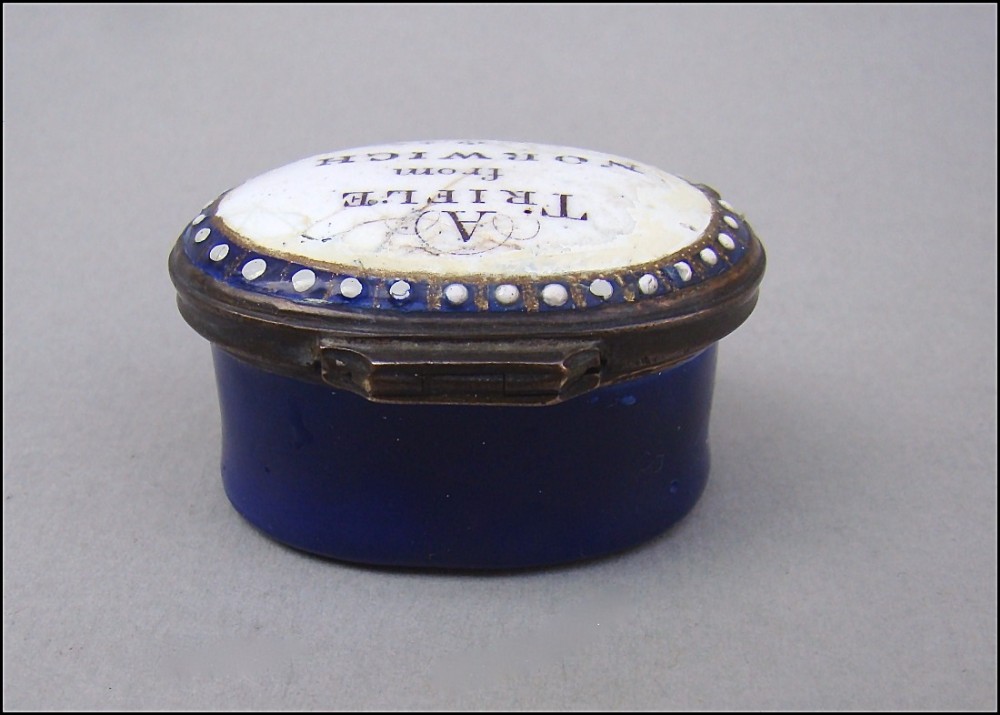
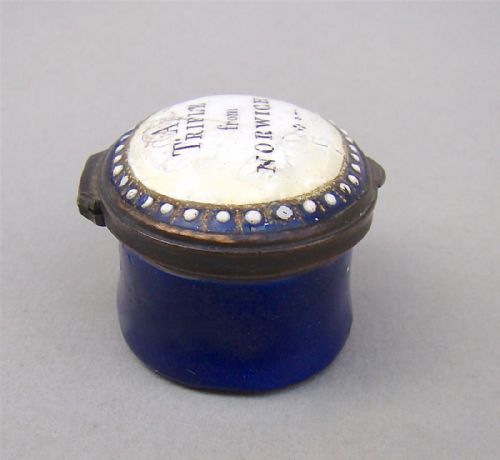
Good strong hinge.
Lid snaps shut firmly.
Postage UK: £7.00 Special delivery.
Postage overseas: £12.00 standard International mail.
You can pay by PayPal, bank transfer, cheque, debit or credit card.
To pay by PAYPAL please add P&P and click on button below.
To pay by credit or debit card over the phone or by cheque, please contact me on 01449 760 585.
The next step for these manufacturers of artefacts such as buckles, boxes and toy was get ahead of their competitors by decorating them. So they turned to enamels.
The technique of enamelling is applying heat to a mixture of silica, soda, potassium silicates and lead oxide, the enameller produced a paste which could be painted on to metal surfaces. Different colours could be created by introducing various metallic oxides into the mixes.
Enamellers often collected broken glasses from pubs and inns to grind them into the paste, but there were already, by the mid-1750s, suppliers selling coloured enamel powders already mixed. Bilston enamellers were particularly partial to rose pink.
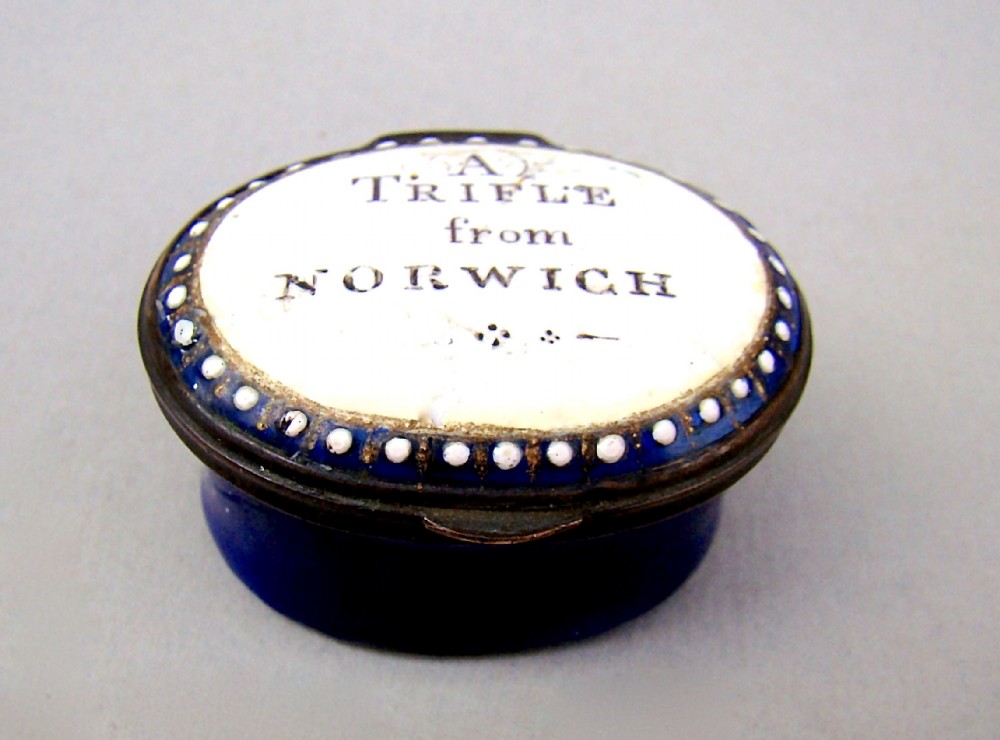
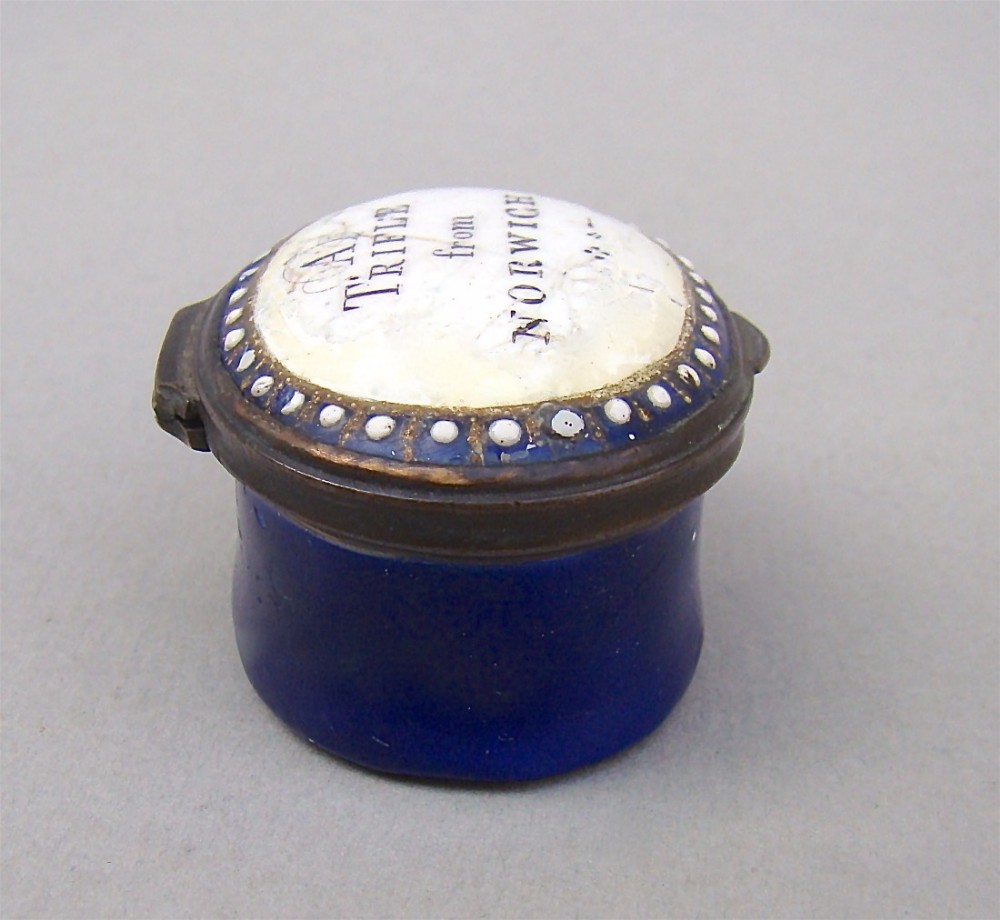
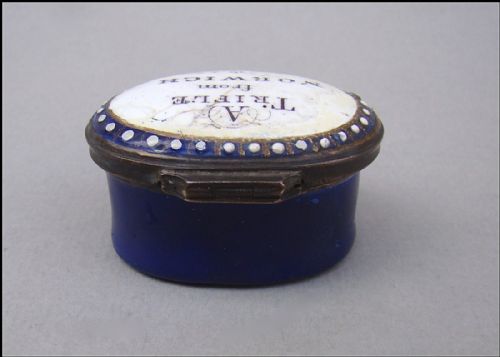
There were patch and snuff boxes, boxes for trinkets and jewellery, bonbonnieres. These boxes became, with the advent of transfer printing, little gift boxes given as token of love and friendship or souvenirs from various towns. This surviving example is transferred with the words "A Trifle from Norwich" .
Julie Cartwright Antiques has dated this piece to the Georgian era.
You can view the stock and full dealer information on the Julie Cartwright Antiques Profile Page
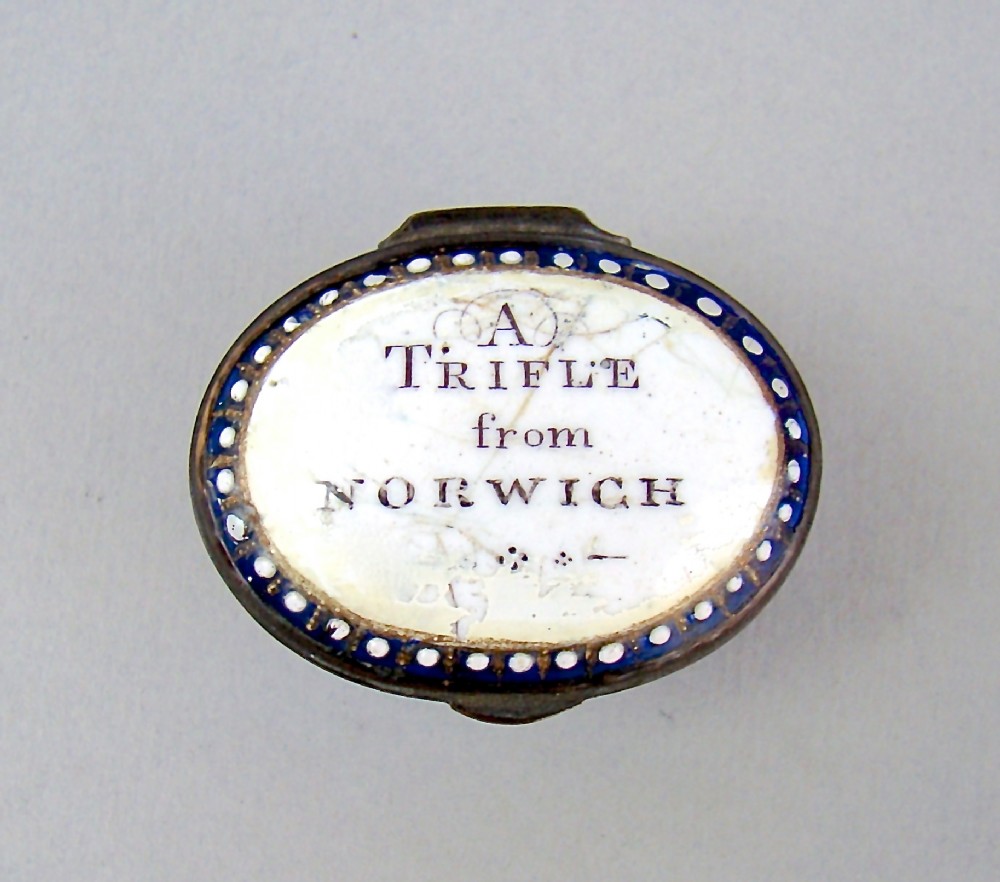
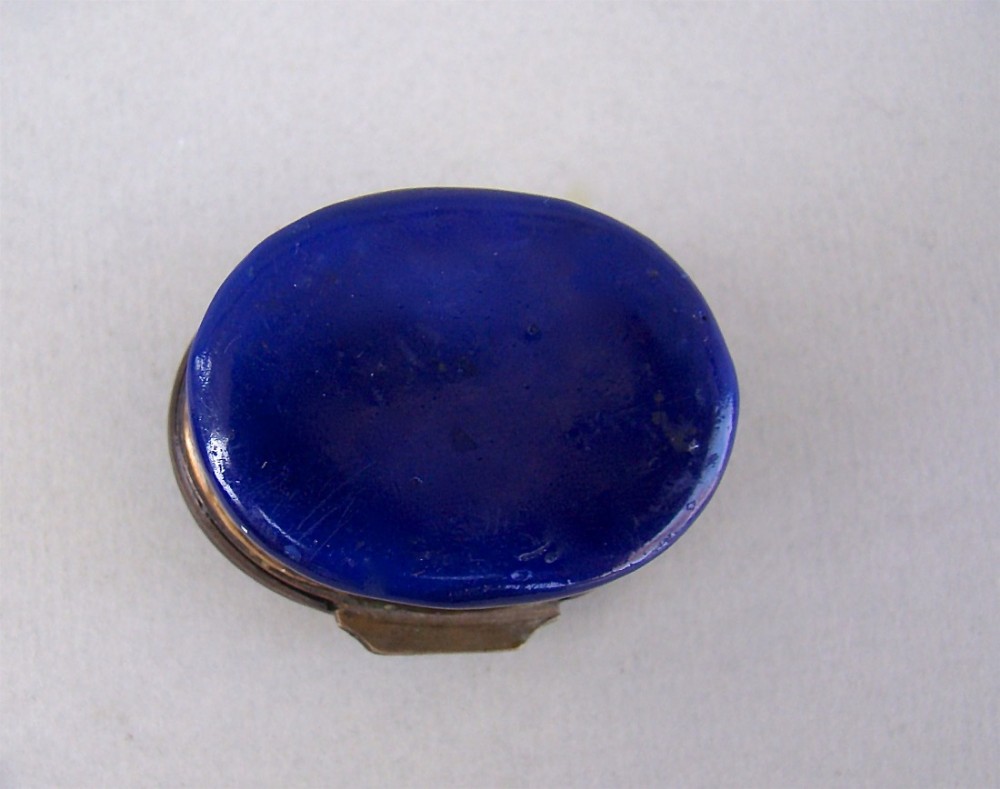
GEORGIAN BILSTON ENAMEL PATCH BOX, CIRCA 1780