W.R. Harvey & Co. (Antiques) Ltd has dated this piece to the Regency era.
Circa 1815
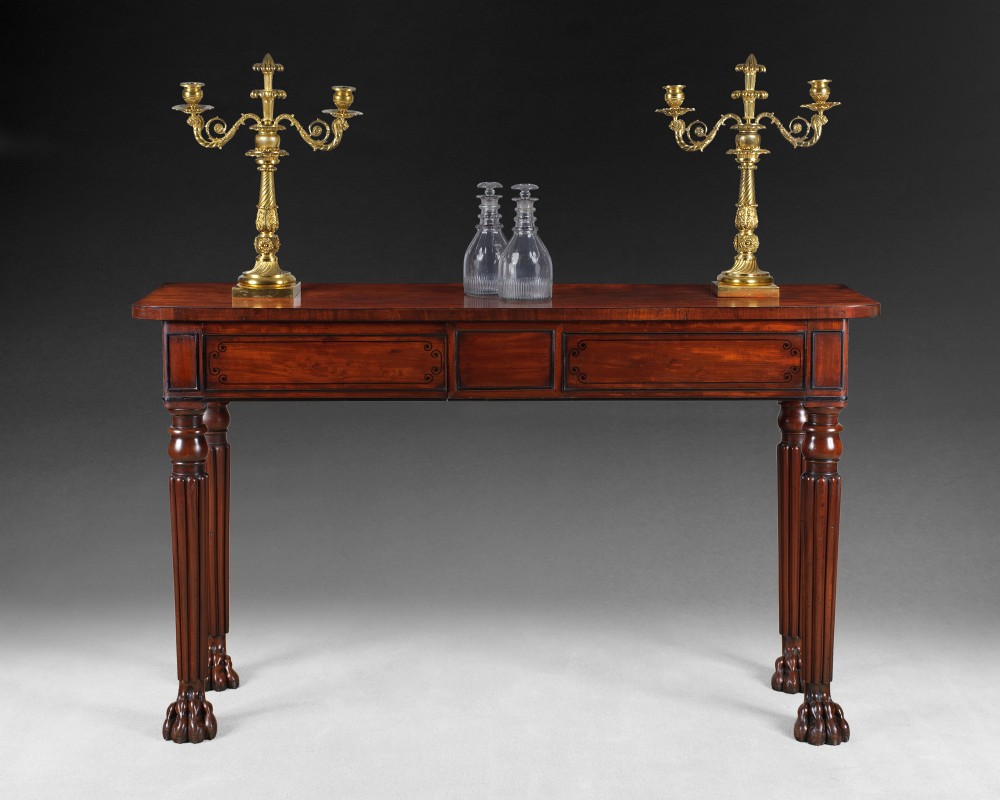
H: 35”, 89 cms, W: 59”, 150 cms, D: 18”, 46 cms.
Barmoor Castle is a privately owned 19th-century country house built on an ancient site in Northumberland. It is a Grade II* listed building. As at 2008 the decaying building is officially listed on the English Heritage Buildings at Risk Register.
After the Norman Conquest the Manor of Barmoor was granted to the Muschamp family who built a tower house on the site. A licence to crenellate the house was granted by Edward III on 17 May 1341. A 1541 survey described the house as ' in extreme decay and almost ruinous for lack of reparations'. Some repairs and improvements were carried out in 1584 but the Muschamps experienced financial difficulties, and following the death of George Muschamp in 1649 the estate was sold to William Carr of Etal to satisfy the demands of creditors.
After 1702 the estate changed hands several times until in 1791 it was acquired by inheritance by Francis Hurt Sitwell. The Sitwells engaged architect John Paterson of Edinburgh and in 1801 built the present substantial castellated Gothic revival mansion on the site of and incorporating some existing stonework of the old house. Later improvements and extensions
Private collection Lincoln.
George Smith (c.1786-1826). Smith’s designs were widely distributed in his pattern book of 1808, ‘A Collection of Designs for Household Furniture and Interior Decoration’, in which he proudly declared himself the ’upholder extraordinary to his Royal Highness the Prince of Wales’.
See plates 92 & 93 dated Decr. 1 1804
W.R. Harvey & Co. (Antiques) Ltd has dated this piece to the Regency era.
Specialists in 17th-18th and early 19th century fine english furniture, art, clocks and other objets d'art
You can view the stock and full dealer information on the W.R. Harvey & Co. (Antiques) Ltd Profile Page
W.R. Harvey & Co. (Antiques) Ltd is a registered member of LAPADA
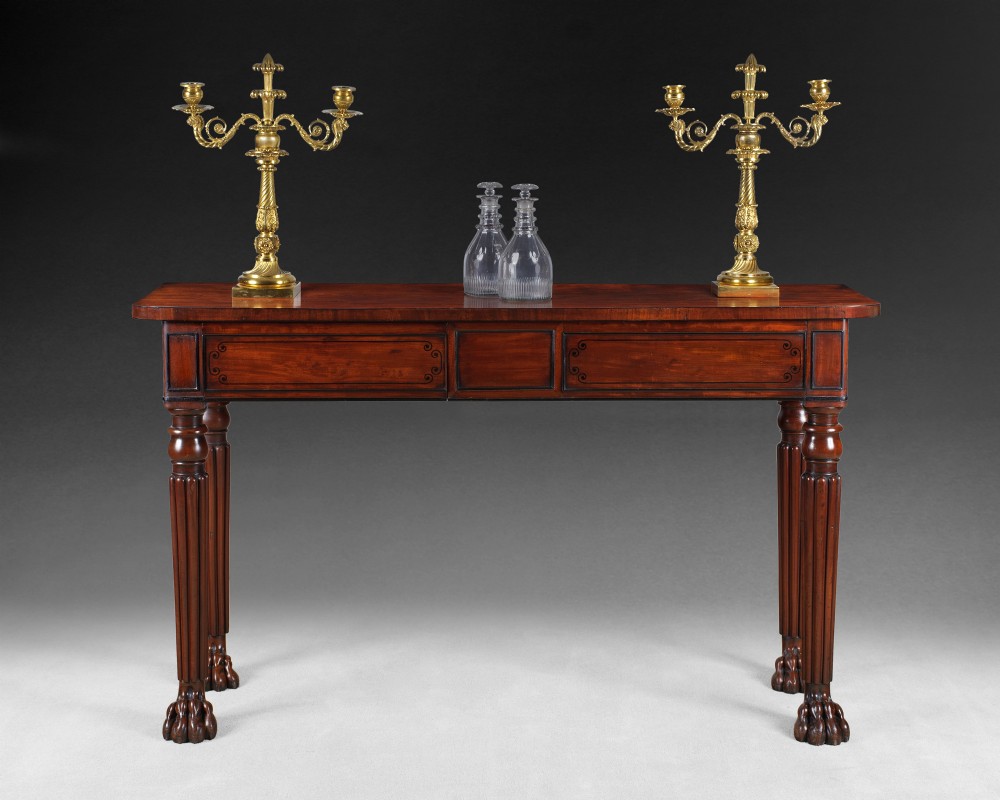
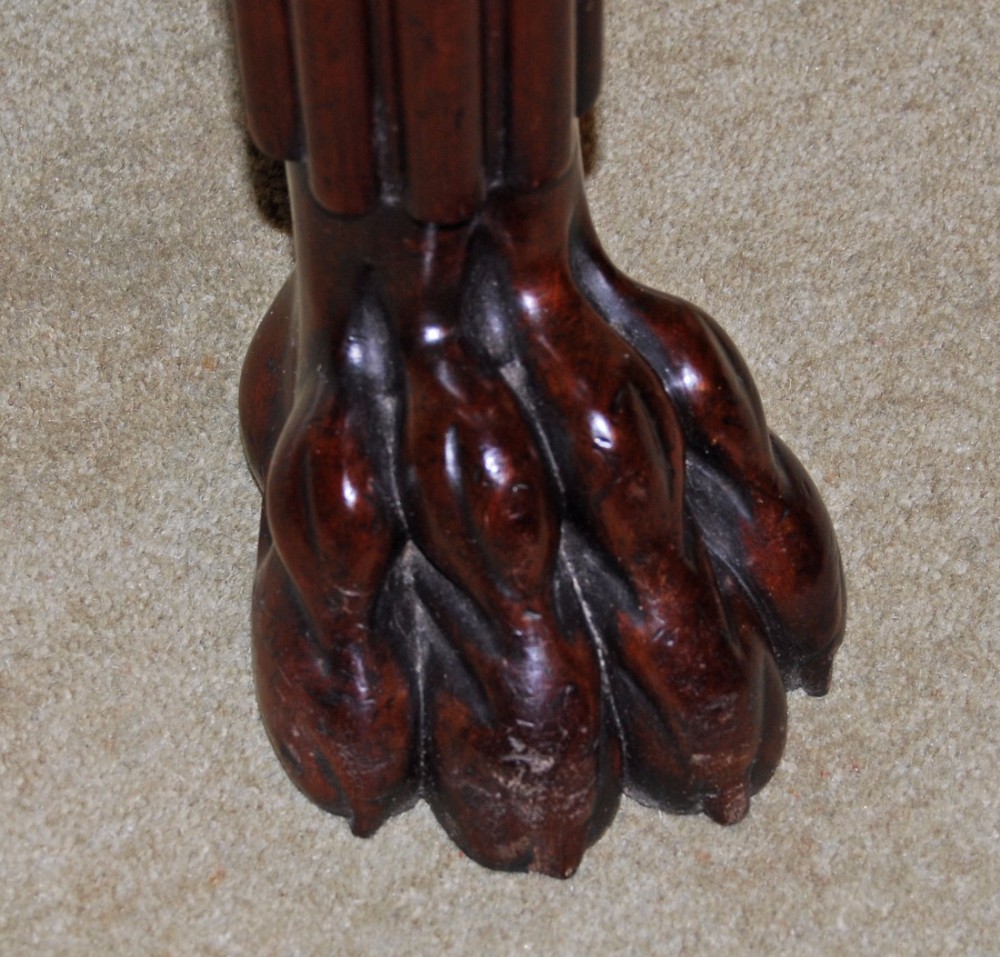
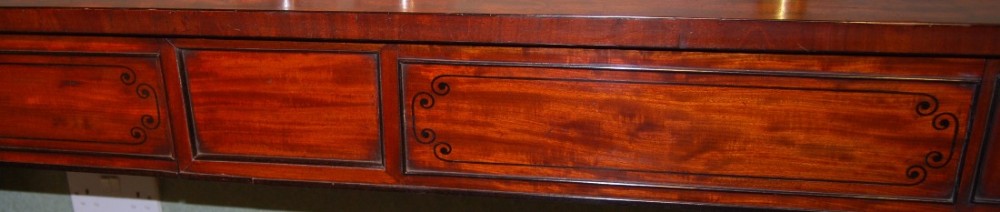
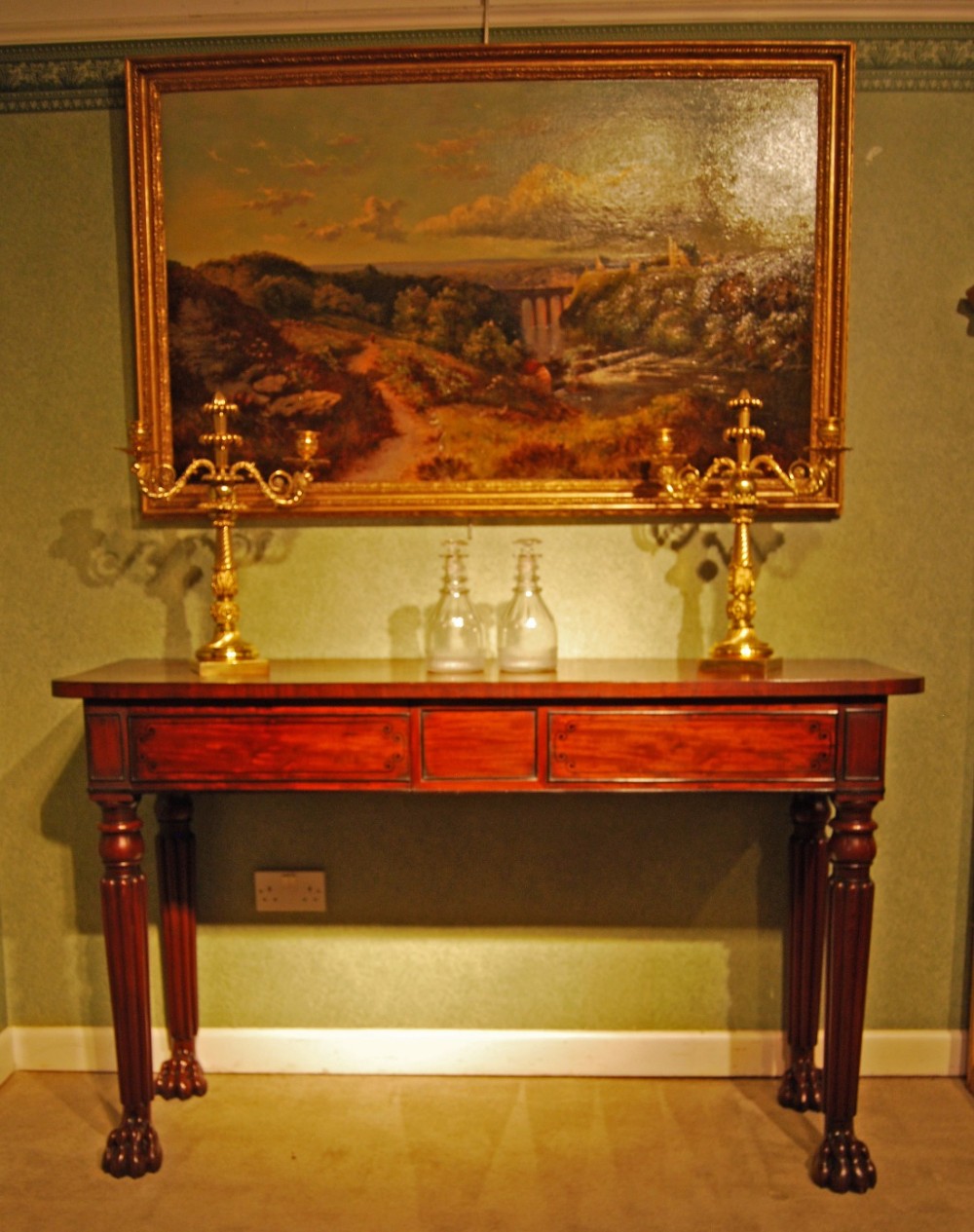
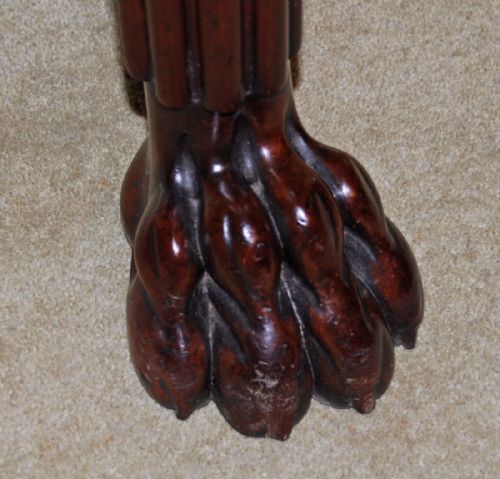
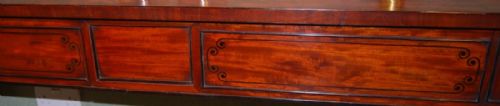
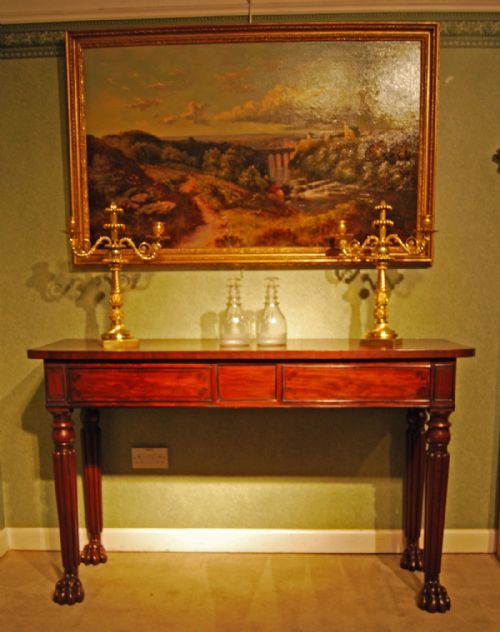
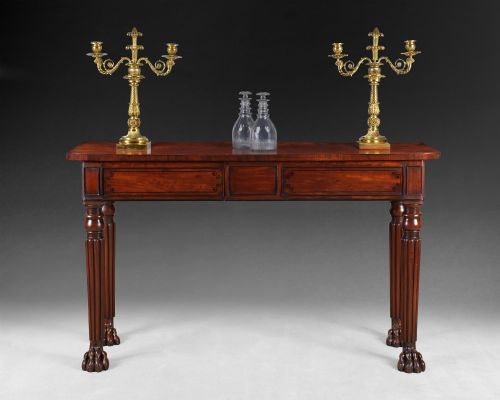
Regency Period Mahogany and Ebony Inlaid Straight Fronted Serving Table in the Manner of George Smith