12,799  PAGES BROWSED TODAY PAGES TODAY 36  ANTIQUES UPLOADED TODAY NEW ARRIVALS
ID #SA449367
FOR SALE
£6,500
Email
Save
Flemish School, 17th Century portrait of Prince Eugene of Savoy 1663 – 1736
Artware Fineart
for sale €7,605     $8,255
£6,500

Artware Fineart

Sellingantiques Verified Since Sep 2008
View Dealers Stock Page
Id #SA449367
PDF SHARE
SAVE

Flemish School, 17th Century portrait of Prince Eugene of Savoy 1663 – 1736

18th century
For Sale by Artware Fineart
Description

Flemish School, 17th Century

Portrait of Prince Eugene of Savoy 1663 – 1736

Prince Eugene of Savoy

oil on canvas

40 x 35 in. (102 x 89 cm.)

Prince Eugene of Savoy (French: François-Eugène de Savoie, Italian: Principe Eugenio di Savoia-Carignano, German: Prinz Eugen von Savoyen; 18 October 1663 – 21 April 1736) was a general of the Imperial Army and statesman of the Holy Roman Empire and the Archduchy of Austria and one of the most successful military commanders in modern European history, rising to the highest offices of state at the Imperial court in Vienna. Born in Paris, Eugene grew up around the French court of King Louis XIV. Based on his poor physique and bearing, the Prince was initially prepared for a career in the church, but by the age of 19 he had determined on a military career. Rejected by Louis XIV for service in the French army, Eugene moved to Austria and transferred his loyalty to the Habsburg Monarchy.
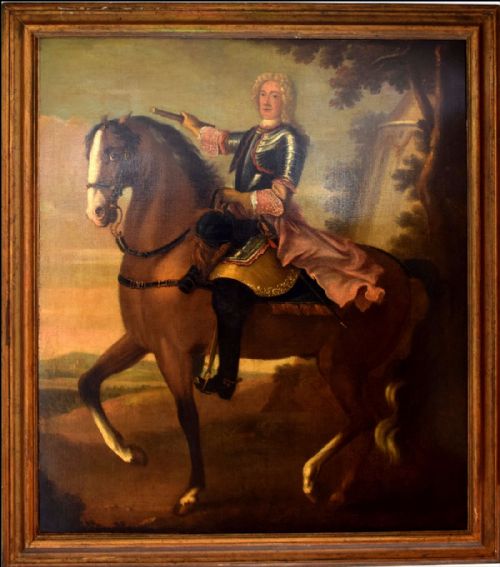
Spanning six decades, Eugene served three Holy Roman Emperors: Leopold I, Joseph I, and Charles VI. He first saw action against the Ottoman Turks at the Siege of Vienna in 1683 and the subsequent War of the Holy League, before serving in the Nine Years' War, fighting alongside his cousin, the Duke of Savoy. However, the Prince's fame was secured with his decisive victory against the Ottomans at the Battle of Zenta in 1697, earning him Europe-wide fame. Eugene enhanced his standing during the War of the Spanish Succession, where his partnership with the Duke of Marlborough secured victories against the French on the fields of Blenheim (1704), Oudenarde (1708), and Malplaquet (1709); he gained further success in the war as Imperial commander in northern Italy, most notably at the Battle of Turin (1706). Renewed hostilities against the Ottomans in the Austro-Turkish War consolidated his reputation, with victories at the battles of Petrovaradin (1716), and the decisive encounter at Belgrade (1717). Throughout the late 1720s, Eugene's influence and skilful diplomacy managed to secure the Emperor powerful allies in his dynastic struggles with the Bourbon powers, but physically and mentally fragile in his later years, Eugene enjoyed less success as commander-in-chief of the army during his final conflict, the War of the Polish Succession. Nevertheless, in Austria, Eugene's reputation remains unrivalled. Although opinions differ as to his character, there is no dispute over his great achievements: he helped to save the Habsburg Empire from French conquest; he broke the westward thrust of the Ottomans, liberating central Europe after a century and a half of Turkish occupation; and he was one of the great patrons of the arts whose building legacy can still be seen in Vienna today. Eugene died in his sleep at his home on 21 April 1736, aged 72.
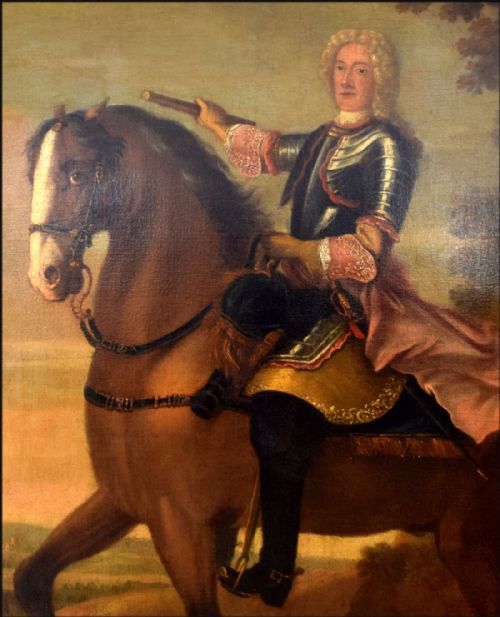
Prince Eugene was born in the Hôtel de Soissons in Paris on 18 October 1663. His mother, Olympia Mancini, was one of Cardinal Mazarin's nieces whom he had brought to Paris from Rome in 1647 to further his, and, to a lesser extent, their ambitions. The Mancinis were raised at the Palais-Royal along with the young Louis XIV, with whom Olympia formed an intimate relationship. Yet to her great disappointment, her chance to become queen passed by, and in 1657, Olympia married Eugene Maurice, Count of Soissons, Count of Dreux and Prince of Savoy. Together they had had five sons (Eugene being the youngest) and three daughters, but neither parent spent much time with the children: his father, a brave, unglamorous French soldier, spent much of his time away campaigning, while Olympia's passion for court intrigue meant the children received little attention from her. The King remained strongly attached to Olympia, so much so that many believed them to be lovers;[5] but her scheming eventually led to her downfall. After falling out of favour at court, Olympia turned to Cather

Physical Dimensions
Height
102cm (40.16")
Width
89cm (35.04")
Depth
2cm (0.79")
Declaration

Artware Fineart has dated this Flemish Equestrian Oil Painting to the 18th Century.

Reference Numbers
Sellingantiques Reference
SA449367
Dealers Internal Reference
3846
Description
Flemish School, 17th Century

Portrait of Prince Eugene of Savoy 1663 – 1736

Prince Eugene of Savoy

oil on canvas

40 x 35 in. (102 x 89 cm.)

Prince Eugene of Savoy (French: François-Eugène de Savoie, Italian: Principe Eugenio di Savoia-Carignano, German: Prinz Eugen von Savoyen; 18 October 1663 – 21 April 1736) was a general of the Imperial Army and statesman of the Holy Roman Empire and the Archduchy of Austria and one of the most successful military commanders in modern European history, rising to the highest offices of state at the Imperial court in Vienna. Born in Paris, Eugene grew up around the French court of King Louis XIV.

Based on his poor physique and bearing, the Prince was initially prepared for a career in the church, but by the age of 19 he had determined on a military career.
Artware Fineart

Rejected by Louis XIV for service in the French army, Eugene moved to Austria and transferred his loyalty to the Habsburg Monarchy.

fig 1. A 17th-century oil painting depicting Prince Eugene of Savoy in plate armour riding a rearing brown horse against a landscape background.
fig 1. Flemish School, 17th Century portrait of Prince Eugene of Savoy 1663 – 1736

Spanning six decades, Eugene served three Holy Roman Emperors: Leopold I, Joseph I, and Charles VI. He first saw action against the Ottoman Turks at the Siege of Vienna in 1683 and the subsequent War of the Holy League, before serving in the Nine Years' War, fighting alongside his cousin, the Duke of Savoy. However, the Prince's fame was secured with his decisive victory against the Ottomans at the Battle of Zenta in 1697, earning him Europe-wide fame. Eugene enhanced his standing during the War of the Spanish Succession, where his partnership with the Duke of Marlborough secured victories against the French on the fields of Blenheim (1704), Oudenarde (1708), and Malplaquet (1709); he gained further success in the war as Imperial commander in northern Italy, most notably at the Battle of Turin (1706). Renewed hostilities against the Ottomans in the Austro-Turkish War consolidated his reputation, with victories at the battles of Petrovaradin (1716), and the decisive encounter at Belgrade (1717). Throughout the late 1720s, Eugene's influence and skilful diplomacy managed to secure the Emperor powerful allies in his dynastic struggles with the Bourbon powers, but physically and mentally fragile in his later years, Eugene enjoyed less success as commander-in-chief of the army during his final conflict, the War of the Polish Succession. Nevertheless, in Austria, Eugene's reputation remains unrivalled. Although opinions differ as to his character, there is no dispute over his great achievements: he helped to save the Habsburg Empire from French conquest; he broke the westward thrust of the Ottomans, liberating central Europe after a century and a half of Turkish occupation; and he was one of the great patrons of the arts whose building legacy can still be seen in Vienna today. Eugene died in his sleep at his home on 21 April 1736, aged 72.

fig 2. A 17th-century oil painting depicting Prince Eugene of Savoy in plate armour riding a rearing brown horse against a landscape background.
fig 2. Flemish School, 17th Century portrait of Prince Eugene of Savoy 1663 – 1736

Prince Eugene was born in the Hôtel de Soissons in Paris on 18 October 1663. His mother, Olympia Mancini, was one of Cardinal Mazarin's nieces whom he had brought to Paris from Rome in 1647 to further his, and, to a lesser extent, their ambitions. The Mancinis were raised at the Palais-Royal along with the young Louis XIV, with whom Olympia formed an intimate relationship. Yet to her great disappointment, her chance to become queen passed by, and in 1657, Olympia married Eugene Maurice, Count of Soissons, Count of Dreux and Prince of Savoy. Together they had had five sons (Eugene being the youngest) and three daughters, but neither parent spent much time with the children: his father, a brave, unglamorous French soldier, spent much of his time away campaigning, while Olympia's passion for court intrigue meant the children received little attention from her. The King remained strongly attached to Olympia, so much so that many believed them to be lovers;[5] but her scheming eventually led to her downfall. After falling out of favour at court, Olympia turned to Cather

Height
102cm (40.16")
Width
89cm (35.04")
Depth
2cm (0.79")
Date of Manufacture

Artware Fineart has dated this Flemish Equestrian Oil Painting to the 18th Century.

Reference Numbers
Sellingantiques Ref
SA449367
Dealers Internal Ref
3846
Artware Fineart
Sellingantiques verified Since Sep 2008
Dealer Profile

You can view the stock and full dealer information on the Artware Fineart Profile Page
PDF SHARE
SAVE
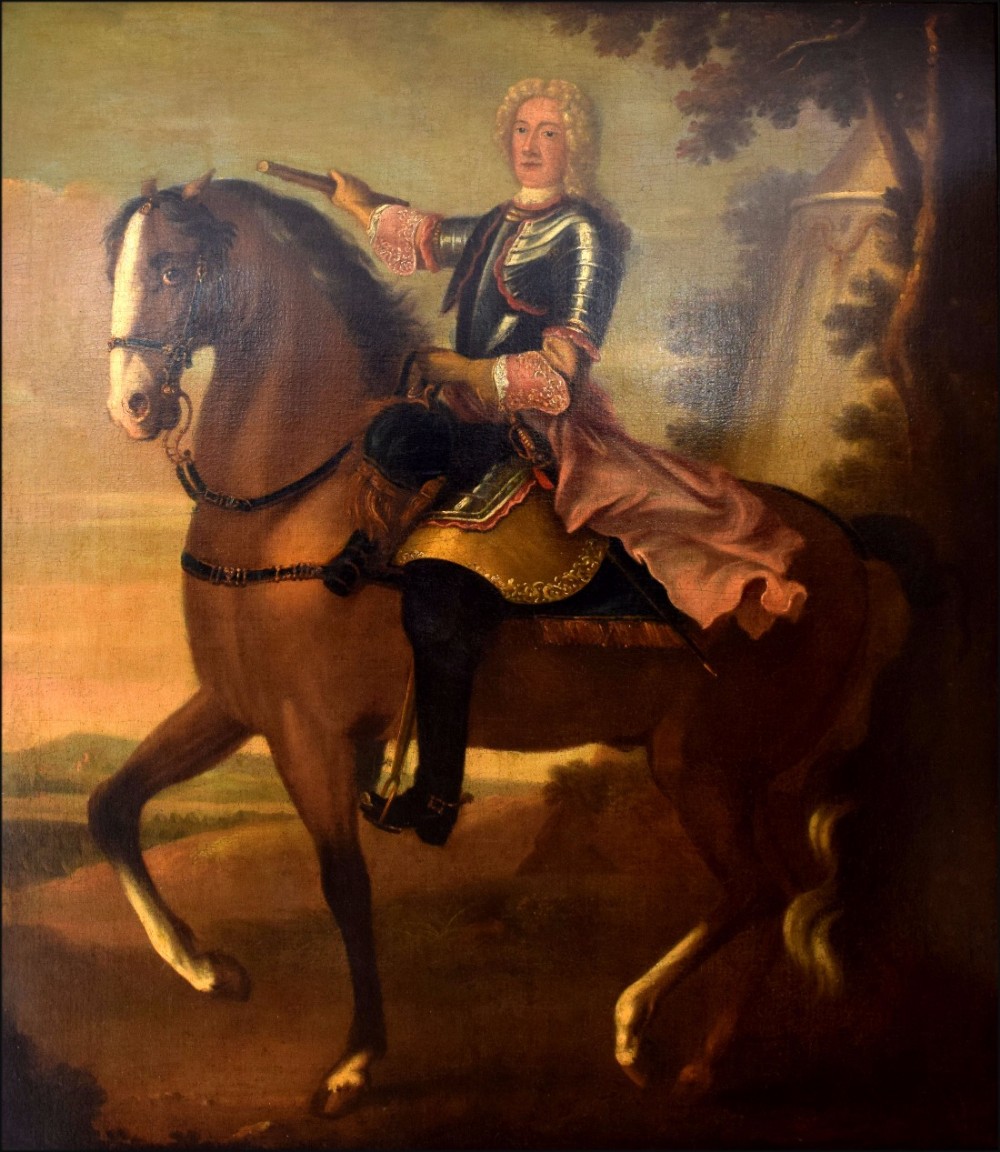
A 17th-century oil painting depicting Prince Eugene of Savoy in plate armour riding a rearing brown horse against a landscape background.
1 / 3
Archive I A 17th-century oil painting depicting Prince Eugene of Savoy in plate armour riding a rearing brown horse against a landscape background.

Flemish School, 17th Century portrait of Prince Eugene of Savoy 1663 – 1736
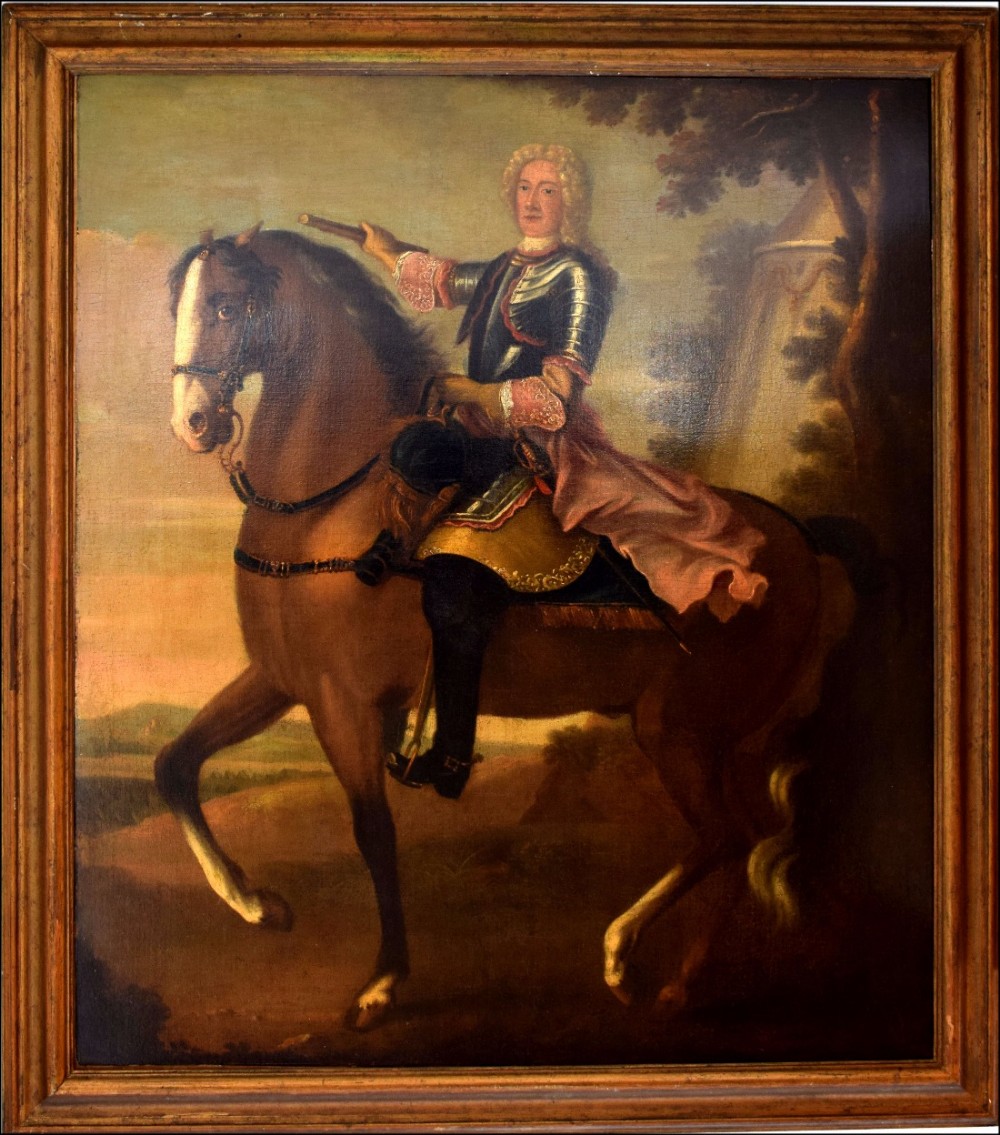
Archive II A 17th-century oil painting depicting Prince Eugene of Savoy in plate armour riding a rearing brown horse against a landscape background. View II
Archive III A 17th-century oil painting depicting Prince Eugene of Savoy in plate armour riding a rearing brown horse against a landscape background. View III
Enlarged Archival View
Telephone 07958 699 645
Location
18 La Gare
51 Surrey Row
London
SE1 0BZ
United Kingdom
Verified Since Sep 2008
Items For Sale 243
Items Sold 223
Artware Fineart
Verified Since Sep 2008
View Dealer Info
Location: 18 La Gare , 51 Surrey Row , London , SE1 0BZ , United Kingdom
Verified
Sep 2008
For Sale
243
Sold
223
A 17th-century oil painting depicting Prince Eugene of Savoy in plate armour riding a rearing brown horse against a landscape background.
Flemish School, 17th Century Portrait of Prince Eugene of Savoy 1663 – 1736
Ref: SA449367
A 17th-century oil painting depicting Prince Eugene of Savoy in plate armour riding a rearing brown horse against a landscape background.
Detail View 1
Detail View 2
Archival Detail
Every single antique dealer on our platform is individually approved by our internal team. We verify their professional trade history, ethical standards, and photographic quality to ensure a secure, high-standard buying environment. Upon joining, every dealer agrees to a strict 9-point code of conduct. While issues can occasionally arise, our dealers typically resolve them swiftly and directly with the buyer. In fact, since our founding in 2002, Sellingantiques has only had to step in to help resolve an issue on roughly five occasions—a true testament to the quality of our dealers and their dedication to your happiness.
Our dealers are highly experienced in packing and shipping fragile, high-value antiques. Because you are in direct contact with the dealer, you will be able to easily go through all available shipping and insurance options together to ensure your item arrives safely.
Antiques are the ultimate green purchase. By choosing historical pieces over newly manufactured goods, you completely eliminate the carbon footprint of modern mass production while preserving exceptional, timeless craftsmanship.

Flemish equestrian portraits from the 17th century typically portray military leaders or nobility atop horses to symbolise power, status, and authority, rendered with dramatic Baroque lighting and intricate details of armour and textiles.

Artists during this period primarily used ground oil pigments, such as ochre and lapis lazuli, applied onto hand-stretched linen canvases or timber panels, often built up in multiple translucent glazes.

Authentic works from this era show age-appropriate craquelure across the paint layer, natural oxidisation on the reverse of the canvas or timber support, and evidence of historical hand-ground pigments rather than modern synthetic paints.

An antique equestrian painting serves as a focal point above a mantelpiece or sideboard, pairing effectively with dark timber furniture, brass accents, or crisp minimalist walls to create contrast.

Keep the canvas away from direct sunlight, extreme humidity, and direct heat sources, dusting it gently with a dry, soft-bristled brush while consulting a professional restorer for periodic cleaning or varnish replacement.
items
Add keywords to the filter
Price
£100
£250000
Era
Movements
Material
Origin
Stock Location
Freshness
Online Payments
Categories