36,878  PAGES BROWSED TODAY PAGES TODAY 90  ANTIQUES UPLOADED TODAY NEW ARRIVALS
ID #SA441071
FOR SALE
£600
Email
Save
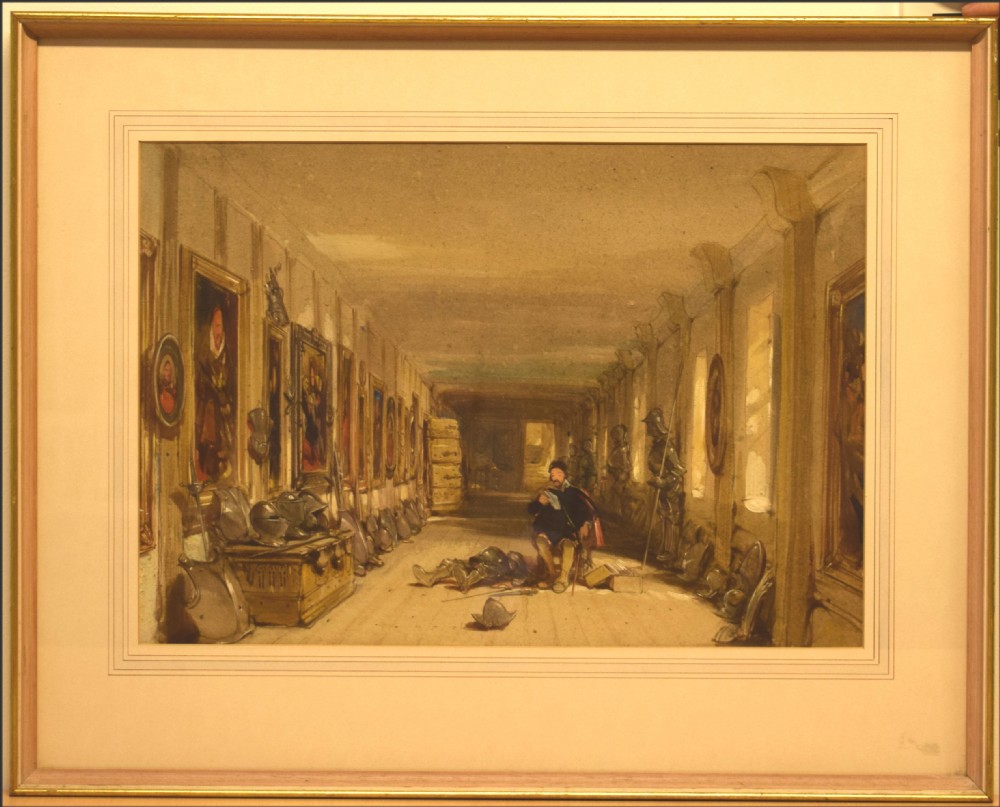
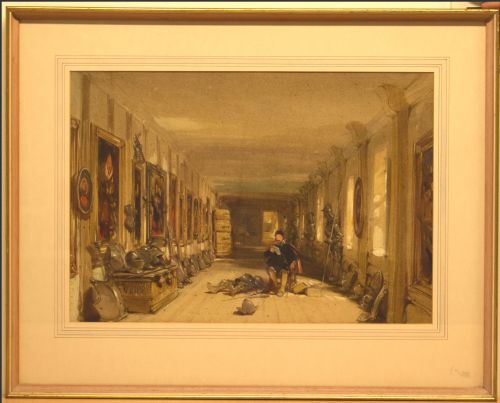
George Cattermole, 1800 - 1868 A Cavalier Reading a Dispatch in a Long Gallery, Decorated with Armour and Paintings
Artware Fineart
for sale €702     $762
£600

Artware Fineart

Sellingantiques Verified Since Sep 2008
View Dealers Stock Page
Relevant Links
Id #SA441071
PDF SHARE
SAVE

George Cattermole, 1800 - 1868 A Cavalier Reading a Dispatch in a Long Gallery, Decorated with Armour and Paintings

19th century
For Sale by Artware Fineart
Description

George Cattermole, 1800 - 1868

A Cavalier reading a dispatch in a Long Gallery, decorated with Armour and Paintings

A Long Gallery, decorated with Armour and Painting

pencl and watercolour

11 x 16 in. (28 x 41 cm.)
Cattermole, George (1800–1868), watercolour painter and illustrator, was born on 10 August 1800 in the village of Dickleburgh, near Diss, Norfolk, the youngest of seven children, six sons and a daughter, of parents whose names are not known.

Cattermole's mother died when he was very young and he was raised and taught by his father, a man of independent means. He was a great reader, familiar with Shakespeare and Scott from an early age. Cattermole knew history well, especially English history, was a good Latin scholar, and wrote in a correct and classic style. He may have served as an assistant at his father's school in Norfolk before his departure for London, where he arrived by 1819.
Soon thereafter, Cattermole began work as an architectural draughtsman for the antiquary John Britton and developed his skills of observation and accuracy, training congenial with his antiquarian and artistic interests.
With one of his brothers, the Revd Richard Cattermole (1795?–1858), Cattermole contributed to two of Britton's most important series of publications: Cathedral Antiquities of England (14 vols., 1814–35) and The Architectural Antiquities of Great Britain (1807–26). Of the former Cattermole contributed to four volumes and Richard to three. Some of the most elaborate engraved drawings appear above the name of George Cattermole: nineteen in the volume on Canterbury and seven in that for Oxford, both published in 1821, twelve for Wells in 1824, and one drawing for Peterborough in 1828. Eighteen engravings after Cattermole's drawings appear in the fifth volume (1826) of Architectural Antiquities.
Cattermole illustrated numerous books. Evenings at Haddon Hall (1832), edited by the baroness de Calabrella, contained twenty-four fancy subjects, which were ‘supposed to be in a portfolio, turned over by a birthday party, confined to the house at Haddon by the snow’ (Roget, 2.73). In the 1830s Cattermole travelled to Scotland to sketch localities mentioned in the Waverley novels by Walter Scott. Five drawings illustrating scenes from four of Scott's novels were exhibited between 1836 and 1850 at the Old Watercolour Society. Certain of Cattermole's drawings were engraved for illustrations to later editions of the Waverley novels. Twenty-one engravings after drawings by Cattermole were published in Heath's Pictorial Annual for 1835: Scott and Scotland by Leitch Ritchie. In his art Cattermole gave visual expression to Scott's evocation of a bygone age in Scotland. He also illustrated volumes 1 (1841) and 2 (1844) of Richard Cattermole's The Great Civil War of Charles I and the Parliament, with a total of twenty-eight engravings after his picturesque and vigorous sketches.

Cattermole enjoyed riding as a young man, and was an excellent carriage driver. His natural vivacity and good fellowship caused him to be a general favourite. He was a good conversationalist in both French and Spanish, and a man of literary tastes, who preferred intellectual associates of the more brilliant kind. An intimate of Count d'Orsay and Lady Blessington at Gore House, he was part of their circle of fashionable people from the worlds of art and literature in London. He was a member of the Garrick Club, and in 1838 was elected to the Athenaeum. In the late 1830s he moved into a suite of private chambers in The Albany, formerly occupied first by Lord Byron (of whom he made a posthumous drawing now in a private collection, after the portrait by Richard Westall, 1813) and later by Edward Bulwer-Lytton. Cattermole included among his close friends Robert Browning, Bulwer-Lytton, Charles Dickens, Benjamin Disraeli, Douglas Jerrold, Sir E

Physical Dimensions
Height
28cm (11.02")
Width
41cm (16.14")
Depth
3cm (1.18")
Declaration

Artware Fineart has dated this Victorian Watercolour History Painting to the 19th Century.

Reference Numbers
Sellingantiques Reference
SA441071
Dealers Internal Reference
3897
Description
George Cattermole, 1800 - 1868

A Cavalier reading a dispatch in a Long Gallery, decorated with Armour and Paintings

A Long Gallery, decorated with Armour and Painting

pencl and watercolour

11 x 16 in. (28 x 41 cm.)

fig 1. A nineteenth-century watercolour artwork depicting a seated cavalier reading a document in a grand long gallery lined with suits of armour and framed paintings.
fig 1. George Cattermole, 1800 - 1868 A Cavalier Reading a Dispatch in a Long Gallery, Decorated with Armour and Paintings

Cattermole, George (1800–1868), watercolour painter and illustrator, was born on 10 August 1800 in the village of Dickleburgh, near Diss, Norfolk, the youngest of seven children, six sons and a daughter, of parents whose names are not known.

Cattermole's mother died when he was very young and he was raised and taught by his father, a man of independent means.
Artware Fineart

He was a great reader, familiar with Shakespeare and Scott from an early age. Cattermole knew history well, especially English history, was a good Latin scholar, and wrote in a correct and classic style. He may have served as an assistant at his father's school in Norfolk before his departure for London, where he arrived by 1819.

fig 2. A nineteenth-century watercolour artwork depicting a seated cavalier reading a document in a grand long gallery lined with suits of armour and framed paintings.
fig 2. George Cattermole, 1800 - 1868 A Cavalier Reading a Dispatch in a Long Gallery, Decorated with Armour and Paintings

Soon thereafter, Cattermole began work as an architectural draughtsman for the antiquary John Britton and developed his skills of observation and accuracy, training congenial with his antiquarian and artistic interests.

fig 3. A nineteenth-century watercolour artwork depicting a seated cavalier reading a document in a grand long gallery lined with suits of armour and framed paintings.
fig 3. George Cattermole, 1800 - 1868 A Cavalier Reading a Dispatch in a Long Gallery, Decorated with Armour and Paintings

With one of his brothers, the Revd Richard Cattermole (1795?–1858), Cattermole contributed to two of Britton's most important series of publications: Cathedral Antiquities of England (14 vols., 1814–35) and The Architectural Antiquities of Great Britain (1807–26). Of the former Cattermole contributed to four volumes and Richard to three. Some of the most elaborate engraved drawings appear above the name of George Cattermole: nineteen in the volume on Canterbury and seven in that for Oxford, both published in 1821, twelve for Wells in 1824, and one drawing for Peterborough in 1828. Eighteen engravings after Cattermole's drawings appear in the fifth volume (1826) of Architectural Antiquities.

fig 4. A nineteenth-century watercolour artwork depicting a seated cavalier reading a document in a grand long gallery lined with suits of armour and framed paintings.
fig 4. George Cattermole, 1800 - 1868 A Cavalier Reading a Dispatch in a Long Gallery, Decorated with Armour and Paintings

Cattermole illustrated numerous books. Evenings at Haddon Hall (1832), edited by the baroness de Calabrella, contained twenty-four fancy subjects, which were ‘supposed to be in a portfolio, turned over by a birthday party, confined to the house at Haddon by the snow’ (Roget, 2.73). In the 1830s Cattermole travelled to Scotland to sketch localities mentioned in the Waverley novels by Walter Scott. Five drawings illustrating scenes from four of Scott's novels were exhibited between 1836 and 1850 at the Old Watercolour Society. Certain of Cattermole's drawings were engraved for illustrations to later editions of the Waverley novels. Twenty-one engravings after drawings by Cattermole were published in Heath's Pictorial Annual for 1835: Scott and Scotland by Leitch Ritchie. In his art Cattermole gave visual expression to Scott's evocation of a bygone age in Scotland. He also illustrated volumes 1 (1841) and 2 (1844) of Richard Cattermole's The Great Civil War of Charles I and the Parliament, with a total of twenty-eight engravings after his picturesque and vigorous sketches.

Cattermole enjoyed riding as a young man, and was an excellent carriage driver. His natural vivacity and good fellowship caused him to be a general favourite. He was a good conversationalist in both French and Spanish, and a man of literary tastes, who preferred intellectual associates of the more brilliant kind. An intimate of Count d'Orsay and Lady Blessington at Gore House, he was part of their circle of fashionable people from the worlds of art and literature in London. He was a member of the Garrick Club, and in 1838 was elected to the Athenaeum. In the late 1830s he moved into a suite of private chambers in The Albany, formerly occupied first by Lord Byron (of whom he made a posthumous drawing now in a private collection, after the portrait by Richard Westall, 1813) and later by Edward Bulwer-Lytton. Cattermole included among his close friends Robert Browning, Bulwer-Lytton, Charles Dickens, Benjamin Disraeli, Douglas Jerrold, Sir E

Height
28cm (11.02")
Width
41cm (16.14")
Depth
3cm (1.18")
Date of Manufacture

Artware Fineart has dated this Victorian Watercolour History Painting to the 19th Century.

Reference Numbers
Sellingantiques Ref
SA441071
Dealers Internal Ref
3897
Artware Fineart
Sellingantiques verified Since Sep 2008
Dealer Profile

You can view the stock and full dealer information on the Artware Fineart Profile Page

Relevant Links
PDF SHARE
SAVE
A nineteenth-century watercolour artwork depicting a seated cavalier reading a document in a grand long gallery lined with suits of armour and framed paintings.
1 / 5
Archive I A nineteenth-century watercolour artwork depicting a seated cavalier reading a document in a grand long gallery lined with suits of armour and framed paintings.

George Cattermole, 1800 - 1868 A Cavalier Reading a Dispatch in a Long Gallery, Decorated with Armour and Paintings
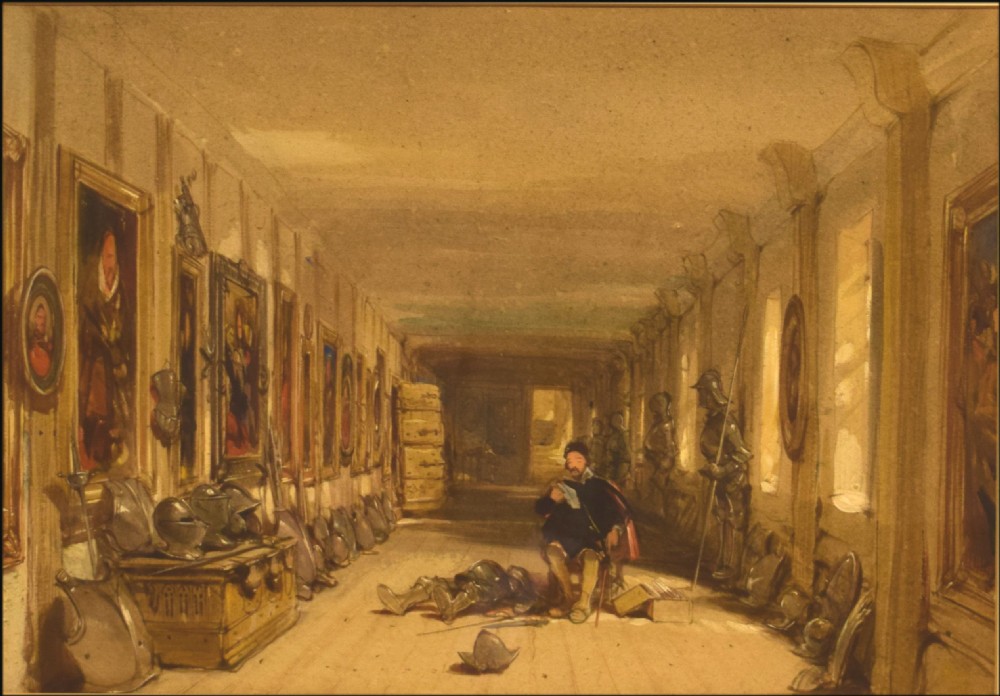
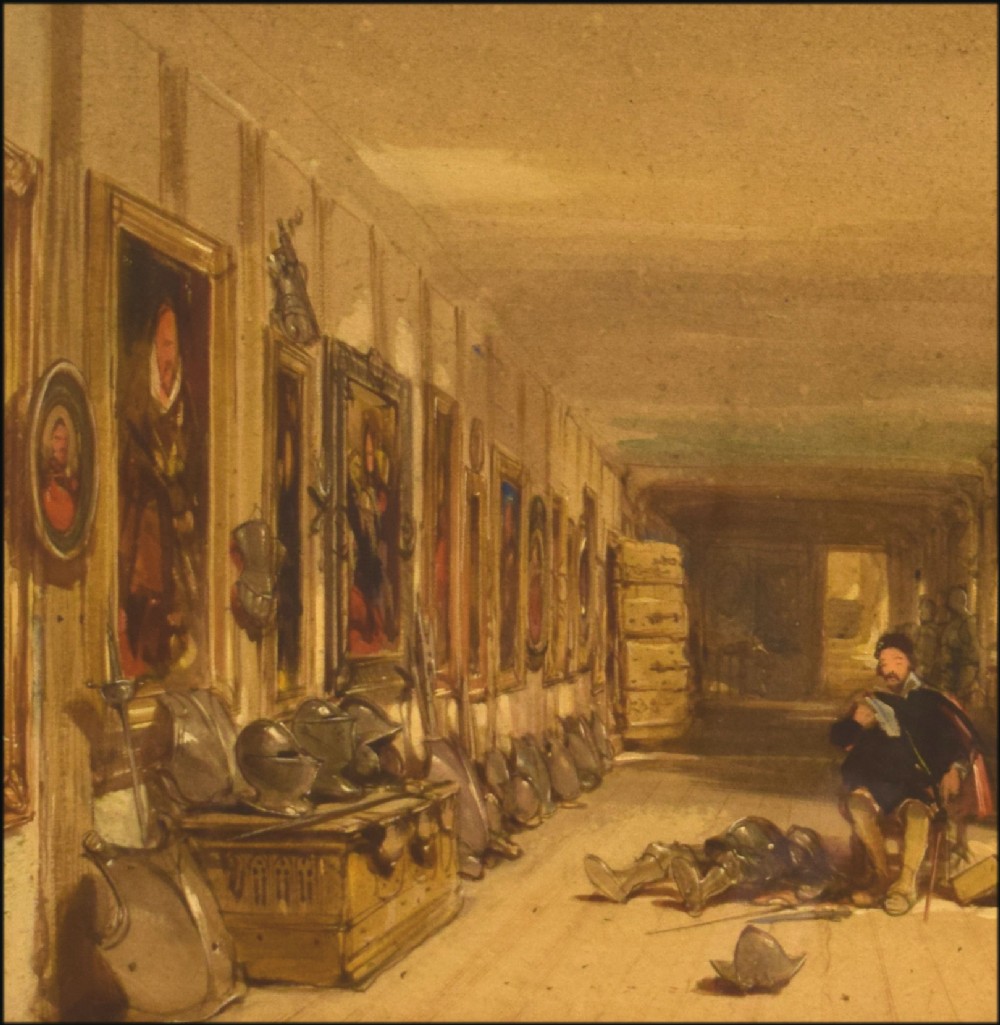
Archive II A nineteenth-century watercolour artwork depicting a seated cavalier reading a document in a grand long gallery lined with suits of armour and framed paintings. View II
Archive III A nineteenth-century watercolour artwork depicting a seated cavalier reading a document in a grand long gallery lined with suits of armour and framed paintings. View III
Archive IV A nineteenth-century watercolour artwork depicting a seated cavalier reading a document in a grand long gallery lined with suits of armour and framed paintings. View IV
Archive V A nineteenth-century watercolour artwork depicting a seated cavalier reading a document in a grand long gallery lined with suits of armour and framed paintings. View V
Enlarged Archival View
Telephone 07958 699 645
Location
18 La Gare
51 Surrey Row
London
SE1 0BZ
United Kingdom
Verified Since Sep 2008
Items For Sale 243
Items Sold 223
Artware Fineart
Verified Since Sep 2008
View Dealer Info
Location: 18 La Gare , 51 Surrey Row , London , SE1 0BZ , United Kingdom
Verified
Sep 2008
For Sale
243
Sold
223
A nineteenth-century watercolour artwork depicting a seated cavalier reading a document in a grand long gallery lined with suits of armour and framed paintings.
George Cattermole, 1800 - 1868 A Cavalier reading a dispatch in a Long Gallery, decorated with Armour and Paintings
Ref: SA441071
A nineteenth-century watercolour artwork depicting a seated cavalier reading a document in a grand long gallery lined with suits of armour and framed paintings.
Detail View 1
Detail View 2
Detail View 3
Detail View 4
Archival Detail
Every single antique dealer on our platform is individually approved by our internal team. We verify their professional trade history, ethical standards, and photographic quality to ensure a secure, high-standard buying environment. Upon joining, every dealer agrees to a strict 9-point code of conduct. While issues can occasionally arise, our dealers typically resolve them swiftly and directly with the buyer. In fact, since our founding in 2002, Sellingantiques has only had to step in to help resolve an issue on roughly five occasions—a true testament to the quality of our dealers and their dedication to your happiness.
Our dealers are highly experienced in packing and shipping fragile, high-value antiques. Because you are in direct contact with the dealer, you will be able to easily go through all available shipping and insurance options together to ensure your item arrives safely.
Antiques are the ultimate green purchase. By choosing historical pieces over newly manufactured goods, you completely eliminate the carbon footprint of modern mass production while preserving exceptional, timeless craftsmanship.

Popularised during the nineteenth century, historical genre paintings depict narrative, historical, or literary scenes, frequently focusing on romanticised periods such as the Tudor and Stuart eras with attention to interior detail and period costuming.

Artists utilized finely ground watercolour pigments, opaque gouache, and gum arabic binder applied onto heavy woven rag paper, occasionally mounted on board backing.

Authentication relies on examining paper age, watermark evidence, natural pigment ageing, period-appropriate mounting, and artist attribution through stylistic comparison or monogram analysis.

Historical watercolours integrate effectively into dedicated study spaces, library settings, or as part of a curated gallery wall alongside modern minimalist frames for architectural contrast.

Keep watercolours away from direct sunlight and harsh artificial light to prevent fading. Mount behind UV-filtering glass using acid-free museum matting within a humidity-controlled environment.
items
Add keywords to the filter
Price
£100
£250000
Era
Movements
Material
Origin
Stock Location
Freshness
Online Payments
Categories