The Vintage Wrist Watch Company has dated this piece to the 1910s.
The company was very successful and very soon they were exporting several countries including Canada, Russia, United States, and the Far East.
By 1905, the company was producing 450,000 watches a year and over the next four years, this rose to three quarters of a million watches a year.
The company was constantly looking at ways to improve and in 1910, just four years before this particular watch was made, they won the Gold Medal at the Grand Prix de Bruxelles.
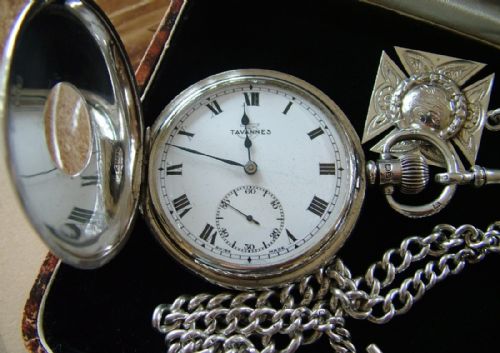
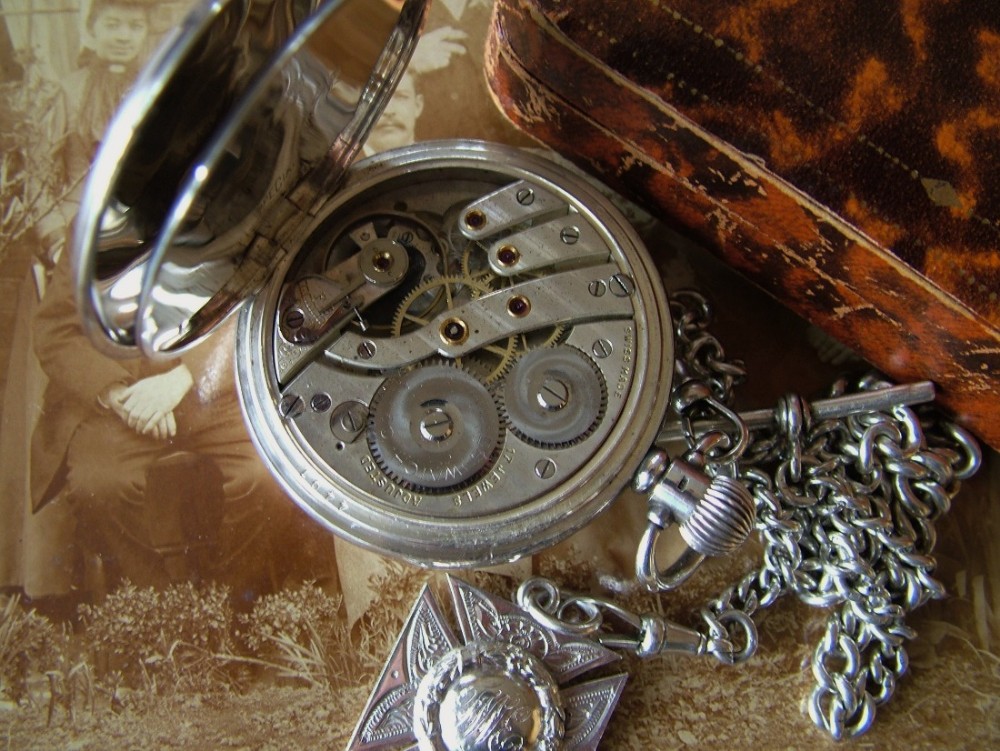
The watch has a good quality stem-winding movement,with jewelled pallets and a whiplash regulator, which is working nicely. The movement is fully signed and is protected by an inner hinged cover.
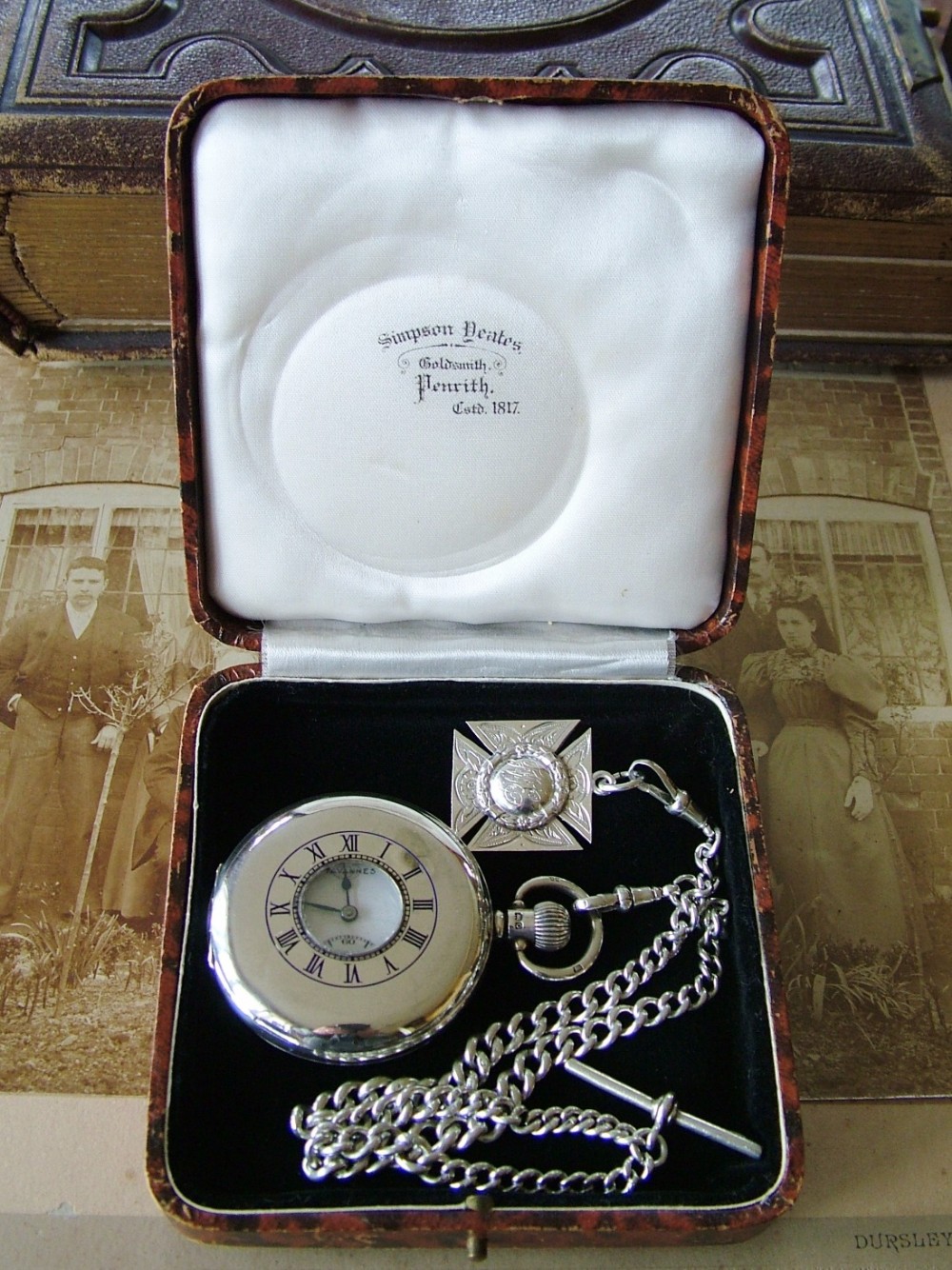
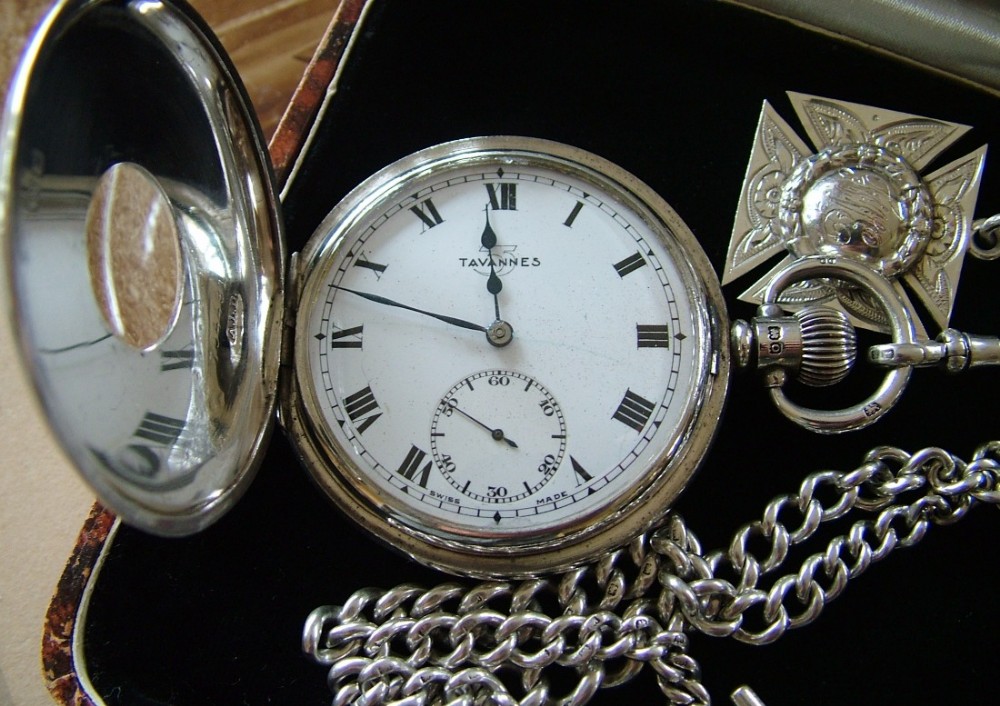
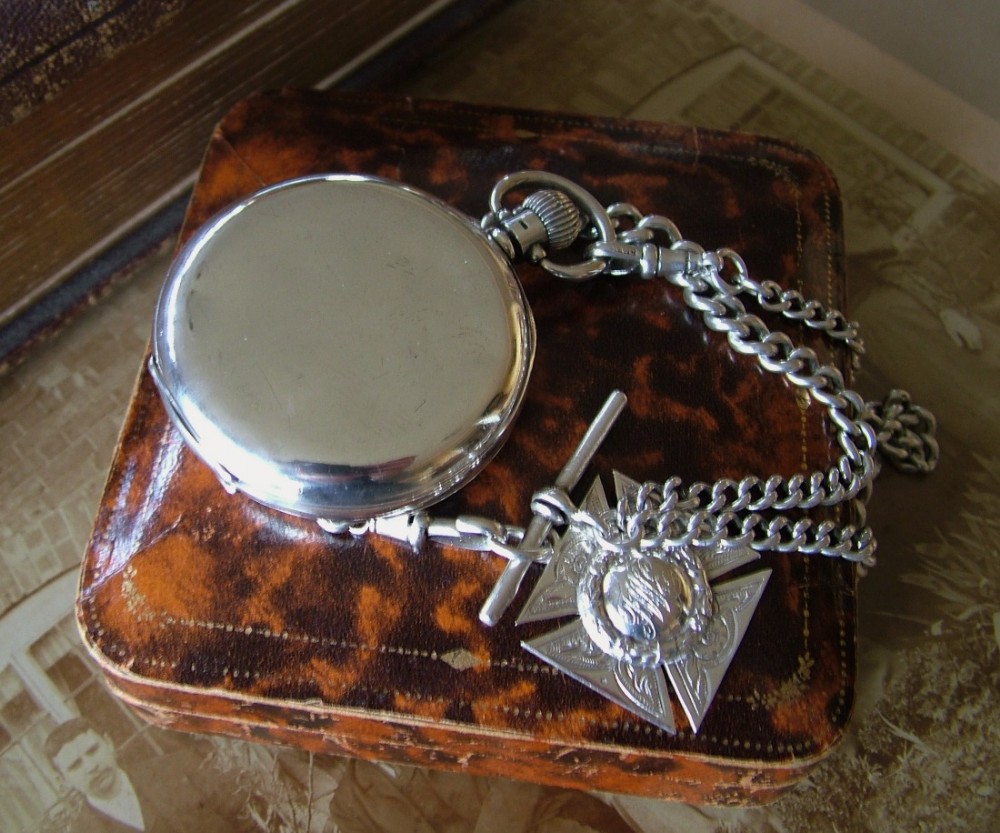
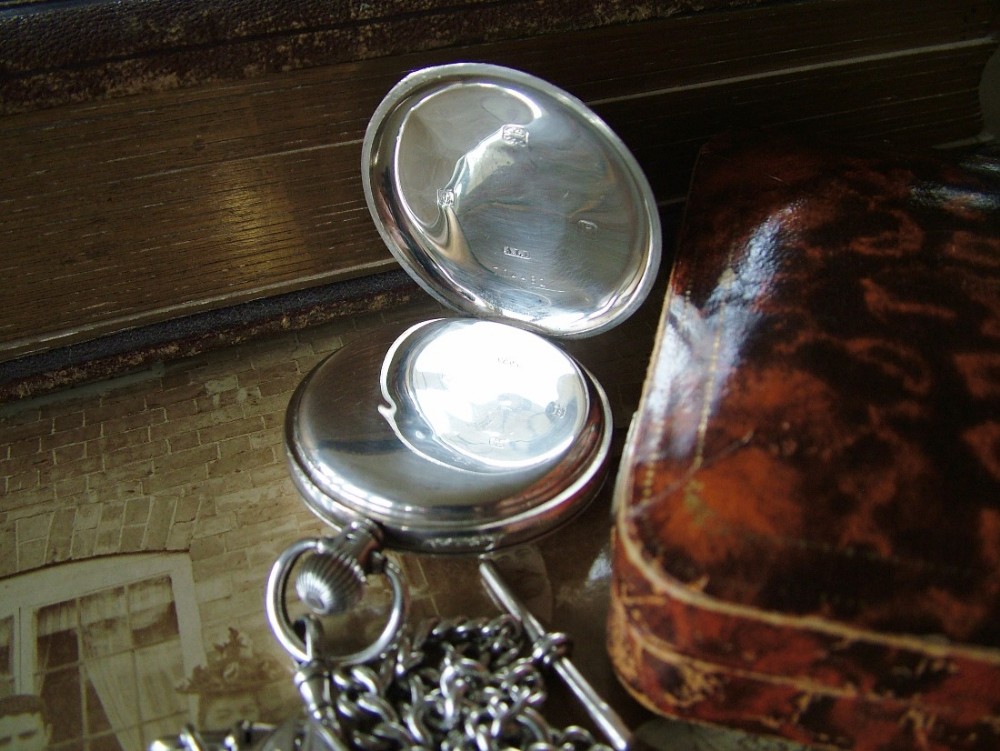
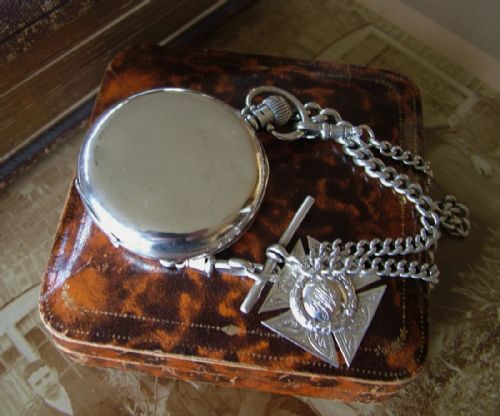
The watch itself measures 50mm diameter excluding the winding stem and the loop. The case is silver and there are hallmarks inside the case back for Birmingham 1914, with a case maker’s mark for Aaron Dennison. The front of the case has one fairly slight indentation next to number 8 and some unevenness to the back. Enamel filled Roman numerals around a small glass lens to the front.
The winding crown pushes in to open the front cover. Inside there is a plastic lens over a signed white enamel dial. There is a hairline crack running horizontally part way across the dial. Blued steel hands (note the special hour hand so that when the front cover is closed, the time can still be read).
The watch comes on a late Victorian silver double albert with a silver fob with initials.
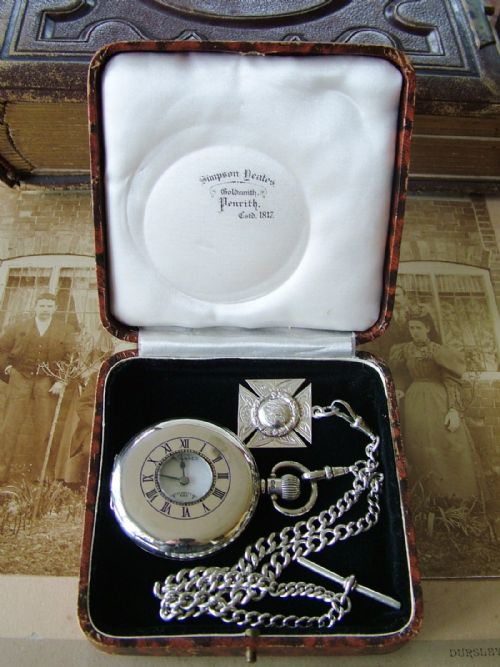
The watch and chain come in an antique presentation box.
The Vintage Wrist Watch Company has dated this piece to the 1910s.
Specialists in antique and vintage wrist watches and pocket watches
You can view the stock and full dealer information on the The Vintage Wrist Watch Company Profile Page
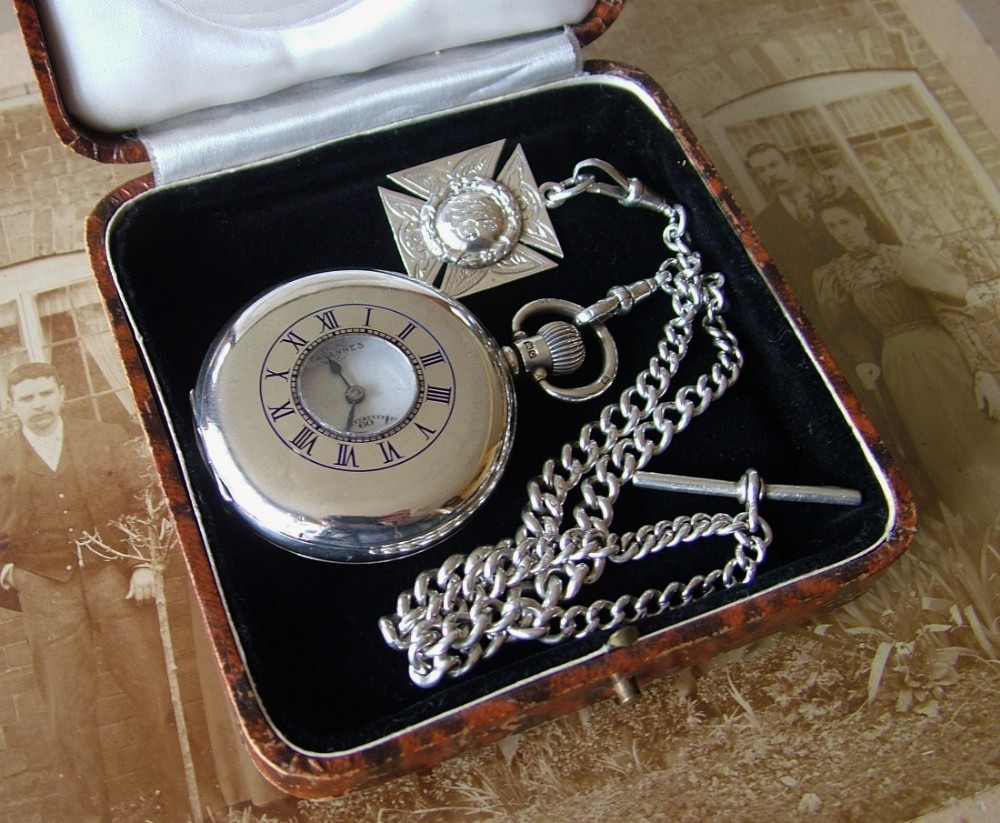
Antique Silver Tavannes Half Hunter Watch & Chain