58,483  PAGES BROWSED TODAY PAGES TODAY 206  ANTIQUES UPLOADED TODAY NEW ARRIVALS
Sort Order
Items Per Page
ID #SA424000
SOLD
Email
Save
Portrait of an East India Company Officer C.1780, by Nathaniel Hone R.A.
Roy Precious - Antiques & Fine Art
sold SA424000
Sorry, but this item has been sold.
Roy Precious - Antiques & Fine Art

Roy Precious - Antiques & Fine Art

Sellingantiques Verified Since Mar 2003
View Dealers Stock Page
  • About Us
    Roy and nadine precious: specialists in portraiture from the 16th to the 20th century. Established in 1972.
Id #SA424000
PDF SHARE
SAVE

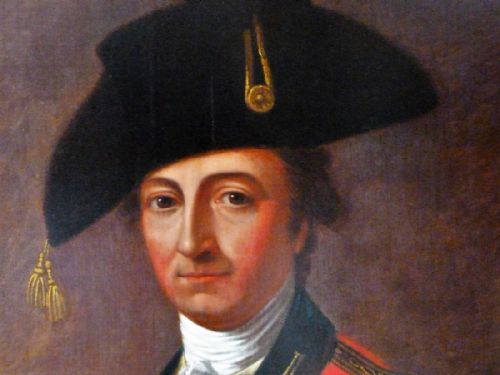
Portrait of an East India Company Officer C.1780, by Nathaniel Hone R.A.

18th century
Description

Oil on canvas in a reproduction frame of correct type.

The East India Company (EIC), also known as the Honourable East India Company or the British East India Company and informally as John Company, was an English and later British joint-stock company, which was formed to pursue trade with the East Indies but ended up trading mainly with the Indian subcontinent and Qing China.
Originally chartered as the "Governor and Company of Merchants of London trading into the East Indies", the company rose to account for half of the world's trade, particularly in basic commodities including cotton, silk, indigo dye, salt, saltpetre, tea and opium. The company also ruled the beginnings of the British Empire in India.

The company received a Royal Charter from Queen Elizabeth I on 31 December 1600, making it the oldest among several similarly formed European East India Companies. Wealthy merchants and aristocrats owned the Company's shares. The government owned no shares and had only indirect control.
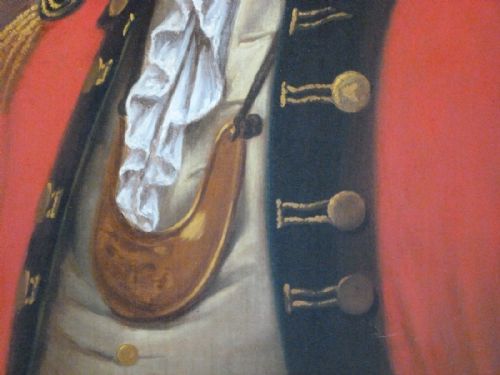
The company eventually came to rule large areas of India with its own private armies, exercising military power and assuming administrative functions. Company rule in India effectively began in 1757 after the Battle of Plassey and lasted until 1858 when, following the Indian Rebellion of 1857, the Government of India Act 1858 led to the British Crown assuming direct control of India in the form of the new British Raj.
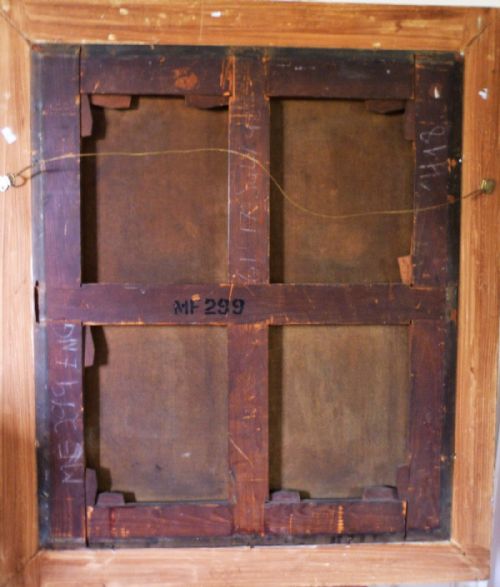
NATHANIEL HONE R.A. (1718-1784)

Nathaniel Hone was born in Ireland, and, it seems, was essentially self-taught. Seeking his fortune, he soon travelled to England to work as an itinerant painter. In the 1740s, after a wealthy marriage, he was able to settle in London, and there formed a large and prestigious clientele. Patrons included the Earl of Bute, Edmund Burke, and Frederick, Prince of Wales. In 1768 Hone was one of a number of artists who left the Society of Artists of Great Britain to found the new Royal Academy, of which he was one of two Irish founding members.

But Hone, who seems by nature to have been something of a rebel, soon fell out with his fellow academicians, in particular the President, Sir Joshua Reynolds. Hone’s large 1775 subject-picture, ‘The Conjuror’, was a direct attack on Reynolds’ reliance, as Hone saw it, on Italian compositions by the Old Masters. What Reynolds saw as a revival of the Grand Manner, Hone saw simply as plagiarism. Hone’s picture was rejected, not least because it also alluded to Reynolds’ alleged relationship with Angelica Kauffman, and he ceased exhibiting at the RA. Thereafter, Hone became the pioneer of the one man show, and began exhibiting his own works at independent shows in London, often to great acclaim.

SIZE: 39.5 x 34 inches inc. frame.

PROVENANCE: Formerly with Indar Pasricha.

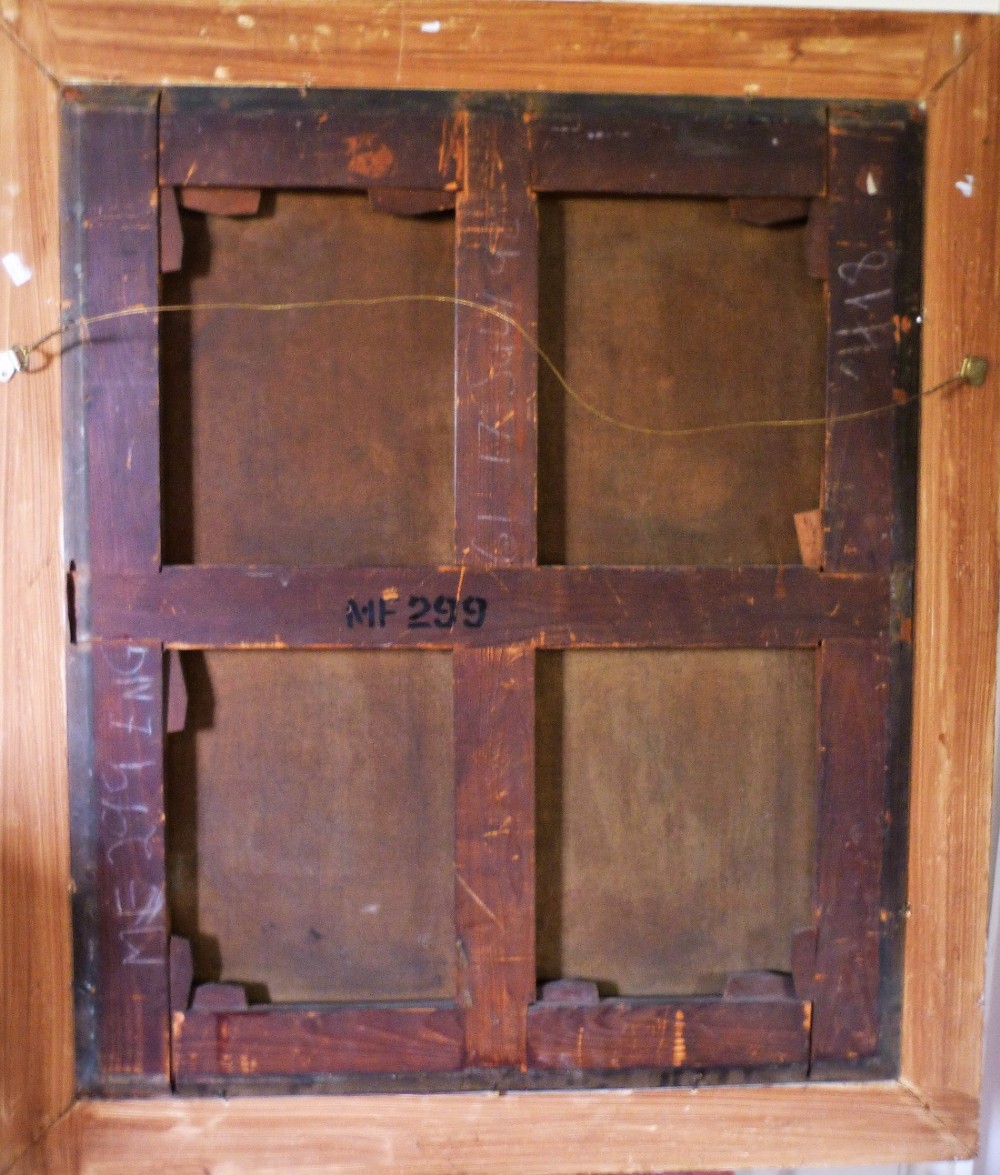
Verso: old Christie's stencil.

Physical Dimensions
Height
100cm (39.37")
Width
86cm (33.86")
Depth
7cm (2.76")
Declaration

Roy Precious - Antiques & Fine Art has dated this piece to the 18th Century.

Reference Numbers
Sellingantiques Reference
SA424000
Dealers Internal Reference
8979
Description
Oil on canvas in a reproduction frame of correct type.

The East India Company (EIC), also known as the Honourable East India Company or the British East India Company and informally as John Company, was an English and later British joint-stock company, which was formed to pursue trade with the East Indies but ended up trading mainly with the Indian subcontinent and Qing China.

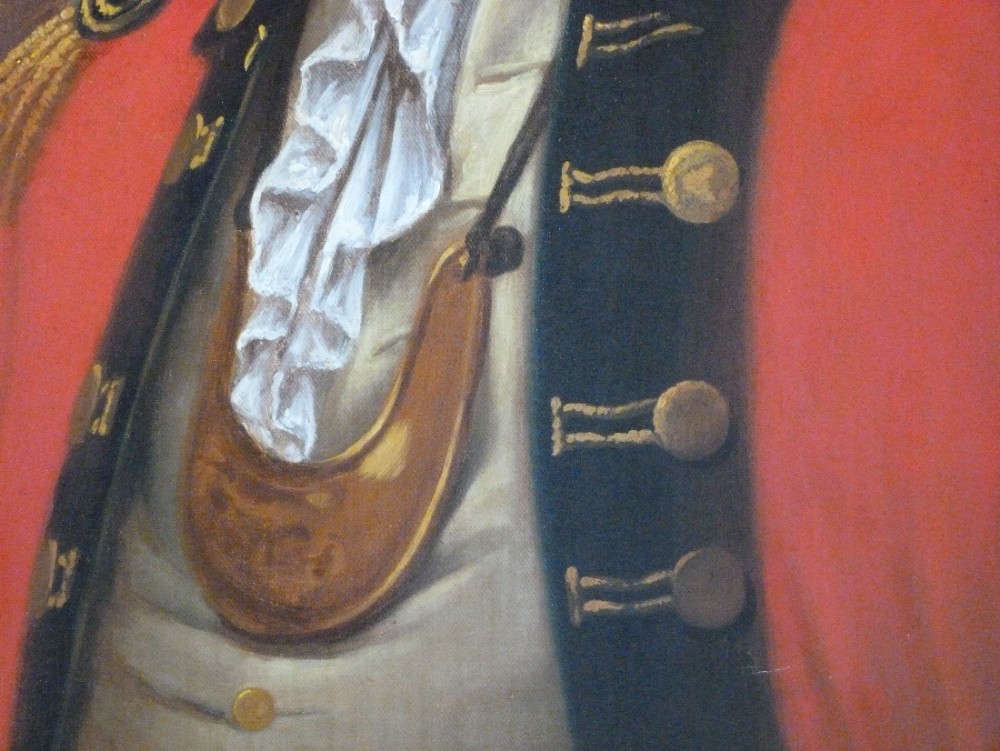
fig 1. Portrait of an East India Company officer c.1780, by Nathaniel Hone R.A.
fig 1. Portrait of an East India Company Officer C.1780, by Nathaniel Hone R.A.

Originally chartered as the "Governor and Company of Merchants of London trading into the East Indies", the company rose to account for half of the world's trade, particularly in basic commodities including cotton, silk, indigo dye, salt, saltpetre, tea and opium. The company also ruled the beginnings of the British Empire in India.

The company received a Royal Charter from Queen Elizabeth I on 31 December 1600, making it the oldest among several similarly formed European East India Companies.
Roy Precious - Antiques & Fine Art

Wealthy merchants and aristocrats owned the Company's shares. The government owned no shares and had only indirect control.

fig 2. Portrait of an East India Company officer c.1780, by Nathaniel Hone R.A.
fig 2. Portrait of an East India Company Officer C.1780, by Nathaniel Hone R.A.

The company eventually came to rule large areas of India with its own private armies, exercising military power and assuming administrative functions. Company rule in India effectively began in 1757 after the Battle of Plassey and lasted until 1858 when, following the Indian Rebellion of 1857, the Government of India Act 1858 led to the British Crown assuming direct control of India in the form of the new British Raj.

fig 3. Portrait of an East India Company officer c.1780, by Nathaniel Hone R.A.
fig 3. Portrait of an East India Company Officer C.1780, by Nathaniel Hone R.A.

NATHANIEL HONE R.A. (1718-1784)

Nathaniel Hone was born in Ireland, and, it seems, was essentially self-taught. Seeking his fortune, he soon travelled to England to work as an itinerant painter. In the 1740s, after a wealthy marriage, he was able to settle in London, and there formed a large and prestigious clientele. Patrons included the Earl of Bute, Edmund Burke, and Frederick, Prince of Wales. In 1768 Hone was one of a number of artists who left the Society of Artists of Great Britain to found the new Royal Academy, of which he was one of two Irish founding members.

But Hone, who seems by nature to have been something of a rebel, soon fell out with his fellow academicians, in particular the President, Sir Joshua Reynolds. Hone’s large 1775 subject-picture, ‘The Conjuror’, was a direct attack on Reynolds’ reliance, as Hone saw it, on Italian compositions by the Old Masters. What Reynolds saw as a revival of the Grand Manner, Hone saw simply as plagiarism. Hone’s picture was rejected, not least because it also alluded to Reynolds’ alleged relationship with Angelica Kauffman, and he ceased exhibiting at the RA. Thereafter, Hone became the pioneer of the one man show, and began exhibiting his own works at independent shows in London, often to great acclaim.

SIZE: 39.5 x 34 inches inc. frame.

PROVENANCE: Formerly with Indar Pasricha.

Verso: old Christie's stencil.

Height
100cm (39.37")
Width
86cm (33.86")
Depth
7cm (2.76")
Date of Manufacture

Roy Precious - Antiques & Fine Art has dated this piece to the 18th Century.

Reference Numbers
Sellingantiques Ref
SA424000
Dealers Internal Ref
8979
Roy Precious - Antiques & Fine Art
Sellingantiques verified Since Mar 2003

Roy and nadine precious: specialists in portraiture from the 16th to the 20th century. Established in 1972.

Dealer Profile

You can view the stock and full dealer information on the Roy Precious - Antiques & Fine Art Profile Page

PDF SHARE
SAVE
Portrait of an East India Company officer c.1780, by Nathaniel Hone R.A.
1 / 4
Archive I Portrait of an East India Company officer c.1780, by Nathaniel Hone R.A.

Portrait of an East India Company Officer C.1780, by Nathaniel Hone R.A.
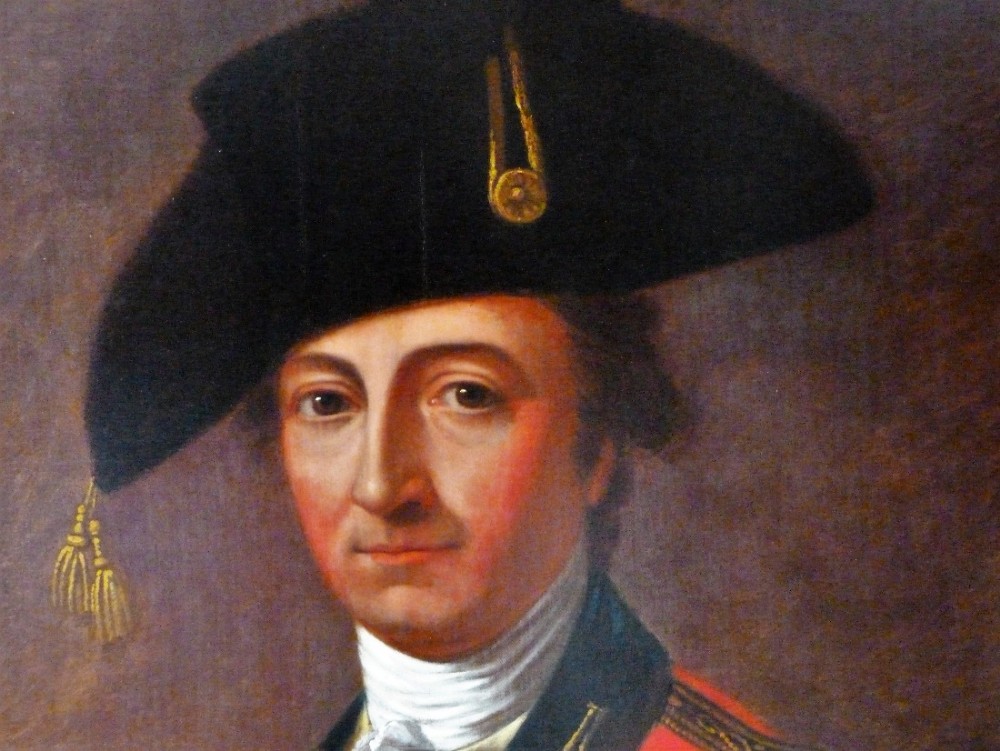
Archive II Portrait of an East India Company officer c.1780, by Nathaniel Hone R.A. View II
Archive III Portrait of an East India Company officer c.1780, by Nathaniel Hone R.A. View III
Archive IV Portrait of an East India Company officer c.1780, by Nathaniel Hone R.A. View IV
Enlarged Archival View
Location
Wiltshire
United Kingdom
Dealer Profile Page sellingantiques.co.uk/rp
Verified Since Mar 2003
Items For Sale 95
Items Sold 679
Roy Precious - Antiques & Fine Art
Verified Since Mar 2003
View Dealer Info
Location: Wiltshire, United Kingdom
Verified
Mar 2003
For Sale
95
Sold
679
Portrait of an East India Company officer c.1780, by Nathaniel Hone R.A.
Ref: SA424000
Portrait of an East India Company officer c.1780, by Nathaniel Hone R.A.
Detail View 1
Detail View 2
Detail View 3
Archival Detail
Every single antique dealer on our platform is individually approved by our internal team. We verify their professional trade history, ethical standards, and photographic quality to ensure a secure, high-standard buying environment. Upon joining, every dealer agrees to a strict 9-point code of conduct. While issues can occasionally arise, our dealers typically resolve them swiftly and directly with the buyer. In fact, since our founding in 2002, Sellingantiques has only had to step in to help resolve an issue on roughly five occasions—a true testament to the quality of our dealers and their dedication to your happiness.
Our dealers are highly experienced in packing and shipping fragile, high-value antiques. Because you are in direct contact with the dealer, you will be able to easily go through all available shipping and insurance options together to ensure your item arrives safely.
Antiques are the ultimate green purchase. By choosing historical pieces over newly manufactured goods, you completely eliminate the carbon footprint of modern mass production while preserving exceptional, timeless craftsmanship.
items
Add keywords to the filter
Price
£100
£250000
Era
Movements
Material
Origin
Stock Location
Freshness
Online Payments
Categories