P A Oxley Antique Clocks & Barometers has dated this piece to the Georgian era.
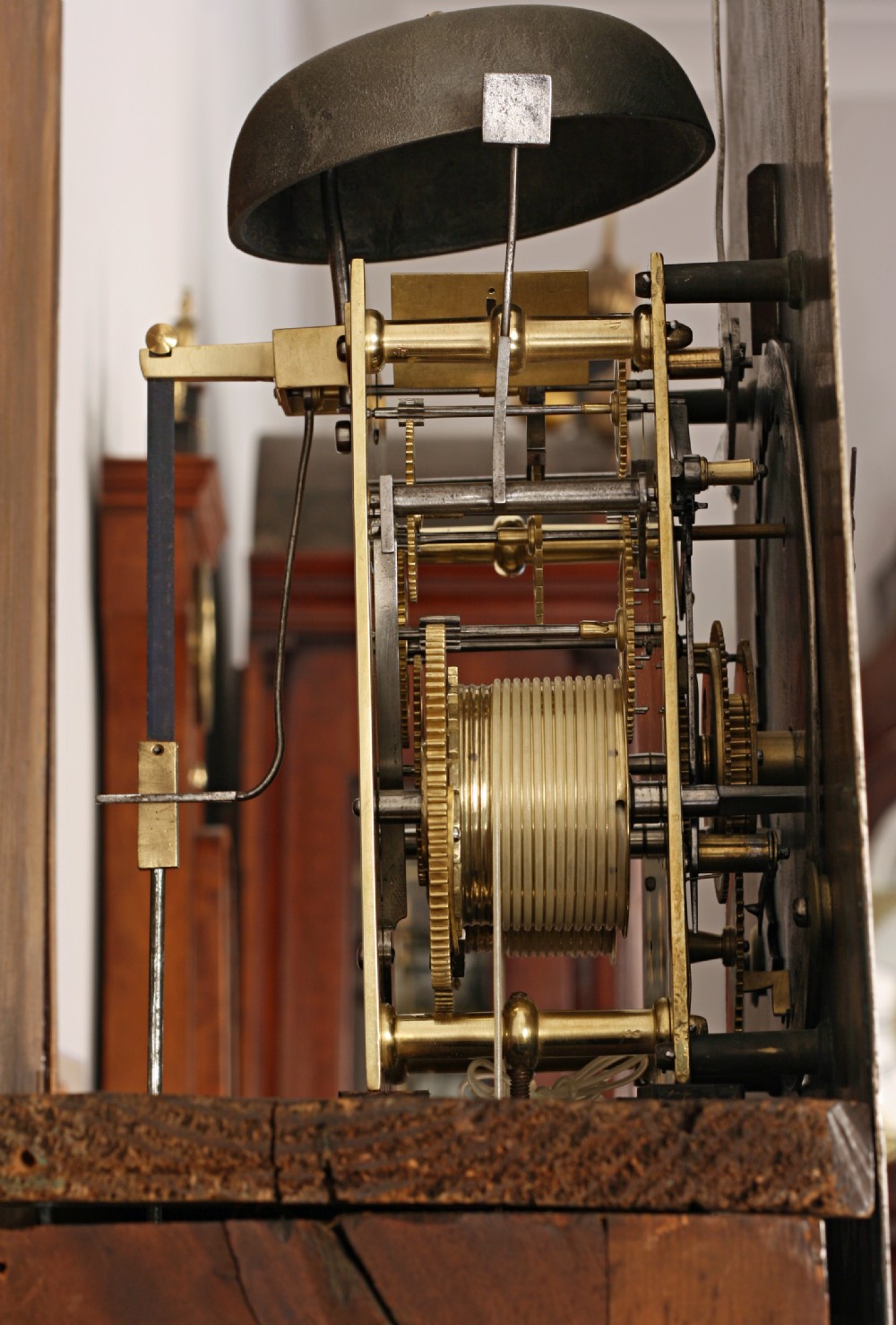
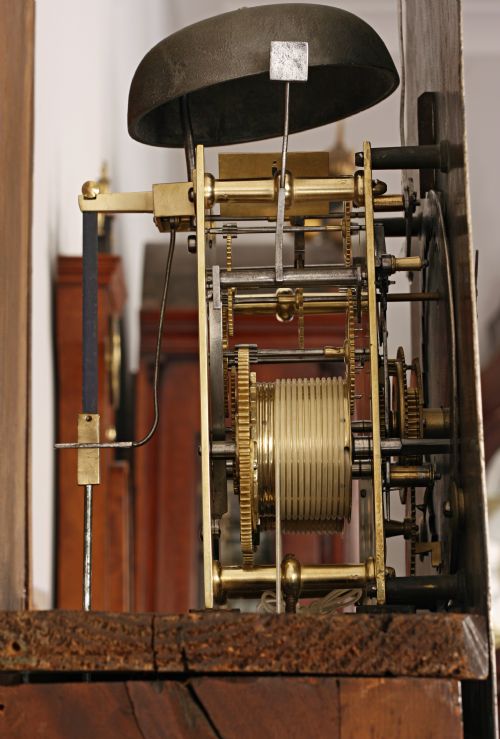
The movement is of 8 day duration and strikes the hours on a bell.
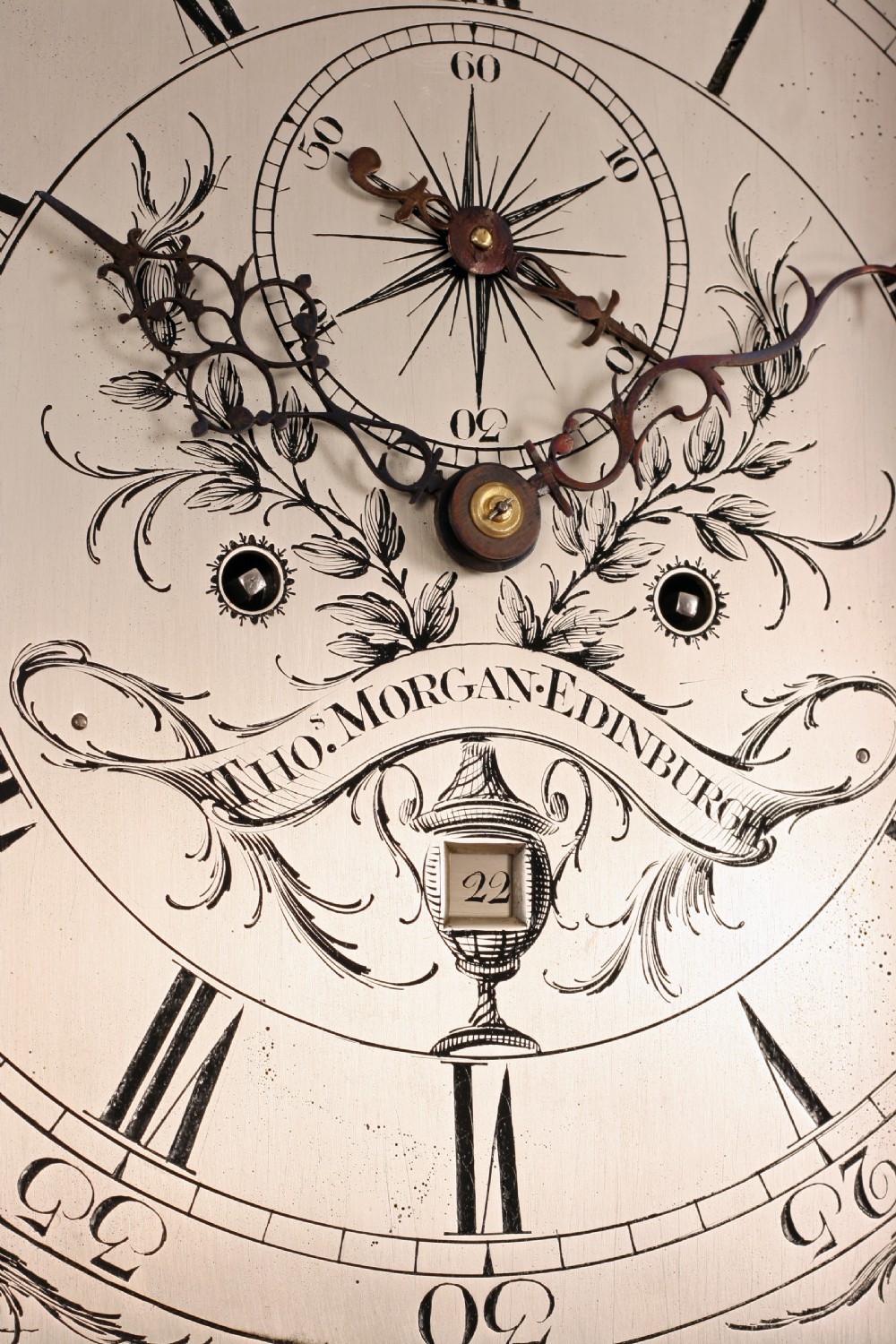
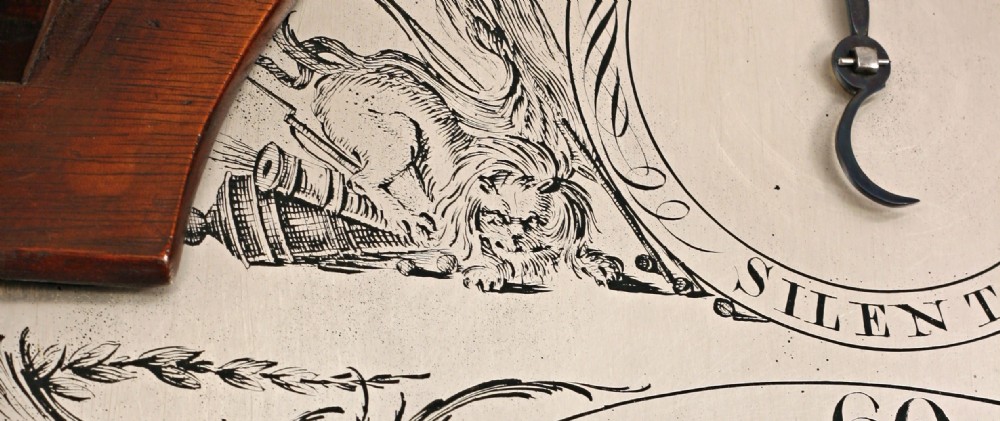
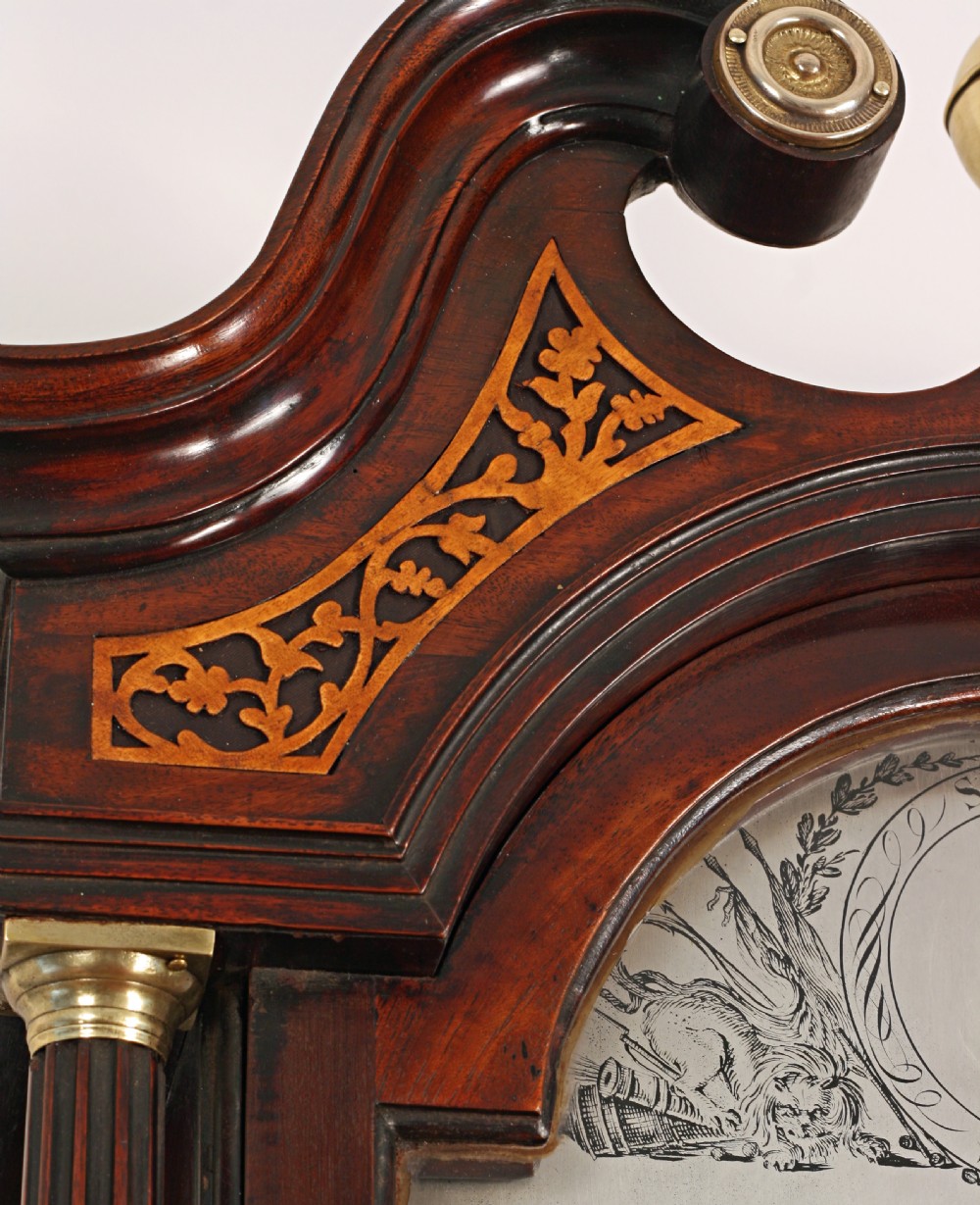
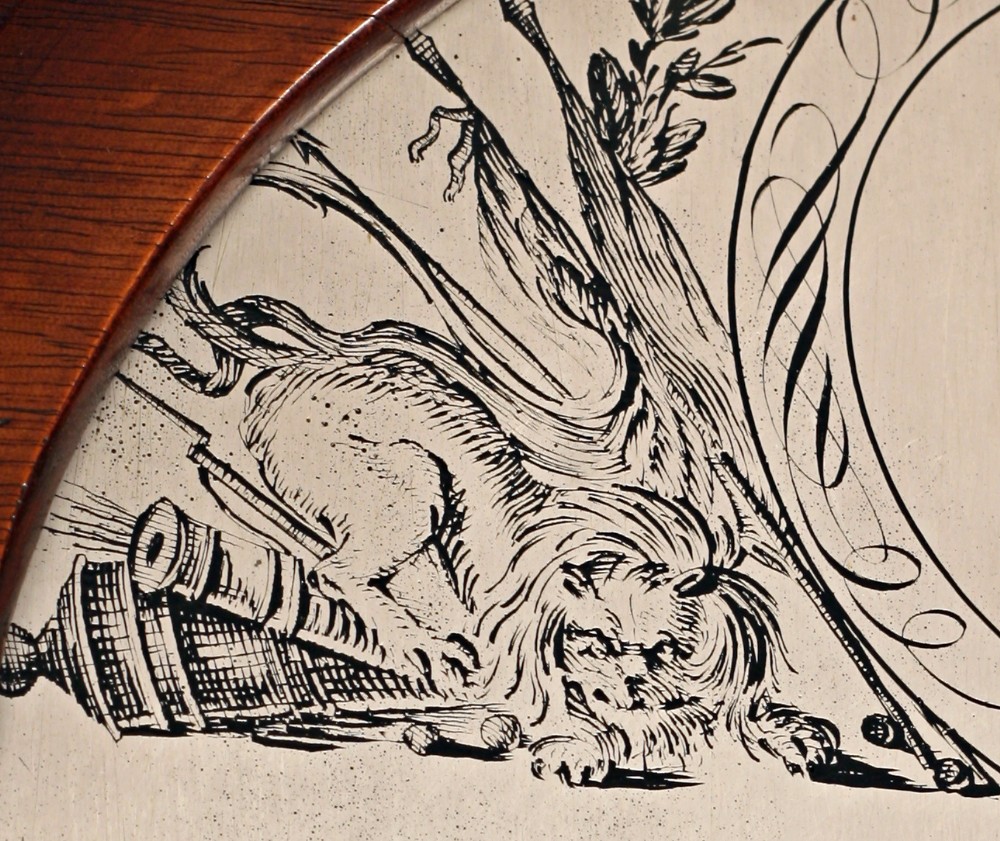
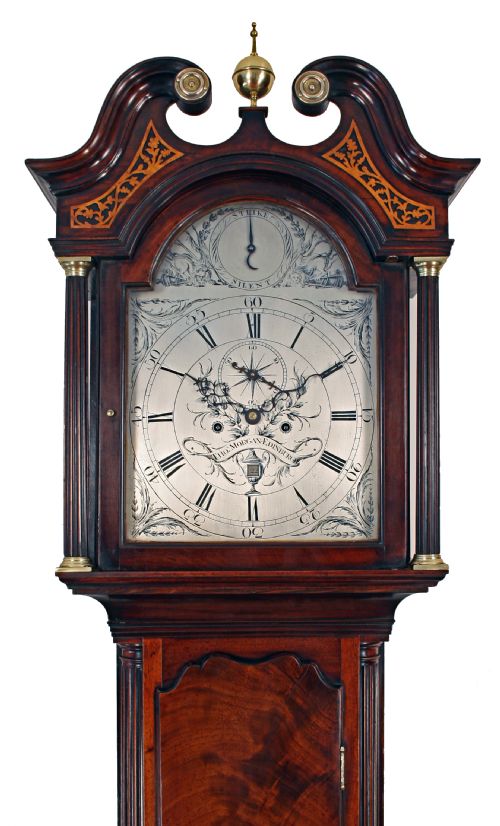
The makers name and place of work is engraved across the centre of the dial with elaborate scrolls, foliage and a large urn. The corners and arch are engraved with matching scrolls and foliage but the arch also has the addition of flag poles, firing cannons and lions. There is a dial to the centre which allows the clock to be silenced on demand. The blued steel hands are typical of the period.
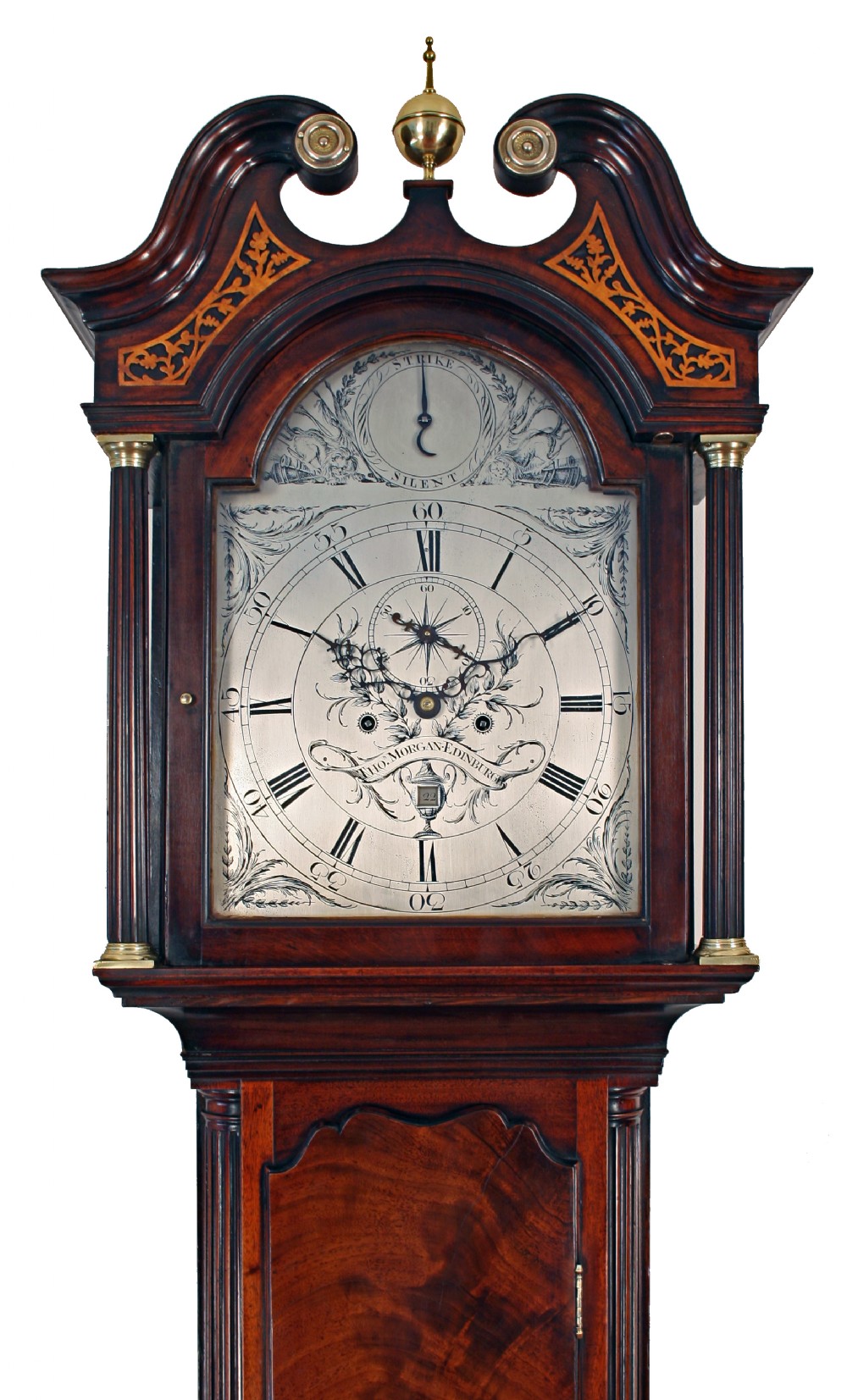
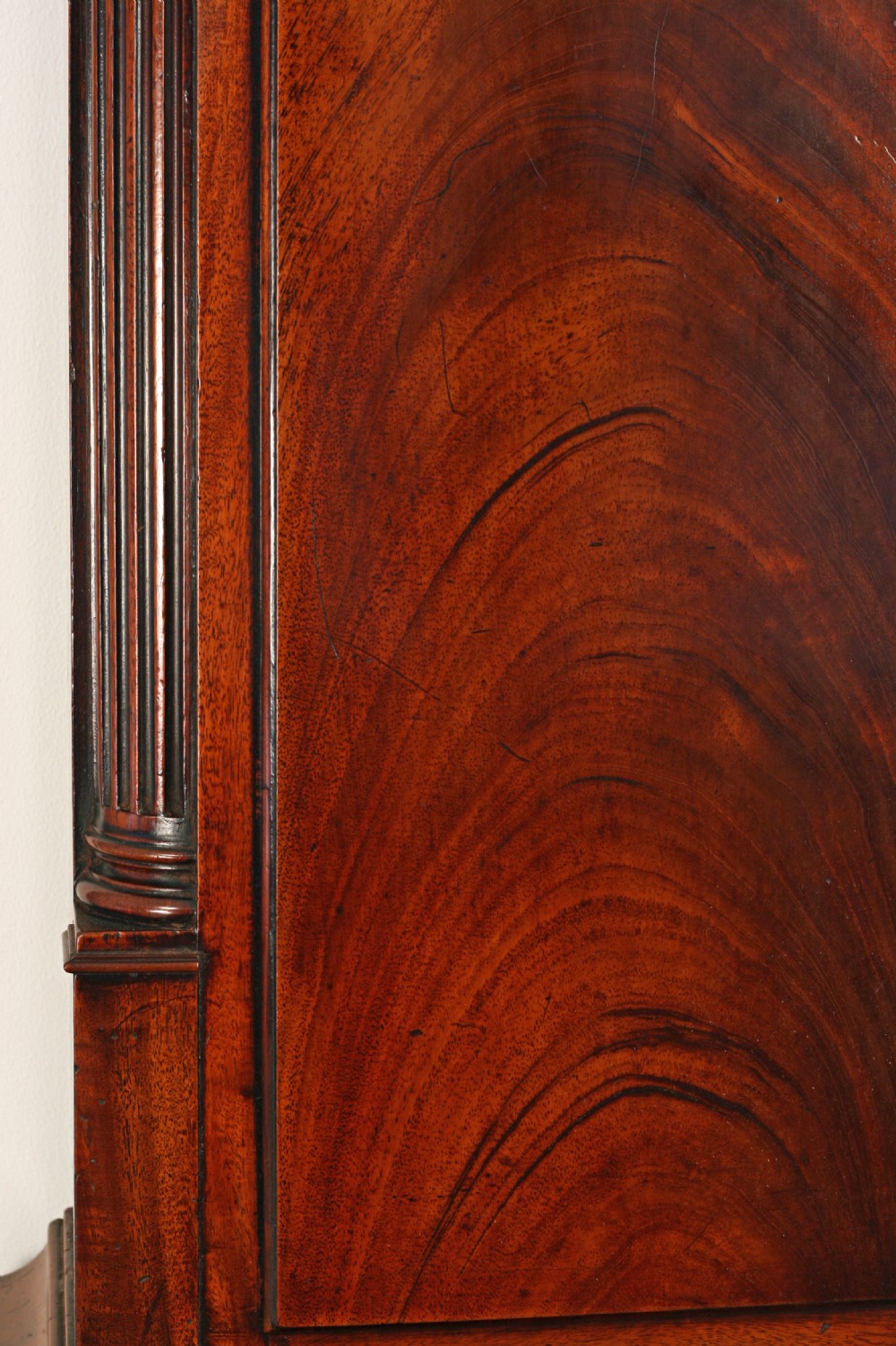
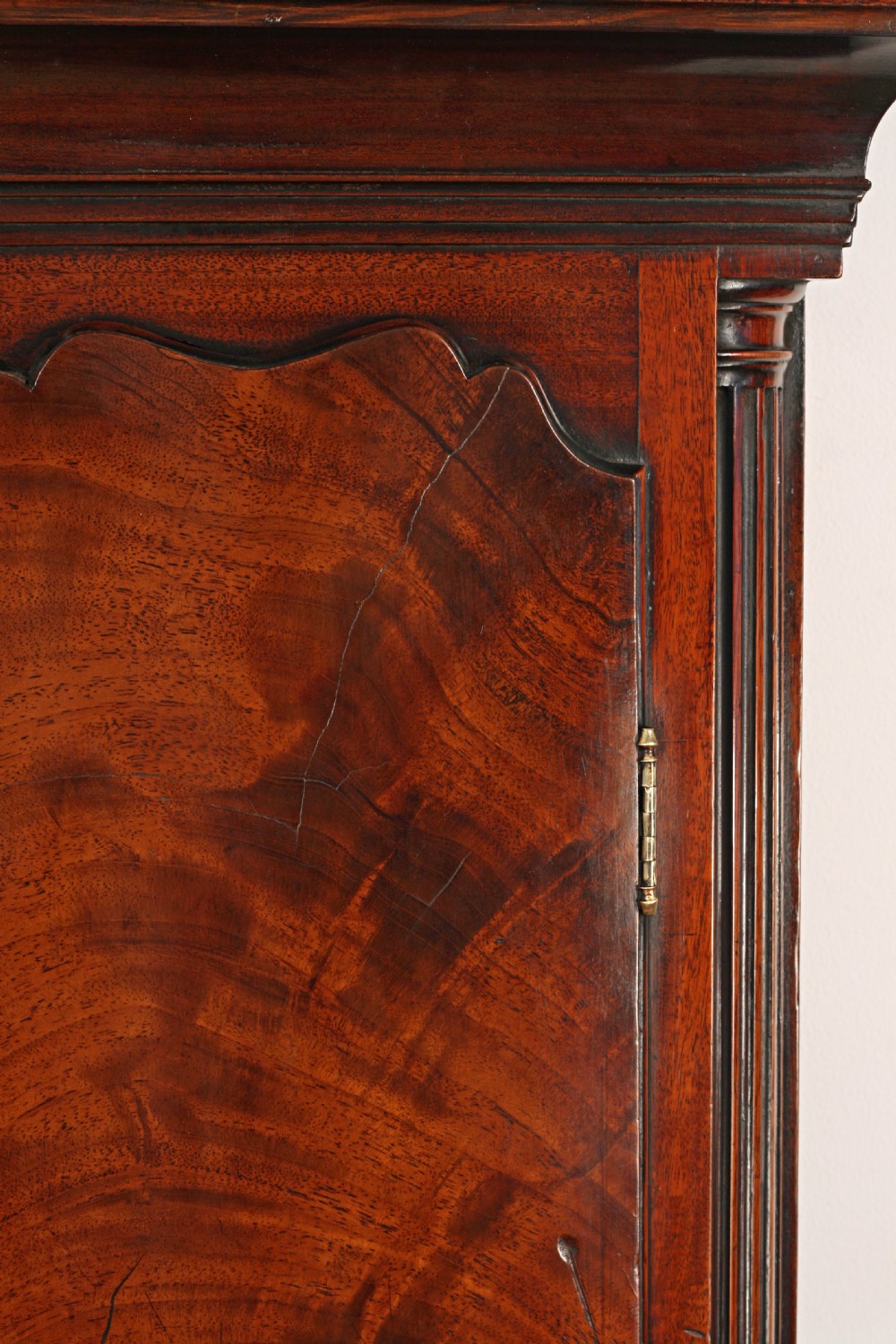
The exceptional cabinet work displays a superb flame veneered trunk door of exquisite colour. This is flanked by reeded quarter columns finishing with solid mahogany capitals. The base is similarly veneered with a book matched panel and standing on small bracket feet. The hood also displays reeded pillars terminating with brass Doric capitals and with wooden capitals to the rear of the hood. The pediment is finished with a typical Edinburgh swan neck top with a central brass finial, brass paterea, satinwood fretwork and inspection windows to the sides.
An excellent and very collectable example.
Note: Thomas Morgan of Edinburgh was apprenticed to William Nicol in November 1767. Originally from London he was admitted a Freeman of the Incorporation of Hammermen on November 1776. He is known to have worked from Clam Shell Turnpike, 30 South Bridge and finally to 1 Infirmary Street in May 1803.
Height: 7'4½" / C.1790
P A Oxley Antique Clocks & Barometers has dated this piece to the Georgian era.
You can view the stock and full dealer information on the P A Oxley Antique Clocks & Barometers Profile Page
P A Oxley Antique Clocks & Barometers is a registered member of LAPADA
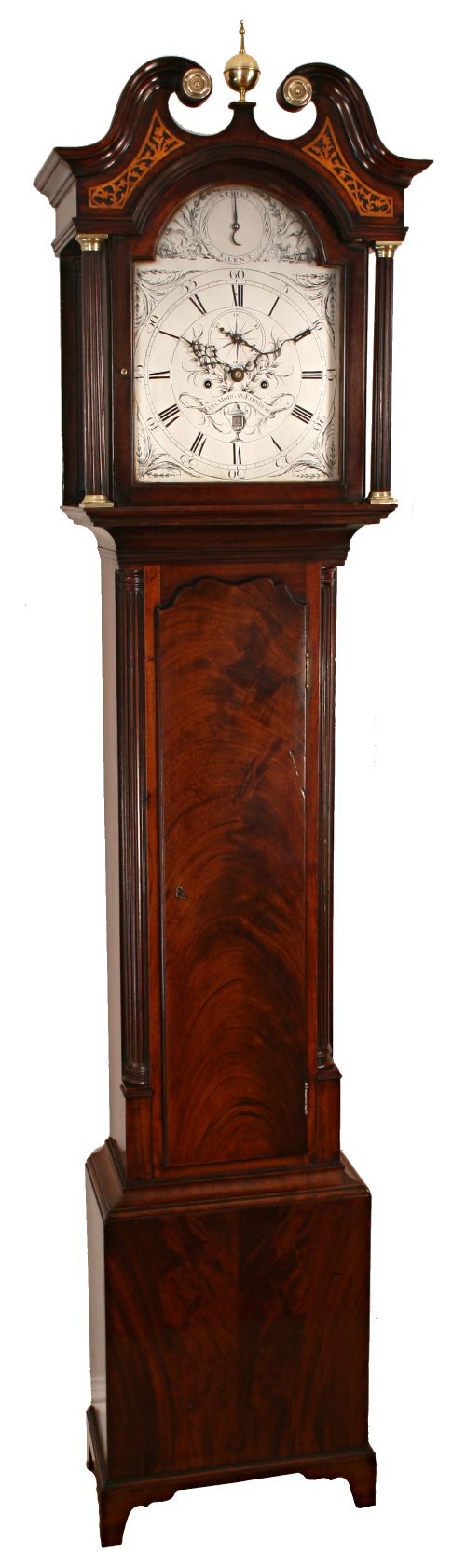
Scottish longcase clock by Thomas Morgan of Edinburgh