40,365  PAGES BROWSED TODAY PAGES TODAY 98  ANTIQUES UPLOADED TODAY NEW ARRIVALS
ID #SA398433
FOR SALE
£6,500
Email
Save
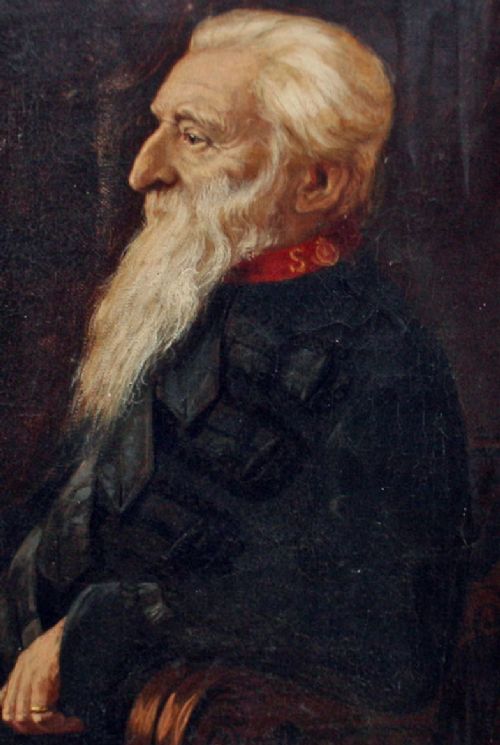
Sir Hubert Von Herkomer, 1849 - 1914 Portrait of General William Booth 1829–1912, Founder of the Salvation Army
Artware Fineart
for sale €7,605     $8,255
£6,500

Artware Fineart

Sellingantiques Verified Since Sep 2008
View Dealers Stock Page
Id #SA398433
PDF SHARE
SAVE

Sir Hubert Von Herkomer, 1849 - 1914 Portrait of General William Booth 1829–1912, Founder of the Salvation Army

19th century
For Sale by Artware Fineart
Description

Sir Hubert Von Herkomer, 1849 - 1914

Portrait of General William Booth 1829–1912, founder of the Salvation Army

oil on canvas

31 x 23 cm (12 x 9 in.)

This portrait is likely to be a studio Modello Portrait painted by Herkomer. The large full scale portrait of William Booth after Sir Hubert Von Herkomer at the William Booth College.
William Booth, (1829–1912), founder of the Salvation Army, was born at Sneinton, a suburb of Nottingham, on 10 April 1829, one of five children of Samuel Booth (1775–1842), a speculative builder, and his second wife, Mary Moss (b. 1791). He was sent to Biddulph's School, Nottingham, but it failed to turn him into either a gentleman or a scholar; at thirteen, because of family poverty, he was apprenticed to a pawnbroker in a squalid part of Nottingham. Although he proved an able assistant to his employer, he spoke of this experience in later life with bitterness. Soon after his apprenticeship began his father, whose business affairs had gone from bad to worse, died; the family, struggling to make ends meet, moved into a shop. Booth's ‘blighted childhood’, as he always called it, left a powerful impression on his mind.

Booth drifted out of the Church of England, but there was little to suggest any marked change in his religious thinking before his father's death. He seems to have been stirred politically by the oratory of Chartist leader Feargus O'Connor (1796–1855), who visited Nottingham during the election of 1842. Deeply affected by the daily spectacle of ragged children crying for bread in the streets, Booth ranged himself on the side of the Chartists. A frequent attendant at Nottingham's Wesley Chapel, he was also coming under the sway of Methodism; in 1844, with his conscience tortured by a piece of sharp practice in which he had overreached some of his fellow assistants at the pawnbroker's shop, he made public confession of his sin and underwent conversion. Had it not been for his conscience, and the effect of confession, he might have become a radical. As it was, religion made him, from a political point of view, a die-hard conservative.

The impressionable teenager came under the spellbinding oratory of the American Methodist James Caughey, who visited Nottingham in 1846. Booth joined a group of revivalists who conducted religious services in the streets of the city. He was then seventeen and distinguished by his height, pale face, black hair, and eloquence. In 1849 he moved to London in search of better paid work, but failing to find it he was obliged to go as assistant to a pawnbroker in Walworth. He took at this time several religious vows, which reveal an uncompromising spiritual intention, and almost starved himself in order to send money back to his mother and sisters. He devoted his leisure to religion and began to attract the attention of local Methodists, one of whom, E. J. Rabbits, a rich boot manufacturer, persuaded him to become a lay preacher. It was this boot manufacturer who introduced him into the family of a carriage builder living in Clapham, where he met the woman who was so powerfully to influence his subsequent career.

Catherine Mumford (1829–1890) [see Booth, Catherine], the daughter of the carriage builder, was an invalid who spent most of her time on a sofa. She had a cultivated mind to a degree unusual among people in suburban circles: while she admired Booth's character, she deplored his lack of culture. A child of the dissenting chapel, her religion was respectable, if not conventional. She criticized Booth's sermons, gave him devotional books, and tried to steady his religious ardour. He admitted his lack of learning, but not even her persuasions could tame his ‘love for souls’, which was the master passion of his life. In return, Booth gave her a wider outlook and gradually weaned her mind from its subservience to convention: the suburban

Declaration

Artware Fineart has dated this Victorian Oil Portrait Painting to the 1890s.

Reference Numbers
Sellingantiques Reference
SA398433
Dealers Internal Reference
3742
Description
Sir Hubert Von Herkomer, 1849 - 1914

Portrait of General William Booth 1829–1912, founder of the Salvation Army

oil on canvas

31 x 23 cm (12 x 9 in.)

This portrait is likely to be a studio Modello Portrait painted by Herkomer.

The large full scale portrait of William Booth after Sir Hubert Von Herkomer at the William Booth College.
Artware Fineart
fig 1. A late Victorian oil portrait painting depicting an elderly gentleman with a long white beard in profile, wearing a dark uniform with a red collar.
fig 1. Sir Hubert Von Herkomer, 1849 - 1914 Portrait of General William Booth 1829–1912, Founder of the Salvation Army

William Booth, (1829–1912), founder of the Salvation Army, was born at Sneinton, a suburb of Nottingham, on 10 April 1829, one of five children of Samuel Booth (1775–1842), a speculative builder, and his second wife, Mary Moss (b. 1791). He was sent to Biddulph's School, Nottingham, but it failed to turn him into either a gentleman or a scholar; at thirteen, because of family poverty, he was apprenticed to a pawnbroker in a squalid part of Nottingham. Although he proved an able assistant to his employer, he spoke of this experience in later life with bitterness. Soon after his apprenticeship began his father, whose business affairs had gone from bad to worse, died; the family, struggling to make ends meet, moved into a shop. Booth's ‘blighted childhood’, as he always called it, left a powerful impression on his mind.

Booth drifted out of the Church of England, but there was little to suggest any marked change in his religious thinking before his father's death. He seems to have been stirred politically by the oratory of Chartist leader Feargus O'Connor (1796–1855), who visited Nottingham during the election of 1842. Deeply affected by the daily spectacle of ragged children crying for bread in the streets, Booth ranged himself on the side of the Chartists. A frequent attendant at Nottingham's Wesley Chapel, he was also coming under the sway of Methodism; in 1844, with his conscience tortured by a piece of sharp practice in which he had overreached some of his fellow assistants at the pawnbroker's shop, he made public confession of his sin and underwent conversion. Had it not been for his conscience, and the effect of confession, he might have become a radical. As it was, religion made him, from a political point of view, a die-hard conservative.

The impressionable teenager came under the spellbinding oratory of the American Methodist James Caughey, who visited Nottingham in 1846. Booth joined a group of revivalists who conducted religious services in the streets of the city. He was then seventeen and distinguished by his height, pale face, black hair, and eloquence. In 1849 he moved to London in search of better paid work, but failing to find it he was obliged to go as assistant to a pawnbroker in Walworth. He took at this time several religious vows, which reveal an uncompromising spiritual intention, and almost starved himself in order to send money back to his mother and sisters. He devoted his leisure to religion and began to attract the attention of local Methodists, one of whom, E. J. Rabbits, a rich boot manufacturer, persuaded him to become a lay preacher. It was this boot manufacturer who introduced him into the family of a carriage builder living in Clapham, where he met the woman who was so powerfully to influence his subsequent career.

Catherine Mumford (1829–1890) [see Booth, Catherine], the daughter of the carriage builder, was an invalid who spent most of her time on a sofa. She had a cultivated mind to a degree unusual among people in suburban circles: while she admired Booth's character, she deplored his lack of culture. A child of the dissenting chapel, her religion was respectable, if not conventional. She criticized Booth's sermons, gave him devotional books, and tried to steady his religious ardour. He admitted his lack of learning, but not even her persuasions could tame his ‘love for souls’, which was the master passion of his life. In return, Booth gave her a wider outlook and gradually weaned her mind from its subservience to convention: the suburban

Date of Manufacture

Artware Fineart has dated this Victorian Oil Portrait Painting to the 1890s.

Reference Numbers
Sellingantiques Ref
SA398433
Dealers Internal Ref
3742
Artware Fineart
Sellingantiques verified Since Sep 2008
Dealer Profile

You can view the stock and full dealer information on the Artware Fineart Profile Page

PDF SHARE
SAVE
A late Victorian oil portrait painting depicting an elderly gentleman with a long white beard in profile, wearing a dark uniform with a red collar.
1 / 2
Archive I A late Victorian oil portrait painting depicting an elderly gentleman with a long white beard in profile, wearing a dark uniform with a red collar.

Sir Hubert Von Herkomer, 1849 - 1914 Portrait of General William Booth 1829–1912, Founder of the Salvation Army

Archive II A late Victorian oil portrait painting depicting an elderly gentleman with a long white beard in profile, wearing a dark uniform with a red collar. View II
FURTHER BROWSING

Visitors also looked at these ⇣

Enlarged Archival View
Telephone 07958 699 645
Location
18 La Gare
51 Surrey Row
London
SE1 0BZ
United Kingdom
Verified Since Sep 2008
Items For Sale 243
Items Sold 223
Artware Fineart
Verified Since Sep 2008
View Dealer Info
Location: 18 La Gare , 51 Surrey Row , London , SE1 0BZ , United Kingdom
Verified
Sep 2008
For Sale
243
Sold
223
A late Victorian oil portrait painting depicting an elderly gentleman with a long white beard in profile, wearing a dark uniform with a red collar.
Sir Hubert Von Herkomer, 1849 - 1914 Portrait of General William Booth 1829–1912, founder of the Salvation Army
Ref: SA398433
A late Victorian oil portrait painting depicting an elderly gentleman with a long white beard in profile, wearing a dark uniform with a red collar.
Detail View 1
Archival Detail
Every single antique dealer on our platform is individually approved by our internal team. We verify their professional trade history, ethical standards, and photographic quality to ensure a secure, high-standard buying environment. Upon joining, every dealer agrees to a strict 9-point code of conduct. While issues can occasionally arise, our dealers typically resolve them swiftly and directly with the buyer. In fact, since our founding in 2002, Sellingantiques has only had to step in to help resolve an issue on roughly five occasions—a true testament to the quality of our dealers and their dedication to your happiness.
Our dealers are highly experienced in packing and shipping fragile, high-value antiques. Because you are in direct contact with the dealer, you will be able to easily go through all available shipping and insurance options together to ensure your item arrives safely.
Antiques are the ultimate green purchase. By choosing historical pieces over newly manufactured goods, you completely eliminate the carbon footprint of modern mass production while preserving exceptional, timeless craftsmanship.

Late Victorian portraiture often emphasised psychological depth, realism, and formal dignity, moving away from idealized romanticism to showcase character and status through precise brushwork and rich, somber tones.

Artists typically painted with oil pigments mixed with linseed oil, applied onto stretched flax or hemp canvas primed with a gesso ground, and often presented in gilded wooden frames.

Authentic period oil paintings usually feature natural craquelure consistent with age, historic canvas stretching techniques, artist signatures or inscriptions, and age-related oxidisation on the reverse of the canvas.

A Victorian portrait can serve as a focal point above a mantelpiece or console, or be incorporated into an eclectic gallery wall alongside contemporary artwork to create a compelling visual dialogue.

Keep the canvas away from direct sunlight, extreme temperature fluctuations, and high humidity, cleaning it only gently with a soft dry brush rather than liquid cleaners.
items
Add keywords to the filter
Price
£100
£250000
Era
Movements
Material
Origin
Stock Location
Freshness
Online Payments
Categories