60,930  PAGES BROWSED TODAY PAGES TODAY 103  ANTIQUES UPLOADED TODAY NEW ARRIVALS
ID #SA398270
FOR SALE
£1,200
Email
Save
Sir Richard Westmacott, 1775 - 1856 Captain, Later Lt Colonel John Guise 1813-1890 of the 24th N.i , H.e.i.c.s of the Bengal Army
Artware Fineart
for sale €1,404     $1,524
£1,200

Artware Fineart

Sellingantiques Verified Since Sep 2008
View Dealers Stock Page
Id #SA398270
PDF SHARE
SAVE

Sir Richard Westmacott, 1775 - 1856 Captain, Later Lt Colonel John Guise 1813-1890 of the 24th N.i , H.e.i.c.s of the Bengal Army

19th century
For Sale by Artware Fineart
Description

Sir Richard Westmacott, 1775 - 1856

Captain, Later Lt Colonel John Guise 1813-1890 of the 24th N.I , H.E.I.C.S of the Bengal Army

Signed/Inscribed:

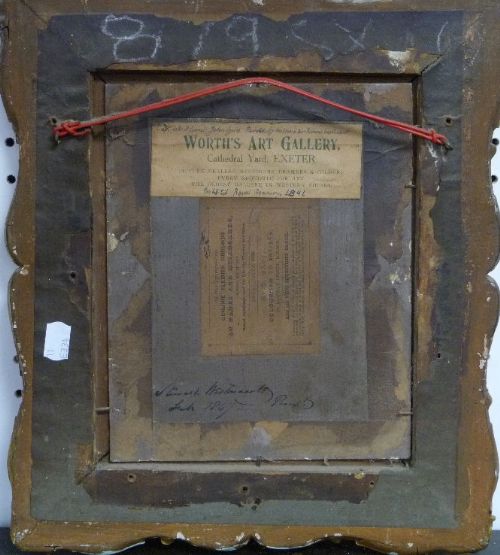
inscribed on a label on the reverse, "Captain, Later Lt Colonel John Guise Painted by his cousin Sir Richard Westmacott./ Exhibited Royal Academy 1841 (sic) / S Richard Westmacott Pinxt. / Feb 1847"

oil on board

25.40 x 20.32 cm. (10 x 8 in.)

Exhibited : Royal Academy, 1847--

Worth's Art Gallery, Exeter

Sir Richard Westmacott 1775-1856 was a cousin of Lt Col John Guise

From Hodson Index are the following notes :
Lieut. Colenel, 24th N.I.

B. London 8 Mar 1813. cadet 1828. arrived in india 22 sept 1829.

ensign 5th June 1829. Lieut 1 jan 1838. capt 20. sept 1845. bt Major

28 nov 1854. retired 31 dec 1856. hon Lt. Col 31 dec 1856. d. 27 Jan 1890. Bapt. Marlebone 30 mar 1813. Son of John Guise and Maria his wife. Married Elizabeth (1823-1899) before 1855.

Services : Ensign d.d. 27th N.I. 2 Nov 1829. posted as Ensign to 12th N.I. 2 Aug 1832. transfd to 24th N.I. 24 June 1833. (Rising in Cuttack 1836; ensign 24th N.I.) Actg. Adjt. Left Wing Dec. 1842.

Disturbances in Bundelkhand 1842-3; lieut. 24th N.I. O Fur 1846-8.

Refs:(? N. & Q 12s.1.46.) (O Punchamuggur, 1842)

All the HEIC Native Infantry officers wore a unifoirm that was essentially the same as British Line Infantry officers uniforms at this period, with distinctions on the buttons, shoulder belt and shako plates. The 24th Foot wore green facings, and had very different shoulder belt plate. The Bengal Native Infantry was part of the organisation of the East India Company's Bengal Army before the Indian rebellion of 1857.The infantry regiments underwent frequent changes of numbering during their period of existence. The traditional formation of British and Presidency armies' regiments was by a hierarchy in which the "1st Regiment" was the oldest and the highest number was given to the youngest. In 1764, the Bengal Native Infantry regiments were renumbered in the order of the seniority of their captain. The vast majority of the Bengal Native Infantry regiments rebelled in the Indian Rebellion of 1857.

The regiment was raised at Nowshera on 1 August 1857 by Lieutenant Charles Henry Brownlow from drafts provided by 4th and 5th Punjab Infantry on the orders of John Lawrence, the British High Commissioner of the Punjab. It was one of several battalions raised by Lawrence to suppress the Great Indian Mutiny of 1857. Brownlow, who became their first commanding officer, remained associated with the regiment for more than half a century; becoming their Honorary Colonel in 1904. He was made a Field Marshal in 1908. The regiment's first overseas service came during the Second Opium War against China. Soon after landing there, it took part in the successful assault on Taku Forts on 21 August 1860. The regiment then advanced with the rest of the British force, arriving at Peking (Beijing) in late September, which was captured on 6 October. In 1861, the regiment was brought into the line as the 24th Regiment of Bengal Native Infantry, replacing the previous 24th which had mutinied in 1857. It was renumbered as the 20th Regiment later in the year.

Artist Biography

Westmacott, Sir Richard (1775–1856), sculptor, was born in Grosvenor Square, Westminster, London, on 15 July 1775, the eldest of the thirteen children of the sculptor Richard Westmacott (bap. 1746, d. 1808) and Sarah Vardy (1750–1826), daughter of the furniture carver Thomas Vardy. The journalist and writer Charles Molloy Westmacott (1787/8–1868) was his half-brother. The elder Westmacott worked primarily as a sculptor of chimney-pieces and in 1777 published a series of twenty chimney-piece designs. He also executed about fifty-five church monuments, the best-known examples of which are those to Jane and James

Declaration

Artware Fineart has dated this Antique Military Portrait Painting to the 1800s.

Reference Numbers
Sellingantiques Reference
SA398270
Dealers Internal Reference
3716
Description
Sir Richard Westmacott, 1775 - 1856

Captain, Later Lt Colonel John Guise 1813-1890 of the 24th N.I , H.E.I.C.S of the Bengal Army

Signed/Inscribed:

inscribed on a label on the reverse, "Captain, Later Lt Colonel John Guise Painted by his cousin Sir Richard Westmacott.
Artware Fineart

/ Exhibited Royal Academy 1841 (sic) / S Richard Westmacott Pinxt. / Feb 1847"

fig 1. An antique oil painting on canvas depicting a 19th-century military officer in a scarlet red coat with gold epaulettes and braid collar trim.
fig 1. Sir Richard Westmacott, 1775 - 1856 Captain, Later Lt Colonel John Guise 1813-1890 of the 24th N.i , H.e.i.c.s of the Bengal Army

oil on board

25.40 x 20.32 cm. (10 x 8 in.)

Exhibited : Royal Academy, 1847--

Worth's Art Gallery, Exeter

Sir Richard Westmacott 1775-1856 was a cousin of Lt Col John Guise

From Hodson Index are the following notes :

fig 2. An antique oil painting on canvas depicting a 19th-century military officer in a scarlet red coat with gold epaulettes and braid collar trim.
fig 2. Sir Richard Westmacott, 1775 - 1856 Captain, Later Lt Colonel John Guise 1813-1890 of the 24th N.i , H.e.i.c.s of the Bengal Army

Lieut. Colenel, 24th N.I.

B. London 8 Mar 1813. cadet 1828. arrived in india 22 sept 1829.

ensign 5th June 1829. Lieut 1 jan 1838. capt 20. sept 1845. bt Major

28 nov 1854. retired 31 dec 1856. hon Lt. Col 31 dec 1856. d. 27 Jan 1890. Bapt. Marlebone 30 mar 1813. Son of John Guise and Maria his wife. Married Elizabeth (1823-1899) before 1855.

Services : Ensign d.d. 27th N.I. 2 Nov 1829. posted as Ensign to 12th N.I. 2 Aug 1832. transfd to 24th N.I. 24 June 1833. (Rising in Cuttack 1836; ensign 24th N.I.) Actg. Adjt. Left Wing Dec. 1842.

Disturbances in Bundelkhand 1842-3; lieut. 24th N.I. O Fur 1846-8.

Refs:(? N. & Q 12s.1.46.) (O Punchamuggur, 1842)

All the HEIC Native Infantry officers wore a unifoirm that was essentially the same as British Line Infantry officers uniforms at this period, with distinctions on the buttons, shoulder belt and shako plates. The 24th Foot wore green facings, and had very different shoulder belt plate. The Bengal Native Infantry was part of the organisation of the East India Company's Bengal Army before the Indian rebellion of 1857.The infantry regiments underwent frequent changes of numbering during their period of existence. The traditional formation of British and Presidency armies' regiments was by a hierarchy in which the "1st Regiment" was the oldest and the highest number was given to the youngest. In 1764, the Bengal Native Infantry regiments were renumbered in the order of the seniority of their captain. The vast majority of the Bengal Native Infantry regiments rebelled in the Indian Rebellion of 1857.

The regiment was raised at Nowshera on 1 August 1857 by Lieutenant Charles Henry Brownlow from drafts provided by 4th and 5th Punjab Infantry on the orders of John Lawrence, the British High Commissioner of the Punjab. It was one of several battalions raised by Lawrence to suppress the Great Indian Mutiny of 1857. Brownlow, who became their first commanding officer, remained associated with the regiment for more than half a century; becoming their Honorary Colonel in 1904. He was made a Field Marshal in 1908. The regiment's first overseas service came during the Second Opium War against China. Soon after landing there, it took part in the successful assault on Taku Forts on 21 August 1860. The regiment then advanced with the rest of the British force, arriving at Peking (Beijing) in late September, which was captured on 6 October. In 1861, the regiment was brought into the line as the 24th Regiment of Bengal Native Infantry, replacing the previous 24th which had mutinied in 1857. It was renumbered as the 20th Regiment later in the year.

Artist Biography

Westmacott, Sir Richard (1775–1856), sculptor, was born in Grosvenor Square, Westminster, London, on 15 July 1775, the eldest of the thirteen children of the sculptor Richard Westmacott (bap. 1746, d. 1808) and Sarah Vardy (1750–1826), daughter of the furniture carver Thomas Vardy. The journalist and writer Charles Molloy Westmacott (1787/8–1868) was his half-brother. The elder Westmacott worked primarily as a sculptor of chimney-pieces and in 1777 published a series of twenty chimney-piece designs. He also executed about fifty-five church monuments, the best-known examples of which are those to Jane and James

Date of Manufacture

Artware Fineart has dated this Antique Military Portrait Painting to the 1800s.

Reference Numbers
Sellingantiques Ref
SA398270
Dealers Internal Ref
3716
Artware Fineart
Sellingantiques verified Since Sep 2008
Dealer Profile

You can view the stock and full dealer information on the Artware Fineart Profile Page

PDF SHARE
SAVE
An antique oil painting on canvas depicting a 19th-century military officer in a scarlet red coat with gold epaulettes and braid collar trim.
1 / 3
Archive I An antique oil painting on canvas depicting a 19th-century military officer in a scarlet red coat with gold epaulettes and braid collar trim.

Sir Richard Westmacott, 1775 - 1856 Captain, Later Lt Colonel John Guise 1813-1890 of the 24th N.i , H.e.i.c.s of the Bengal Army

Archive II An antique oil painting on canvas depicting a 19th-century military officer in a scarlet red coat with gold epaulettes and braid collar trim. View II
Archive III An antique oil painting on canvas depicting a 19th-century military officer in a scarlet red coat with gold epaulettes and braid collar trim. View III
Enlarged Archival View
Telephone 07958 699 645
Location
18 La Gare
51 Surrey Row
London
SE1 0BZ
United Kingdom
Verified Since Sep 2008
Items For Sale 243
Items Sold 223
Artware Fineart
Verified Since Sep 2008
View Dealer Info
Location: 18 La Gare , 51 Surrey Row , London , SE1 0BZ , United Kingdom
Verified
Sep 2008
For Sale
243
Sold
223
An antique oil painting on canvas depicting a 19th-century military officer in a scarlet red coat with gold epaulettes and braid collar trim.
Sir Richard Westmacott, 1775 - 1856 Captain, Later Lt Colonel John Guise 1813-1890 of the 24th N.I , H.E.I.C.S of the Bengal Army
Ref: SA398270
An antique oil painting on canvas depicting a 19th-century military officer in a scarlet red coat with gold epaulettes and braid collar trim.
Detail View 1
Detail View 2
Archival Detail
Every single antique dealer on our platform is individually approved by our internal team. We verify their professional trade history, ethical standards, and photographic quality to ensure a secure, high-standard buying environment. Upon joining, every dealer agrees to a strict 9-point code of conduct. While issues can occasionally arise, our dealers typically resolve them swiftly and directly with the buyer. In fact, since our founding in 2002, Sellingantiques has only had to step in to help resolve an issue on roughly five occasions—a true testament to the quality of our dealers and their dedication to your happiness.
Our dealers are highly experienced in packing and shipping fragile, high-value antiques. Because you are in direct contact with the dealer, you will be able to easily go through all available shipping and insurance options together to ensure your item arrives safely.
Antiques are the ultimate green purchase. By choosing historical pieces over newly manufactured goods, you completely eliminate the carbon footprint of modern mass production while preserving exceptional, timeless craftsmanship.

During the 18th and 19th centuries, military officer portraits were commissioned to record rank, honour, and family lineage. These works typically depict subjects in full dress uniform, adhering to strict regimental regulations of the period.

Portraits from this era were primarily executed using oil pigments ground with linseed oil and applied to linen or hemp canvas stretched over wooden stretcher bars.

Authenticity is assessed by examining craquelure patterns, canvas weave, stretcher construction, and accurate historical details such as regimental buttons, lace trim, crossbelt plates, and epaulettes.

A military portrait can serve as a focal point in a contemporary space when hung above a sideboard, layered within a gallery wall, or set against dark, muted wall paint for historical contrast.

Keep oil paintings away from direct sunlight, extreme humidity, and heat sources. Clean gently using a dry, soft brush, and consult a professional conservator for surface cleaning or varnish restoration.
items
Add keywords to the filter
Price
£100
£250000
Era
Movements
Material
Origin
Stock Location
Freshness
Online Payments
Categories