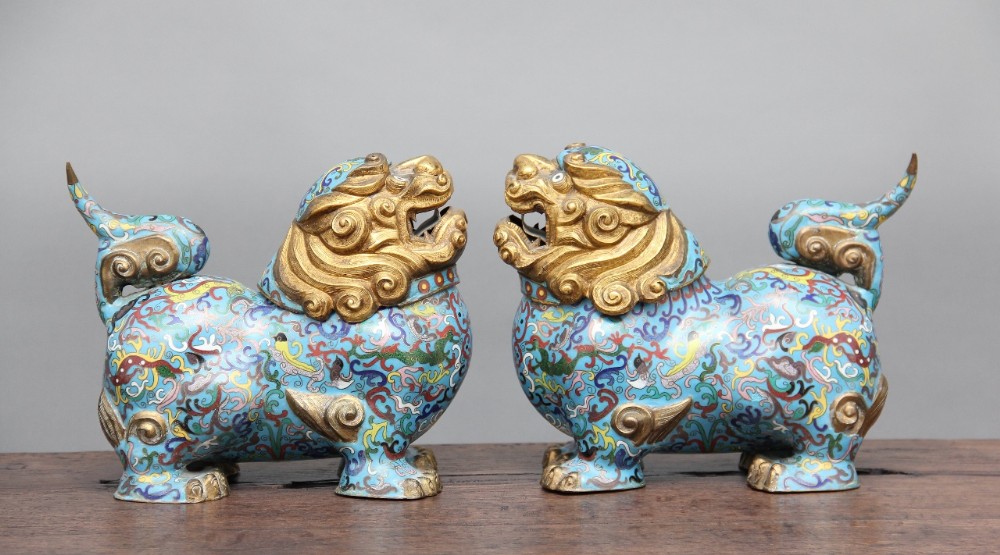
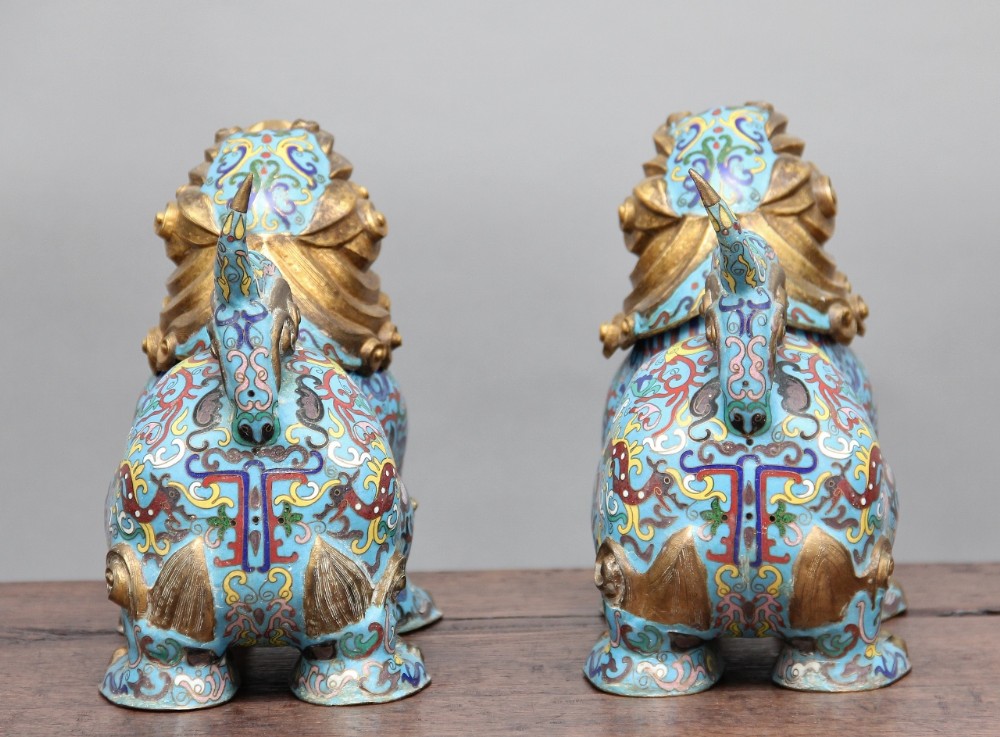
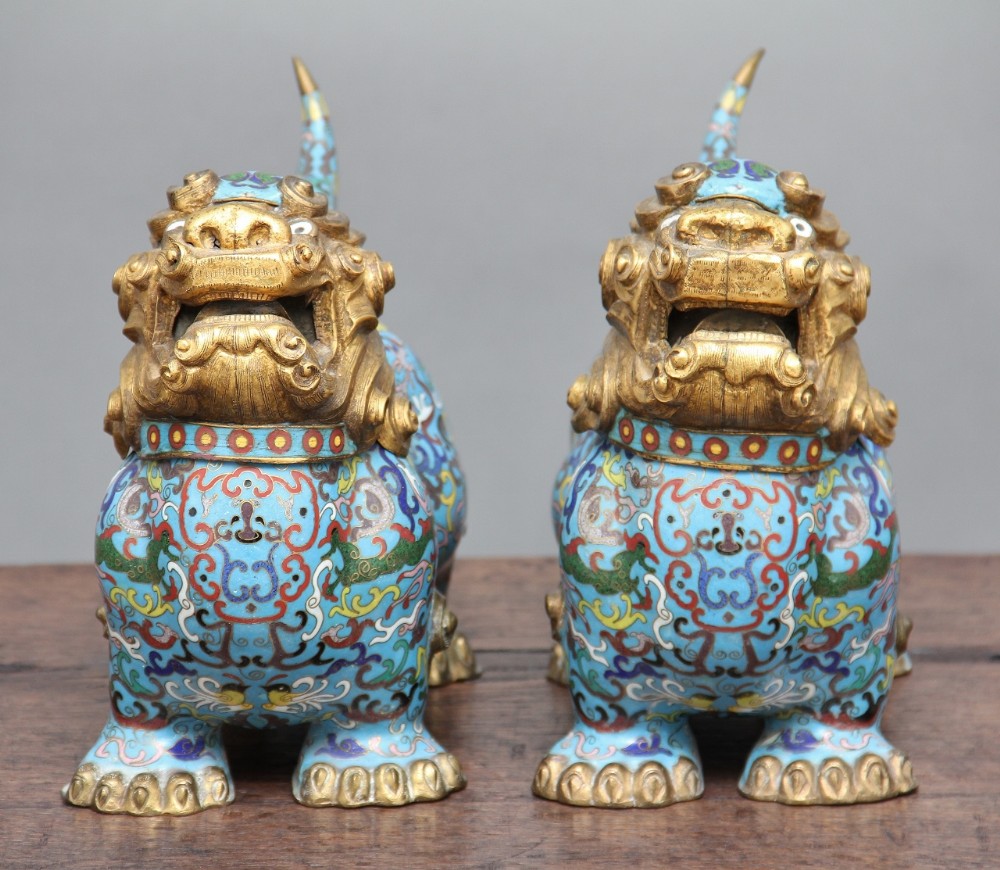
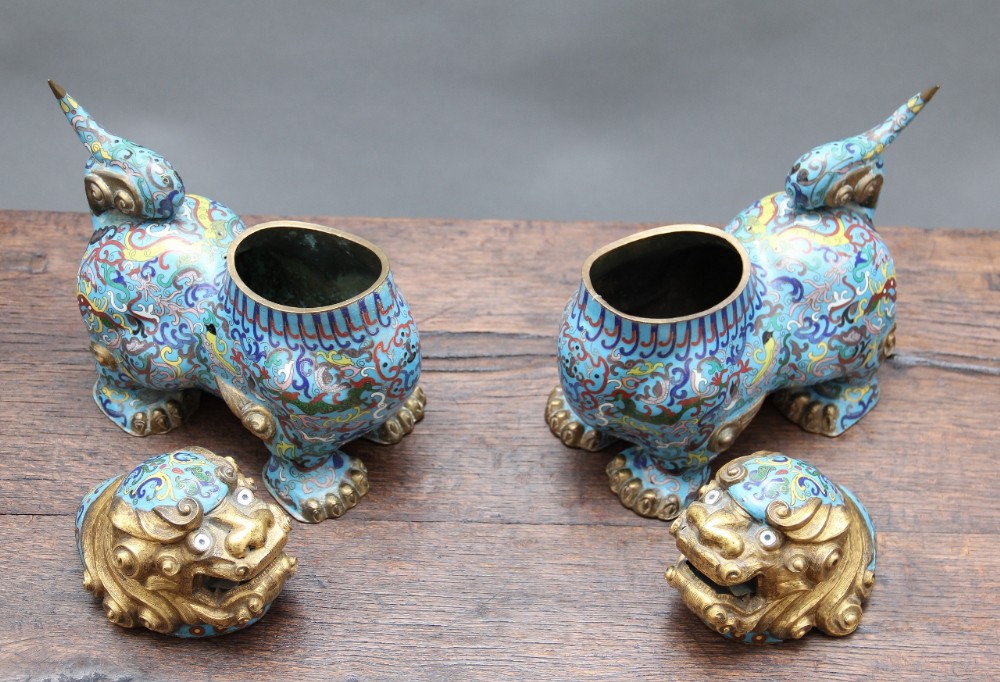
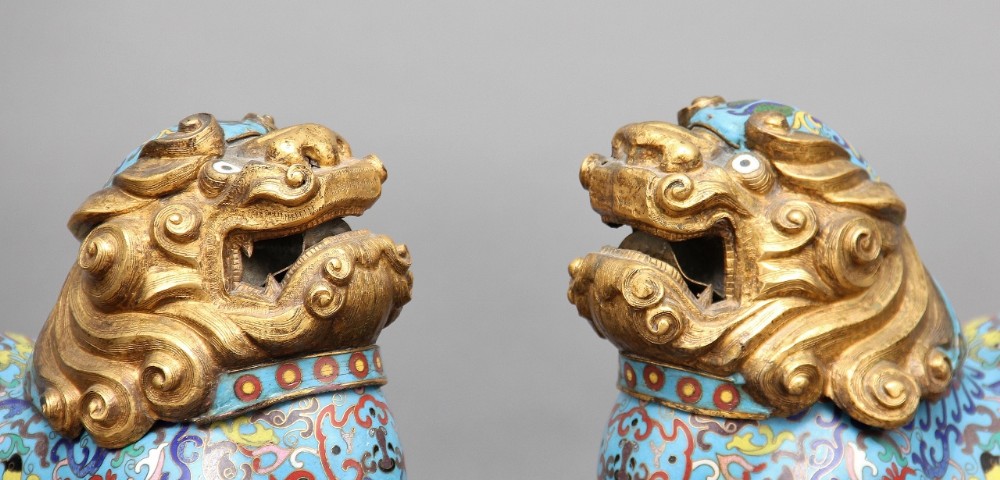
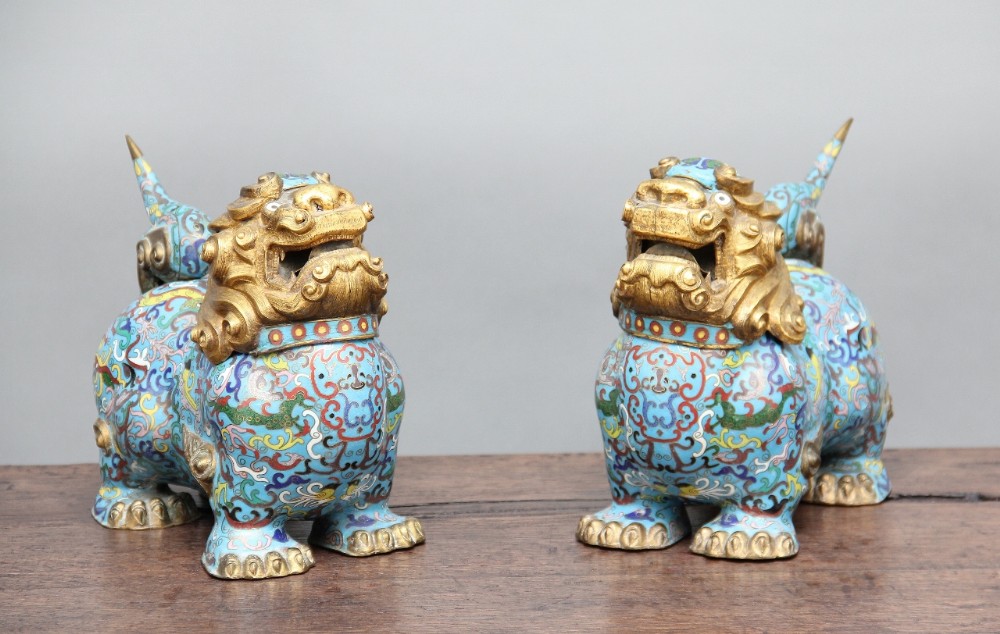
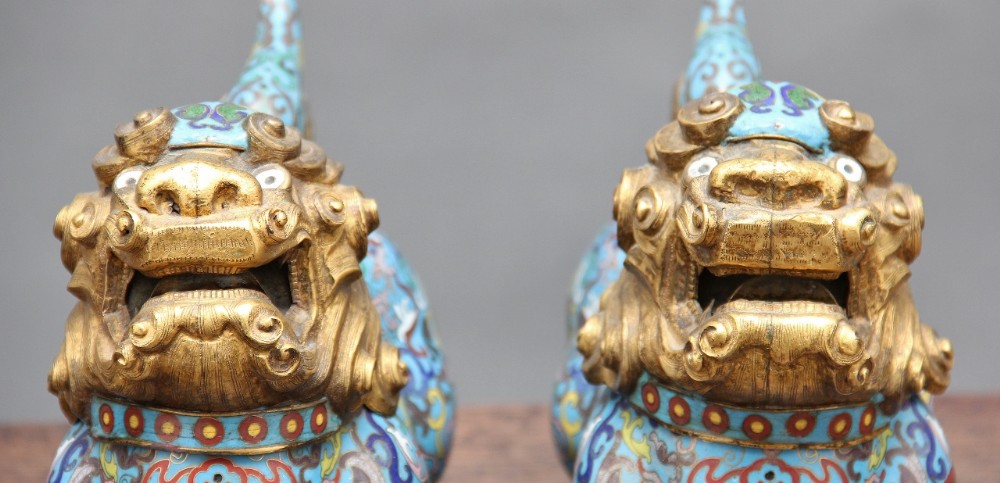
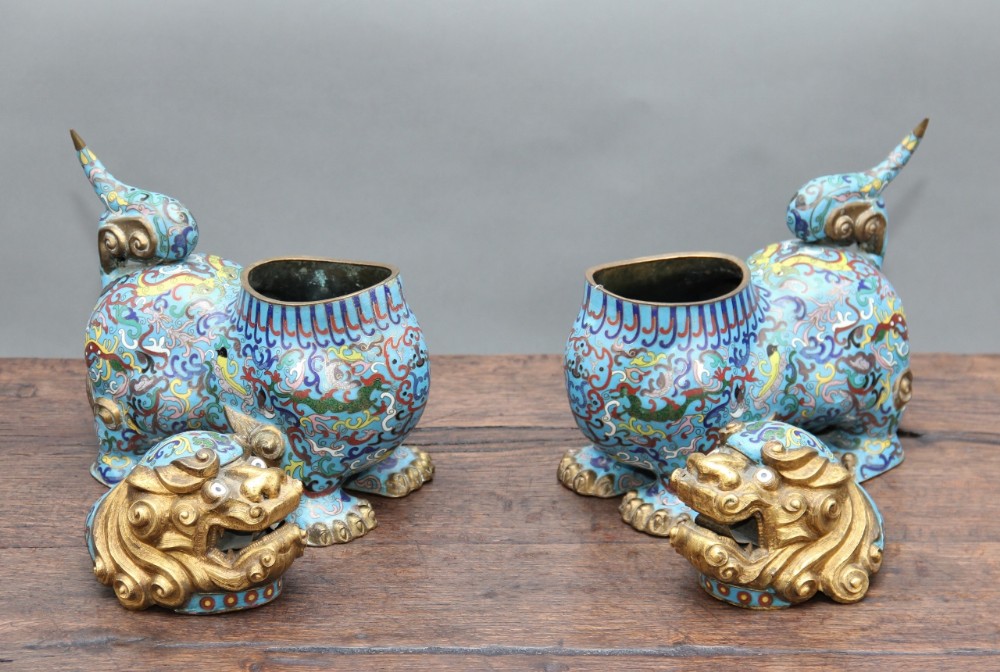
Martlesham Antiques has dated this piece to the 19th Century.
9" x 5" x 8" high.
23cm x 13cm x 20cm high.
The earliest securely dated Chinese cloisonné is from the reign of the Ming Xuande emperor (1426–35). However, cloisonné is recorded during the previous Yuan dynasty, and it has been suggested that the technique was introduced to China at that time via the western province of Yunnan, which, under Mongol rule, received an influx of Islamic people. A very few cloisonné objects have been dated on stylistic grounds to the Yongle reign (1403–24) of the early Ming dynasty.
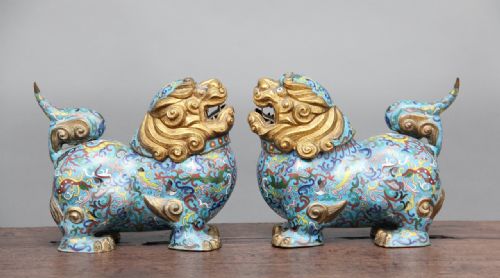
Cloisonné is the technique of creating designs on metal vessels with colored-glass paste placed within enclosures made of copper or bronze wires, which have been bent or hammered into the desired pattern. Known as cloisons (French for “partitions”), the enclosures generally are either pasted or soldered onto the metal body. The glass paste, or enamel, is colored with metallic oxide and painted into the contained areas of the design. The vessel is usually fired at a relatively low temperature, about 800°C. Enamels commonly shrink after firing, and the process is repeated several times to fill in the designs. Once this process is complete, the surface of the vessel is rubbed until the edges of the cloisons are visible. They are then gilded, often on the edges, in the interior, and on the base. Circa 1880.
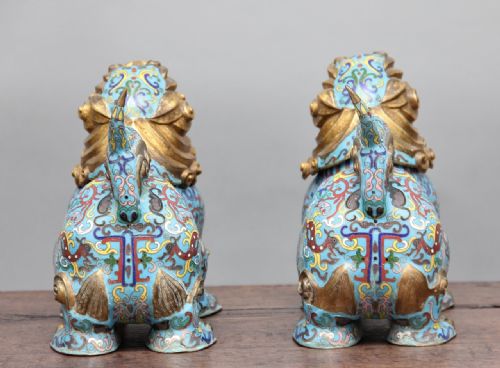
Cloisonné objects were intended primarily for the furnishing of temples and palaces, because their flamboyant splendor was considered appropriate to the function of these structures but not well suited to a more restrained atmosphere, such as that of a scholar’s home. This opinion was expressed by Cao Zhao (or Cao Mingzhong) in 1388 in his influential Gegu Yaolun (Guide to the Study of Antiquities), in which cloisonné was dismissed as being suitable only for lady’s chambers. However, by the period of Emperor Xuande, this ware came to be greatly prized at court.
Department of Asian Art, The Metropolitan Museum of Art
Martlesham Antiques has dated this piece to the 19th Century.
You can view the stock and full dealer information on the Martlesham Antiques Profile Page
Martlesham Antiques is a registered member of LAPADA
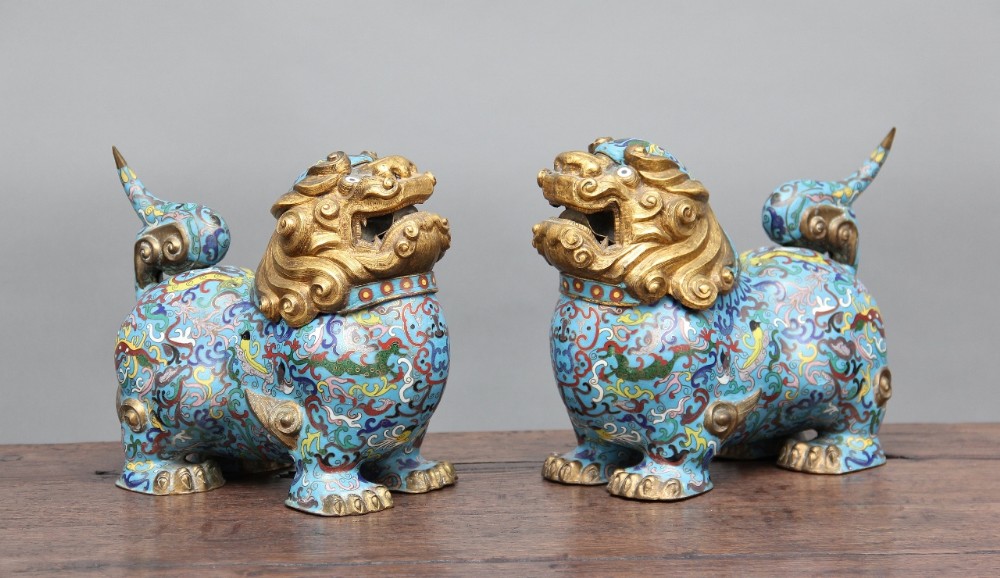
Pair of 19th Century Chinese Cloisonné Incense Burners