Martlesham Antiques has dated this piece to the 1800s.
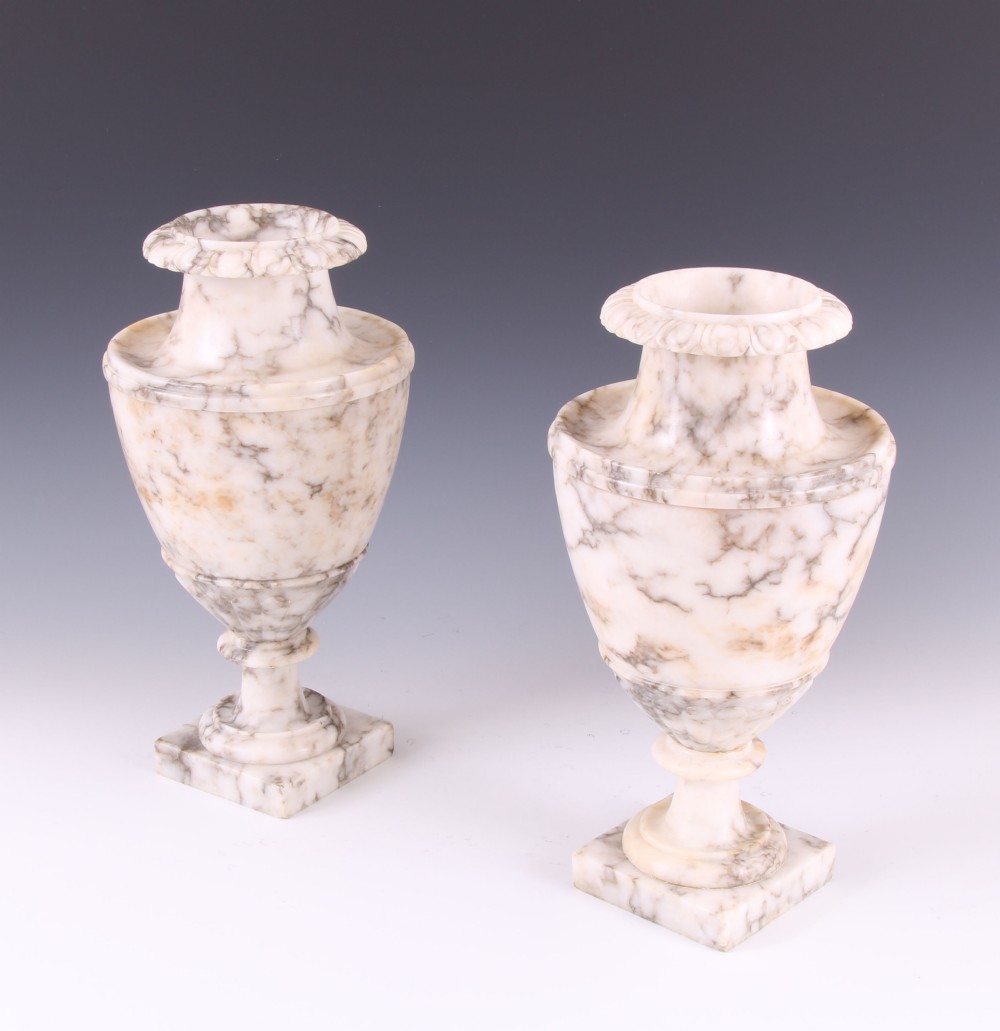
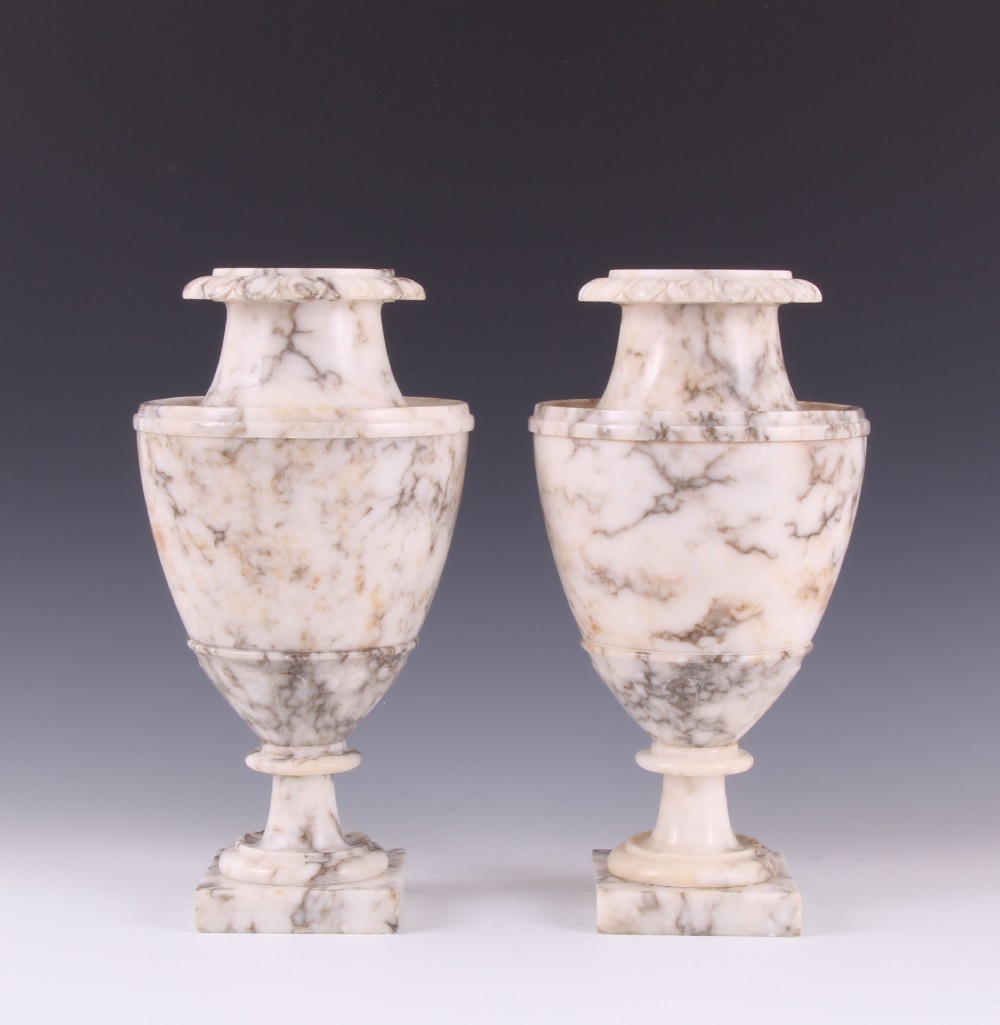
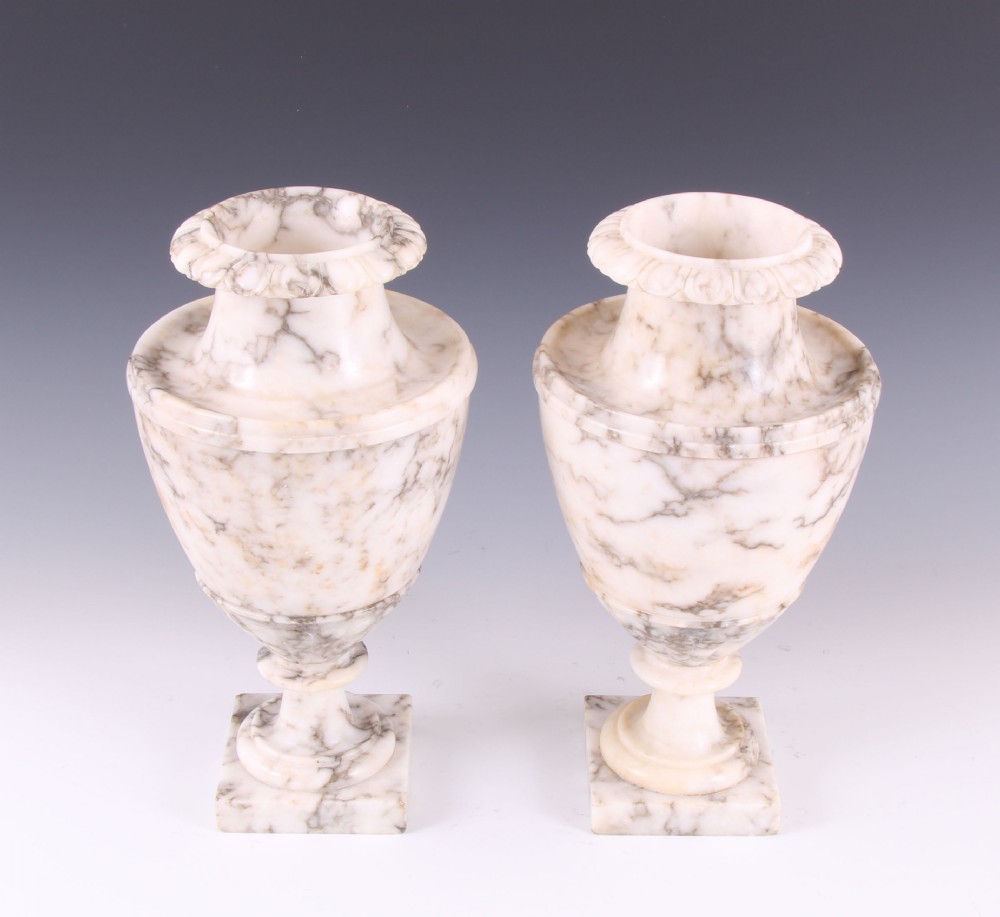
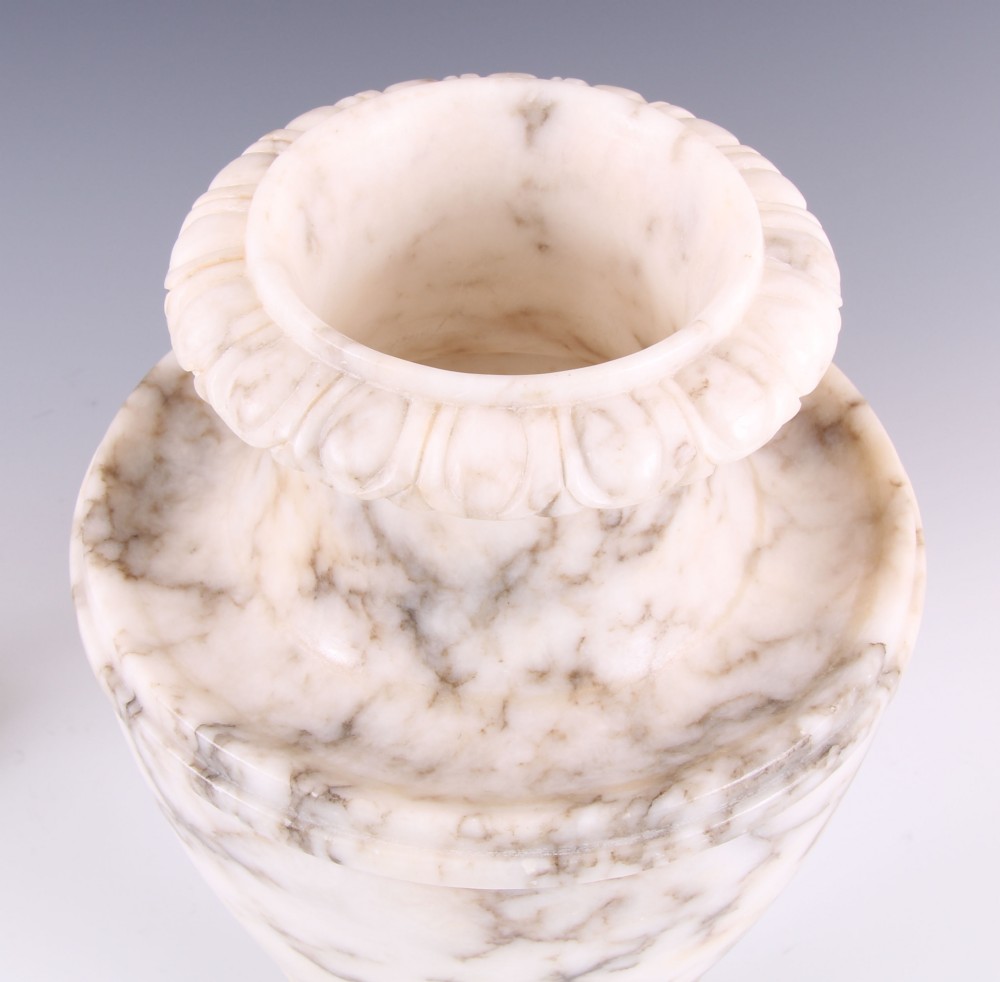
The egg and dart carving is crisp and well formed & the sculpted recess on the top of the bowl a true delight, making the neck of the vase even more graceful and defined. The gadrooning on the bottom of the vases is extremely subtle, but with enough detail to catch the eye.
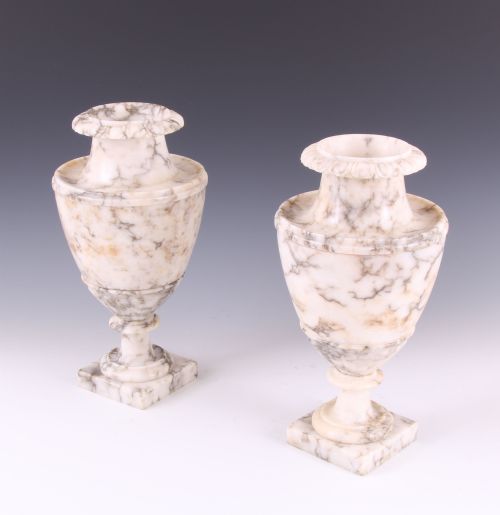
This wonderful pair came from an Important Titled Estate, where they have been since they were acquired in the 19th Century. They are in excellent condition for their age, having recently been waxed by one of the World's leading Museum marble conservationists, ensuring their surface remains protected & maintains its wonderful patina for many years. True pairs of Grand Tour Vases are rare to find. The influence on the Neo-Classical came from the discoveries of Herculaneum and Pompeii, which re-introduced and made fashionable the Ancient Period & was embraced by the English aristocracy.
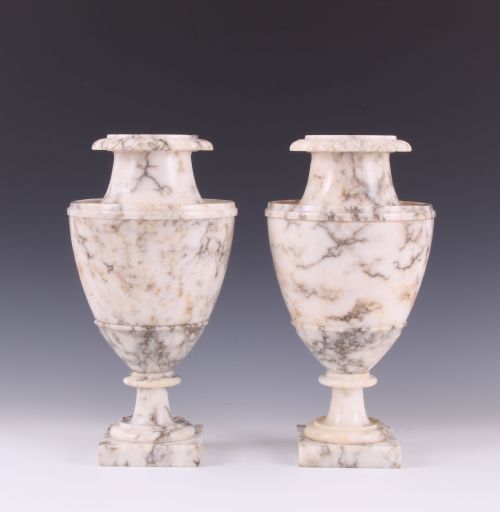
Alabaster is a fine-grained translucent variety of Gypsum, a hydrous Calcium Sulphate. It is pure white or streaked with reddish brown & grey. Alabaster, like all other forms of Gypsum, forms by the evaporation of bedded deposits that are precipitated mainly from evaporating seawater. Because of its softness, Alabaster is often carved for statuary and other decorative purposes. It is quarried in England and also in Italy. Vases and statuettes of Italian Alabaster are often sold as “Florentine marbles''.
7 1/2" Dia x 13 1/2" high.
19cms Dia x 34cms high.
Martlesham Antiques has dated this piece to the 1800s.
You can view the stock and full dealer information on the Martlesham Antiques Profile Page
Martlesham Antiques is a registered member of LAPADA
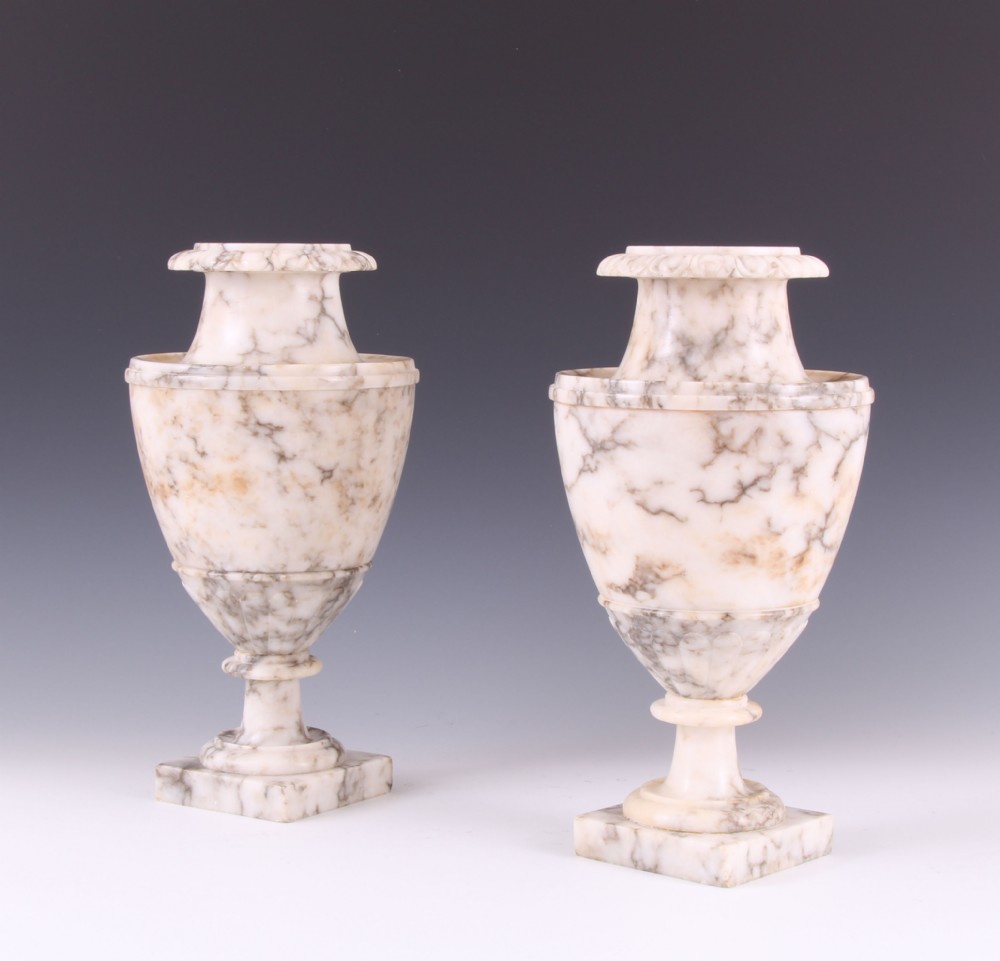
Early 19th Century Grand Tour Italian Carved Alabaster Vases