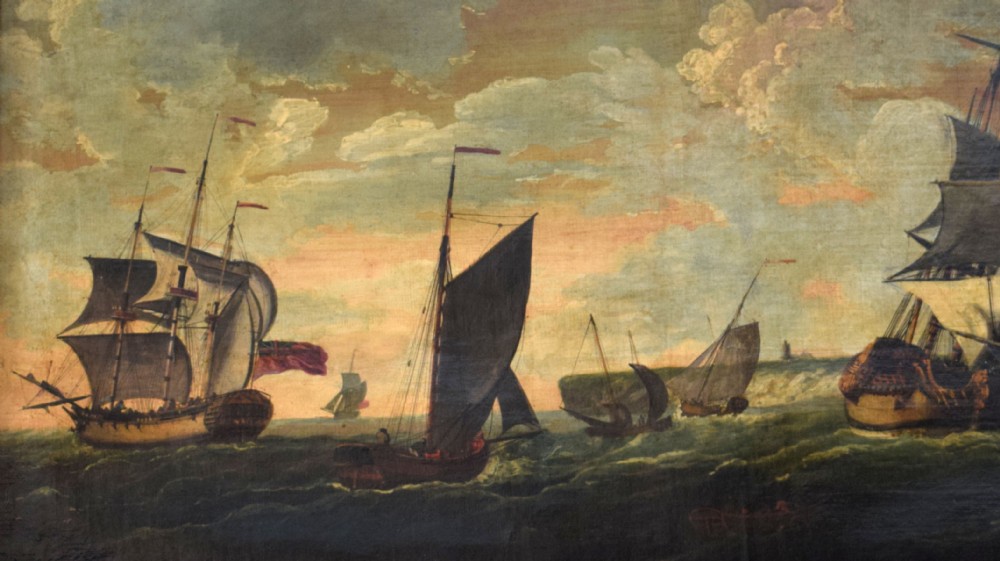
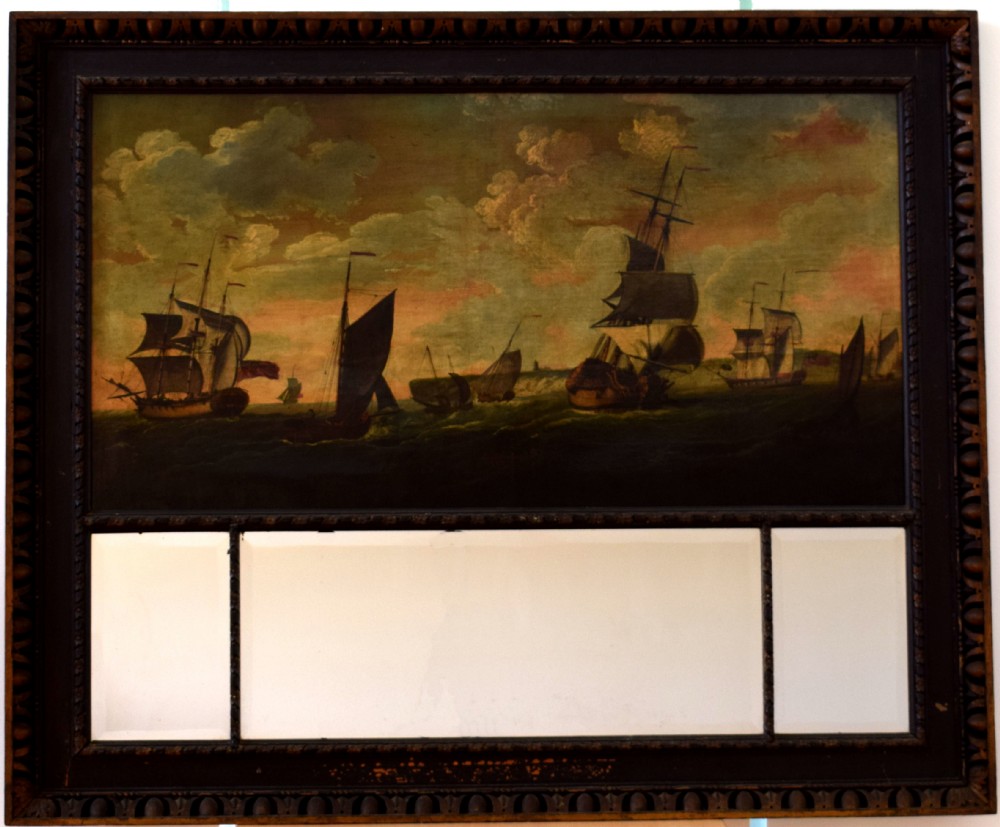
Artware Fineart has dated this 18th Century Marine Oil Painting to the 1750s.
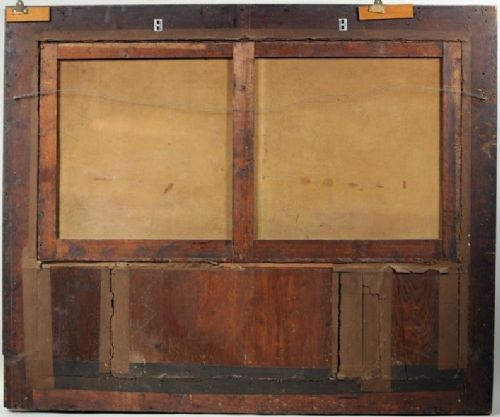
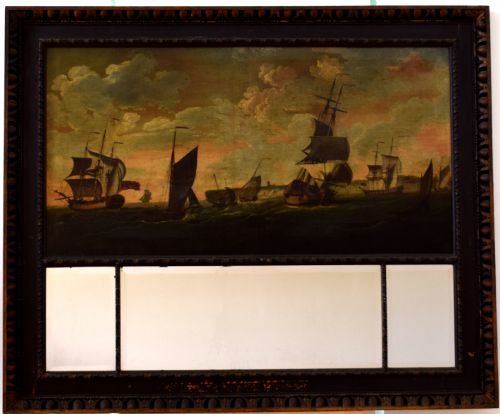
a Trumeau Mirror, overall size 136 x 163 cm. (53 x 64.1/4 in. Mirror panels 14 inches each 36cm.
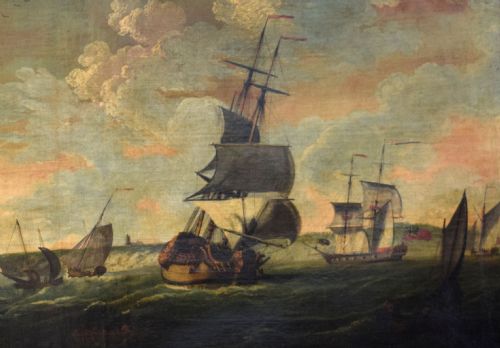
In the 17th century, the term was used for any warship built for speed and maneuverability, the description often used being "frigate-built". These could be warships carrying their principal battery of carriage-mounted guns on a single deck or on two decks (with further smaller carriage-mounted guns usually carried on the forecastle and quarterdeck of the vessel). The term was generally used for ships too small to stand in the line of battle, although early line-of-battle ships were frequently referred to as frigates when they were built for speed.
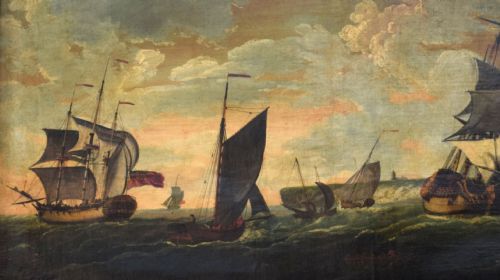
In the 18th century, the term referred to ships which were usually as long as a ship-of-the-line and were square-rigged on all three masts (full rigged), but were faster and with lighter armament, used for patrolling and escort. In the definition adopted by the British Admiralty, they were rated ships of at least 28 guns, carrying their principal armament upon a single continuous deck—the upper deck, while ships-of-the-line possessed two or more continuous decks bearing batteries of guns.
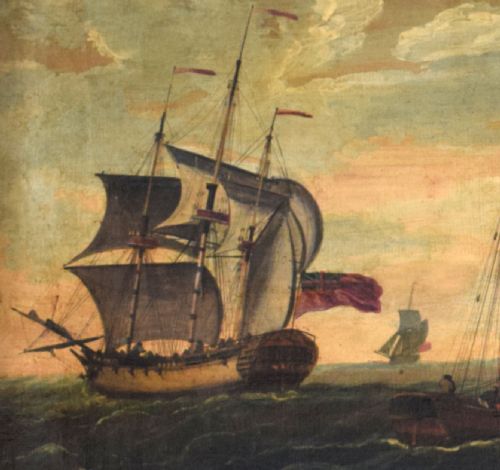
The classic sailing frigate, well-known today for its role in the Napoleonic wars, can be traced back to French developments in the second quarter of the 18th century. The French-built Médée of 1740 is often regarded as the first example of this type. These ships were square-rigged and carried all their main guns on a single continuous upper deck. The lower deck, known as the "gun deck", now carried no armament, and functioned as a "berth deck" where the crew lived, and was in fact placed below the waterline of the new frigates.
A total of fifty-nine French sailing frigates were built between 1777 and 1790, with a standard design averaging a hull length of 135 ft (41 m) and an average draught of 13 ft (4.0 m). The new frigates recorded sailing speeds of up to 14 knots (26 km/h; 16 mph), significantly faster than their predecessor vessels.[4] They were able to fight with all their guns when the seas were so rough that comparable two-deckers had to close the gun-ports on their lower decks (see the Action of 13 January 1797, for an example when this was decisive). Like the larger 74 which was developed at the same time, the new frigates sailed well and were good fighting vessels due to a combination of long hulls and low upperworks compared to vessels of comparable size and firepower.
The Royal Navy captured a handful of the new French frigates during the War of the Austrian Succession (1740–1748) and were impressed by them, particularly for their inshore handling capabilities. They soon built copies and started to adapt the type to their own needs, setting the standard for other frigates as the leading naval power. The first British frigates carried 28 guns including an upper deck battery of twenty-four 9-pounder guns (the remaining four smaller guns were carried on the quarter deck) but soon developed into fifth-rate ships of 32 or 36 guns including an upper deck battery of twenty-six 12-pounder guns, with the remaining six or ten smaller guns carried on the quarter deck and forecastle. From around 1778, a larger "heavy" frigate was developed with a main battery of twenty-six or twenty-eight 18-pounder guns (again with the remaining ten smaller guns carried on the quarter deck and forecastle).
Confusing, the lower deck of Royal Navy frigates continued to be called the "gundeck" even where that deck contained no guns or gunports. In the United States Navy this lower deck became known as "berth deck." Both British and American frigates could (and usually did) additionally carry smaller carriage-mounted guns on their quarter decks and forecastles.
Artware Fineart has dated this 18th Century Marine Oil Painting to the 1750s.
You can view the stock and full dealer information on the Artware Fineart Profile Page
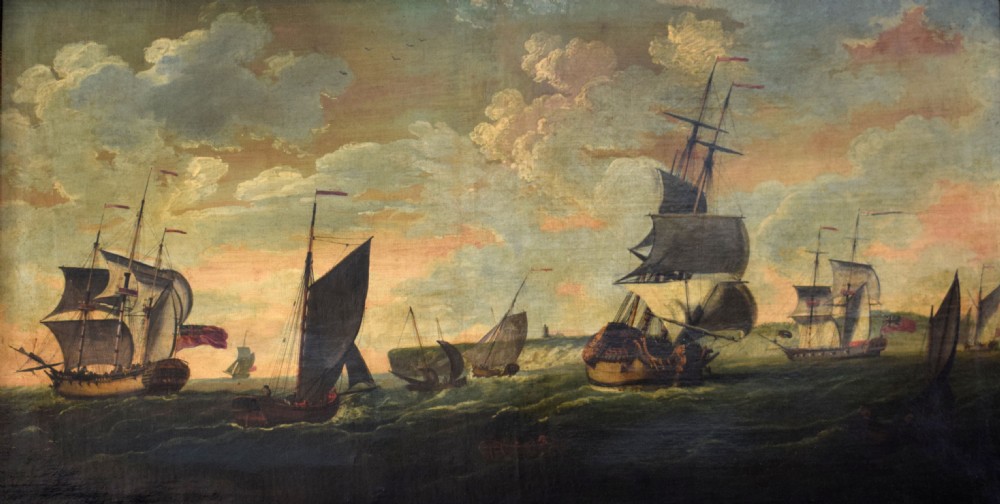
Attributed to Francis Holman 1729-1784 Frigates and Coastal Shipping of Beachey Head