7,054  PAGES BROWSED TODAY PAGES TODAY 0  ANTIQUES UPLOADED TODAY NEW ARRIVALS
ID #SA319309
FOR SALE
£5,700
Email
Save
Attributed to Francis Holman 1729-1784 Frigates and Coastal Shipping of Beachey Head
Artware Fineart
for sale €6,669     $7,239
£5,700

Artware Fineart

Sellingantiques Verified Since Sep 2008
View Dealers Stock Page
Id #SA319309
PDF SHARE
SAVE

Attributed to Francis Holman 1729-1784 Frigates and Coastal Shipping of Beachey Head

18th century
For Sale by Artware Fineart
Description

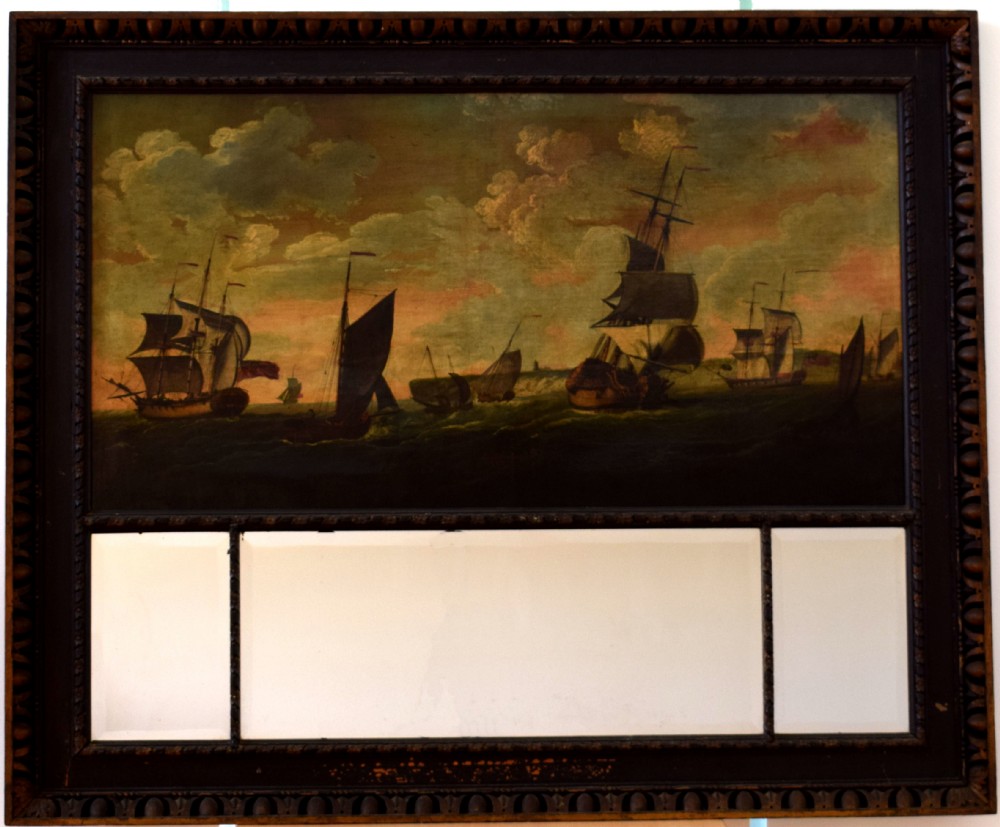
Attributed to Francis Holman 1729-1784 Frigates and Coastal shipping of Beachey Head

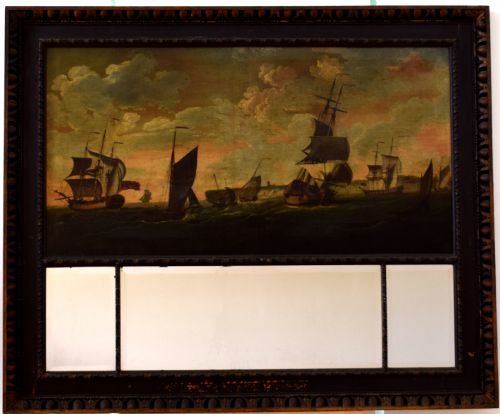
a Trumeau Mirror, overall size 136 x 163 cm. (53 x 64.1/4 in. Mirror panels 14 inches each 36cm.
A frigate is any of several types of warship, the term having been used for ships of various sizes and roles over the last few centuries.

In the 17th century, the term was used for any warship built for speed and maneuverability, the description often used being "frigate-built". These could be warships carrying their principal battery of carriage-mounted guns on a single deck or on two decks (with further smaller carriage-mounted guns usually carried on the forecastle and quarterdeck of the vessel). The term was generally used for ships too small to stand in the line of battle, although early line-of-battle ships were frequently referred to as frigates when they were built for speed.
In the 18th century, the term referred to ships which were usually as long as a ship-of-the-line and were square-rigged on all three masts (full rigged), but were faster and with lighter armament, used for patrolling and escort. In the definition adopted by the British Admiralty, they were rated ships of at least 28 guns, carrying their principal armament upon a single continuous deck—the upper deck, while ships-of-the-line possessed two or more continuous decks bearing batteries of guns.
The classic sailing frigate, well-known today for its role in the Napoleonic wars, can be traced back to French developments in the second quarter of the 18th century. The French-built Médée of 1740 is often regarded as the first example of this type. These ships were square-rigged and carried all their main guns on a single continuous upper deck. The lower deck, known as the "gun deck", now carried no armament, and functioned as a "berth deck" where the crew lived, and was in fact placed below the waterline of the new frigates.
A total of fifty-nine French sailing frigates were built between 1777 and 1790, with a standard design averaging a hull length of 135 ft (41 m) and an average draught of 13 ft (4.0 m). The new frigates recorded sailing speeds of up to 14 knots (26 km/h; 16 mph), significantly faster than their predecessor vessels.[4] They were able to fight with all their guns when the seas were so rough that comparable two-deckers had to close the gun-ports on their lower decks (see the Action of 13 January 1797, for an example when this was decisive). Like the larger 74 which was developed at the same time, the new frigates sailed well and were good fighting vessels due to a combination of long hulls and low upperworks compared to vessels of comparable size and firepower.
The Royal Navy captured a handful of the new French frigates during the War of the Austrian Succession (1740–1748) and were impressed by them, particularly for their inshore handling capabilities. They soon built copies and started to adapt the type to their own needs, setting the standard for other frigates as the leading naval power. The first British frigates carried 28 guns including an upper deck battery of twenty-four 9-pounder guns (the remaining four smaller guns were carried on the quarter deck) but soon developed into fifth-rate ships of 32 or 36 guns including an upper deck battery of twenty-six 12-pounder guns, with the remaining six or ten smaller guns carried on the quarter deck and forecastle. From around 1778, a larger "heavy" frigate was developed with a main battery of twenty-six or twenty-eight 18-pounder guns (again with the remaining ten smaller guns carried on the quarter deck and forecastle).

Confusing, the lower deck of Royal Navy frigates continued to be called the "gundeck" even where that deck contained no guns or gunports. In the United States Navy this lower deck became known as "berth deck." Both British and American frigates could (and usually did) additionally carry smaller carriage-mounted guns on their quarter decks and forecastles.

Physical Dimensions
Height
136cm (53.54")
Width
163cm (64.17")
Depth
4cm (1.57")
Declaration

Artware Fineart has dated this 18th Century Marine Oil Painting to the 1750s.

Reference Numbers
Sellingantiques Reference
SA319309
Dealers Internal Reference
3698
Description
Attributed to Francis Holman 1729-1784 Frigates and Coastal shipping of Beachey Head

a Trumeau Mirror, overall size 136 x 163 cm. (53 x 64.1/4 in. Mirror panels 14 inches each 36cm.

A frigate is any of several types of warship, the term having been used for ships of various sizes and roles over the last few centuries.
Artware Fineart
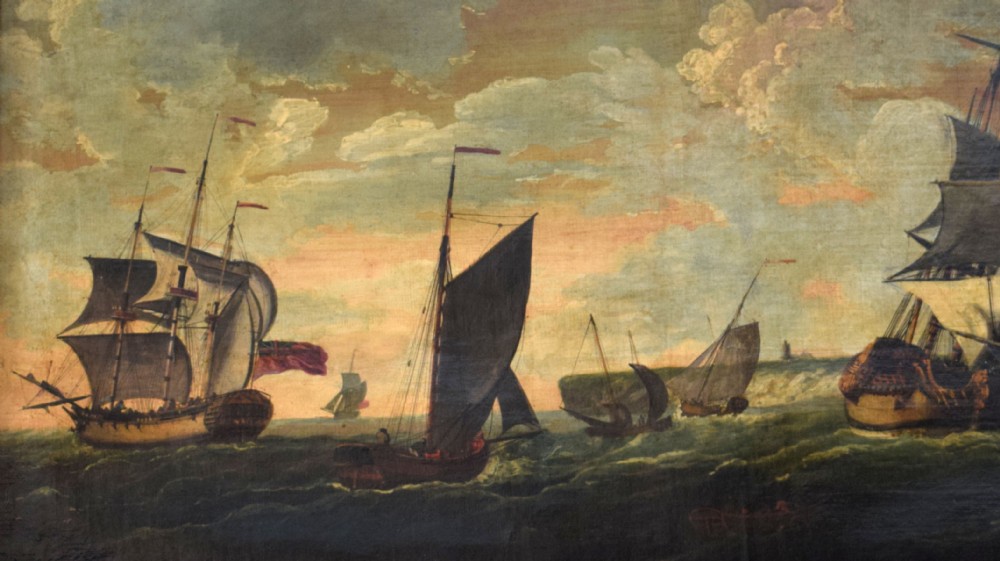
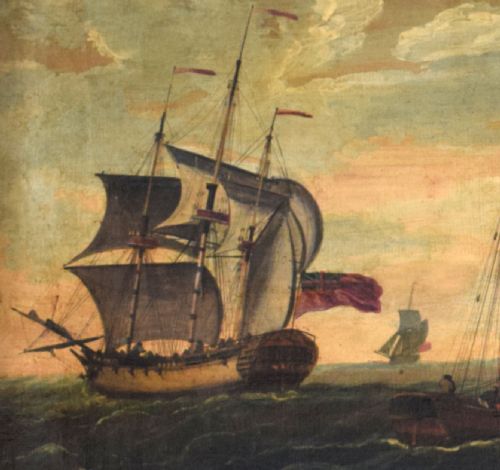
fig 1. An 18th-century maritime oil painting depicting wooden sailing frigates and coastal ships navigating choppy seas under a clouded sky off a chalk cliff coastline.
fig 1. Attributed to Francis Holman 1729-1784 Frigates and Coastal Shipping of Beachey Head

In the 17th century, the term was used for any warship built for speed and maneuverability, the description often used being "frigate-built". These could be warships carrying their principal battery of carriage-mounted guns on a single deck or on two decks (with further smaller carriage-mounted guns usually carried on the forecastle and quarterdeck of the vessel). The term was generally used for ships too small to stand in the line of battle, although early line-of-battle ships were frequently referred to as frigates when they were built for speed.

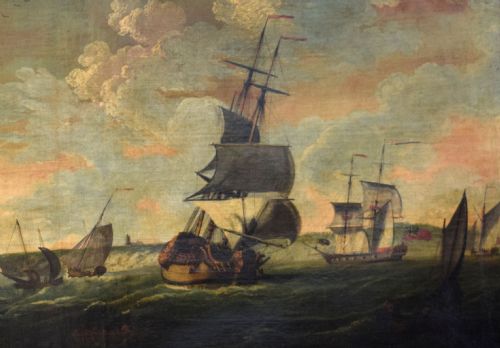
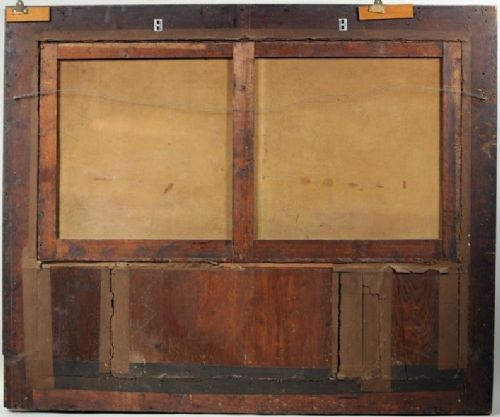
fig 2. An 18th-century maritime oil painting depicting wooden sailing frigates and coastal ships navigating choppy seas under a clouded sky off a chalk cliff coastline.
fig 2. Attributed to Francis Holman 1729-1784 Frigates and Coastal Shipping of Beachey Head

In the 18th century, the term referred to ships which were usually as long as a ship-of-the-line and were square-rigged on all three masts (full rigged), but were faster and with lighter armament, used for patrolling and escort. In the definition adopted by the British Admiralty, they were rated ships of at least 28 guns, carrying their principal armament upon a single continuous deck—the upper deck, while ships-of-the-line possessed two or more continuous decks bearing batteries of guns.

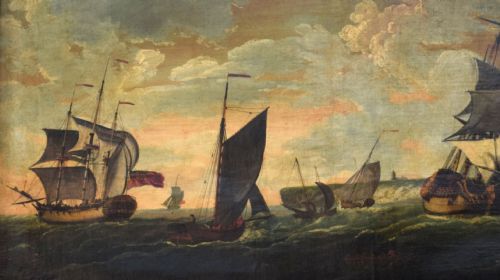
fig 3. An 18th-century maritime oil painting depicting wooden sailing frigates and coastal ships navigating choppy seas under a clouded sky off a chalk cliff coastline.
fig 3. Attributed to Francis Holman 1729-1784 Frigates and Coastal Shipping of Beachey Head

The classic sailing frigate, well-known today for its role in the Napoleonic wars, can be traced back to French developments in the second quarter of the 18th century. The French-built Médée of 1740 is often regarded as the first example of this type. These ships were square-rigged and carried all their main guns on a single continuous upper deck. The lower deck, known as the "gun deck", now carried no armament, and functioned as a "berth deck" where the crew lived, and was in fact placed below the waterline of the new frigates.

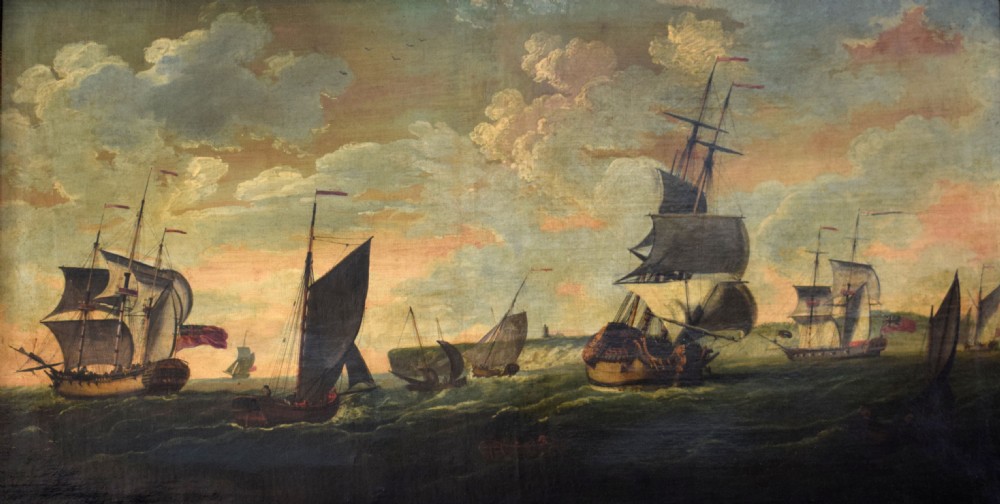
fig 4. An 18th-century maritime oil painting depicting wooden sailing frigates and coastal ships navigating choppy seas under a clouded sky off a chalk cliff coastline.
fig 4. Attributed to Francis Holman 1729-1784 Frigates and Coastal Shipping of Beachey Head

A total of fifty-nine French sailing frigates were built between 1777 and 1790, with a standard design averaging a hull length of 135 ft (41 m) and an average draught of 13 ft (4.0 m). The new frigates recorded sailing speeds of up to 14 knots (26 km/h; 16 mph), significantly faster than their predecessor vessels.[4] They were able to fight with all their guns when the seas were so rough that comparable two-deckers had to close the gun-ports on their lower decks (see the Action of 13 January 1797, for an example when this was decisive). Like the larger 74 which was developed at the same time, the new frigates sailed well and were good fighting vessels due to a combination of long hulls and low upperworks compared to vessels of comparable size and firepower.

fig 5. An 18th-century maritime oil painting depicting wooden sailing frigates and coastal ships navigating choppy seas under a clouded sky off a chalk cliff coastline.
fig 5. Attributed to Francis Holman 1729-1784 Frigates and Coastal Shipping of Beachey Head

The Royal Navy captured a handful of the new French frigates during the War of the Austrian Succession (1740–1748) and were impressed by them, particularly for their inshore handling capabilities. They soon built copies and started to adapt the type to their own needs, setting the standard for other frigates as the leading naval power. The first British frigates carried 28 guns including an upper deck battery of twenty-four 9-pounder guns (the remaining four smaller guns were carried on the quarter deck) but soon developed into fifth-rate ships of 32 or 36 guns including an upper deck battery of twenty-six 12-pounder guns, with the remaining six or ten smaller guns carried on the quarter deck and forecastle. From around 1778, a larger "heavy" frigate was developed with a main battery of twenty-six or twenty-eight 18-pounder guns (again with the remaining ten smaller guns carried on the quarter deck and forecastle).

Confusing, the lower deck of Royal Navy frigates continued to be called the "gundeck" even where that deck contained no guns or gunports. In the United States Navy this lower deck became known as "berth deck." Both British and American frigates could (and usually did) additionally carry smaller carriage-mounted guns on their quarter decks and forecastles.

Height
136cm (53.54")
Width
163cm (64.17")
Depth
4cm (1.57")
Date of Manufacture

Artware Fineart has dated this 18th Century Marine Oil Painting to the 1750s.

Reference Numbers
Sellingantiques Ref
SA319309
Dealers Internal Ref
3698
Artware Fineart
Sellingantiques verified Since Sep 2008
Dealer Profile

You can view the stock and full dealer information on the Artware Fineart Profile Page
PDF SHARE
SAVE
An 18th-century maritime oil painting depicting wooden sailing frigates and coastal ships navigating choppy seas under a clouded sky off a chalk cliff coastline.
1 / 6
Archive I An 18th-century maritime oil painting depicting wooden sailing frigates and coastal ships navigating choppy seas under a clouded sky off a chalk cliff coastline.

Attributed to Francis Holman 1729-1784 Frigates and Coastal Shipping of Beachey Head

Archive II An 18th-century maritime oil painting depicting wooden sailing frigates and coastal ships navigating choppy seas under a clouded sky off a chalk cliff coastline. View II
Archive III An 18th-century maritime oil painting depicting wooden sailing frigates and coastal ships navigating choppy seas under a clouded sky off a chalk cliff coastline. View III
Archive IV An 18th-century maritime oil painting depicting wooden sailing frigates and coastal ships navigating choppy seas under a clouded sky off a chalk cliff coastline. View IV
Archive V An 18th-century maritime oil painting depicting wooden sailing frigates and coastal ships navigating choppy seas under a clouded sky off a chalk cliff coastline. View V
Archive VI An 18th-century maritime oil painting depicting wooden sailing frigates and coastal ships navigating choppy seas under a clouded sky off a chalk cliff coastline. View VI
Enlarged Archival View
Telephone 07958 699 645
Location
18 La Gare
51 Surrey Row
London
SE1 0BZ
United Kingdom
Verified Since Sep 2008
Items For Sale 243
Items Sold 223
Artware Fineart
Verified Since Sep 2008
View Dealer Info
Location: 18 La Gare , 51 Surrey Row , London , SE1 0BZ , United Kingdom
Verified
Sep 2008
For Sale
243
Sold
223
An 18th-century maritime oil painting depicting wooden sailing frigates and coastal ships navigating choppy seas under a clouded sky off a chalk cliff coastline.
Attributed to Francis Holman 1729-1784 Frigates and Coastal shipping of Beachey Head
Ref: SA319309
An 18th-century maritime oil painting depicting wooden sailing frigates and coastal ships navigating choppy seas under a clouded sky off a chalk cliff coastline.
Detail View 1
Detail View 2
Detail View 3
Detail View 4
Detail View 5
Archival Detail
Every single antique dealer on our platform is individually approved by our internal team. We verify their professional trade history, ethical standards, and photographic quality to ensure a secure, high-standard buying environment. Upon joining, every dealer agrees to a strict 9-point code of conduct. While issues can occasionally arise, our dealers typically resolve them swiftly and directly with the buyer. In fact, since our founding in 2002, Sellingantiques has only had to step in to help resolve an issue on roughly five occasions—a true testament to the quality of our dealers and their dedication to your happiness.
Our dealers are highly experienced in packing and shipping fragile, high-value antiques. Because you are in direct contact with the dealer, you will be able to easily go through all available shipping and insurance options together to ensure your item arrives safely.
Antiques are the ultimate green purchase. By choosing historical pieces over newly manufactured goods, you completely eliminate the carbon footprint of modern mass production while preserving exceptional, timeless craftsmanship.

Eighteenth-century British marine painting focused on documenting naval vessels, merchant shipping, and coastal topography with atmospheric natural light. Artists of this era emphasised technical accuracy in ship rigging and hull construction alongside dramatic depictions of sea conditions.

Paintings from this period were predominantly executed in oil paints on natural linen canvas stretched over wooden frames. Pigments were hand-ground and bound with linseed oil, often finished with natural resin varnishes.

Authentic period paintings exhibit natural age-related craquelure across the paint surface, hand-tacked canvas edges on hand-carved stretchers, and characteristic oxidisation on the reverse of the canvas. Compositional techniques and brushwork specific to documented period artists also confirm provenance.

Large marine seascapes provide strong visual focal points above fireplaces, sideboards, or within wood-panelled rooms. Combining classic framed oil paintings with neutral walls or contemporary furniture creates an intentional balance between historical art and modern aesthetics.

Display the canvas away from direct sunlight, heating vents, and high humidity to prevent cracking and canvas tension loss. Surface dust should be gently removed with a soft dry brush, while deep cleaning or restoration should be left to professional conservators.
items
Add keywords to the filter
Price
£100
£250000
Era
Movements
Material
Origin
Stock Location
Freshness
Online Payments
Categories