59,970  PAGES BROWSED TODAY PAGES TODAY 206  ANTIQUES UPLOADED TODAY NEW ARRIVALS
Sort Order
Items Per Page
ID #SA308330
SOLD
Email
Save
Portrait of Lady Mary Villiers 17th C., After Van Dyck.
Roy Precious - Antiques & Fine Art
sold SA308330
Sorry, but this item has been sold.
Roy Precious - Antiques & Fine Art

Roy Precious - Antiques & Fine Art

Sellingantiques Verified Since Mar 2003
View Dealers Stock Page
  • About Us
    Roy and nadine precious: specialists in portraiture from the 16th to the 20th century. Established in 1972.
Id #SA308330
PDF SHARE
SAVE

Portrait of Lady Mary Villiers 17th C., After Van Dyck.

17th century
Description

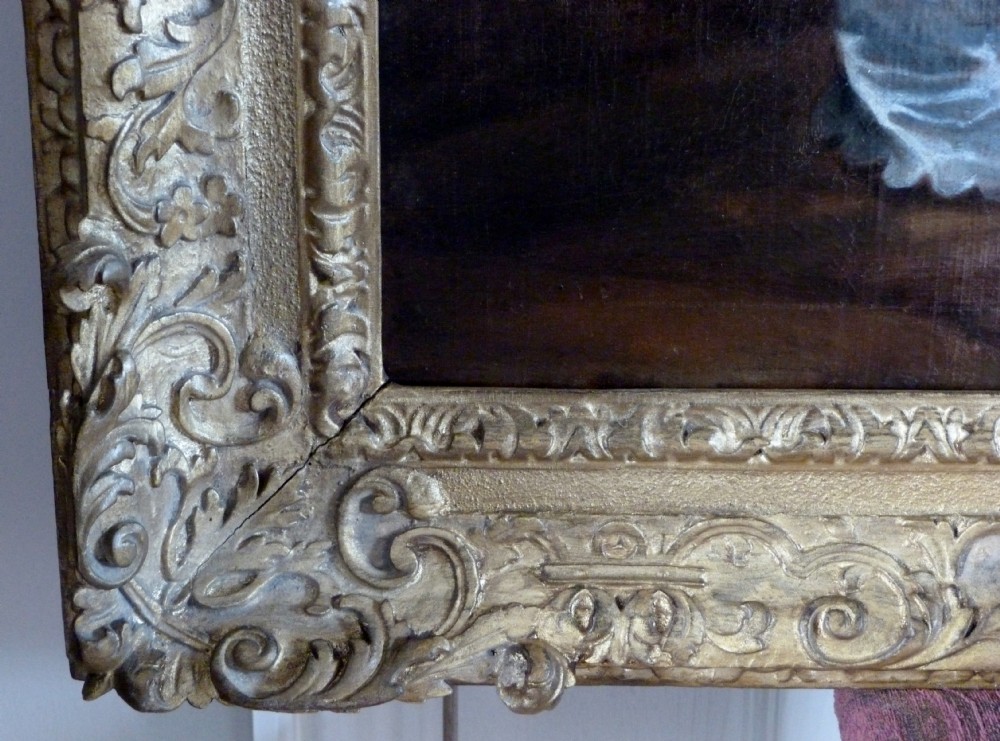
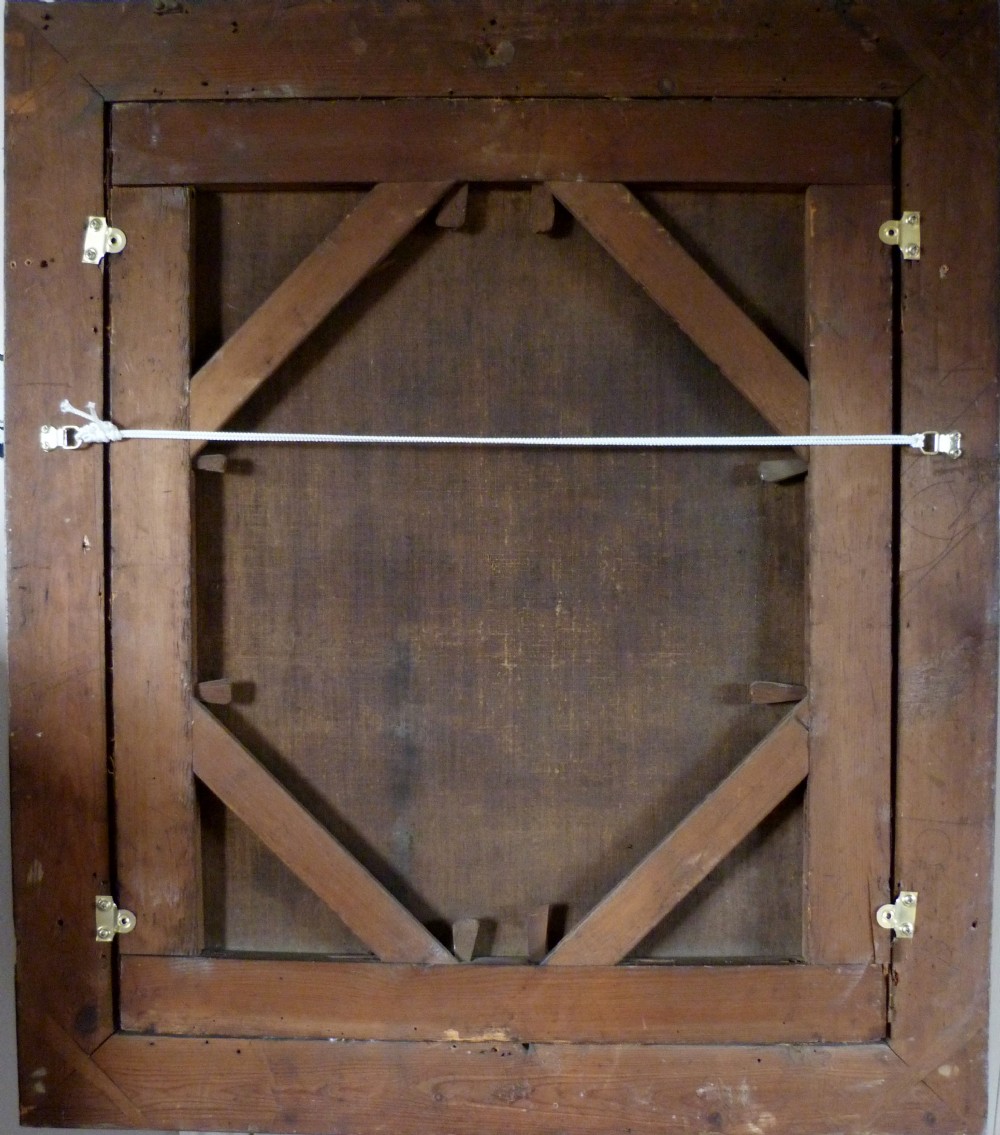
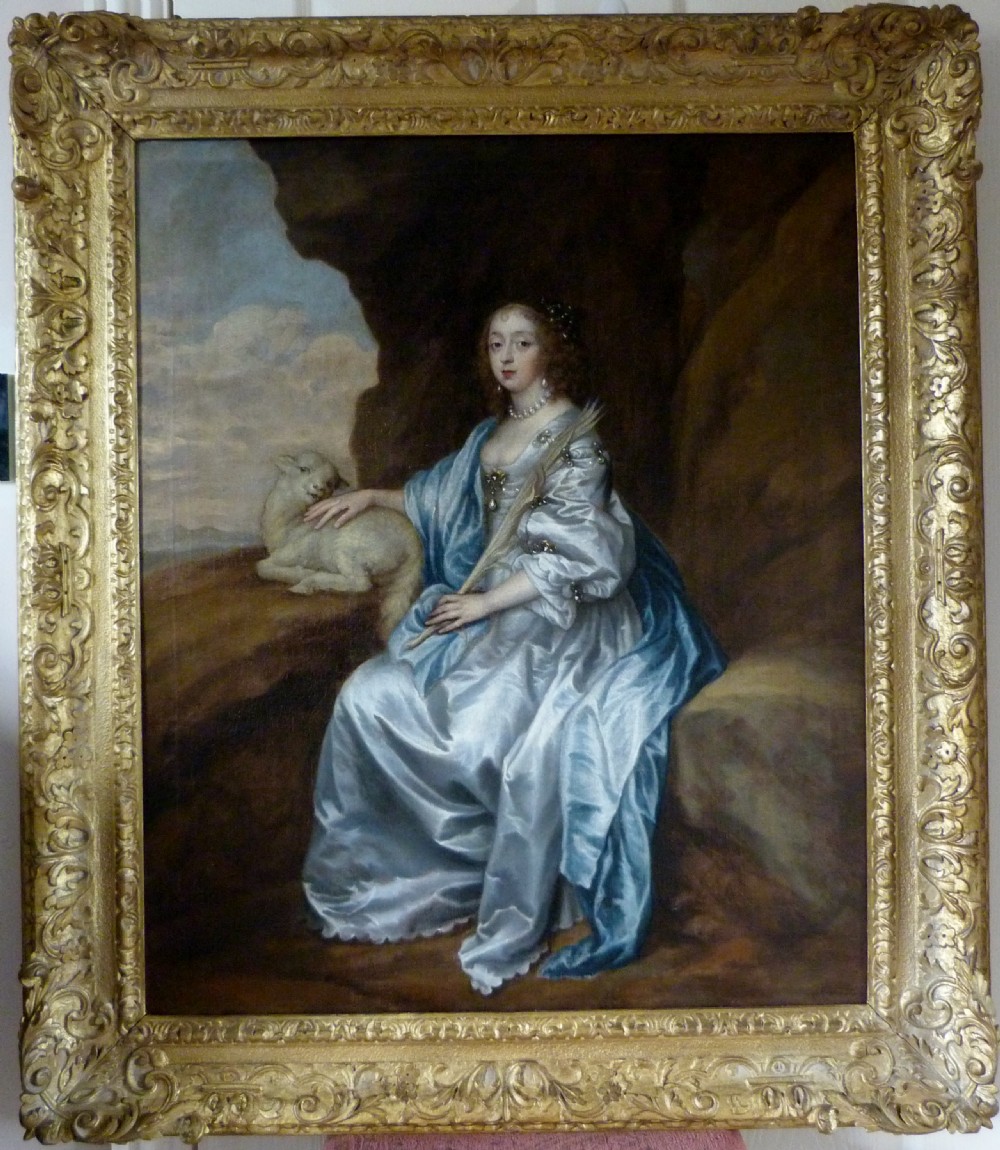
Oil on canvas in good quality 18th century carved and giltwood frame.

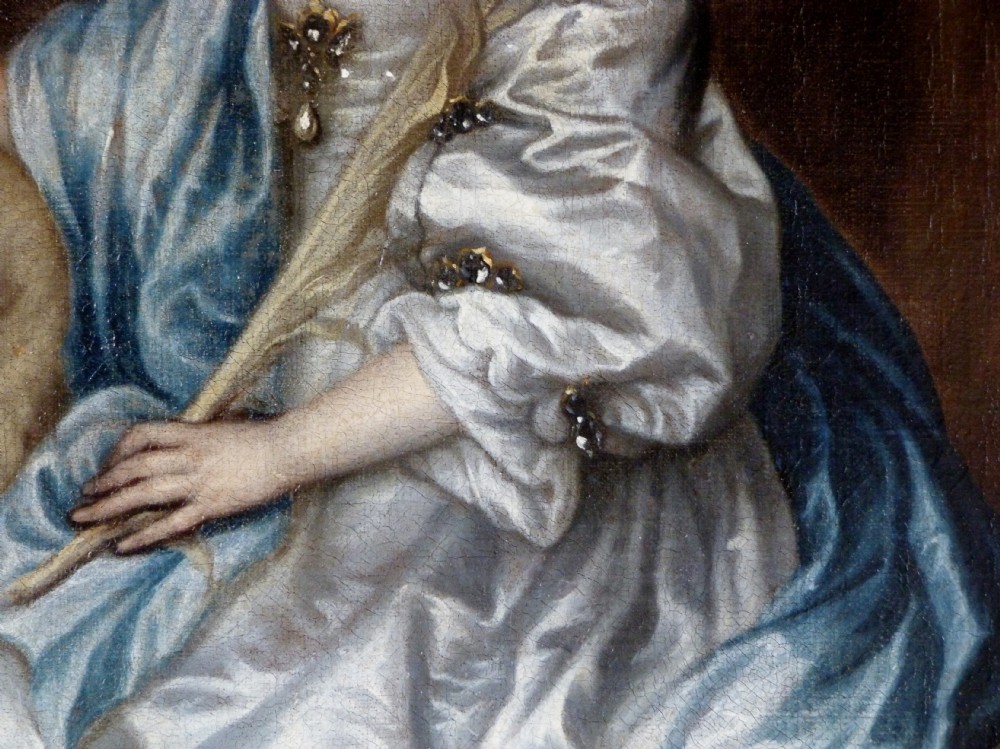
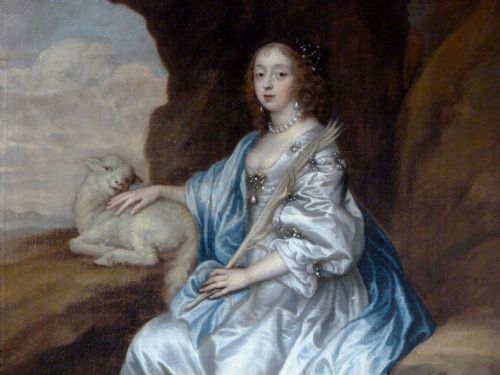
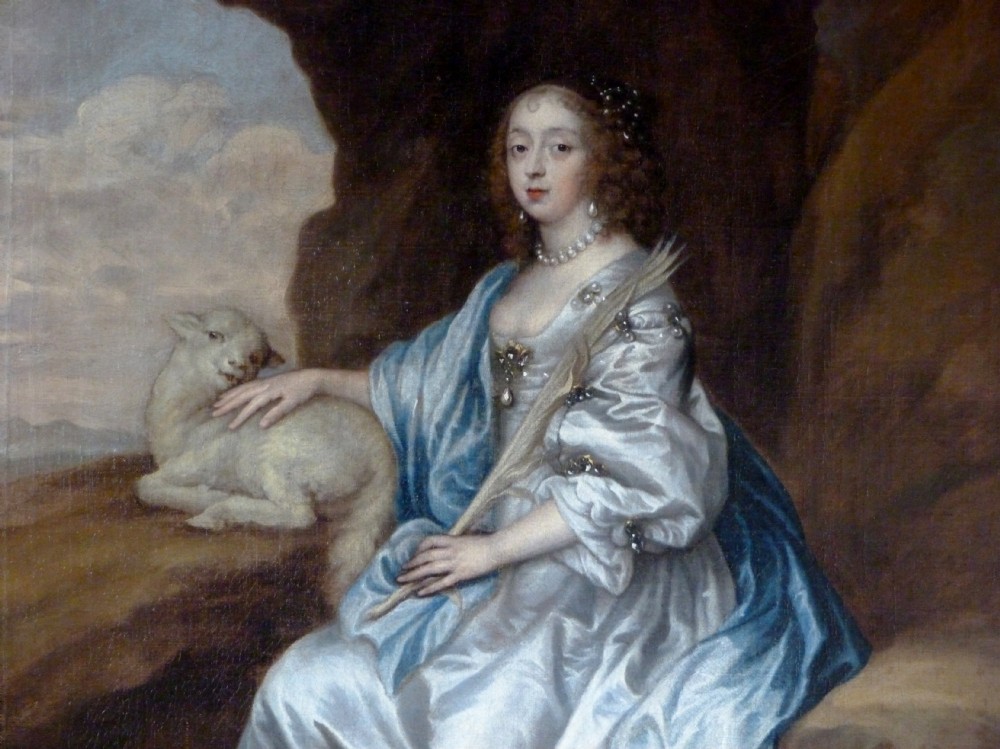
LADY MARY VILLIERS, Lady Herbert and later Duchess of Lennox and Richmond (1622 – 1685), as St Agnes, after Sir Anthony Van Dyck (1599-1641).

The original portrait by Sir Anthony van Dyck is life size and in the Royal Collection. "A number of copies of this portrait survive, some indicating that the original version was once larger in size." quote from'Van Dyck in Britain', edited by Karen Sharpe, published by the Tate.

This is one of those, and the sitter fits within the composition much more comfortably than the now tightly cropped original.

The original painting, in the Royal Collection, Windsor, was presumably painted for Charles I, who gave the sitter away at her wedding in 1637 to the Duke of Lennox. She is shown as St Agnes, the patroness of those engaged to be married.

St Agnes is usually accompanied by a lamb, because of the similarity of her name to the Latin agnus, a lamb, but actually ‘Agnes’ comes from the Greek word for ‘chaste’.

Lady Mary Villiers was the daughter of 1st Duke of Buckingham and Katherine Manners and, raised with the royal children, she was a favourite of James I and Charles I. She was married three times.

In 1626 she was betrothed to Charles Herbert, son of Philip, who subsequently succeeded as 4th Earl of Pembroke. They were married on 8 January 1635, but Herbert died a year later, leaving a 13 year-old widow. Her second marriage was to James Stuart, Duke of Lennox (afterwards Duke of Richmond), a cousin of Charles I, on 3 August 1637. Whilst living at King Charles I exiled court at Oxford between 1643 and 1645, Mary was rumoured to have had an affair with Prince Rupert of the Rhine.

The Duke of Richmond died in 1655, and Mary left for the exiled Royalist community in Paris. After the Restoration she returned to the English Court and became Lady of the Bedchamber to the dowager Queen, Henrietta Maria. In 1664 she was married to Colonel Thomas Howard (d. 1678), brother of 1st Earl of Carlisle.

As Duchess of Richmond, and later as the wife of Colonel Howard, Lady Mary was a prominent figure at Court after the Restoration. Several poems by the anonymous Stuart poetess known as Ephelia (whose works were published in 1679 as ''Female Poems... by Ephelia'') were dedicated to her, and it has been established in the last decade by Maureen Mulvihill of the Princeton Research Forum that Ephelia was in fact Lady Mary herself. This poetess produced an intriguing set of texts, some privately-printed, being bold political broadsheets against the Popish Plot and the rising of James, Duke of Monmouth, as well as amusing coterie verse, songs, a collection of female poems, amorous verse-letters, and ‘a damn'd play’, evidently a farce-burlesque on the debauched private lives of Charles II and his brother, James, Duke of York. This new identification suggests that Lady Mary Villiers was the most highly-placed, publishing woman writer of the Stuart period.

She died in 1685 and was buried in Westminster Abbey.

SIR ANTHONY VAN DYKE (1599-1641) was the greatest master of the European baroque portrait. Born in Antwerp, he first visited England in 1620. In 1632 he entered the service of King Charles I as Court Painter, and was knighted in 1633.

His clientele was essentially the aristocratic circle of courtiers, many of whom lived in a romantic Royalist dream world which collapsed in ruins in the Civil War, soon after Van Dyck's death.

Van Dyke's influence on the art of the portrait is almost beyond measure.

SIZE: 36 x 31 inches inc. frame.

PROVENANCE: Old Collection, Gloucestershire country house.

Declaration

Roy Precious - Antiques & Fine Art has dated this piece to the 17th Century.
Reference Numbers
Sellingantiques Reference
SA308330
Dealers Internal Reference
8849
Description
Oil on canvas in good quality 18th century carved and giltwood frame.
LADY MARY VILLIERS, Lady Herbert and later Duchess of Lennox and Richmond (1622 – 1685), as St Agnes, after Sir Anthony Van Dyck (1599-1641).
Roy Precious - Antiques & Fine Art
fig 1. Portrait of Lady Mary Villiers 17th c., after van Dyck.
fig 1. Portrait of Lady Mary Villiers 17th C., After Van Dyck.

The original portrait by Sir Anthony van Dyck is life size and in the Royal Collection. "A number of copies of this portrait survive, some indicating that the original version was once larger in size." quote from'Van Dyck in Britain', edited by Karen Sharpe, published by the Tate.
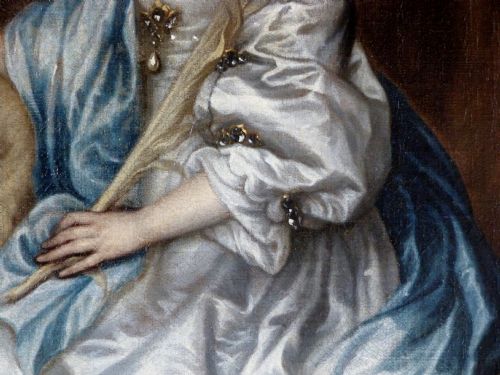
fig 2. Portrait of Lady Mary Villiers 17th c., after van Dyck.
fig 2. Portrait of Lady Mary Villiers 17th C., After Van Dyck.

This is one of those, and the sitter fits within the composition much more comfortably than the now tightly cropped original.

The original painting, in the Royal Collection, Windsor, was presumably painted for Charles I, who gave the sitter away at her wedding in 1637 to the Duke of Lennox. She is shown as St Agnes, the patroness of those engaged to be married.
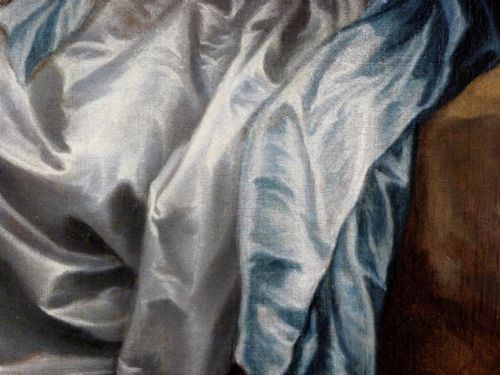
fig 3. Portrait of Lady Mary Villiers 17th c., after van Dyck.
fig 3. Portrait of Lady Mary Villiers 17th C., After Van Dyck.

St Agnes is usually accompanied by a lamb, because of the similarity of her name to the Latin agnus, a lamb, but actually ‘Agnes’ comes from the Greek word for ‘chaste’.

Lady Mary Villiers was the daughter of 1st Duke of Buckingham and Katherine Manners and, raised with the royal children, she was a favourite of James I and Charles I. She was married three times.
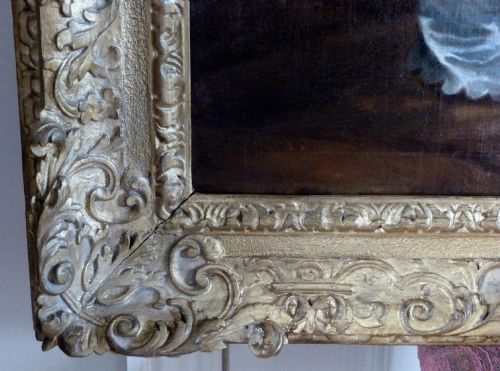
fig 4. Portrait of Lady Mary Villiers 17th c., after van Dyck.
fig 4. Portrait of Lady Mary Villiers 17th C., After Van Dyck.

In 1626 she was betrothed to Charles Herbert, son of Philip, who subsequently succeeded as 4th Earl of Pembroke. They were married on 8 January 1635, but Herbert died a year later, leaving a 13 year-old widow. Her second marriage was to James Stuart, Duke of Lennox (afterwards Duke of Richmond), a cousin of Charles I, on 3 August 1637. Whilst living at King Charles I exiled court at Oxford between 1643 and 1645, Mary was rumoured to have had an affair with Prince Rupert of the Rhine.
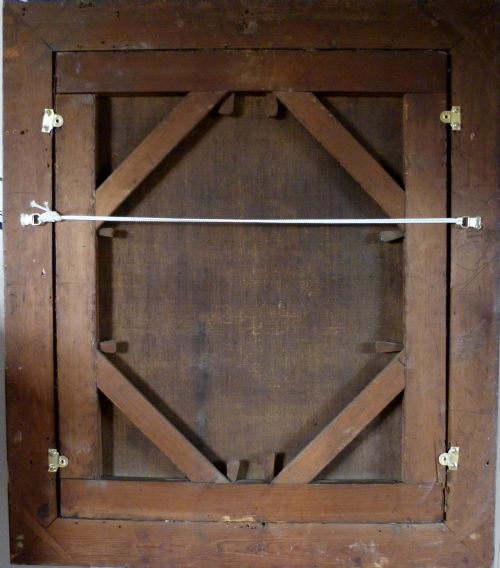
fig 5. Portrait of Lady Mary Villiers 17th c., after van Dyck.
fig 5. Portrait of Lady Mary Villiers 17th C., After Van Dyck.

The Duke of Richmond died in 1655, and Mary left for the exiled Royalist community in Paris. After the Restoration she returned to the English Court and became Lady of the Bedchamber to the dowager Queen, Henrietta Maria. In 1664 she was married to Colonel Thomas Howard (d. 1678), brother of 1st Earl of Carlisle.

As Duchess of Richmond, and later as the wife of Colonel Howard, Lady Mary was a prominent figure at Court after the Restoration. Several poems by the anonymous Stuart poetess known as Ephelia (whose works were published in 1679 as ''Female Poems... by Ephelia'') were dedicated to her, and it has been established in the last decade by Maureen Mulvihill of the Princeton Research Forum that Ephelia was in fact Lady Mary herself. This poetess produced an intriguing set of texts, some privately-printed, being bold political broadsheets against the Popish Plot and the rising of James, Duke of Monmouth, as well as amusing coterie verse, songs, a collection of female poems, amorous verse-letters, and ‘a damn'd play’, evidently a farce-burlesque on the debauched private lives of Charles II and his brother, James, Duke of York. This new identification suggests that Lady Mary Villiers was the most highly-placed, publishing woman writer of the Stuart period.

She died in 1685 and was buried in Westminster Abbey.

SIR ANTHONY VAN DYKE (1599-1641) was the greatest master of the European baroque portrait. Born in Antwerp, he first visited England in 1620. In 1632 he entered the service of King Charles I as Court Painter, and was knighted in 1633.

His clientele was essentially the aristocratic circle of courtiers, many of whom lived in a romantic Royalist dream world which collapsed in ruins in the Civil War, soon after Van Dyck's death.

Van Dyke's influence on the art of the portrait is almost beyond measure.

SIZE: 36 x 31 inches inc. frame.

PROVENANCE: Old Collection, Gloucestershire country house.

Date of Manufacture

Roy Precious - Antiques & Fine Art has dated this piece to the 17th Century.

Reference Numbers
Sellingantiques Ref
SA308330
Dealers Internal Ref
8849
Roy Precious - Antiques & Fine Art
Sellingantiques verified Since Mar 2003

Roy and nadine precious: specialists in portraiture from the 16th to the 20th century. Established in 1972.

Dealer Profile

You can view the stock and full dealer information on the Roy Precious - Antiques & Fine Art Profile Page
PDF SHARE
SAVE
Portrait of Lady Mary Villiers 17th c., after van Dyck.
1 / 6
Archive I Portrait of Lady Mary Villiers 17th c., after van Dyck.

Portrait of Lady Mary Villiers 17th C., After Van Dyck.
Archive II Portrait of Lady Mary Villiers 17th c., after van Dyck. View II
Archive III Portrait of Lady Mary Villiers 17th c., after van Dyck. View III
Archive IV Portrait of Lady Mary Villiers 17th c., after van Dyck. View IV
Archive V Portrait of Lady Mary Villiers 17th c., after van Dyck. View V
Archive VI Portrait of Lady Mary Villiers 17th c., after van Dyck. View VI
Enlarged Archival View
Location
Wiltshire
United Kingdom
Dealer Profile Page sellingantiques.co.uk/rp
Verified Since Mar 2003
Items For Sale 95
Items Sold 679
Roy Precious - Antiques & Fine Art
Verified Since Mar 2003
View Dealer Info
Location: Wiltshire, United Kingdom
Verified
Mar 2003
For Sale
95
Sold
679
Portrait of Lady Mary Villiers 17th c., after van Dyck.
Ref: SA308330
Portrait of Lady Mary Villiers 17th c., after van Dyck.
Detail View 1
Detail View 2
Detail View 3
Detail View 4
Detail View 5
Archival Detail
Every single antique dealer on our platform is individually approved by our internal team. We verify their professional trade history, ethical standards, and photographic quality to ensure a secure, high-standard buying environment. Upon joining, every dealer agrees to a strict 9-point code of conduct. While issues can occasionally arise, our dealers typically resolve them swiftly and directly with the buyer. In fact, since our founding in 2002, Sellingantiques has only had to step in to help resolve an issue on roughly five occasions—a true testament to the quality of our dealers and their dedication to your happiness.
Our dealers are highly experienced in packing and shipping fragile, high-value antiques. Because you are in direct contact with the dealer, you will be able to easily go through all available shipping and insurance options together to ensure your item arrives safely.
Antiques are the ultimate green purchase. By choosing historical pieces over newly manufactured goods, you completely eliminate the carbon footprint of modern mass production while preserving exceptional, timeless craftsmanship.
items
Add keywords to the filter
Price
£100
£250000
Era
Movements
Material
Origin
Stock Location
Freshness
Online Payments
Categories