Roy Precious - Antiques & Fine Art has dated this piece to the Before 1700 period.
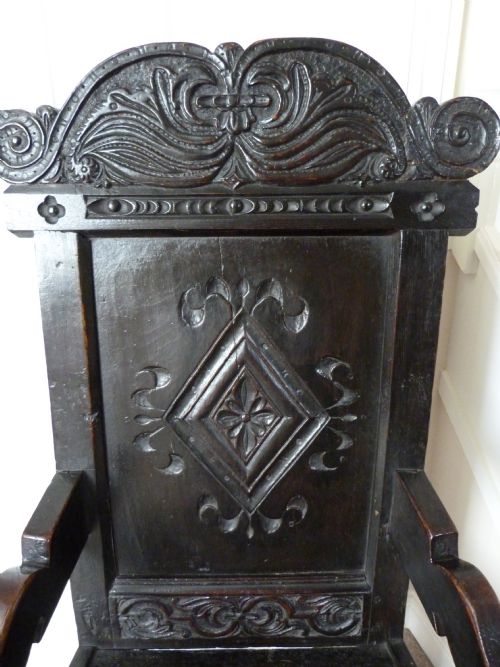
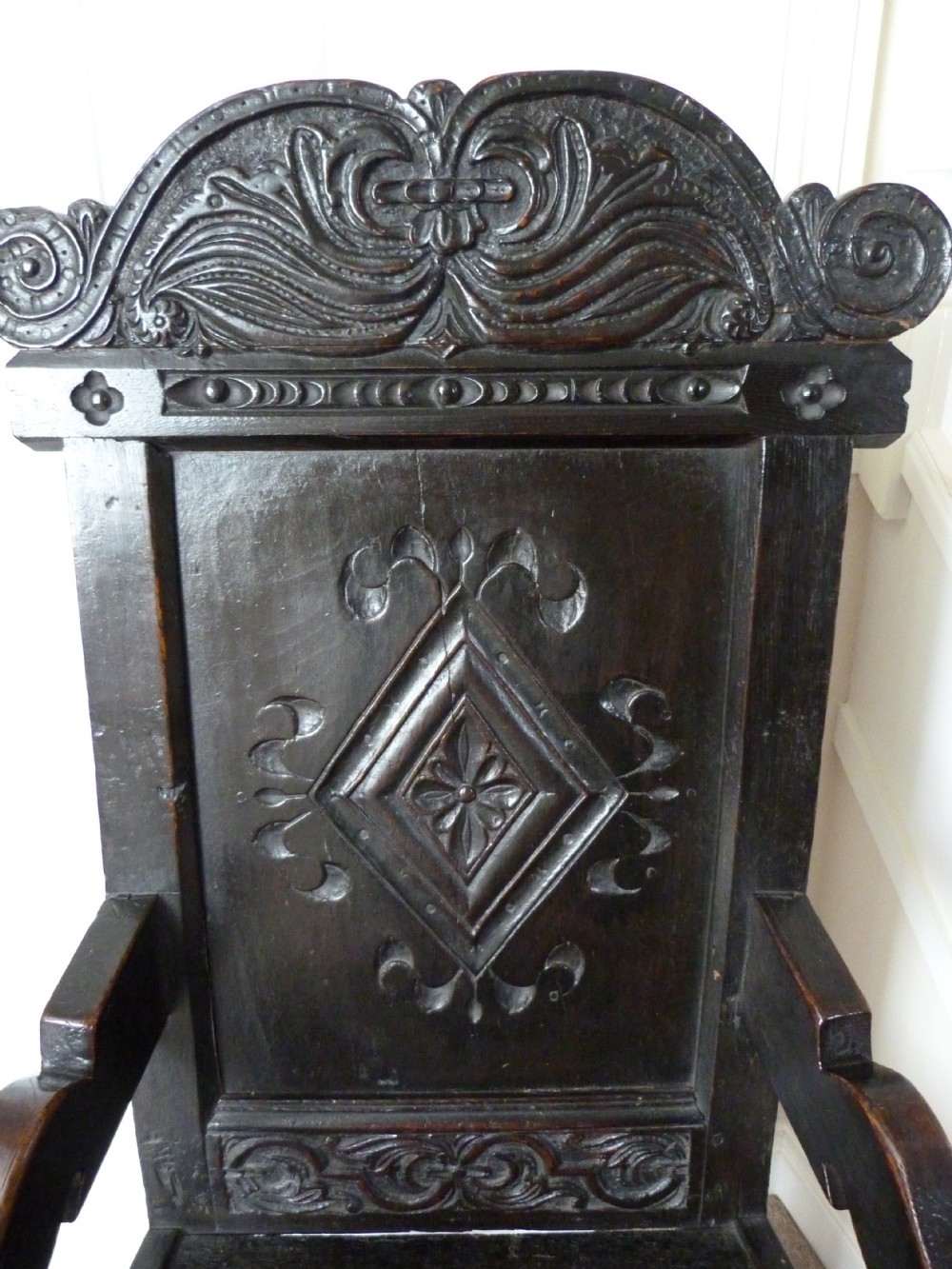
The diamond panel with fluttering pennant-like terminals is highly characteristic of the Dales area". ('Oak Furniture: The British Tradition' by Victor Chinnery).
An example of a chair so similar to this one as to suggest that they came from the same workshop is shown in Chinnery's book; page 470, Figure 4:116.
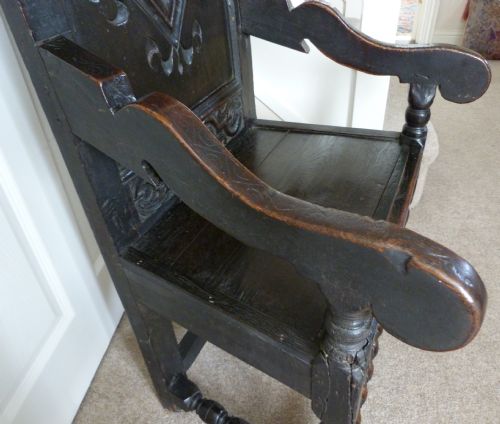
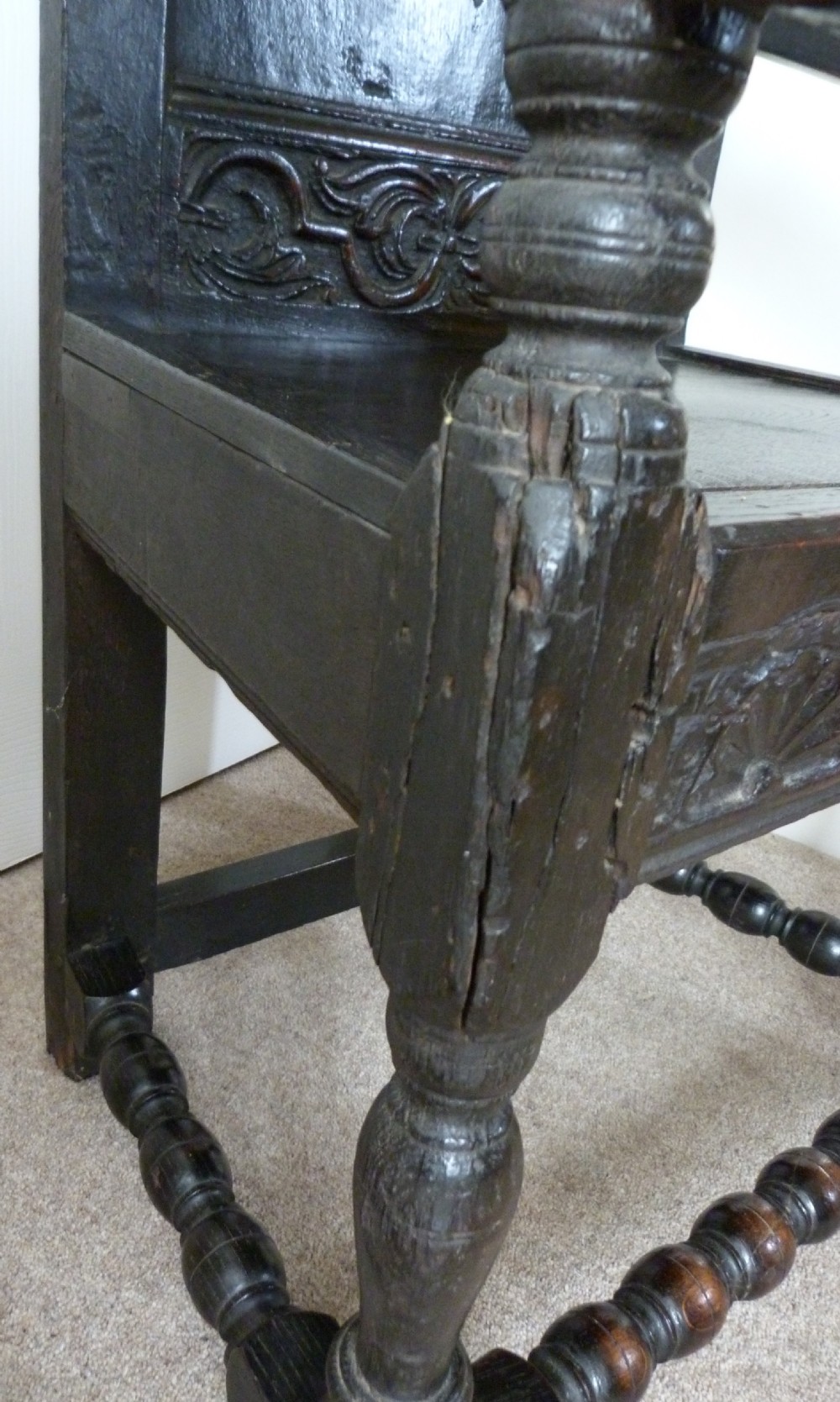
This chair is of excellent quality but constant use over the centuries has inevitably left its marks.
As these once high status chairs became unfashionable in the 18th century they moved down from gentry houses to farmers and small merchants then into cottages.
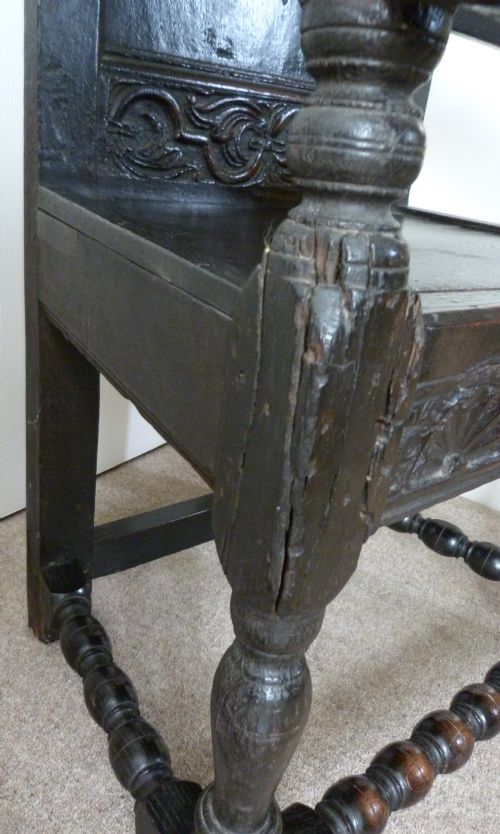
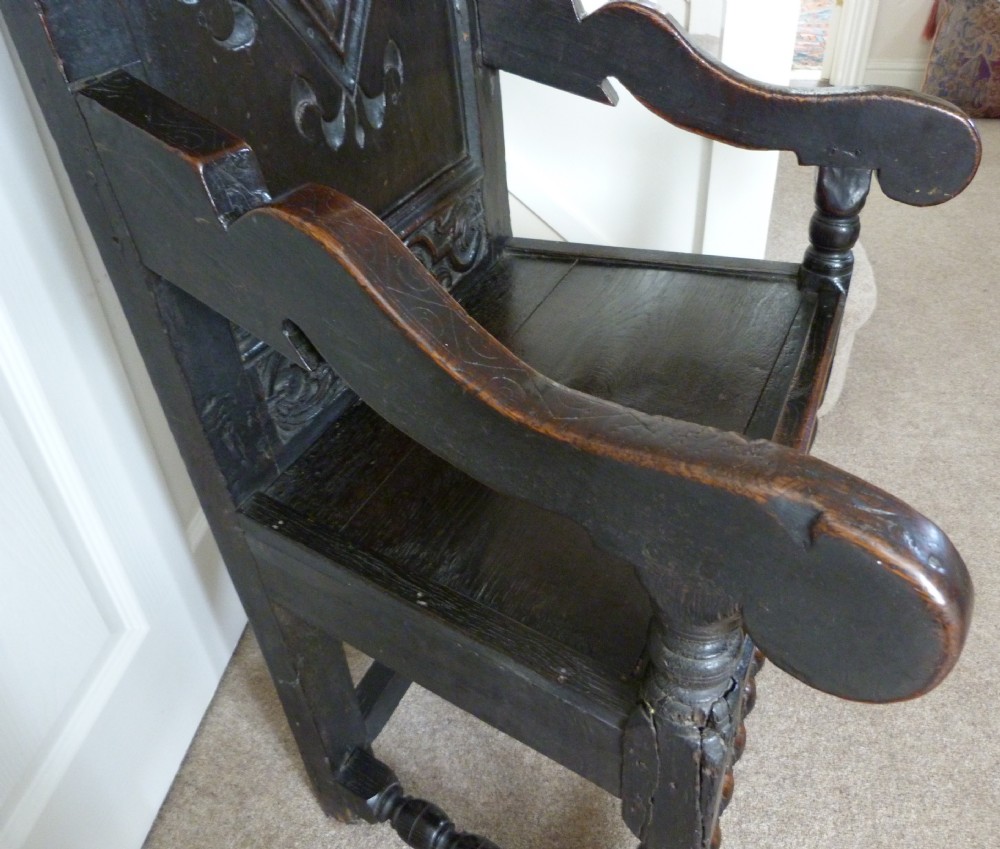
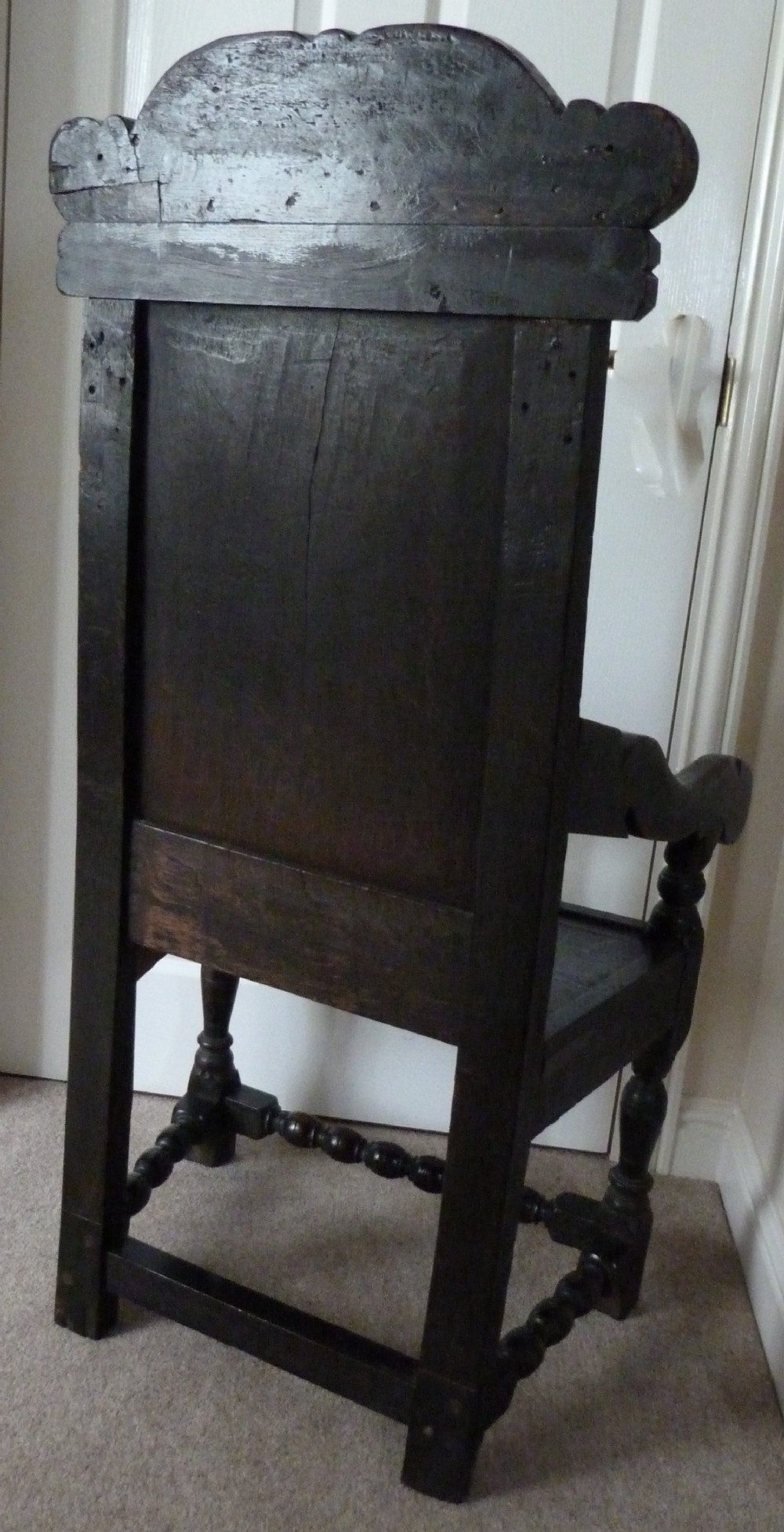
This example shows all the signs of constant use, being used almost to the point of extinction and needing considerable repair.
From the late 18th into the 19th century a fashion for mediaevalism and antiquarianism started and flourished, started by 'The Castle of Otranto' and encouraged by Sir Walter Scott's hugely successful writings.
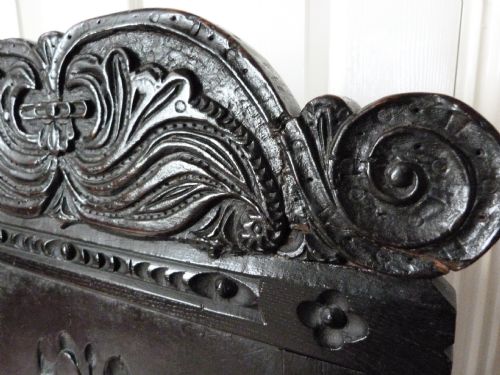
Furniture that had been discarded was sought and 'restored', often being stained a Gothic black which was thought to be the appropriate appearance.
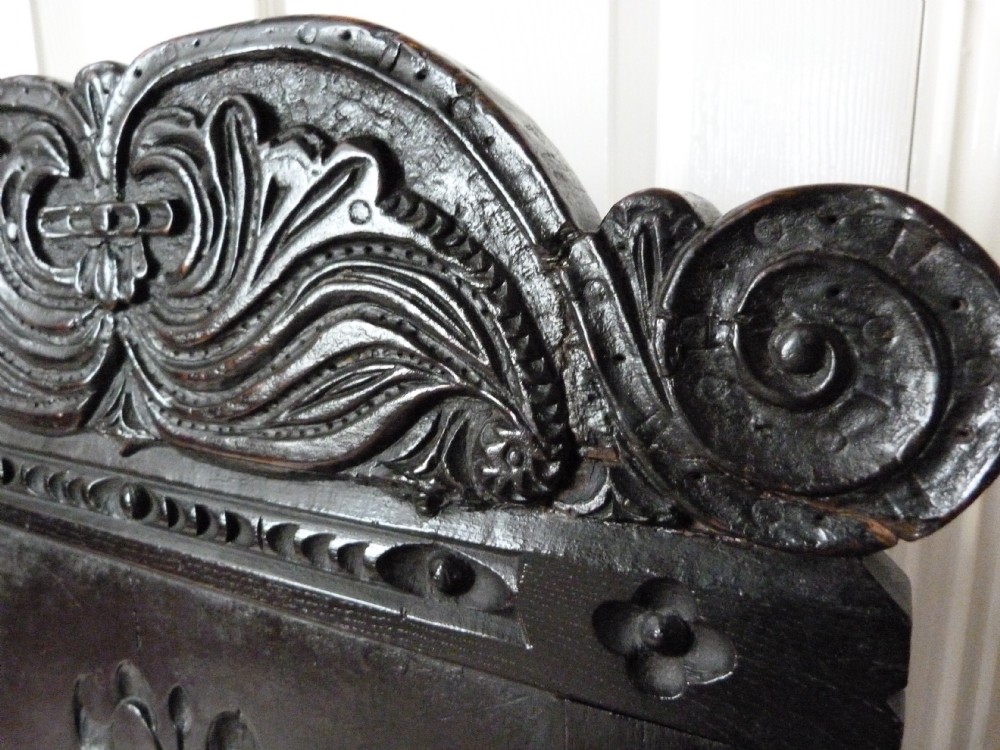
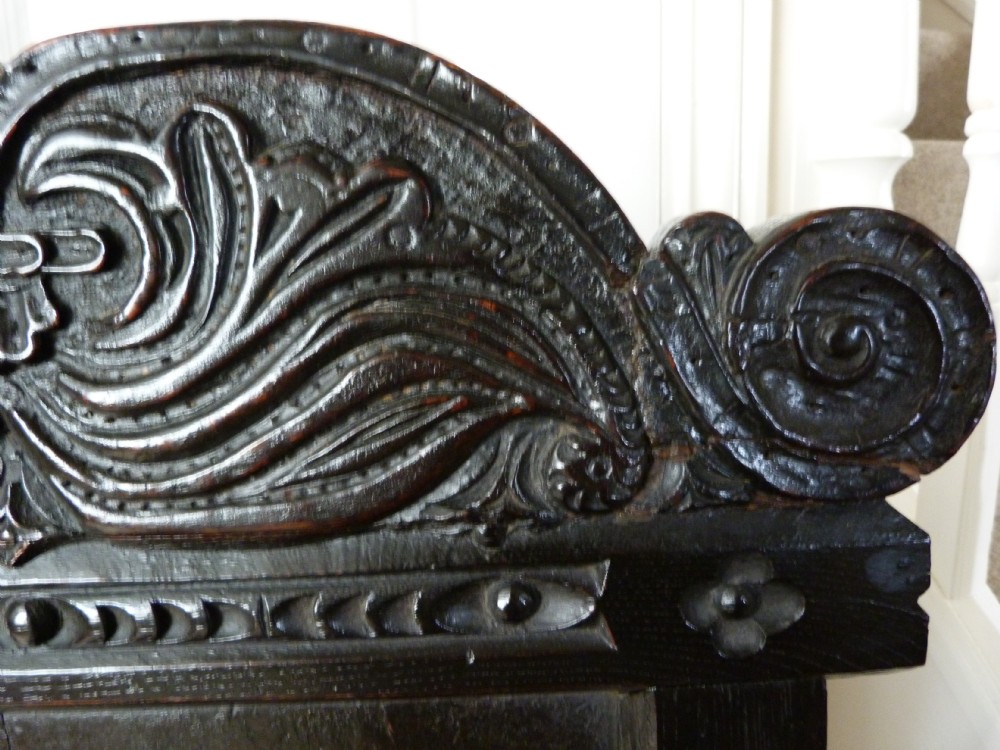
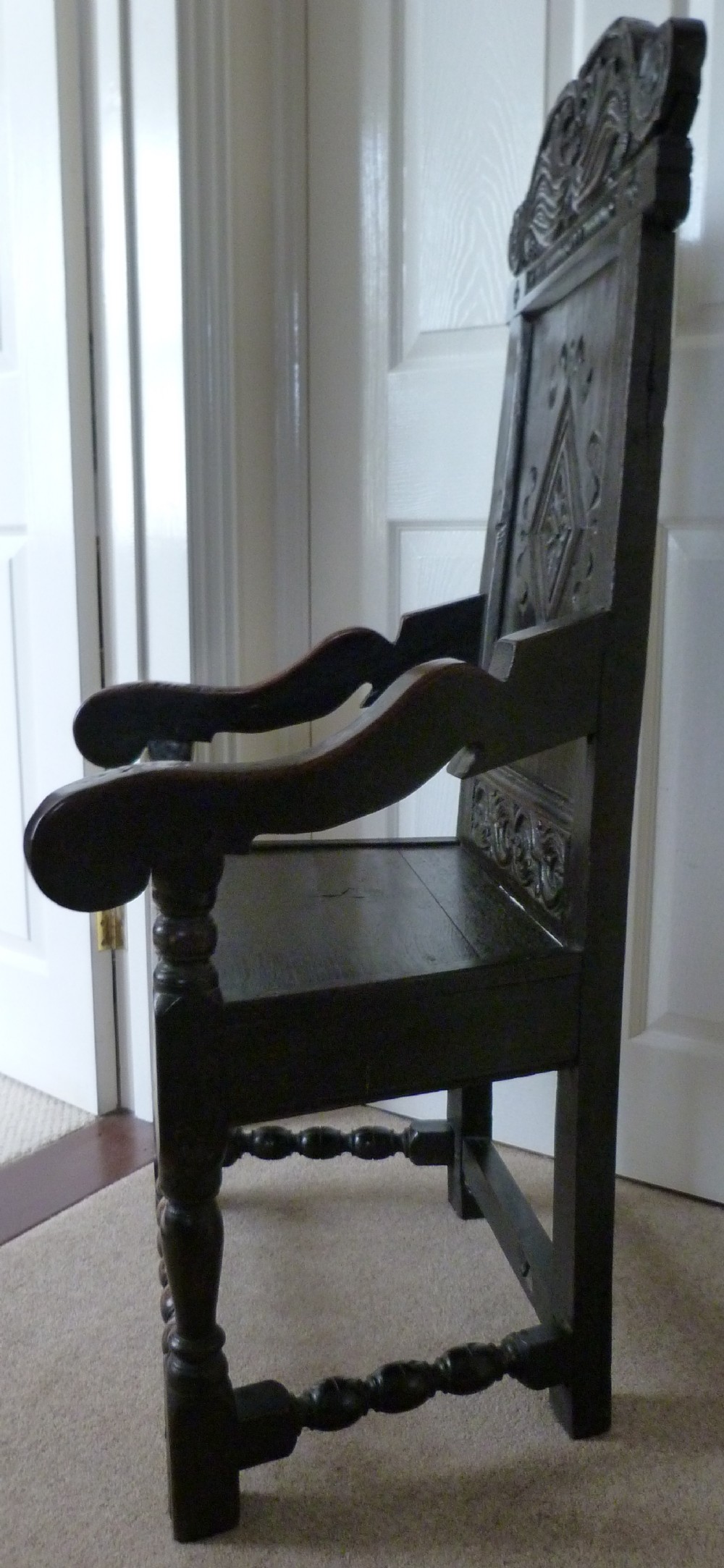
All this history is shown in this chair...beneath the crest is a piece of Victorian carving, the seat and stretchers have been replaced as have the tips of the back legs. The rest is original.
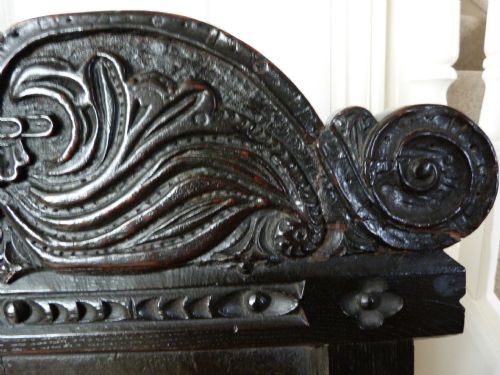
Although not one for the purist collector this is a fine chair with a long story to tell...and it is sturdy and usable despite the crack in one of the front legs - this has not affected the solidity of the chair.
DIMENSIONS: 47 inches tall, 23.5 inches wide, 20 inches deep, seat height 17.25 inches.
PROVENANCE: Private Collection, Gloucestershire.
Roy Precious - Antiques & Fine Art has dated this piece to the Before 1700 period.
Roy and nadine precious: specialists in portraiture from the 16th to the 20th century. Established in 1972.
You can view the stock and full dealer information on the Roy Precious - Antiques & Fine Art Profile Page
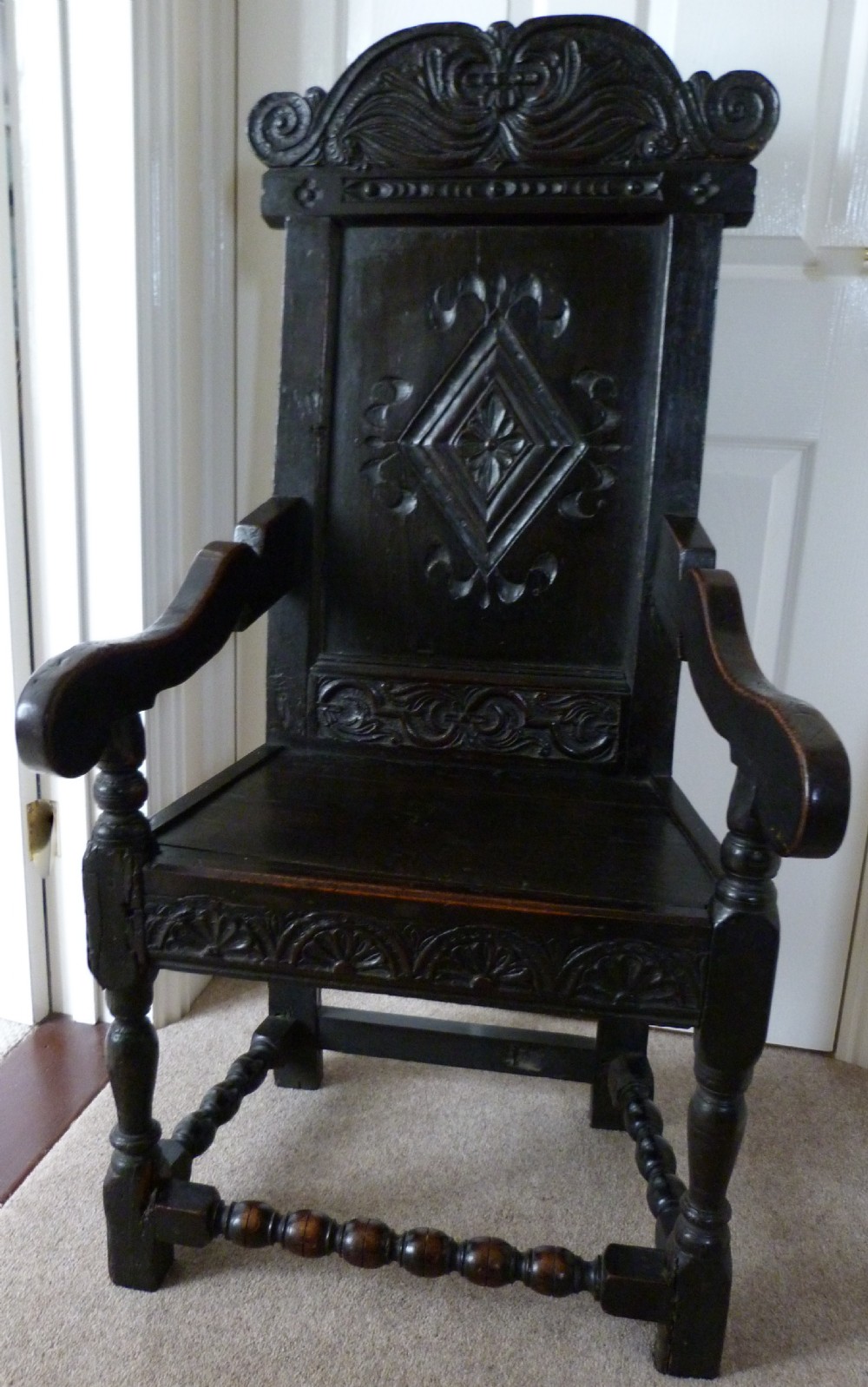
Oak Wainscot Chair C.1660 and Later.