

Marlborough Antiques & Interiors has dated this piece to the 1800s.
It was one of his first mounts and he was given the ride by way of a practice for the Goodwood Cup. Yorkshire Lady was the complete outsider.
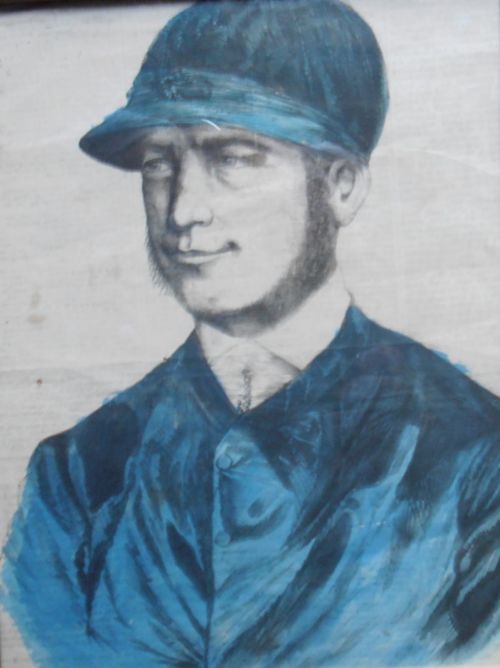
Sam later partnered Red Deer, carrying just 4 stone to an all the way victory over top weight Alice Hawthorn in the 1844 Trade Cup, later known as the Chester Cup.
Red Deer’s story is interesting. As a two-year-old, he had run so badly at Goodwood that he was offered for sale to his jockey, Sam Rogers. Sam, thinking the horse useless, refused the offer.
That autumn, Sam Kitchener climbed aboard Red Deer in a trial gallop and the improvement under his new jockey was staggering. Red Deer began to slaughter top two-year-olds which had won that summer at Goodwood. In further gallops, he easily outclassed the talented Pastoral, who had earlier shown much ability by winning at Newmarket.
It was clear that a betting coup the following year must be landed, and the Chester Cup was duly selected: as a subterfuge, five horses from the stable were entered so that bookmakers would not know which was the stable’s intended runner.
Then, out of the blue, came an offer to Sam Kitchener’s father: a consortium, headed by John Day, wanted the young jockey to ride for them and were prepared to give Sam’s father £100 a year ‘for the use of the boy and his earnings’. A better offer was immediately put on the table, securing Sam’s services.
By the time the Chester Cup took place on Wednesday, 1st May 1844, Red Deer was a heavily backed favourite.
There were, however, 26 runners, far too many to start in a single line on such a narrow course. An alternative plan was devised. It was simply to divide them into two divisions of 13 each, their riders drawing tickets for their chances of the first or second rank. The plan worked perfectly with the field getting away at the first attempt.
Young Sam and the 7/2 favourite Red Deer had been drawn in the second tier. An opening, however, presented itself before the field reached the stand, and Sam immediately went into overdrive. Surging through, he was clear of his rivals. Halfway down the back straight he was a distance clear, and the race was over. Sam and Red Deer cantered to a six lengths win.
There was only one casualty; Celeste fell early but without injury to herself or her jockey.
Sam was able to ride at such a young age as school was not made compulsory until the Elementary Education act of 1876.
He once wrote to the Sporting Life confirming that the lowest weight he ever rode at was 3st 12lb on a filly in the Wokingham Stakes at Ascot in 1840. Only ten years old at the time, he said that his actual body weight had been just 2st 7lb and that he had to make the excess weight with a heavy saddle and clothes.
22 x 17.5 cms Image Only
Marlborough Antiques & Interiors has dated this piece to the 1800s.
We display a variety of antiques at all price levels, including furniture, paintings and other decorative items
You can view the stock and full dealer information on the Marlborough Antiques & Interiors Profile Page
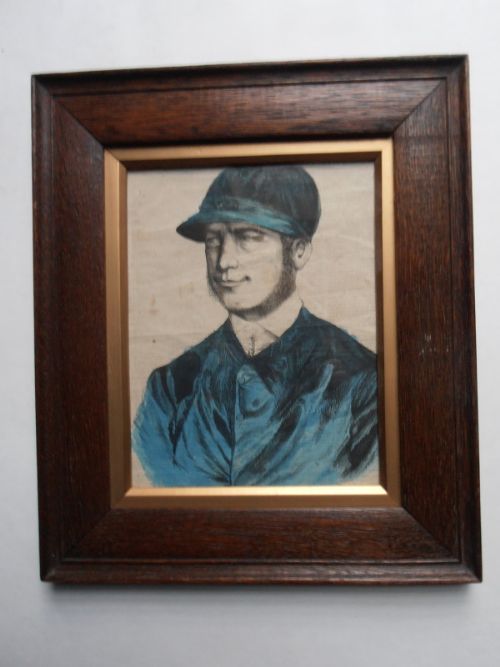
C1840 Sam Kitchener - Jockey - Hand Coloured
