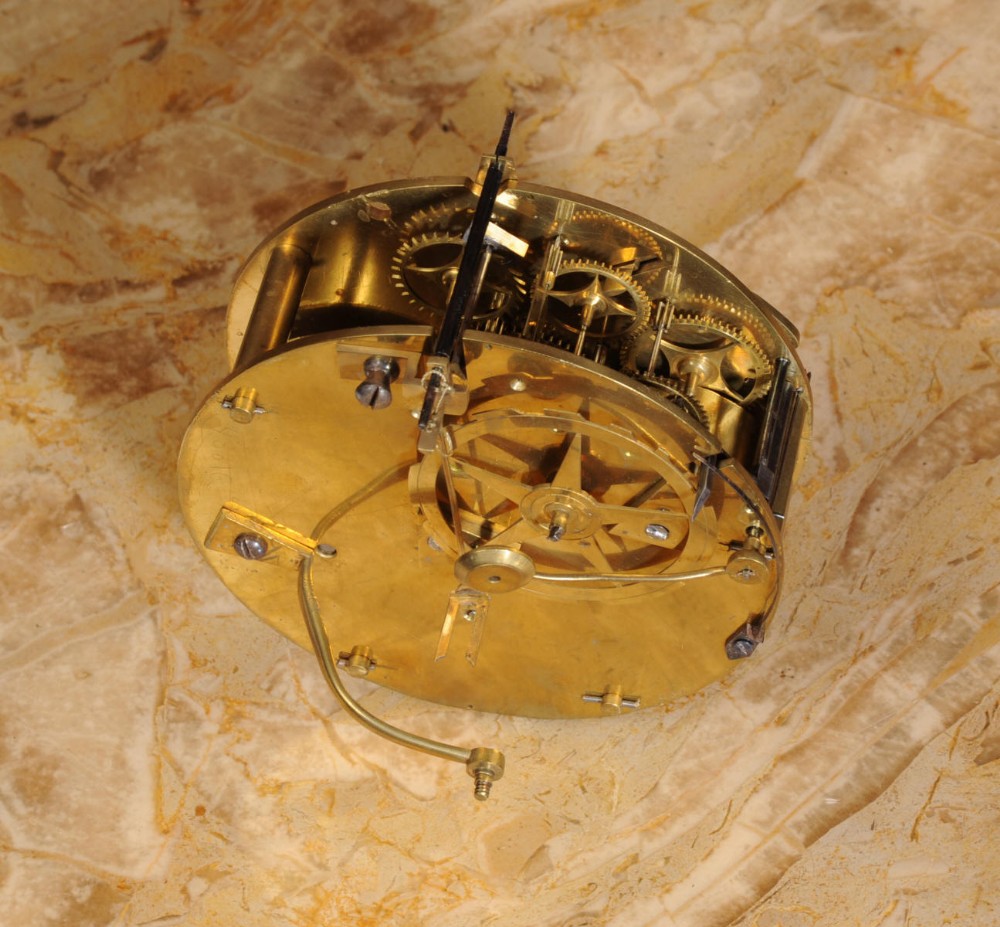
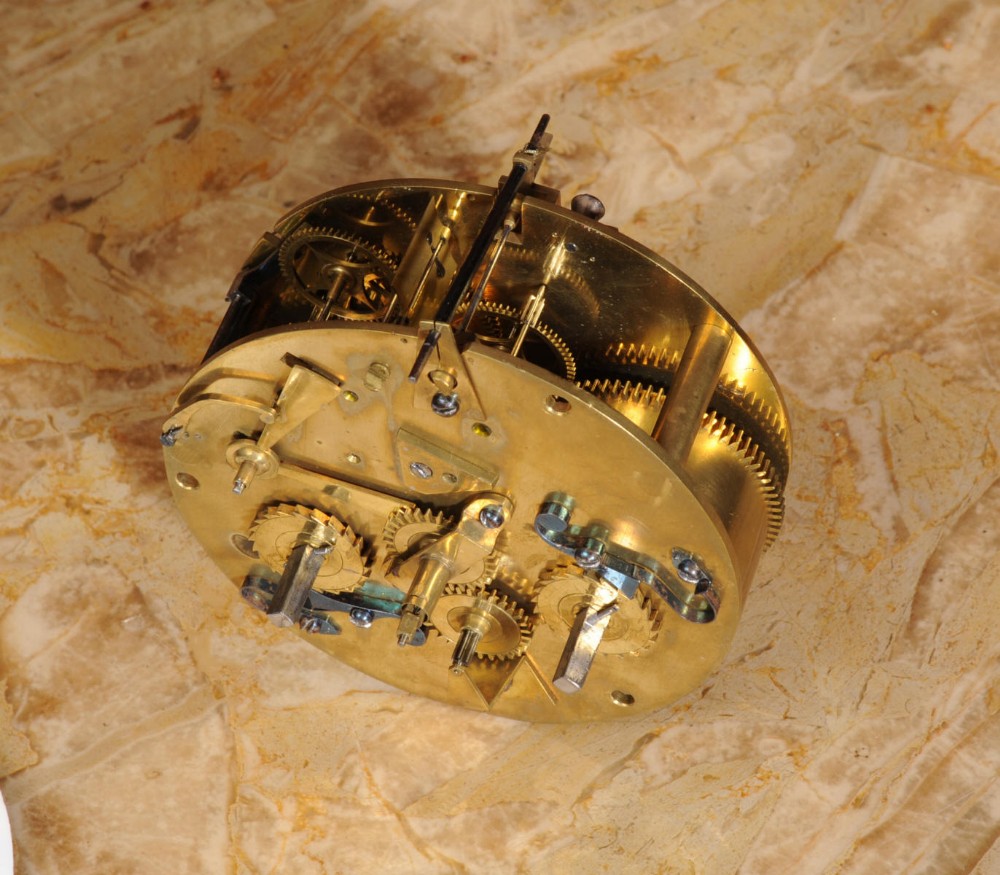
Dragon-Antiques.com has dated this piece to the 1750s.
~ French - Circa 1775 ~
~Excellent condition, fully working and ready to display~
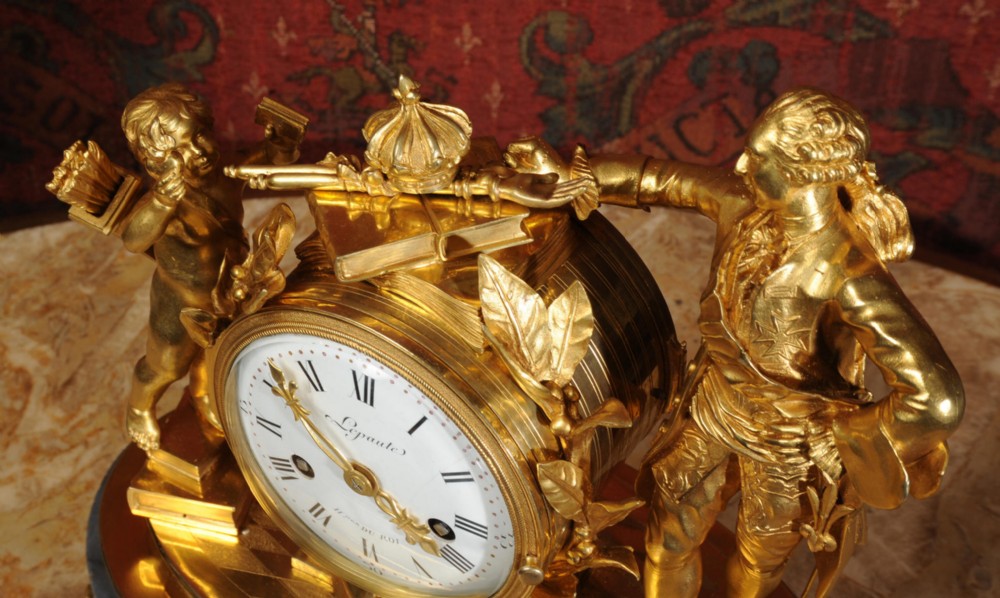
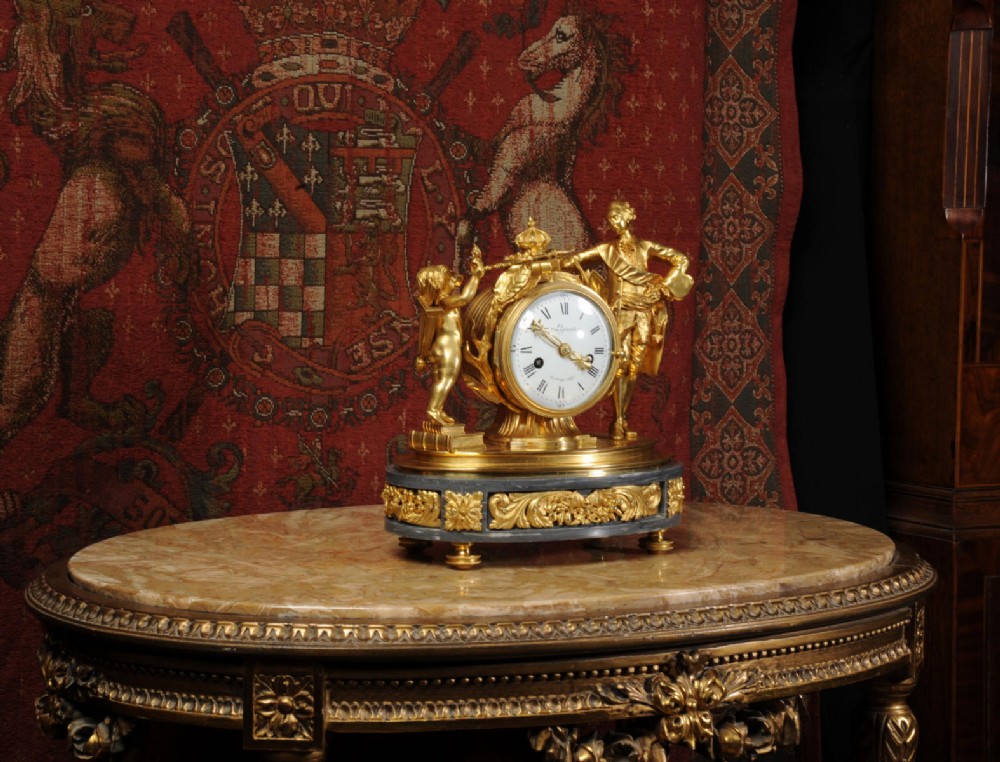
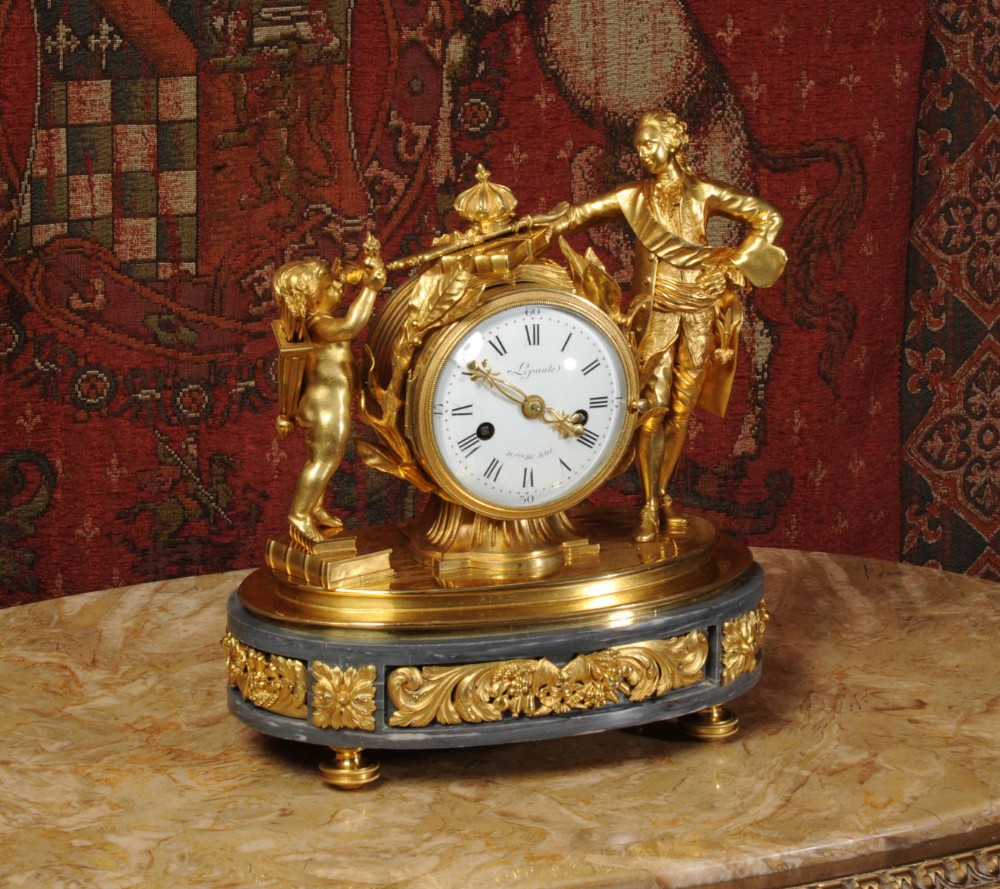
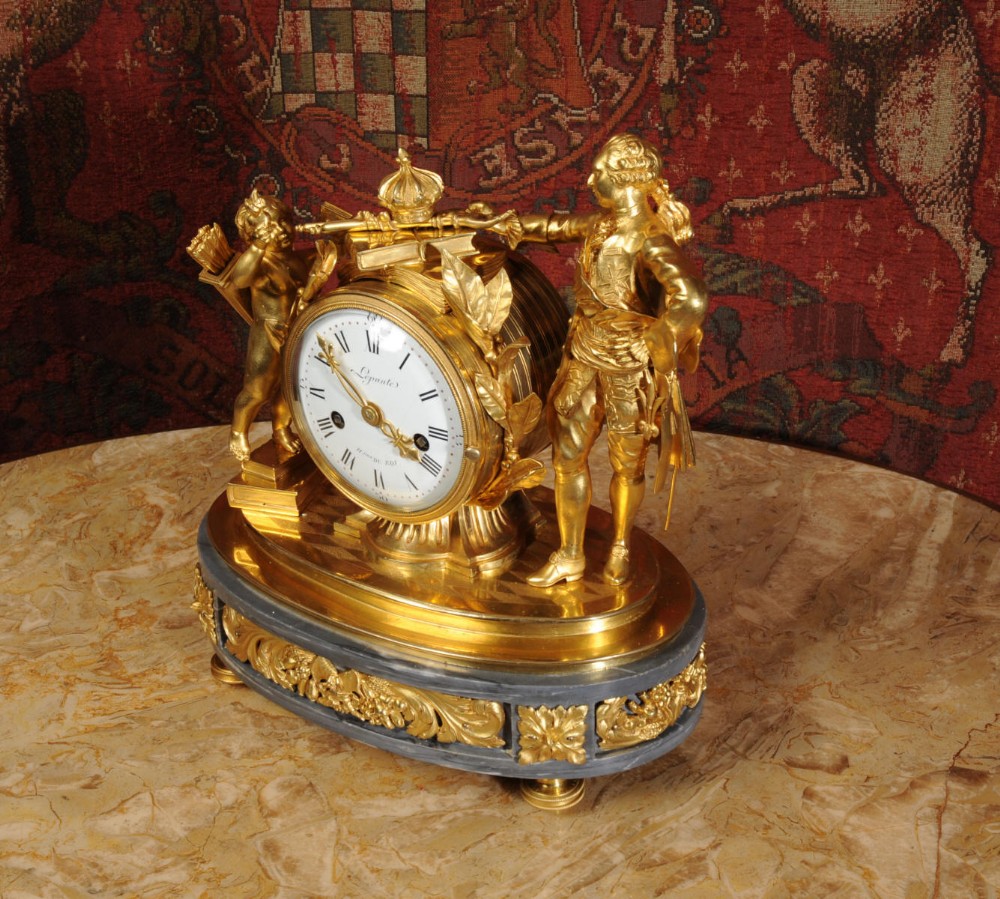
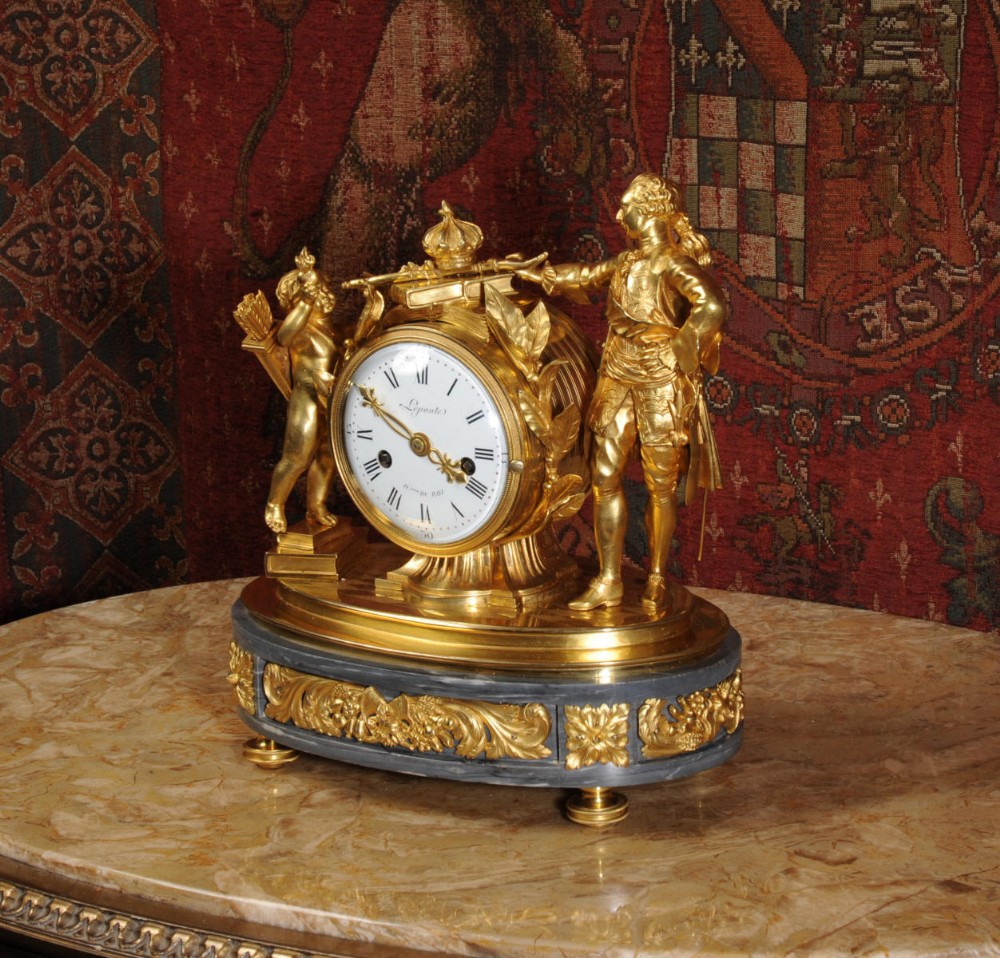
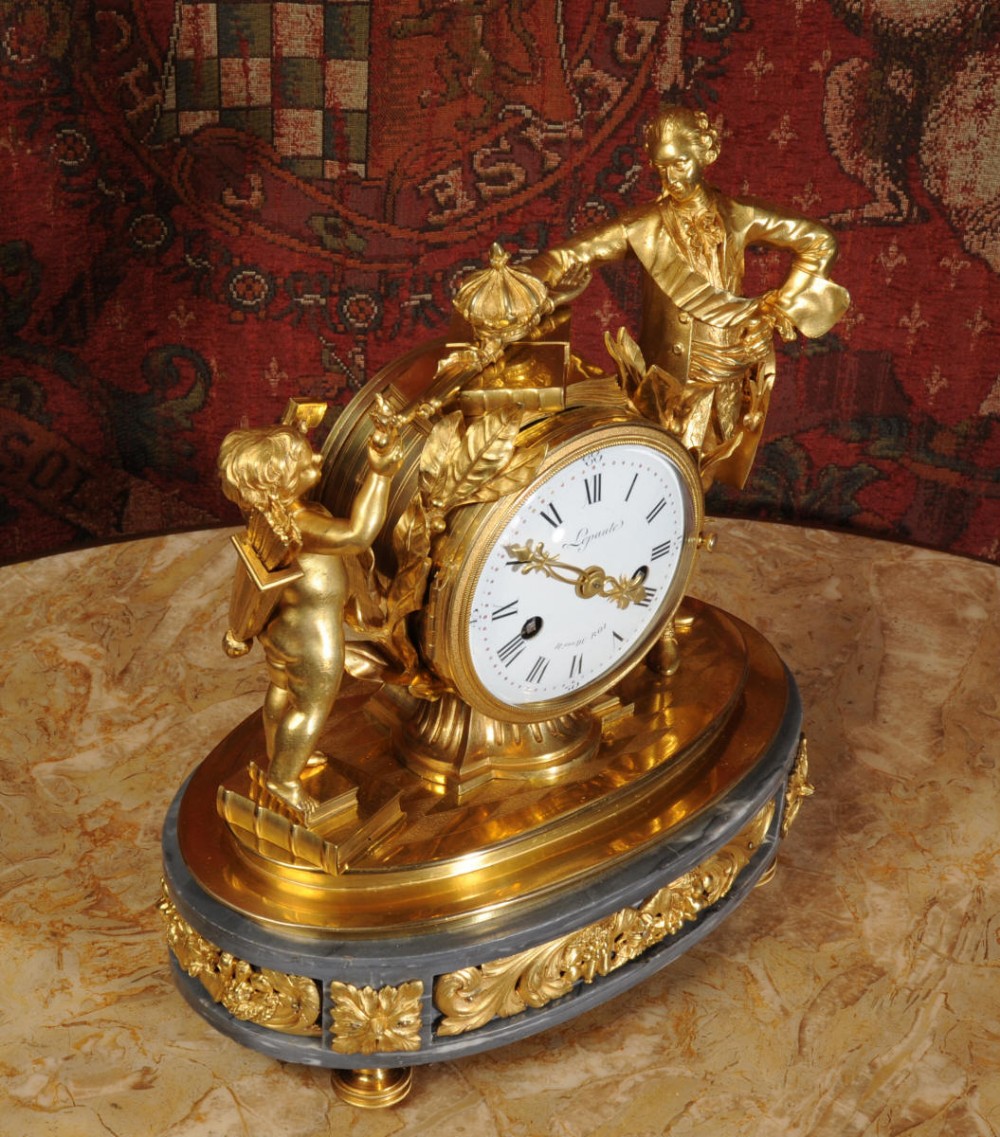
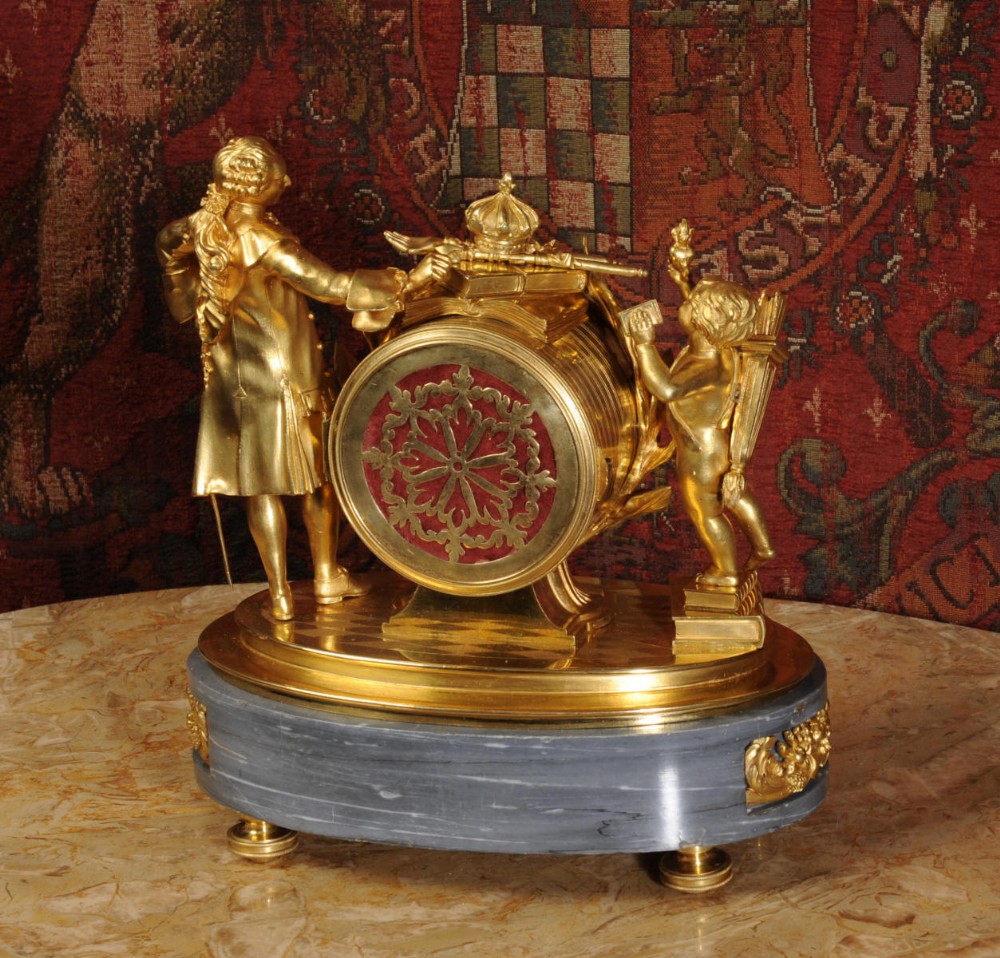
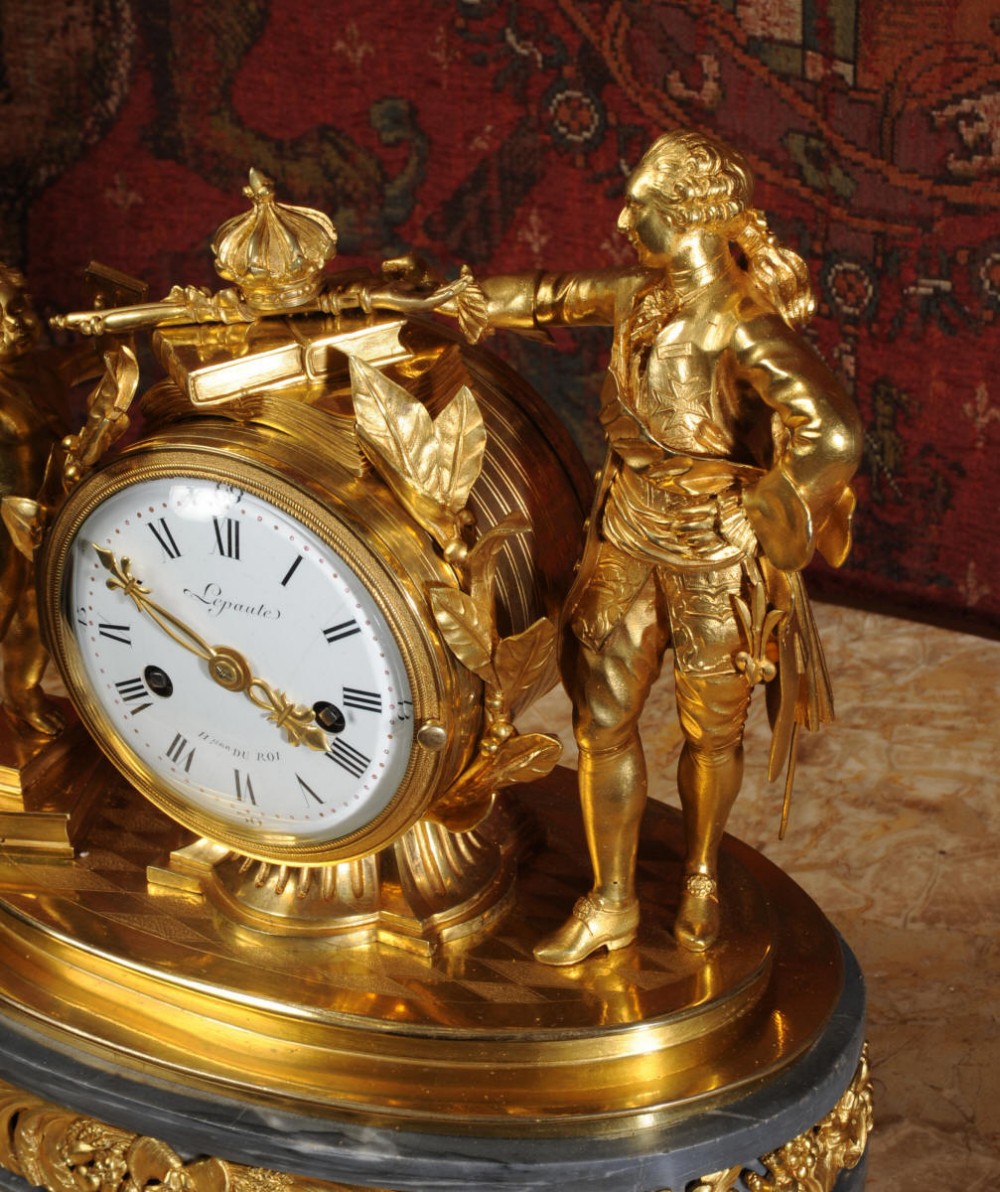
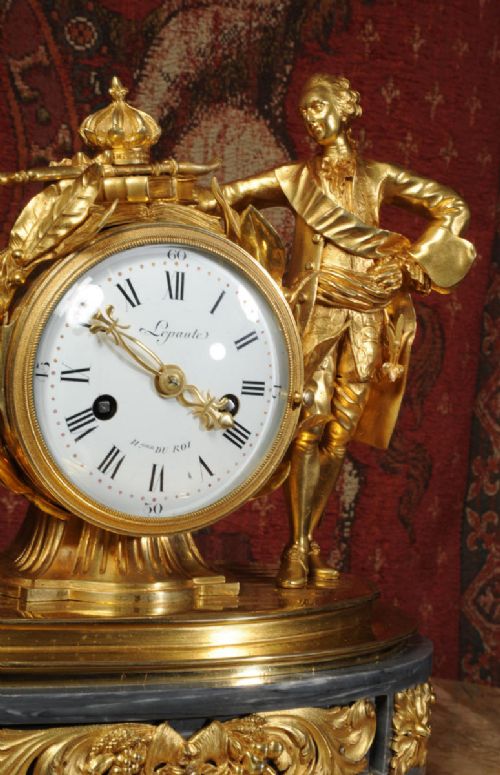
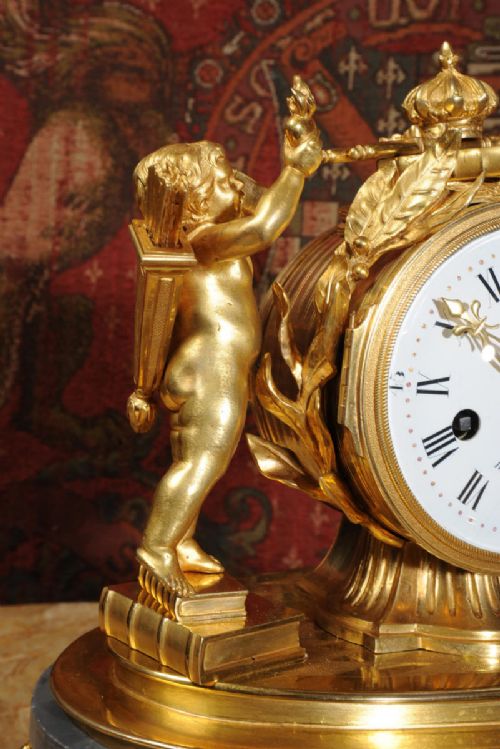
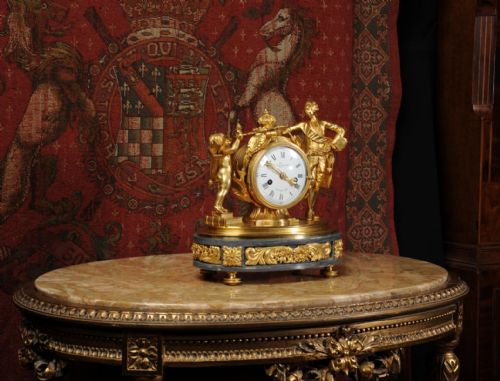
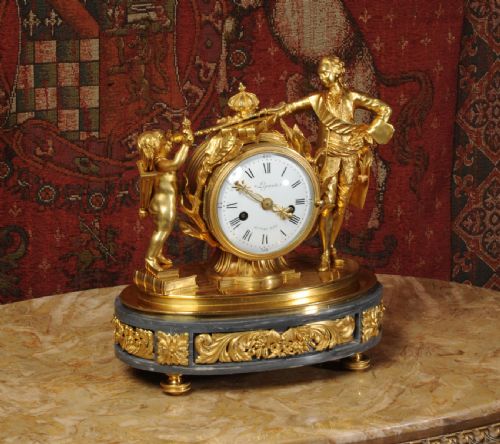
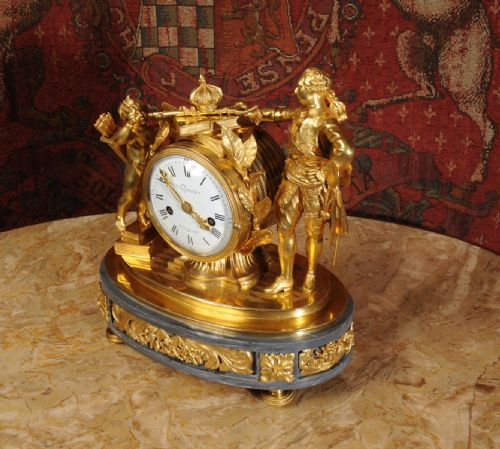
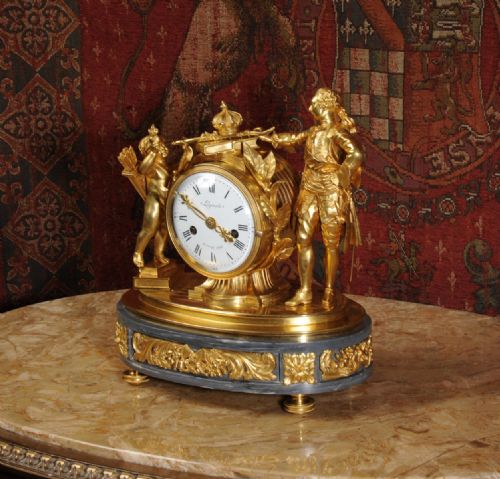
It depicts the succession of Louis XVI to the throne with putto presenting the divine light of the sacred heart along with the regalia of state including the hand of justice and the crown. Its is beautifully made in ormolu (Bronze Doré, mercury fire gilded bronze) mounted on a bleu turquin marble plinth inset with ormolu. The modelling and chasing is exquisite and the condition is superb, especially considering the clock is almost 240 years old, a rare survivor as so many objects depicting the king were lost during the revolution.
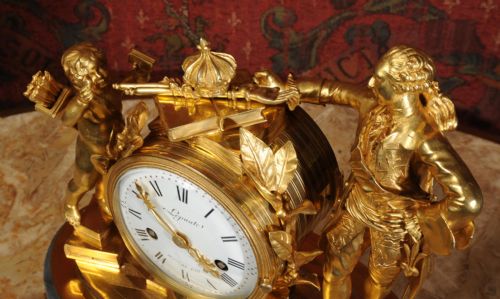
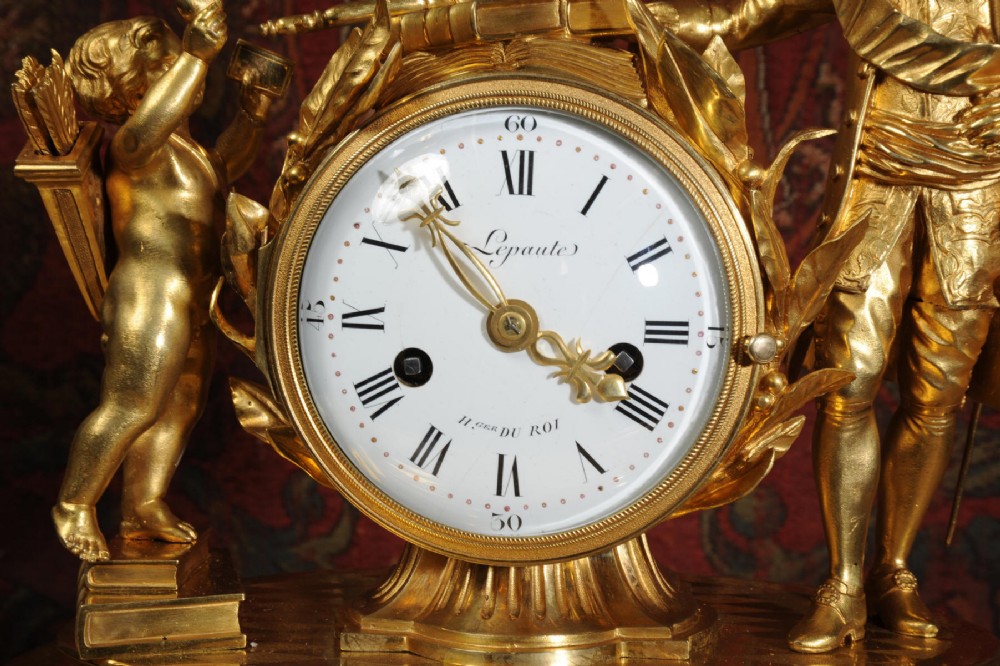
The clockmaker is Lepaute Horloger du Roi, a company formed of brothers Jean-André and Jean Baptiste, Jean-André was granted lodgings in the Palais du Luxembourg around 1751 and In the Galleries of the Lourve around 1756 and as a result was able to use the title Horloger du Roi. Jean-Baptiste took over the family business in 1776.
Clocks by Lepaute are in many major collections around the world including the Kunstgewerbemuseum in Berlin; Palacio Real in Madrid; Musée du Louvre, Musée national des techniques, and Nissim de Camondo in Paris; Château de Versailles; Musée des arts décoratifs, Lyon; New York Metropolitan Museum of Art; Hermitage Museum in St. Petersburg, The Wallace Collection, London and the John Paul Getty Museum, California
Originally from the eastern part of France, Jean-André Lepaute was the eldest of nine children. Introduced by his father to the art of casting, locksmithing, and monumental clockmaking, he left home at 20 to train with a Parisian clockmaker. His younger brother Jean-Baptiste joined him in 1747. Together they founded LEPAUTE HORLOGER DU ROI, established at rue Saint-Honoré in 1766, and then at Palais Royal in 1772-73. 9 Designated Horloger du roi, Jean-André Lepaute devised a clock, which he presented to Louis XV in 1751, whose entire mechanism consisted of only one wheel. In 1752 he invented a clock that indicated the hours, minutes and seconds, striking the hours and the quarters. The following year he published the essay Mémoire sur l’echapemens à repos, Donné à l’Académie des Sciences par Lepaute Horloger du Roi au Luxembourg à Paris, followed in 1755 by the remarkable horology treatise Traité d’horlogerie, on which he collaborated with the celebrated astronomer and academician Jérôme de Lalande (Fig.1). He completed his treatise work in 1760 with Description d’une nouvelle pendule policamératique ; pour servir de Supplément au Traité d’Horlogerie.
Appointed Maître, or master clockmaker, in 1759, Jean-André Lepaute received official accomodation at the Louvre. He retired from the firm in 1775. Fig.1 Traité d’horlogerie by Jean-André Lepaute His brother, Jean-Baptiste Lepaute, also appointed Horloger du Roi, took over the family enterprise in 1774 along with his two nephews. He became master clockmaker in 1776, creating among other works, the monumental equation clock for the Paris city hall (destroyed in 1871). From 1778 to 1783, his establishment was located at Rue des Echelles Saint-Honoré. He retired in 1789. The two Lepaute brothers were not only renowned for the technical feats and aesthetic value of their numerous horological inventions, but they were also the founding members of a great dynasty of clockmakers who distiguished themselves over the centuries for their excellence and prestige.
Reference: Tardy, Dictionnaire Des Horlogers Francais. European Clocks in the J. Paul Getty Museum By Gillian Wilson, David Harris Cohen, Jean Nérée Ronfort, Jean-Dominique Augarde, Peter Friess
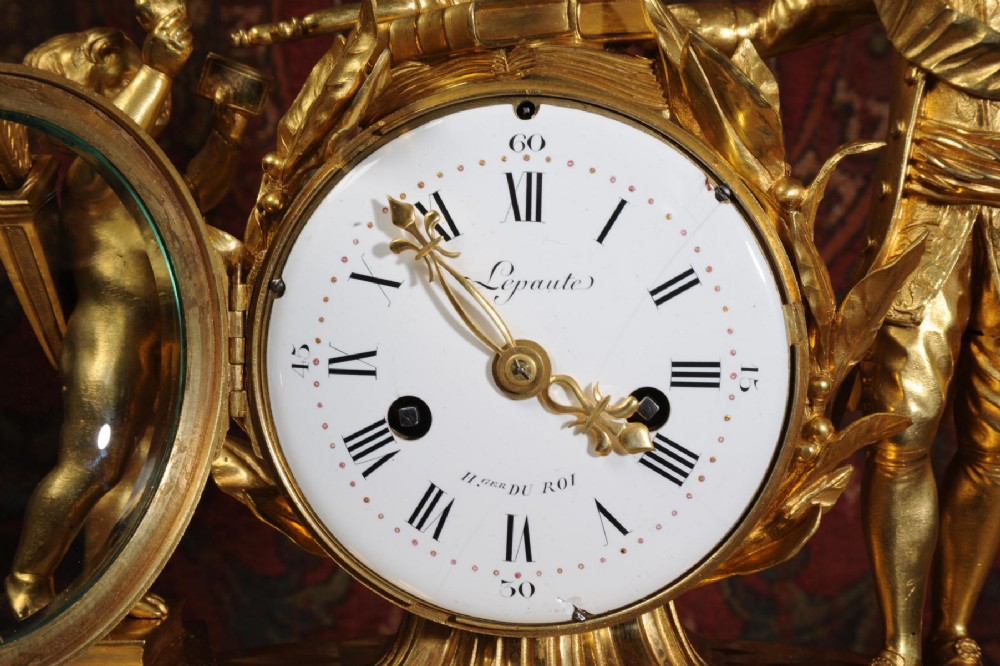
The superb enamel dial is signed
Dragon-Antiques.com has dated this piece to the 1750s.
You can view the stock and full dealer information on the Dragon-Antiques.com Profile Page
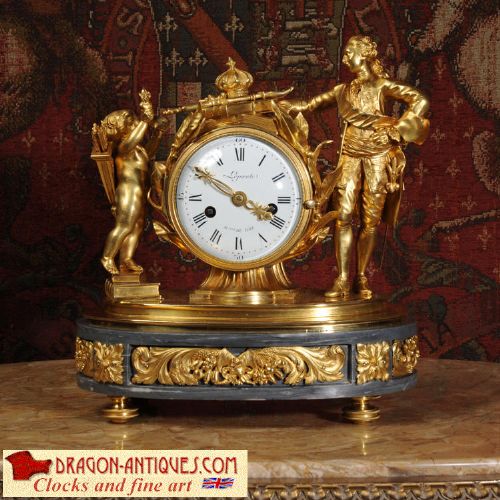
Exquisite Early Clock, Succession of Louis Xvi, Jean-baptiste Lepaute (1727-1802)Clockmaker to the King