P A Oxley Antique Clocks & Barometers has dated this piece to the 1800s.
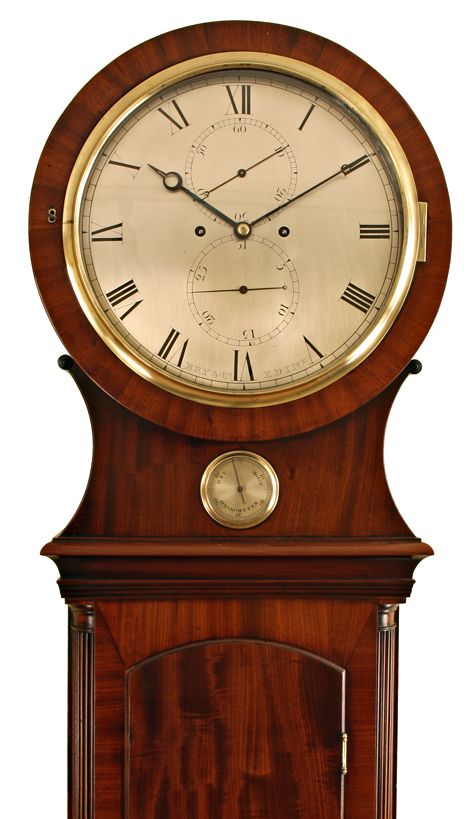
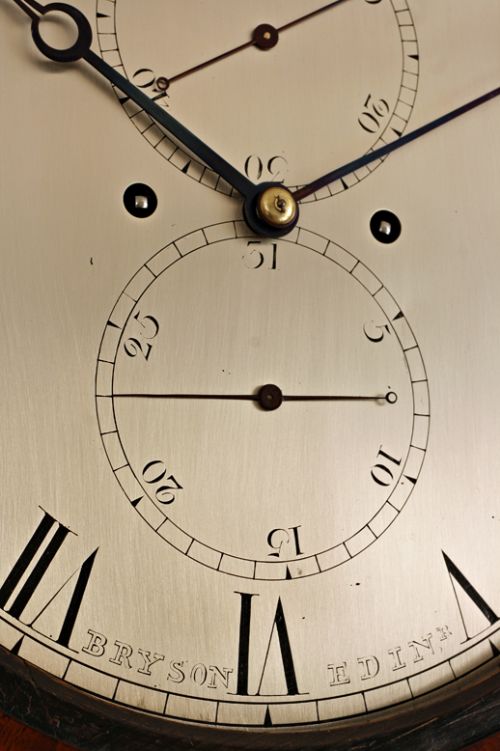
The round silvered brass dial showing both seconds and date dials. Also with matching blued steel hands and signed by the maker to the base of the dial in large capital letters. The large brass pendulum bob with regulation nut and wooden rod.
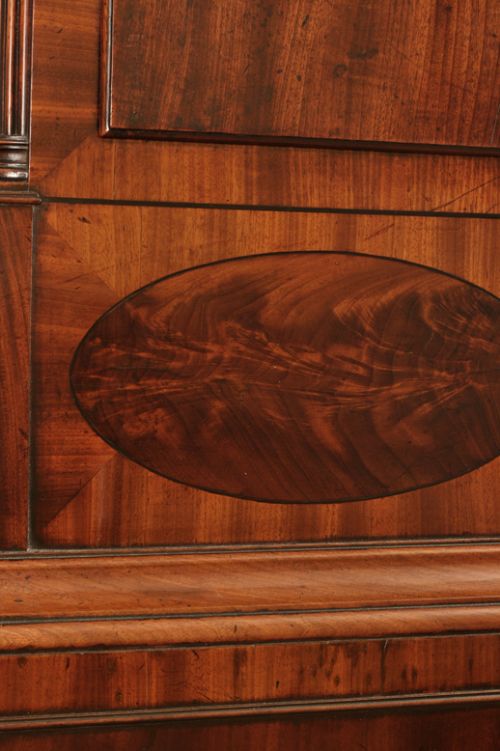
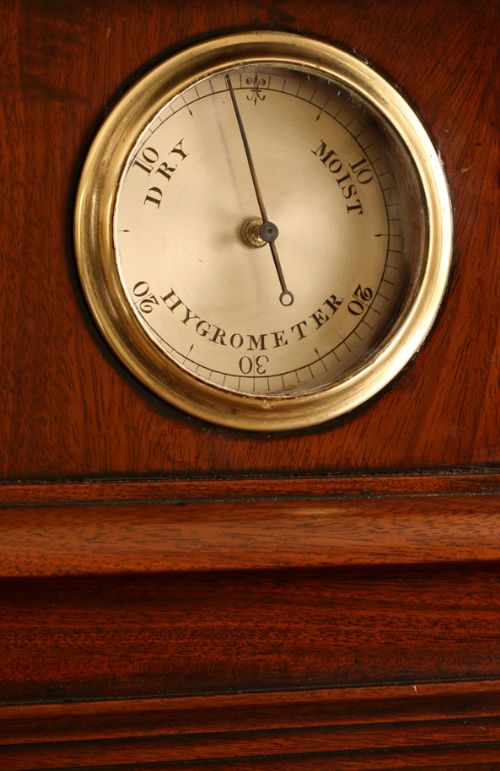
The beautifully proportioned mahogany veneered case of typical drumhead design with fiddleback veneers to the trunk door flanked by reeded quarter columns and a flame mahogany veneered oval with ebony inlay surround. The base with a raised single moulding and shaped plinth. The hood with glazed concave brass bezel, plain drum shaped top and turned horizontal supports with ebony paterae. The case also with a rare Oatbeard Hygrometer feature below the main dial.
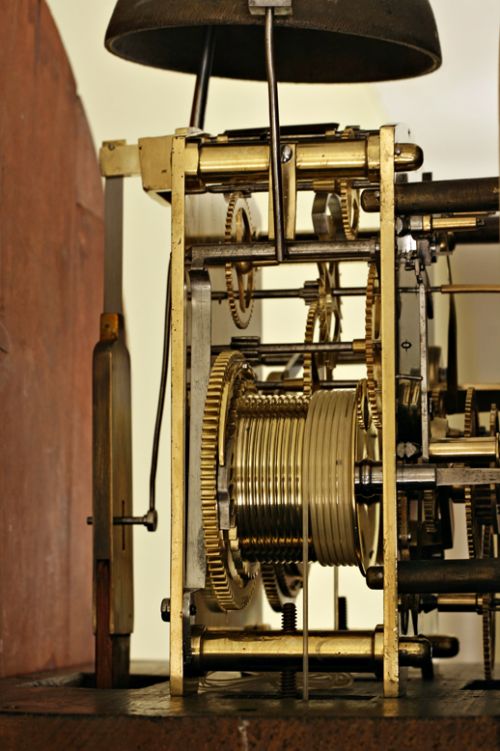
Note: The Bryson family are described as eminent and inventive Clockmakers. Robert Bryson was born in 1778 and died in 1852. He was a Fellow of the Royal Society of Edinburgh and made a Sidereal Regulator for the Edinburgh Observatory. He had two sons, Alexander and Robert who succeeded him. It’s quite possible that this clock was made by more than one Bryson as it is simply signed ‘Bryson’.
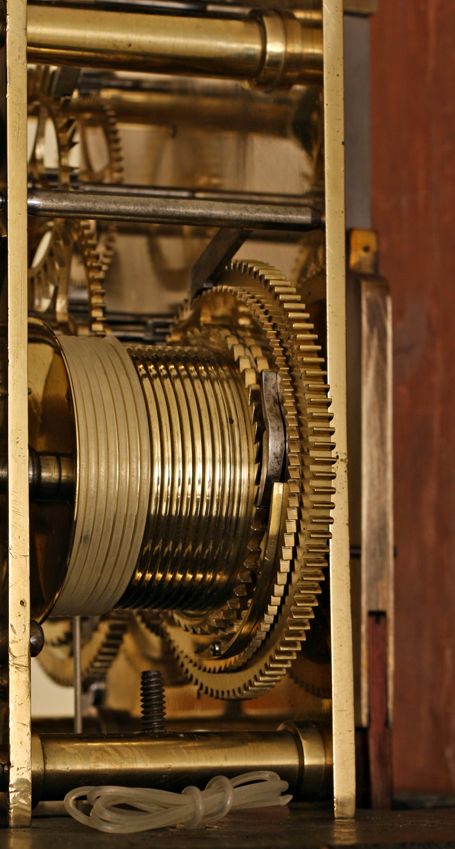
Alexander Bryson was a great inventor including “a new clock impelled by a combination of Gravitation and Electro Magnetism” and “the means of determining the presence of icebergs during fogs or darkness at sea.” This would explain the extremely rare feature of an Oatbeard Hygrometer to the case of this clock. It was most probably used for timekeeping purposes.
Height: 6'11"
P A Oxley Antique Clocks & Barometers has dated this piece to the 1800s.
You can view the stock and full dealer information on the P A Oxley Antique Clocks & Barometers Profile Page
P A Oxley Antique Clocks & Barometers is a registered member of LAPADA
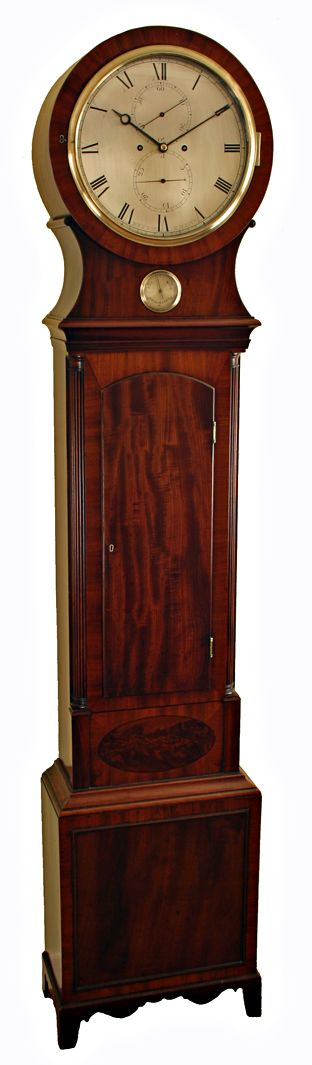
Regulator Grandfather Clock by Bryson of Edinburgh