20,137  PAGES BROWSED TODAY PAGES TODAY 36  ANTIQUES UPLOADED TODAY NEW ARRIVALS
ID #SA260094
FOR SALE
£3,500
Email
Save
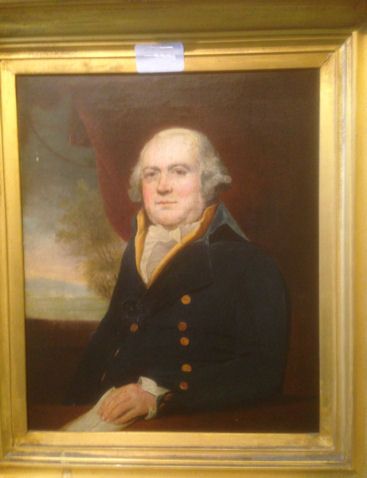
Attributed to Lemuel Francis Abbott, Circa 1760-1802 Portrait of Robert Milligan 1746-1809
Artware Fineart
for sale €4,095     $4,445
£3,500

Artware Fineart

Sellingantiques Verified Since Sep 2008
View Dealers Stock Page
Id #SA260094
PDF SHARE
SAVE

Attributed to Lemuel Francis Abbott, Circa 1760-1802 Portrait of Robert Milligan 1746-1809

18th century
For Sale by Artware Fineart
Description

Attributed to Lemuel Francis Abbott, Circa 1760-1802

Portrait of Robert Milligan 1746-1809

1795

UK

Oil on Canvas

12 x 10 in. (31 x 26 cm.)

Robert Milligan (1746 – 21 May 1809) was a prominent English merchant and ship-owner, and was the driving force behind the construction of the West India Docks in London. Having grown up on his wealthy family's sugar plantations in Jamaica, Milligan left Jamaica in 1779 to establish himself in London,living in Hampstead for a period. Outraged at losses due to theft and delays at London's riverside wharves, Milligan headed a group of powerful businessmen who planned and built West India Docks, which was to have a monopoly on the import into London of West Indian produce such as sugar, rum and coffee for a period of 21 years. The Docks' foundation stone was laid in July 1800, when Milligan was Deputy Chairman of the West India Dock Company - his strong connections with the political establishment of the day were evident from those attending the ceremony, the stone being laid by Lord Chancellor Lord Loughborough and Prime Minister William Pitt the Younger as well as Company chairman George Hibbert and himself. The Docks officially opened just over two years later in August 1802. Milligan later also served as Chairman of the Company. The Docks were authorised by the West India Dock Act 1799 - the first parliamentary (as opposed to a municipal Act) for dock building. The Docks were constructed in two phases. The two northern-most docks were constructed between 1800 and 1802 (officially opened on 27 August 1802) for the West India Dock Company to a design by leading civil engineer William Jessop (John Rennie was a consultant; Thomas Morris (Liverpool's third dock engineer) was also involved), and were the first commercial wet docks in London. British Prime Minister William Pitt the Younger and Lord Chancellor Lord Loughborough attended the foundation stone ceremony on 12 July 1800; Milligan and Hibbert were also commemorated for their part in the ceremony. Following his death in May 1809, the Company commissioned a commemorative statue from sculptor Richard Westmacott. The statue currently stands in front of the Museum in Docklands on West India Quay, where it was originally erected (1813–1875) before being relocated to the nearby Main Gate (1875–1943), held in storage and later re-erected at the London Docks. It was re-erected at West India Quay in February 1997 by the London Docklands Development Corporation.Milligan has also had a local street named after him. Milligan Street is located near Westferry DLR station, just off Narrow Street, Limehouse. Robert Milligan was born at Dumfries on 19th August, 1746, the son of James Milligan. He married at Kingston, Surrey, 13th October, 1781, Jean Dunbar, the daughter of William Dunbar of Forres, Co. Elgin, by Jean daughter of William Davidson of Tulloch. Robert Milligan was the father of Thomas Hughan’s wife, Jean. Robert Milligan (c.1746-1809) After Robert died in 1809, he was honoured four years later by the erection of a beautiful statue of his likeness on the London docks, in recognition of the work and effort he had put into their growth and development. Robert Milligan had married fellow Scot Jean Dunbar on October 13, 1781, at Kingston, Surrey. The following year in London their first child, Jean Milligan, was born. She was to be followed by seven siblings-two sisters and five brothers- born between 1786 and 1799. In his later years Robert and his family enjoyed a very wealthy lifestyle centred around the grand family home, “Rosslyn”, near Hampstead. Approached from the London Road by an avenue of ‘fine and lofty trees’, Rosslyn was mainly formed from an old mansion called Shelford Lodge. It was purchased, redeveloped and renamed by Lord Rosslyn, and after his death in 1805 purchased by Robert Milligan. The Milligans also owned a beau

Physical Dimensions
Height
39cm (15.35")
Width
34cm (13.39")
Depth
2cm (0.79")
Declaration

Artware Fineart has dated this Georgian Oil Portrait Painting to the 18th Century.

Reference Numbers
Sellingantiques Reference
SA260094
Dealers Internal Reference
3627
Description
Attributed to Lemuel Francis Abbott, Circa 1760-1802

Portrait of Robert Milligan 1746-1809

1795

UK

Oil on Canvas

12 x 10 in. (31 x 26 cm.)

Robert Milligan (1746 – 21 May 1809) was a prominent English merchant and ship-owner, and was the driving force behind the construction of the West India Docks in London.
Artware Fineart

Having grown up on his wealthy family's sugar plantations in Jamaica, Milligan left Jamaica in 1779 to establish himself in London,living in Hampstead for a period. Outraged at losses due to theft and delays at London's riverside wharves, Milligan headed a group of powerful businessmen who planned and built West India Docks, which was to have a monopoly on the import into London of West Indian produce such as sugar, rum and coffee for a period of 21 years. The Docks' foundation stone was laid in July 1800, when Milligan was Deputy Chairman of the West India Dock Company - his strong connections with the political establishment of the day were evident from those attending the ceremony, the stone being laid by Lord Chancellor Lord Loughborough and Prime Minister William Pitt the Younger as well as Company chairman George Hibbert and himself. The Docks officially opened just over two years later in August 1802. Milligan later also served as Chairman of the Company. The Docks were authorised by the West India Dock Act 1799 - the first parliamentary (as opposed to a municipal Act) for dock building. The Docks were constructed in two phases. The two northern-most docks were constructed between 1800 and 1802 (officially opened on 27 August 1802) for the West India Dock Company to a design by leading civil engineer William Jessop (John Rennie was a consultant; Thomas Morris (Liverpool's third dock engineer) was also involved), and were the first commercial wet docks in London. British Prime Minister William Pitt the Younger and Lord Chancellor Lord Loughborough attended the foundation stone ceremony on 12 July 1800; Milligan and Hibbert were also commemorated for their part in the ceremony. Following his death in May 1809, the Company commissioned a commemorative statue from sculptor Richard Westmacott. The statue currently stands in front of the Museum in Docklands on West India Quay, where it was originally erected (1813–1875) before being relocated to the nearby Main Gate (1875–1943), held in storage and later re-erected at the London Docks. It was re-erected at West India Quay in February 1997 by the London Docklands Development Corporation.Milligan has also had a local street named after him. Milligan Street is located near Westferry DLR station, just off Narrow Street, Limehouse. Robert Milligan was born at Dumfries on 19th August, 1746, the son of James Milligan. He married at Kingston, Surrey, 13th October, 1781, Jean Dunbar, the daughter of William Dunbar of Forres, Co. Elgin, by Jean daughter of William Davidson of Tulloch. Robert Milligan was the father of Thomas Hughan’s wife, Jean. Robert Milligan (c.1746-1809) After Robert died in 1809, he was honoured four years later by the erection of a beautiful statue of his likeness on the London docks, in recognition of the work and effort he had put into their growth and development. Robert Milligan had married fellow Scot Jean Dunbar on October 13, 1781, at Kingston, Surrey. The following year in London their first child, Jean Milligan, was born. She was to be followed by seven siblings-two sisters and five brothers- born between 1786 and 1799. In his later years Robert and his family enjoyed a very wealthy lifestyle centred around the grand family home, “Rosslyn”, near Hampstead. Approached from the London Road by an avenue of ‘fine and lofty trees’, Rosslyn was mainly formed from an old mansion called Shelford Lodge. It was purchased, redeveloped and renamed by Lord Rosslyn, and after his death in 1805 purchased by Robert Milligan. The Milligans also owned a beau

Height
39cm (15.35")
Width
34cm (13.39")
Depth
2cm (0.79")
Date of Manufacture

Artware Fineart has dated this Georgian Oil Portrait Painting to the 18th Century.

Reference Numbers
Sellingantiques Ref
SA260094
Dealers Internal Ref
3627
Artware Fineart
Sellingantiques verified Since Sep 2008
Dealer Profile

You can view the stock and full dealer information on the Artware Fineart Profile Page

PDF SHARE
SAVE
An 18th-century oil portrait depicting a gentleman with powdered hair wearing a dark blue coat and white cravat against a crimson backdrop.
1 / 4
Archive I An 18th-century oil portrait depicting a gentleman with powdered hair wearing a dark blue coat and white cravat against a crimson backdrop.

Attributed to Lemuel Francis Abbott, Circa 1760-1802 Portrait of Robert Milligan 1746-1809
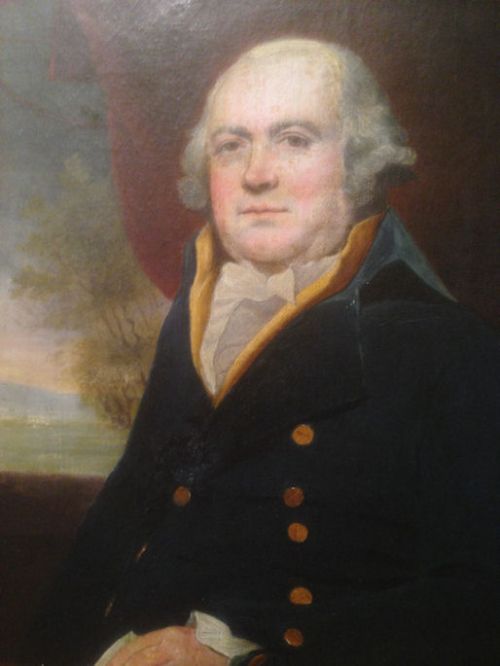
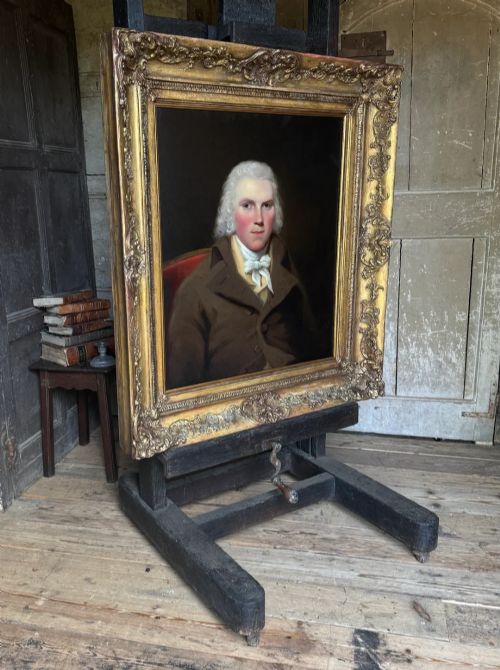
Archive II An 18th-century oil portrait depicting a gentleman with powdered hair wearing a dark blue coat and white cravat against a crimson backdrop. View II
Archive III An 18th-century oil portrait depicting a gentleman with powdered hair wearing a dark blue coat and white cravat against a crimson backdrop. View III
Archive IV An 18th-century oil portrait depicting a gentleman with powdered hair wearing a dark blue coat and white cravat against a crimson backdrop. View IV
FURTHER BROWSING

Visitors also looked at these ⇣

Enlarged Archival View
Telephone 07958 699 645
Location
18 La Gare
51 Surrey Row
London
SE1 0BZ
United Kingdom
Verified Since Sep 2008
Items For Sale 243
Items Sold 223
Artware Fineart
Verified Since Sep 2008
View Dealer Info
Location: 18 La Gare , 51 Surrey Row , London , SE1 0BZ , United Kingdom
Verified
Sep 2008
For Sale
243
Sold
223
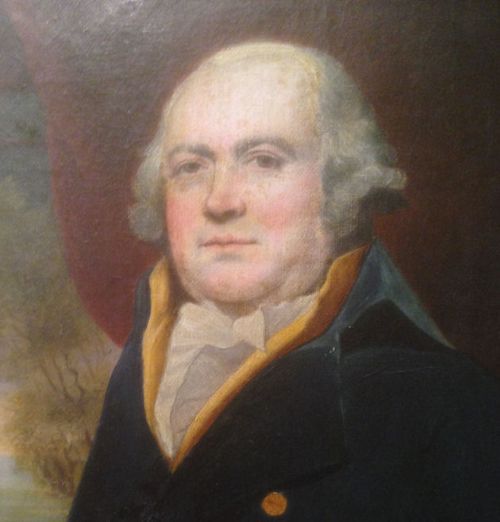
An 18th-century oil portrait depicting a gentleman with powdered hair wearing a dark blue coat and white cravat against a crimson backdrop.
Attributed to Lemuel Francis Abbott, Circa 1760-1802 Portrait of Robert Milligan 1746-1809
Ref: SA260094
An 18th-century oil portrait depicting a gentleman with powdered hair wearing a dark blue coat and white cravat against a crimson backdrop.
Detail View 1
Detail View 2
Detail View 3
Archival Detail
Every single antique dealer on our platform is individually approved by our internal team. We verify their professional trade history, ethical standards, and photographic quality to ensure a secure, high-standard buying environment. Upon joining, every dealer agrees to a strict 9-point code of conduct. While issues can occasionally arise, our dealers typically resolve them swiftly and directly with the buyer. In fact, since our founding in 2002, Sellingantiques has only had to step in to help resolve an issue on roughly five occasions—a true testament to the quality of our dealers and their dedication to your happiness.
Our dealers are highly experienced in packing and shipping fragile, high-value antiques. Because you are in direct contact with the dealer, you will be able to easily go through all available shipping and insurance options together to ensure your item arrives safely.
Antiques are the ultimate green purchase. By choosing historical pieces over newly manufactured goods, you completely eliminate the carbon footprint of modern mass production while preserving exceptional, timeless craftsmanship.

British portraiture of the 18th century is characterised by formal grand manner depictions of aristocrats and merchants, capturing realistic facial likenesses, contemporary attire, and symbolic backgrounds such as landscape vistas or draped fabric.

Artists during the Georgian era applied natural pigment-based oil paints onto stretched linen canvases, often mounted on wooden strainers and secured with hand-forged tacks.

Authentic period paintings display natural paint craquelure consistent with age, historic canvas weave variations, oxidation on the reverse of the stretcher, and contemporary brushwork techniques.

A historical portrait creates a striking focal point when hung above a mahogany sideboard or fireplace mantel, contrasting with contemporary plaster walls or complementing dark academia colour schemes.

Canvas paintings require hanging away from direct sunlight, dampness, and heat sources. Dust gently with a soft microfibre cloth or dry brush, avoiding water or chemical cleaning agents.
items
Add keywords to the filter
Price
£100
£250000
Era
Movements
Material
Origin
Stock Location
Freshness
Online Payments
Categories