
An excellent portrait of the Elizabethan period painted on a single piece of oak.
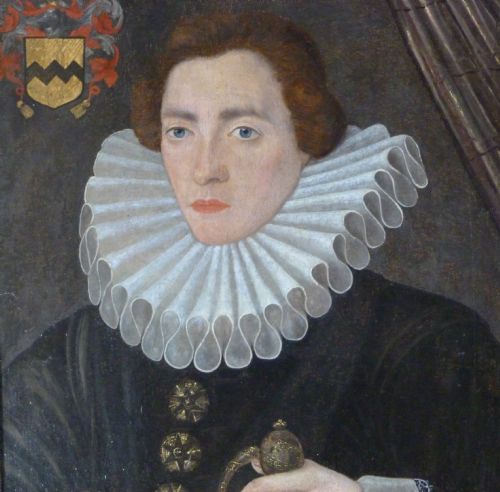
THOMAS VAVASOUR (1560–1620) came from a family long established in Yorkshire. His grandfather was William Vavasour and his father was Henry Vavasour of Copmanthorpe, Yorkshire. His mother, Margaret, was the daughter of Sir Henry Knyvet of Charlton, Wiltshire. Thomas was educated at Eton and Caius College, Cambridge.
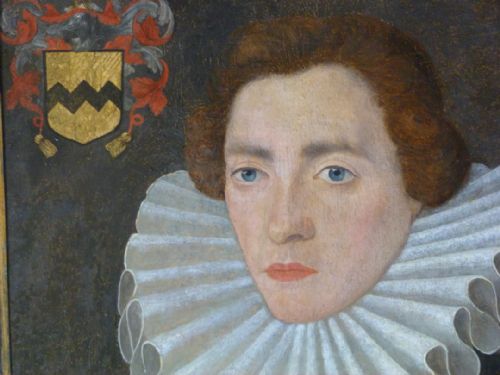
In 1576 he married Mary, daughter and heiress of John Dodge of Suffolk, widow of Peter Houghton, alderman of London. They had 4 sons and 2 daughters.
His sister Anne had become a Gentlewoman of the Bedchamber about 1580; but Anne Vavasour's dissolute career was to impinge considerably on her brother's. She began as she was to end as the mistress of Sir Henry Lee, the Queen's champion and jouster-in-chief, and it is as a jouster against Sir Henry at the tilt of 6 December 1584 that Thomas is first mentioned. By then, however, he was doubtless already involved in the feud between Thomas Knyvett and the Earl of Oxford, by whom Anne had had a child in March 1581; and it was this scandal which led him in January 1585 to challenge Oxford to a duel which evidently did not come off.
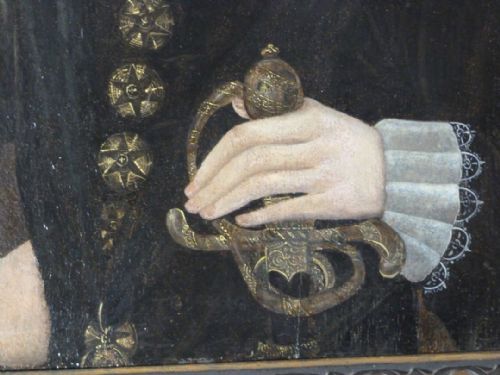
He was Member of Elizabethan Parliaments for Wootton Bassett in the 1584 and 1586 parliaments, and member for Malmesbury in the 1589 parliament.
In August 1585 he fought in the Netherlands as Captain of Foot from Yorkshire, retaining this command until 1591. He distinguished himself on two occasions, once in an attack near Arnhem in October 1585, and again in 1587 with Lord Willoughby against the forces of the Marques del Guasto.
He is thought to have been knighted before August 1595, though the record is unclear.
Following military service he was a Gentleman Pensioner until the death of Queen Elizabeth at Richmond Palace in March 1603. After the accession of James I, Vavasour was made Butler of the Port of London, earning him £1,000 compensation. In 1604 he was appointed Knight Marshal of the Household, a role confirmed to him for life in 1612 but, according to John Chamberlain, he sold the right for £3,000, in 1618, two years before his death.
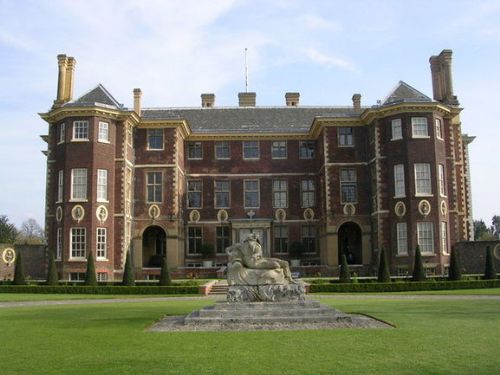
Vavasour's wealth and connection to the court allowed the construction of Ham House in 1610. He died in 1620.
HIERONIMO CUSTODIS (also spelled Hieronymus, Heironimos) (active 1589 - 1593) was a Flemish portrait painter active in England in the reign of Elizabeth I.
A native of Antwerp, Custodis was one of many Flemish artists of the Tudor court who had fled to England to avoid the persecution of Protestants in the Spanish Netherlands. He is thought to have arrived in England sometime after the fall of Antwerp to the forces of the Duke of Parma in 1585.
Three English portraits by Custodis signed and dated 1589 firmly establish him as resident in London by that year. Sir Roy Strong attributes a portrait of Sir Henry Bromley dated 1587 to Custodis, suggesting an earlier arrival, and has verified the recent attribution of a portrait of the young Edward Talbot dated 1586 to Custodis. In 1591, he was living in the parish of St Bodolph-without-Aldgate where "Jacobus the son of Ieronyme Custodis A Paynter" was baptised on 2 March.
Custodis was a member of the Dutch Reformed Church in London, and after his death his widow remarried there in 1593.
SIZE: 26.75 inches x 20.5 inches inc. frame.
PROVENANCE:
Sale; *Phillip's, London, December 1982.
English Private Collection.
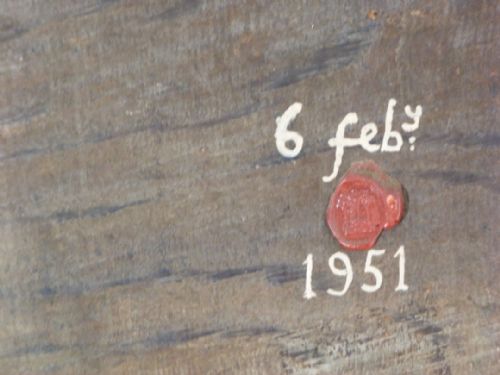
Verso: a collector's seal in red wax and the inscription "6 feby:1951"
Roy and nadine precious: specialists in portraiture from the 16th to the 20th century. Established in 1972.
You can view the stock and full dealer information on the Roy Precious - Antiques & Fine Art Profile Page
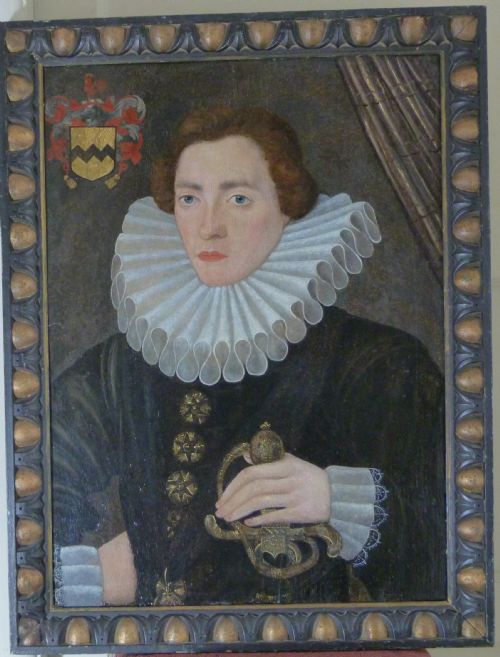
Portrait of Thomas Vavasour C.1585; Attributed to Hieronymus Custodis.
