
Roy Precious - Antiques & Fine Art has dated this piece to the 1800s.
The SALKELDS are an ancient and notable family who have occupied all levels of society.
The Salkeld name is a locative one derived from Great and Little Salkeld, two villages situated in the Eden valley in Cumberland between Carlisle and Penrith. Like a number of Lakeland names Salkeld comes from the Old Norse and means ‘Willow wood’. There were early Salkelds settled in Addingham, near Little Salkeld in the Eden valley by the 13th century.
Among the many mistranscriptions there are five variant spellings which are notable for their consistency and number of occurrences. These are: Salkield; Salkilld; Sawkill; Soakell and Sokell. The closer you get to Cumberland, the less variations there are, and of the above, Salkield is principally in County Durham, Sawkill equally divided between Durham and Yorkshire, Sokell mainly in Yorkshire and Salkilld in London. It is not uncommon however to find Salkeld and one or more variants in the same parish.
Gifts from the King saw the Salkelds settled in Corby Castle on the river Eden. Sir Richard Salkeld, Lord of Corby married Jane Vaux of Catterlen in the mid 15th century. Their effigies are in Wetheral church, opposite Corby Castle. They had no male heirs, but the two eldest daughters married male cousins and kept the noble line going.
In the early 17th century Lord William Howard, son of the 4th Duke of Norfolk had made over to him Corby Castle from the Salkelds, in settlement of a debt.
Lancelot Salkeld was the first Dean of Carlisle cathedral and erected the Salkeld screen, which you can see in the cathedral to this day.
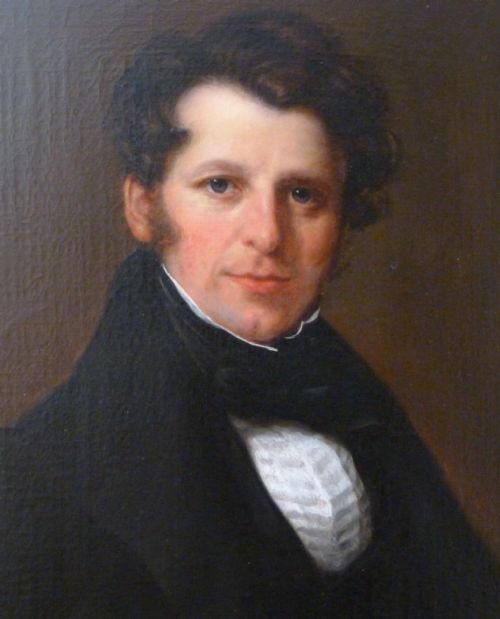
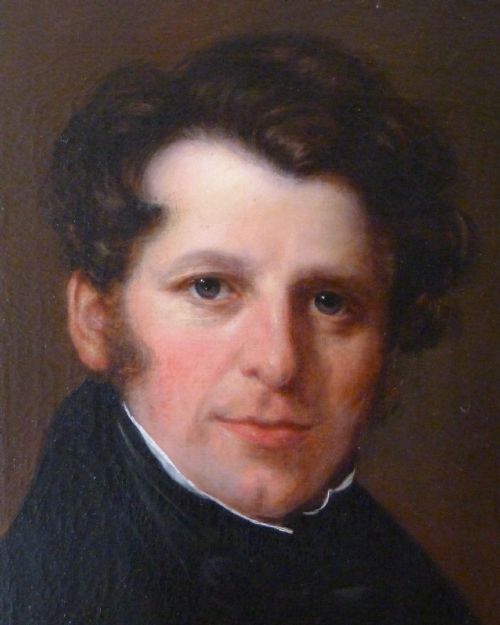
THOMAS SALKELD was the son of Thomas Salkend (born 1778), a farmer of 35 acres, and Hannah Nicholson (born 1775), and he was born in 1803, making him 33 at the time of the portrait.
Thomas was a solicitor and lived in Appleby in a large Victorian house which is now the HSBC. He was a Town Councillor in 1849.
The family maintained an apartment in this building to the present day, and this portrait came from there.
Our thanks to Keith Salkeld for his help.
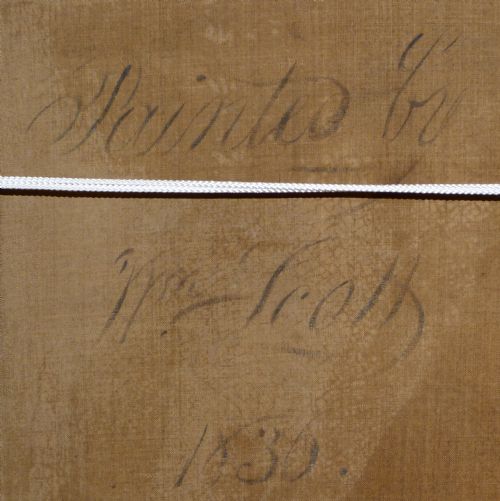
WILLIAM BELL SCOTT 1811-1890 was a Scottish artist and poet, but little else is known of him at this time. Clearly he was a talented and perceptive artist and is worthy of more research.
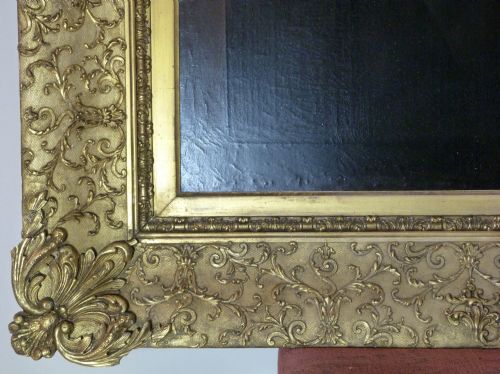
SIZE:42.5 x 37.5 inches inc. frame.
PROVENANCE: By descent.
Roy Precious - Antiques & Fine Art has dated this piece to the 1800s.
Roy and nadine precious: specialists in portraiture from the 16th to the 20th century. Established in 1972.
You can view the stock and full dealer information on the Roy Precious - Antiques & Fine Art Profile Page
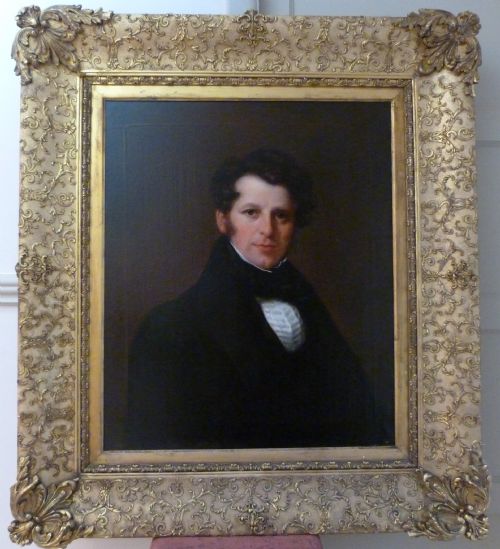
Portrait of Thomas Selkeld 1836, by William Scott.
