Roy Precious - Antiques & Fine Art has dated this piece to the 1700s.
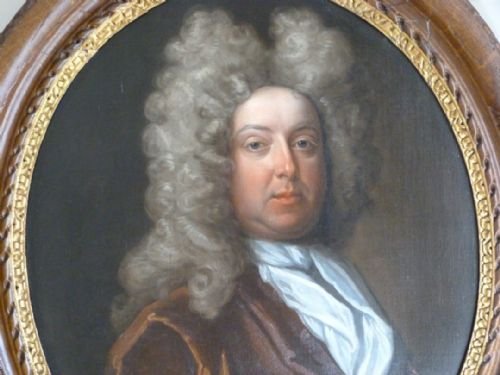
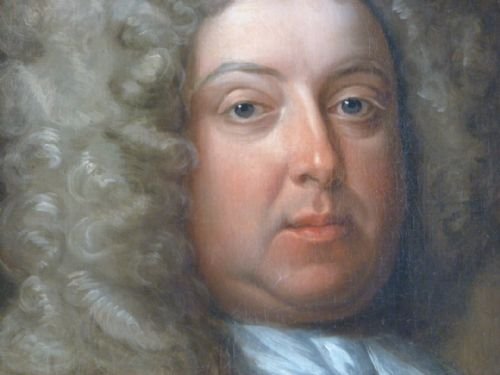
The sitter, radiating an air of well fed confidence, wears a large and very expensive wig. The expression 'bigwig' for a rich or important person comes from this fashion.
LITTLECOTE HOUSE AND THE POPHAMS.
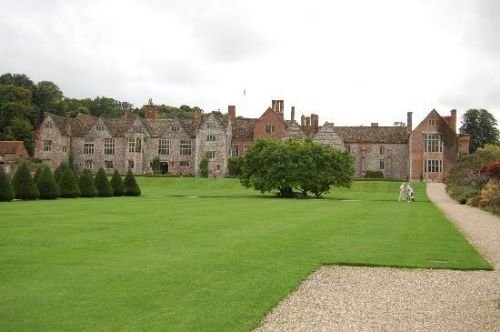
The first Littlecote House in Wiltshire was built during the 13th century. A medieval mansion, it was inhabited by the de Calstone family from around 1290. When William Darrell married Elizabeth de Calstone in 1415, he inherited the house. His family went on to build the Tudor mansion in the mid-16th century. Henry VIII courted Jane Seymour at the house; her grandmother was Elizabeth Darrell.
Elizabeth I, James I, Charles II, and William of Orange stayed there, William on his march from Torbay to London in the Glorious Revolution. Popham's descendants, the Pophams and (from 1762) the Leyborne Pophams owned the house until the 1920s. The Leyborne Pophams refurbished much of the house in 1810. They retained it until 1929, when the house was purchased by Sir Ernest Wills, 3rd Baronet.
In 1985 the house was sold to Peter de Savary and the house contents, including this portrait of a Popham gentleman, were sold by Sotheby's at a three day sale.
EDWARD BYNG (c.1676-1753) was a portrait and drapery painter. He was born in Potterne, Wiltshire and died there in 1753. He was assistant and drapery painter to Sir Godfrey Kneller, Court painter, from c.1693 and was chief assistant at the time of Kneller's death in 1723. He was instructed in Kneller's will to complete unfinished portraits.
SIZE: 38 x 33 inches inc. frame.
PROVENANCE:
By descent in the Popham family.
Sotheby's sale, The Contents of Littlecote House, Wiltshire, 20-23 November 1985.
Private Collection.
Roy Precious - Antiques & Fine Art has dated this piece to the 1700s.
Roy and nadine precious: specialists in portraiture from the 16th to the 20th century. Established in 1972.
You can view the stock and full dealer information on the Roy Precious - Antiques & Fine Art Profile Page
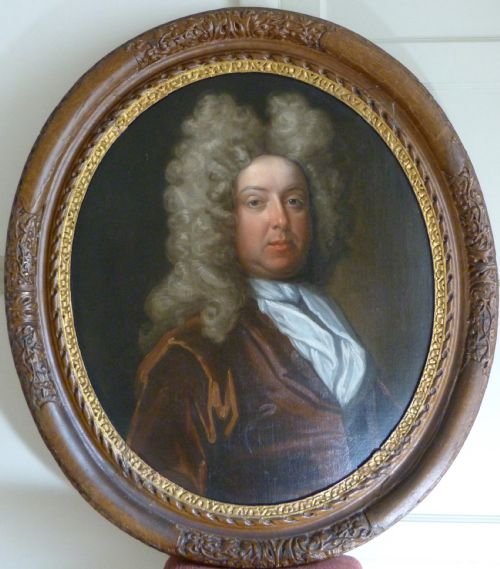
Sold....portrait of a Gentleman of the Popham Family C.1700: Attributed to Edward Byng.