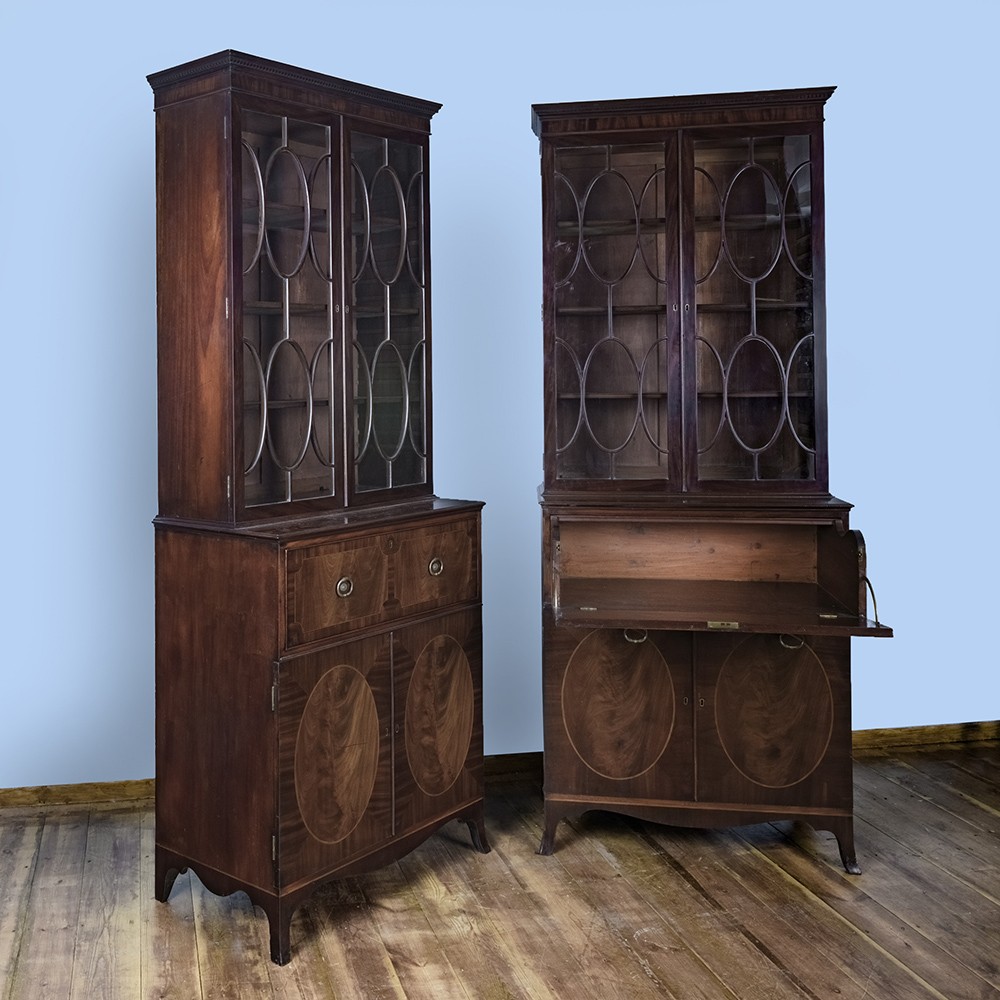
Freshfords Fine Antiques has dated these George III Mahogany Bookcases to the Georgian era.
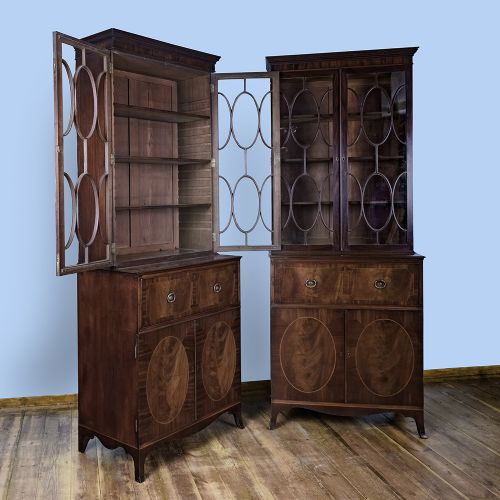
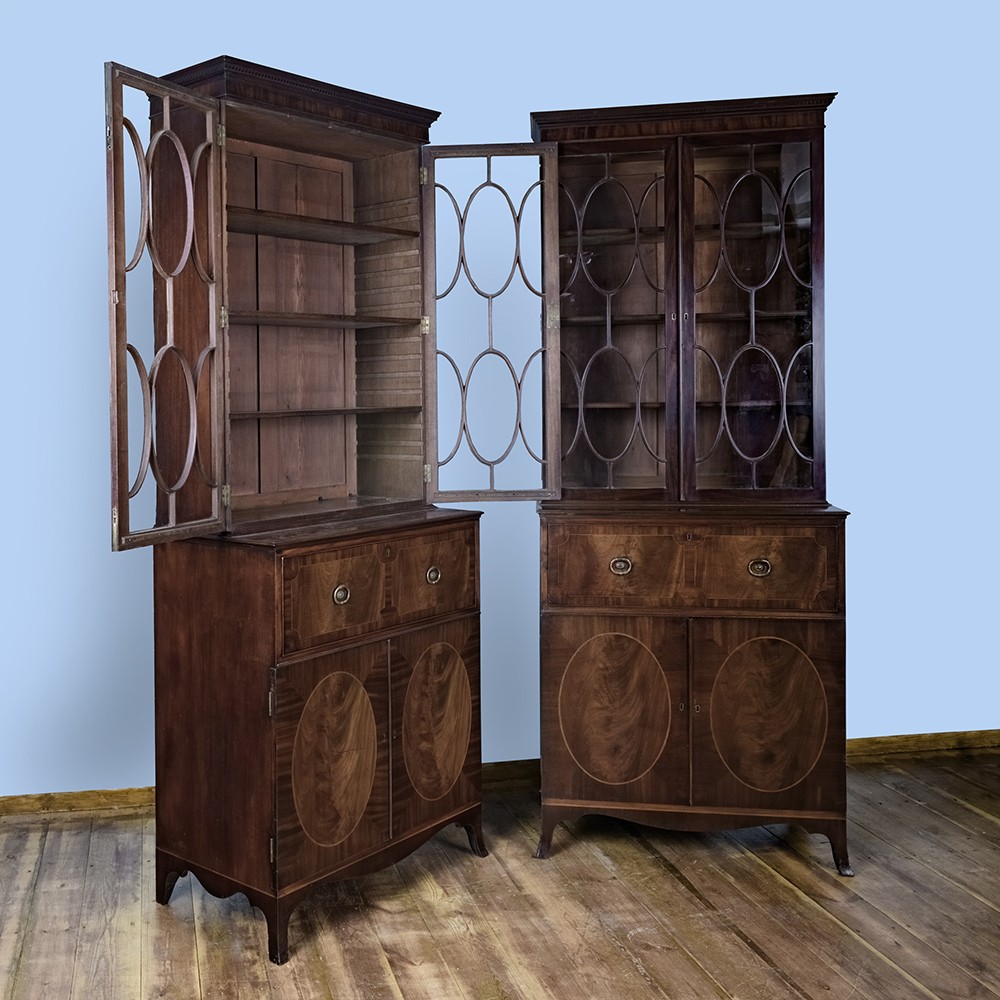
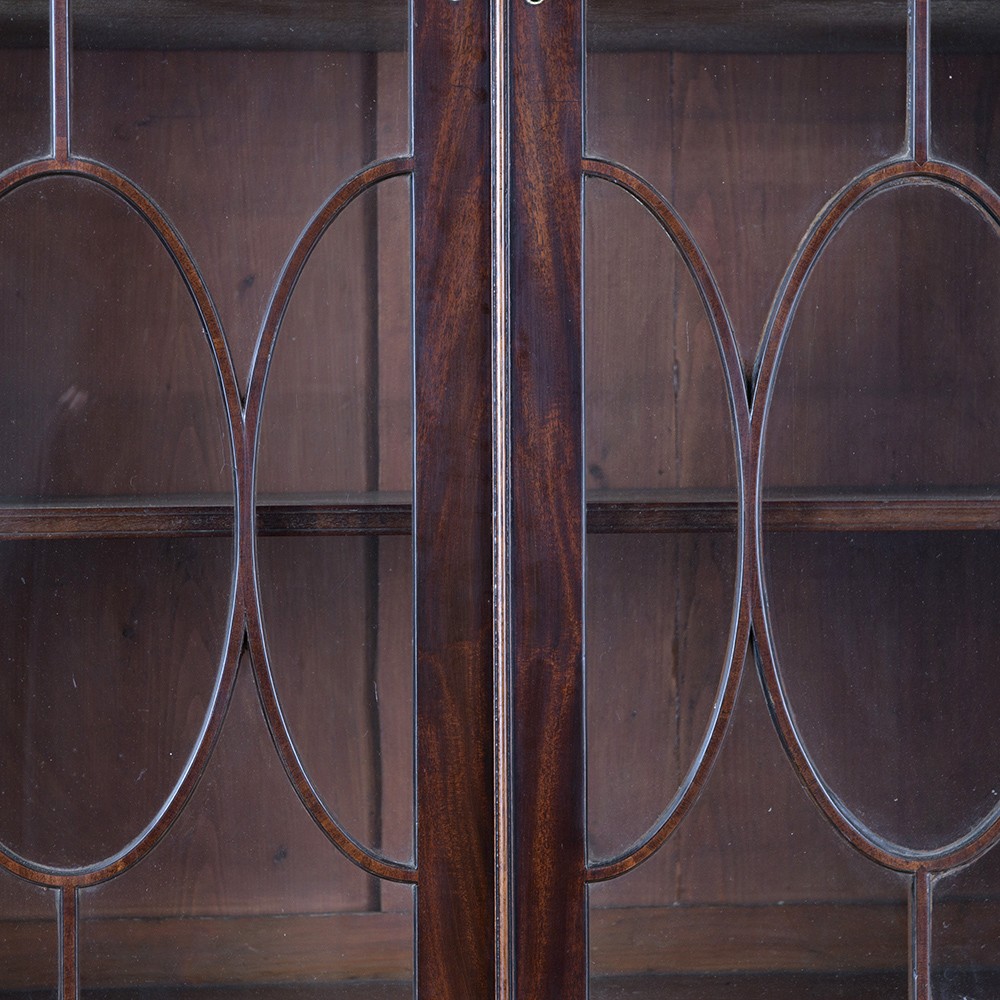
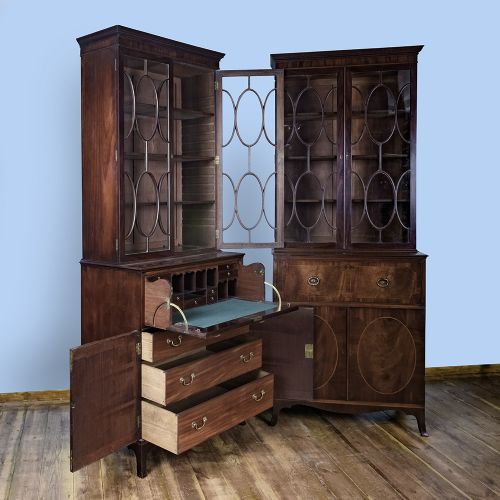
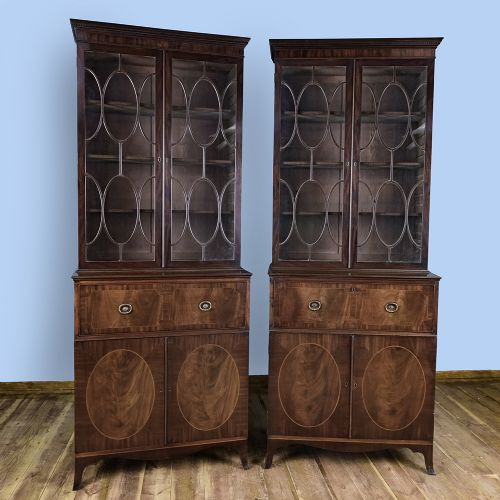
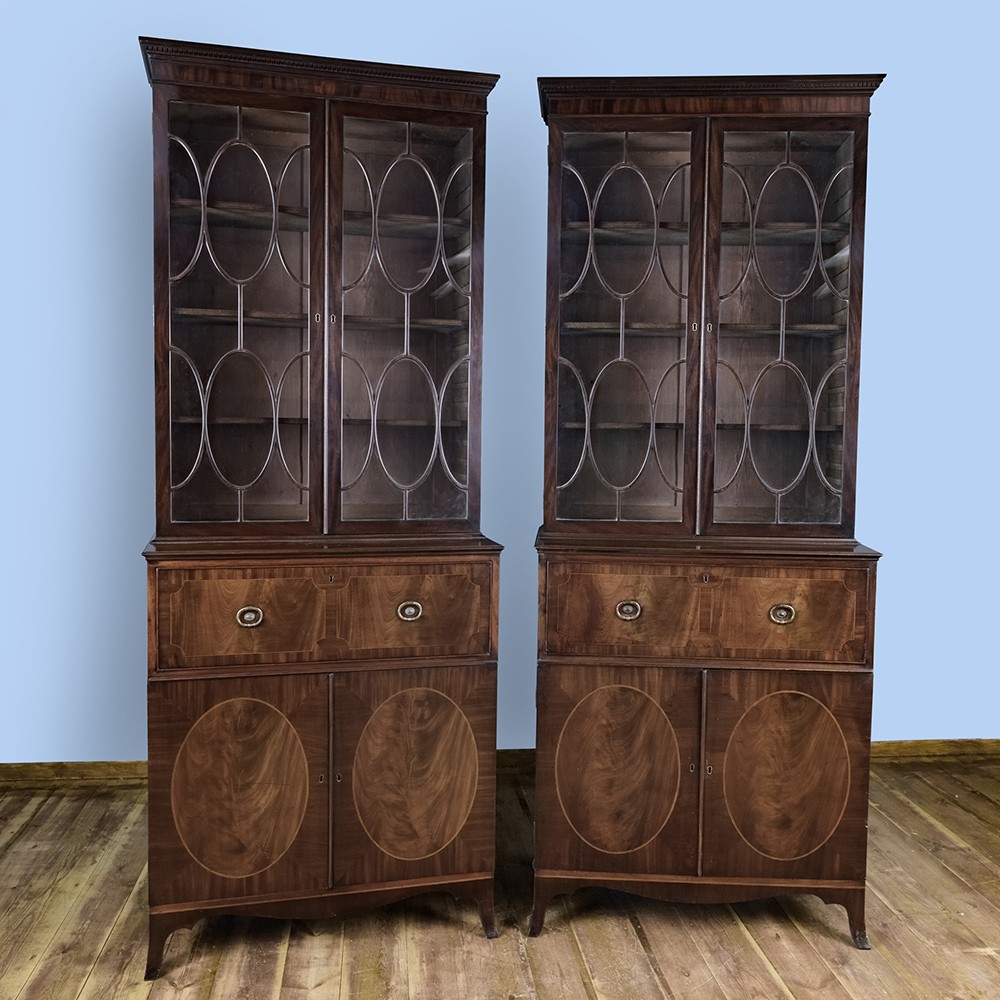
Each bookcase has an overhanging cornice above a carved dentil moulding, with end grain mahogany veneers set over a solid thumbnail moulding. The glazed upper doors are framed with figured mahogany and fitted with an unusual oval astragal arrangement, executed in long grain mahogany and finely inlaid with a single ebony outline. The doors open to reveal three original adjustable oak shelves with figured oak backboards.
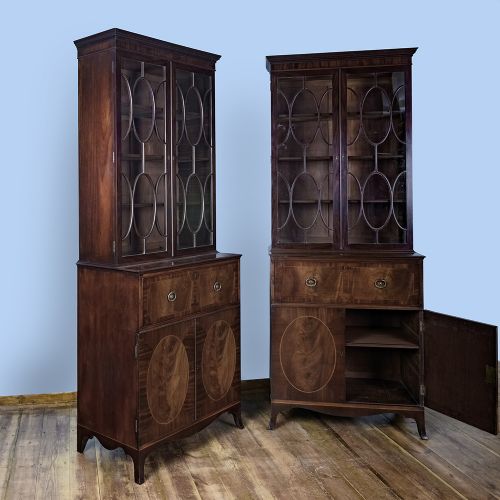
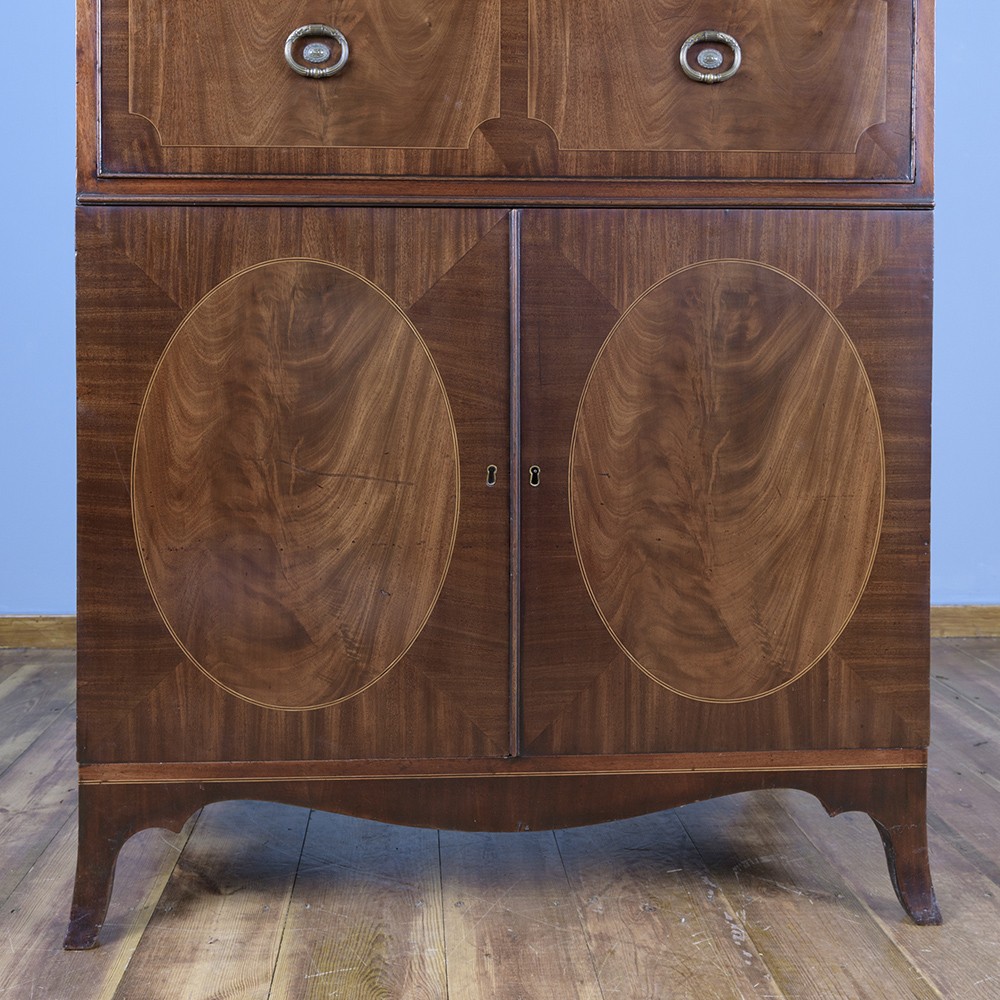
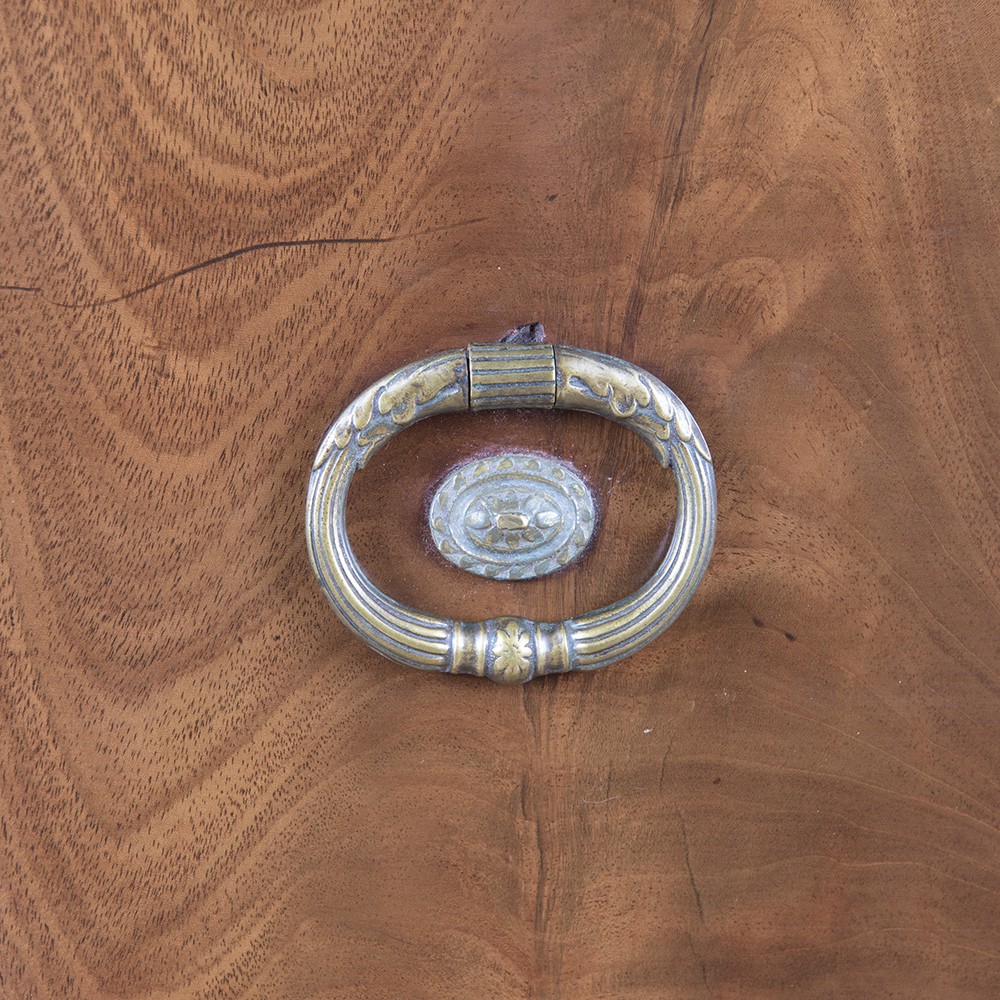
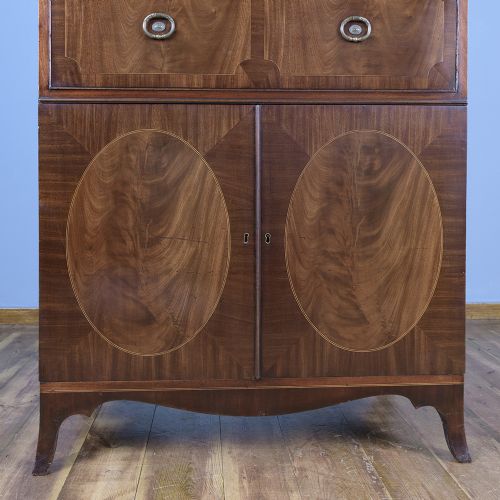
The lower drawer sections are cross banded with contrasting flamed mahogany panels outlined in boxwood stringing and retain their original gilt brass oval drop handles with central oval patera. Handles of closely related form are illustrated in surviving Gillows archive material and in Susan E. Stuart’s Gillows of Lancaster and London 1730-1840, Volume II, page 335, illustrations an and b.
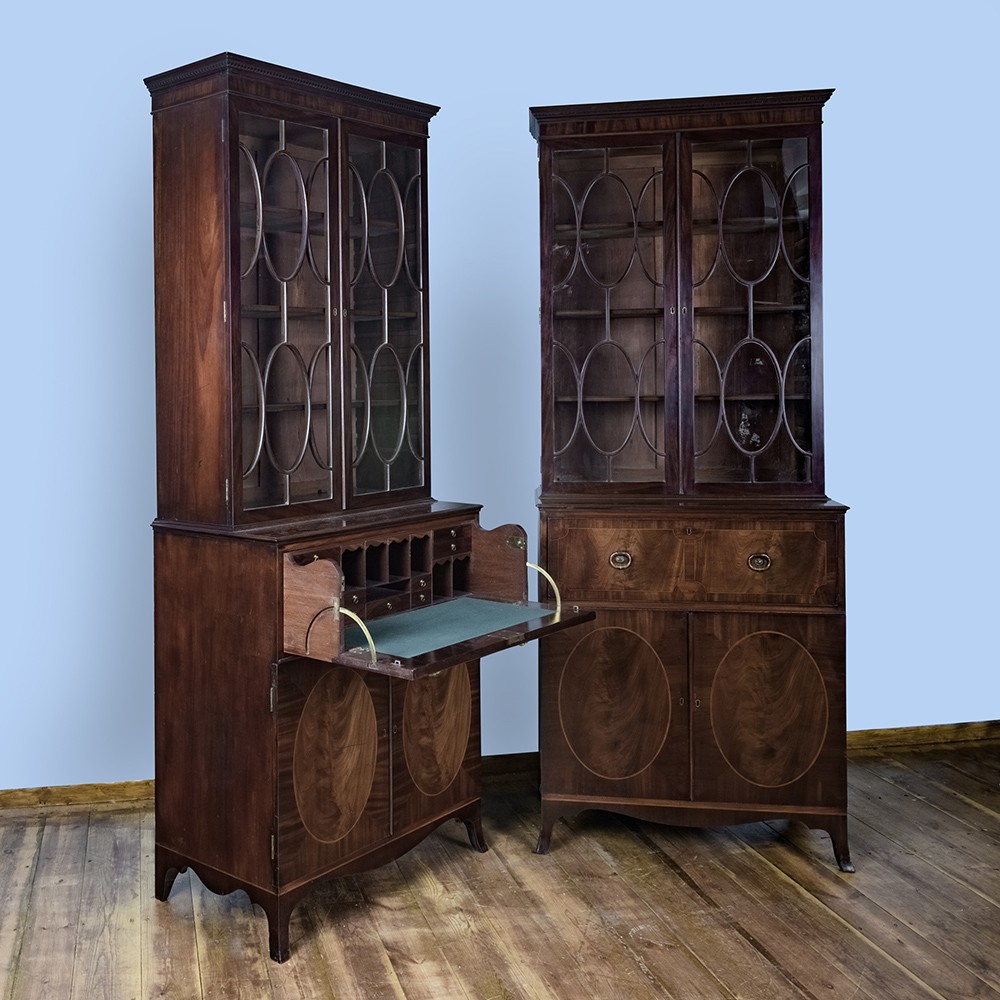
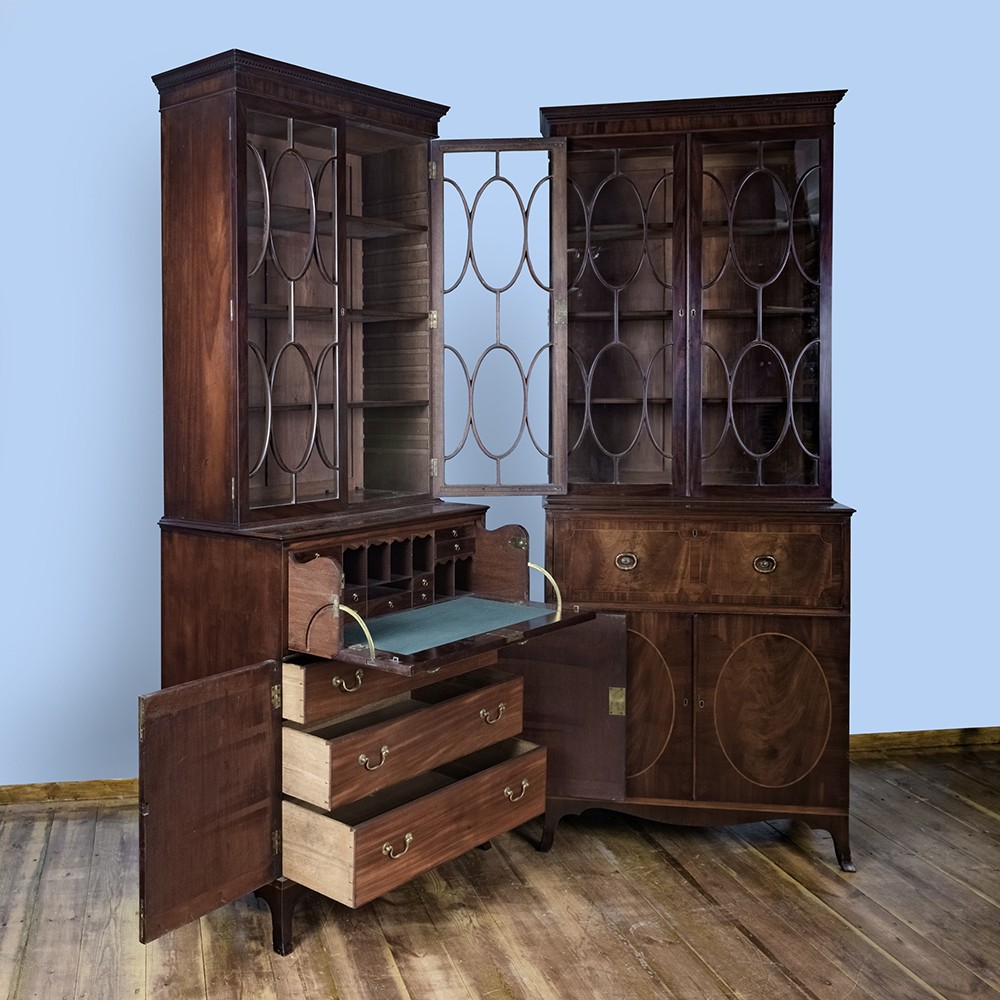
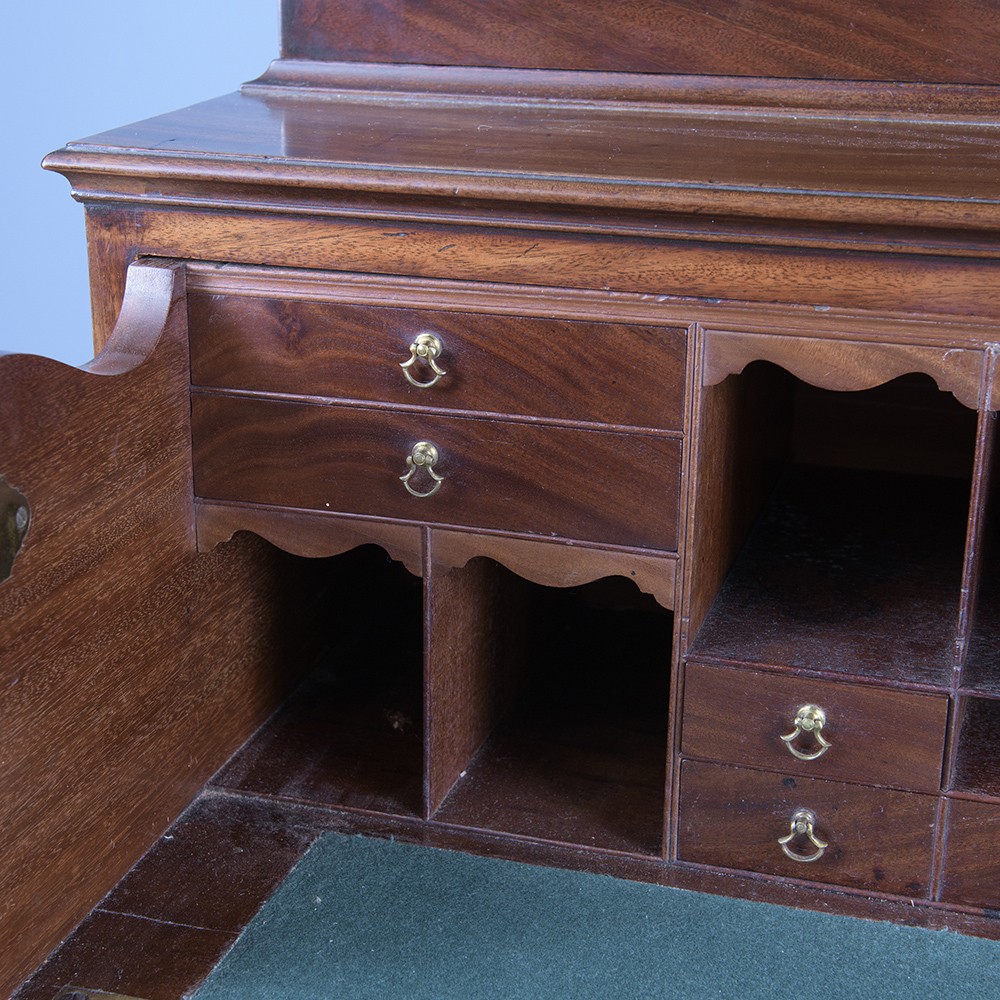
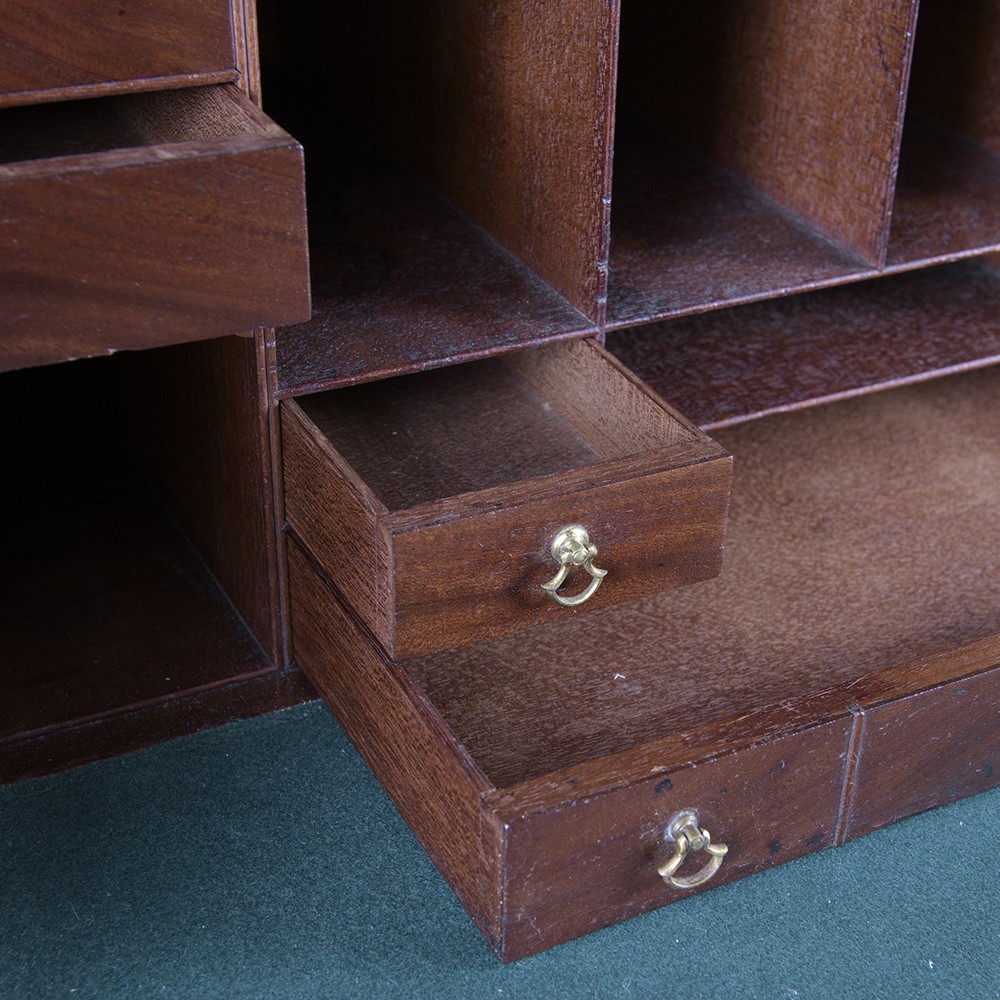
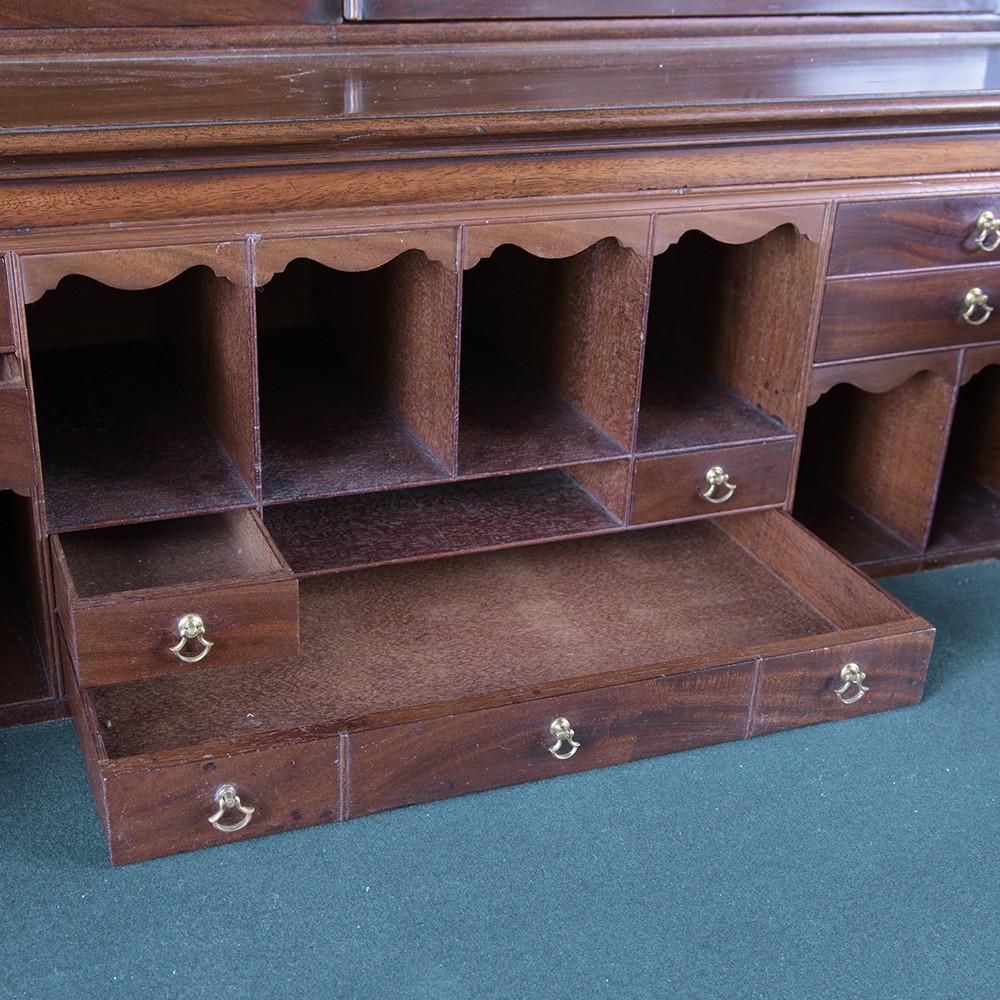
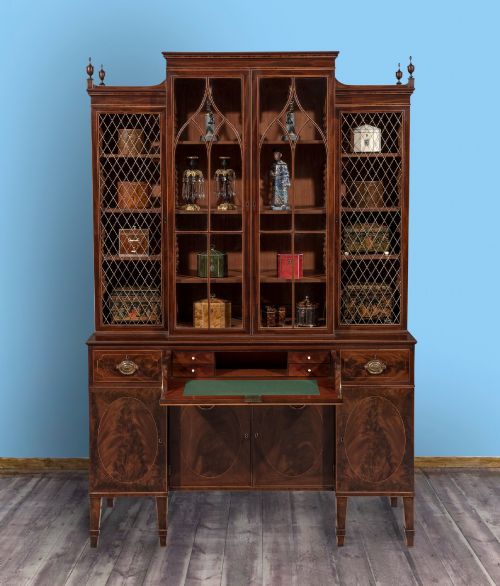
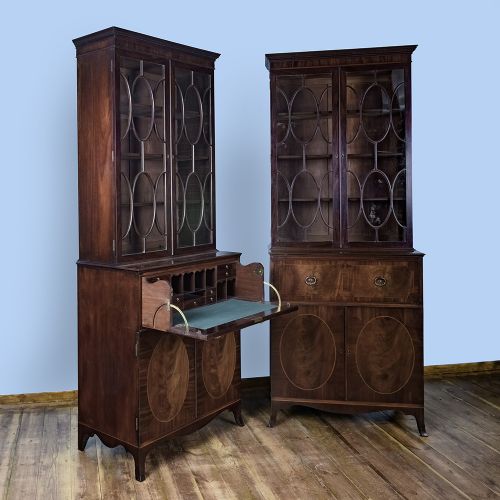
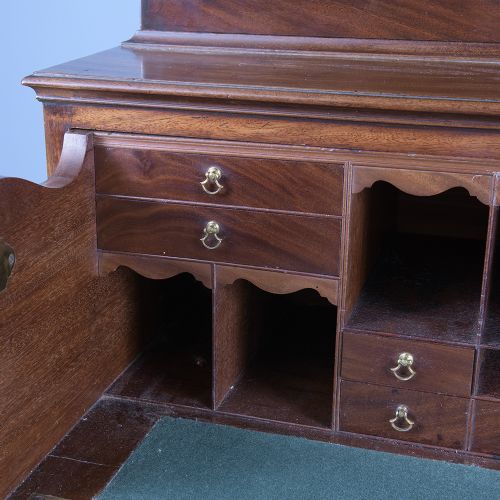
One bookcase is fitted with a fully appointed secretaire drawer opening to reveal a bespoke interior of mahogany lined drawers and pigeonholes above a green baize writing surface. The corresponding drawer on the second bookcase is unfitted and was designed as a deep storage drawer. Externally, however, the two remain identical in form.
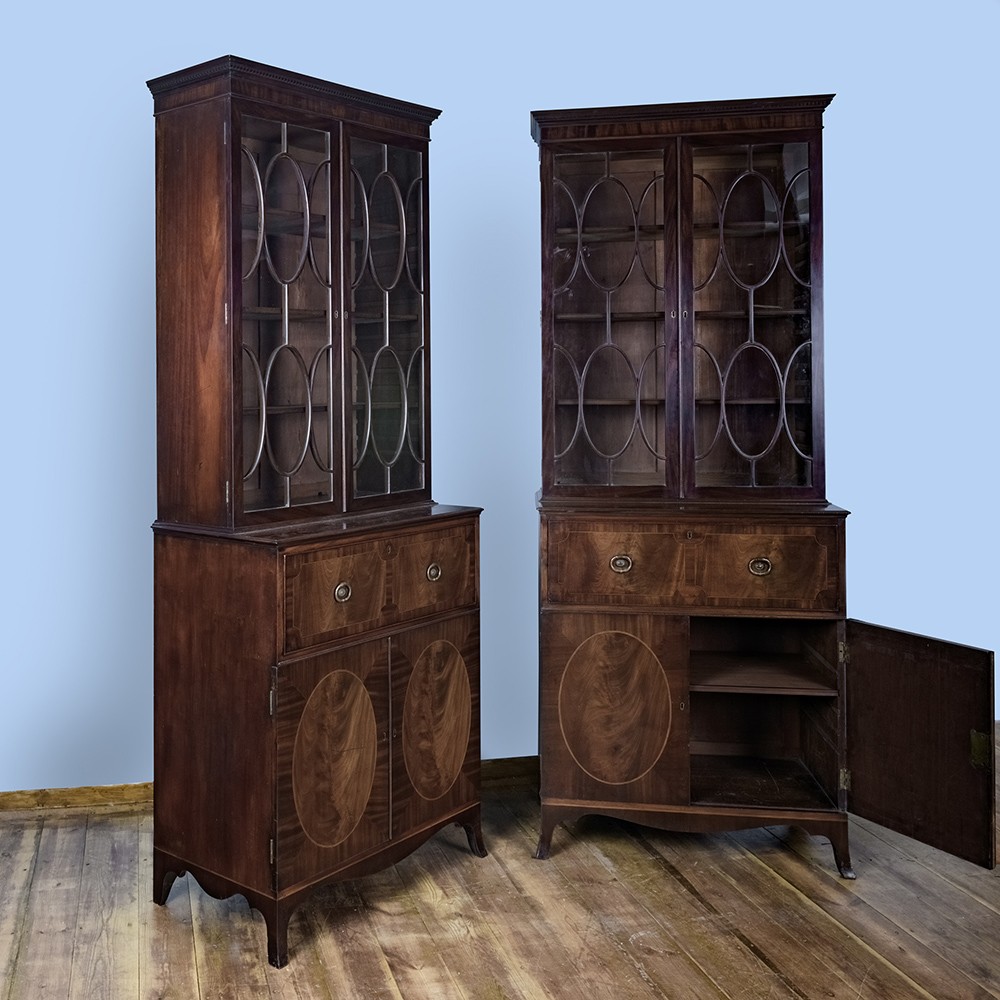
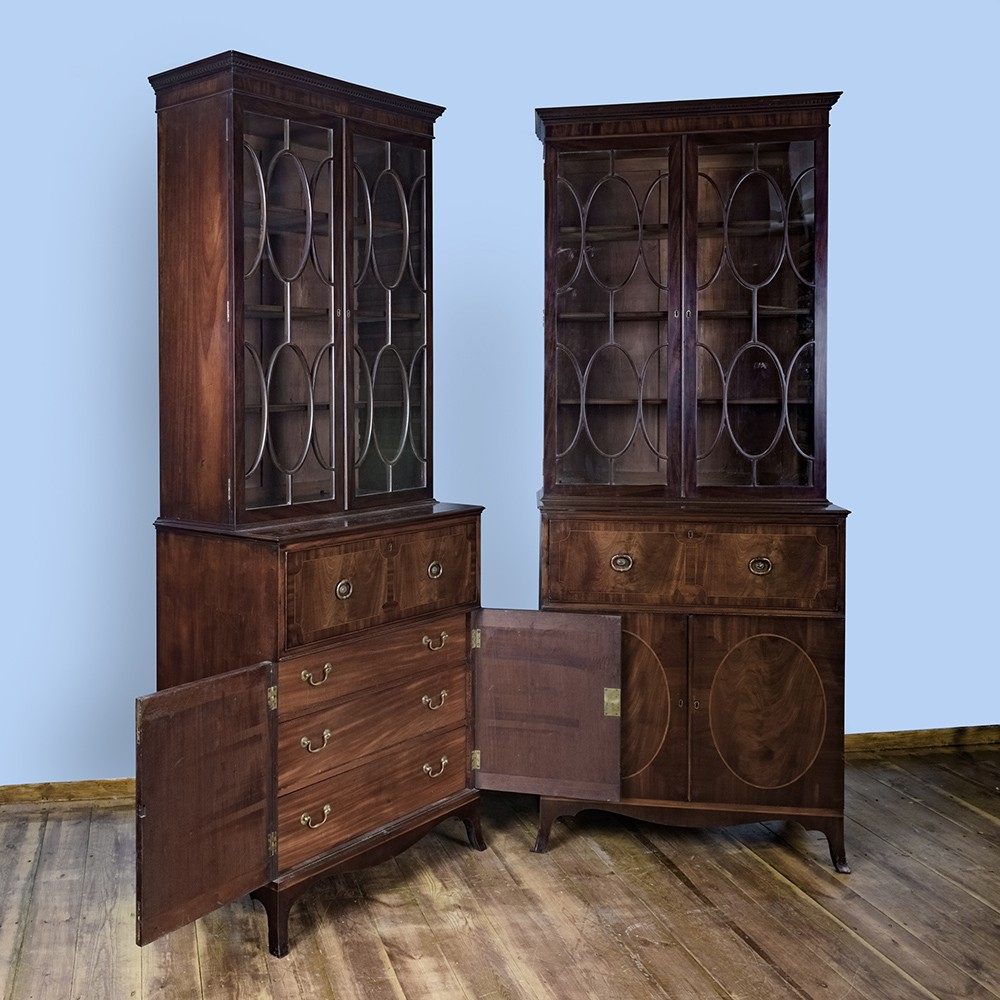
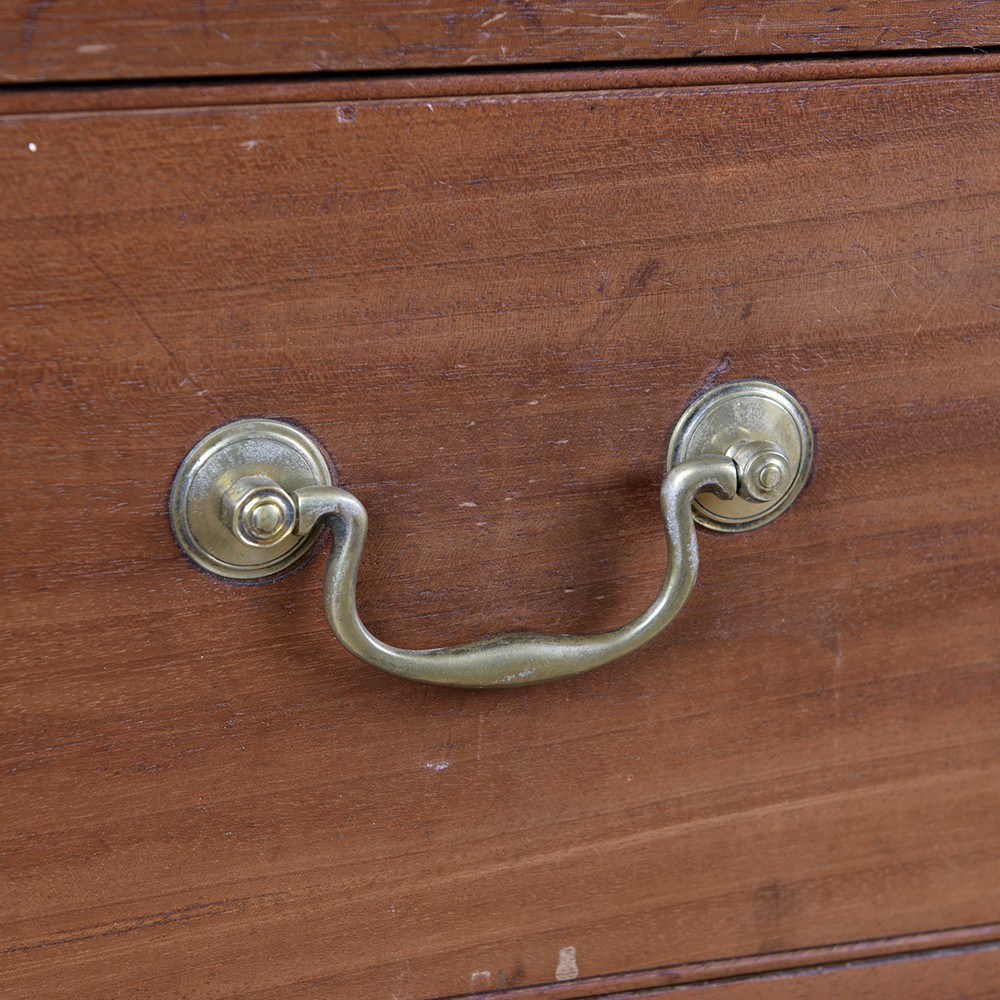
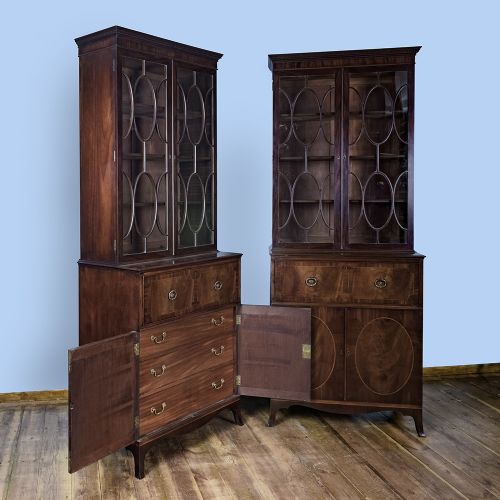
The lower cupboard doors are centred by ascending flamed mahogany oval panels, framed by tulipwood crossbanding with ebony and boxwood stringing. On the secretaire bookcase, the doors open to reveal a bank of three full length oak lined drawers retaining their original gilt brass swan neck handles. The second bookcase opens to reveal a cupboard fitted with an adjustable shelf.
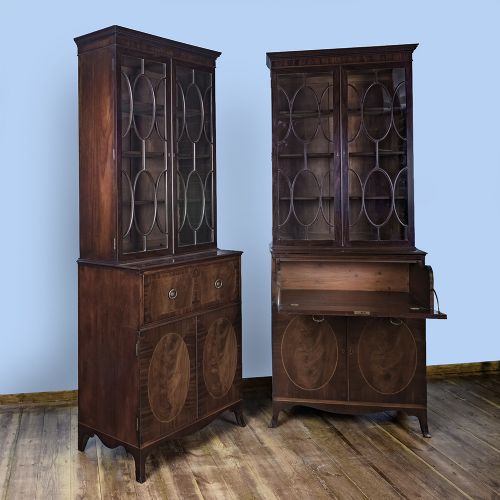
Both bookcases stand on crossbanded plinth bases with bold mahogany outlines and terminate on fine bracket feet.
The pair was rediscovered when a visiting trade colleague recognised the similarity between a bookcase in the Freshfords collection and an apparently identical example he had owned for many years following its purchase at auction in Wales. The two were subsequently brought together and examined side by side in the workshop.
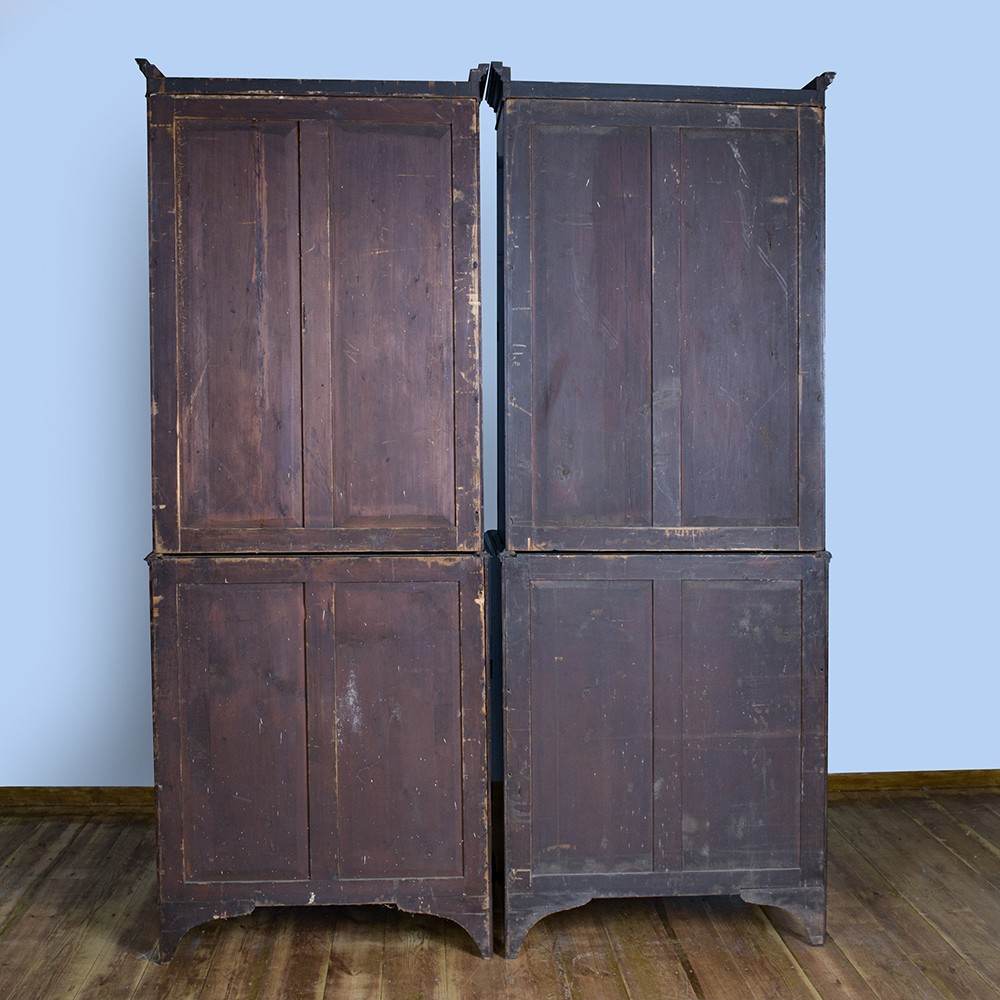
Detailed comparison of the doors, drawers, shelves, carcasses, oval panels, cornice construction and backboards showed them to have been made in the same workshop and at the same time. The flamed mahogany veneers were also found to have been cut and laid in a matching descending arrangement, with mitred joints and timber cuts corresponding across both pieces.
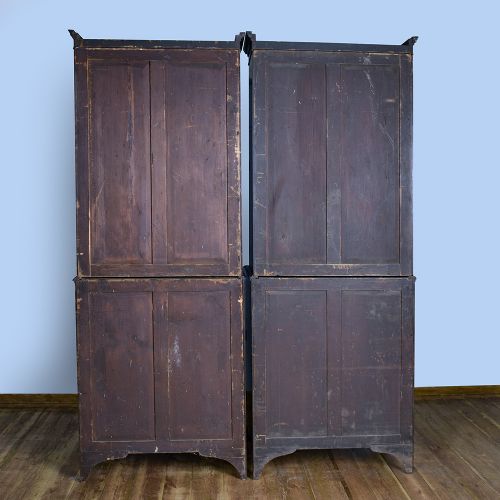
The internal differences appear to have been deliberate from the outset. One bookcase was made to function as a writing and document cabinet, with a fitted secretaire and internal drawers, while the other was designed primarily for storage and display. Despite these different internal roles, the exterior treatment is matched throughout, confirming that they were conceived as a pair.
Their separation at some point in the past remains unexplained, but their reunion has restored an important aspect of their original design and use. Finding a single Gillows bookcase of this quality is unusual; to identify and reunite a true pair with matching construction, timbers and complementary internal arrangements is considerably more significant.
For further information on this rediscovered pair of Bookcases by Gillows see our article A Historic Discovery: Reuniting a Rare Pair of George III Bookcases by Gillows in the journal.
Depth 92cm (36.22″) with the draws open
Freshfords Fine Antiques has dated these George III Mahogany Bookcases to the Georgian era.
Four decades of expertise in english antique furniture
You can view the stock and full dealer information on the Freshfords Fine Antiques Profile Page
Freshfords Fine Antiques is a registered member of BADA
A Rediscovered Pair of George III Mahogany Bookcases by Gillows