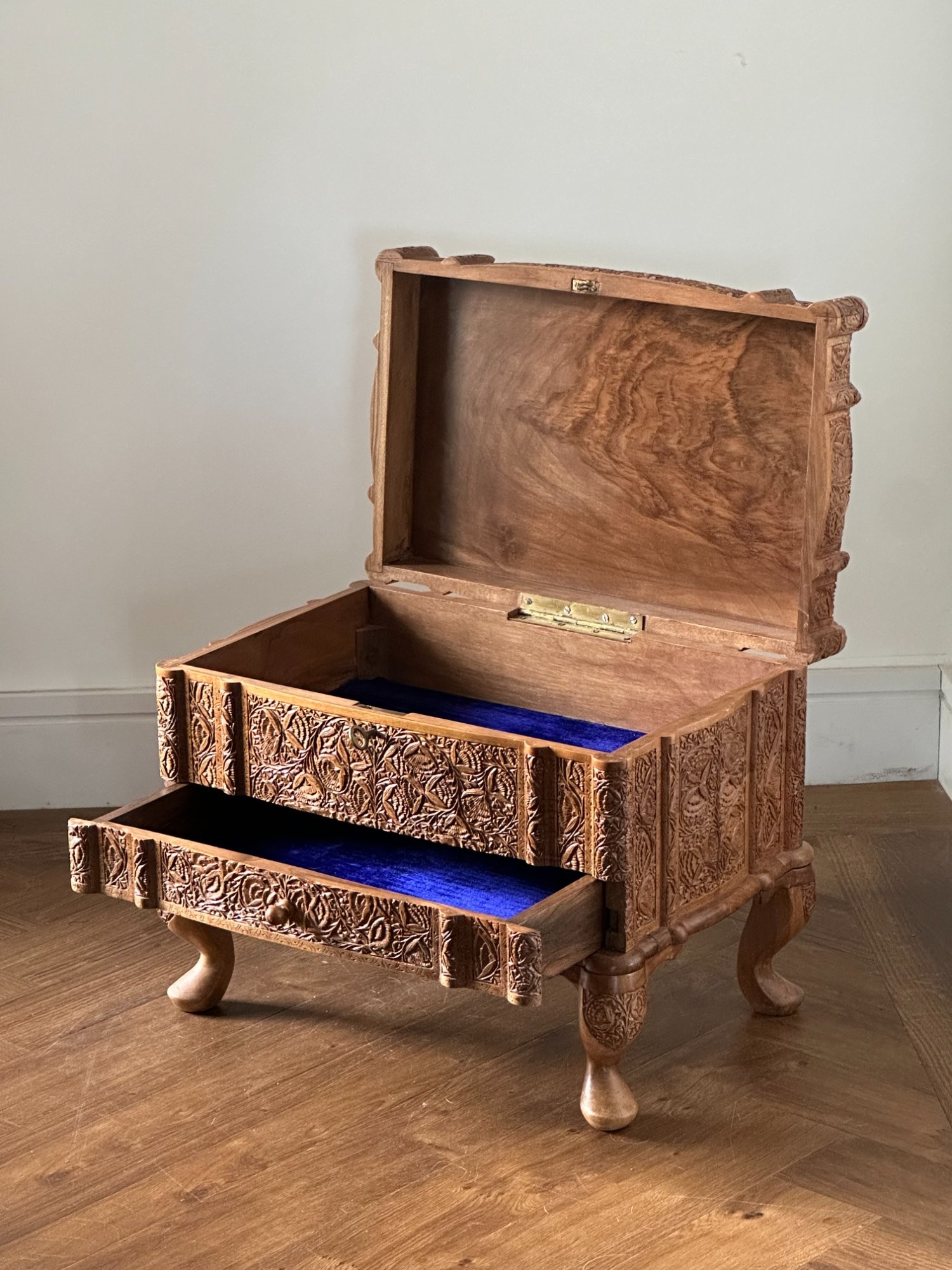
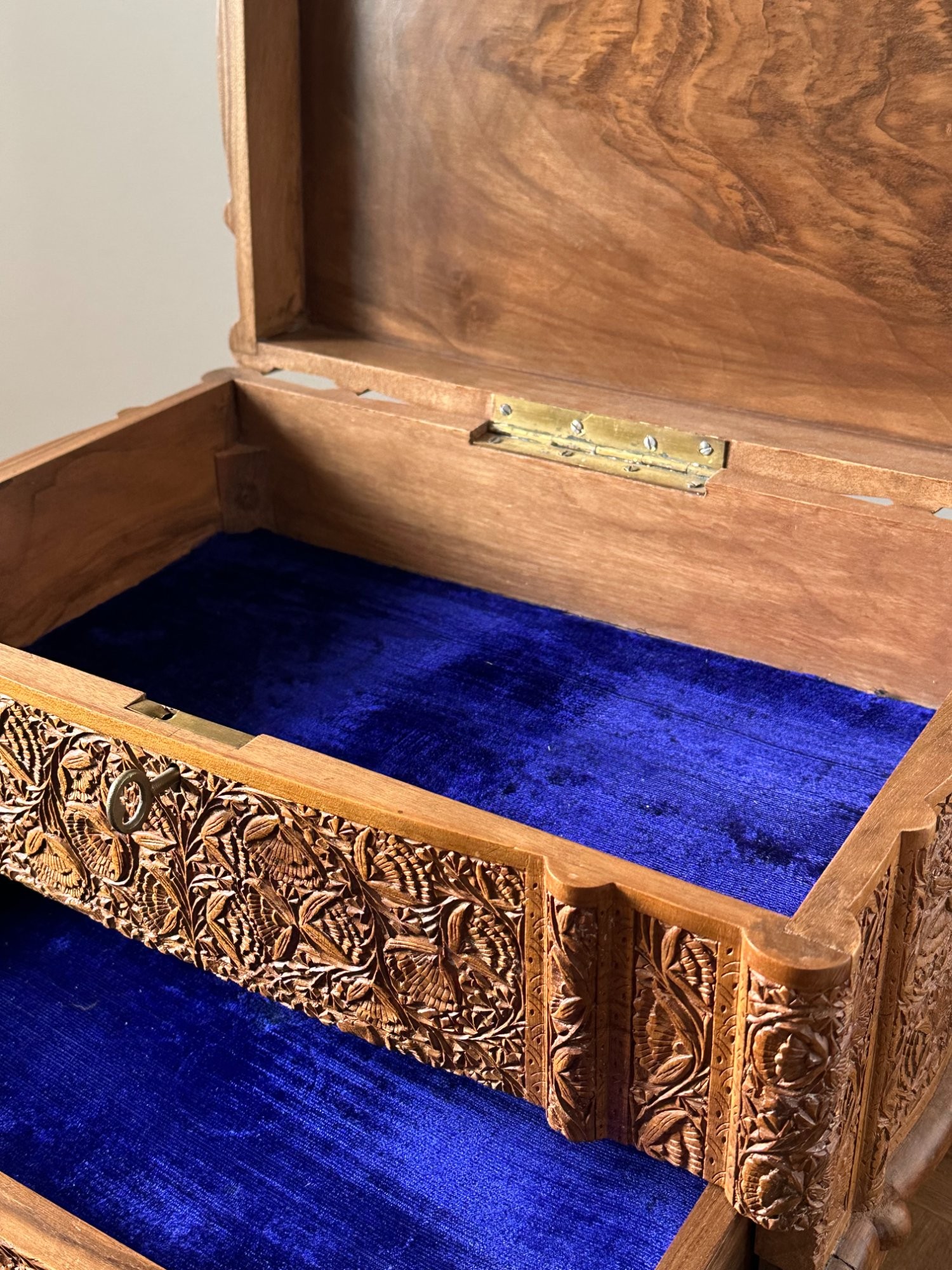
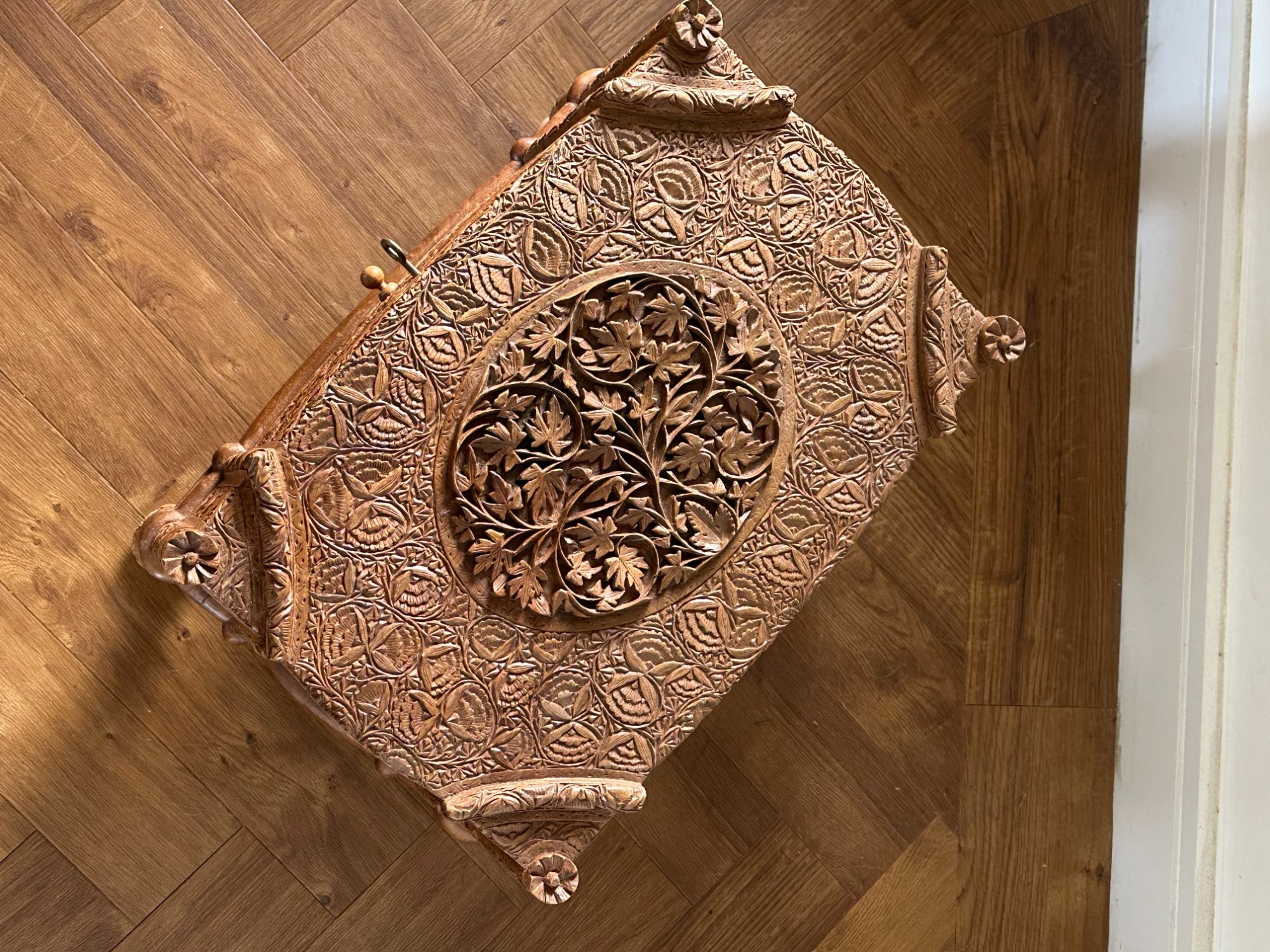
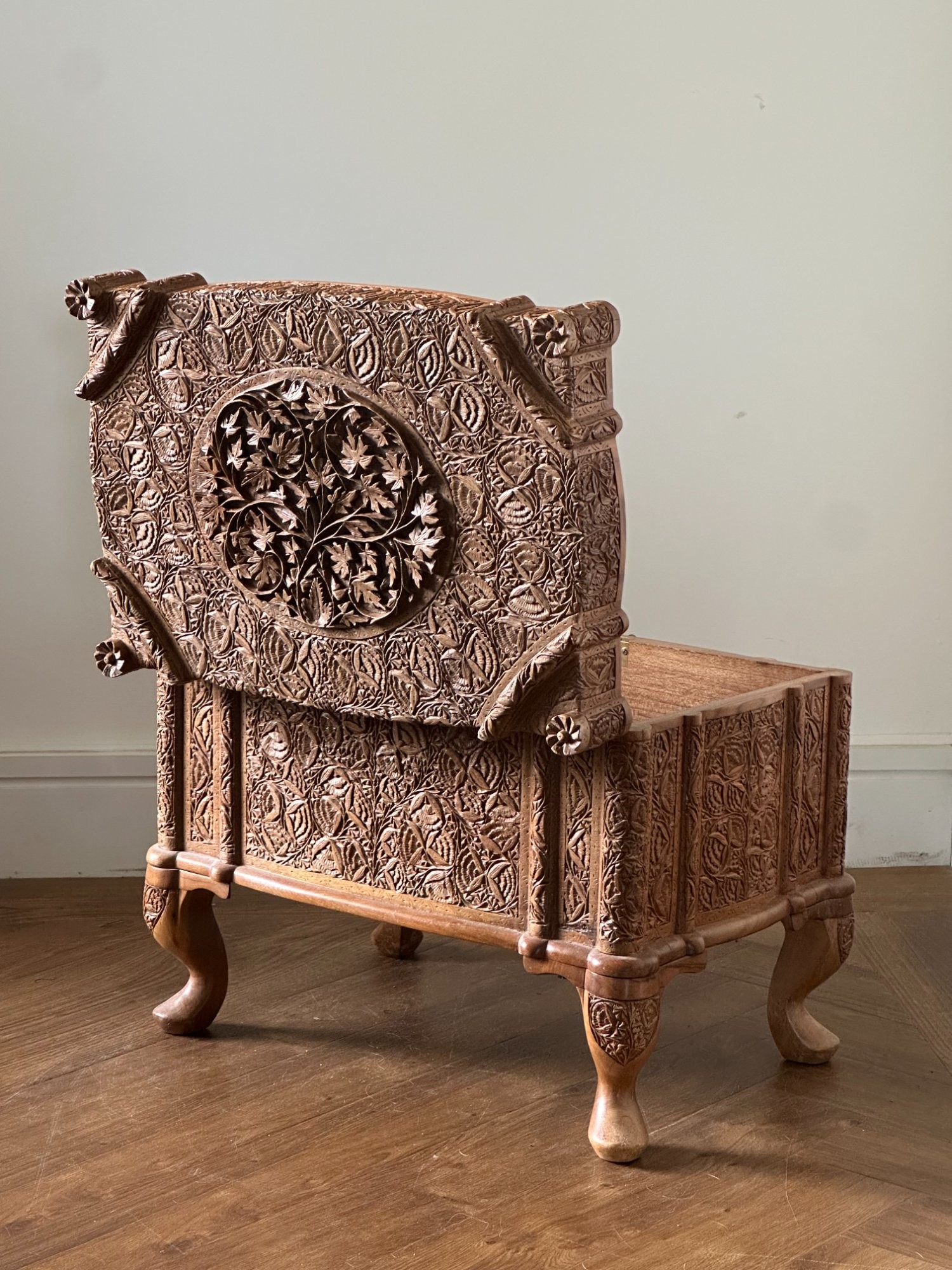
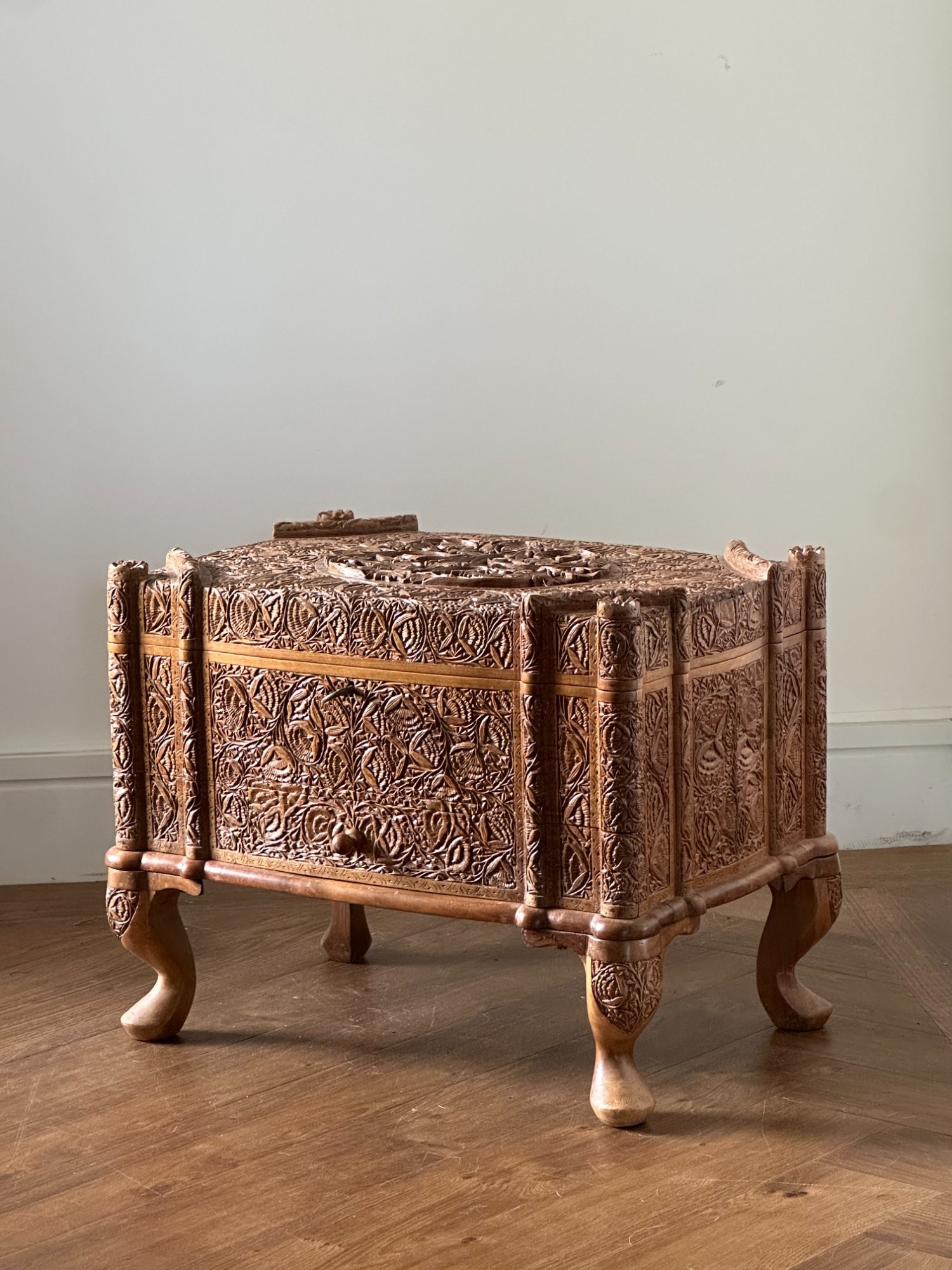
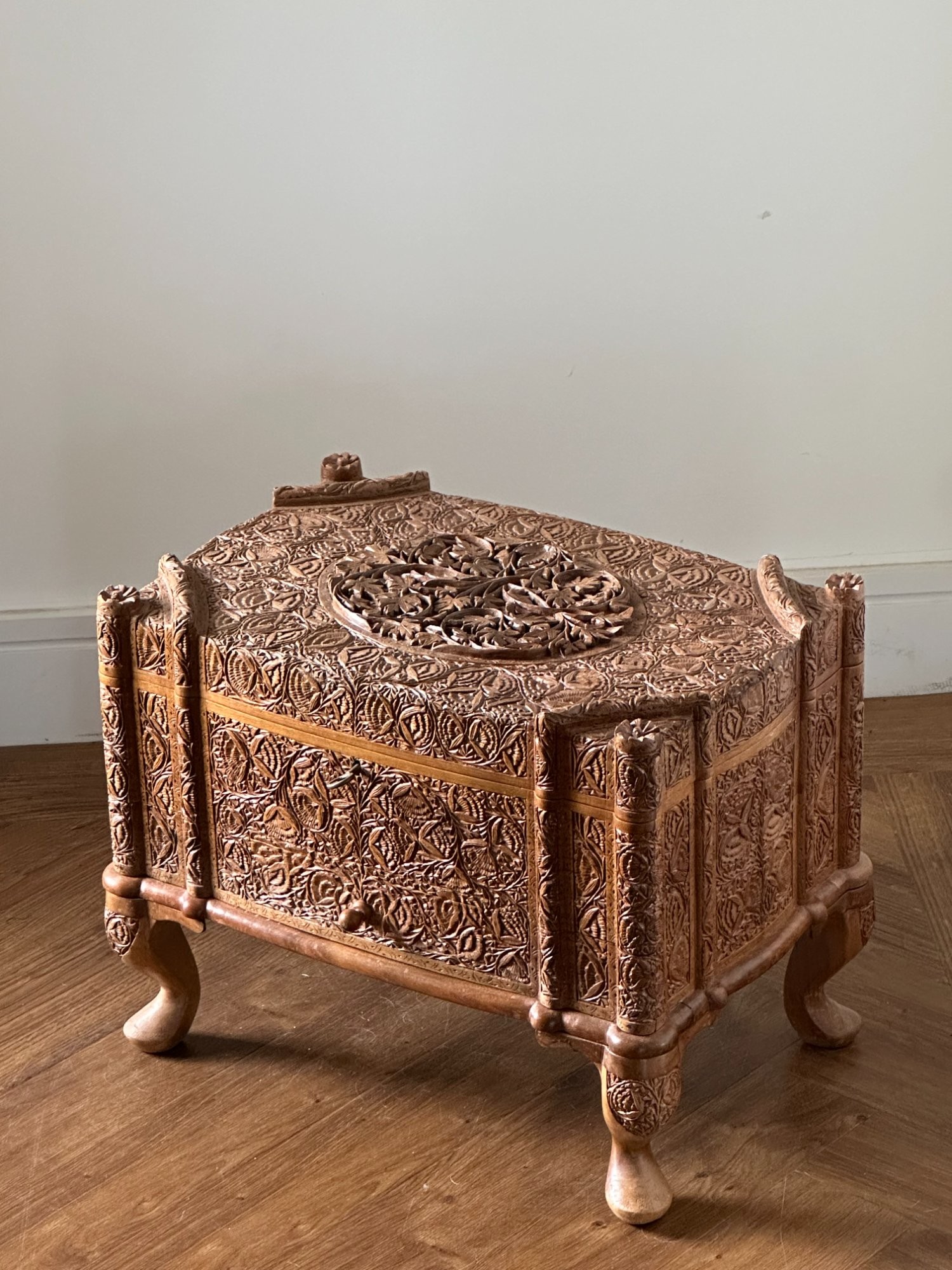
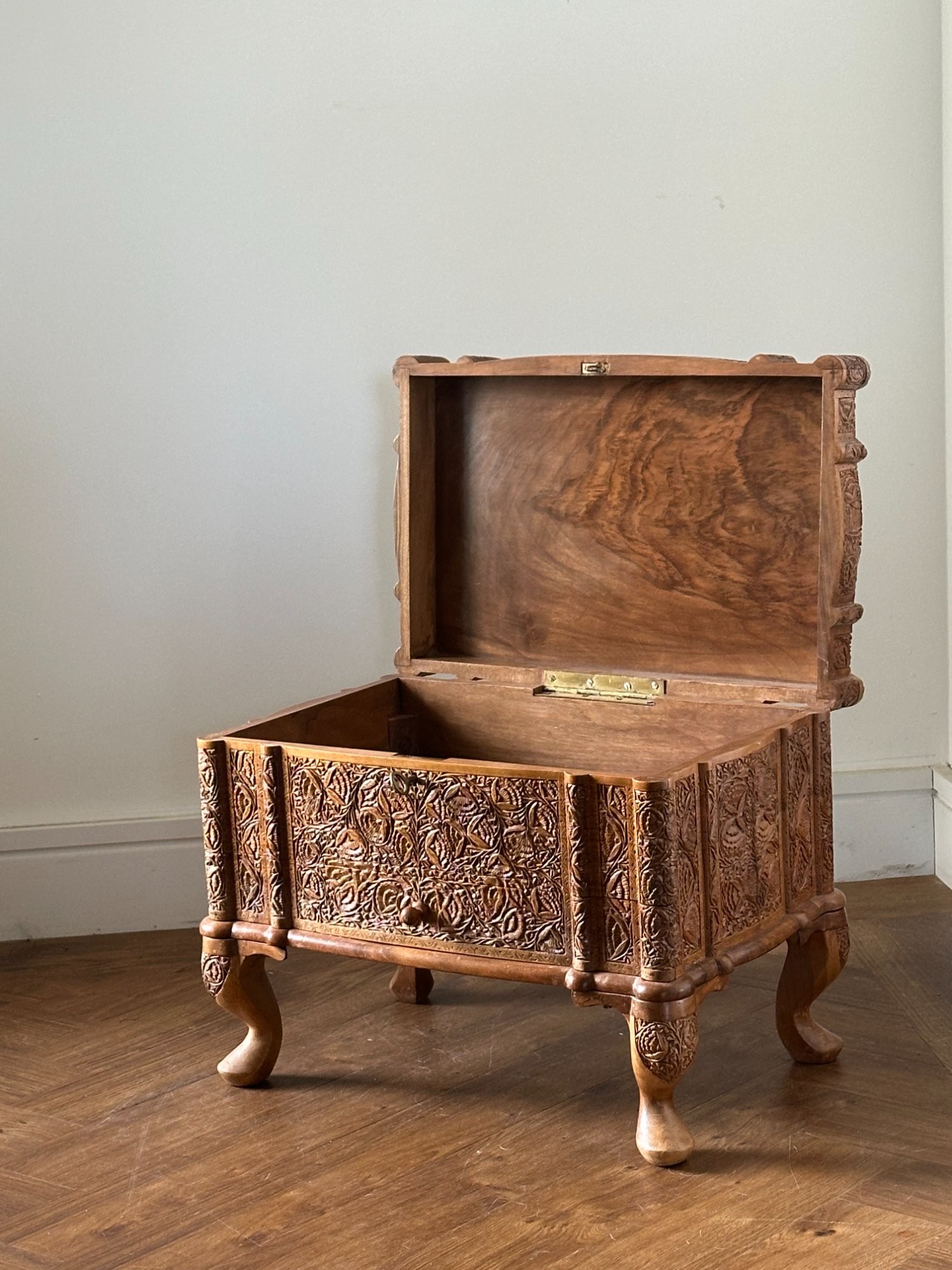
Jeckyll & Co has dated this Anglo Indian Jewellery Casket to the 1920s.
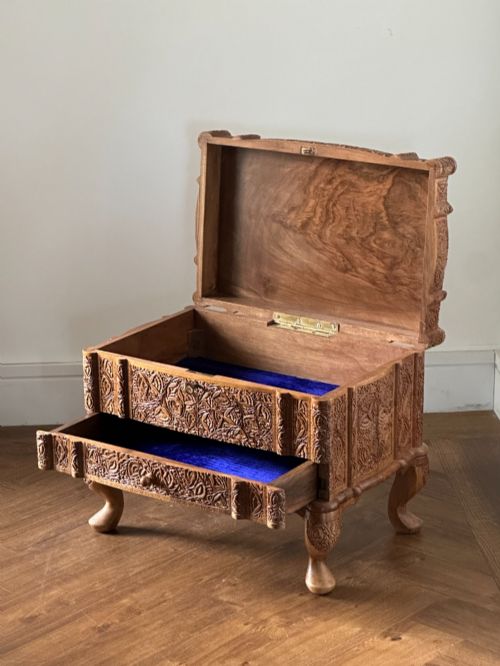
37cm high x 46cm wide x 31cm deep
By a process of deduction, the most likely wood for the main body of this remarkable casket is sandalwood, and by extension the likely area in which it was made is Mysore. The overall colour and hardness of the timber is typically sandalwood, but there are darker colourings that resemble walnut. However in his seminal work ' Furniture from British India and Ceylon' (published by Timeless Books and The Victoria & Albert Museum. 2001) Amin Jaffer makes no mention of walnut being used for caskets and boxes, although there is a chair made from Kashmir walnut. Sandalwood can have darker coloured stripes, but in boxes and caskets of a more typical size, these are not generally apparent. The unusually large scale of this casket inevitably requires a much larger section of timber to be used and consequently the darker stripes are more apparent.
For news and stock updates follow us on Instagram: jeckyllandco
Jeckyll & Co has dated this Anglo Indian Jewellery Casket to the 1920s.
Instagram: jeckyllandco
You can view the stock and full dealer information on the Jeckyll & Co Profile Page
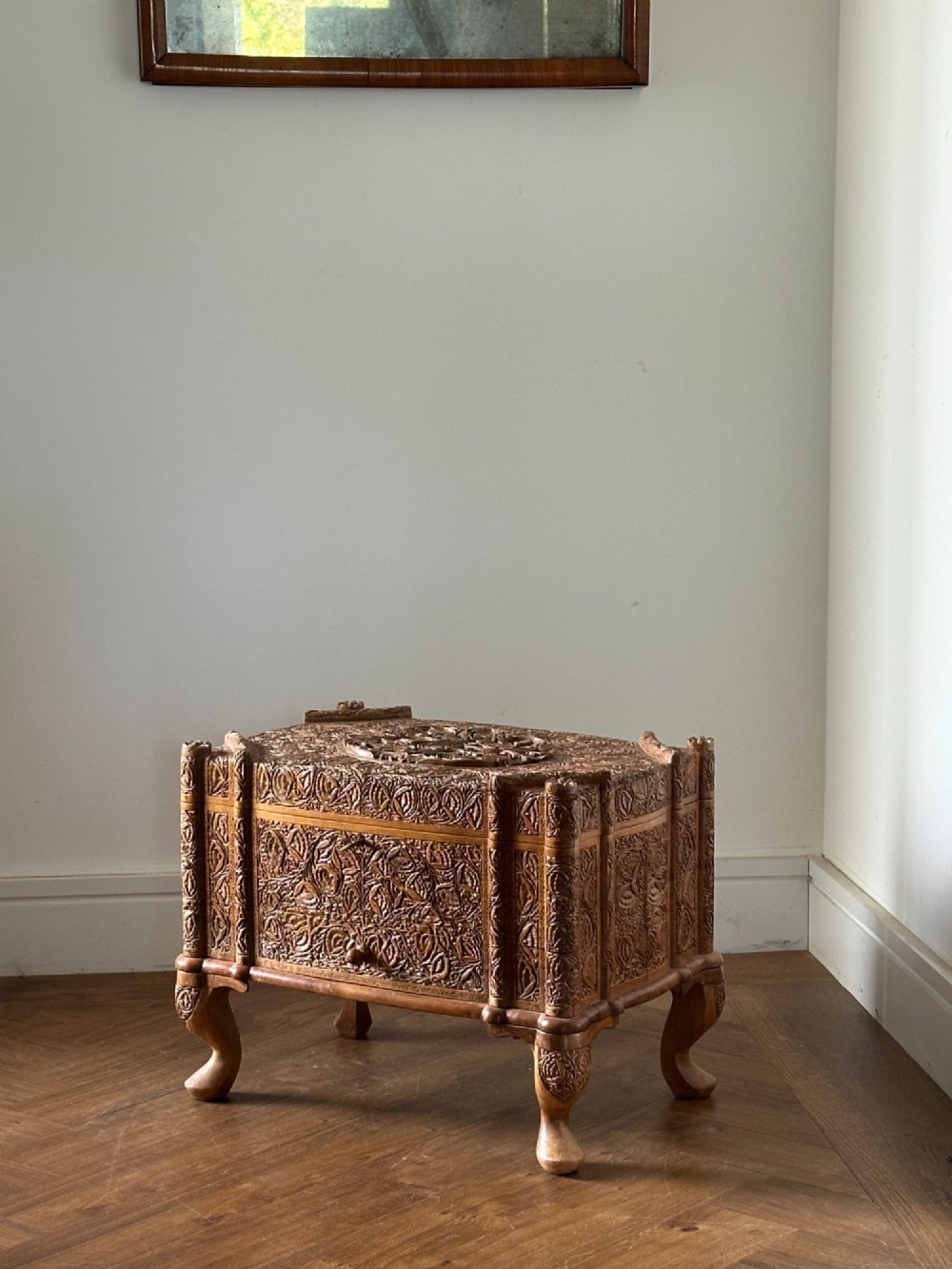
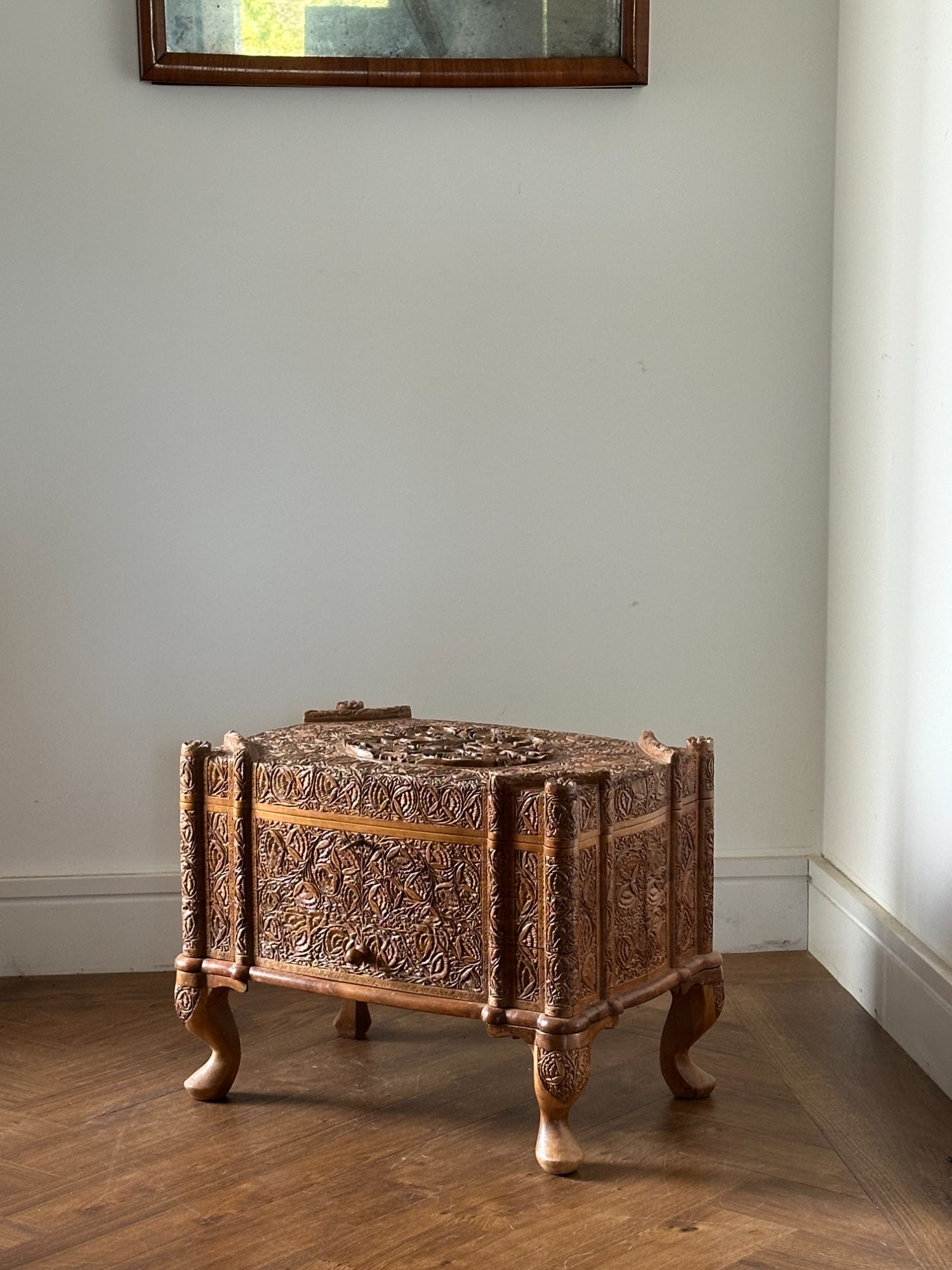
A Large and Impressive Indian Carved Sandalwood Sarcophagus-shaped Jewellery Casket, C.1920