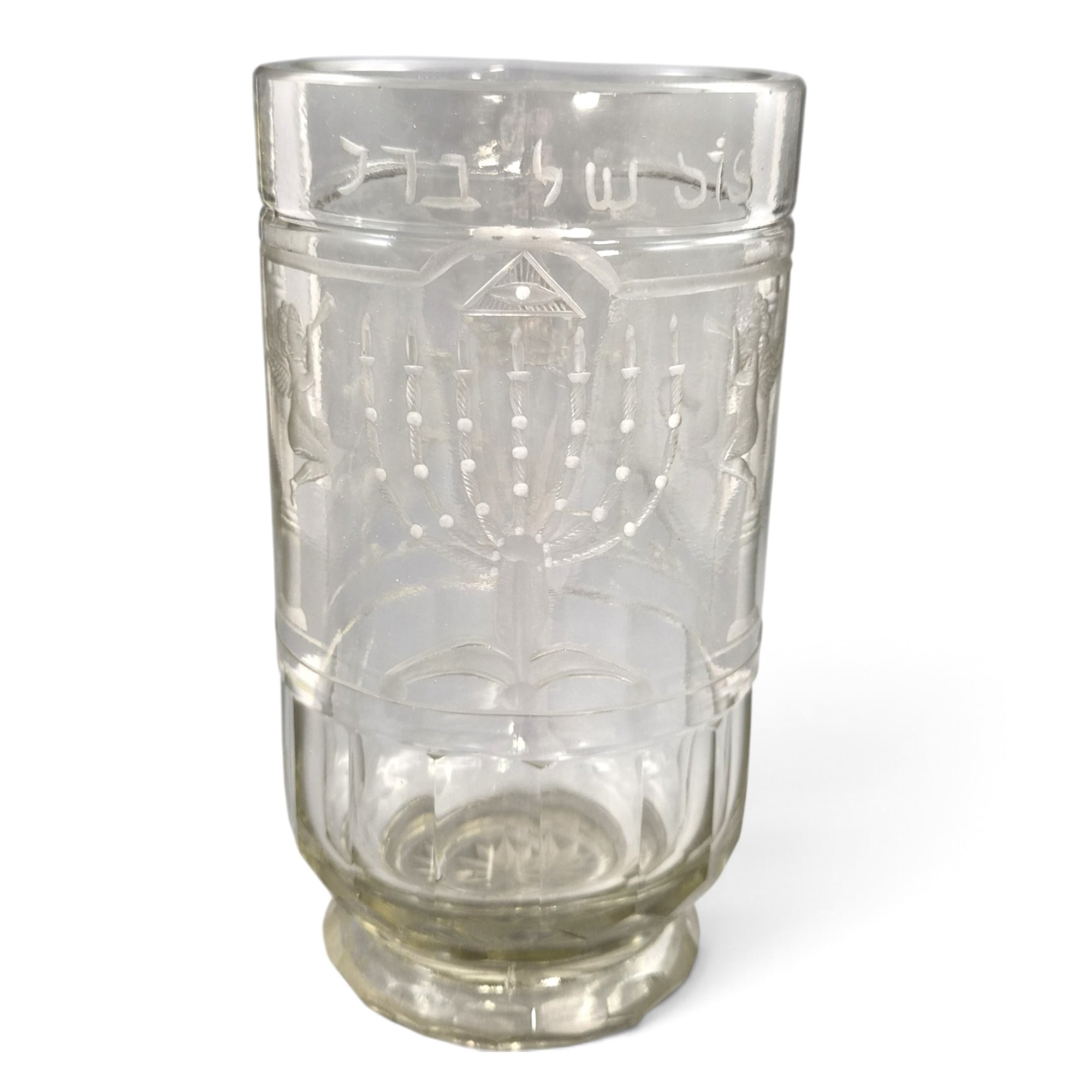
Gillers Antiques Ltd has dated this Bohemian Engraved Glass Beaker to the Victorian era.
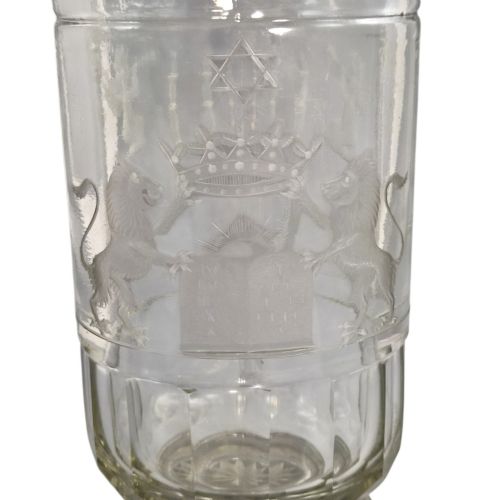
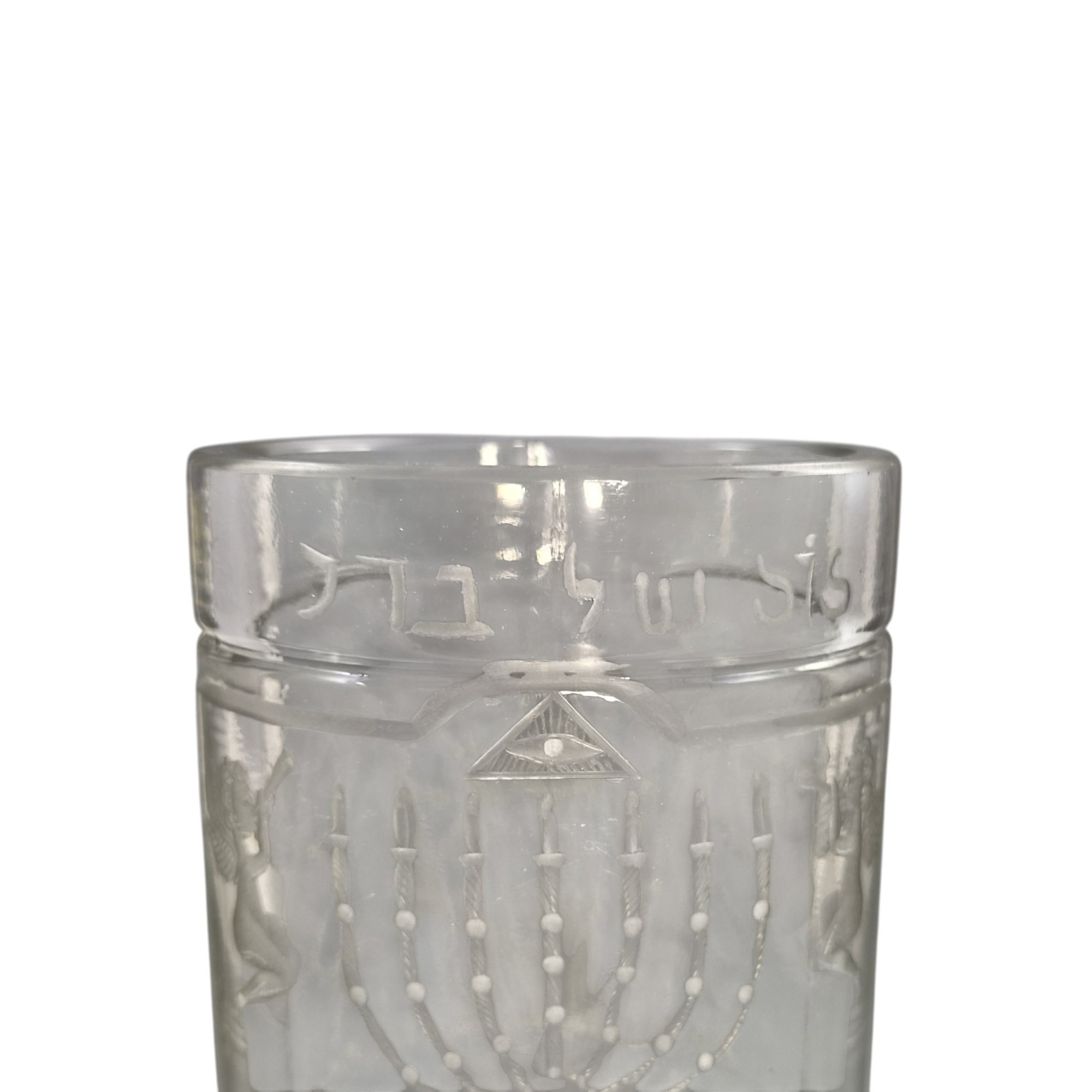
The Hebrew inscription around the rim reads כוס של ברכה (Kos shel Berakhah), meaning “Cup of Blessing”. The inscription appears to have been copied from a supplied model by an engraver unfamiliar with Hebrew script, accounting for the irregular execution of the first word.

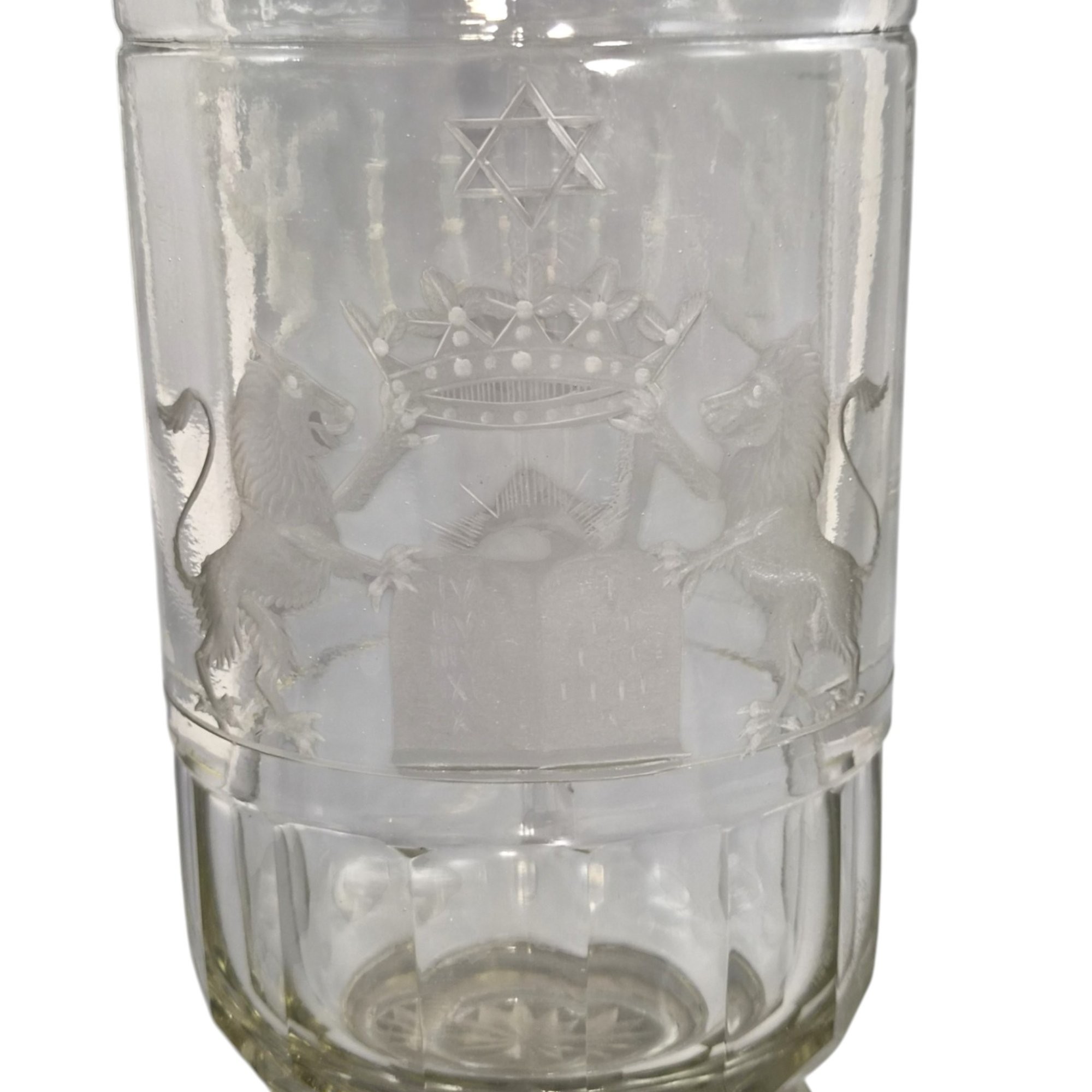
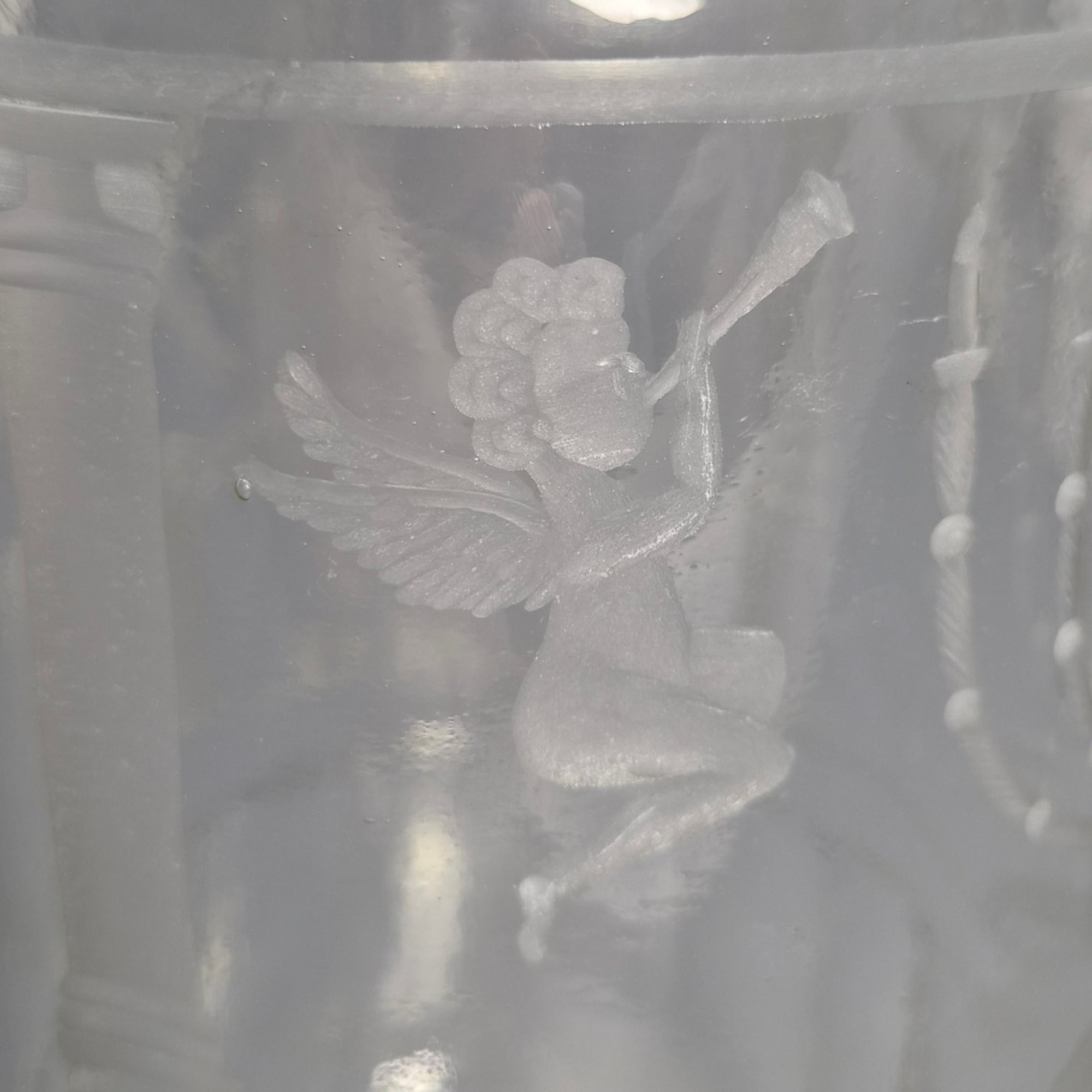
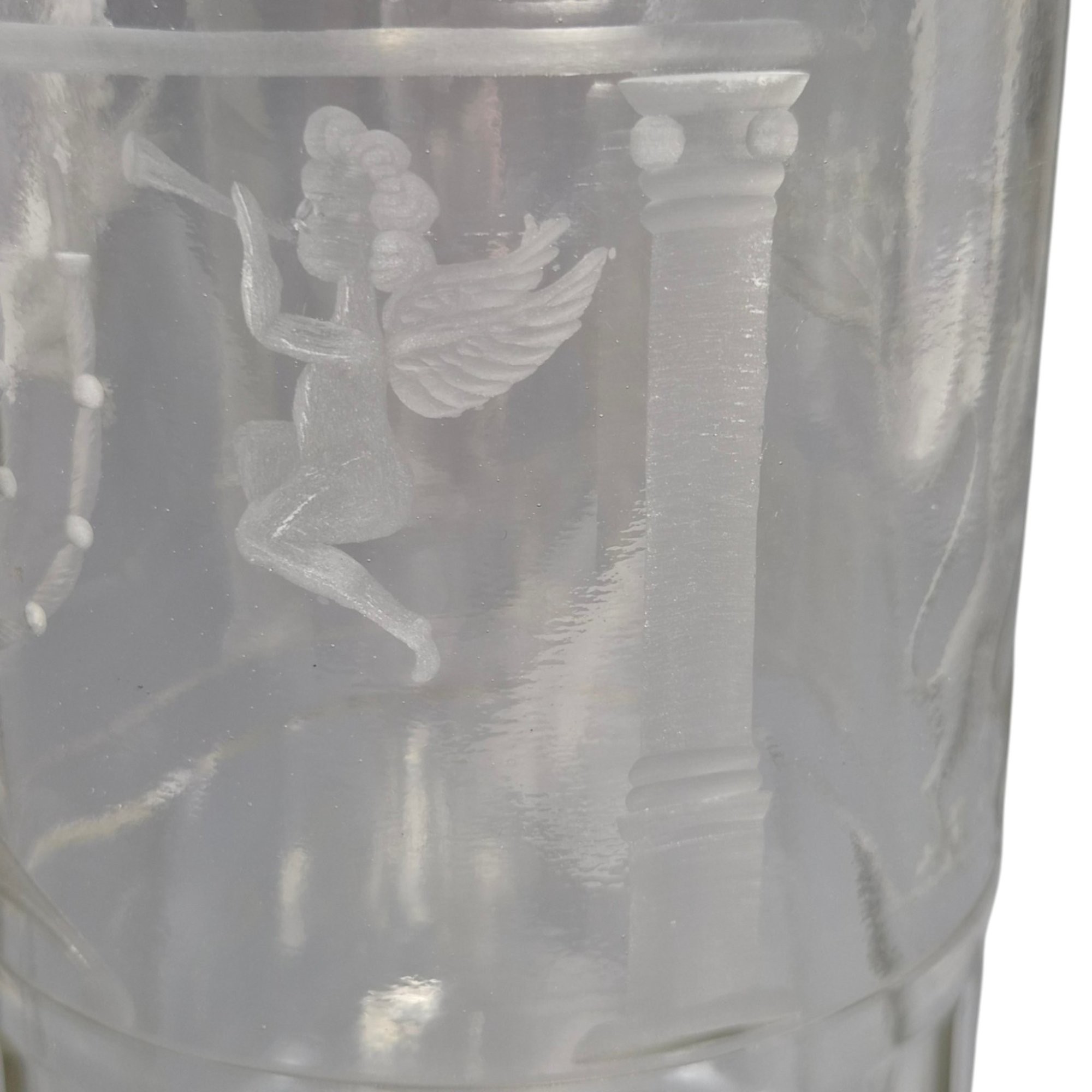
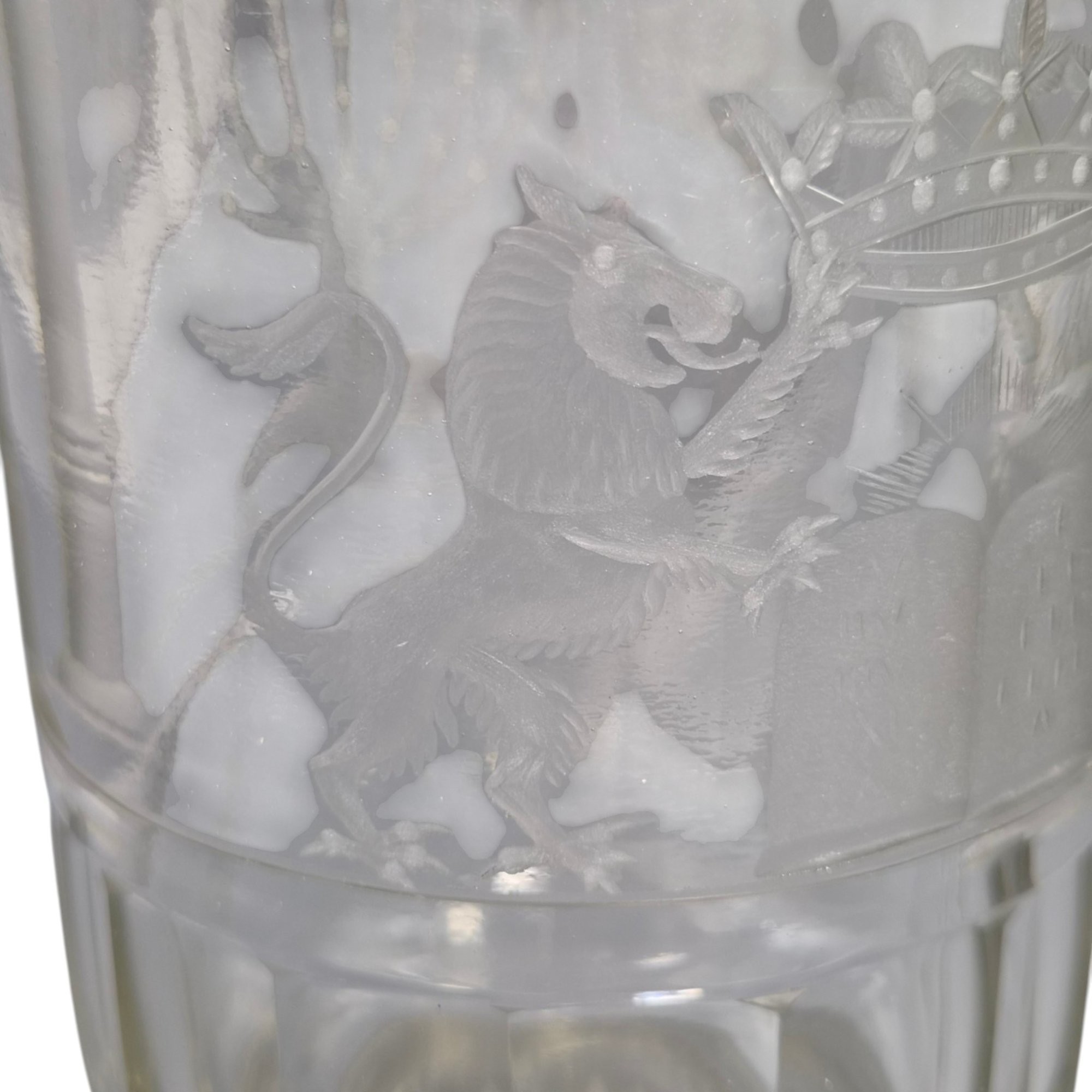
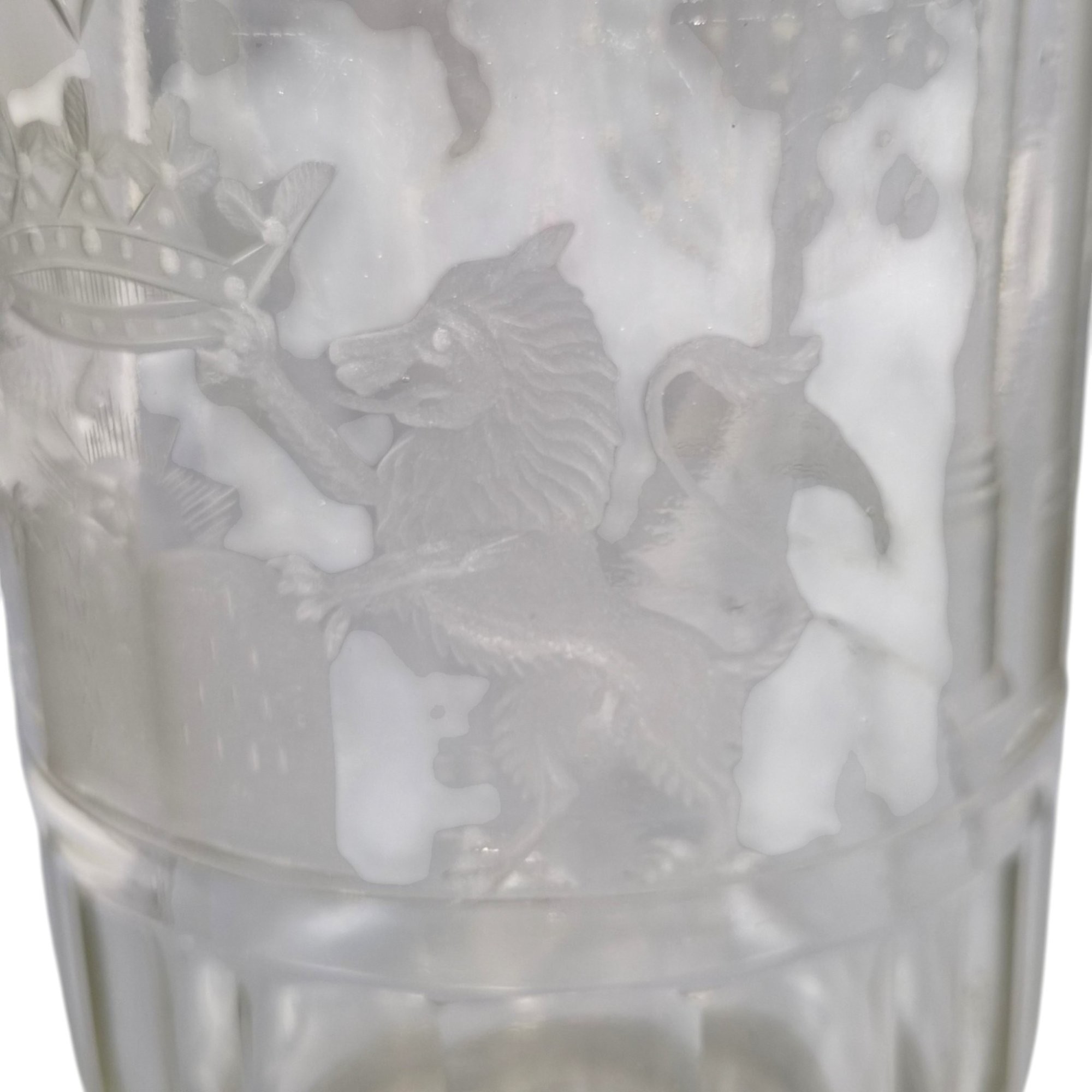
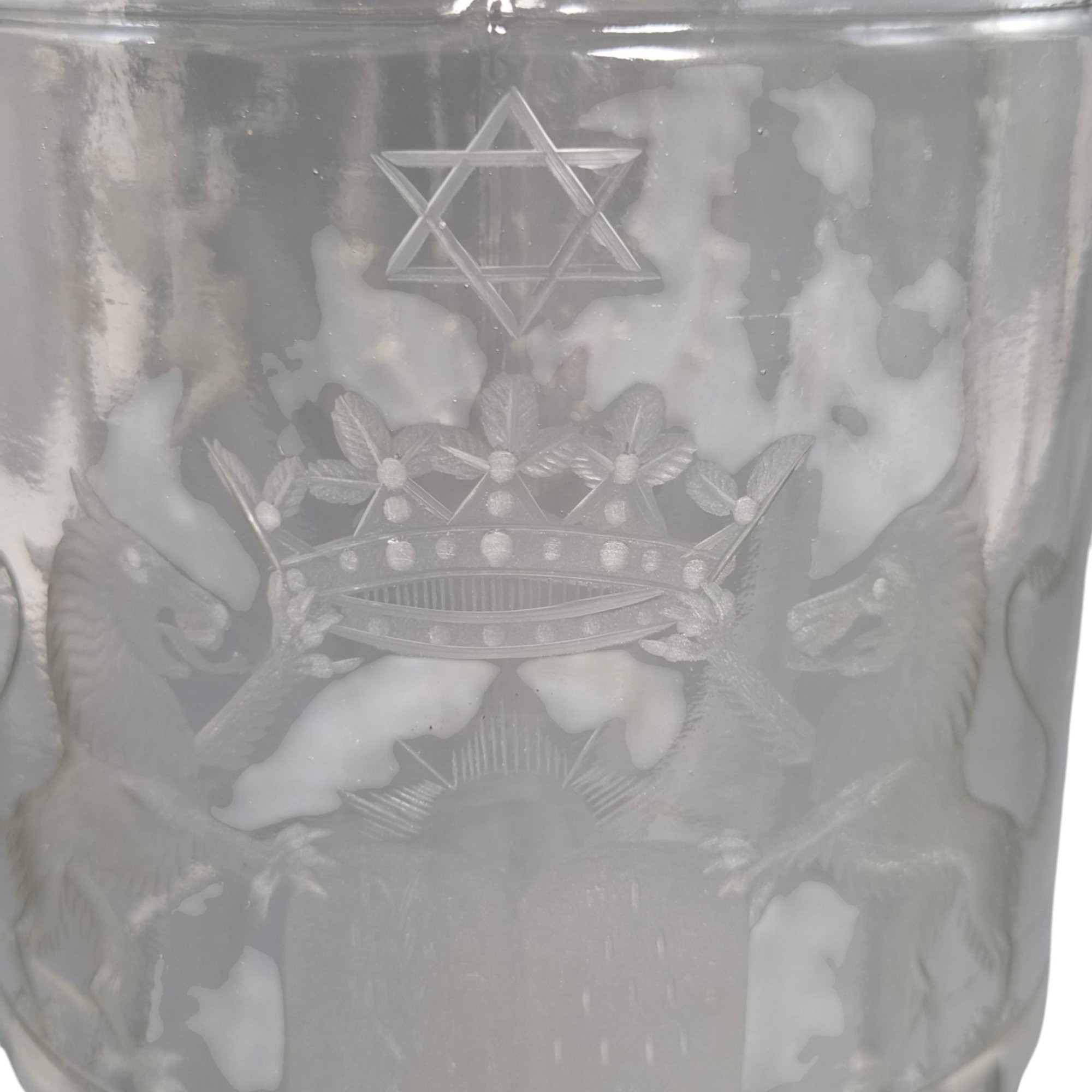
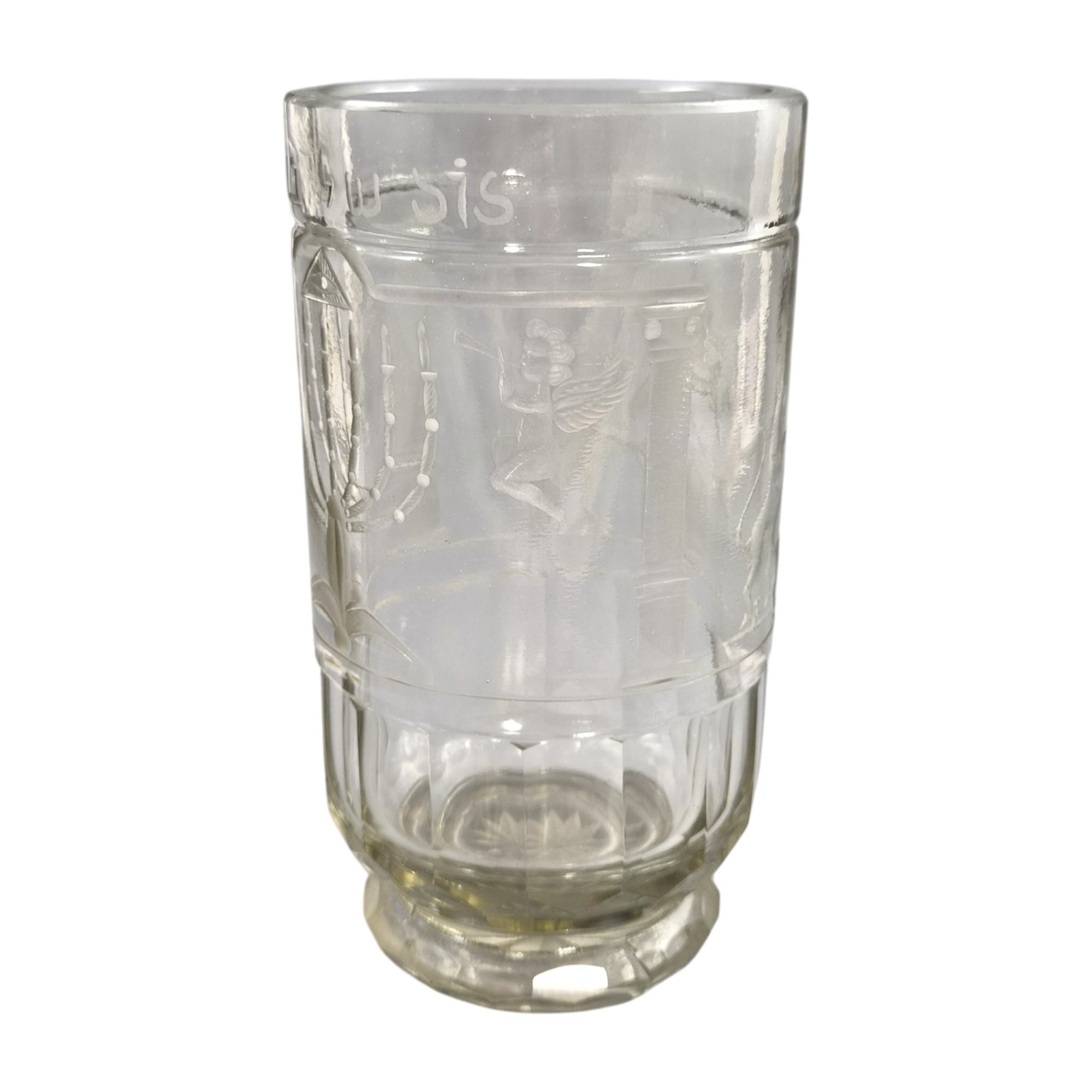
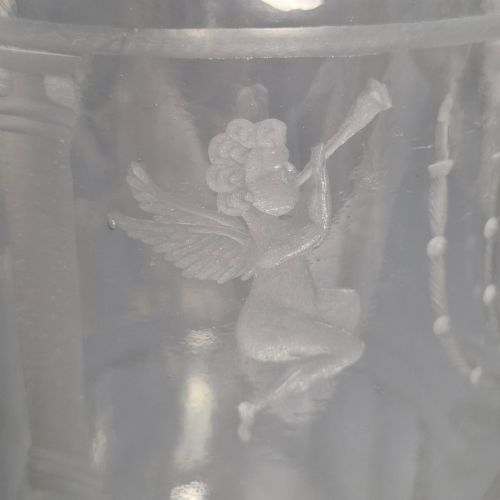
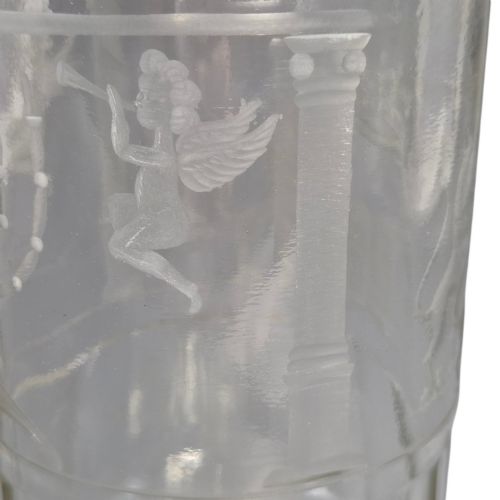
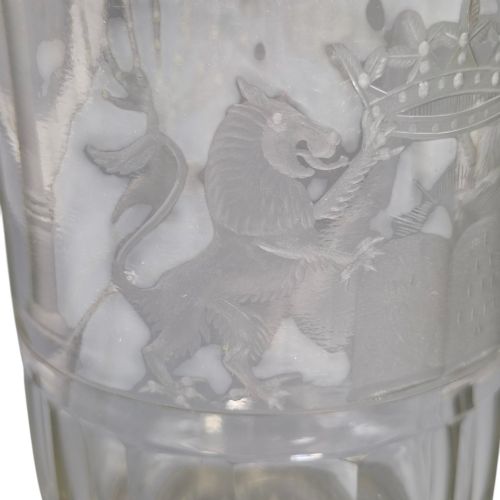
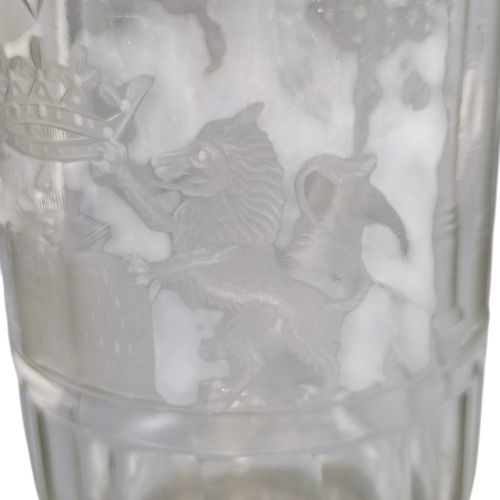
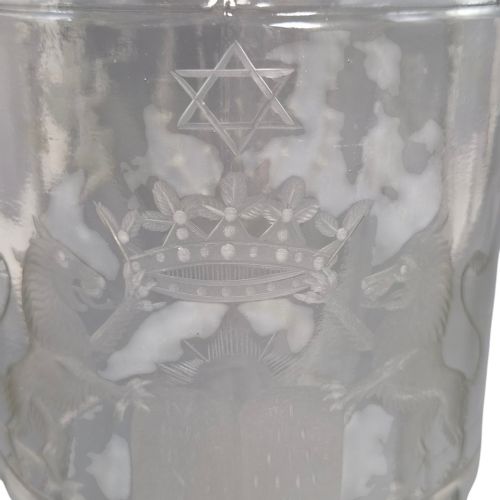
The principal composition centres on the Temple Menorah beneath the radiant All-Seeing Eye within a triangle, flanked by the columns of Solomon’s Temple, Jachin and Boaz. Above are two winged trumpeting heralds. The reverse depicts the Tablets of the Law beneath the Star of David and Crown of the Torah, supported by a magnificent pair of Lions of Judah. A radiant burst behind the Tablets symbolises Divine Revelation. Particularly impressive details include the lions’ manes and claws, the feathers of the winged figures, the flames of the Menorah and the architectural elements.
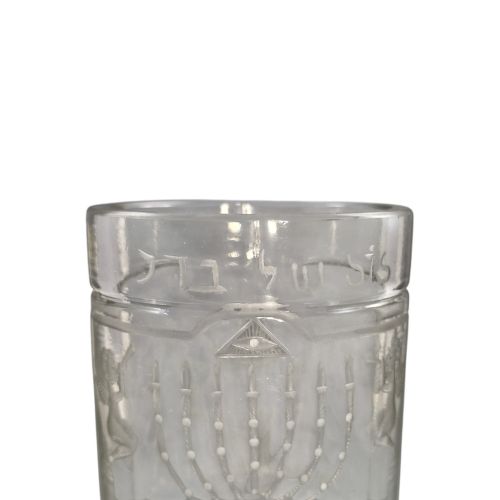
This unusual iconographic programme strongly suggests a commission for a Jewish Masonic lodge or related fraternity. The combination of Hebrew inscription, Menorah, Star of David, Tablets, Lions of Judah, All-Seeing Eye and Temple columns reflects the synthesis of Jewish and Masonic traditions found within certain Central European Jewish fraternal circles during the nineteenth century.

The substantial weight of 1,658 grams and exceptionally thick walls indicate a ceremonial rather than ordinary drinking vessel. Comparable nineteenth-century Masonic engraved beakers are known, including examples dating to around 1855, although these are generally considerably smaller and less elaborate.
Jewish participation in European Freemasonry varied considerably during this period. While Jews were admitted to many English and French lodges, several German and Prussian Grand Lodges maintained Christian membership restrictions. Jewish intellectuals and professionals consequently participated in lodges operating under more liberal jurisdictions. One notable example was L’Aurore Naissante, founded in Frankfurt in 1807 under the Grand Orient de France.
The Order of B’nai B’rith, founded in New York in 1843 and organised along fraternal lines, later expanded into Europe, establishing its first German lodge in Berlin in 1882. However, given the proposed 1850–1860 dating of this beaker, attribution specifically to B’nai B’rith would require further evidence.
Despite extensive research, no closely comparable beaker combining this Hebrew inscription with such a comprehensive Jewish-Masonic decorative programme has been identified. Its scale, craftsmanship and highly unusual iconography make it an exceptional survival of nineteenth-century Central European ceremonial glass and an important object for collectors of Judaica and Masonic material.
Dimensions:
Weight: 1,658 g
Height: 20.5 cm
Diameter: 11 cm
Wall thickness: approximately 0.9 cm
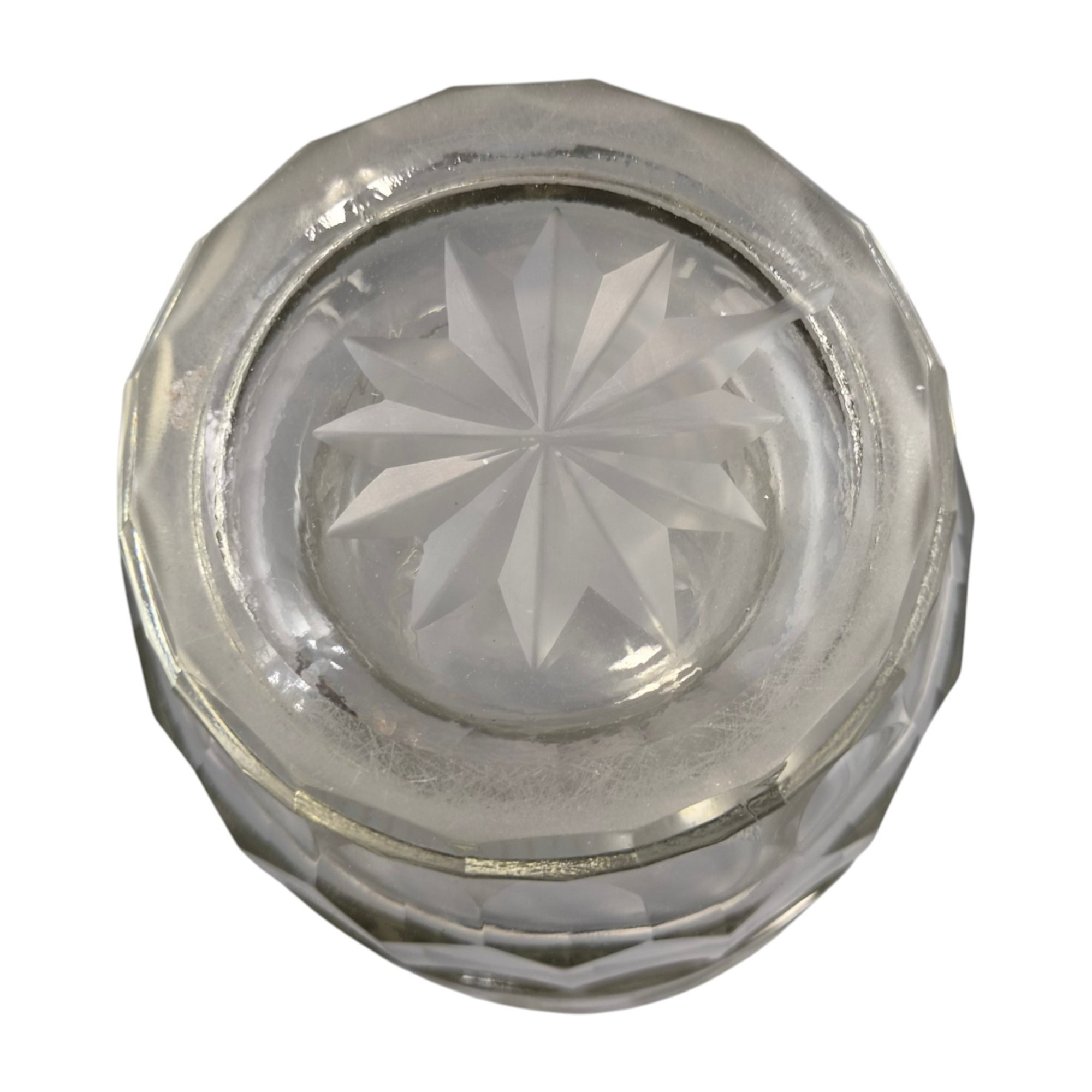
Technique: Hand-blown thick-walled clear glass with elaborate wheel engraving.
Condition: Excellent antique condition with no chips, cracks or restorations.
Provenance: Central Europe, probably Bohemia, circa 1850–1860.
Rarity: Exceptionally rare; apparently a specially commissioned ceremonial piece. No exact documented equivalent featuring this particular combination of Hebrew text and Jewish-Masonic iconography has been identified.

Please study the accompanying photographs carefully as they form an integral part of this description. If you have any questions, we will be happy to answer them. The item will be shipped with full tracking and insurance. Shipping costs include labour, packaging and postage.
Gillers Antiques Ltd has dated this Bohemian Engraved Glass Beaker to the Victorian era.

You can view the stock and full dealer information on the Gillers Antiques Ltd Profile Page


Massive Bohemian Jewish Masonic Ceremonial Engraved Glass Beaker, c.1850–1860