11,797  PAGES BROWSED TODAY PAGES TODAY 36  ANTIQUES UPLOADED TODAY NEW ARRIVALS
ID #SA1227744
FOR SALE
£12,000
Email Buy
Save
David Scougall (C.1610-c.1680) - Oil on Canvas Portrait of Ellen Napier.
Period Portraits
for sale €14,040     $15,240
£12,000
Period Portraits

Period Portraits

Sellingantiques Verified Since Jan 2017
View Dealers Stock Page
  • About Us
    Specialist dealer in portraits from the 17th century to the 20th century. Our stock includes quality oil paintings, drawings, and mezzotints
Id #SA1227744
PDF SHARE
SAVE

David Scougall (C.1610-c.1680) - Oil on Canvas Portrait of Ellen Napier.

17th century
For Sale by Period Portraits
Description

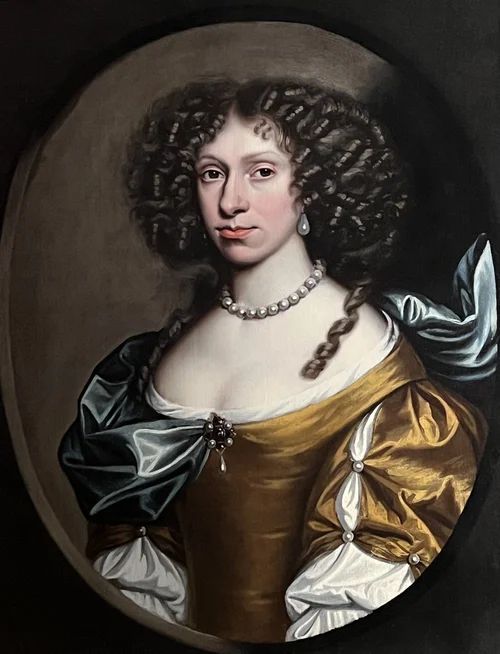
Fine 17th century oil on canvas portrait of Scottish noblewoman Ellen Napier by David Scougall (c.1610 - c.1680).

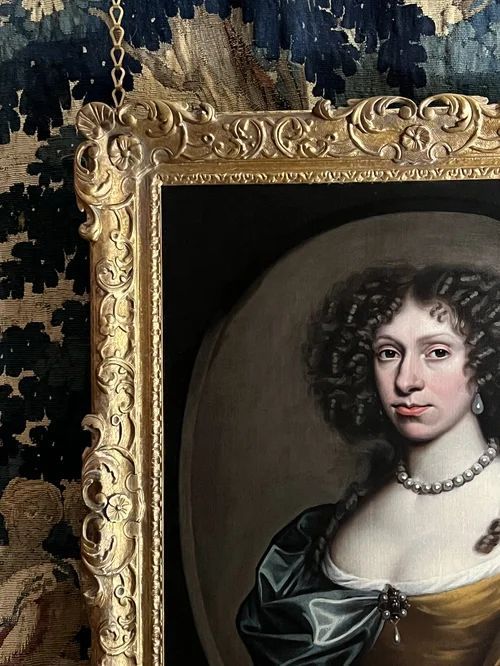
The elegant sitter is depicted half length within an oval cartouche and she is dressed in the high status and fashionable brightly coloured silk clothing of the period. Gold or saffron coloured robes such as the one worn by our sitter were extremely fashionable and costly.
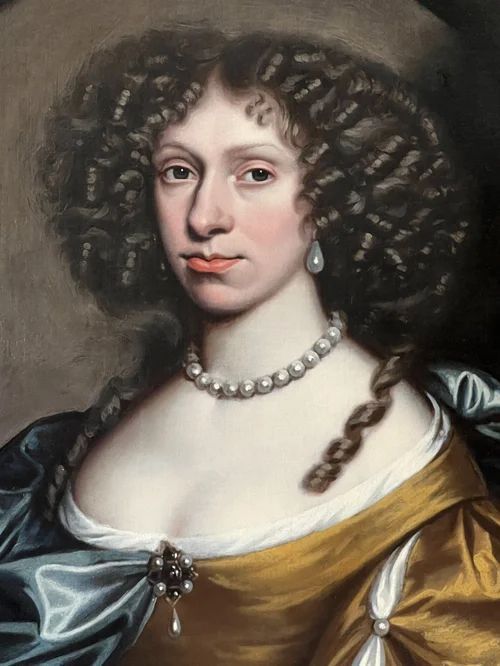
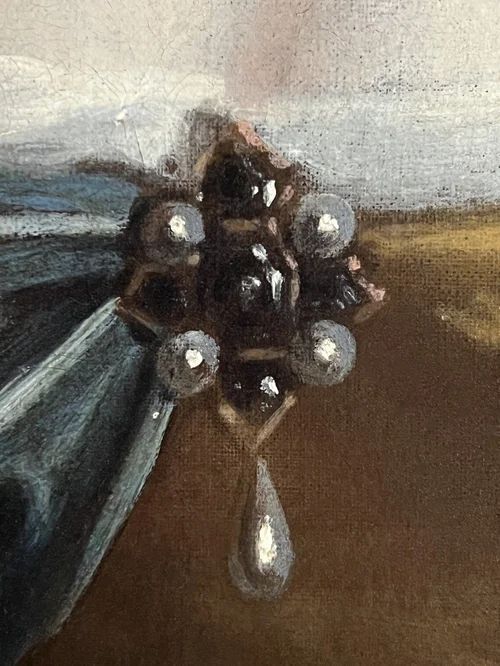
Her costume has a low and wide neckline that reveals her décolletage, it also has jewelled fastenings and her shawl is held in place by a gem and pearl set brooch at her bosom. Her luxuriant locks are pinned upwards, and a single curl tumbles across her bare shoulder. Her look is complete by large pearl drop earrings and a single strand pearl necklace.
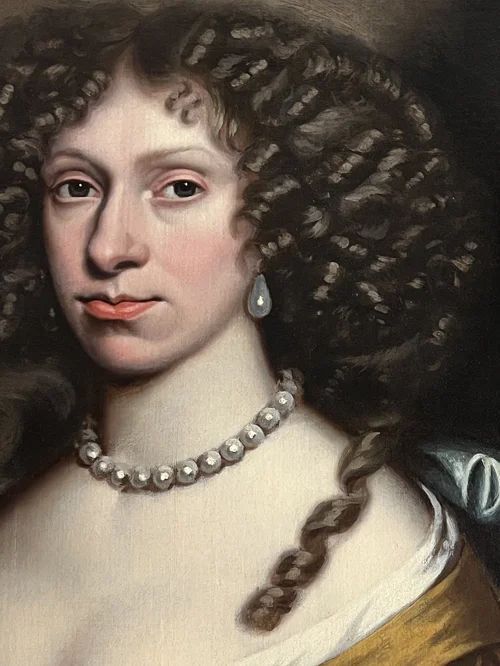
Throughout the 17th century there was a thriving trade in pearls, which were transported from Asia to Europe. The Golf of Manner (between South India and Sri Lanka) was one of the pearl diving hotspots of the period. Divers would weight themselves with heavy stones to plunge into the depths, and they often had to retrieve as many as 1000 oysters before they discovered a single pearl.
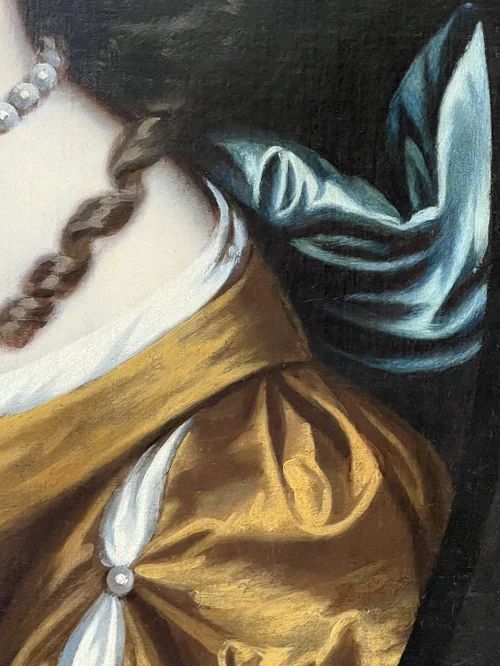
With her jewel studied dress, earrings, and necklace, it his clear that this noble lady had wealth in abundance.

David Scougall (c.1610-c.1680) Following the restoration of the Monarchy in 1660, Scottish portraiture came to a rise as many members of the nobility gained power and wanted to profess their wealth and status by having their portraits painted. One artist above all others dominated the field and that was David Scougall (c. 1630-1685).
During the 1660s and 1670s David Scougall was particularly prolific, and he received many commissions, largely from members of the Scottish nobility (such as the Napier family) and they were also often prominent members of the new parliament.
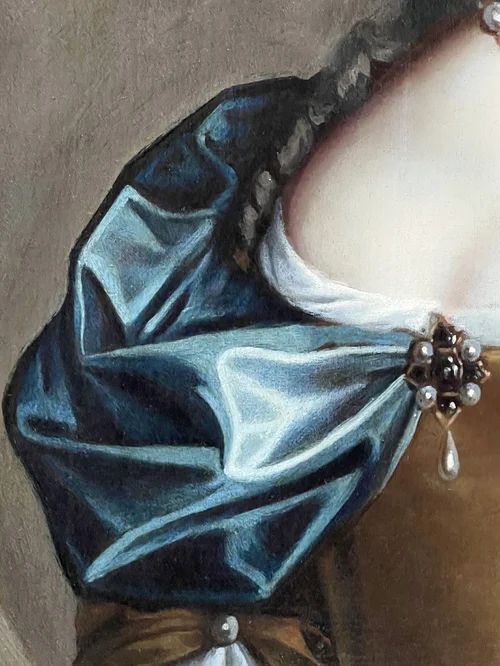
His work may have been influenced by fashionable London painters such as Sir Peter Lely (1618-1680)and later on Sir Godfrey Kneller (1646-1723), but it also has an individuality which makes his paintings unique and distinctive.
His son John Scougall (1657-1737) expanded the practice into a portrait studio in the 1680s, and explicitly called himself a limner throughout his life. He painted many portraits in the course of the following decades.
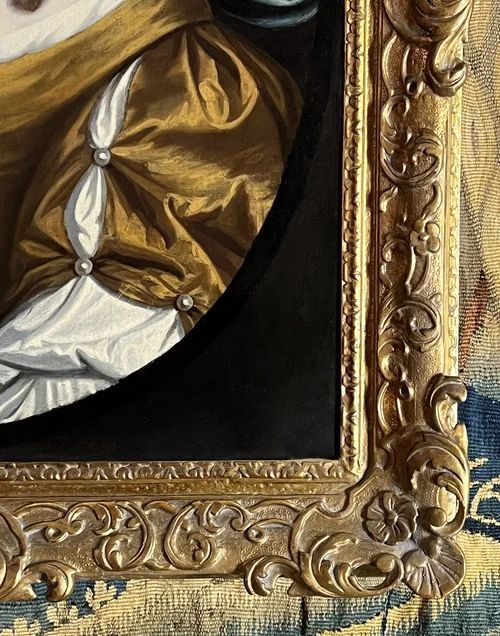
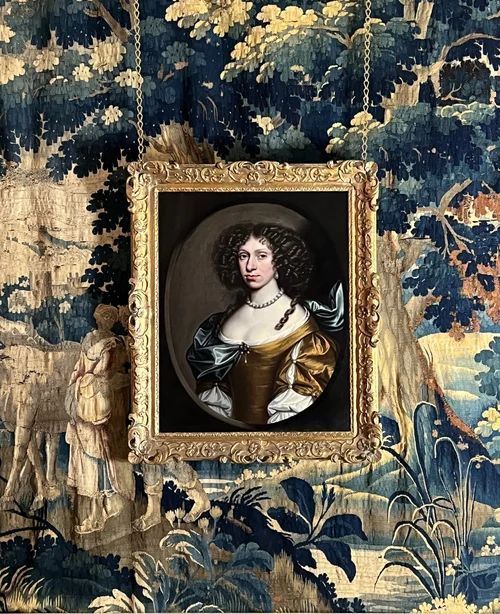
This sensual, arresting and well characterised work is in an excellent state of conservation and is offered ready to hang and enjoy in lots likely original antique frame which is itself a work of art.
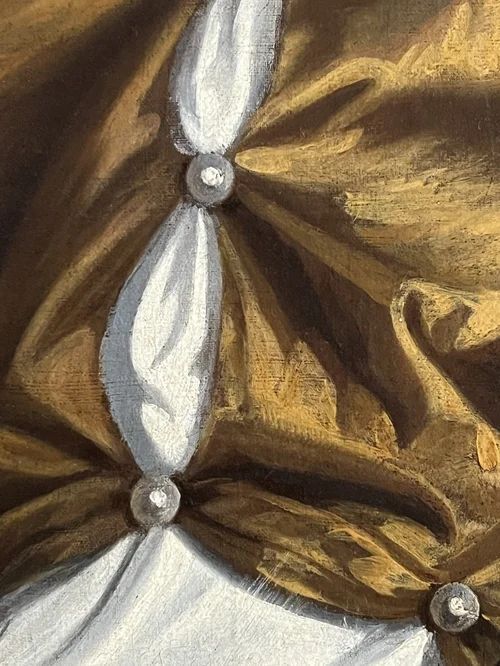
I am most grateful to Dr Carla van de Puttelaar, Art Historian for confirming authorship upon viewing this work in person, and her report on this portrait will be provided in full to the purchaser.

Higher resolution images on request.

Worldwide shipping available.

Canvas: 30” x 24" / 76.55cm x 61cm.

Framed: 36" x 30" / 92cm x 76cm.

Physical Dimensions
Height
92cm (36.22")
Width
76cm (29.92")
Depth
3cm (1.18")
Declaration

Period Portraits has dated this 17th Century Oil Portrait to the 17th Century.

Reference Numbers
Sellingantiques Reference
SA1227744
Description
Fine 17th century oil on canvas portrait of Scottish noblewoman Ellen Napier by David Scougall (c.1610 - c.1680).
The elegant sitter is depicted half length within an oval cartouche and she is dressed in the high status and fashionable brightly coloured silk clothing of the period.
Period Portraits

Gold or saffron coloured robes such as the one worn by our sitter were extremely fashionable and costly.

fig 1. A 17th-century oil portrait of a woman wearing a gold and blue gown with pearl jewellery, painted within a feigned oval canvas frame.
fig 1. David Scougall (C.1610-c.1680) - Oil on Canvas Portrait of Ellen Napier.

Her costume has a low and wide neckline that reveals her décolletage, it also has jewelled fastenings and her shawl is held in place by a gem and pearl set brooch at her bosom. Her luxuriant locks are pinned upwards, and a single curl tumbles across her bare shoulder. Her look is complete by large pearl drop earrings and a single strand pearl necklace.

fig 2. A 17th-century oil portrait of a woman wearing a gold and blue gown with pearl jewellery, painted within a feigned oval canvas frame.
fig 2. David Scougall (C.1610-c.1680) - Oil on Canvas Portrait of Ellen Napier.

Throughout the 17th century there was a thriving trade in pearls, which were transported from Asia to Europe. The Golf of Manner (between South India and Sri Lanka) was one of the pearl diving hotspots of the period. Divers would weight themselves with heavy stones to plunge into the depths, and they often had to retrieve as many as 1000 oysters before they discovered a single pearl.

fig 3. A 17th-century oil portrait of a woman wearing a gold and blue gown with pearl jewellery, painted within a feigned oval canvas frame.
fig 3. David Scougall (C.1610-c.1680) - Oil on Canvas Portrait of Ellen Napier.

With her jewel studied dress, earrings, and necklace, it his clear that this noble lady had wealth in abundance.

David Scougall (c.1610-c.1680) Following the restoration of the Monarchy in 1660, Scottish portraiture came to a rise as many members of the nobility gained power and wanted to profess their wealth and status by having their portraits painted. One artist above all others dominated the field and that was David Scougall (c. 1630-1685).

fig 4. A 17th-century oil portrait of a woman wearing a gold and blue gown with pearl jewellery, painted within a feigned oval canvas frame.
fig 4. David Scougall (C.1610-c.1680) - Oil on Canvas Portrait of Ellen Napier.

During the 1660s and 1670s David Scougall was particularly prolific, and he received many commissions, largely from members of the Scottish nobility (such as the Napier family) and they were also often prominent members of the new parliament.

fig 5. A 17th-century oil portrait of a woman wearing a gold and blue gown with pearl jewellery, painted within a feigned oval canvas frame.
fig 5. David Scougall (C.1610-c.1680) - Oil on Canvas Portrait of Ellen Napier.

His work may have been influenced by fashionable London painters such as Sir Peter Lely (1618-1680)and later on Sir Godfrey Kneller (1646-1723), but it also has an individuality which makes his paintings unique and distinctive.

fig 6. A 17th-century oil portrait of a woman wearing a gold and blue gown with pearl jewellery, painted within a feigned oval canvas frame.
fig 6. David Scougall (C.1610-c.1680) - Oil on Canvas Portrait of Ellen Napier.

His son John Scougall (1657-1737) expanded the practice into a portrait studio in the 1680s, and explicitly called himself a limner throughout his life. He painted many portraits in the course of the following decades.

fig 7. A 17th-century oil portrait of a woman wearing a gold and blue gown with pearl jewellery, painted within a feigned oval canvas frame.
fig 7. David Scougall (C.1610-c.1680) - Oil on Canvas Portrait of Ellen Napier.

This sensual, arresting and well characterised work is in an excellent state of conservation and is offered ready to hang and enjoy in lots likely original antique frame which is itself a work of art.

fig 8. A 17th-century oil portrait of a woman wearing a gold and blue gown with pearl jewellery, painted within a feigned oval canvas frame.
fig 8. David Scougall (C.1610-c.1680) - Oil on Canvas Portrait of Ellen Napier.

I am most grateful to Dr Carla van de Puttelaar, Art Historian for confirming authorship upon viewing this work in person, and her report on this portrait will be provided in full to the purchaser.

Higher resolution images on request.

Worldwide shipping available.

Canvas: 30” x 24" / 76.55cm x 61cm.

Framed: 36" x 30" / 92cm x 76cm.

Height
92cm (36.22")
Width
76cm (29.92")
Depth
3cm (1.18")
Date of Manufacture

Period Portraits has dated this 17th Century Oil Portrait to the 17th Century.

Reference Numbers
Sellingantiques Ref
SA1227744
Period Portraits
Period Portraits
Sellingantiques verified Since Jan 2017

Specialist dealer in portraits from the 17th century to the 20th century. Our stock includes quality oil paintings, drawings, and mezzotints

Dealer Profile

You can view the stock and full dealer information on the Period Portraits Profile Page
PDF SHARE
SAVE
A 17th-century oil portrait of a woman wearing a gold and blue gown with pearl jewellery, painted within a feigned oval canvas frame.
1 / 10
Archive I A 17th-century oil portrait of a woman wearing a gold and blue gown with pearl jewellery, painted within a feigned oval canvas frame.

David Scougall (C.1610-c.1680) - Oil on Canvas Portrait of Ellen Napier.
Archive II A 17th-century oil portrait of a woman wearing a gold and blue gown with pearl jewellery, painted within a feigned oval canvas frame. View II
Archive III A 17th-century oil portrait of a woman wearing a gold and blue gown with pearl jewellery, painted within a feigned oval canvas frame. View III
Archive IV A 17th-century oil portrait of a woman wearing a gold and blue gown with pearl jewellery, painted within a feigned oval canvas frame. View IV
Archive V A 17th-century oil portrait of a woman wearing a gold and blue gown with pearl jewellery, painted within a feigned oval canvas frame. View V
Archive VI A 17th-century oil portrait of a woman wearing a gold and blue gown with pearl jewellery, painted within a feigned oval canvas frame. View VI
Archive VII A 17th-century oil portrait of a woman wearing a gold and blue gown with pearl jewellery, painted within a feigned oval canvas frame. View VII
Archive VIII A 17th-century oil portrait of a woman wearing a gold and blue gown with pearl jewellery, painted within a feigned oval canvas frame. View VIII
Archive IX A 17th-century oil portrait of a woman wearing a gold and blue gown with pearl jewellery, painted within a feigned oval canvas frame. View IX
Archive X A 17th-century oil portrait of a woman wearing a gold and blue gown with pearl jewellery, painted within a feigned oval canvas frame. View X
Enlarged Archival View
Telephone 07889 859729
Location
North Yorkshire
United Kingdom
Verified Since Jan 2017
Items For Sale 47
Items Sold 61
Period Portraits
Period Portraits
Verified Since Jan 2017
View Dealer Info
Location: North Yorkshire, United Kingdom
Verified
Jan 2017
For Sale
47
Sold
61
A 17th-century oil portrait of a woman wearing a gold and blue gown with pearl jewellery, painted within a feigned oval canvas frame.
DAVID SCOUGALL (c.1610-c.1680) - OIL ON CANVAS PORTRAIT OF ELLEN NAPIER.
Ref: SA1227744
A 17th-century oil portrait of a woman wearing a gold and blue gown with pearl jewellery, painted within a feigned oval canvas frame.
Detail View 1
Detail View 2
Detail View 3
Detail View 4
Detail View 5
Detail View 6
Detail View 7
Detail View 8
Detail View 9
Archival Detail
Every single antique dealer on our platform is individually approved by our internal team. We verify their professional trade history, ethical standards, and photographic quality to ensure a secure, high-standard buying environment. Upon joining, every dealer agrees to a strict 9-point code of conduct. While issues can occasionally arise, our dealers typically resolve them swiftly and directly with the buyer. In fact, since our founding in 2002, Sellingantiques has only had to step in to help resolve an issue on roughly five occasions—a true testament to the quality of our dealers and their dedication to your happiness.
Our dealers are highly experienced in packing and shipping fragile, high-value antiques. Because you are in direct contact with the dealer, you will be able to easily go through all available shipping and insurance options together to ensure your item arrives safely.
Antiques are the ultimate green purchase. By choosing historical pieces over newly manufactured goods, you completely eliminate the carbon footprint of modern mass production while preserving exceptional, timeless craftsmanship.

Scottish portraiture during the 17th century was influenced by European Baroque traditions and British court styles, focusing on formal depiction of aristocrats. Works often featured feigned oval frames, precise rendering of textiles, and detailed representation of contemporary jewellery and hairstyles.

Artists during this era predominantly worked with oil pigments painted onto hand-woven linen canvas or wooden panels. Pigments were ground from natural minerals, earth, and organic materials mixed with linseed or walnut oil.

Authentic period paintings show age-appropriate craquelure patterns across the paint film, natural oxidisation on the canvas reverse, and historical stretcher or strainer construction. Pigment analysis and examination of the ground layer also confirm period construction.

A period oil portrait can serve as a focal point in traditional, eclectic, or contemporary interiors. Mounting the painting above a fireplace mantel, sideboard, or console table creates visual balance alongside modern lighting and simplified furnishings.

Oil paintings require stable climate conditions with relative humidity between 45% and 55% and temperatures around 18-21C. Direct sunlight and proximity to heat sources should be avoided to prevent cracking, fading, and canvas distortion.
items
Add keywords to the filter
Price
£100
£250000
Era
Movements
Material
Origin
Stock Location
Freshness
Online Payments
Categories