18,834  PAGES BROWSED TODAY PAGES TODAY 70  ANTIQUES UPLOADED TODAY NEW ARRIVALS
ID #SA1226427
FOR SALE
£7,800
Email
Save
Pupil of Rembrandt Portrait of a Young Man
Darnley Fine Art
for sale €9,126     $9,906
£7,800

Darnley Fine Art

Sellingantiques Verified Since Jul 2026
View Dealers Stock Page
Id #SA1226427
PDF SHARE
SAVE

Pupil of Rembrandt Portrait of a Young Man

17th century
For Sale by Darnley Fine Art
Description

Oil on oak panel

Image size: 4 1/4 x 5 inches (11 x 13 cm)

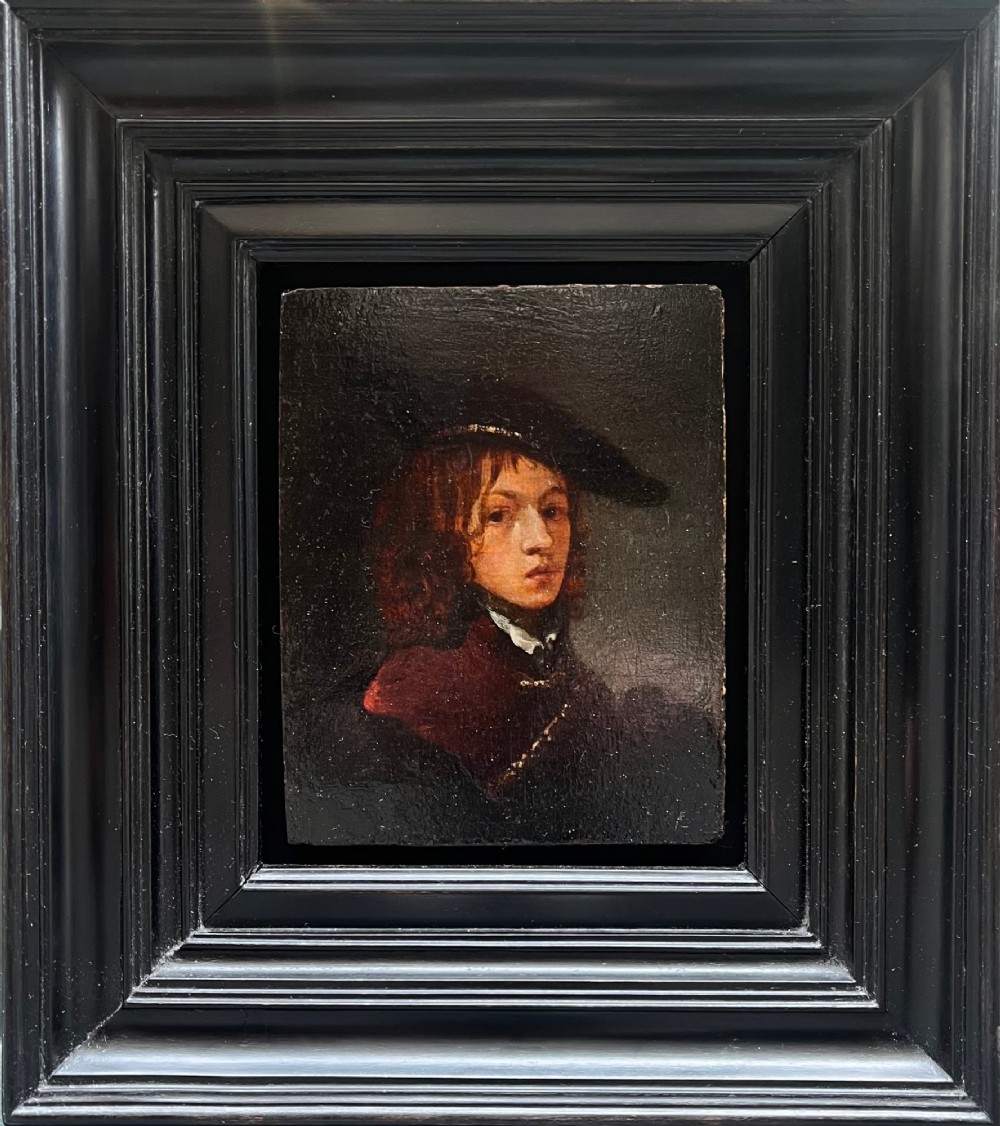
Dutch ebonised frame

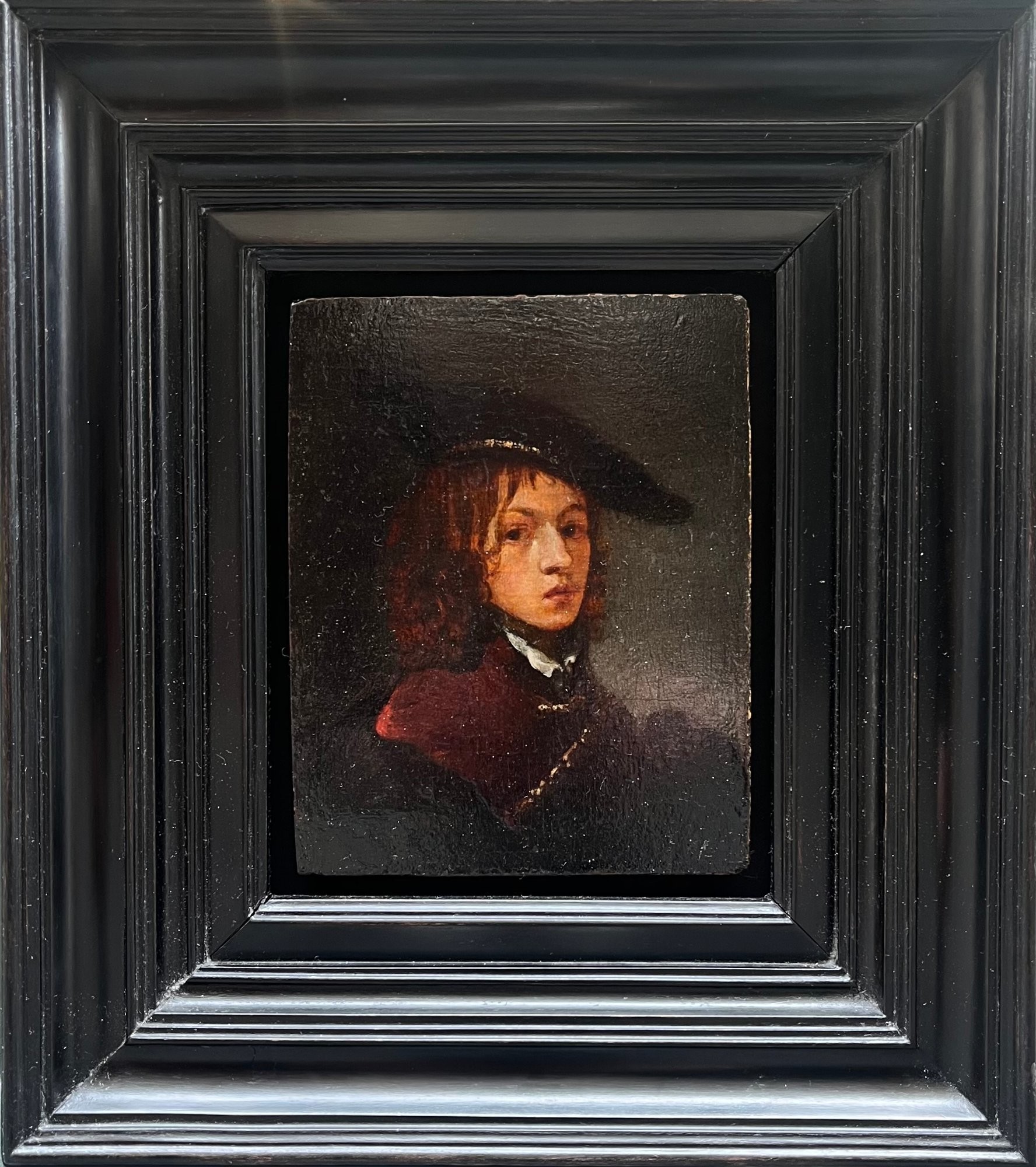
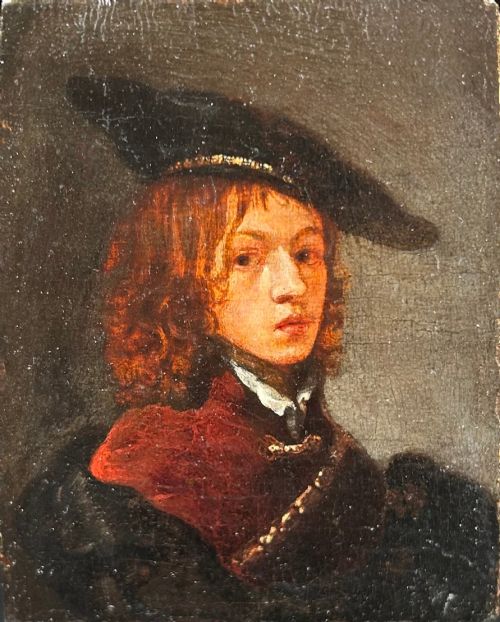
This small portrait is of a young man, staring inquisitively out towards the viewer. The realism of his appearance is striking, with great care taken in the depiction of the man’s features - for example, his full lips and the slight bump in the bridge of his nose. The man wears a rich burgundy doublet and a black cap and is adorned with gold accessories, indicating a degree of wealth - it is likely that this is a miniature portrait for a wealthy patron. The warm flesh tones of this painting and the intricate rendering of the man’s curly brown hair demonstrate the artistry of the painter, who has successfully captured the image of youth within his brushstrokes.
Rembrandt’s Pupils

Upon completing his artistic education, Rembrandt opened a studio and began to take students - the first of which were Gerrit Dou and Isaac Jouderville. The studio functioned as an art school, in which materials and guidance were provided - contrary to the studios of his peers, Rembrandt did not offer lodging to his pupils. The families of prospective pupils had to pay Rembrandt 100 guilders (enough for a house at the time) for this artistic education, and the profits from any works produced by pupils under Rembrandt would be paid to the master rather than kept by the student-artist - this contributed substantially to  the master’s income.

When taking on pupils, Rembrandt looked for those who could already paint, and guided their styles to reflect his. By choosing pupils who were somewhat experienced artists, Rembrandt had an array of painters that could be involved at any stage of assisting with the creation of his works - in this way, Rembrandt’s pupils often functioned as studio assistants as well. In order to perfect Rembrandt’s style, pupils would paint copies of their teacher’s works, sometimes adding their own distinct variations. They would use the same subjects and models as Rembrandt himself, and would accompany him on outdoor trips to paint nature and landscapes. The extensive copying and utilisation of same source materials has rendered Rembrandt’s work and the work of his pupils difficult to differentiate, even in the modern era.

At least 50 pupils were taught by Rembrandt, with many continuing on to become his studio assistants. A few graduated into successful artists in their own right - for example, Govaert Flinck, Willem Dorst, Ferdinand Bol, Nicolaes Maes and Gottfried Kneller. With these artists, the influence of Rembrandt is noticeable within their works despite their own distinct styles. Many other pupils changed vocation, or simply never gained recognition for their work.

Physical Dimensions
Height
13cm (5.12")
Width
11cm (4.33")
Declaration

Darnley Fine Art has dated this Dutch Golden Age Portrait to the 17th Century.

Reference Numbers
Sellingantiques Reference
SA1226427
Description
Oil on oak panel

Image size: 4 1/4 x 5 inches (11 x 13 cm)

Dutch ebonised frame

This small portrait is of a young man, staring inquisitively out towards the viewer.

The realism of his appearance is striking, with great care taken in the depiction of the man’s features - for example, his full lips and the slight bump in the bridge of his nose.
Darnley Fine Art

The man wears a rich burgundy doublet and a black cap and is adorned with gold accessories, indicating a degree of wealth - it is likely that this is a miniature portrait for a wealthy patron. The warm flesh tones of this painting and the intricate rendering of the man’s curly brown hair demonstrate the artistry of the painter, who has successfully captured the image of youth within his brushstrokes.

fig 1. An antique oil portrait depicting a young man wearing a wide-brimmed cap, presented within a multi-moulded black ebonised frame.
fig 1. Pupil of Rembrandt Portrait of a Young Man

Rembrandt’s Pupils

Upon completing his artistic education, Rembrandt opened a studio and began to take students - the first of which were Gerrit Dou and Isaac Jouderville. The studio functioned as an art school, in which materials and guidance were provided - contrary to the studios of his peers, Rembrandt did not offer lodging to his pupils. The families of prospective pupils had to pay Rembrandt 100 guilders (enough for a house at the time) for this artistic education, and the profits from any works produced by pupils under Rembrandt would be paid to the master rather than kept by the student-artist - this contributed substantially to  the master’s income.

When taking on pupils, Rembrandt looked for those who could already paint, and guided their styles to reflect his. By choosing pupils who were somewhat experienced artists, Rembrandt had an array of painters that could be involved at any stage of assisting with the creation of his works - in this way, Rembrandt’s pupils often functioned as studio assistants as well. In order to perfect Rembrandt’s style, pupils would paint copies of their teacher’s works, sometimes adding their own distinct variations. They would use the same subjects and models as Rembrandt himself, and would accompany him on outdoor trips to paint nature and landscapes. The extensive copying and utilisation of same source materials has rendered Rembrandt’s work and the work of his pupils difficult to differentiate, even in the modern era.

At least 50 pupils were taught by Rembrandt, with many continuing on to become his studio assistants. A few graduated into successful artists in their own right - for example, Govaert Flinck, Willem Dorst, Ferdinand Bol, Nicolaes Maes and Gottfried Kneller. With these artists, the influence of Rembrandt is noticeable within their works despite their own distinct styles. Many other pupils changed vocation, or simply never gained recognition for their work.

Height
13cm (5.12")
Width
11cm (4.33")
Date of Manufacture

Darnley Fine Art has dated this Dutch Golden Age Portrait to the 17th Century.

Reference Numbers
Sellingantiques Ref
SA1226427
Darnley Fine Art
Sellingantiques verified Since Jul 2026
Dealer Profile

You can view the stock and full dealer information on the Darnley Fine Art Profile Page
PDF SHARE
SAVE
An antique oil portrait depicting a young man wearing a wide-brimmed cap, presented within a multi-moulded black ebonised frame.
1 / 2
Archive I An antique oil portrait depicting a young man wearing a wide-brimmed cap, presented within a multi-moulded black ebonised frame.

Pupil of Rembrandt Portrait of a Young Man
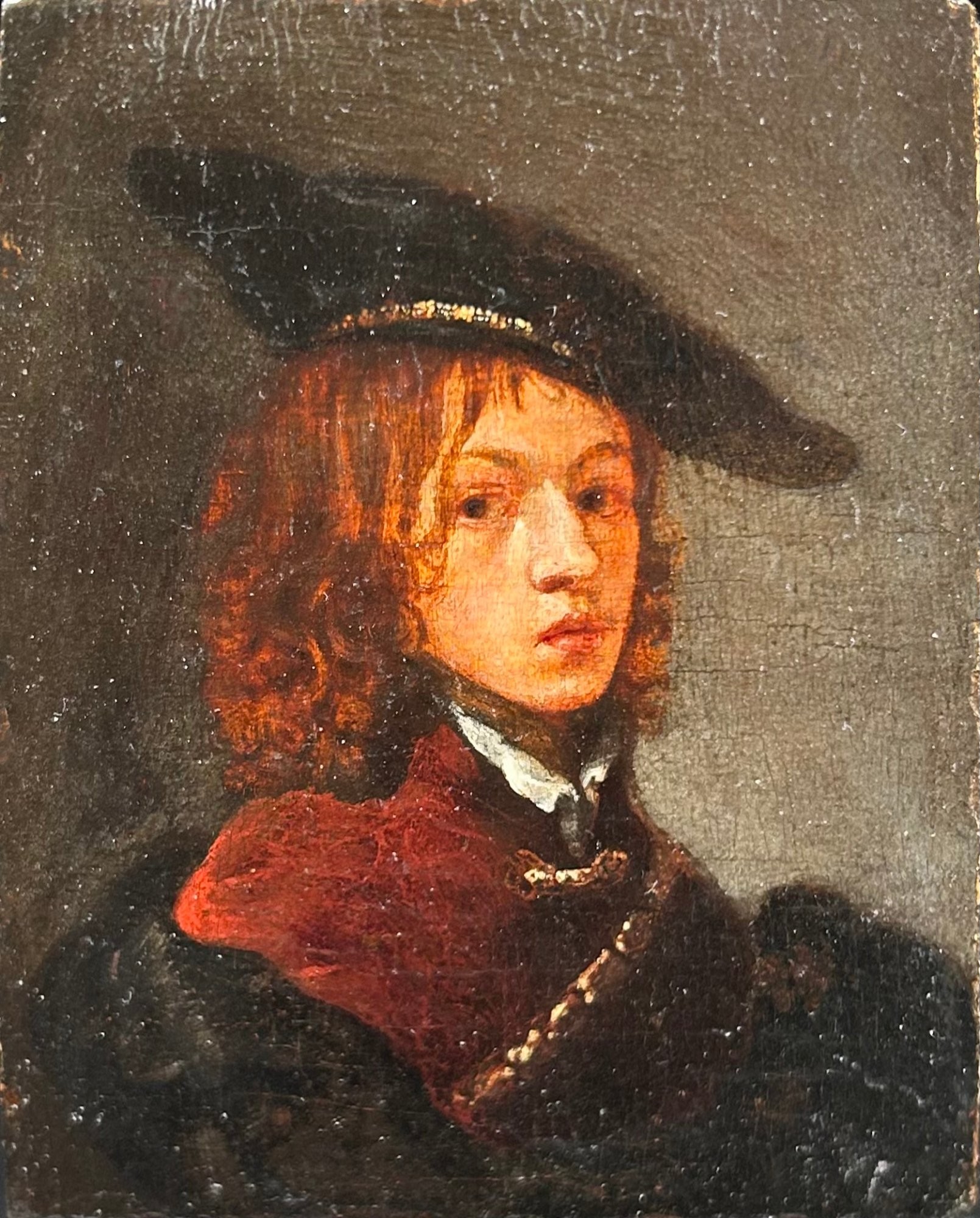
Archive II An antique oil portrait depicting a young man wearing a wide-brimmed cap, presented within a multi-moulded black ebonised frame. View II
FURTHER BROWSING

Visitors also looked at these ⇣

Enlarged Archival View
Telephone 0207 379 0499
Location
2-4 Cecil Court
London
WC2N 4HE
United Kingdom

Opening Times
Monday to Saturday: 10:30 - 5:30
(excluding Bank Holidays)
Dealer Profile Page sellingantiques.co.uk/dfa
Verified Since Jul 2026
Items For Sale 76
Darnley Fine Art
Verified Since Jul 2026
View Dealer Info
Location: 2-4 Cecil Court, London, WC2N 4HE, United Kingdom, , Opening Times, Monday to Saturday: 10:30 - 5:30, (excluding Bank Holidays)
Verified
Jul 2026
For Sale
76
An antique oil portrait depicting a young man wearing a wide-brimmed cap, presented within a multi-moulded black ebonised frame.
Pupil of Rembrandt Portrait of a Young Man
Ref: SA1226427
An antique oil portrait depicting a young man wearing a wide-brimmed cap, presented within a multi-moulded black ebonised frame.
Detail View 1
Archival Detail
Every single antique dealer on our platform is individually approved by our internal team. We verify their professional trade history, ethical standards, and photographic quality to ensure a secure, high-standard buying environment. Upon joining, every dealer agrees to a strict 9-point code of conduct. While issues can occasionally arise, our dealers typically resolve them swiftly and directly with the buyer. In fact, since our founding in 2002, Sellingantiques has only had to step in to help resolve an issue on roughly five occasions—a true testament to the quality of our dealers and their dedication to your happiness.
Our dealers are highly experienced in packing and shipping fragile, high-value antiques. Because you are in direct contact with the dealer, you will be able to easily go through all available shipping and insurance options together to ensure your item arrives safely.
Antiques are the ultimate green purchase. By choosing historical pieces over newly manufactured goods, you completely eliminate the carbon footprint of modern mass production while preserving exceptional, timeless craftsmanship.

Dutch Golden Age portraiture from the 17th century is recognised for its realistic representation, dramatic use of chiaroscuro lighting, and focus on individual identity. Artists from this movement, including Rembrandt and his studio circle, frequently portrayed subjects in subtle light against dark, tonal backgrounds.

Artists during this period typically applied hand-ground oil pigments onto solid oak panels or stretched linen canvases. Framing commonly featured dark hardwoods with deep profile mouldings or ebonised veneers.

Authentic period paintings display consistent age-related craquelure across the paint surface, historic wood panel construction or original lining techniques, and period-appropriate pigment application. Technical examinations such as dendrochronology and infrared reflectography are used to confirm dating.

Classical portraiture can be integrated into modern interiors by positioning the painting on a minimalist wall or above a clean-lined console table. Combining dark, historic artwork with contemporary architecture creates a balanced visual contrast.

Maintain a stable room climate away from direct sunlight, dampness, and heat sources to avoid panel warping or paint flaking. Dust the surface gently using a dry, soft brush, and engage a professional conservator for any structural repairs or cleaning.
items
Add keywords to the filter
Price
£100
£250000
Era
Movements
Material
Origin
Stock Location
Freshness
Online Payments
Categories