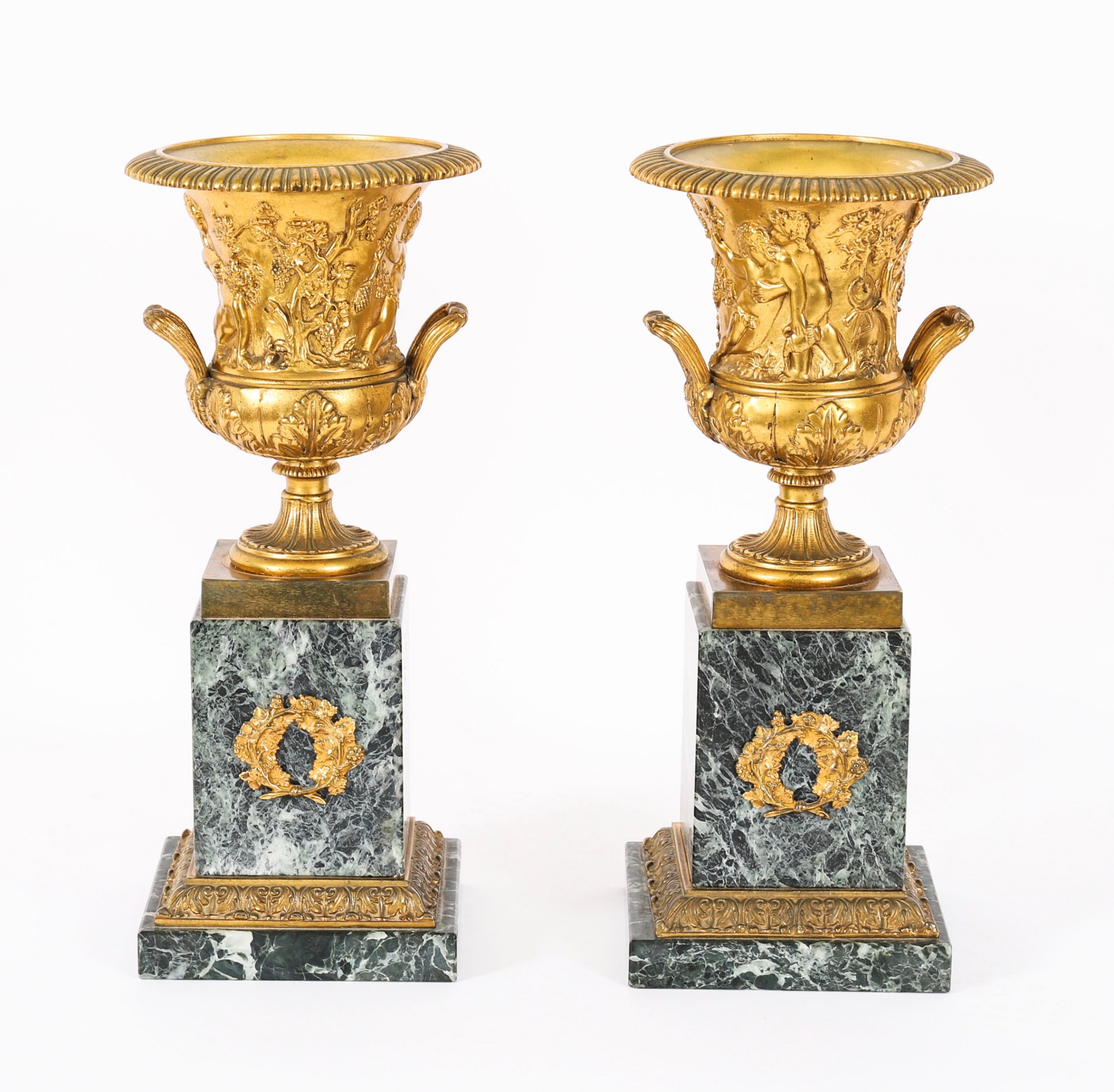
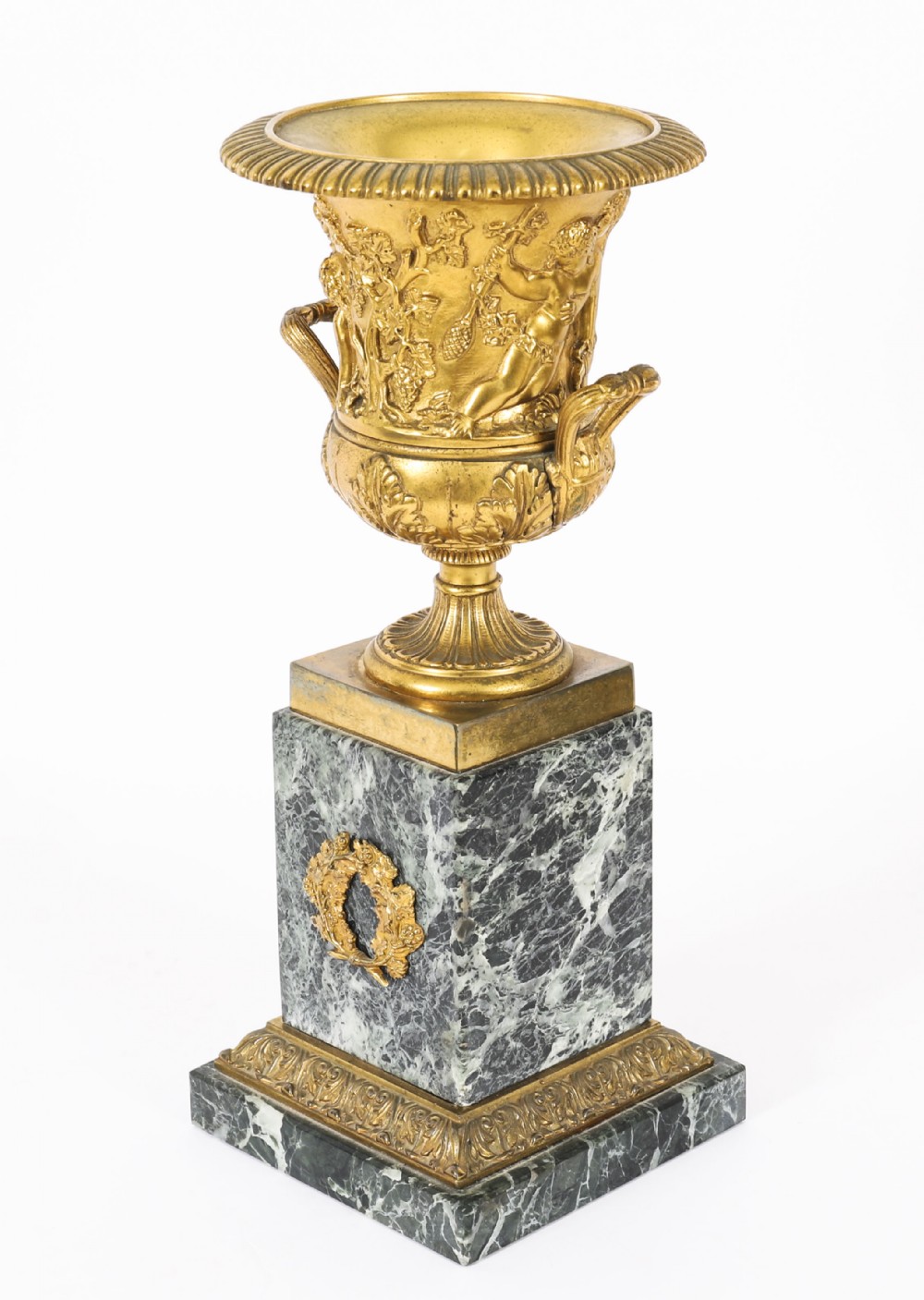
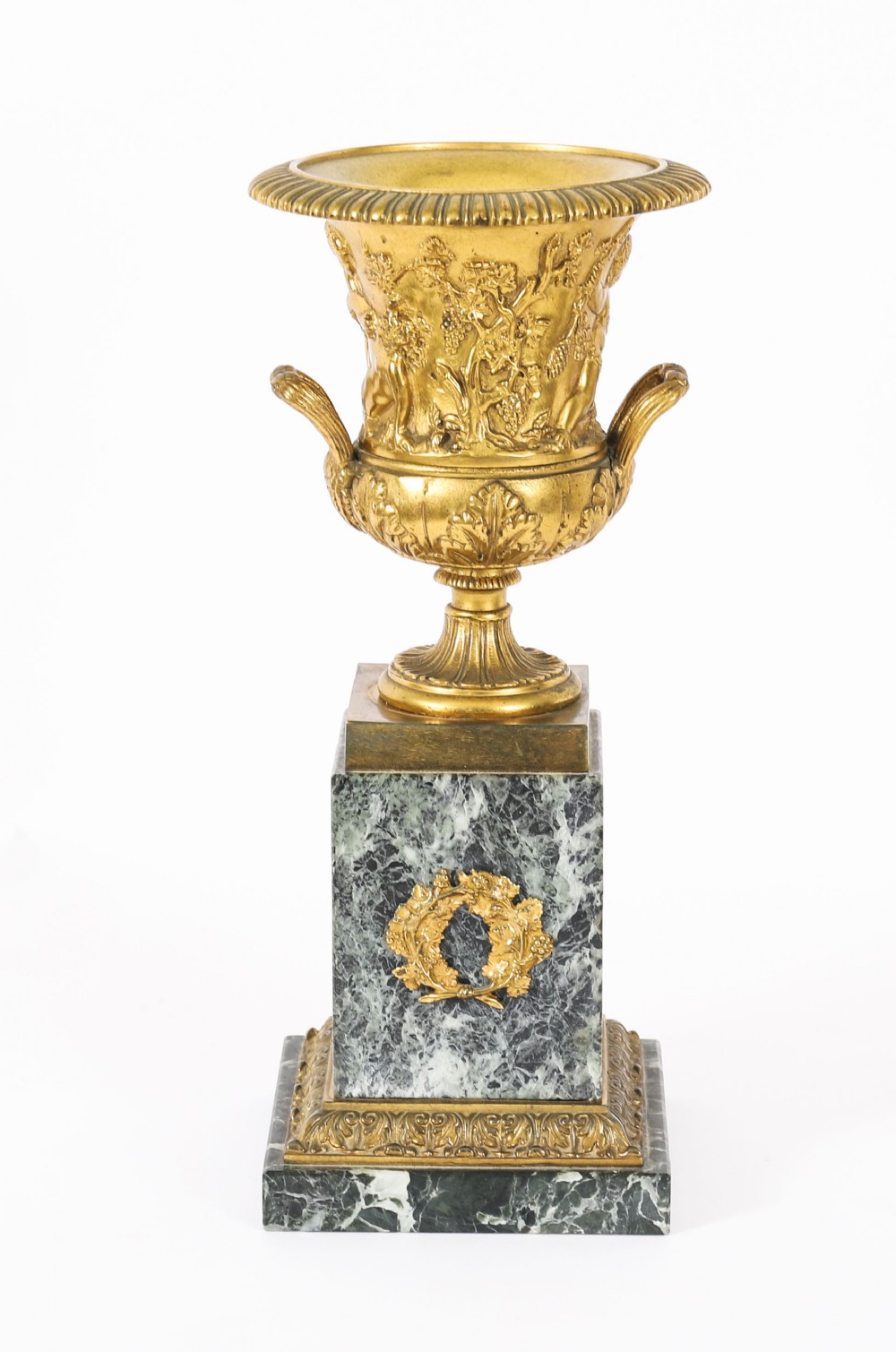
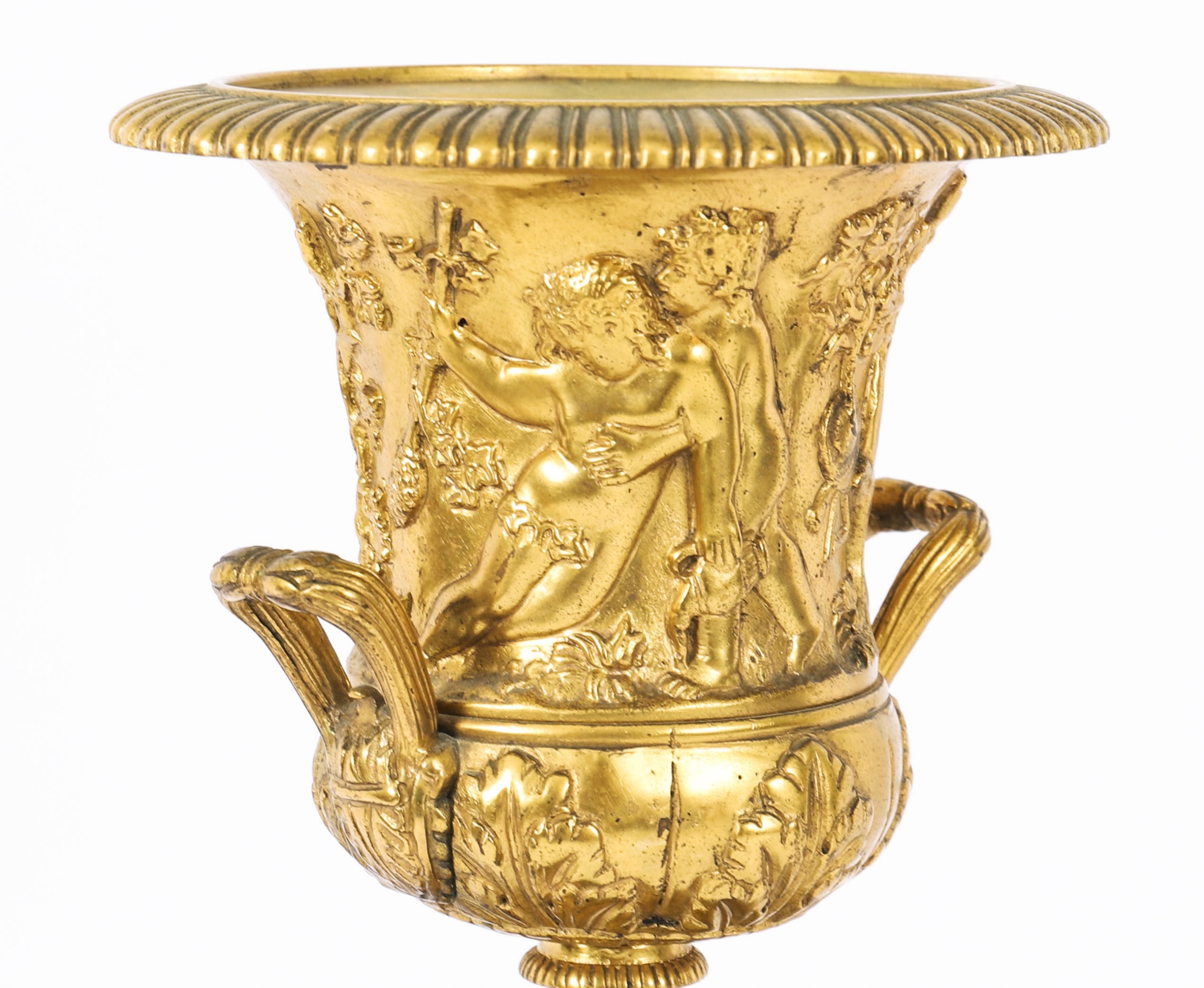
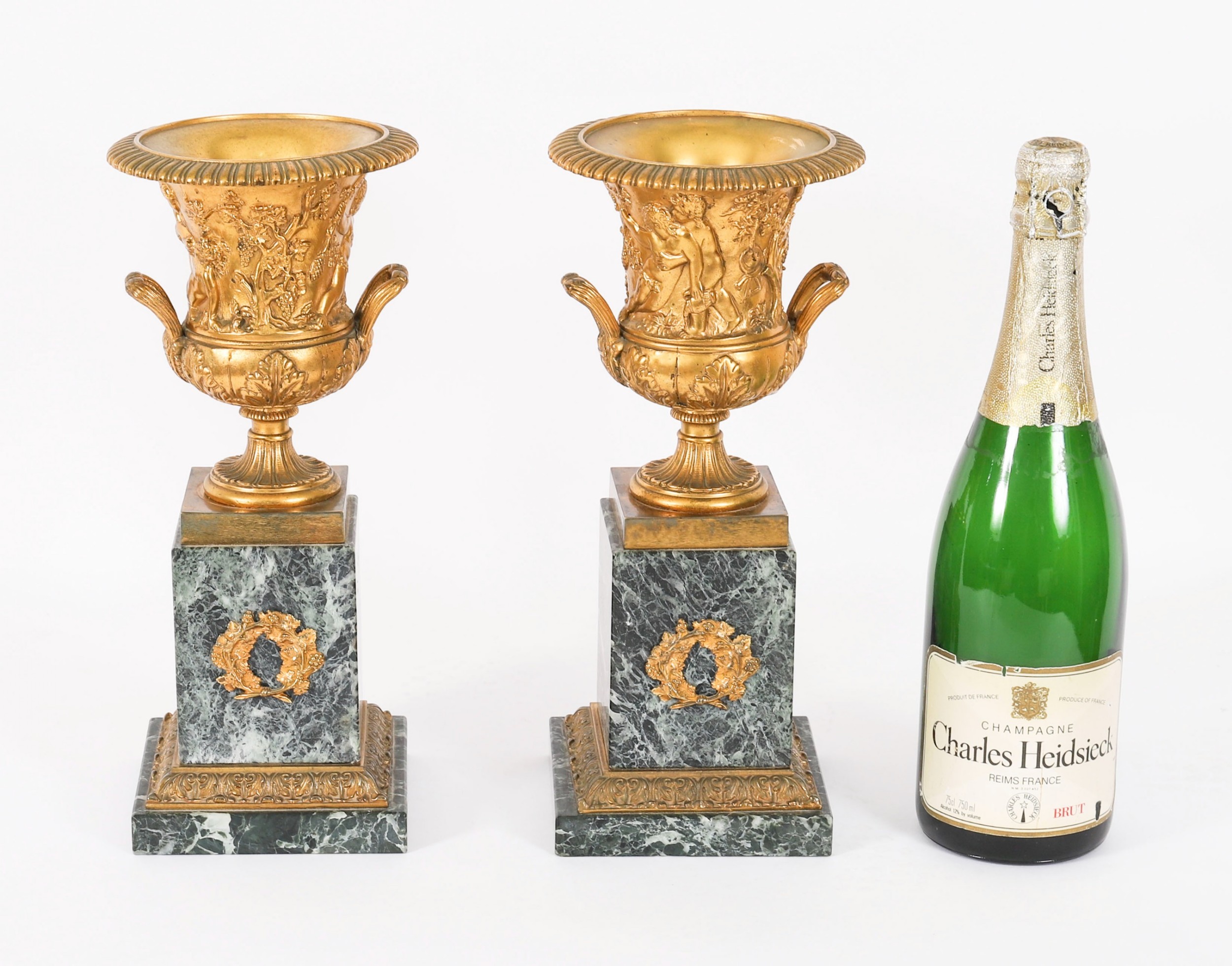
A superb antique pair of French Grand Tour gilt bronze and marble Borghese Campana urns, circa 1870 in date.
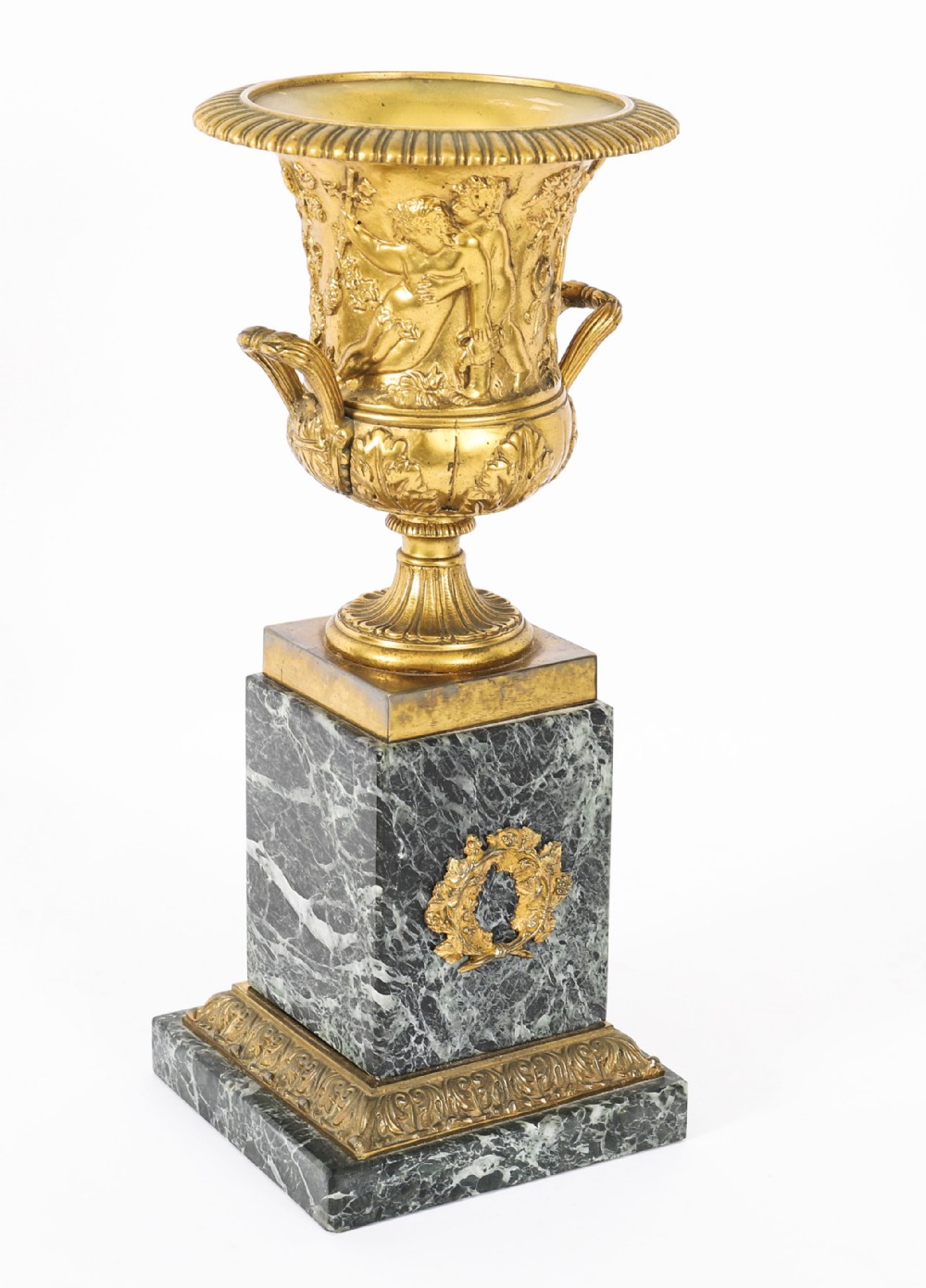
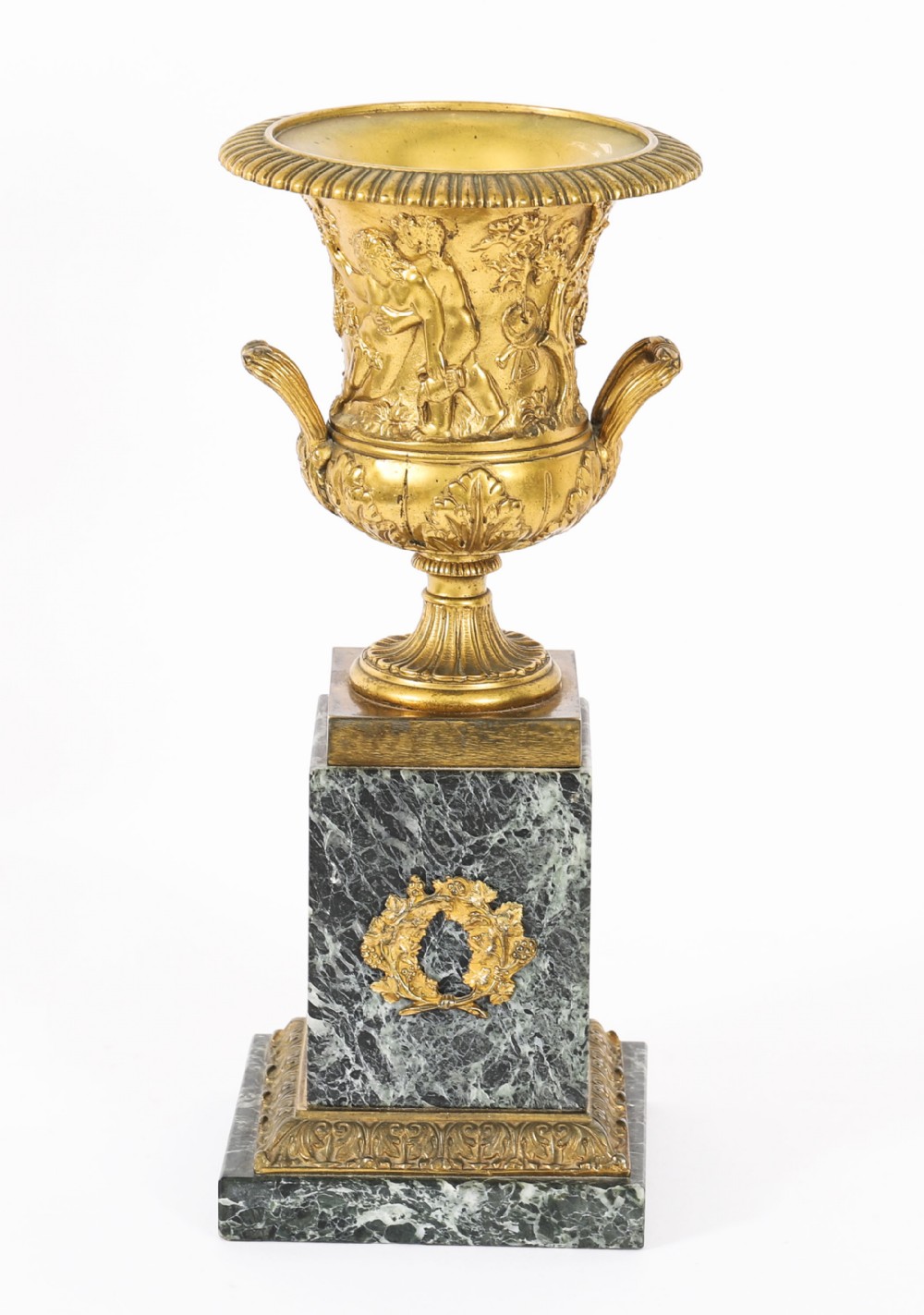
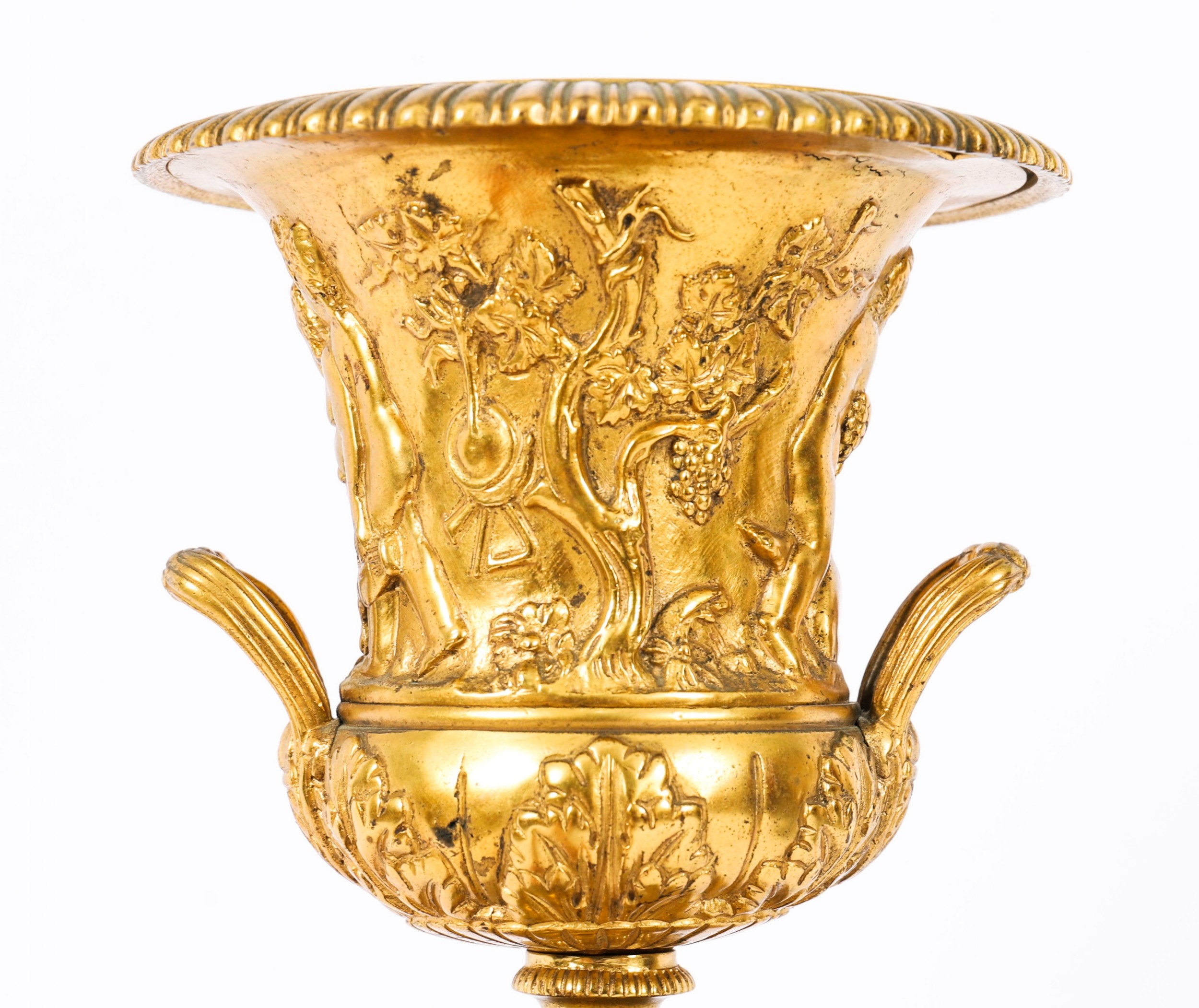
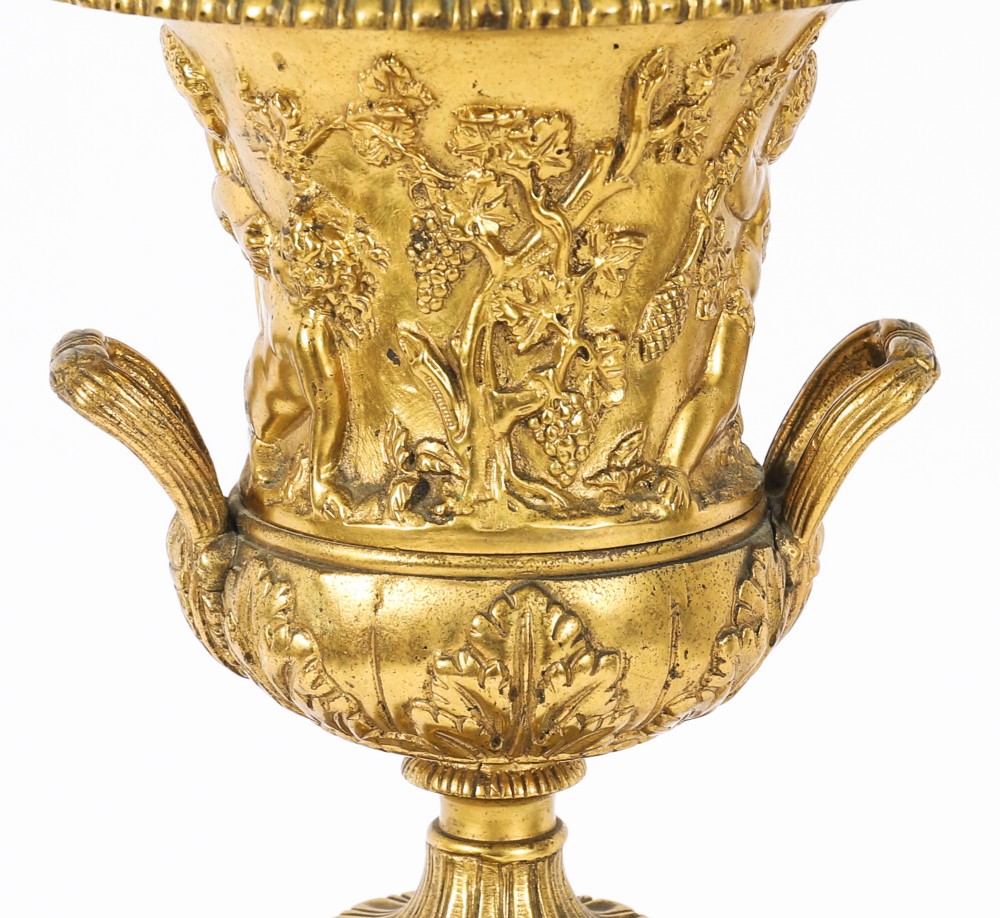
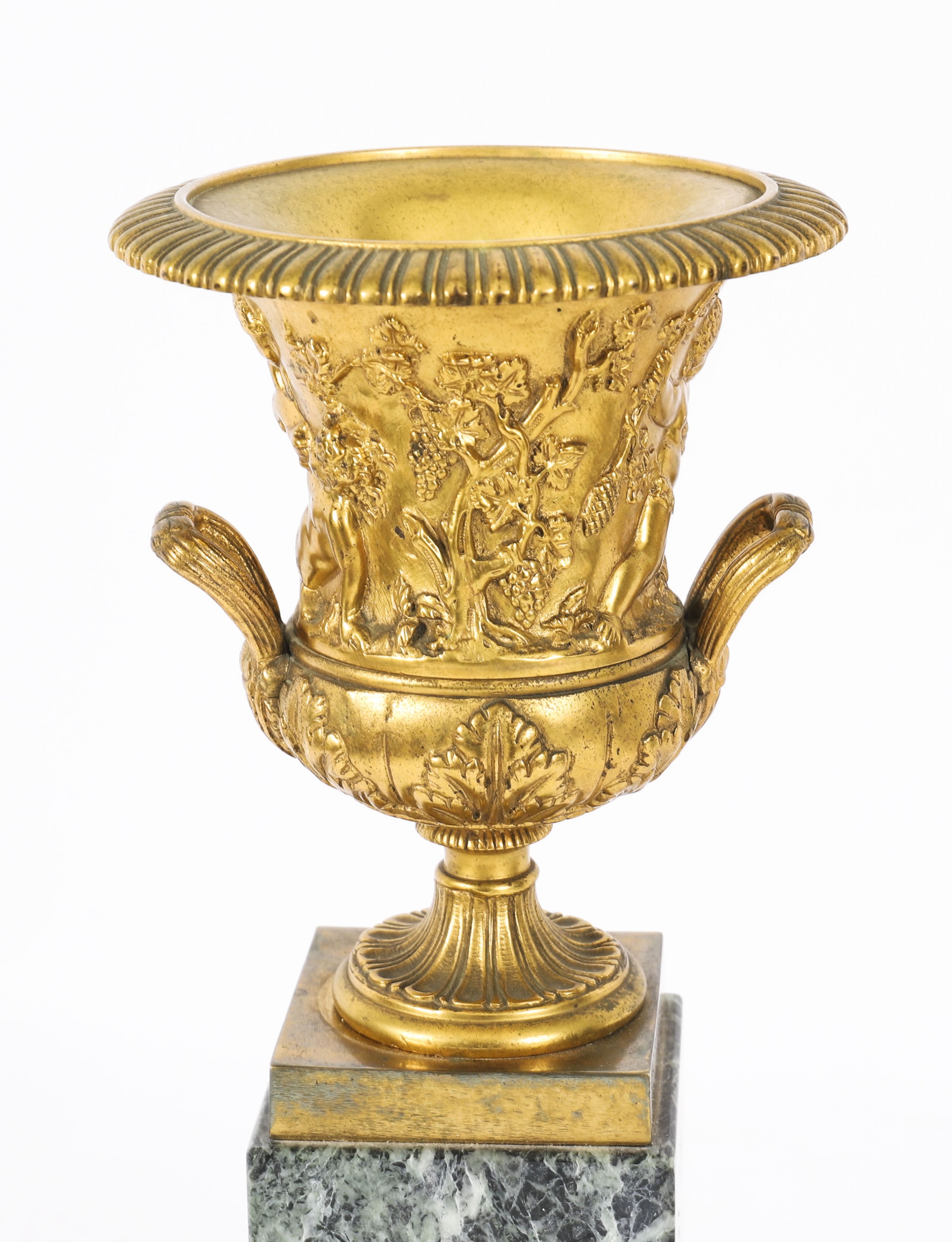
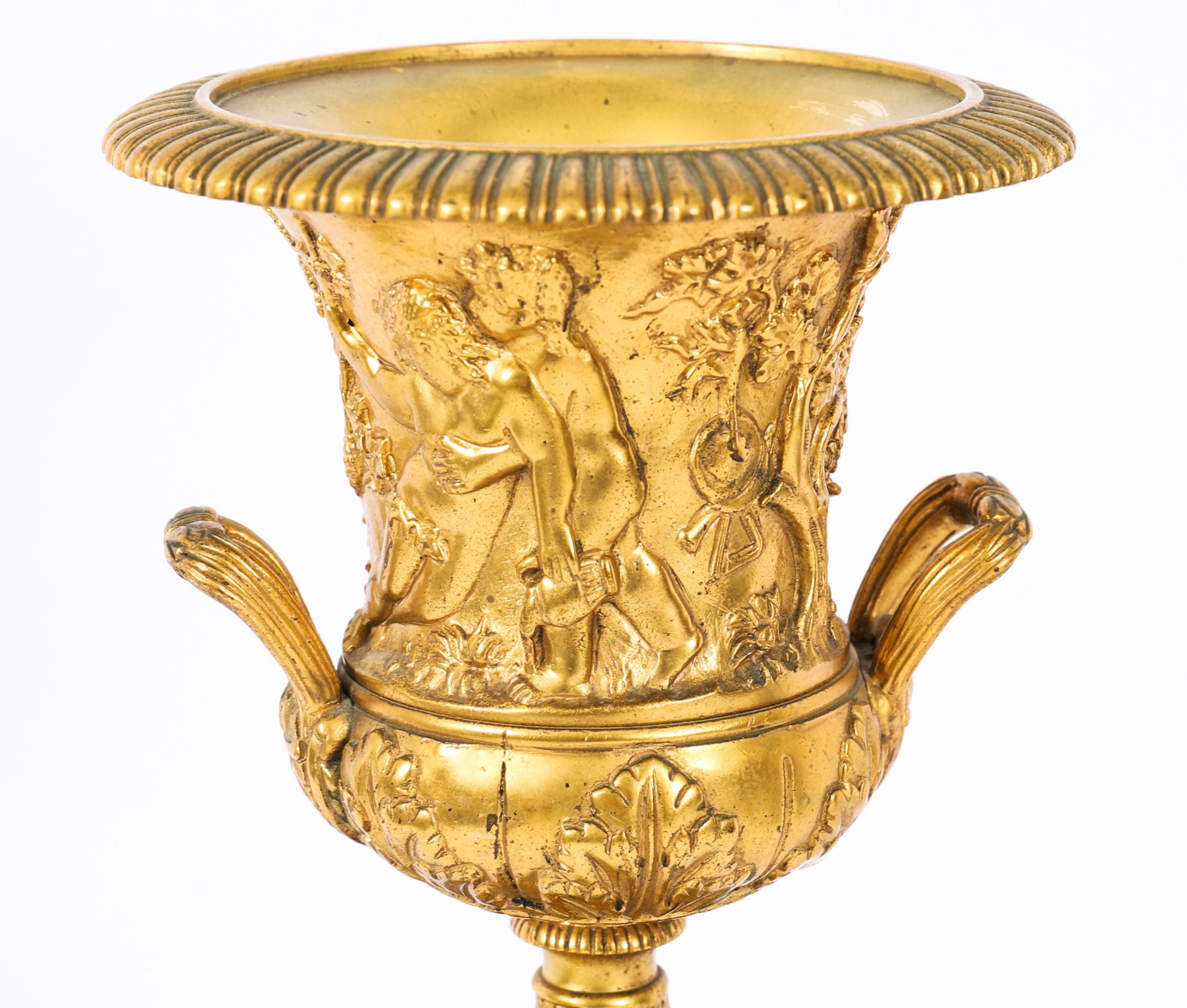
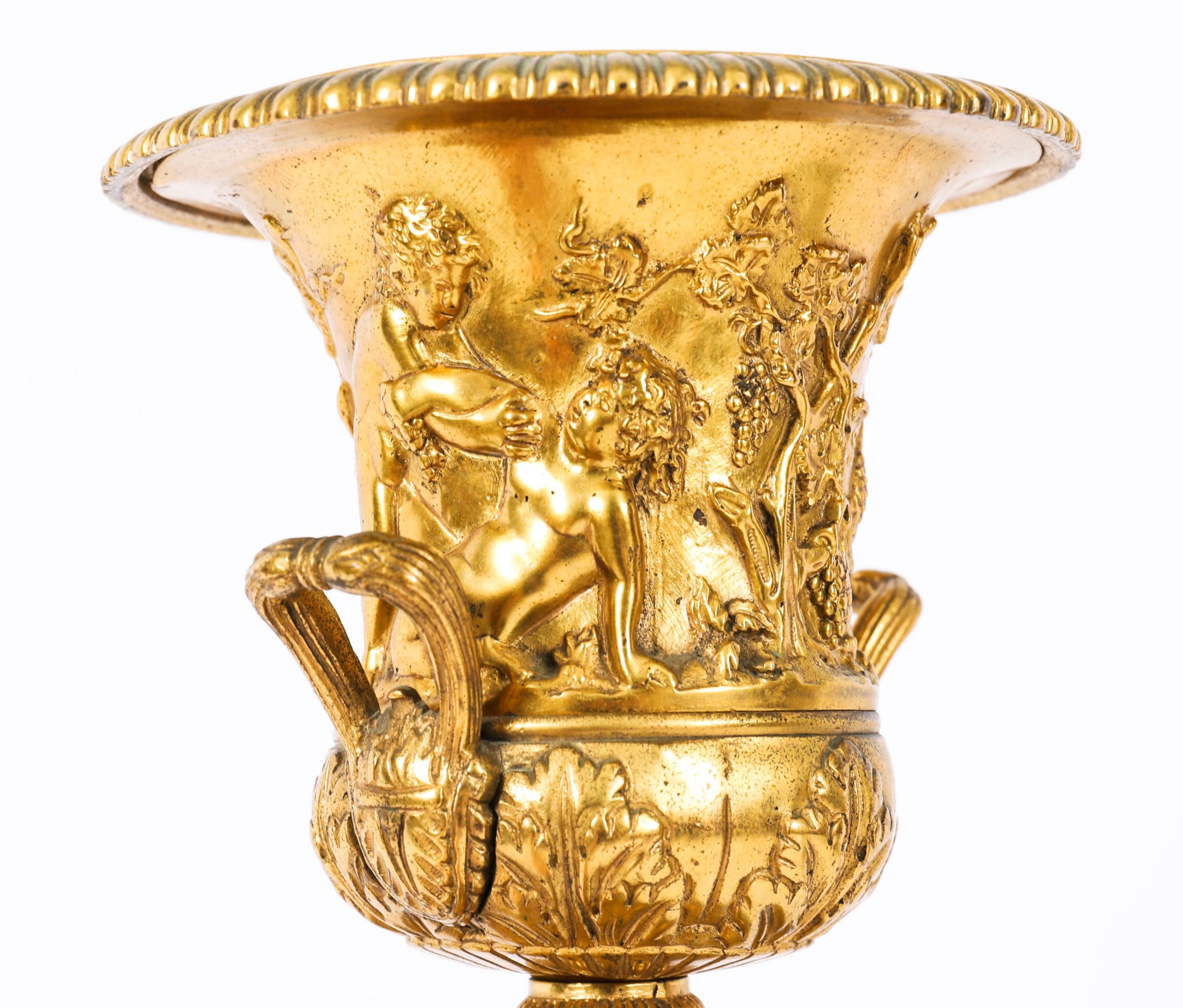
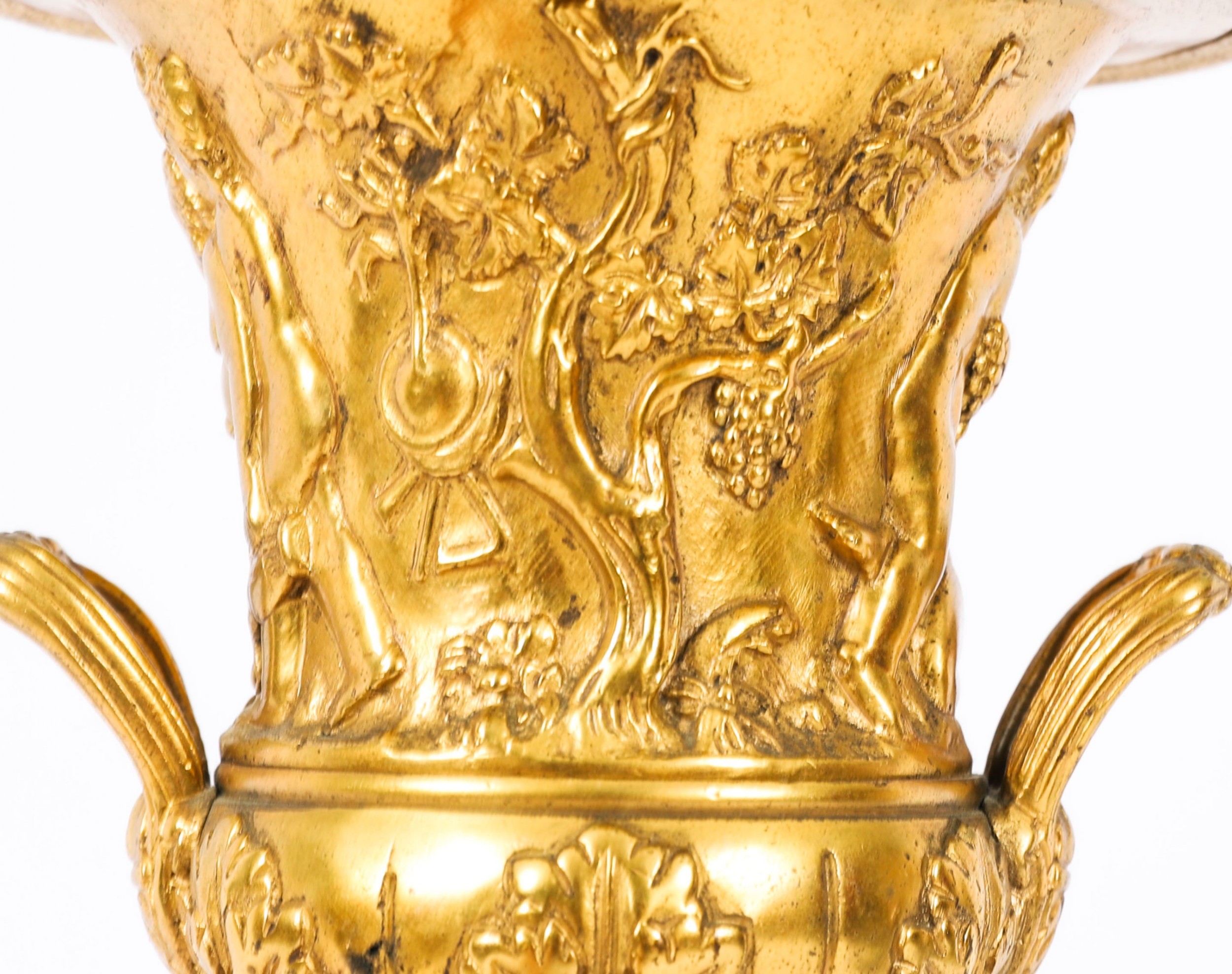
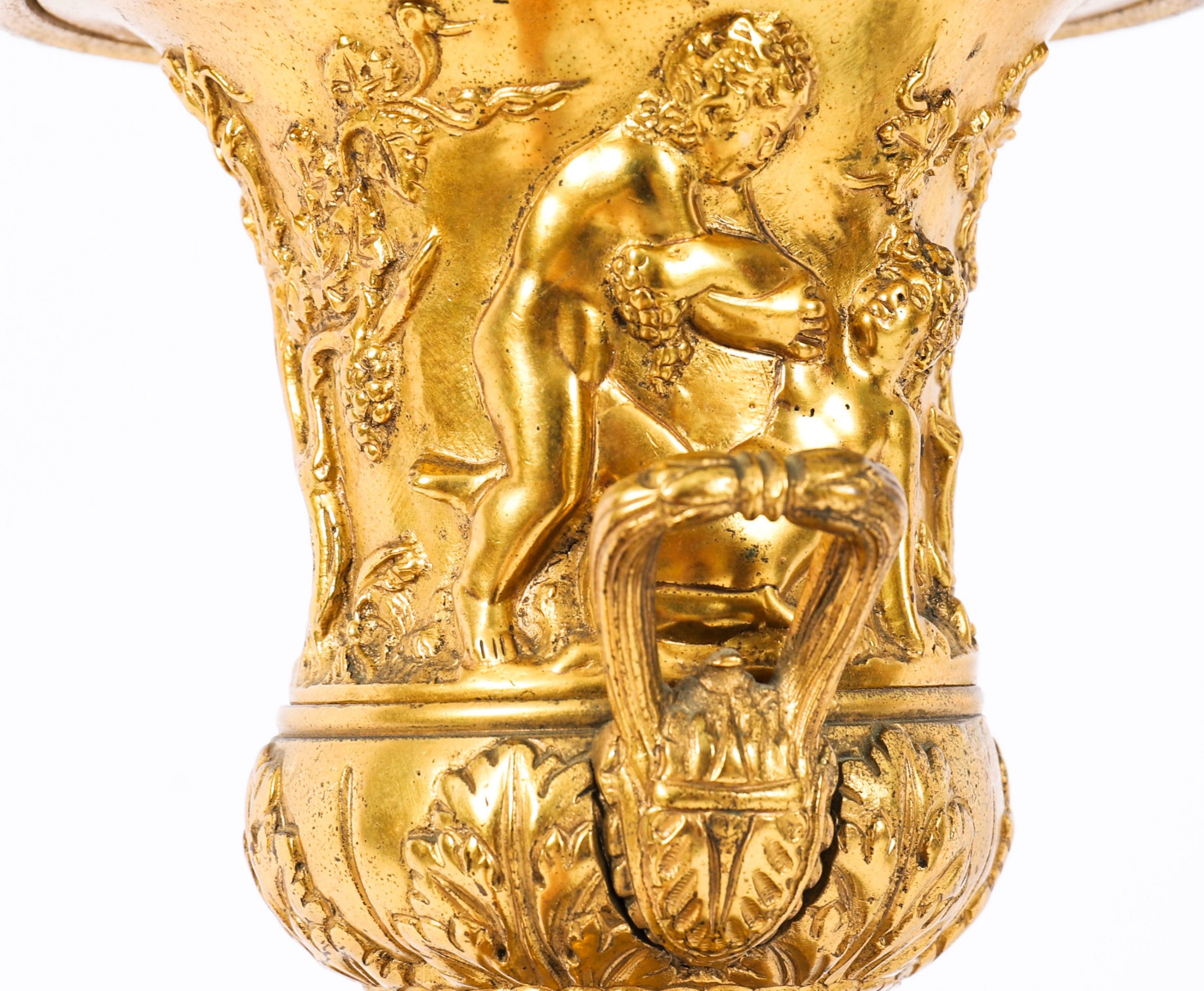
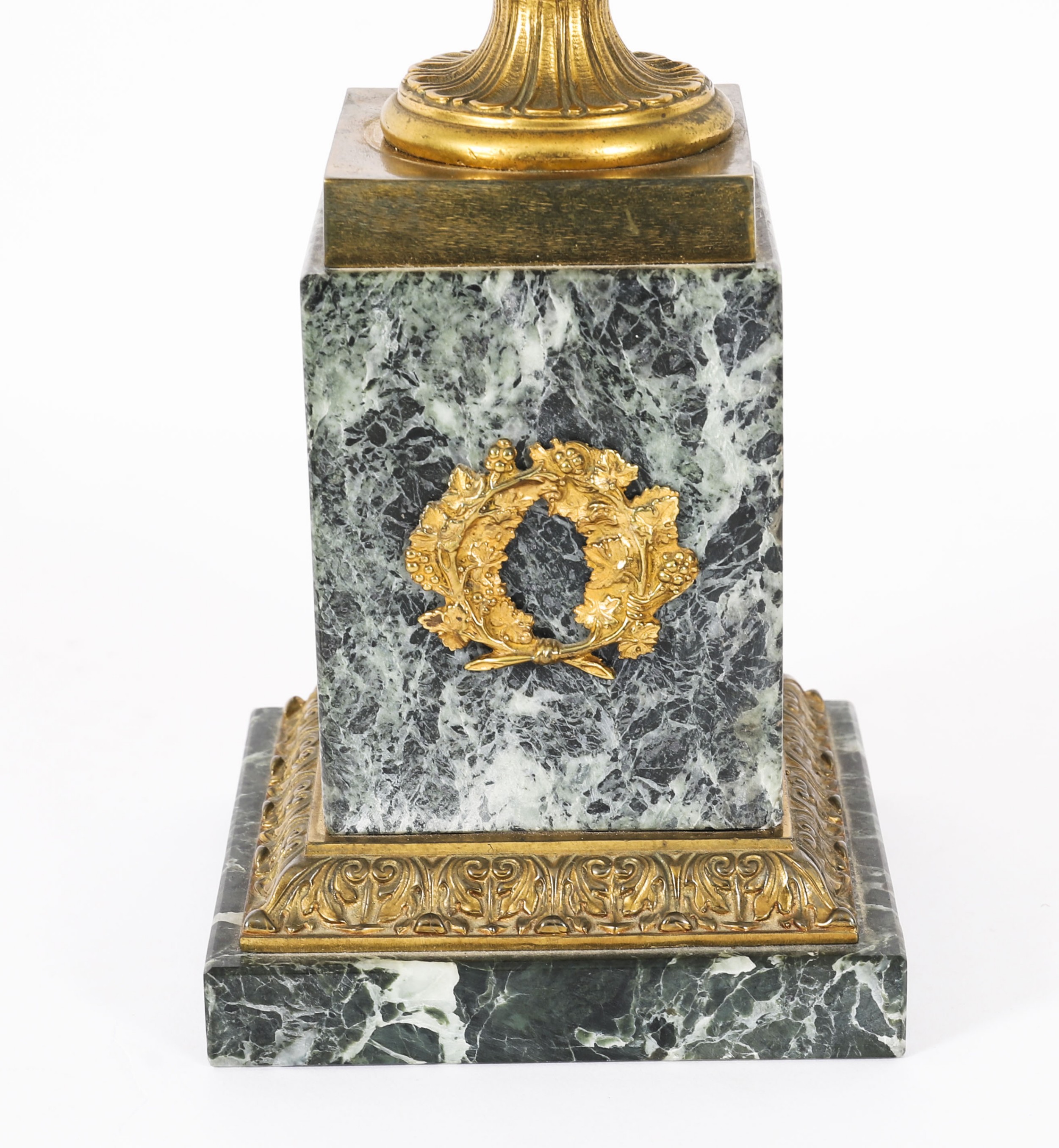
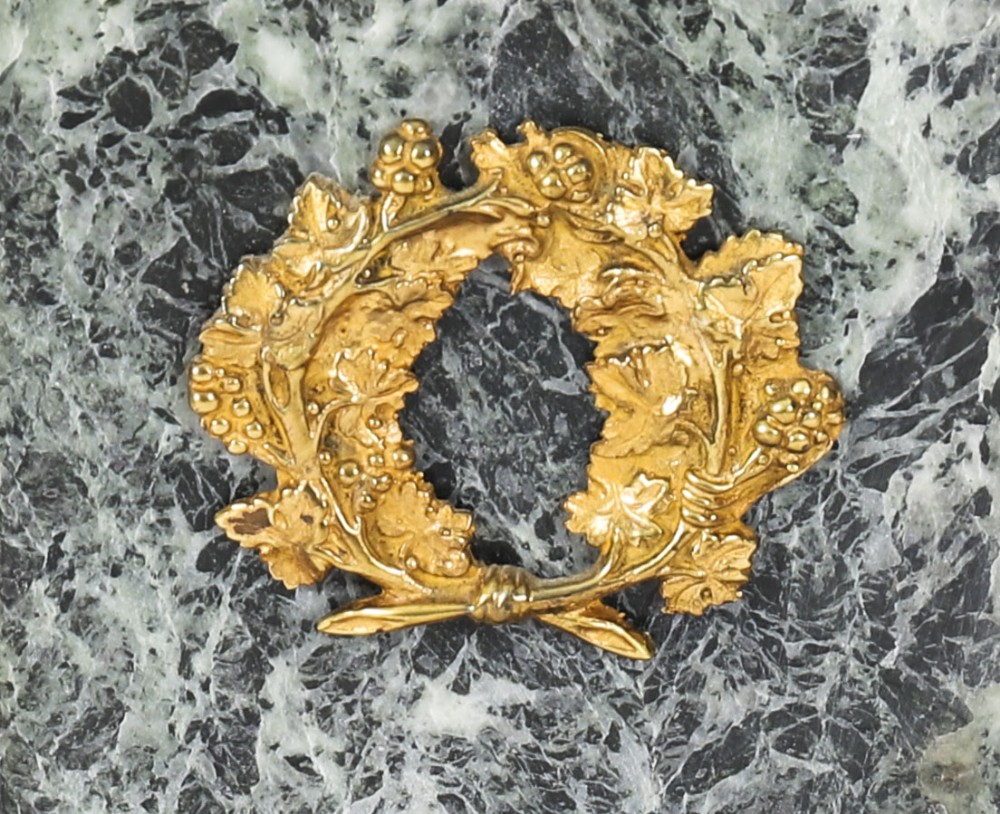
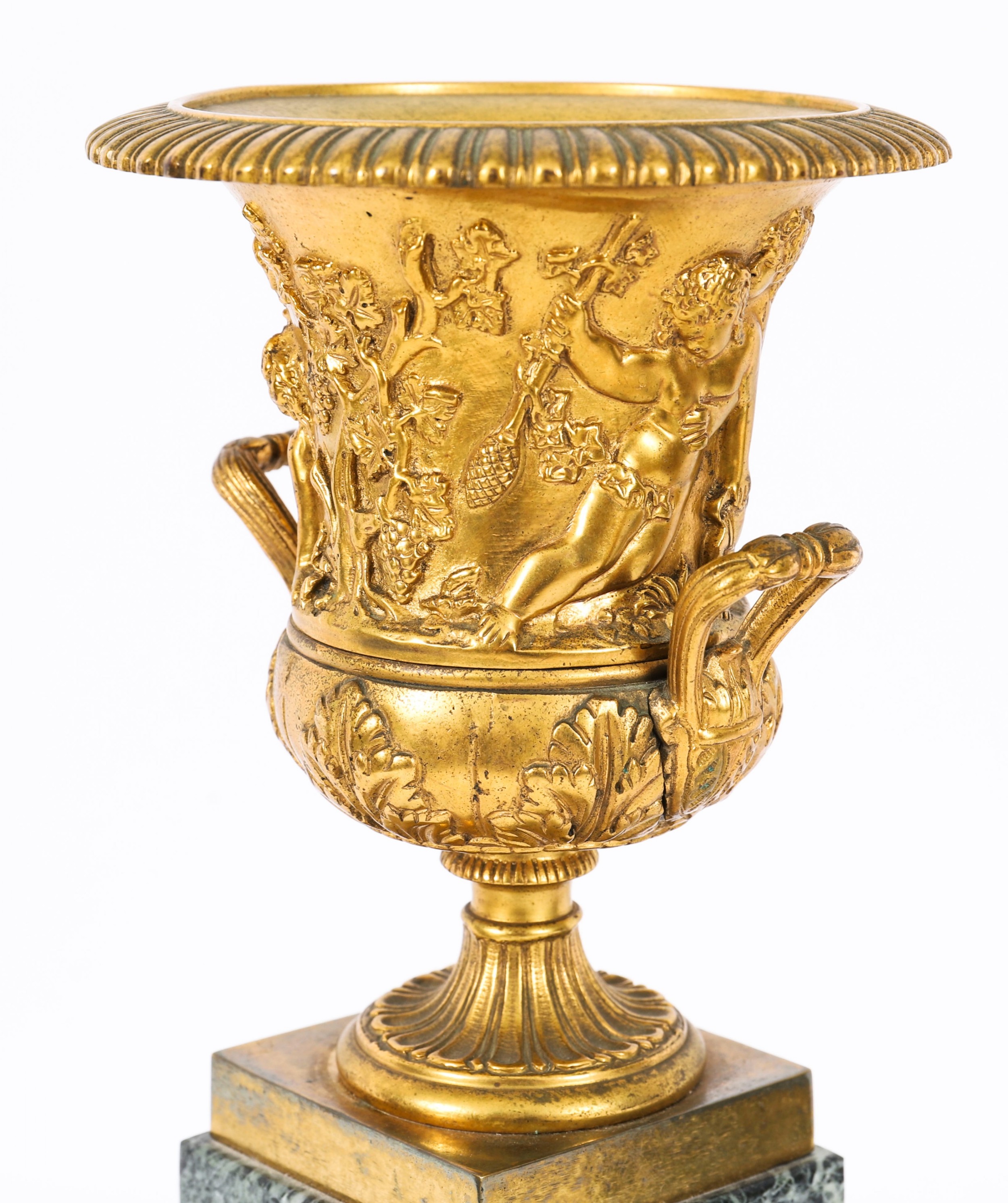
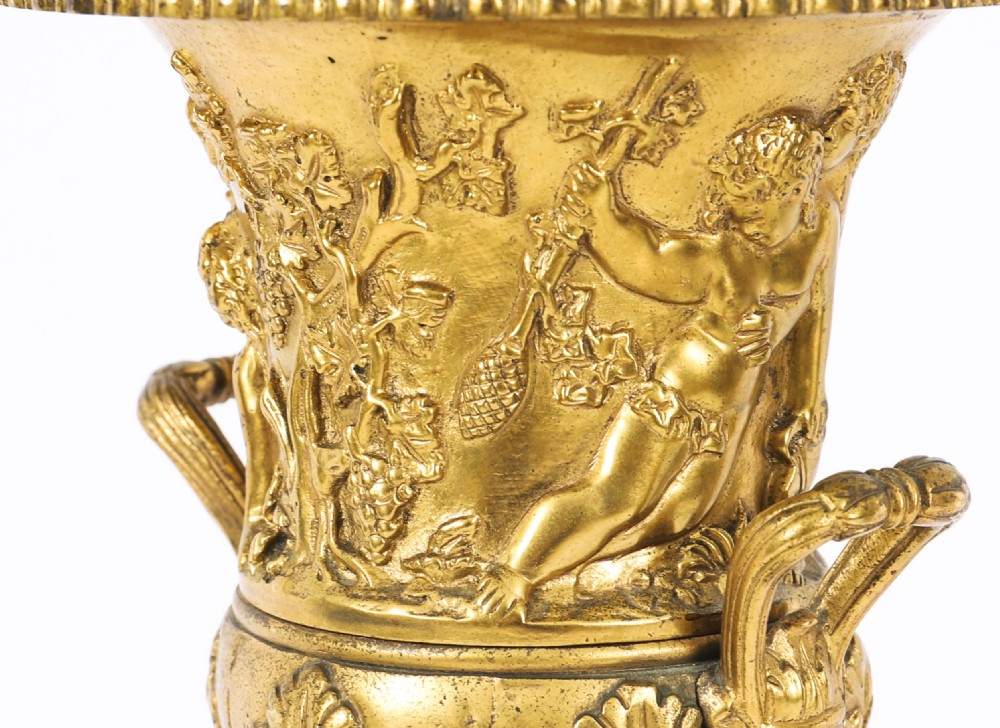
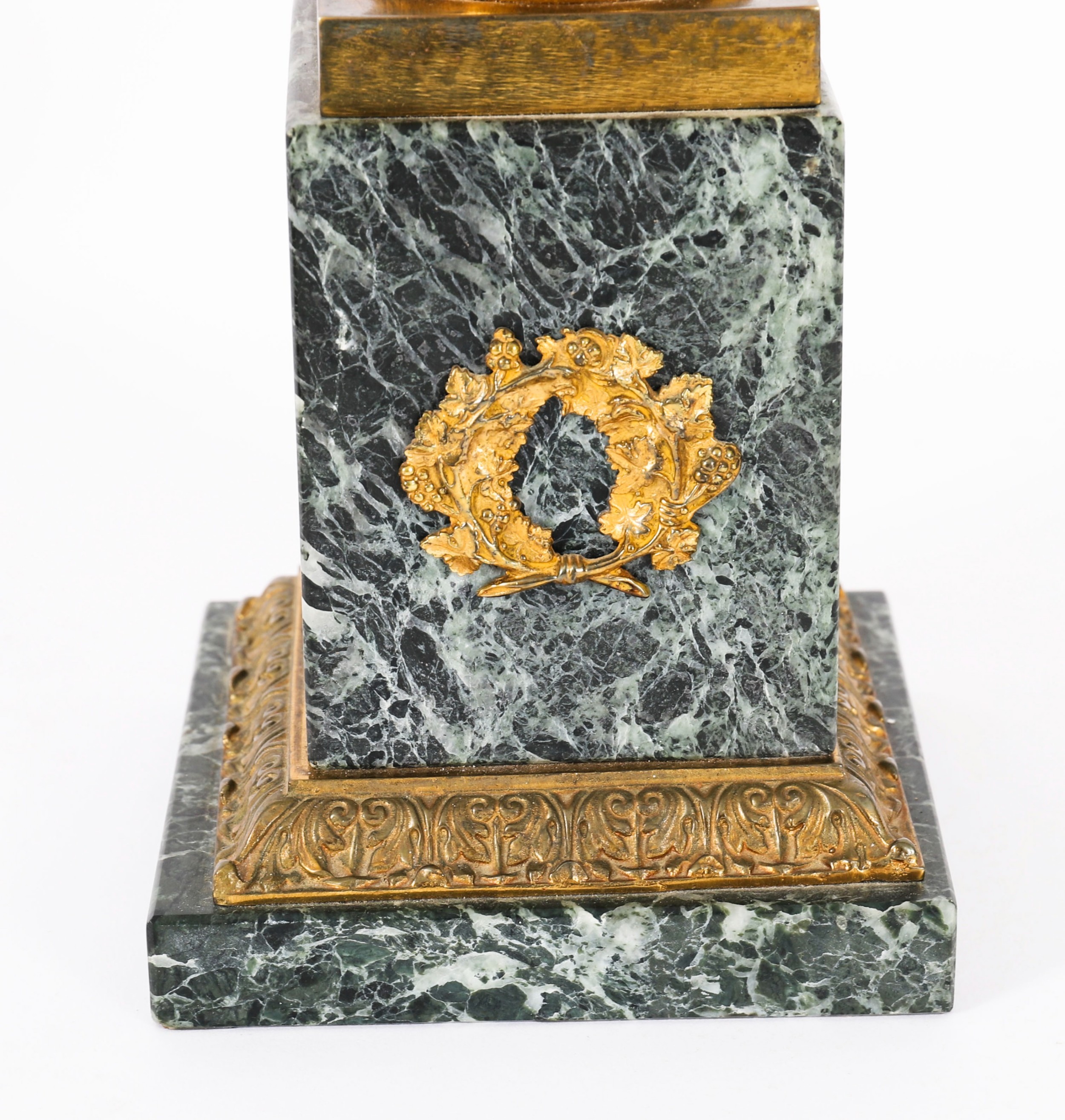
This pair of gilt bronze campana urns is after the Borghese models, with the bodies cast in relief with continuous Bacchanalian scenes, flanked by loop handles, on socle bases mounted on square-section mottled grey Gris St Anne marble plinths with gilt bronze ormolu mounts.
This high-quality hot-cast solid bronze was produced using the traditional ''lost wax'' process, otherwise known as the ''cire perdue'' method.
The craftsmanship is second to none throughout all aspects of this pair, and they are sure to add an unparalleled touch of class to your home.
Condition:
In excellent condition, please see photos for confirmation.
Dimensions in cm:
Height 32 cm x Width 12 cm x Depth 12 cm
Dimensions in inches:
Height 1 foot, 1 inch x Width 5 inches x Depth 5 inches
The Grand Tour was the traditional trip of Europe undertaken by mainly upper-class European
... young men of means. The custom flourished from about 1660 until the advent of large-scale rail transit in the 1840s, and was associated with a standard itinerary.
It served as an educational rite of passage. Though primarily associated with the British nobility and wealthy landed gentry, similar trips were made by wealthy young men of Protestant Northern European nations on the Continent, and from the second half of the 18th century some South American, U.S., and other overseas youth joined in. The tradition was extended to include more of the middle class after rail and steamship travel made the journey less of a burden.
The primary value of the Grand Tour, it was believed, lay in the exposure both to the cultural legacy of classical antiquity and the Renaissance, and to the aristocratic and fashionably polite society of the European continent. In addition, it provided the only opportunity to view specific works of art, and possibly the only chance to hear certain music. A grand tour could last from several months to several years. It was commonly undertaken in the company of a knowledgeable guide or tutor.
The Grand Tour not only provided a liberal education but allowed those who could afford it the opportunity to buy things otherwise unavailable at home, and it thus increased participants'' prestige and standing. Grand Tourists would return with crates of art, books, pictures, sculpture, and items of culture, which would be displayed in libraries, cabinets, gardens, and drawing rooms, as well as the galleries built purposely for their display; The Grand Tour became a symbol of wealth and freedom.
Ormolu - Gilt Bronze (from French ''or moulu'', signifying ground or pounded gold) is an 18th-century English term for applying finely ground, high-carat gold in a mercury amalgam to an object of bronze. The mercury is driven off in a kiln, leaving behind a gold-coloured veneer known as ''gilt bronze''.
The manufacture of true ormolu employs a process known as mercury-gilding or fire-gilding, in which a solution of nitrate of mercury is applied to a piece of copper, brass, or bronze, followed by the application of an amalgam of gold and mercury. The item was then exposed to extreme heat until the mercury burned off and the gold remained, adhered to the metal object.
Gris St.Anne Marble
is a beautiful dark gray marble with light gray and white markings.
The principal quarries are at Gougnies, near Charleroi; and at Biesme, Namur, Belgium.
Our reference: A5347
Internal Reference: A5347
Antique ID Number (AIDN): SA1225675
Dateline of this antique is 1870
Height is 32cm (12.6inches)Width is 12cm (4.7inches)Depth is 12cm (4.7inches)




Thank you.
Your comment has been sent to Sellingantiques.