24,785  PAGES BROWSED TODAY PAGES TODAY 75  ANTIQUES UPLOADED TODAY NEW ARRIVALS
ID #SA1225565
FOR SALE
£11,950
Email Buy
Save
Northern European School C.1660 - Portrait of King William III as a Boy.
Period Portraits
for sale €13,982     $15,177
£11,950
Period Portraits

Period Portraits

Sellingantiques Verified Since Jan 2017
View Dealers Stock Page
  • About Us
    Specialist dealer in portraits from the 17th century to the 20th century. Our stock includes quality oil paintings, drawings, and mezzotints
Id #SA1225565
PDF SHARE
SAVE

Northern European School C.1660 - Portrait of King William III as a Boy.

17th century
For Sale by Period Portraits
Description

NORTHERN EUROPEAN SCHOOL C.1660 - PORTRAIT OF KING WILLIAM III AS A BOY.

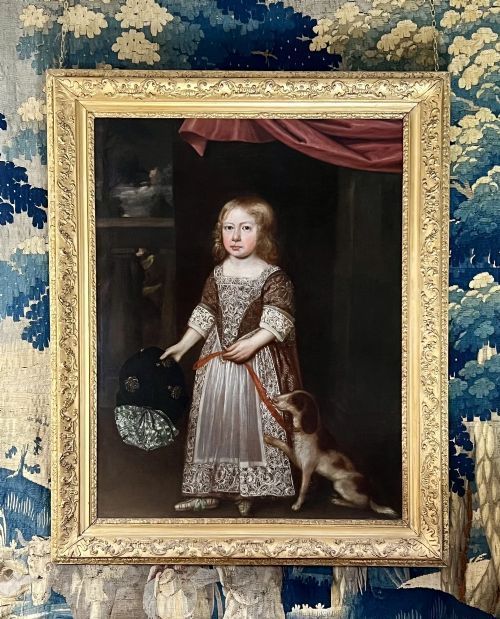
A rare and charming portrait of King William III of Great Britain and Ireland as a boy with his pet dog. This highly decorative portrait exhibits a clear baroque aesthetic – with exuberant patterned costume, the use of chiaroscuro and the swag of red drapery above the sitter.

The aristocratic young sitter is depicted full length upon a terrace with a balustrade and landscape beyond. He has wide eyes, rosebud lips and hair which tumbles around his shoulders.

A key indicator of young children’s dress is the leading string just visible, emerging on the right of the child’s body under the elbow, and distinguishable at waist height. Leading strings were two lined strips of fabric that fell vertically to three-quarters of the way down the body, one from each shoulder and they were a useful means to grab hold of and steer a wayward toddler.

During the seventeenth century boys and girls wore very similar clothing. Both girls and boys wore skirts until boys were ‘breeched’ – i.e. put into breeches (short trousers) between the ages of five and seven. After the age of seven boys wore clothing very similar in form and construction to that worn by adult men. The child here looks to be below the age of seven and is most likely a boy (despite wearing clothing that looks female to the modern eye).

He wears a bodice and matching skirt made from shiny brown fabric that has been embellished (possibly embroidered) with a meandering line, echoing the shape of a stylised stem and flowers. This high status individual also carries a voluminous jewel encrusted hat, and they sport fine footwear constructed of ribbons of fabric.

It is possible to date this portrait to the third quarter of the seventeenth century due to the open texture and size of the pattern on the lace of the apron, bodice and cuffs when scrolling foliate designs of needle lace (also known as parchment lace) were popular.

The sitters long and loose hair, facial expression and their lack of traditional female accessories (such as pearls) also seem to indicate a male sitter, as does their pet their which appears to be an active and loyal pet to command, rather than a passive adjunct to the sitters beauty which is traditional in female portraits of the period.

This portrait has been further identified as the young monarch through his physiognomy and costume in other works of the period, including an engraving by 9 or after Sivordtsma ( see carousel below)

This fine work is in an excellent state of conservation, and is ready to hang and enjoy in an antique 18th century carved gilt and gesso frame, which has a wonderful mellow colour.

I am most grateful to Jacqui Ansell, Senior Lecturer, Christie’s Education for the detailed information and analysis that she has provided on fashion and costume.

Provenance: Private collection Sussex, UK.
Higher resolution images on request.

Worldwide shipping available.

Canvas: 43” x 33” / 110cm x 85cm

Frame: 53” x 33” / 136cm x 110cm

Price: £11950

Physical Dimensions
Height
136cm (53.54")
Width
110cm (43.31")
Depth
4cm (1.57")
Declaration

Period Portraits has dated this 17th Century Oil Portrait to the 17th Century.

Reference Numbers
Sellingantiques Reference
SA1225565
Description
NORTHERN EUROPEAN SCHOOL C.1660 - PORTRAIT OF KING WILLIAM III AS A BOY.
A rare and charming portrait of King William III of Great Britain and Ireland as a boy with his pet dog.
Period Portraits

This highly decorative portrait exhibits a clear baroque aesthetic – with exuberant patterned costume, the use of chiaroscuro and the swag of red drapery above the sitter.

fig 1. A seventeenth-century oil portrait depicting a young child in detailed lace-trimmed attire holding a plumed hat, accompanied by a small hound dog.
fig 1. Northern European School C.1660 - Portrait of King William III as a Boy.

The aristocratic young sitter is depicted full length upon a terrace with a balustrade and landscape beyond. He has wide eyes, rosebud lips and hair which tumbles around his shoulders.

A key indicator of young children’s dress is the leading string just visible, emerging on the right of the child’s body under the elbow, and distinguishable at waist height. Leading strings were two lined strips of fabric that fell vertically to three-quarters of the way down the body, one from each shoulder and they were a useful means to grab hold of and steer a wayward toddler.

fig 2. A seventeenth-century oil portrait depicting a young child in detailed lace-trimmed attire holding a plumed hat, accompanied by a small hound dog.
fig 2. Northern European School C.1660 - Portrait of King William III as a Boy.

During the seventeenth century boys and girls wore very similar clothing. Both girls and boys wore skirts until boys were ‘breeched’ – i.e. put into breeches (short trousers) between the ages of five and seven. After the age of seven boys wore clothing very similar in form and construction to that worn by adult men. The child here looks to be below the age of seven and is most likely a boy (despite wearing clothing that looks female to the modern eye).

fig 3. A seventeenth-century oil portrait depicting a young child in detailed lace-trimmed attire holding a plumed hat, accompanied by a small hound dog.
fig 3. Northern European School C.1660 - Portrait of King William III as a Boy.

He wears a bodice and matching skirt made from shiny brown fabric that has been embellished (possibly embroidered) with a meandering line, echoing the shape of a stylised stem and flowers. This high status individual also carries a voluminous jewel encrusted hat, and they sport fine footwear constructed of ribbons of fabric.

fig 4. A seventeenth-century oil portrait depicting a young child in detailed lace-trimmed attire holding a plumed hat, accompanied by a small hound dog.
fig 4. Northern European School C.1660 - Portrait of King William III as a Boy.

It is possible to date this portrait to the third quarter of the seventeenth century due to the open texture and size of the pattern on the lace of the apron, bodice and cuffs when scrolling foliate designs of needle lace (also known as parchment lace) were popular.

fig 5. A seventeenth-century oil portrait depicting a young child in detailed lace-trimmed attire holding a plumed hat, accompanied by a small hound dog.
fig 5. Northern European School C.1660 - Portrait of King William III as a Boy.

The sitters long and loose hair, facial expression and their lack of traditional female accessories (such as pearls) also seem to indicate a male sitter, as does their pet their which appears to be an active and loyal pet to command, rather than a passive adjunct to the sitters beauty which is traditional in female portraits of the period.

fig 6. A seventeenth-century oil portrait depicting a young child in detailed lace-trimmed attire holding a plumed hat, accompanied by a small hound dog.
fig 6. Northern European School C.1660 - Portrait of King William III as a Boy.

This portrait has been further identified as the young monarch through his physiognomy and costume in other works of the period, including an engraving by 9 or after Sivordtsma ( see carousel below)

This fine work is in an excellent state of conservation, and is ready to hang and enjoy in an antique 18th century carved gilt and gesso frame, which has a wonderful mellow colour.

fig 7. A seventeenth-century oil portrait depicting a young child in detailed lace-trimmed attire holding a plumed hat, accompanied by a small hound dog.
fig 7. Northern European School C.1660 - Portrait of King William III as a Boy.

I am most grateful to Jacqui Ansell, Senior Lecturer, Christie’s Education for the detailed information and analysis that she has provided on fashion and costume.

Provenance: Private collection Sussex, UK.

fig 8. A seventeenth-century oil portrait depicting a young child in detailed lace-trimmed attire holding a plumed hat, accompanied by a small hound dog.
fig 8. Northern European School C.1660 - Portrait of King William III as a Boy.

Higher resolution images on request.

Worldwide shipping available.

Canvas: 43” x 33” / 110cm x 85cm

Frame: 53” x 33” / 136cm x 110cm

Price: £11950

Height
136cm (53.54")
Width
110cm (43.31")
Depth
4cm (1.57")
Date of Manufacture

Period Portraits has dated this 17th Century Oil Portrait to the 17th Century.

Reference Numbers
Sellingantiques Ref
SA1225565
Period Portraits
Period Portraits
Sellingantiques verified Since Jan 2017

Specialist dealer in portraits from the 17th century to the 20th century. Our stock includes quality oil paintings, drawings, and mezzotints

Dealer Profile

You can view the stock and full dealer information on the Period Portraits Profile Page

PDF SHARE
SAVE
A seventeenth-century oil portrait depicting a young child in detailed lace-trimmed attire holding a plumed hat, accompanied by a small hound dog.
1 / 10
Archive I A seventeenth-century oil portrait depicting a young child in detailed lace-trimmed attire holding a plumed hat, accompanied by a small hound dog.

Northern European School C.1660 - Portrait of King William III as a Boy.

Archive II A seventeenth-century oil portrait depicting a young child in detailed lace-trimmed attire holding a plumed hat, accompanied by a small hound dog. View II
Archive III A seventeenth-century oil portrait depicting a young child in detailed lace-trimmed attire holding a plumed hat, accompanied by a small hound dog. View III
Archive IV A seventeenth-century oil portrait depicting a young child in detailed lace-trimmed attire holding a plumed hat, accompanied by a small hound dog. View IV
Archive V A seventeenth-century oil portrait depicting a young child in detailed lace-trimmed attire holding a plumed hat, accompanied by a small hound dog. View V
Archive VI A seventeenth-century oil portrait depicting a young child in detailed lace-trimmed attire holding a plumed hat, accompanied by a small hound dog. View VI
Archive VII A seventeenth-century oil portrait depicting a young child in detailed lace-trimmed attire holding a plumed hat, accompanied by a small hound dog. View VII
Archive VIII A seventeenth-century oil portrait depicting a young child in detailed lace-trimmed attire holding a plumed hat, accompanied by a small hound dog. View VIII
Archive IX A seventeenth-century oil portrait depicting a young child in detailed lace-trimmed attire holding a plumed hat, accompanied by a small hound dog. View IX
Archive X A seventeenth-century oil portrait depicting a young child in detailed lace-trimmed attire holding a plumed hat, accompanied by a small hound dog. View X
FURTHER BROWSING

Visitors also looked at these ⇣

Enlarged Archival View
Telephone 07889 859729
Location
North Yorkshire
United Kingdom
Verified Since Jan 2017
Items For Sale 47
Items Sold 61
Period Portraits
Period Portraits
Verified Since Jan 2017
View Dealer Info
Location: North Yorkshire, United Kingdom
Verified
Jan 2017
For Sale
47
Sold
61
A seventeenth-century oil portrait depicting a young child in detailed lace-trimmed attire holding a plumed hat, accompanied by a small hound dog.
NORTHERN EUROPEAN SCHOOL C.1660 - PORTRAIT OF KING WILLIAM III AS A BOY.
Ref: SA1225565
A seventeenth-century oil portrait depicting a young child in detailed lace-trimmed attire holding a plumed hat, accompanied by a small hound dog.
Detail View 1
Detail View 2
Detail View 3
Detail View 4
Detail View 5
Detail View 6
Detail View 7
Detail View 8
Detail View 9
Archival Detail
Every single antique dealer on our platform is individually approved by our internal team. We verify their professional trade history, ethical standards, and photographic quality to ensure a secure, high-standard buying environment. Upon joining, every dealer agrees to a strict 9-point code of conduct. While issues can occasionally arise, our dealers typically resolve them swiftly and directly with the buyer. In fact, since our founding in 2002, Sellingantiques has only had to step in to help resolve an issue on roughly five occasions—a true testament to the quality of our dealers and their dedication to your happiness.
Our dealers are highly experienced in packing and shipping fragile, high-value antiques. Because you are in direct contact with the dealer, you will be able to easily go through all available shipping and insurance options together to ensure your item arrives safely.
Antiques are the ultimate green purchase. By choosing historical pieces over newly manufactured goods, you completely eliminate the carbon footprint of modern mass production while preserving exceptional, timeless craftsmanship.

Northern European portraiture of the 17th century, closely linked with Dutch and Flemish Baroque traditions, is characterised by realistic depiction, dramatic lighting contrast, and detailed rendering of costume textures such as lace, satin, and heavy drapery.

Artists from this period typically applied hand-ground natural mineral pigments mixed with drying oils, such as linseed or walnut oil, onto stretched linen canvas or solid timber panels prepared with a gesso ground.

Authentic period paintings generally display age-consistent craquelure patterns across the paint film, natural oxidisation of historical varnish layers, and structural indications of historical relining or stretcher modification.

A historical oil portrait functions as an intriguing focal point when positioned above a fireplace mantelpiece, presented within a contemporary gallery wall, or paired alongside minimalist, clean-lined modern furniture.

Keep the painting away from direct sunlight, sharp temperature shifts, and excess humidity; dust lightly with a dry, soft-bristled brush and consult a accredited fine art conservator for varnish cleaning or structural repairs.
items
Add keywords to the filter
Price
£100
£250000
Era
Movements
Material
Origin
Stock Location
Freshness
Online Payments
Categories