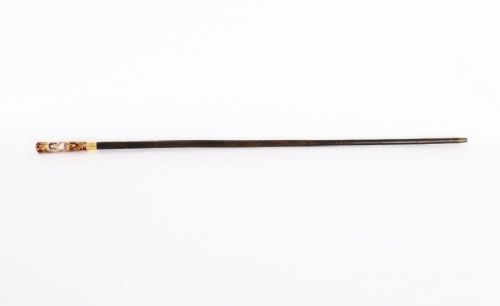
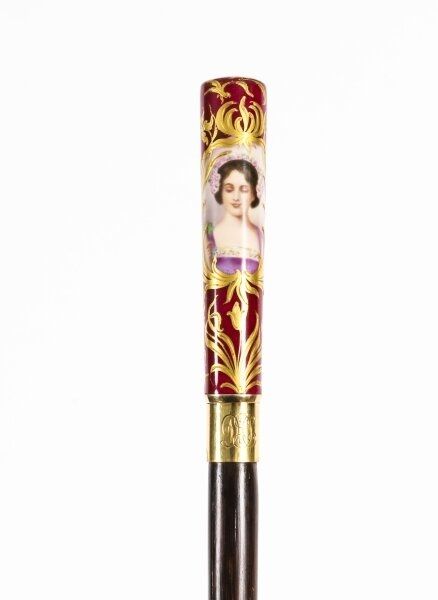
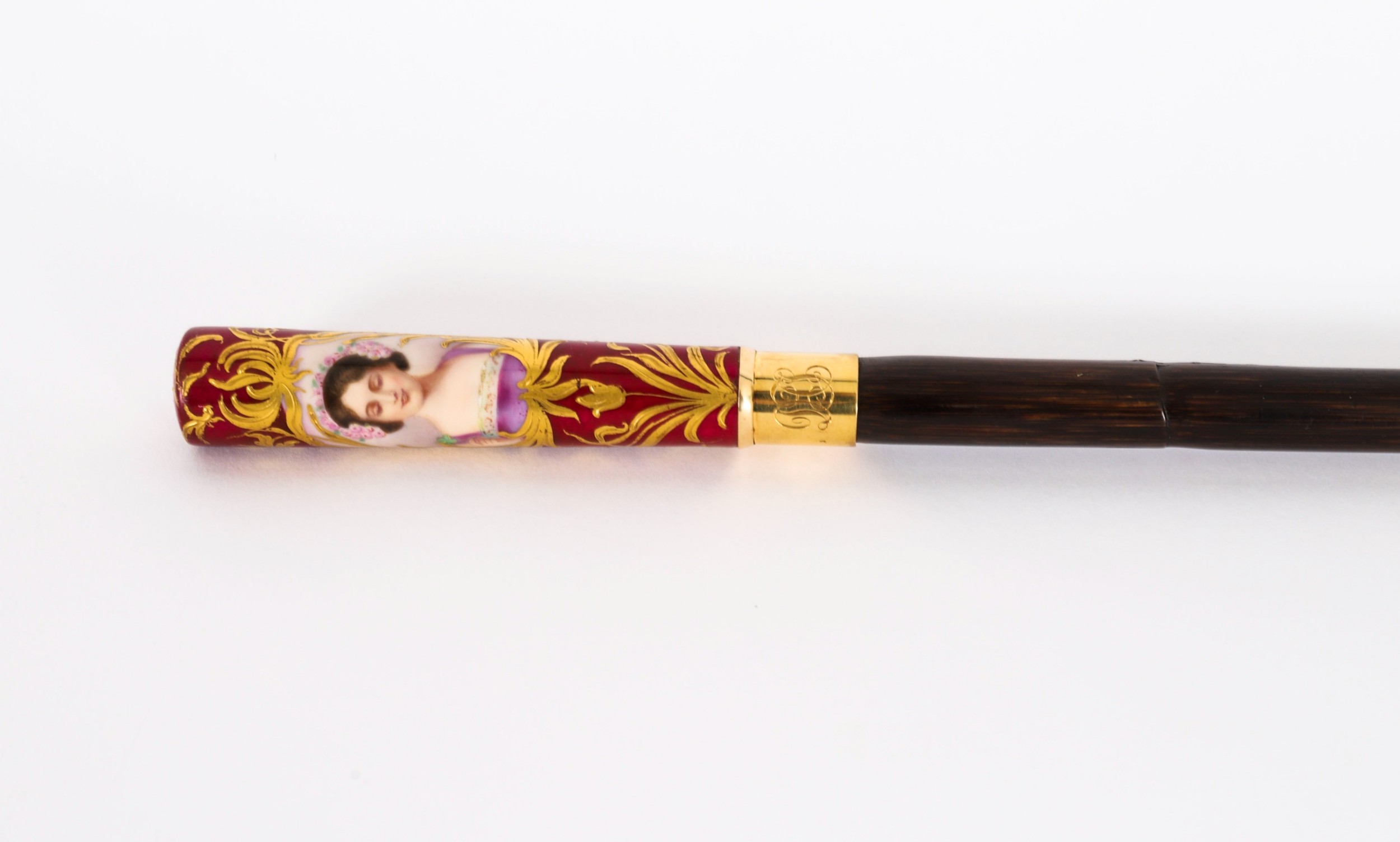
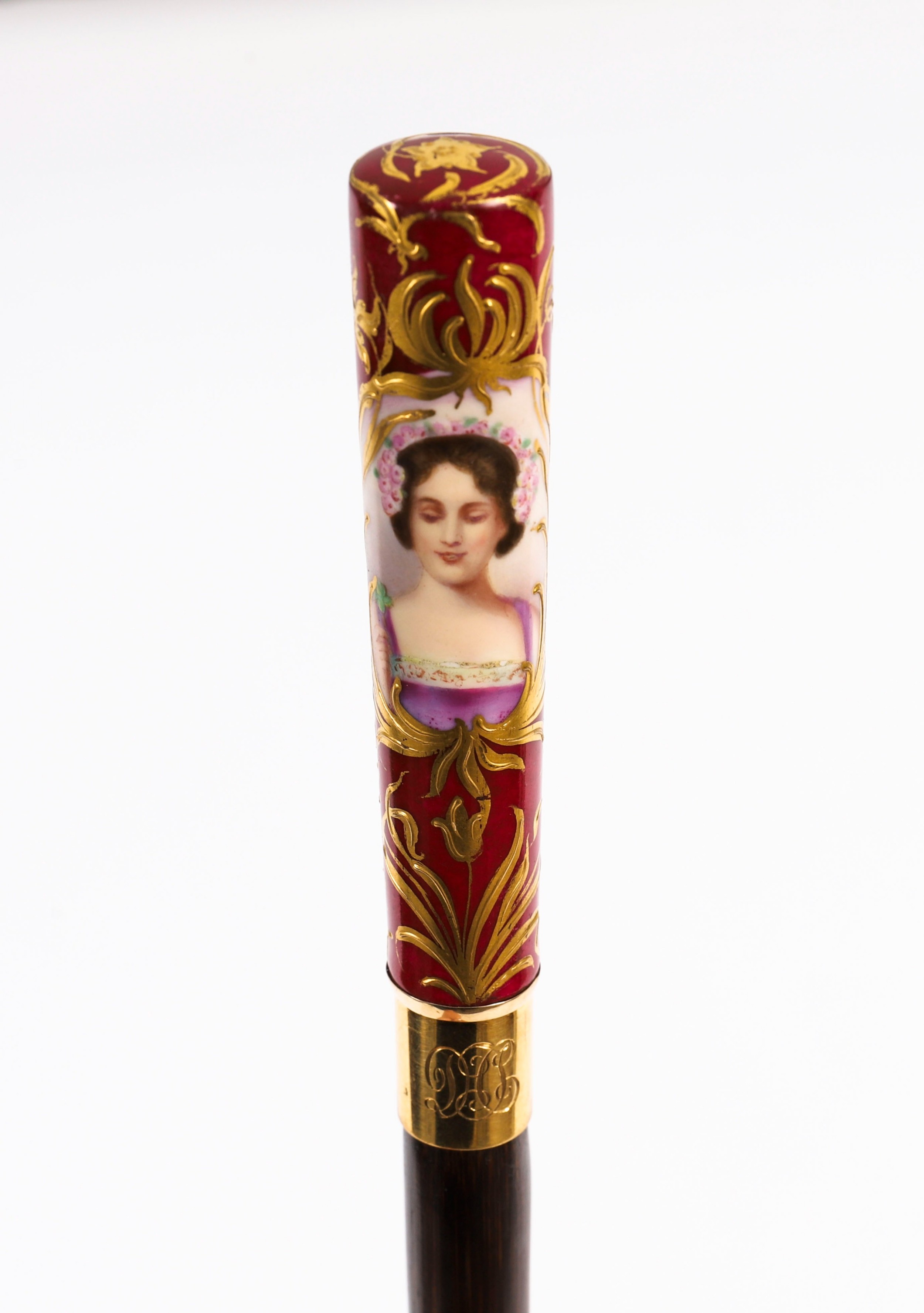
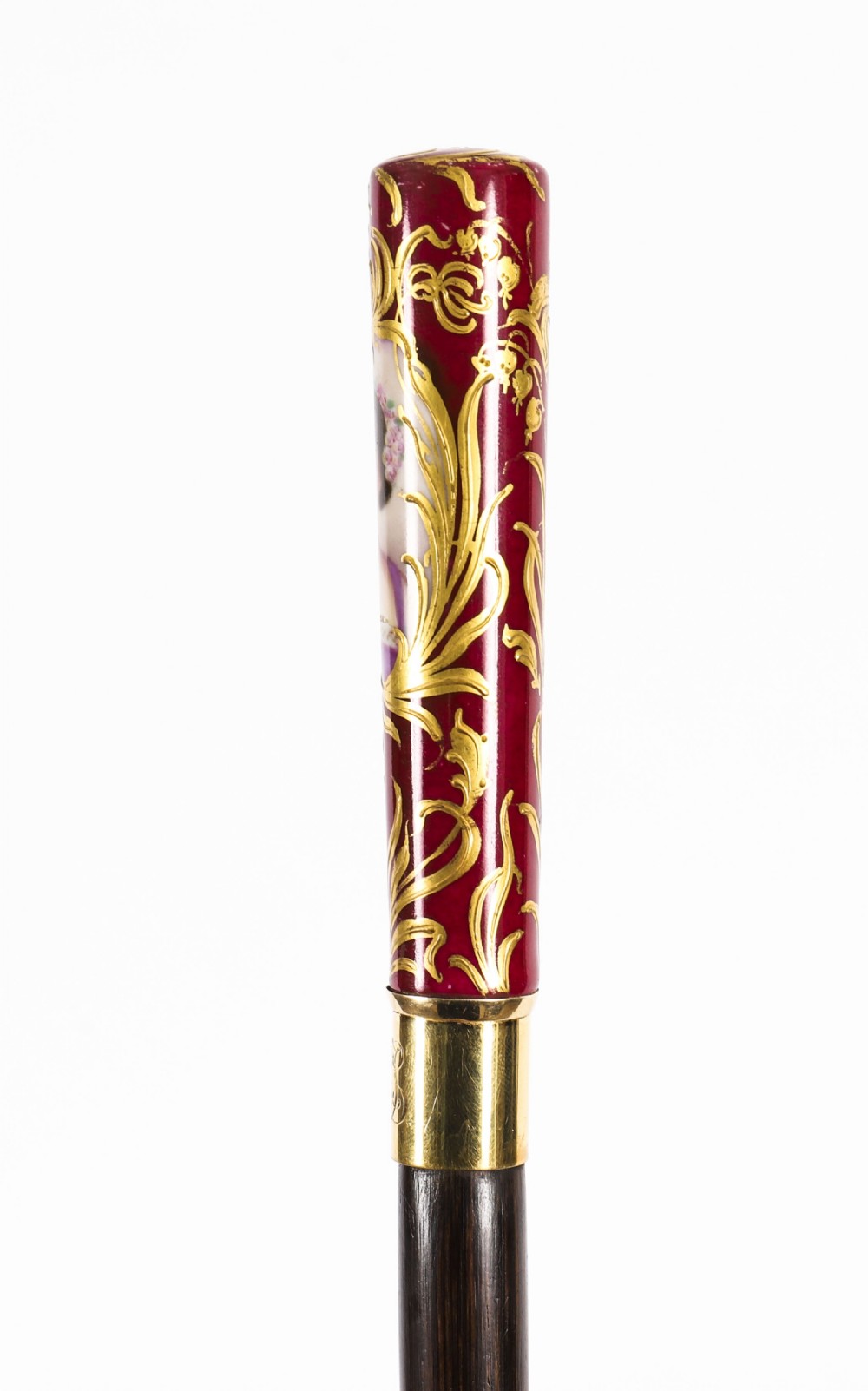
This is a fine antique French Sevres porcelain and gold plate handled walking stick /sword stick, circa 1890 in date
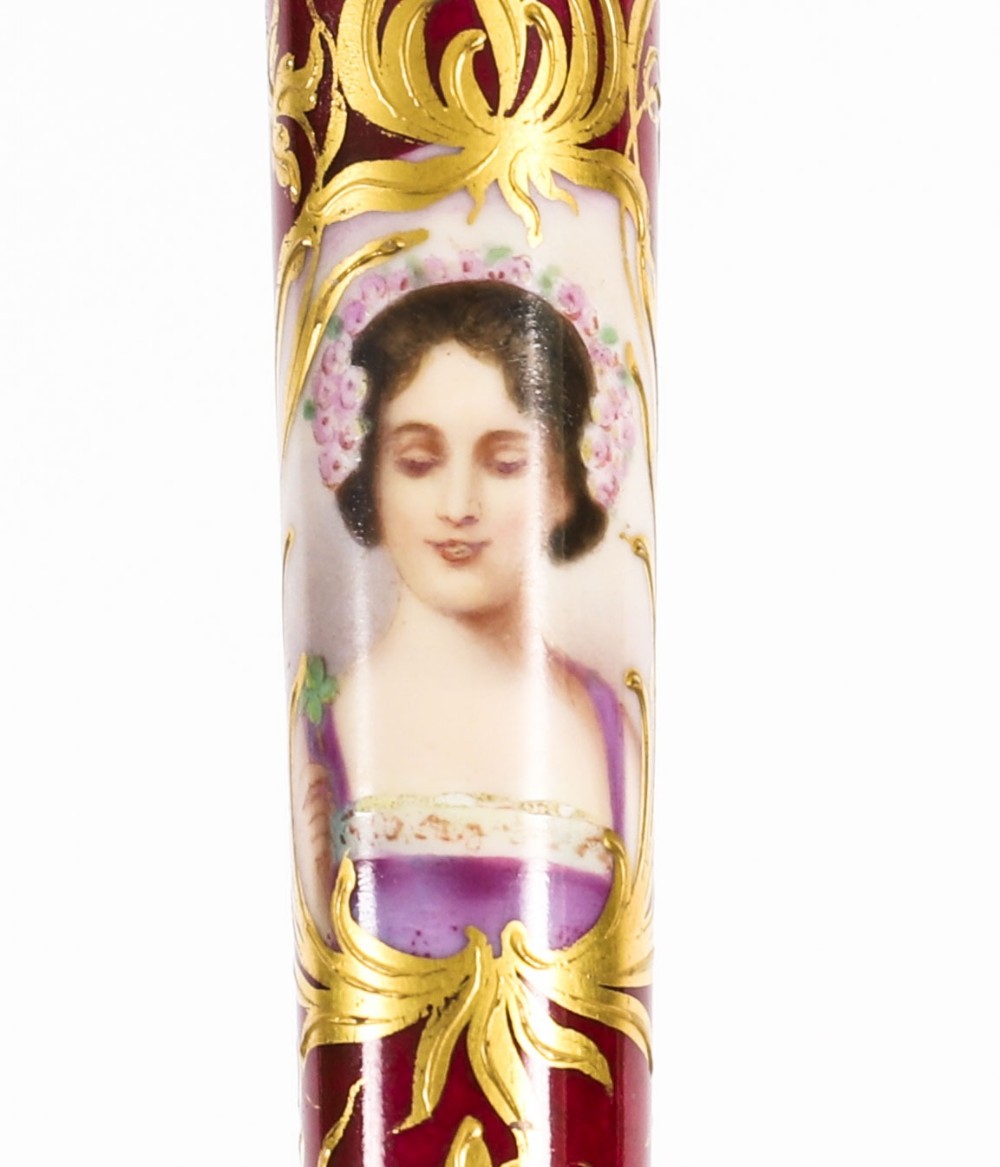
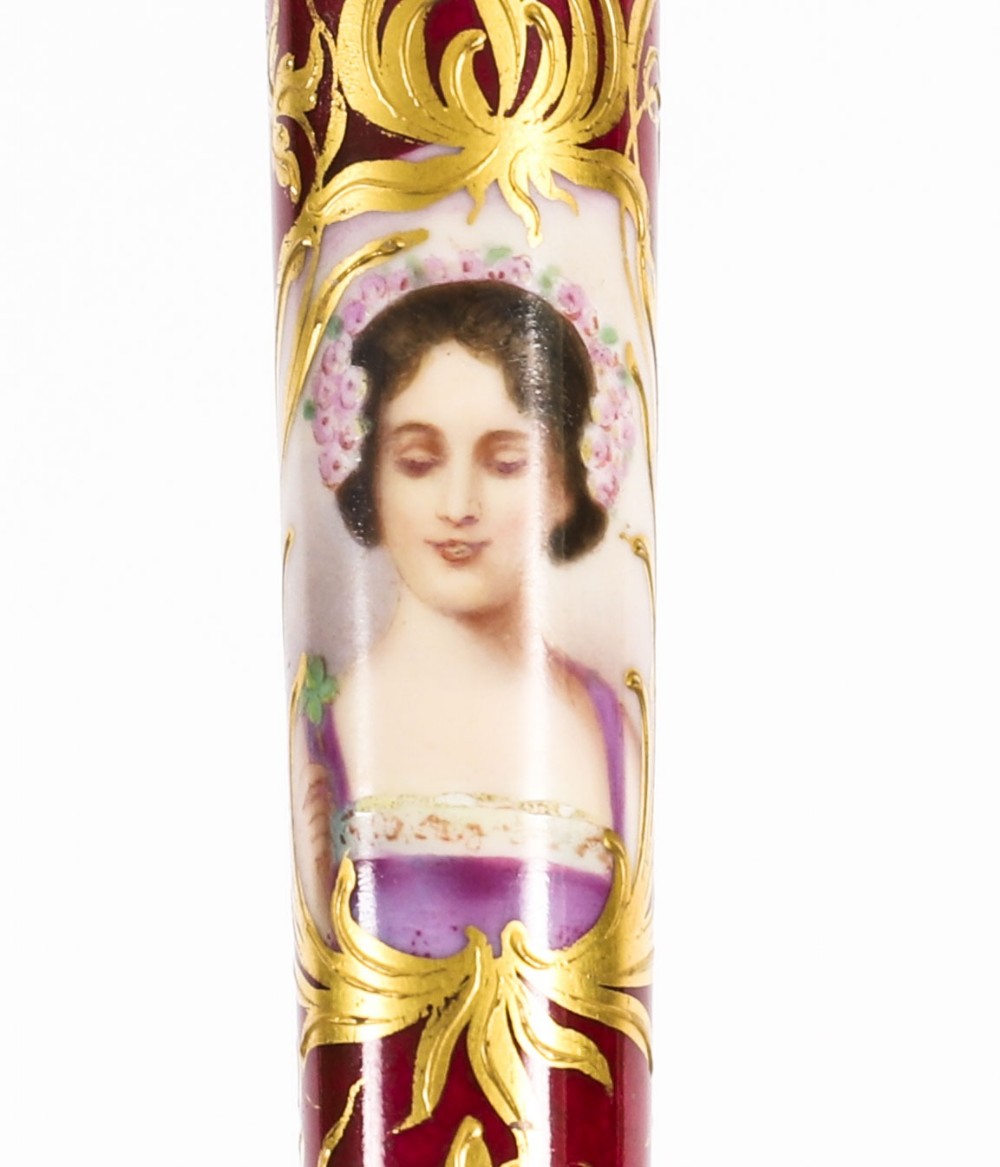
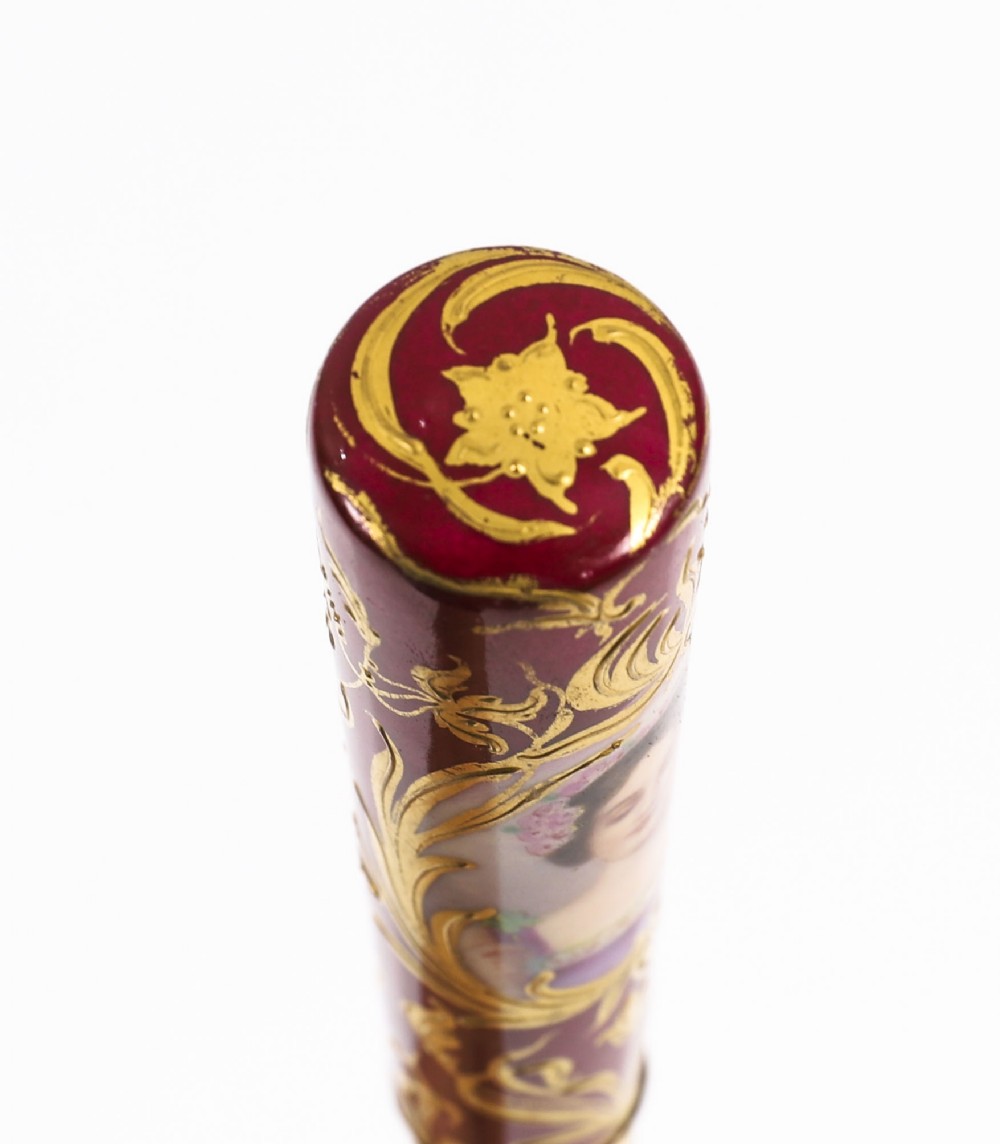
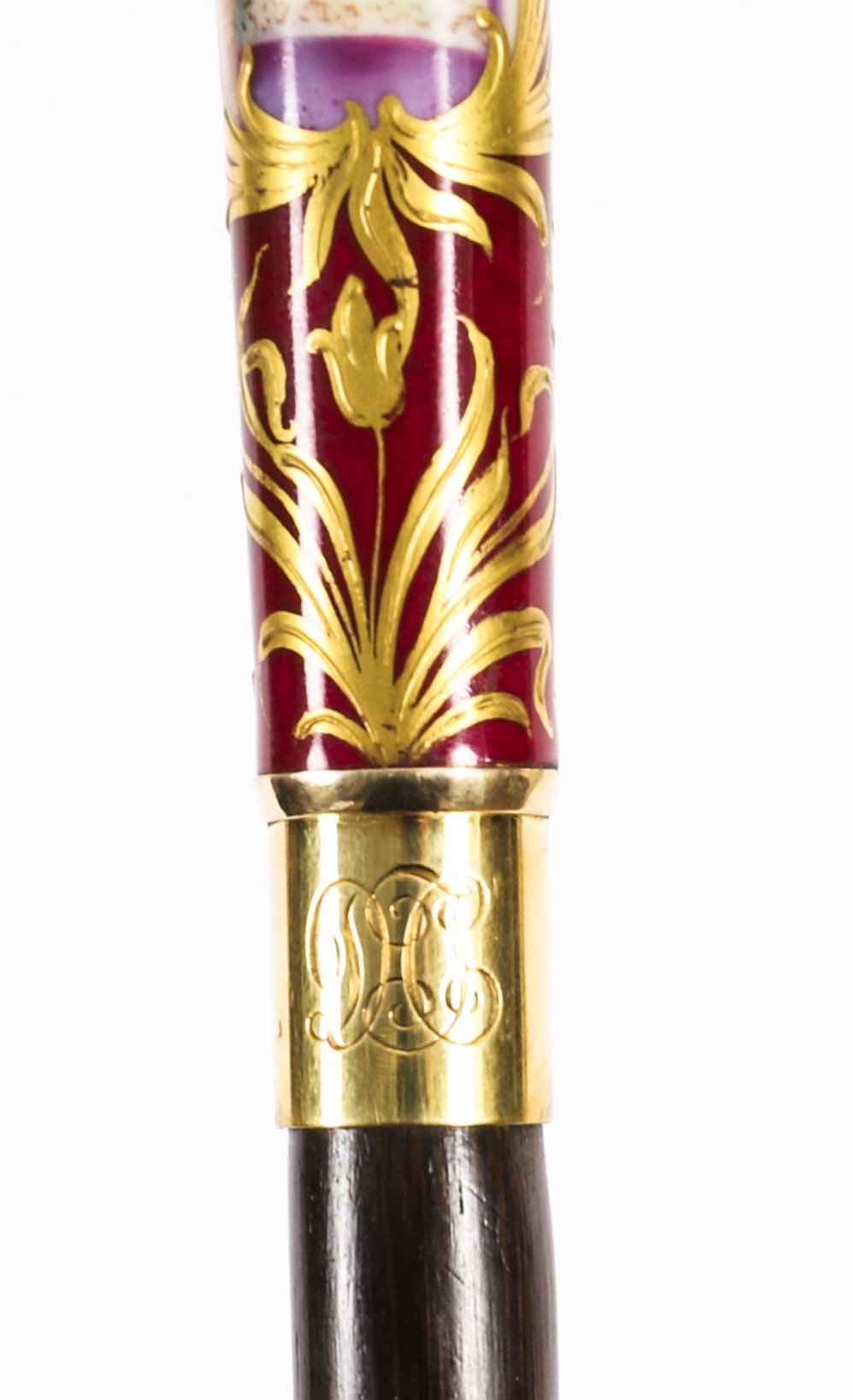
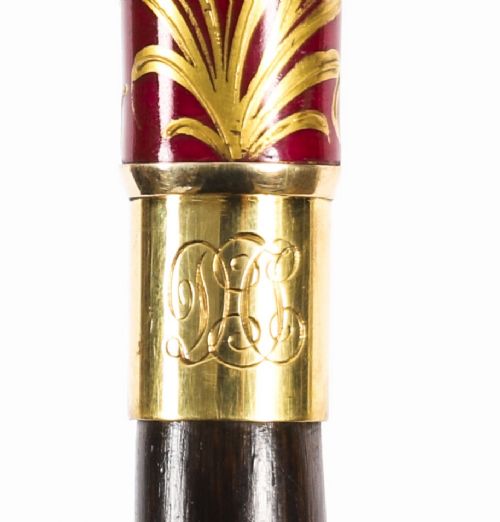
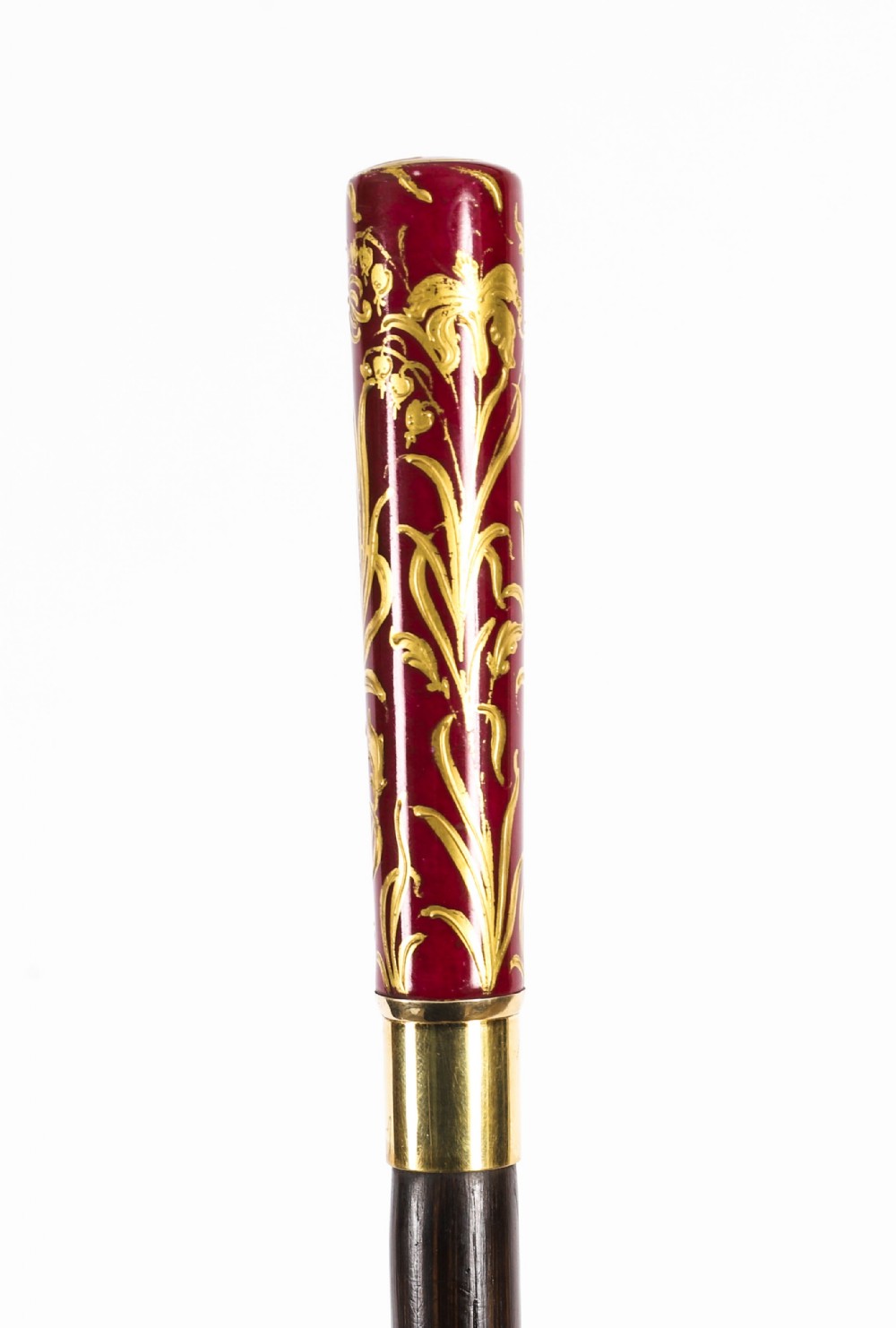
The sword stick a features a finely painted Sevre porcelain handle decorated with a ''mardi gras purple'' ground with a superb portrait panel of a young lady with gilded floral high lights and a gold plate band.
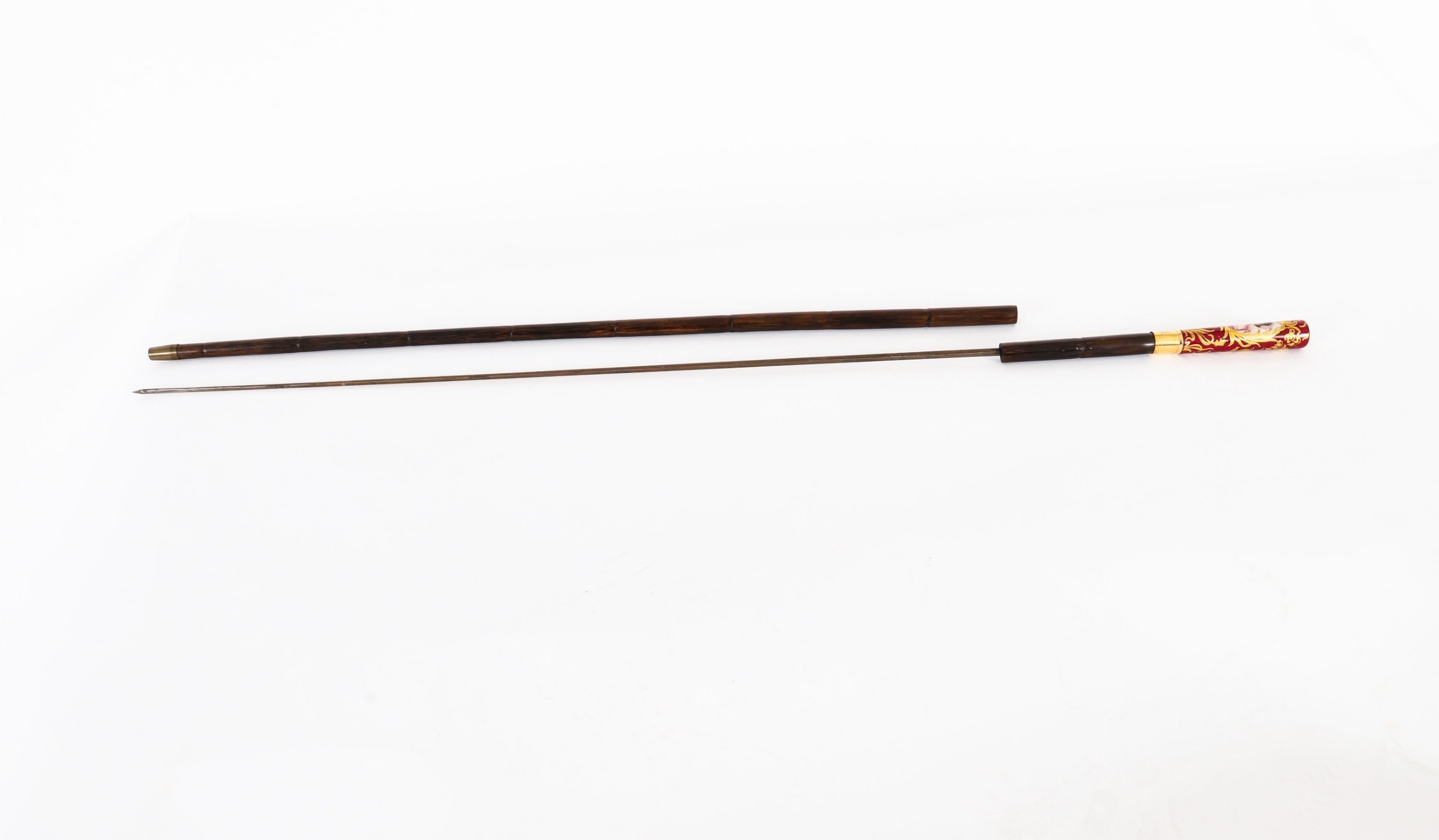
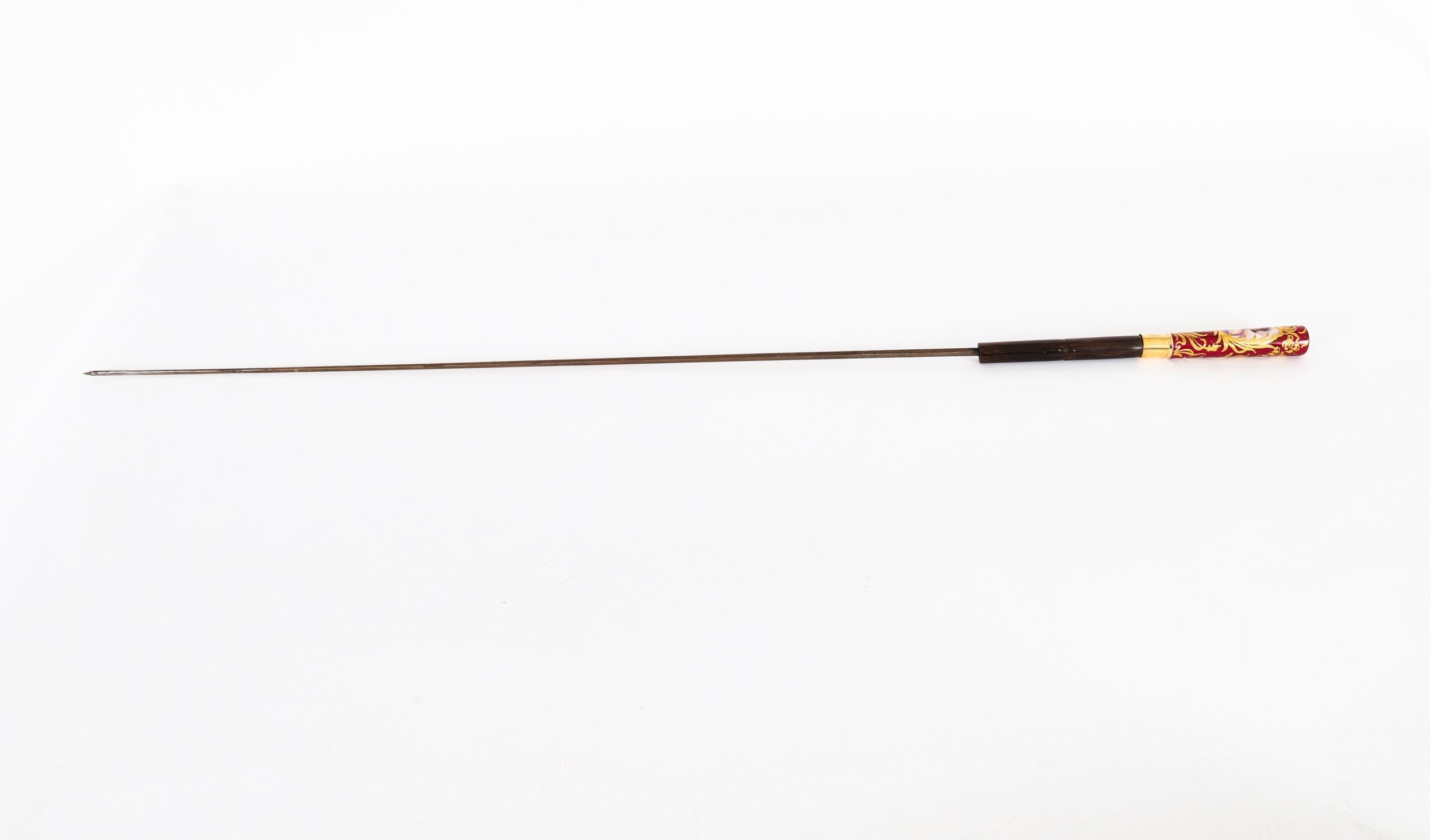
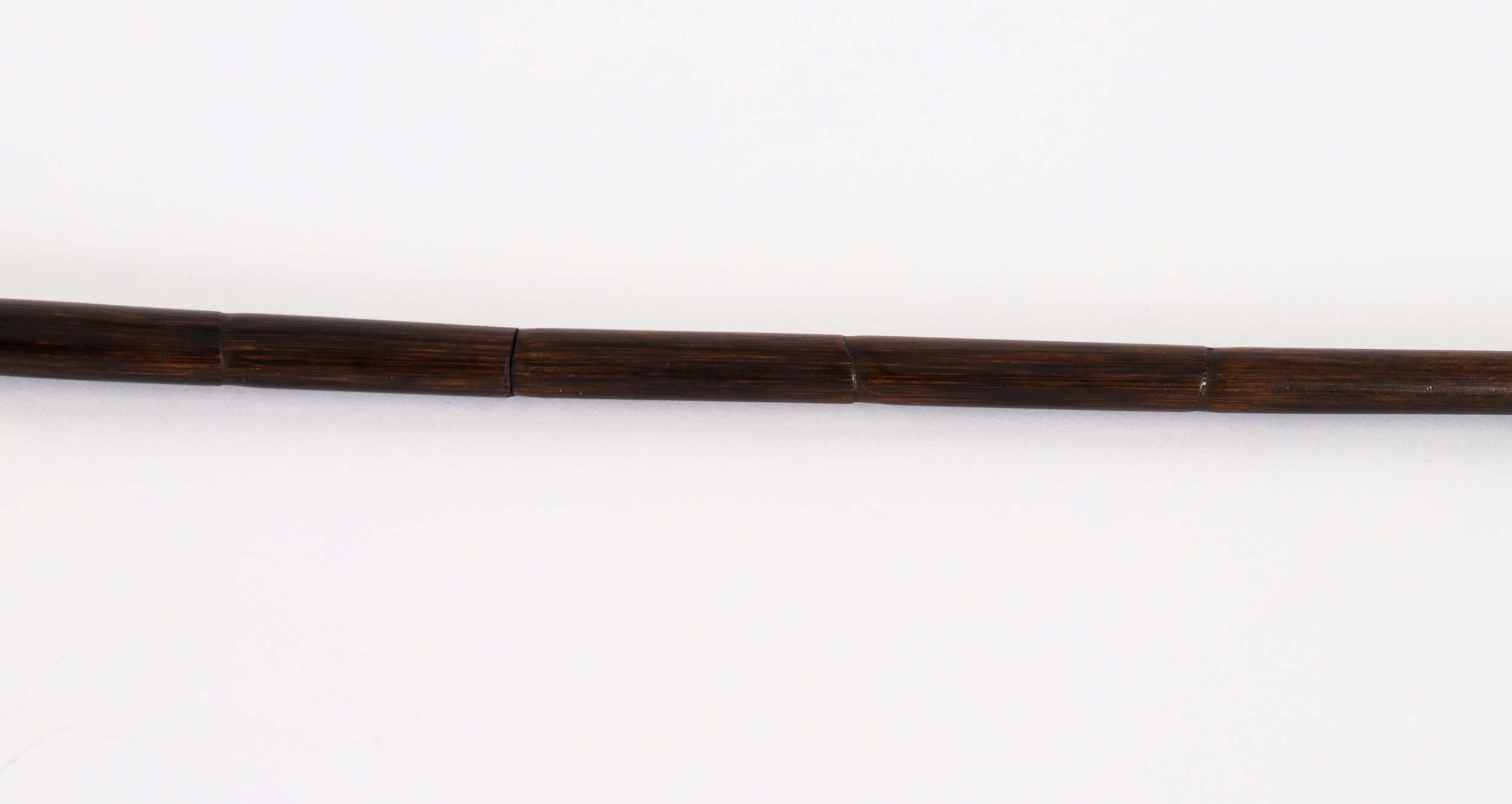
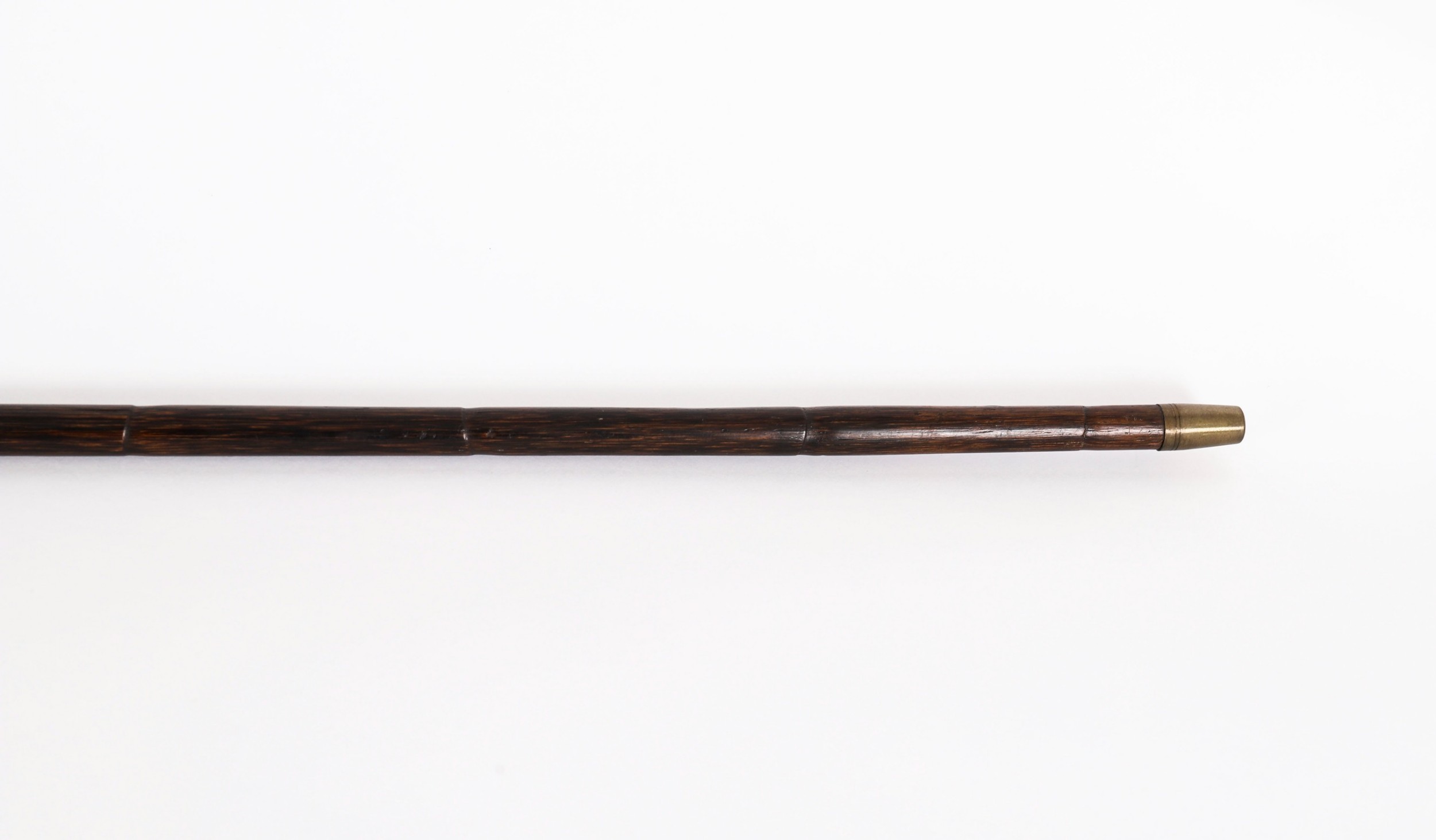
It opens to reveal a square tapering 63cm steel blade mounted on a tapering partridge wood shaft with its ordinal brass ferrule.
Add an extravagant element to your daily life with this stylish antique walking cane.
Condition:
In excellent condition, please see photos for confirmation.
Dimensions in cm:
Height 89 cm x Width 2 cm x Depth 2 cm - Stick
Height 63 cm - Blade
Dimensions in inches:
Height 2 foot, 11 inches x Width 1 inch x Depth 1 inch - Stick
Height 2 feet, 1 inch - Blade
Size of cane that you need
Convert your height into inches. For example, if you are 5'' 10” in your shoes, your height is 70 inches. Divide b
...y two and then add ½ inch to determine your approximate cane size.In our example, if you are 70 inches tall (5'' 10”), your approximate cane size would be 35” plus ½”= 35.5 inches.
Sevres Porcelain
traces its roots in France to early craftsmen who had small manufacturing operations in such places as Lille, Rouen. St. Cloud, and most notably Chantilly. It is from Chantilly that a cadre of workers migrated to the Chateau de Vincennes near Paris to form a larger porcelain manufactory in 1738.
French King Louis XV, perhaps inspired by his rumoured relationship with mistress Madame de Pompadour, took an intense interest in porcelain and moved the operation in 1756 to even larger quarters in the Paris suburb of Sevres. Sevres was also conveniently near the home of Madame de Pompadour and the King''s own Palace at Versailles.
From the outset the king''s clear aim was to produce Sevres Porcelain that surpassed the established Saxony works of Meissen and Dresden. Though the French lacked an ample supply of kaolin, a required ingredient for hard-paste porcelain (pate dure), their soft-paste porcelain (pate tendre) was fired at a lower temperature and was thus compatible with a wider variety of colours and glazes that in many cases were also richer and more vivid. Unglazed white Sevres Porcelain ''biscuit'' figurines were also a great success. However, soft-paste Sevres Porcelain was more easily broken. Therefore, early pieces of Sevres Porcelain that remain intact have become rare indeed.
The Sevres Porcelain manufactory always seemed to be in dire financial straits despite the incredibly fine works it produced. In fact, the king''s insistence that only the finest items be created may have contributed to the difficulties. Only a limited number of European nobility could afford the extravagant prices demanded for such works. King Louis XV and eventually his heir, the ill-fated Louis XVI, were obliged to invest heavily in the enterprise. Ultimately, the Sevres Porcelain Factory produced items under the name of ''Royal'' and thus the well-known Sevres mark was born. King Louis XV even mandated laws that severely restricted other porcelain production in France so as to retain a near monopoly for his Sevres Porcelain. The king even willingly became chief salesman for the finest of his products, hosting an annual New Year''s Day showing for French nobility in his private quarters at Versailles. He eagerly circulated among potential buyers, pitching the merits of ownership and policing the occasional light-fingered guest.
Sevres Porcelain may have indeed given the makers of Meissen and Dresden a run for their money by the end of the 18th Century but for the French Revolution. By 1800, the Sevres Porcelain Works were practically out of business due to the economic devastation of the new French Republic.
About the time when Napoleon Bonaparte named himself Emperor
Internal Reference: A5238
Antique ID Number (AIDN): SA1225369
Dateline of this antique is 19th Century
Height is 89cm (35.0inches)Width is 2cm (0.8inches)Depth is 2cm (0.8inches)




Thank you.
Your comment has been sent to Sellingantiques.