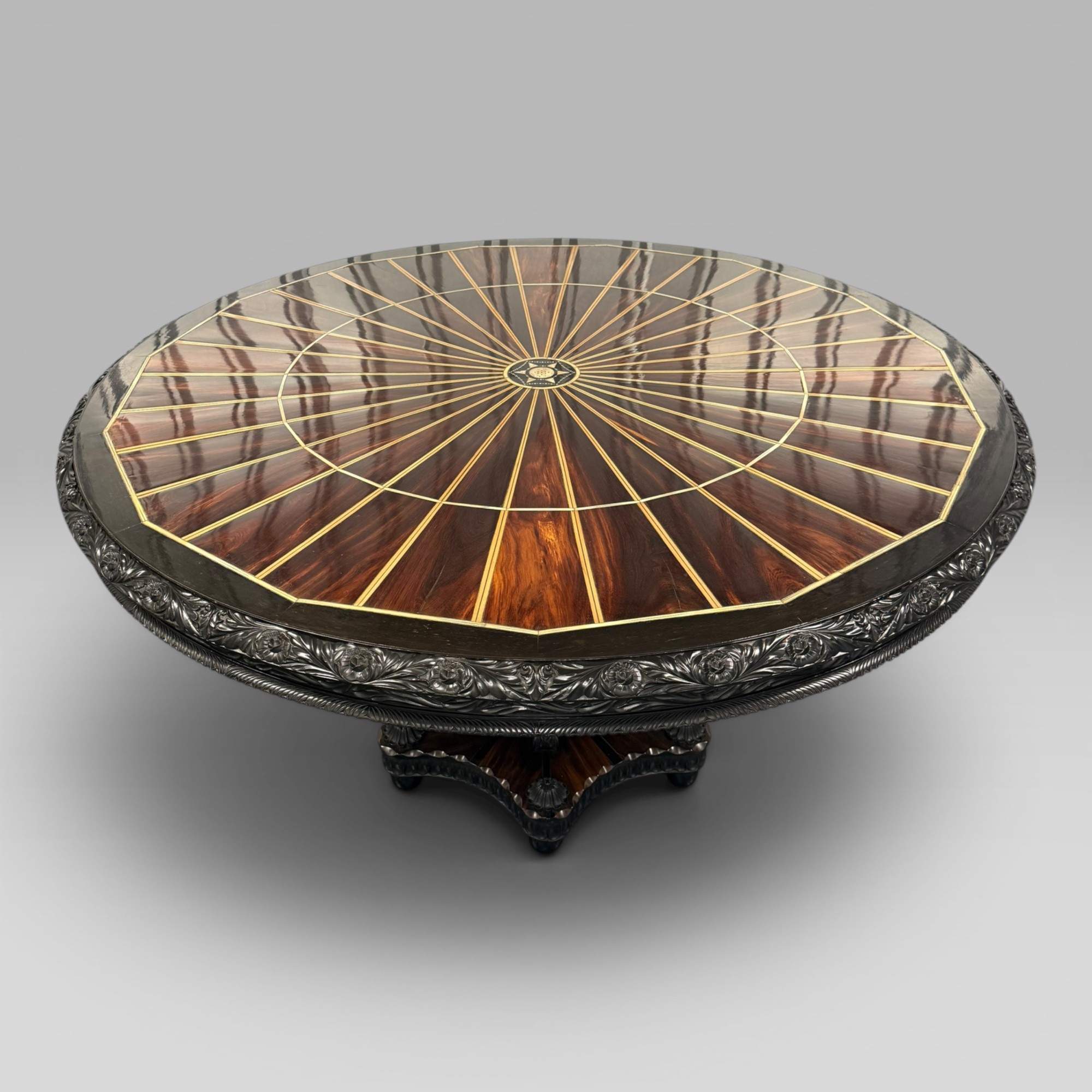
An impressive Ceylonese centre table, dating to circa 1840, during the late William IV to early Victorian period, crafted from solid ebony and calamander.
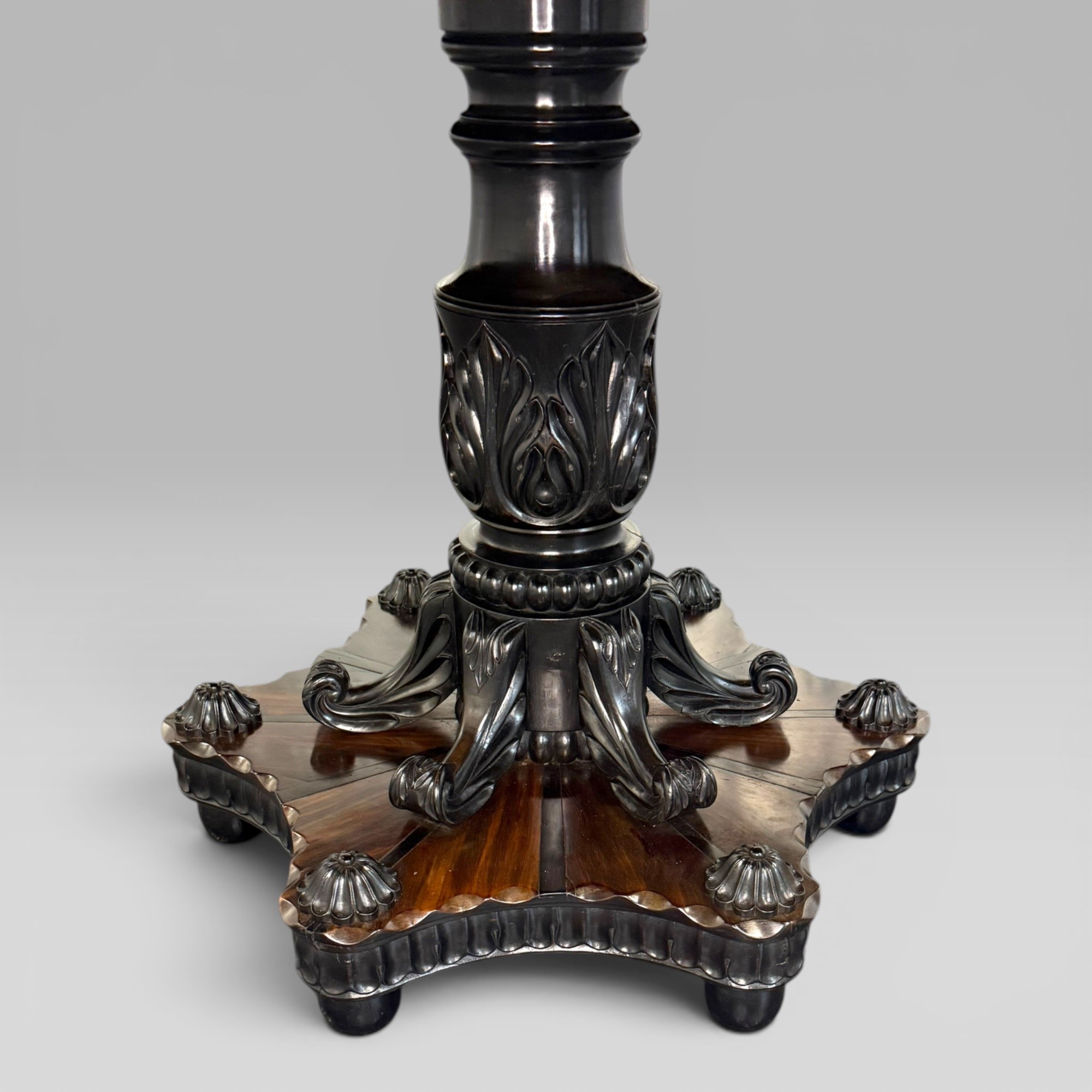
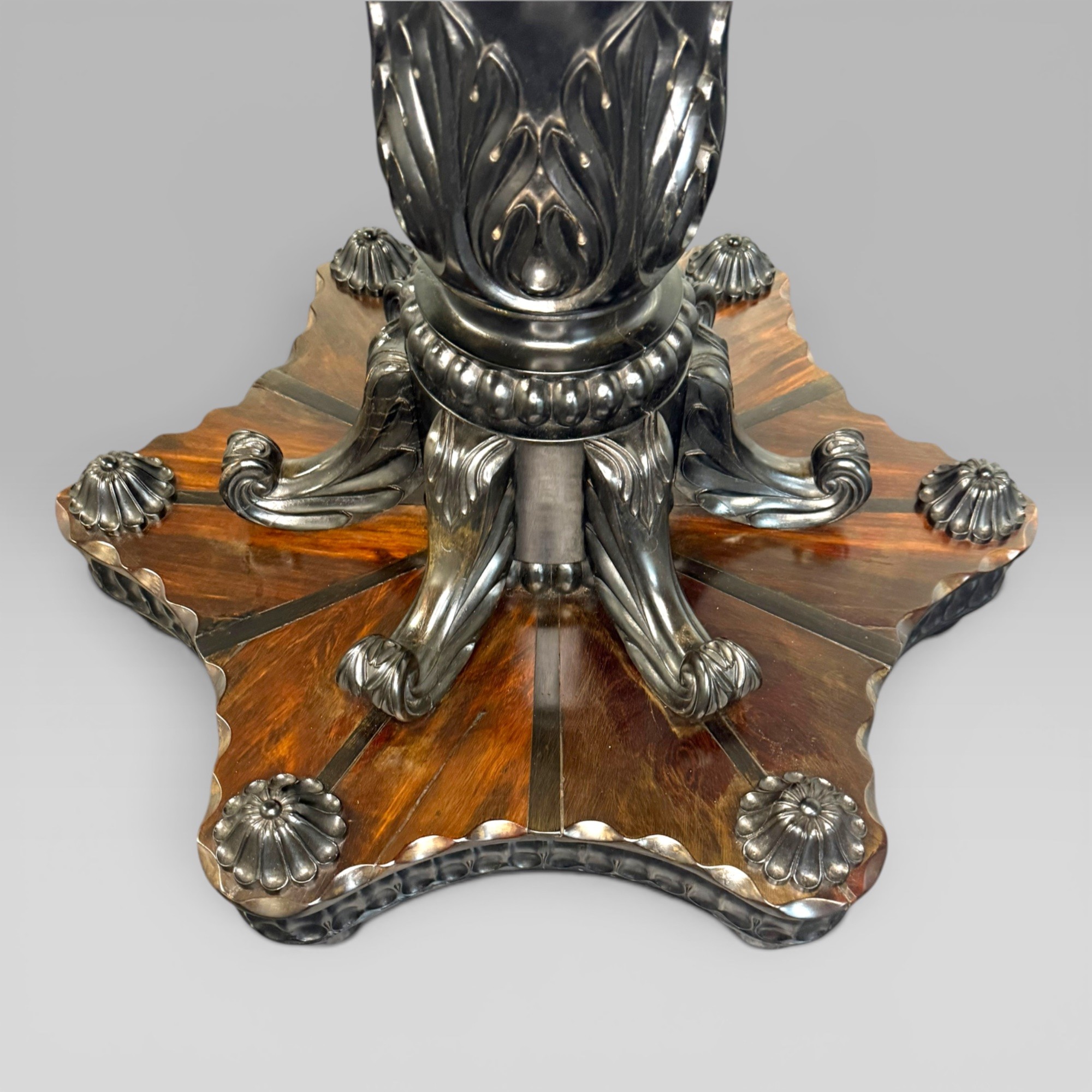
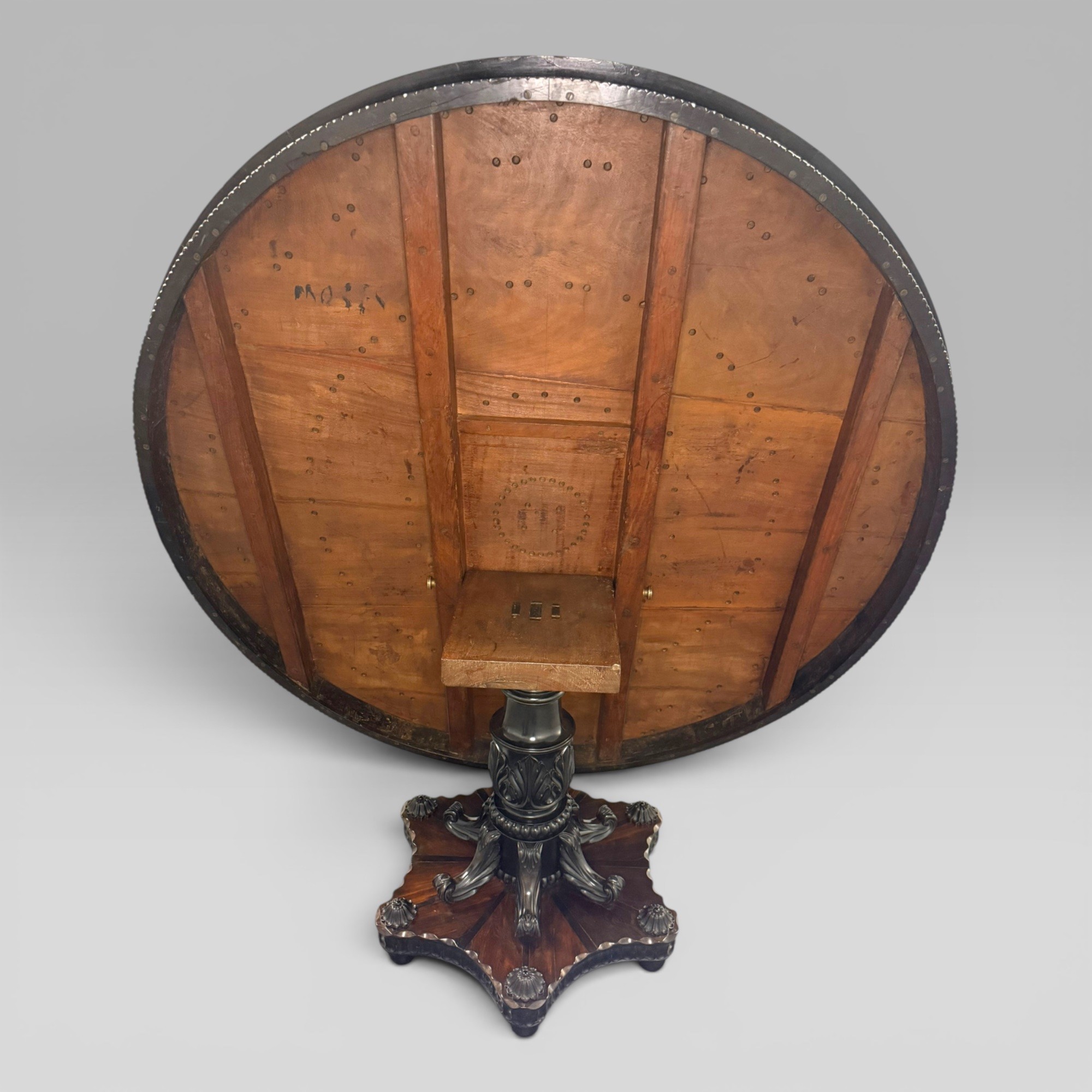
The table stands on a substantial solid ebony turned central column, boldly carved with acanthus leaf ornament. Six finely carved scroll supports radiate from the column, uniting it with the base, which is constructed from calamander, ebony and raised on solid bun feet.
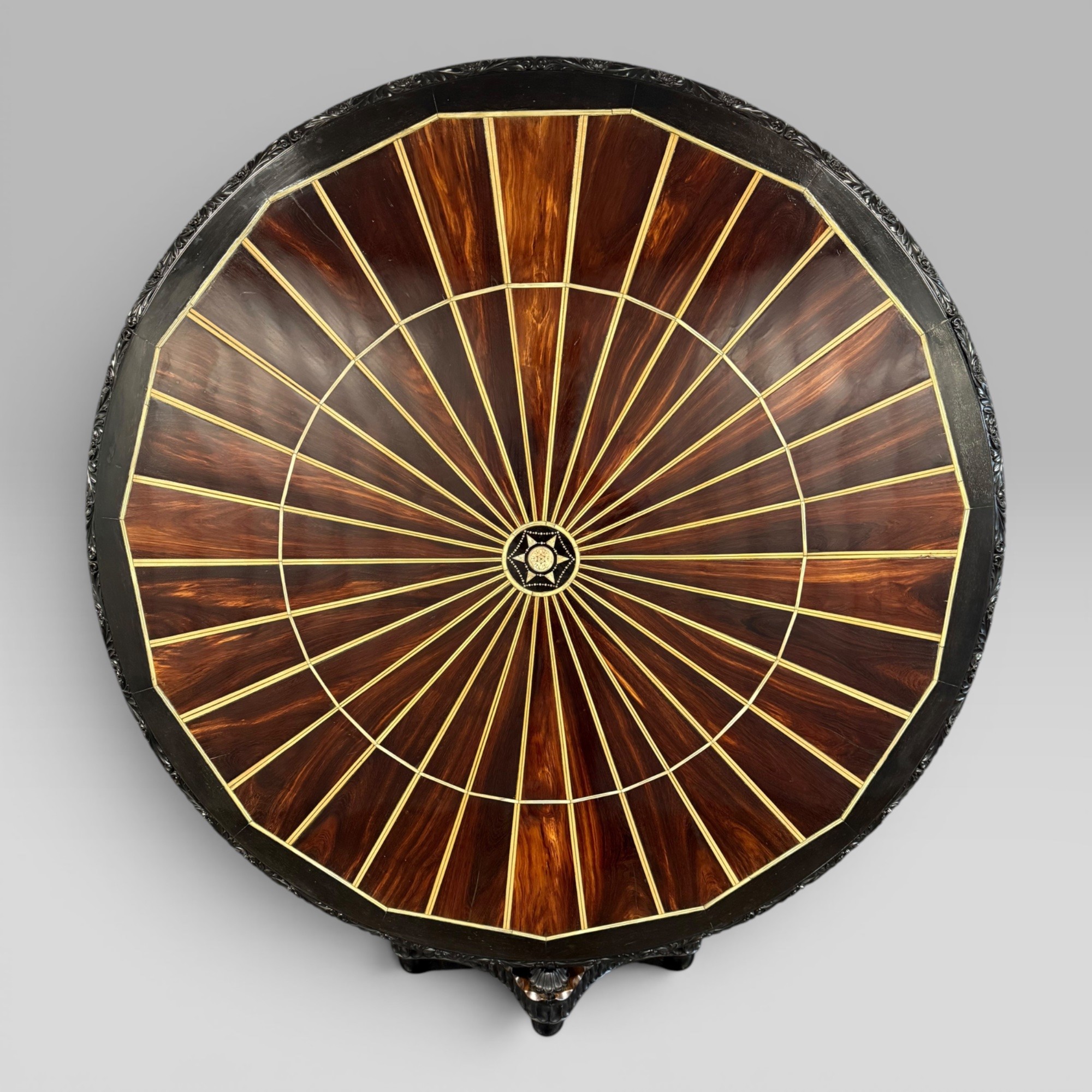
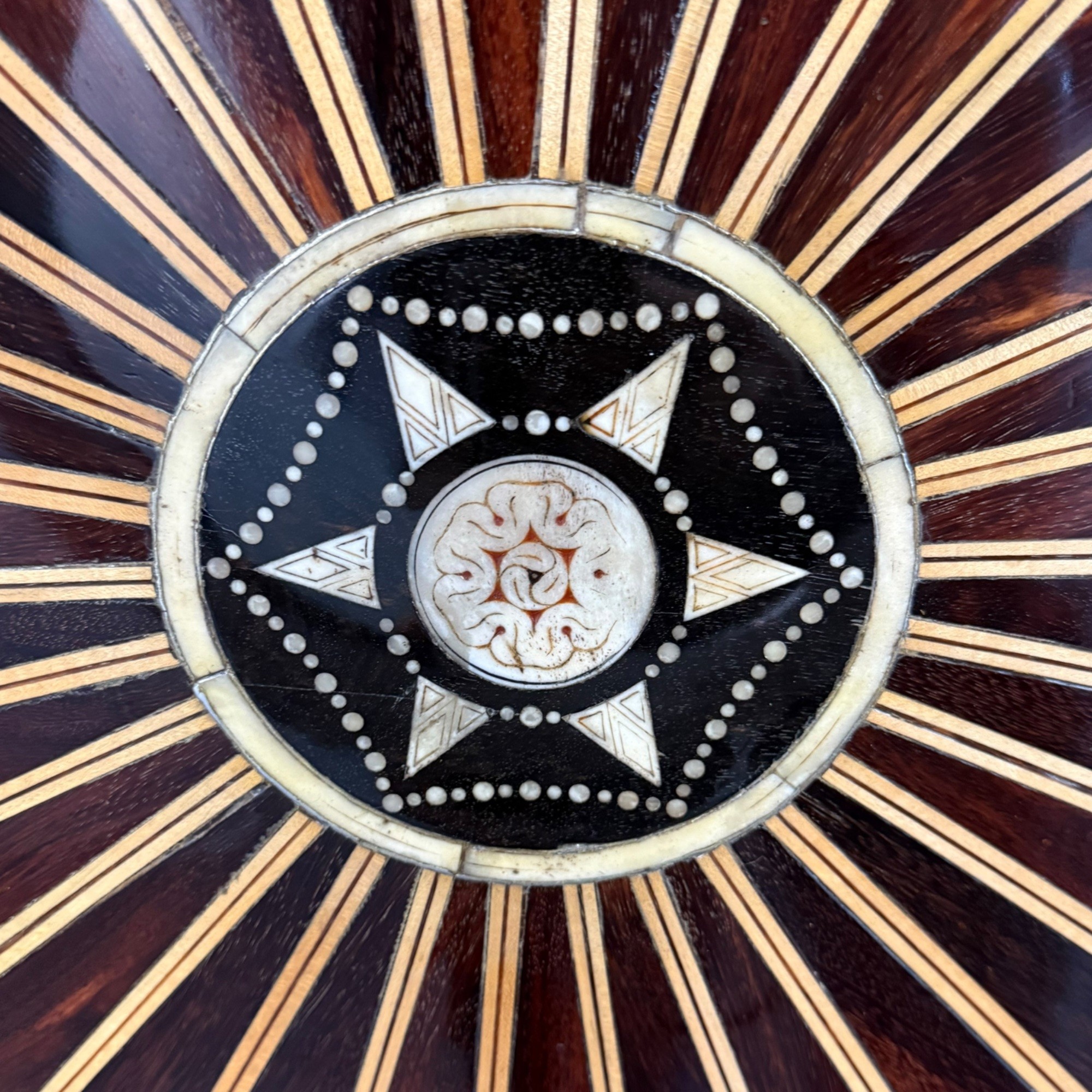
The top is particularly impressive, veneered in radiating sections of calamander, forming a striking sunburst or ship’s wheel design. Whilst Ceylonese tables are often encountered with specimen wood tops, this distinctive radiating design is exceptionally unusual, and we have been unable to locate another recorded example featuring this remarkable pattern.
The top is further enriched with ivory inlay, accompanied by an exceptionally fine line of silver stringing subtly inlaid alongside the ivory, a delicate detail that beautifully highlights the extraordinary
... level of craftsmanship. Contrasting timber stringing further accentuates the radiating design, while at its centre is an ivory roundel depicting an Asian-inspired decorative motif. The ebony frieze and moulded edge are richly carved in low relief with scrolling flowers and foliage, providing a striking contrast to the geometric precision of the tabletop and demonstrating the exceptional quality of the carving throughout.
The top is secured to the base with original bolts and can be tilted upright, allowing the remarkable veneering and inlay to be displayed when not in use, or lowered for use as an impressive centre table.
Formerly known as Ceylon, modern-day Sri Lanka was internationally celebrated during the nineteenth century for producing some of the finest decorative hardwood furniture in the British Empire. The island’s cabinetmakers worked with indigenous timbers of exceptional quality, most notably ebony and calamander. Calamander, sometimes historically referred to as Coromandel wood, is one of the world’s rarest and most highly prized decorative hardwoods. Native to Sri Lanka, it is renowned for its rich golden-brown colouring dramatically figured with dark black streaks, making it one of the most sought-after exotic timbers used by nineteenth-century cabinetmakers. Combined with solid ebony and the refined ivory and silver inlay, these exceptional materials place this table amongst the finest examples of Ceylonese craftsmanship.
UK Ivory Act 2018 Registration Reference: ZTNP6RPA
Dimensions:
• Height: 83 cm (32.68 in)
• Width: 154 cm (60.63 in)
• Depth: 154 cm (60.63 in)
Delivery:
Free UK mainland delivery (excluding Scottish islands and other UK islands).
We are happy to arrange international delivery please contact us for a quotation.
Delivery:
Free UK mainland delivery (excluding Scottish islands and other UK islands).
International delivery available — please contact us or request a quote.Antique ID Number (AIDN): SA1225074
Dateline of this antique is 19th Century
Height is 83cm (32.7inches)Width is 154cm (60.6inches)Depth is 154cm (60.6inches)




Thank you.
Your comment has been sent to Sellingantiques.