10,314  PAGES BROWSED TODAY PAGES TODAY 36  ANTIQUES UPLOADED TODAY NEW ARRIVALS
ID #SA1223450
FOR SALE
£495
Email
Save
19th‑century French Cast Iron Mortar – Large Chateau Kitchen Apothecary Mortar
Whites Antiques
for sale €579     $629
£495
Whites Antiques

Whites Antiques

Sellingantiques Verified Since May 2023
View Dealers Stock Page
  • About Us
    White's antiques collective is the perfect resource for both trade and private clients
Id #SA1223450
PDF SHARE
SAVE

19th‑century French Cast Iron Mortar – Large Chateau Kitchen Apothecary Mortar

19th century
For Sale by Whites Antiques
Description

19th‑Century French Cast Iron Mortar – Large Chateau Kitchen Apothecary Mortar

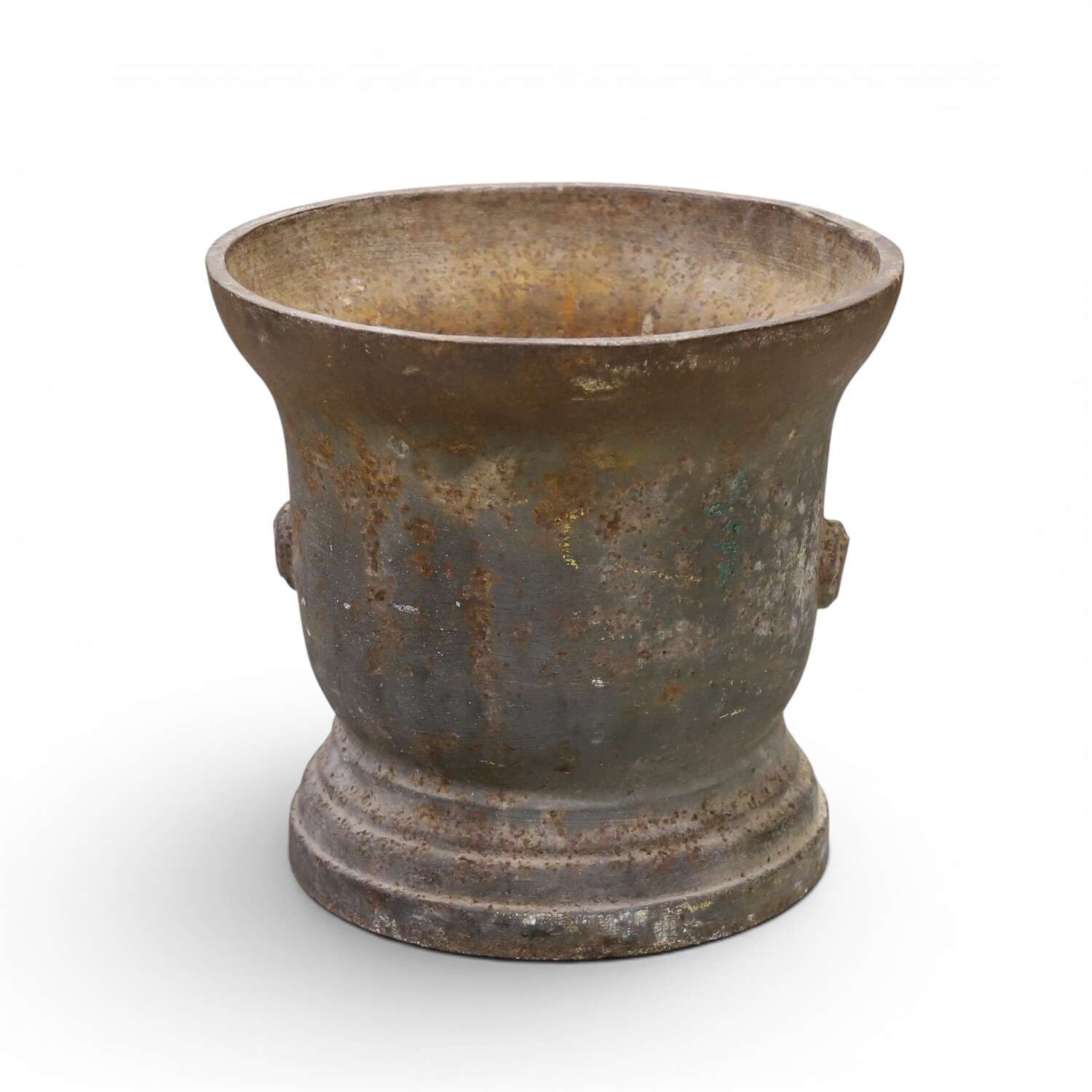
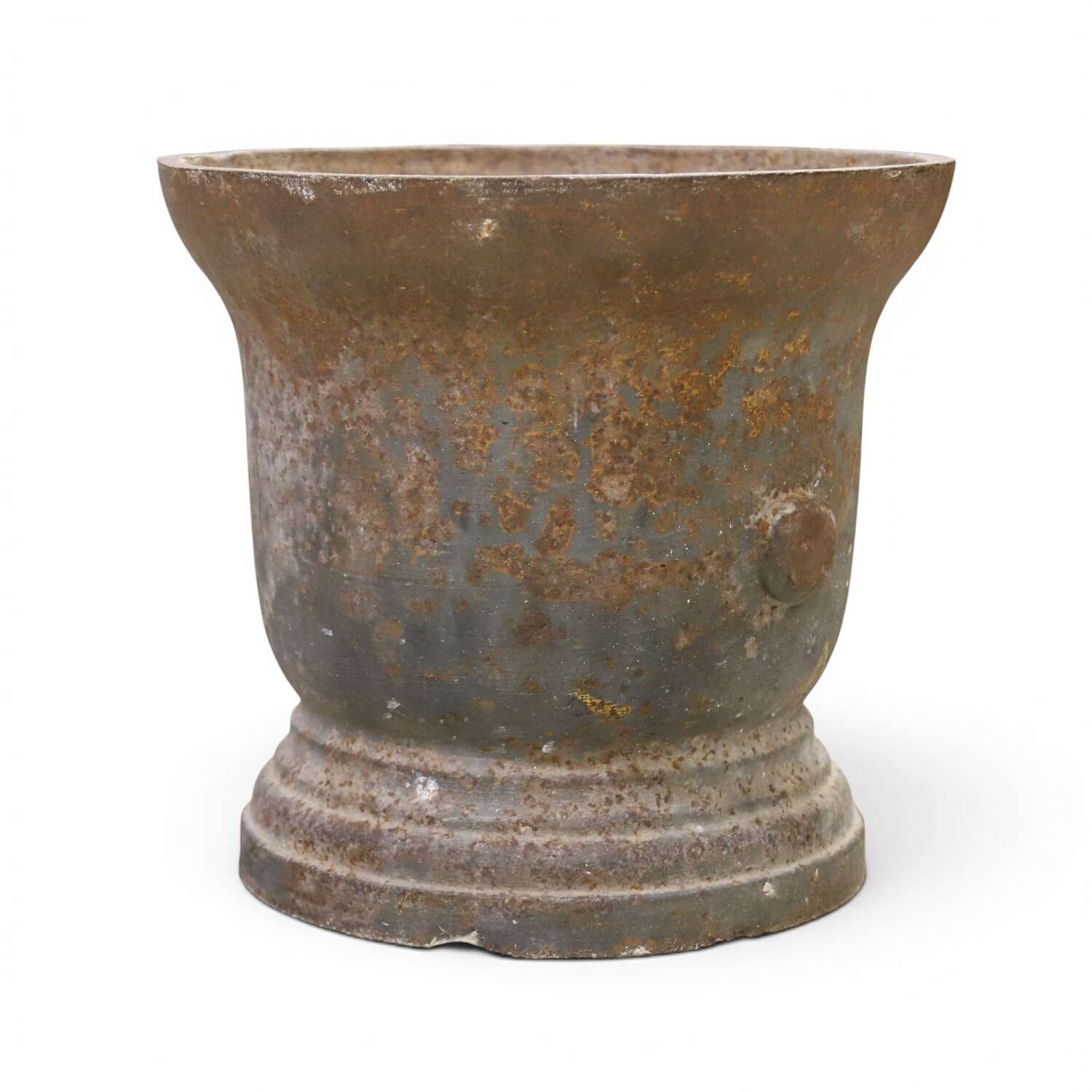
Why We Love This … A superb and impressively scaled 19th‑century French cast iron mortar, originally used in a chateau kitchen or apothecary setting. The weight, presence, and beautifully aged surface give this piece enormous decorative impact. Mortars of this size and quality are increasingly hard to find, and this example has the perfect balance of sculptural form, honest wear, and deep, rich patina. A striking object that works equally well as a functional kitchen piece or as a standalone decorative sculpture.
At a Glance – Appeal, Desirability & Collectibility • Date: 19th century • Origin: France • Style: French chateau kitchen / apothecary • Materials: • Cast iron • Naturally aged surface • Original patina • Dimensions: (Insert your measurements) • Condition: • Very good antique condition • Surface wear consistent with age and use • Stable and structurally sound • Beautifully aged patina • No cracks or structural losses • Notable Details: • Exceptional size and weight • Deep bowl with thick walls • Strong sculptural form • Rich, tactile surface • Classic 19th‑century French casting • Decorative Appeal: • A powerful sculptural object with real presence • Versatility: • Kitchen display • Centrepiece on a table or island • Decorative object in contemporary or rustic interiors • Ideal for herbs, utensils, or purely as sculpture • Collectibility: • Large French mortars are increasingly sought after • Delivery is not included – please use the Delivery Quote tab prior to purchase
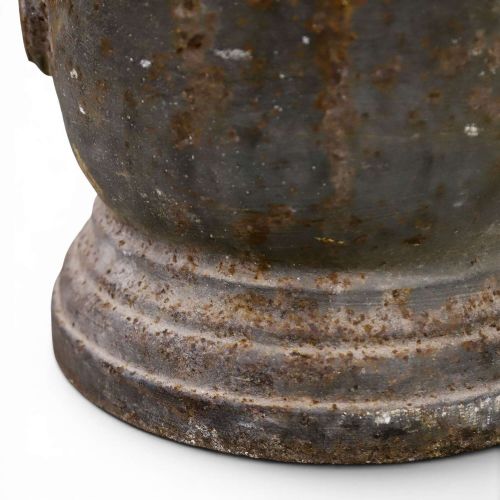
Heritage, History & Craftsmanship Cast iron mortars were essential tools in 19th‑century French kitchens, pharmacies, and chateaux, used for grinding spices, herbs, grains, and medicinal ingredients. Their weight and durability made them indispensable, and the best examples were cast in thick, heavy iron to withstand decades of use. This piece shows the hallmarks of quality French foundry work: crisp shaping, excellent balance, and a beautifully aged surface that has developed over more than a century of handling and use. Its scale suggests it was used in a large household or professional kitchen, where ingredients were prepared in significant quantities.
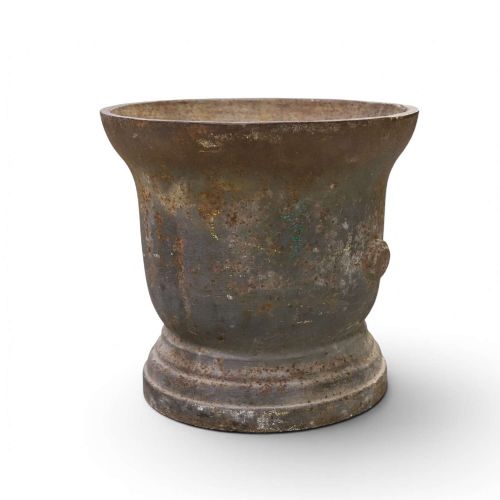
Social History In grand French chateaux, mortars of this size were part of the daily rhythm of kitchen life — grinding spices for sauces, herbs for remedies, and ingredients for preserving and curing. They were also used in apothecaries, where precision and durability were essential. Today, these mortars are prized not only for their history but for their sculptural beauty, embodying the practical elegance of 19th‑century French domestic life.
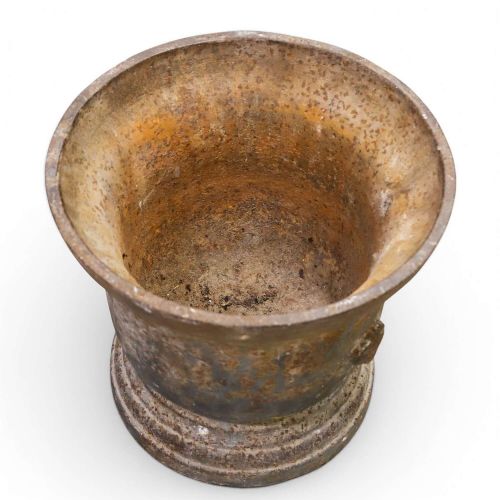
Explore Every Facet These images form an essential part of the condition report and are intended to provide complete transparency and confidence in your purchase. • Exceptional scale and weight • Deep, tactile patina • Thick cast iron walls • Strong sculptural silhouette • Age‑appropriate surface wear • Stable and structurally sound

Terminology by Style French Chateau Kitchen: A tradition of robust, functional, beautifully made tools and vessels designed for large‑scale food preparation, often crafted in iron, copper, and stone.

Sustainable Style & Styling Suggestions Thank you for considering this 19th‑Century French Cast Iron Mortar — a choice that is both culturally and environmentally responsible … in every sense, the most sustainable item is the one that endures. • Use as a centrepiece filled with herbs or utensils • Style on a kitchen island with wooden boards and copper • Display as a sculptural object in modern or rustic interiors

Physical Dimensions
Height
38cm (14.96")
Width
34cm (13.39")
Depth
41cm (16.14")
Declaration

Whites Antiques has dated this Antique Cast Iron Mortar to the 19th Century.

Reference Numbers
Sellingantiques Reference
SA1223450
Dealers Internal Reference
BR088
Dealers Notes

We do not include delivery in our prices as this is dependent upon many factors such as whether it is mainland or overseas. The following options are available to you:-

• You can arrange your own collection from our address

• You can fill in the delivery request option

• You can email us for further information if there is more than one item

• Proovia Delivery offer a 2 man delivery system

Description
19th‑Century French Cast Iron Mortar – Large Chateau Kitchen Apothecary Mortar
Why We Love This … A superb and impressively scaled 19th‑century French cast iron mortar, originally used in a chateau kitchen or apothecary setting.
Whites Antiques

The weight, presence, and beautifully aged surface give this piece enormous decorative impact. Mortars of this size and quality are increasingly hard to find, and this example has the perfect balance of sculptural form, honest wear, and deep, rich patina. A striking object that works equally well as a functional kitchen piece or as a standalone decorative sculpture.

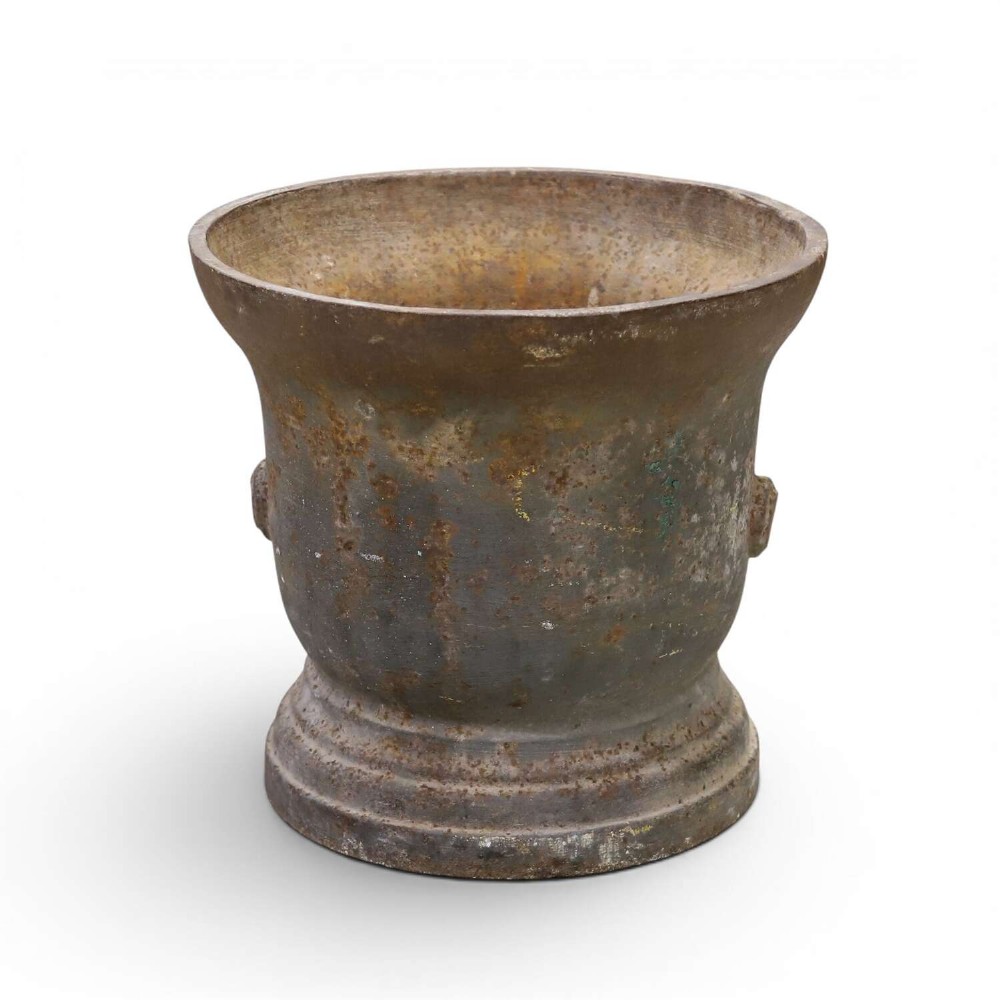
fig 1. A nineteenth-century cast iron mortar featuring a flared upper rim, two side lug handles, and a moulded circular base with a patinated metal surface.
fig 1. 19th‑century French Cast Iron Mortar – Large Chateau Kitchen Apothecary Mortar

At a Glance – Appeal, Desirability & Collectibility • Date: 19th century • Origin: France • Style: French chateau kitchen / apothecary • Materials: • Cast iron • Naturally aged surface • Original patina • Dimensions: (Insert your measurements) • Condition: • Very good antique condition • Surface wear consistent with age and use • Stable and structurally sound • Beautifully aged patina • No cracks or structural losses • Notable Details: • Exceptional size and weight • Deep bowl with thick walls • Strong sculptural form • Rich, tactile surface • Classic 19th‑century French casting • Decorative Appeal: • A powerful sculptural object with real presence • Versatility: • Kitchen display • Centrepiece on a table or island • Decorative object in contemporary or rustic interiors • Ideal for herbs, utensils, or purely as sculpture • Collectibility: • Large French mortars are increasingly sought after • Delivery is not included – please use the Delivery Quote tab prior to purchase

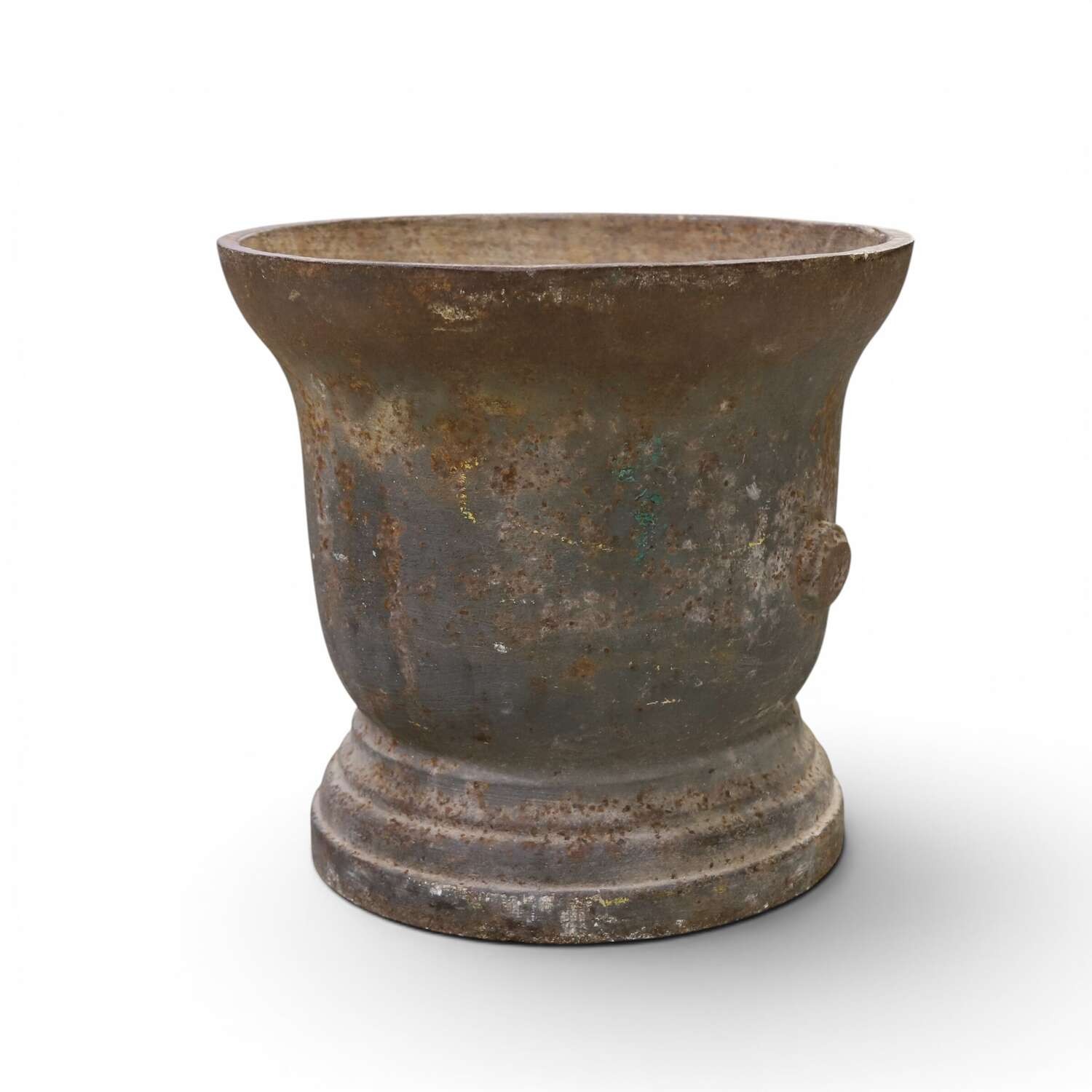
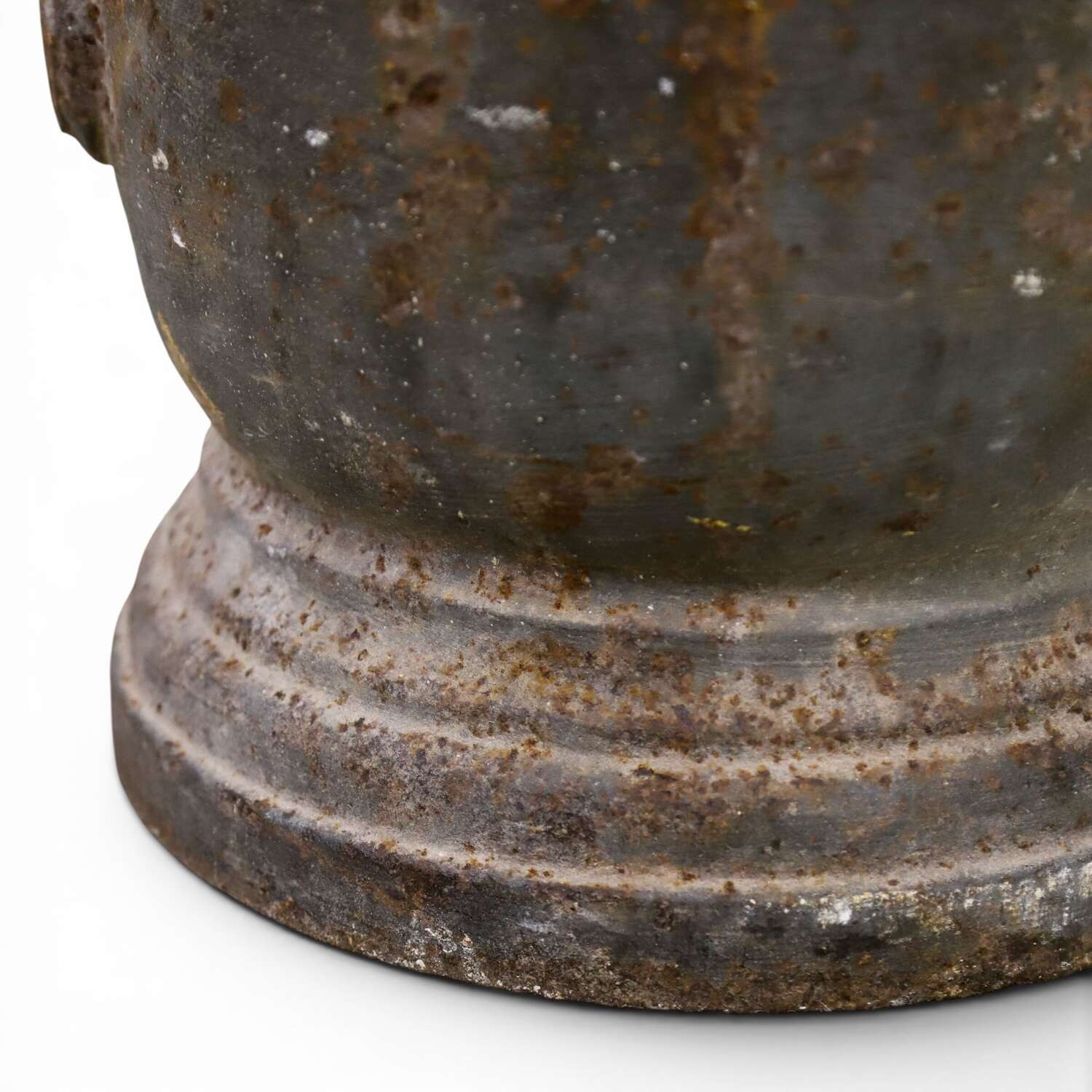
fig 2. A nineteenth-century cast iron mortar featuring a flared upper rim, two side lug handles, and a moulded circular base with a patinated metal surface.
fig 2. 19th‑century French Cast Iron Mortar – Large Chateau Kitchen Apothecary Mortar

Heritage, History & Craftsmanship Cast iron mortars were essential tools in 19th‑century French kitchens, pharmacies, and chateaux, used for grinding spices, herbs, grains, and medicinal ingredients. Their weight and durability made them indispensable, and the best examples were cast in thick, heavy iron to withstand decades of use. This piece shows the hallmarks of quality French foundry work: crisp shaping, excellent balance, and a beautifully aged surface that has developed over more than a century of handling and use. Its scale suggests it was used in a large household or professional kitchen, where ingredients were prepared in significant quantities.

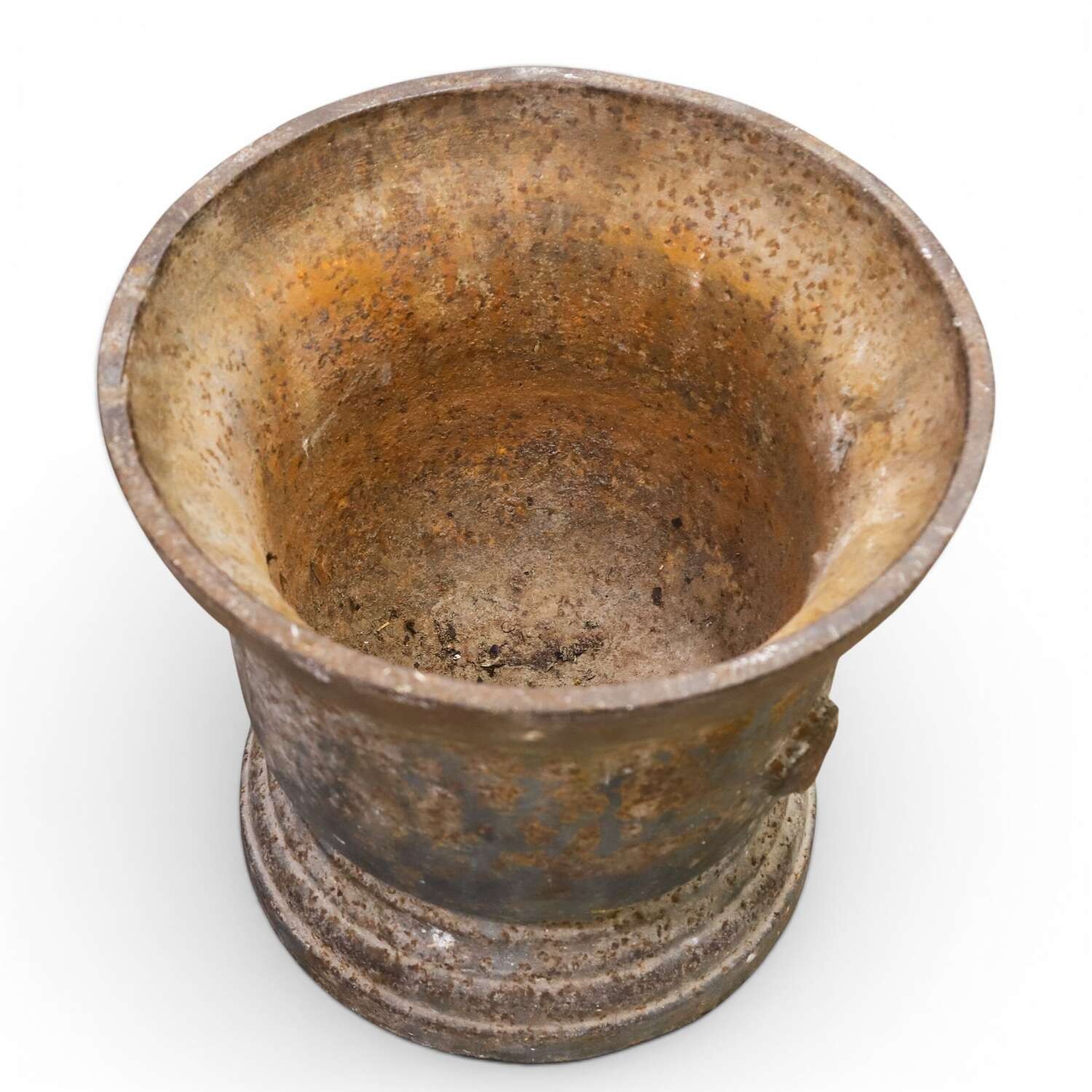
fig 3. A nineteenth-century cast iron mortar featuring a flared upper rim, two side lug handles, and a moulded circular base with a patinated metal surface.
fig 3. 19th‑century French Cast Iron Mortar – Large Chateau Kitchen Apothecary Mortar

Social History In grand French chateaux, mortars of this size were part of the daily rhythm of kitchen life — grinding spices for sauces, herbs for remedies, and ingredients for preserving and curing. They were also used in apothecaries, where precision and durability were essential. Today, these mortars are prized not only for their history but for their sculptural beauty, embodying the practical elegance of 19th‑century French domestic life.

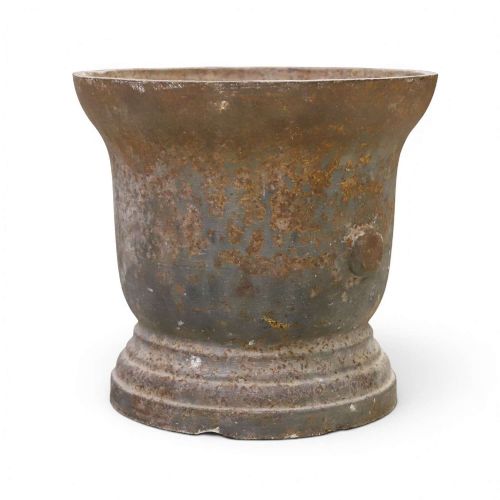
fig 4. A nineteenth-century cast iron mortar featuring a flared upper rim, two side lug handles, and a moulded circular base with a patinated metal surface.
fig 4. 19th‑century French Cast Iron Mortar – Large Chateau Kitchen Apothecary Mortar

Explore Every Facet These images form an essential part of the condition report and are intended to provide complete transparency and confidence in your purchase. • Exceptional scale and weight • Deep, tactile patina • Thick cast iron walls • Strong sculptural silhouette • Age‑appropriate surface wear • Stable and structurally sound

Terminology by Style French Chateau Kitchen: A tradition of robust, functional, beautifully made tools and vessels designed for large‑scale food preparation, often crafted in iron, copper, and stone.

Sustainable Style & Styling Suggestions Thank you for considering this 19th‑Century French Cast Iron Mortar — a choice that is both culturally and environmentally responsible … in every sense, the most sustainable item is the one that endures. • Use as a centrepiece filled with herbs or utensils • Style on a kitchen island with wooden boards and copper • Display as a sculptural object in modern or rustic interiors

Height
38cm (14.96")
Width
34cm (13.39")
Depth
41cm (16.14")
Date of Manufacture

Whites Antiques has dated this Antique Cast Iron Mortar to the 19th Century.

Reference Numbers
Sellingantiques Ref
SA1223450
Dealers Internal Ref
BR088
Whites Antiques
Whites Antiques
Sellingantiques verified Since May 2023

White's antiques collective is the perfect resource for both trade and private clients

Dealer Profile

You can view the stock and full dealer information on the Whites Antiques Profile Page
PDF SHARE
SAVE
A nineteenth-century cast iron mortar featuring a flared upper rim, two side lug handles, and a moulded circular base with a patinated metal surface.
1 / 5
Archive I A nineteenth-century cast iron mortar featuring a flared upper rim, two side lug handles, and a moulded circular base with a patinated metal surface.

19th‑century French Cast Iron Mortar – Large Chateau Kitchen Apothecary Mortar
Archive II A nineteenth-century cast iron mortar featuring a flared upper rim, two side lug handles, and a moulded circular base with a patinated metal surface. View II
Archive III A nineteenth-century cast iron mortar featuring a flared upper rim, two side lug handles, and a moulded circular base with a patinated metal surface. View III
Archive IV A nineteenth-century cast iron mortar featuring a flared upper rim, two side lug handles, and a moulded circular base with a patinated metal surface. View IV
Archive V A nineteenth-century cast iron mortar featuring a flared upper rim, two side lug handles, and a moulded circular base with a patinated metal surface. View V
Enlarged Archival View
Telephone 07717 321455
Location
Unit 10 The Vinery
Arundel Road
Poling
West Sussex
BN18 9PY
United Kingdom
Verified Since May 2023
Items For Sale 134
Items Sold 431
Whites Antiques
Whites Antiques
Verified Since May 2023
View Dealer Info
Location: Unit 10 The Vinery, Arundel Road, Poling, West Sussex, BN18 9PY, United Kingdom
Verified
May 2023
For Sale
134
Sold
431
A nineteenth-century cast iron mortar featuring a flared upper rim, two side lug handles, and a moulded circular base with a patinated metal surface.
19th‑Century French Cast Iron Mortar – Large Chateau Kitchen Apothecary Mortar
Ref: SA1223450
A nineteenth-century cast iron mortar featuring a flared upper rim, two side lug handles, and a moulded circular base with a patinated metal surface.
Detail View 1
Detail View 2
Detail View 3
Detail View 4
Archival Detail
Every single antique dealer on our platform is individually approved by our internal team. We verify their professional trade history, ethical standards, and photographic quality to ensure a secure, high-standard buying environment. Upon joining, every dealer agrees to a strict 9-point code of conduct. While issues can occasionally arise, our dealers typically resolve them swiftly and directly with the buyer. In fact, since our founding in 2002, Sellingantiques has only had to step in to help resolve an issue on roughly five occasions—a true testament to the quality of our dealers and their dedication to your happiness.
Our dealers are highly experienced in packing and shipping fragile, high-value antiques. Because you are in direct contact with the dealer, you will be able to easily go through all available shipping and insurance options together to ensure your item arrives safely.
Antiques are the ultimate green purchase. By choosing historical pieces over newly manufactured goods, you completely eliminate the carbon footprint of modern mass production while preserving exceptional, timeless craftsmanship.

Mortars were essential utilitarian vessels used in historical kitchens, apothecaries, and laboratories to pulverise spices, herbs, and chemical compounds. Cast iron examples became prominent during the nineteenth century due to their durability and heavy weight, which provided stability during grinding.

Heavy metal mortars were typically formed using sand casting, where molten iron or bronze was poured into a sand mould to create a dense, single-piece vessel. Exterior details, such as side lugs and moulded bases, were cast directly into the form to ensure structural integrity under impact.

Authentic pieces display natural surface patination, dark oxidisation, and subtle pitting consistent with age and usage. They exhibit substantial weight, hand-finished mould seams, and smoothing along the interior base where grinding occurred over extended periods.

In contemporary interiors, large iron mortars function as grounding sculptural vessels on kitchen islands, sideboards, or hearths. They are frequently styled as planters, cachepots, or standalone architectural objects.

Maintenance involves dry dusting with a soft brush or cloth to prevent moisture entrapment that could induce rust. To preserve the existing patina without causing deterioration, a thin layer of neutral microcrystalline wax can be applied and buffed.
items
Add keywords to the filter
Price
£100
£250000
Era
Movements
Material
Origin
Stock Location
Freshness
Online Payments
Categories