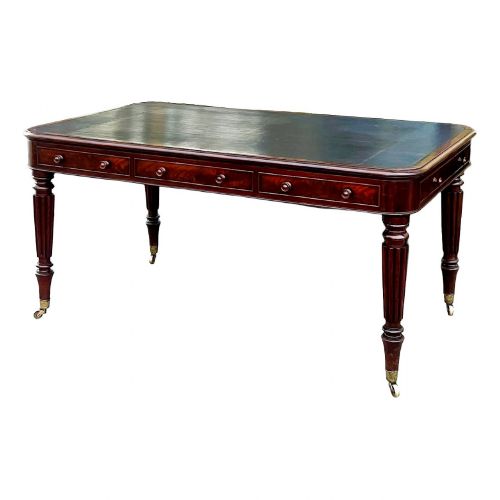
Loveday Antiques has dated this Regency Mahogany Writing Desk to the 19th Century.
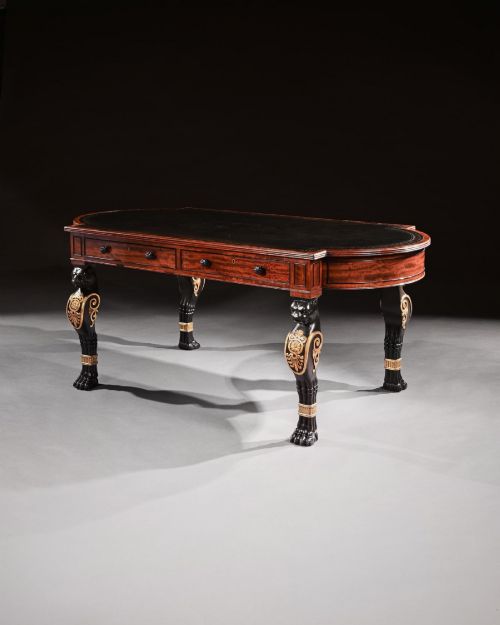
English, Regency period, Circa 1820.
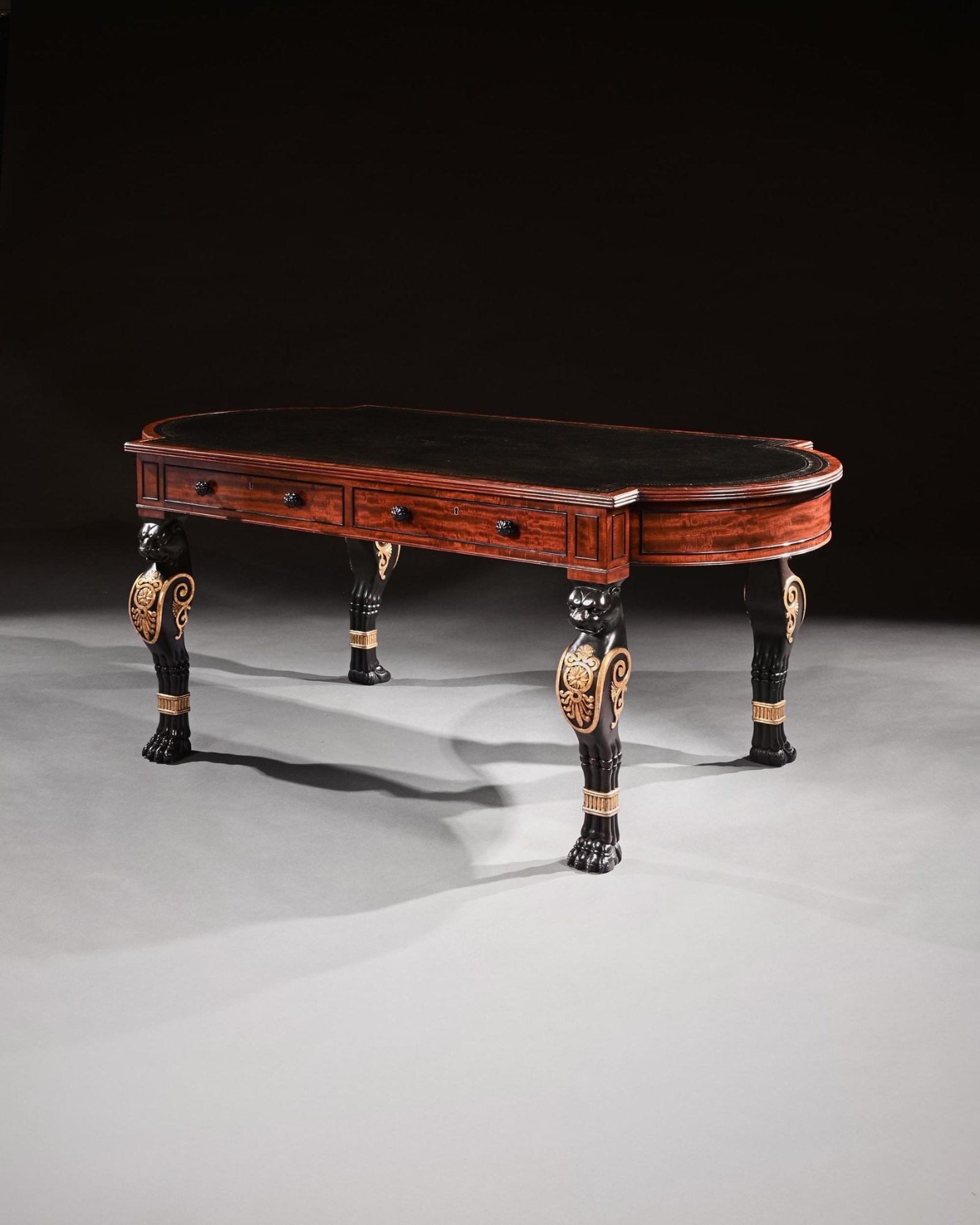
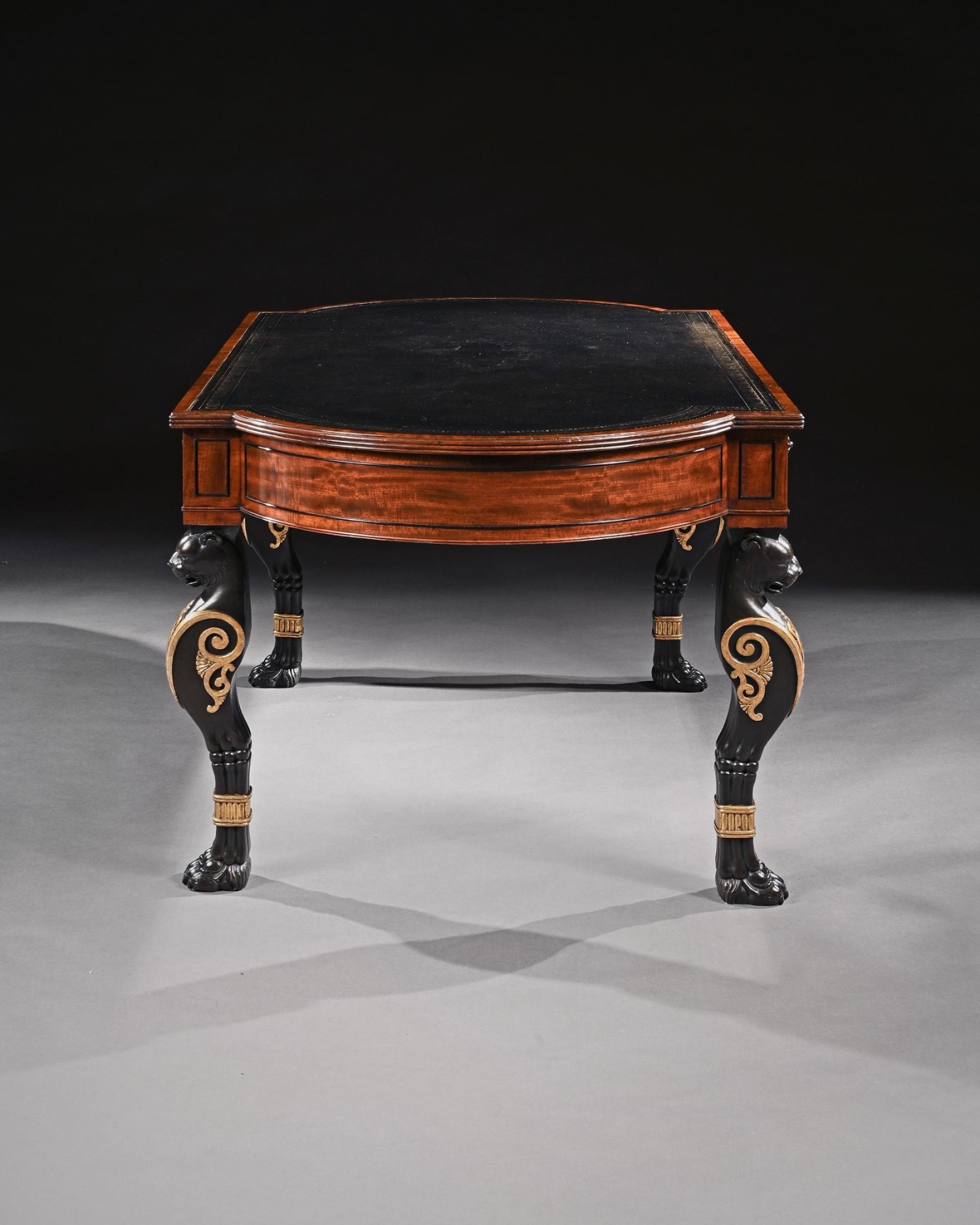
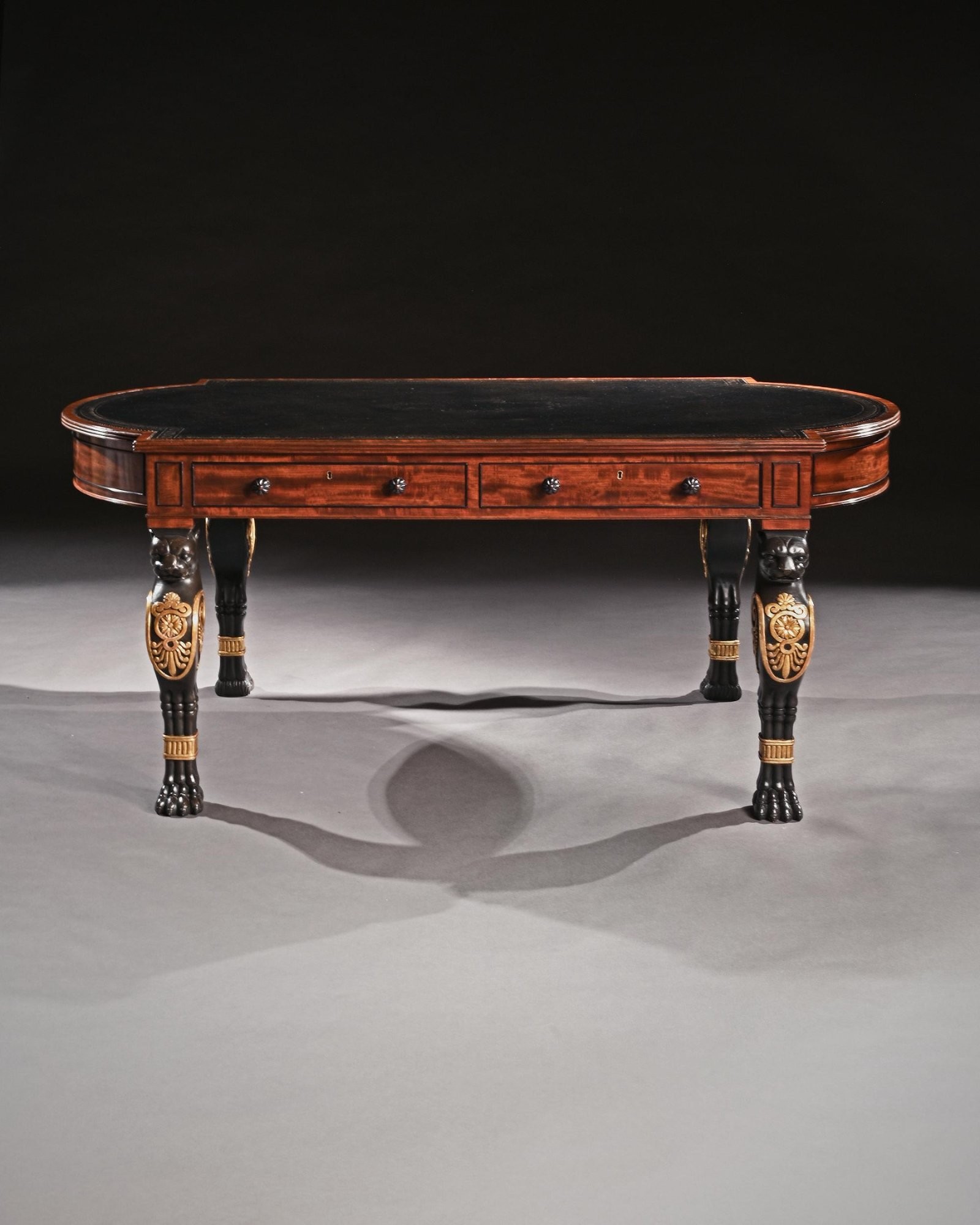
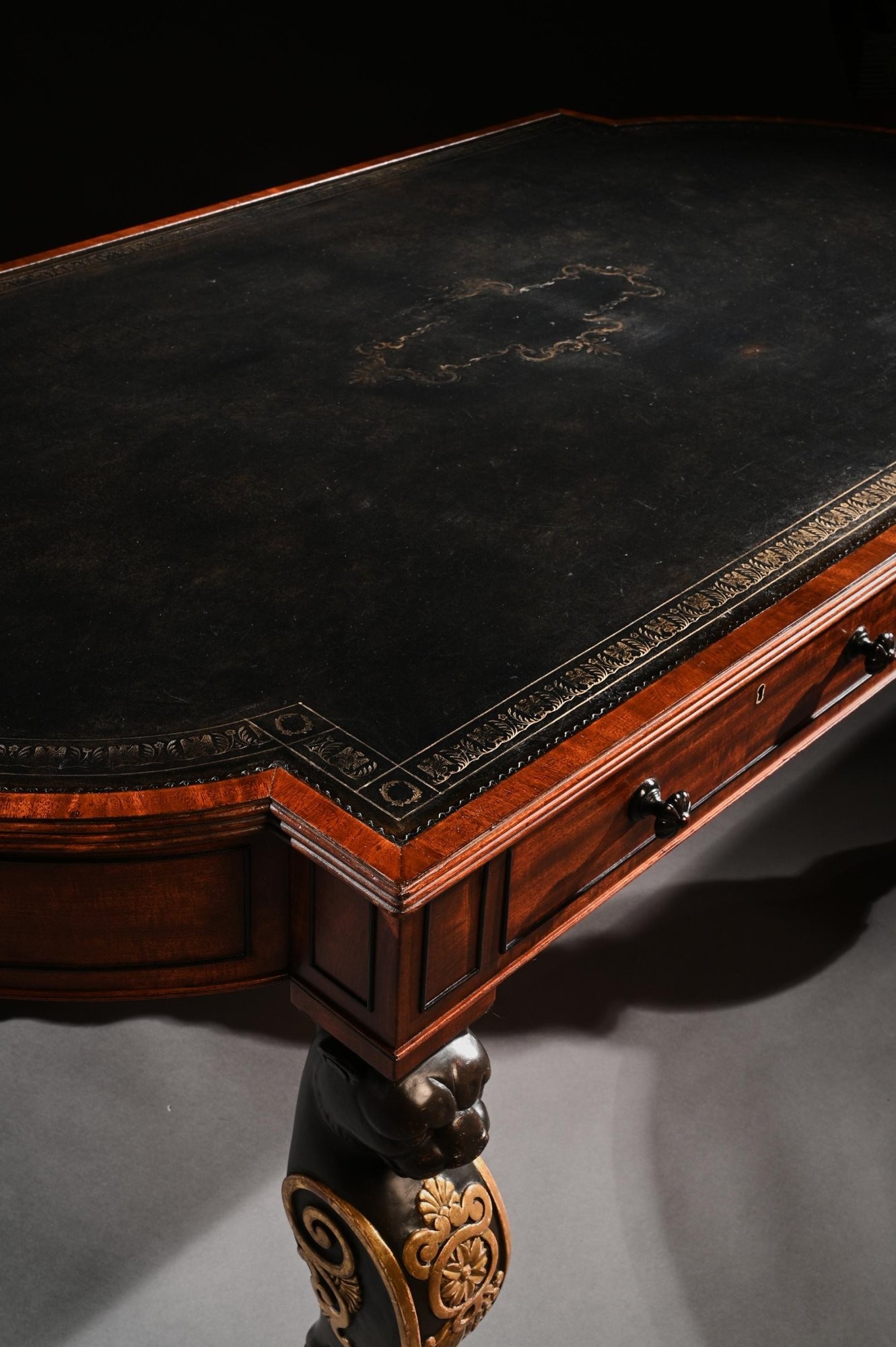
The frieze, containing four finely chosen fiddle-back mahogany drawers, two pairs to opposing sides, each retaining the original gadrooned carved ebonised knob handles. The perimeters having a finely ebonised cockbead, whilst the drawer liners, executed in mahogany, retain the original recessed brass locks which look to have never been removed. Flanking the drawers are bead-moulded ebonised panels which conform to either end above a reeded mould.
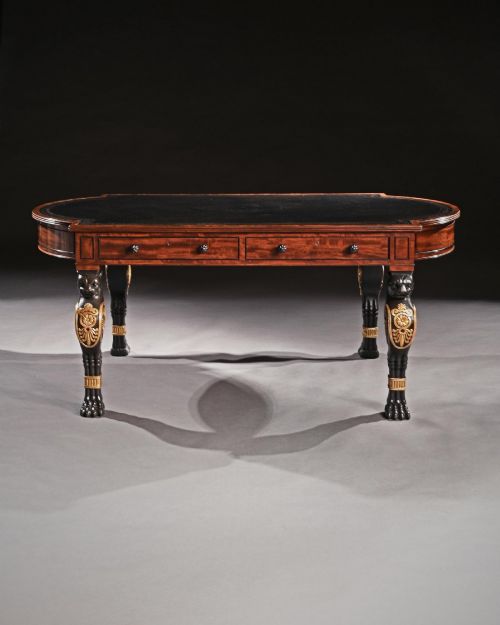
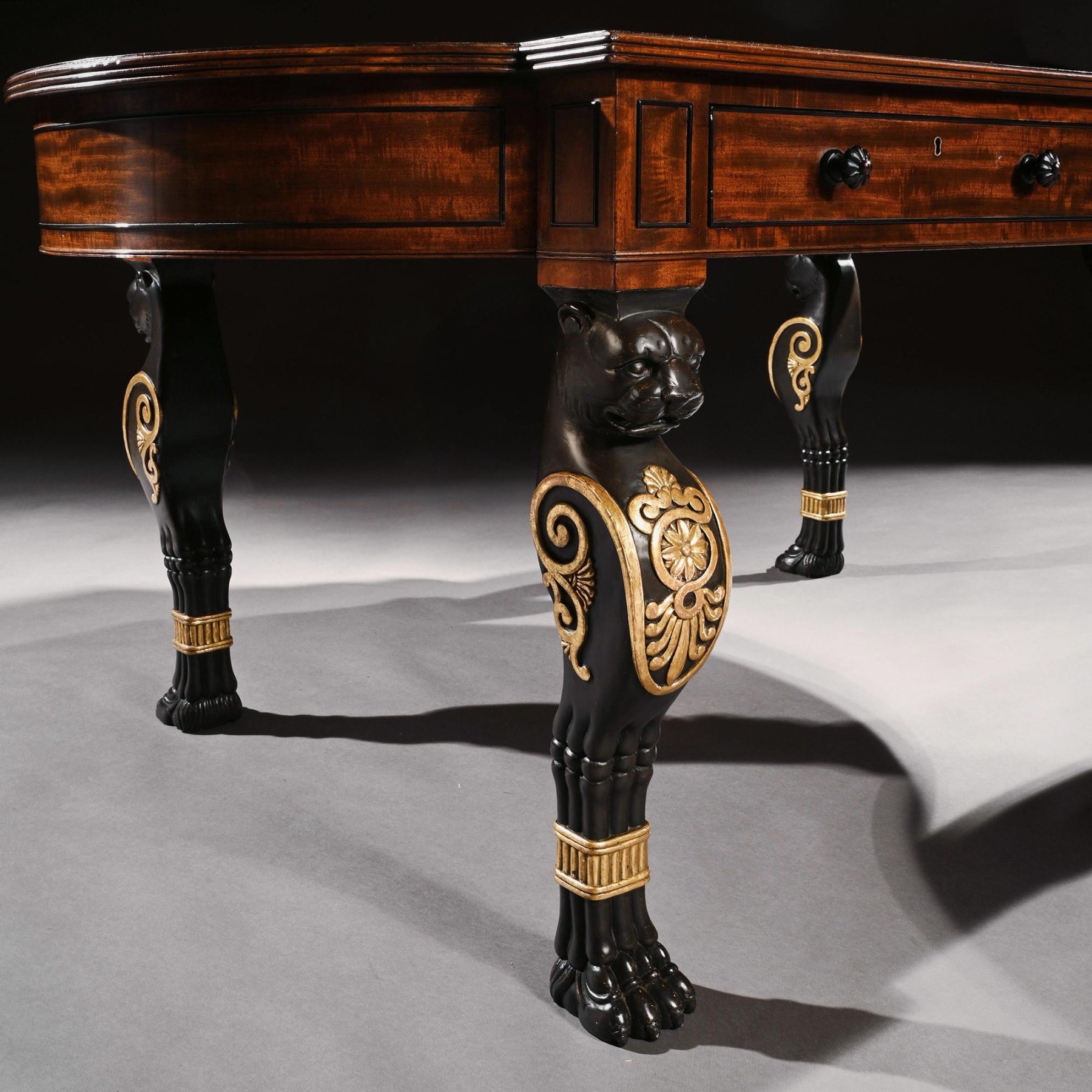
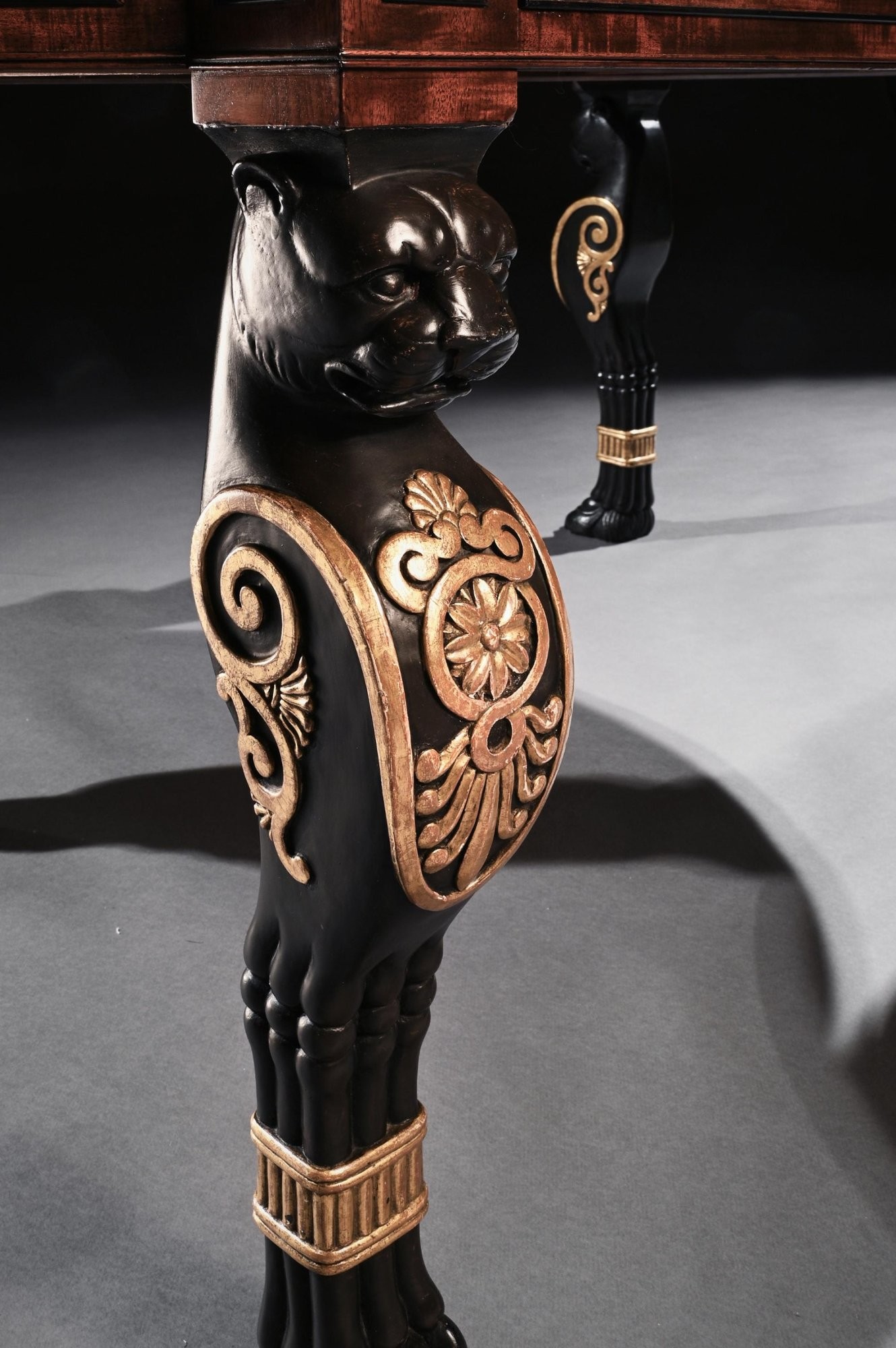
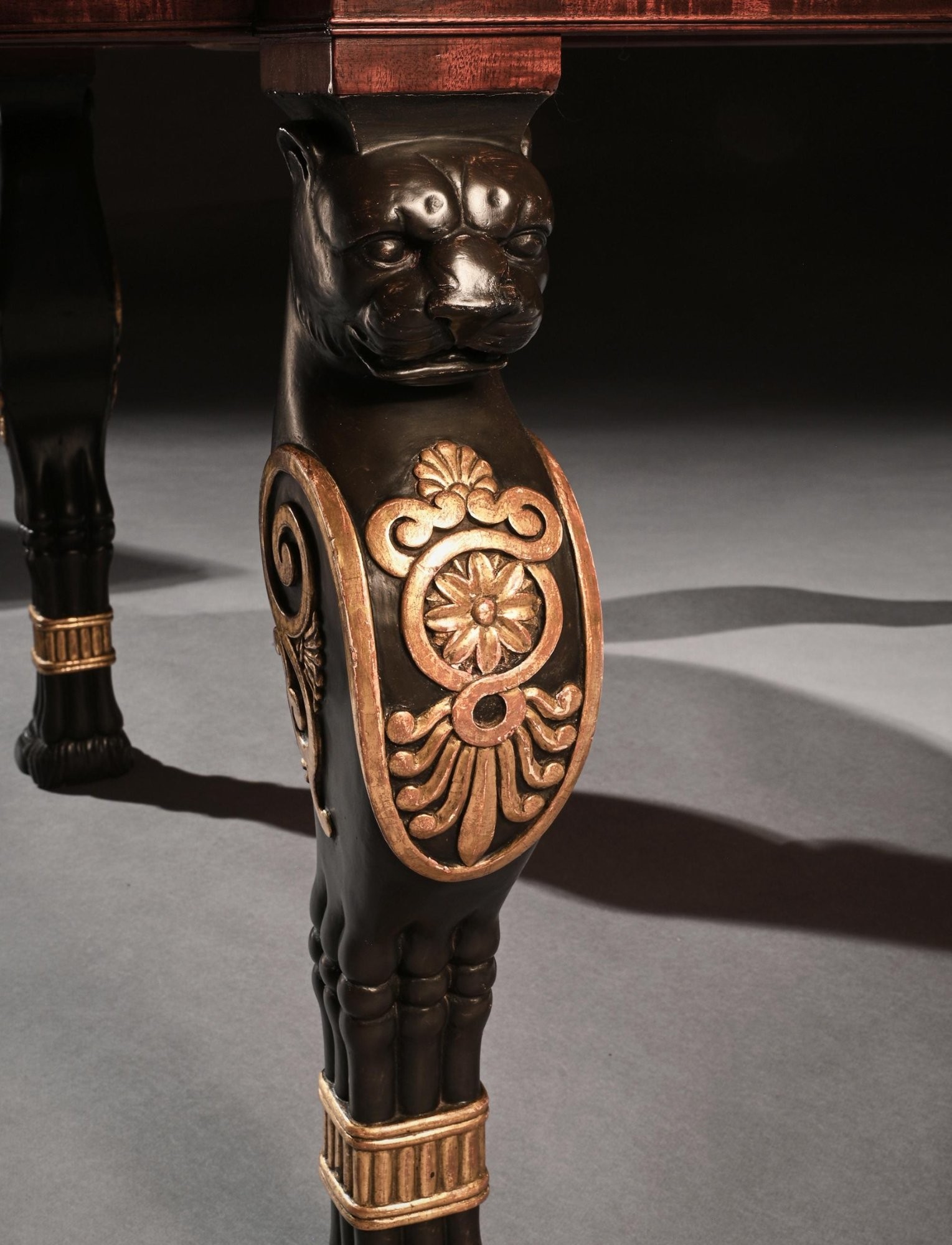
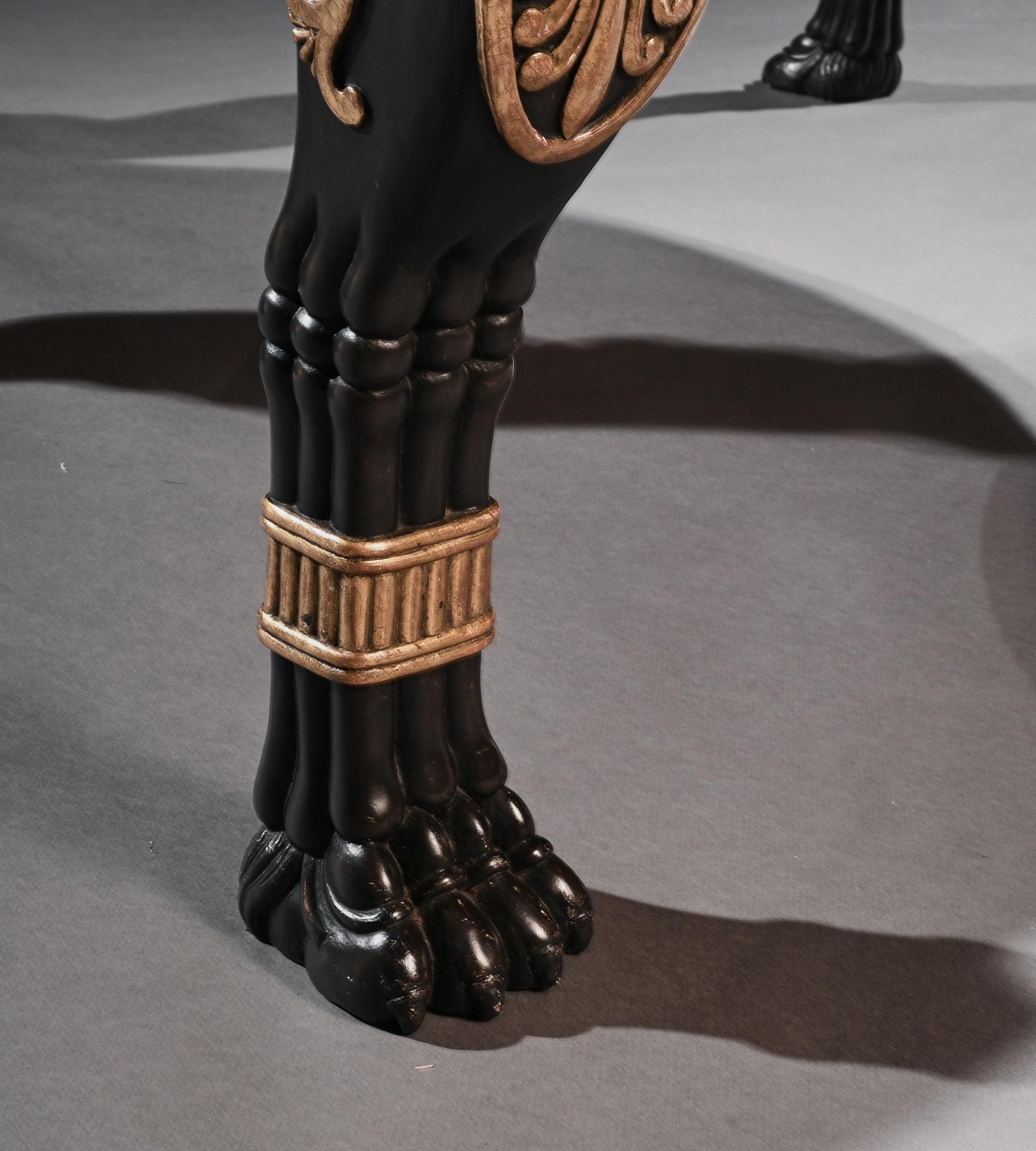
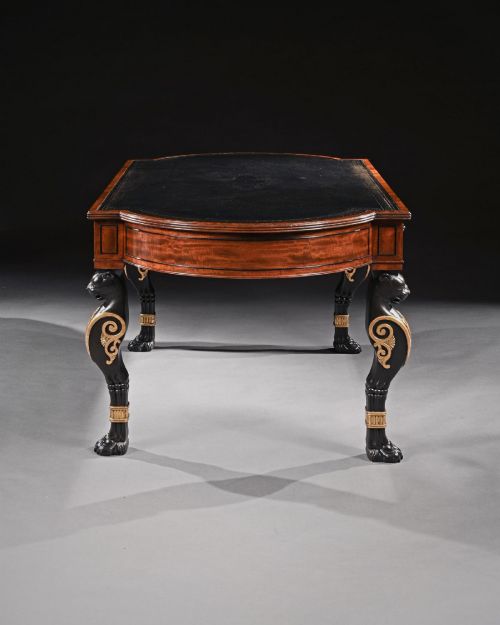
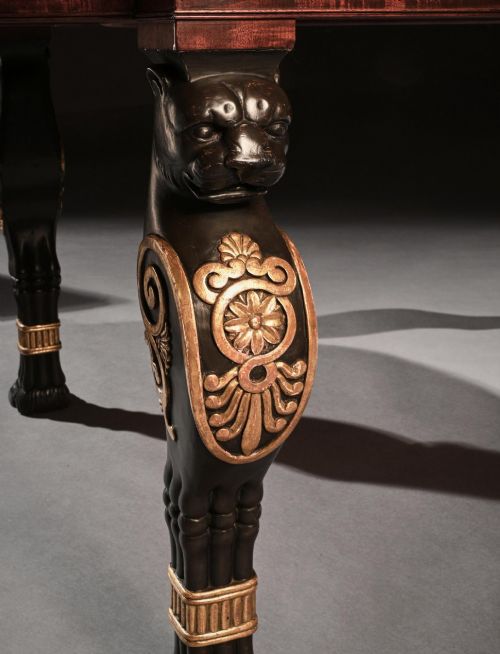
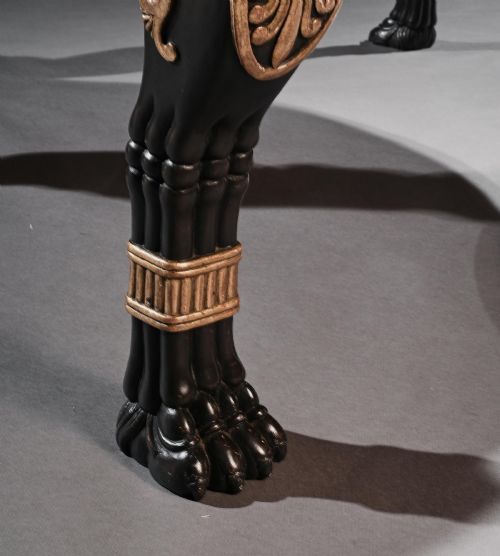
Raised on four boldly designed and imposing, crisply carved, ebonised and parcel gilt leopard monopodia supports in wonderful original waxed condition. Each of the Egyptian leopards' masks above a bold breast decorated with carved gilt anthemion and guilloche motifs, finishing on a finely detailed carved leg and paw foot.
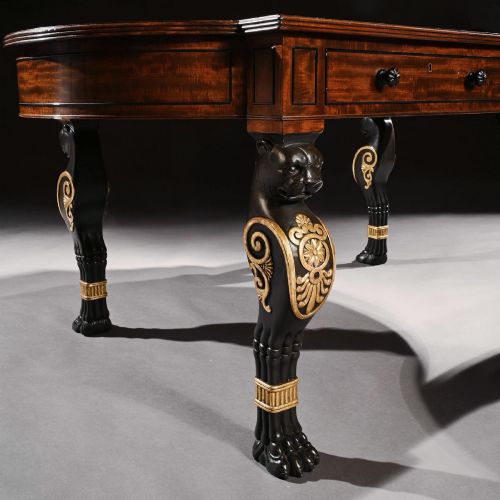
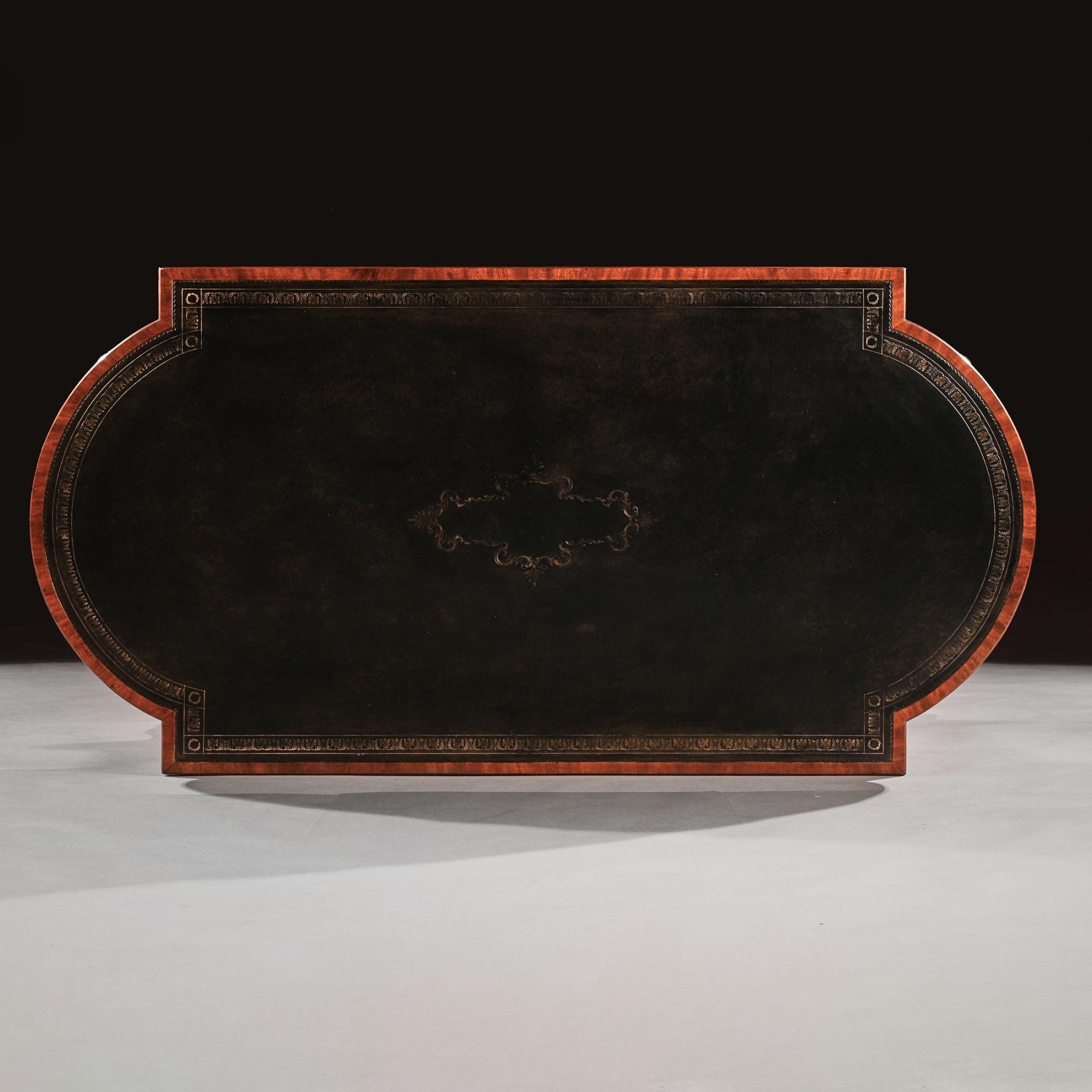
The condition is excellent, retaining what looks to be the original hand-dyed and gilt tooled waxed leather writing surface along with locks, handles and gilt-work to the legs.
Labelled ‘Morning Library’ to the underside, whilst in this exemplary condition, this striking piece of Regency furniture would have furnished the library of an important house of the period when it was made and, given its exemplary "country house" condition, it probably remained in this house or at least the same family for the majority of its life.
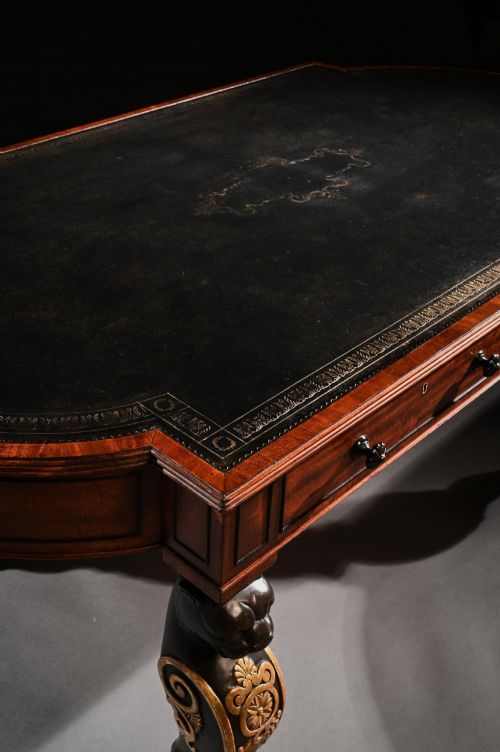
This is a rare, elegant, writing table of exceptional colour, which corresponds with designs of the celebrated furniture maker and designer George Smith and is stamped to the underside Chas Norman four times.
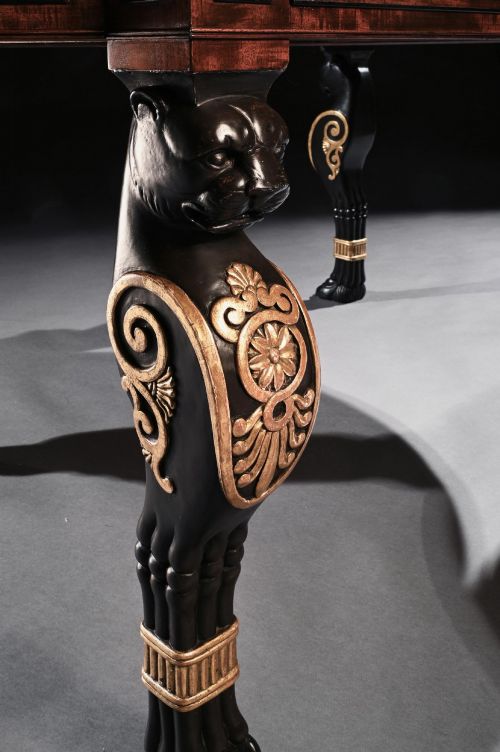
George Smith (1756 - 1826) was one of the most influential furniture designers of the English Regency Period (1811-1830). Smith, who began his pattern-book in 1804, wrote of ‘the great taste and elegance’ of this design. In 1808 he published his influential and definitive text on Regency interior Design titled ‘ A Collection of Designs for Household Furniture and Interior Decoration’ and classed himself as ‘Upholder Extraordinary to His Royal Excellency the Prince of Wales’…The Prince Regent. Smith was inspired in his designs from his earlier career as an Egyptologist, producing drawings incorporating motifs of Leopards heads and paws, Lions, sphinx’s, anthemia, and griffons amongst others.
Charles Heathcote Tatham (1772-1842) published ‘Etchings, Representing the Best Examples of Ancient Ornamental Architecture; Drawn from the Originals in Rome, and Other Parts of Italy During the Years 1794, 1795, and 1796’, in which he illustrated an antique tripod table with similar monopodiae of leopard heads and paws, based on the original in the Vatican.
Thomas Hope (1769-1831) was also another influential figure to Smiths designs. A rich young man, being the eldest of three sons from a family of Dutch bankers, Hope had travelled extensively spending several years in the Middle East and Greece. He published his ‘ancient furniture’ designs in the ‘Household Furniture and Interior Decoration. 1807’, which was an important and influential book throughout the Regency period. George Smith interpreted Thomas Hopes Egyptian and Grecian themes (although the plates are dated 1804-7) into a more practical design with a greater regard for comfort and utility than for archaeological accuracy, which was widely accepted as the turning point in Regency furniture for the affluent gentry.
Literature for Design of Top and Monopodia Leg: The carved monopodiae
Loveday Antiques has dated this Regency Mahogany Writing Desk to the 19th Century.
Specialist furniture dealers 18th-20th century
You can view the stock and full dealer information on the Loveday Antiques Profile Page
Loveday Antiques is a registered member of LAPADA BADA CINOA
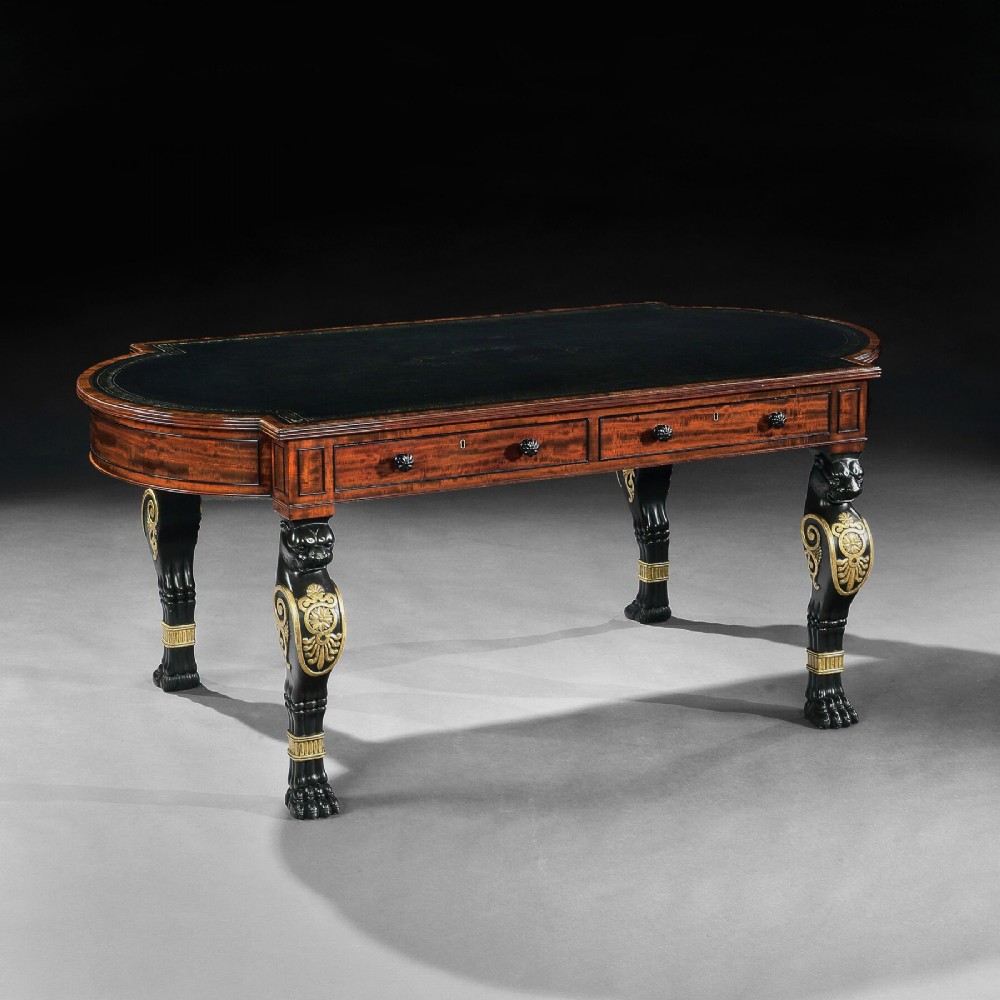
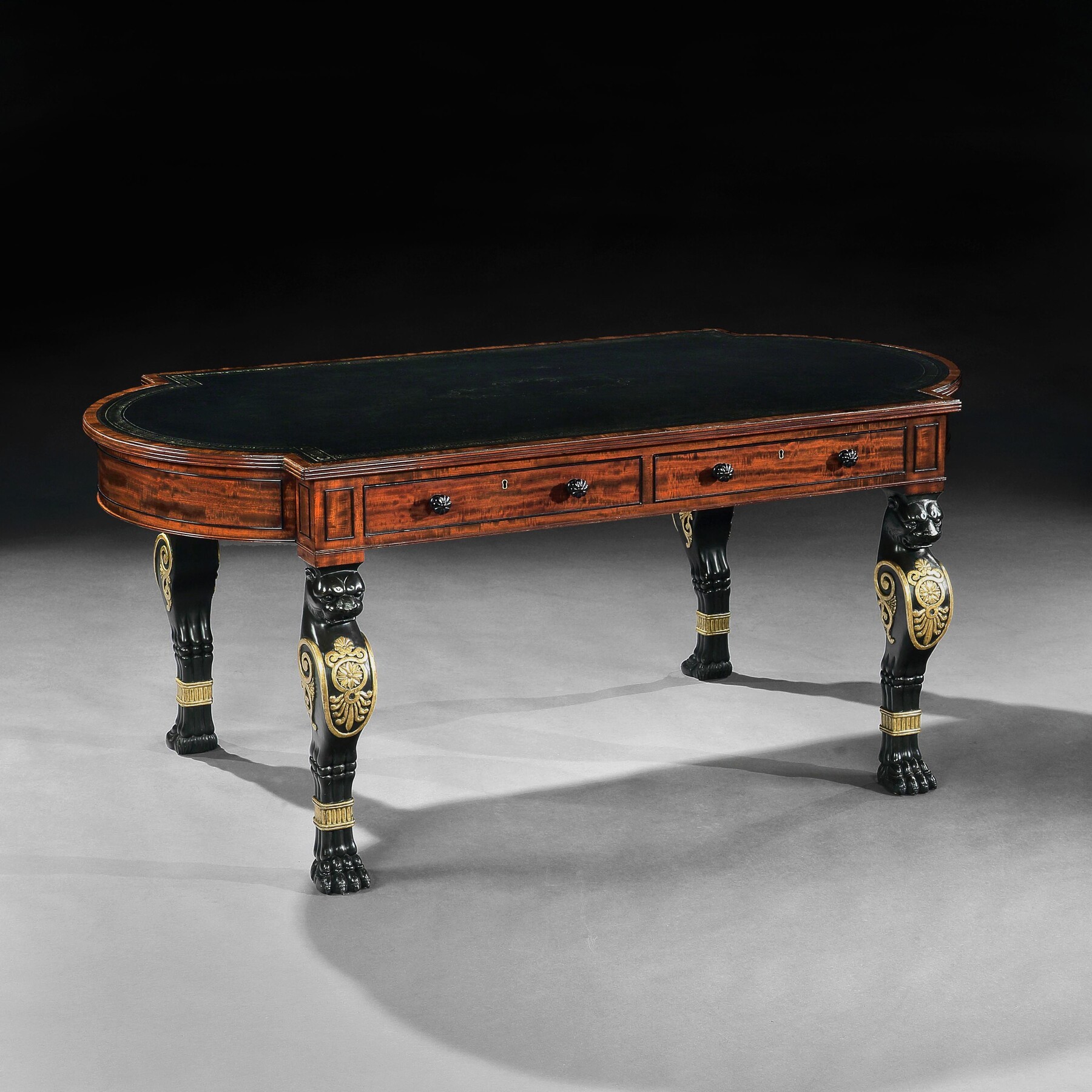
Regency Mahogany Partners Writing Table In The Manner Of George Smith