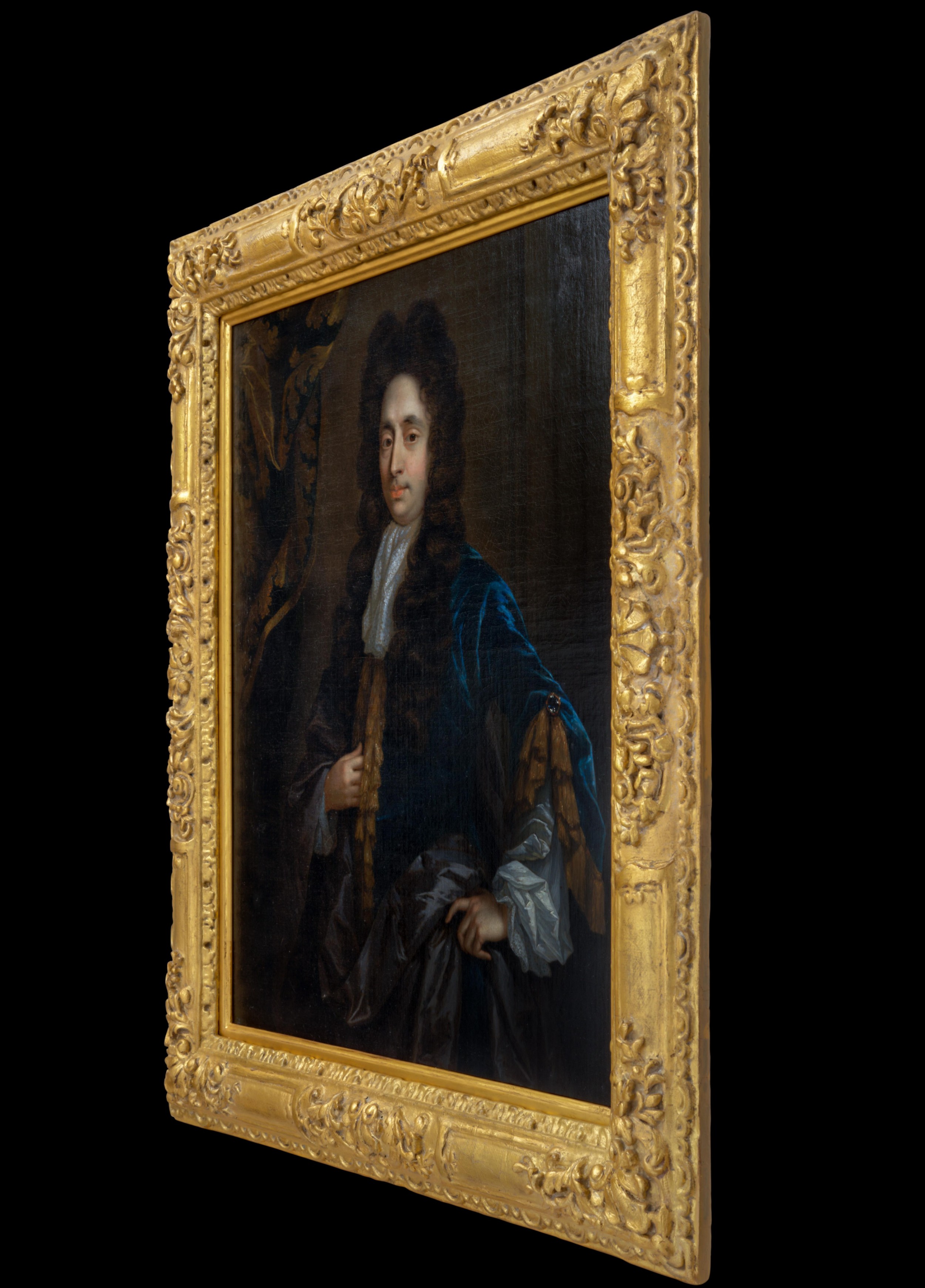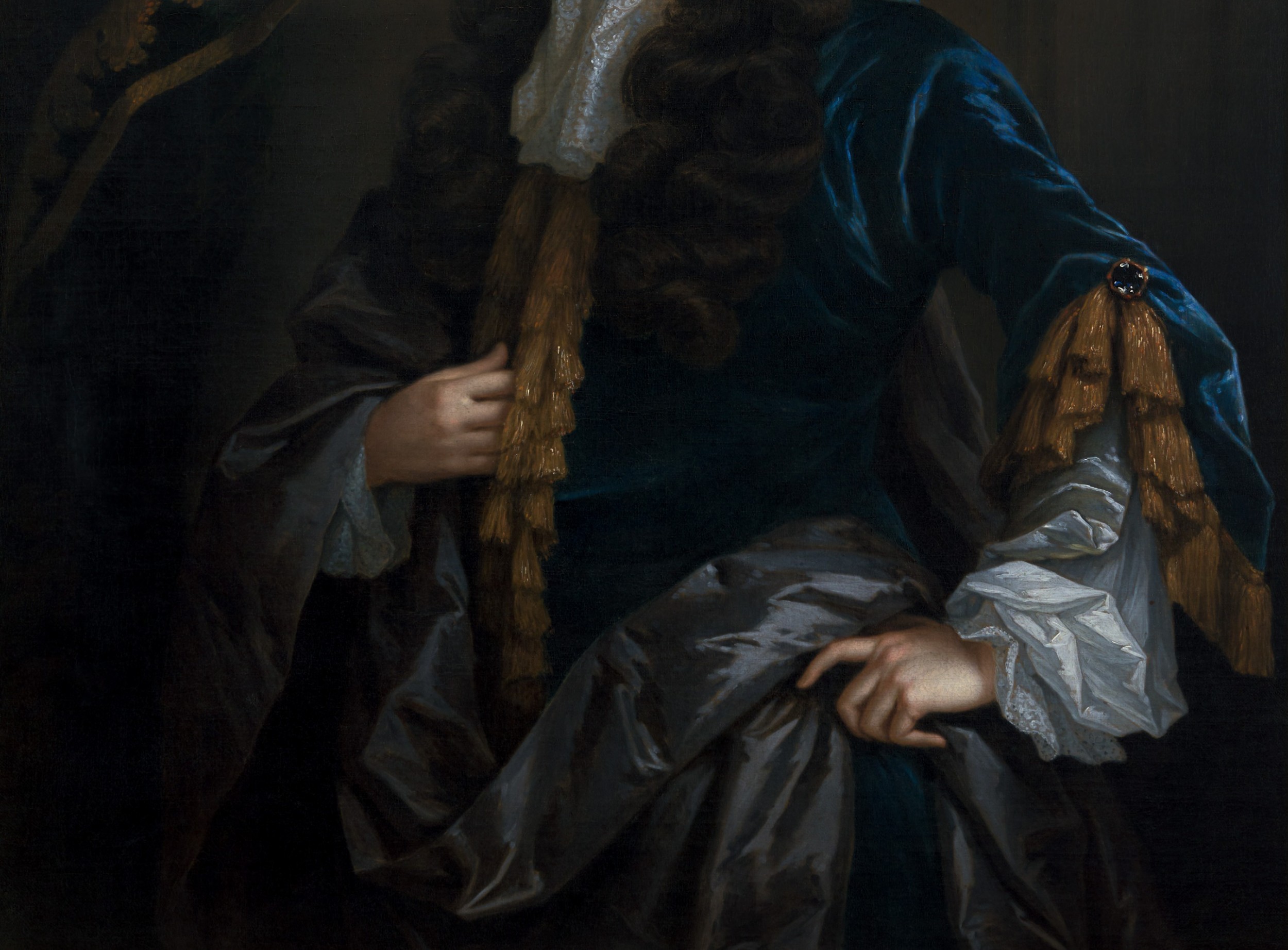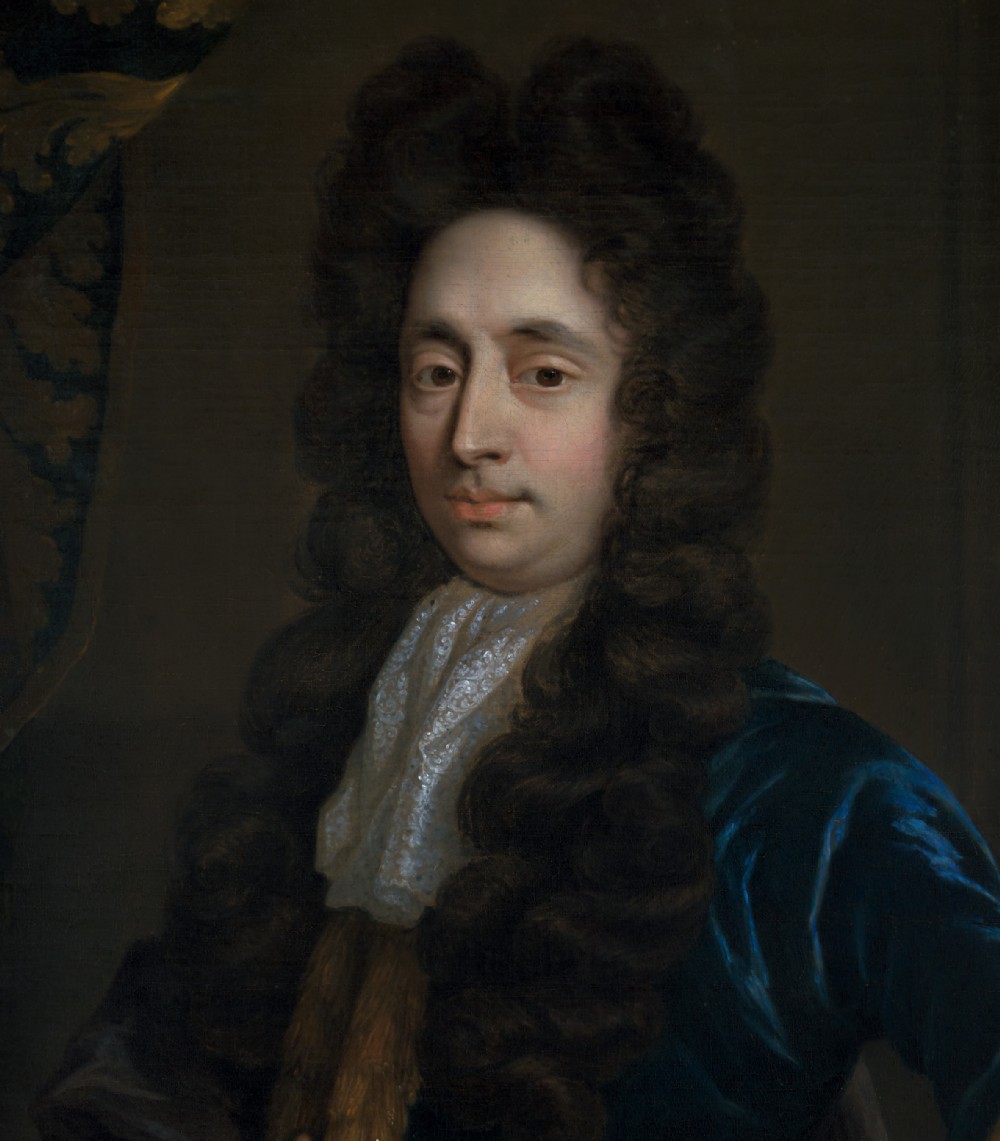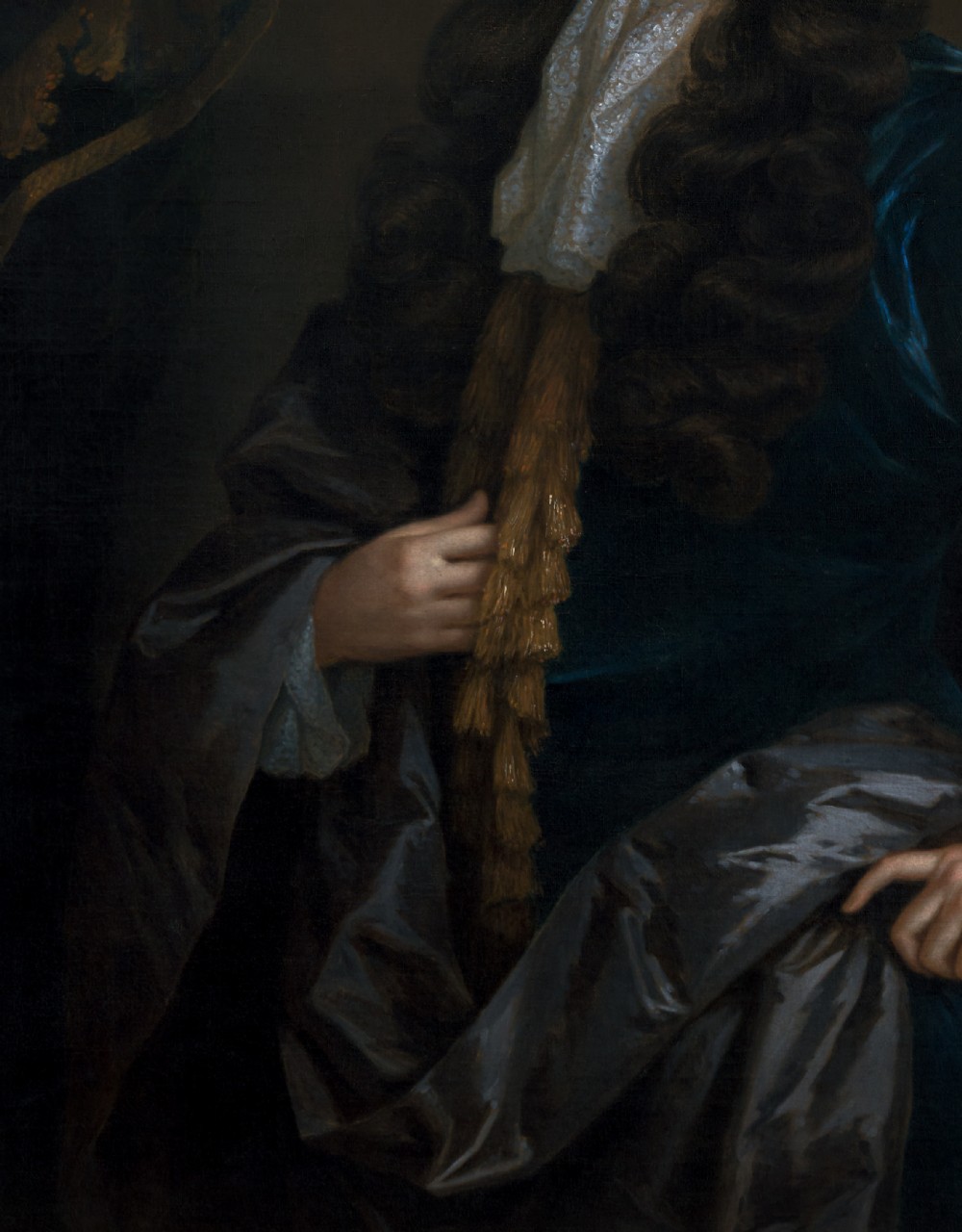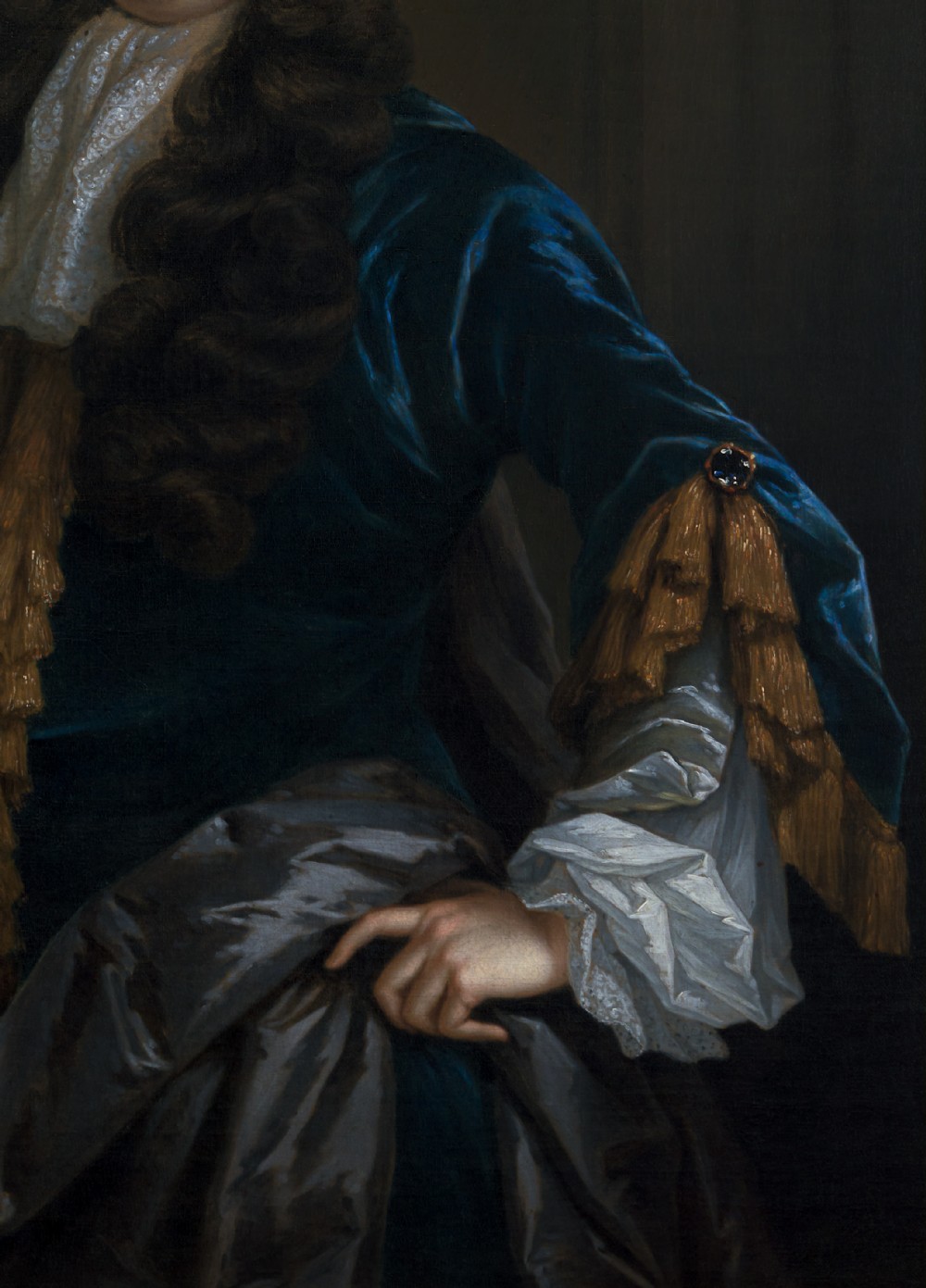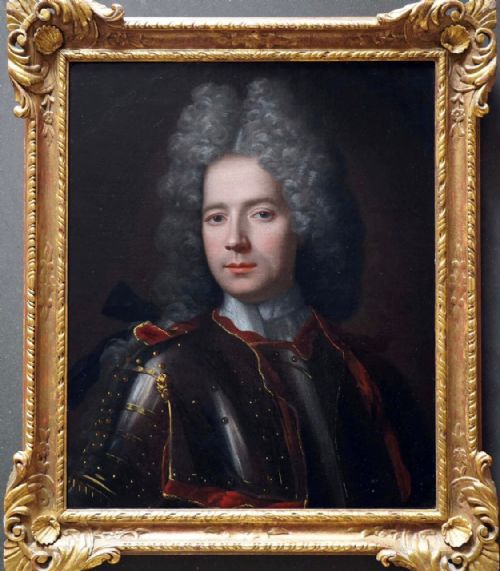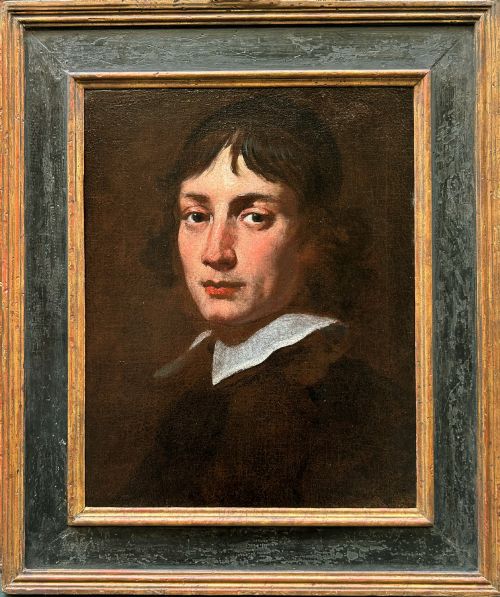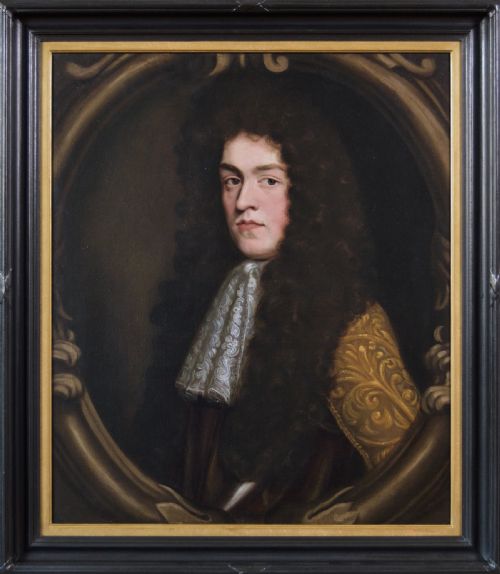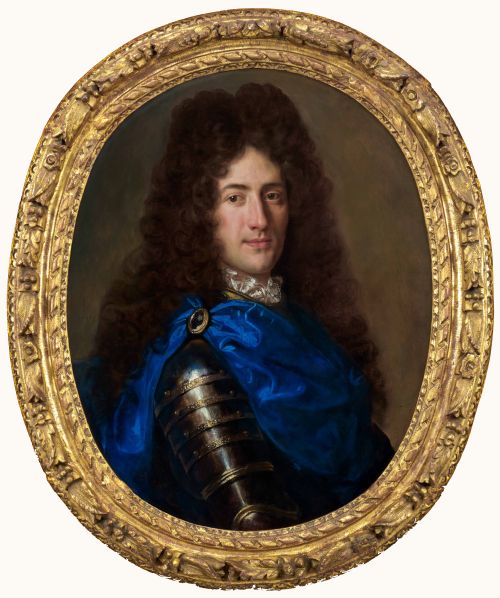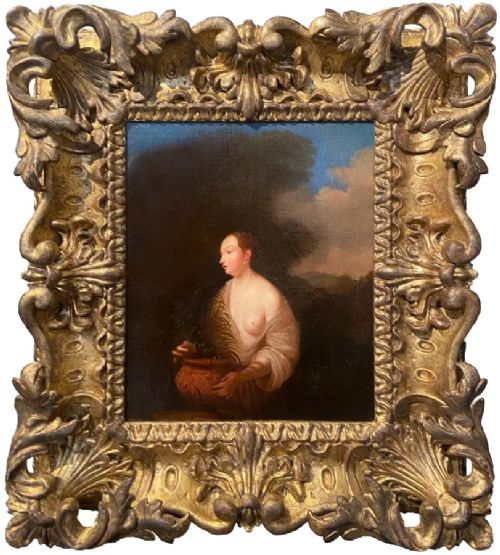
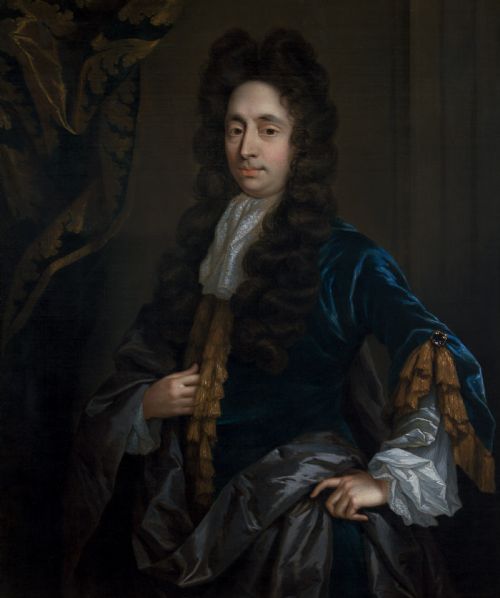
Titan Fine Art has dated this Baroque Male Oil Portrait to the 17th Century.
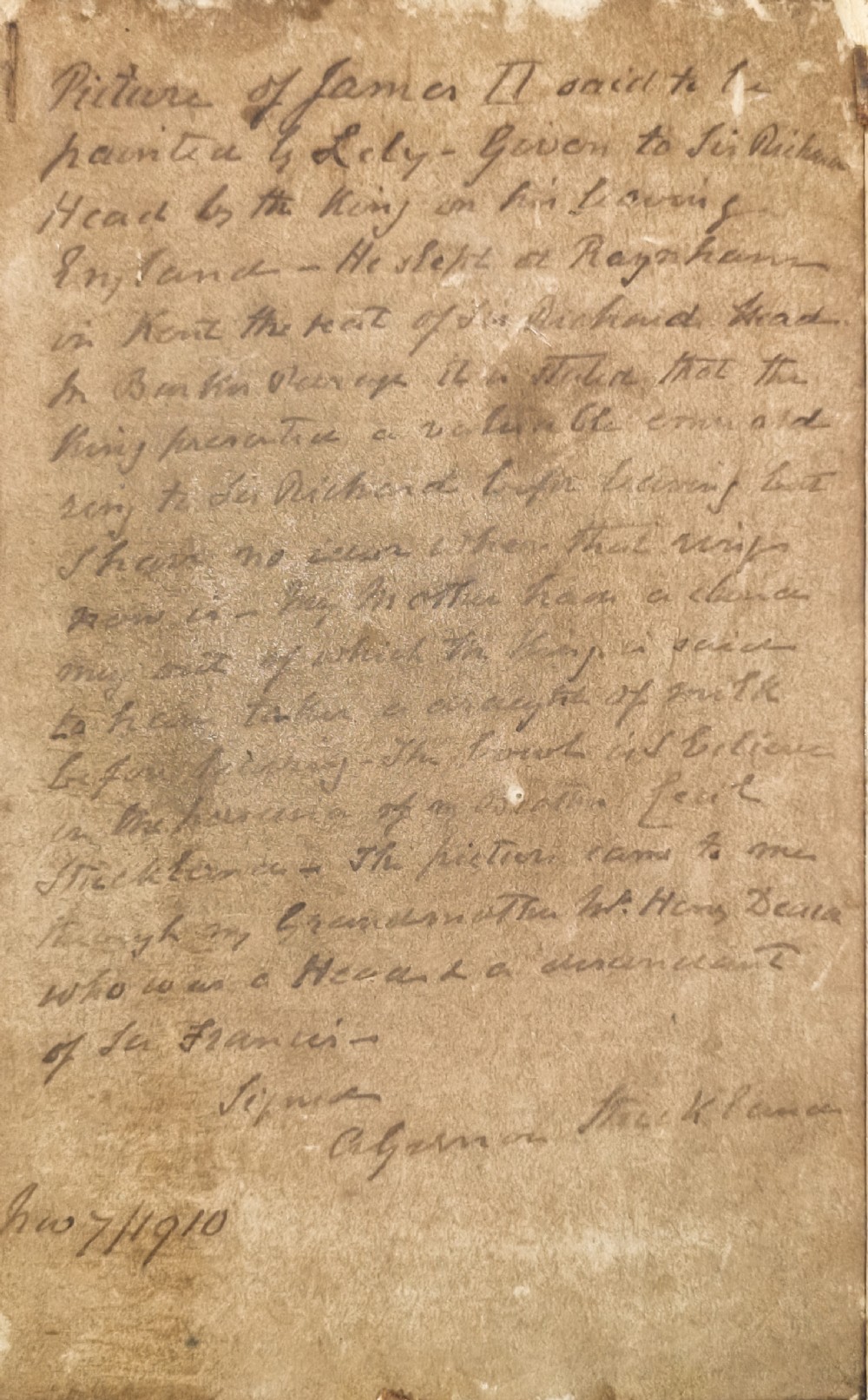
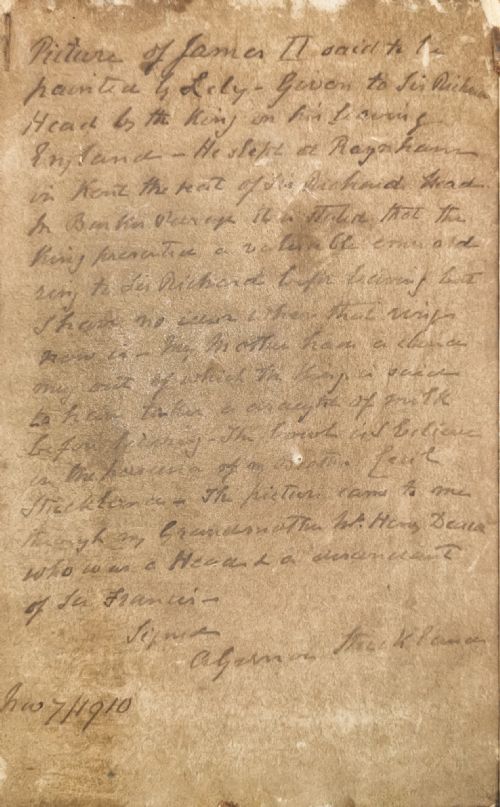
“Picture of James Il said to be painted by Lely - Given to Sir Richard Head by the King on his leaving England. He slept a Raynham in Kent, the seat of Sir Richard Head. In Burke’s Peerage it is stated that the King presented a valuable emerald ring to Sir Richard before leaving but I have no idea where that ring now is. My mother had a choice ? ??? of which the King is said to have taken a draught of milk before leaving. The bowl is I believe in the possession of my brother Cecil Strickland. This picture came to me through my grandmother Mrs Henry Deacon who was a Head and a descendant of Sir Francis. Signed, Algernon Strickland. Nov 7/1910”.
In December 1688, during the Glorious Revolution, King James II was captured while attempting to flee England. He was escorted to Rochester, Kent, where he stayed at the house of Sir Richard Head, 1st Baronet (c.1609-1689). Sir Richard was a Member of Parliament and twice Mayor of Rochester. His home later became known as "Abdication House". After spending time there, James II successfully made his second and final escape from England to France on December 23, 1688. Accounts confirm that James II was grateful for Head's hospitality and gave him an emerald ring. The note's reference to Burke's Peerage confirms the family's knowledge of this story.
The note signed by Abernon Strickland in 1910 is valuable for several reasons, not least that it provides a clear chain of provenance for the item, noting it came through a Head-descended grandmother. It also indicates that the milk bowl, from which the king is said to have taken a final draught of milk, was likely with his brother, Cecil Strickland.
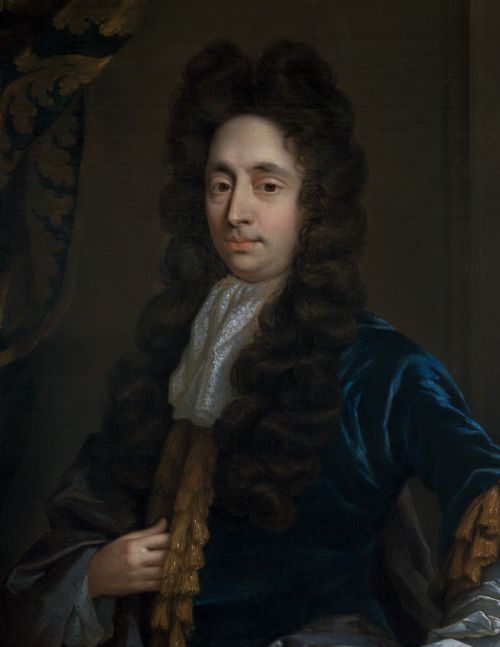
Several historical accounts corroborate the core events that are mentioned in the document and it is plausible that Sir Richard Head could have received or purchased a portrait of James II. The Dutch artist Sir Peter Lely (1618–1680) was a prominent court painter who created multiple portraits of James II (while he was still Duke of York) and other members of the royal family. State portraits were often copied for loyal followers, making it possible for Head to have acquired a copy. The specific portrait mentioned in the text may have been an original Lely or from his studio, or a later copy.
Algernon Augustine de Lille Strickland (1837-1914) lived at Apperley Court, Gloucestershire. He left his family estate “and all of his family pictures” to his son Algernon Henry Peter.
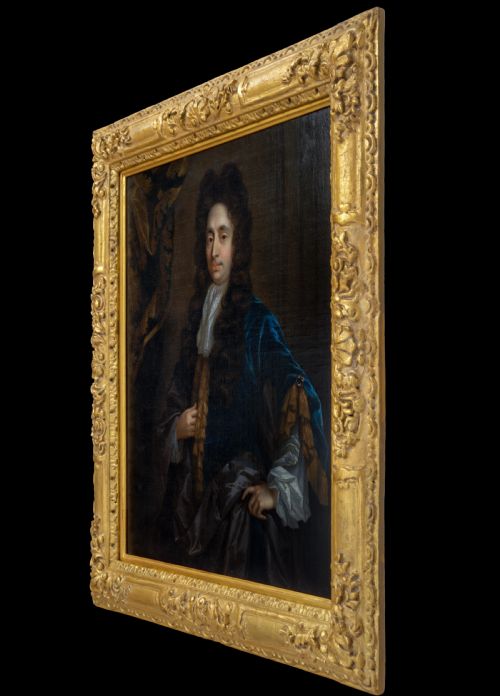
The anecdote speaks to the social value of possessing objects connected to royalty, even by families of the lesser gentry – this portrait is a supreme detailed example of portraiture from the end of the seventeenth century. Held in a fine carved and gilded period frame.
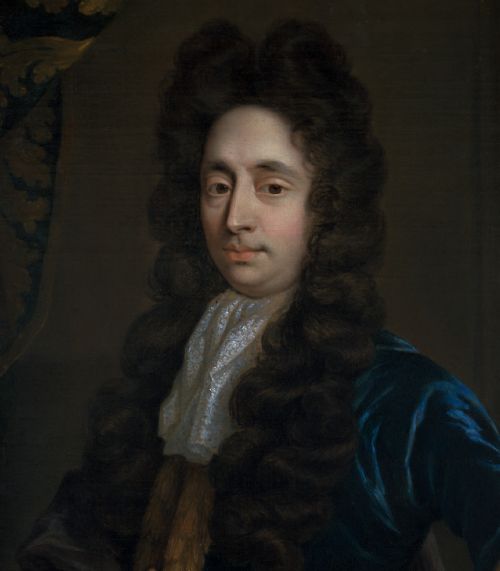
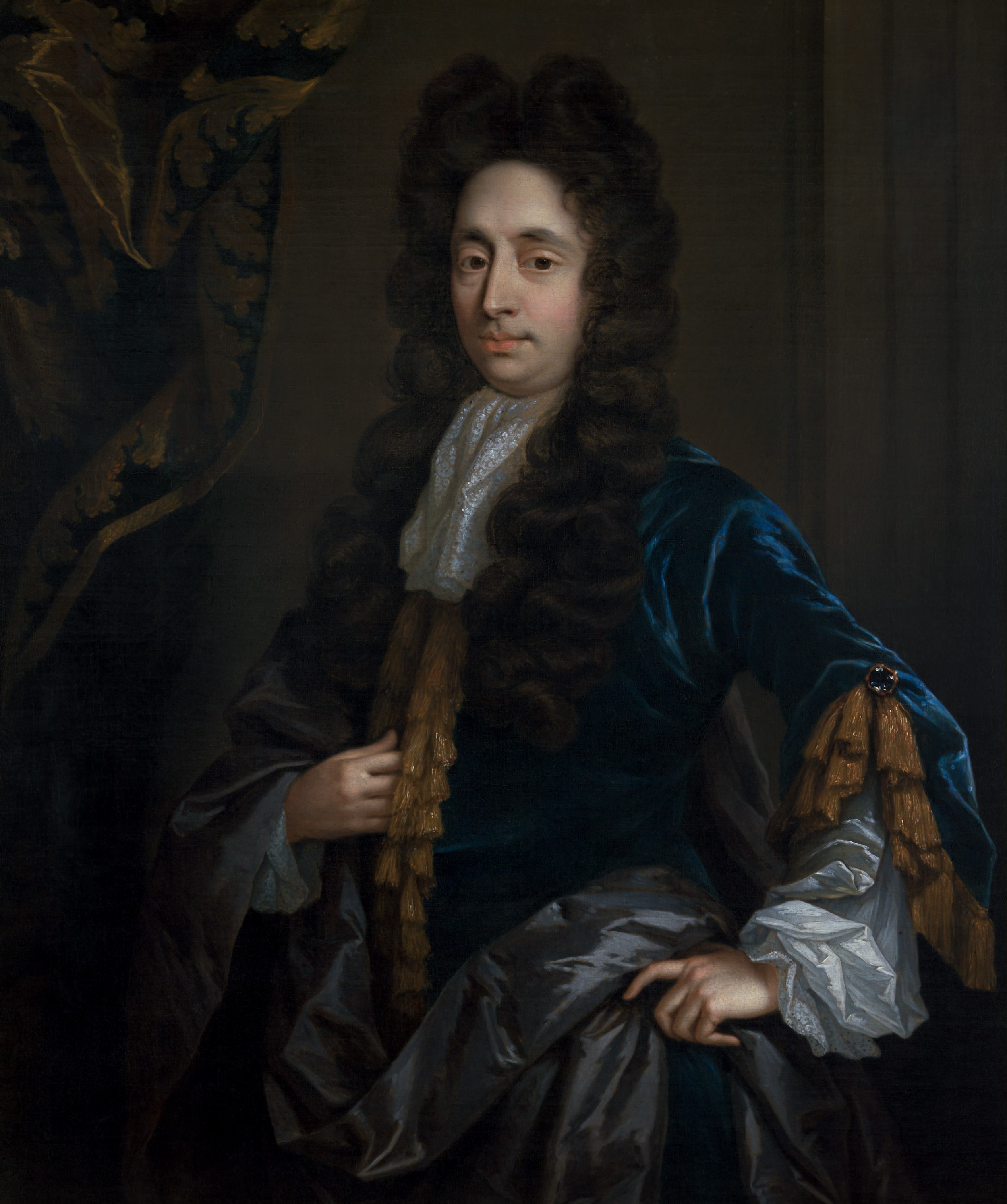
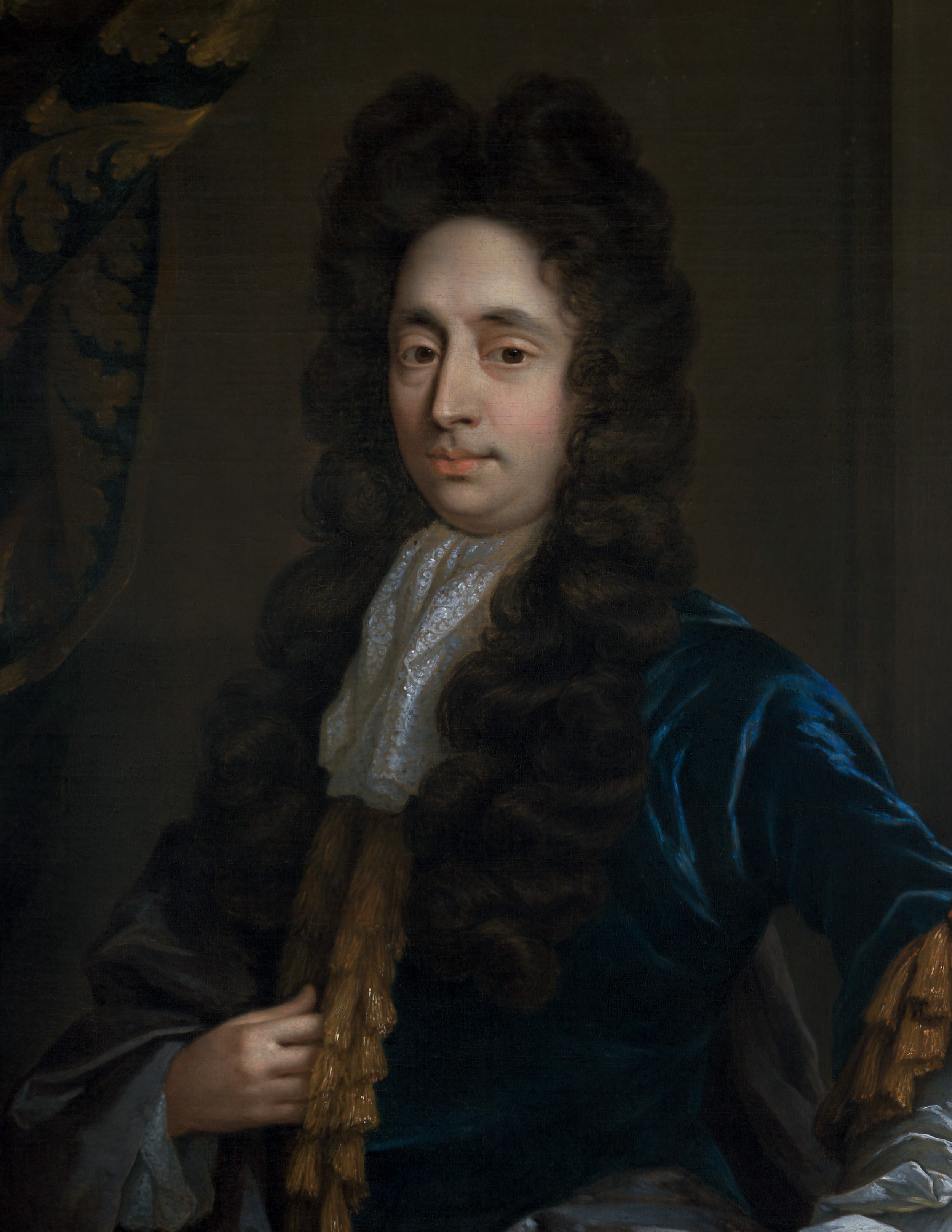
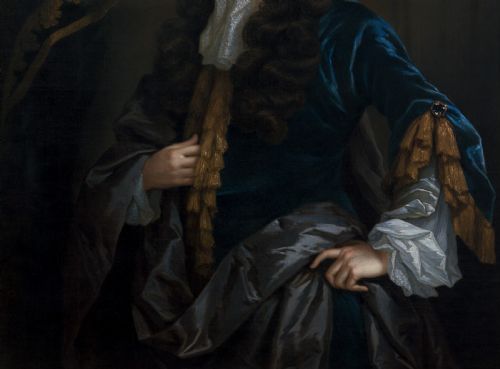
Constantyn Netscher was one of the twelve children of the renowned Court painter Caspar (1639-84), yet he and his brother Theodore were the only children to pursue their father's career. This painting illustrates that Constantyn, similar to his father, focused on small-scale three-quarter length portraits, which exhibit a delicacy and a level of detail that is frequently absent in larger portraits. The treatment of the face, costume, and drapery is very good, but the treatment of the hands is exceptional.
Provenance:
Algernon Augustine de Lille Strickland (1837-1914), Apperley Court, Gloucestershire; family decent to his son
Full description at: www.titanfineart.com
Titan Fine Art has dated this Baroque Male Oil Portrait to the 17th Century.
Specialist in 17th & 18thc portraits. Highly curated selection, museum-level research & pro conservation. Exceptional art, expertly vetted.
You can view the stock and full dealer information on the Titan Fine Art Profile Page
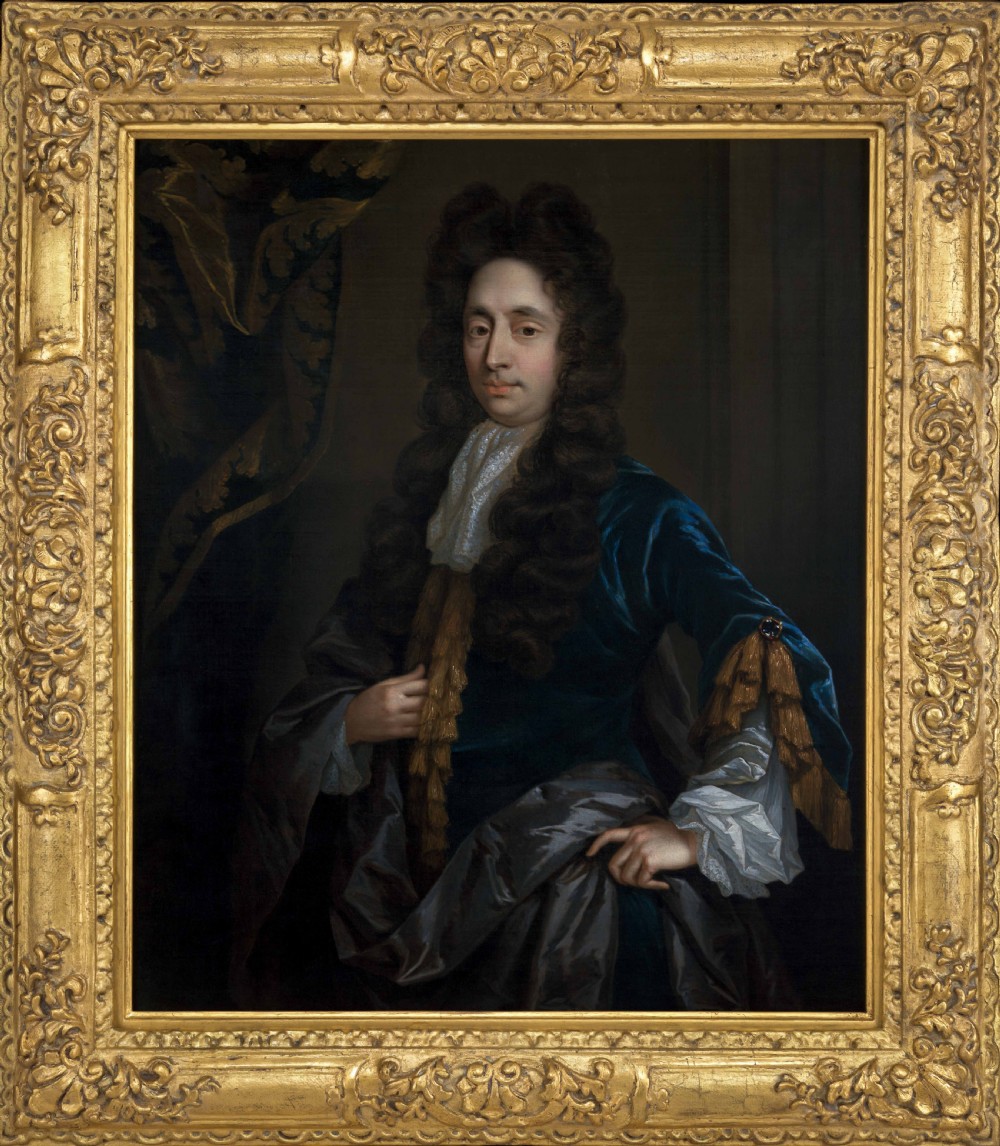
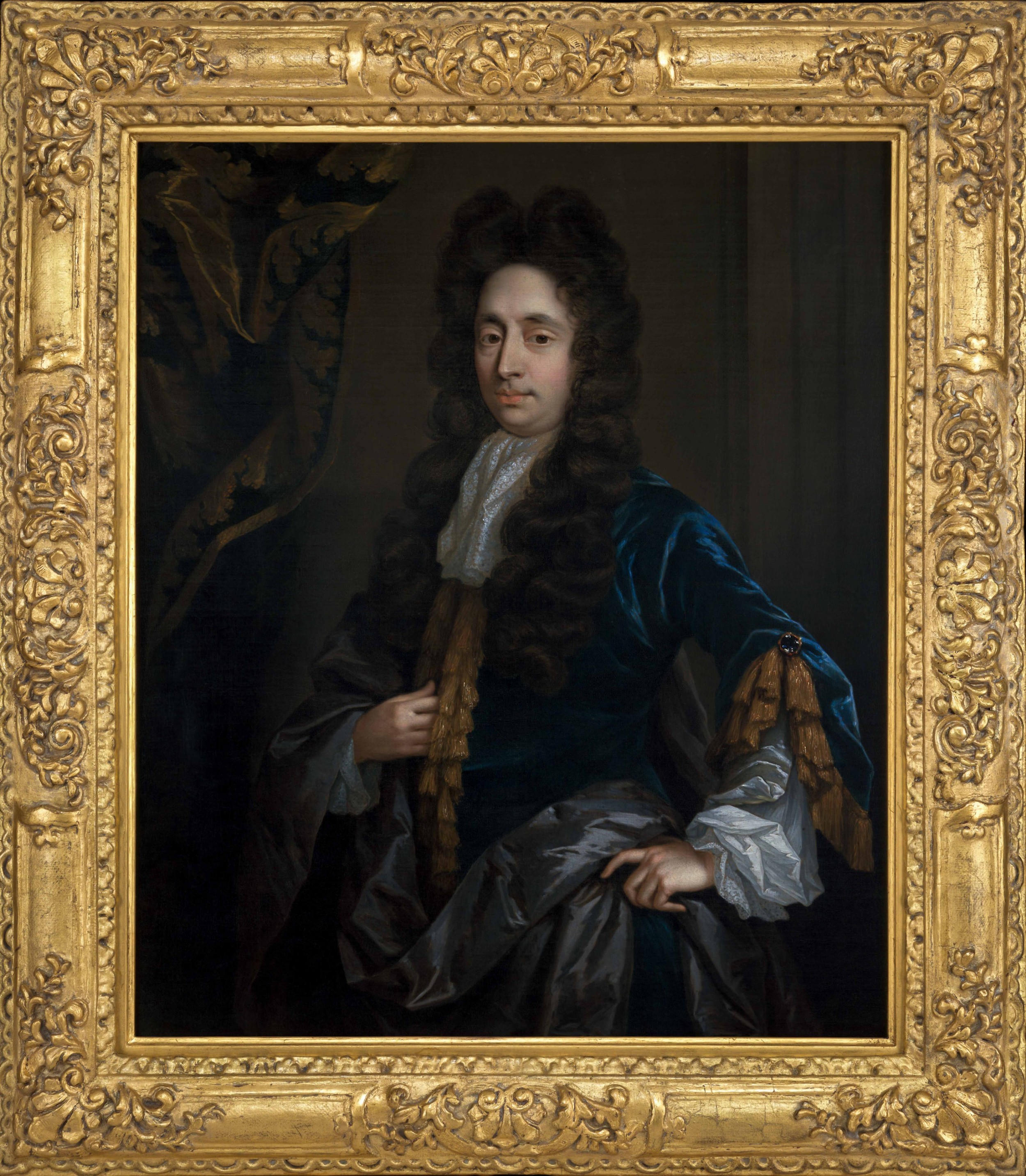
Portrait of a Gentleman in Blue Coat Standing by Curtain C.1695; Attributed to Constantyn Netscher (C.1668-c.1723), Oil on Canvas Painting