10,314  PAGES BROWSED TODAY PAGES TODAY 36  ANTIQUES UPLOADED TODAY NEW ARRIVALS
ID #SA1219492
FOR SALE
£4,500
Email
Save
Antique New Zealand Specimen Marquetry Table by Anton Seuffert
Knight Fine Antiques and Collectables
Id #SA1219492
PDF SHARE
SAVE

Antique New Zealand Specimen Marquetry Table by Anton Seuffert

19th century
Description

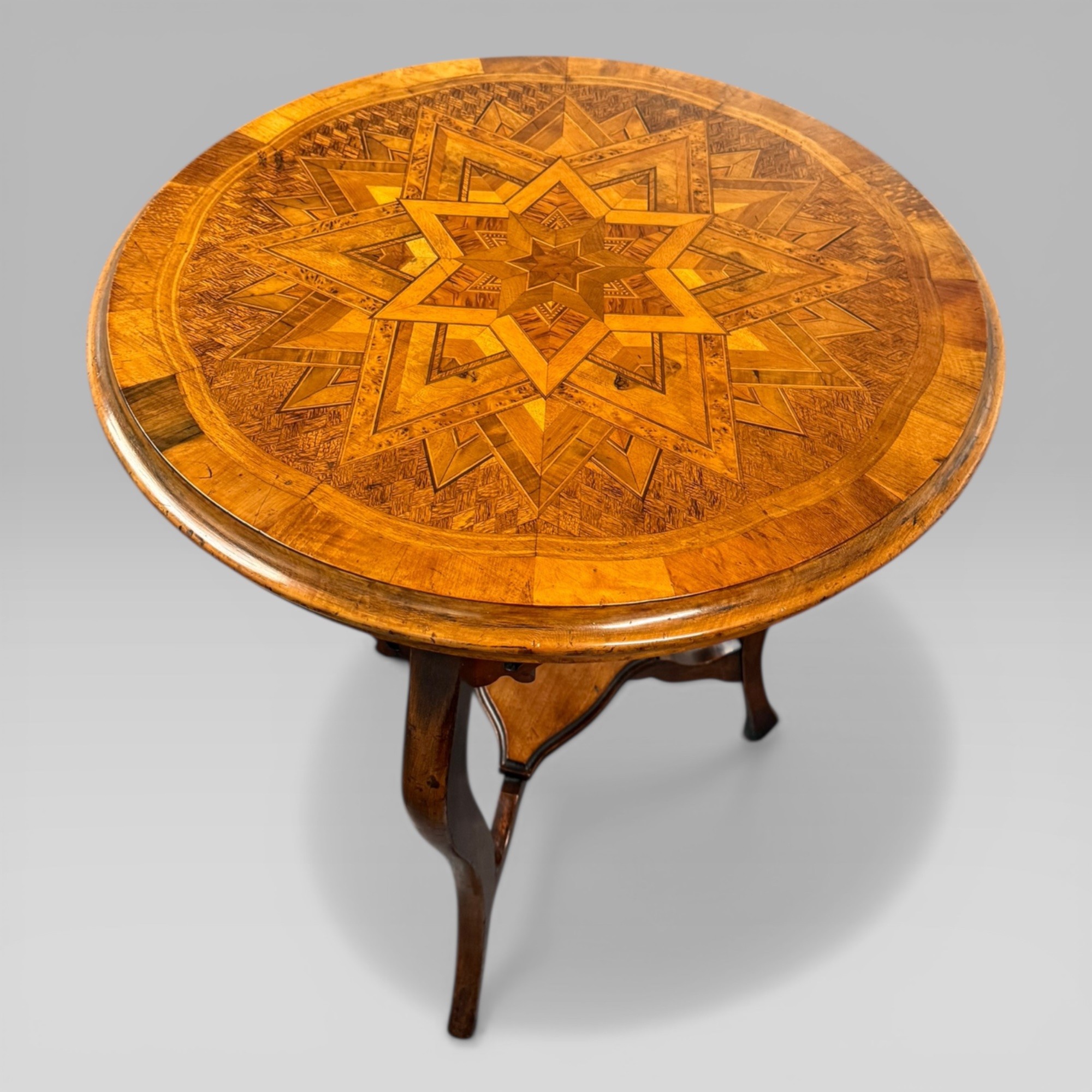
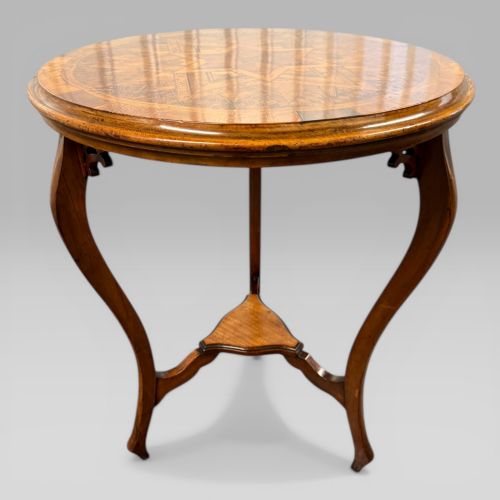
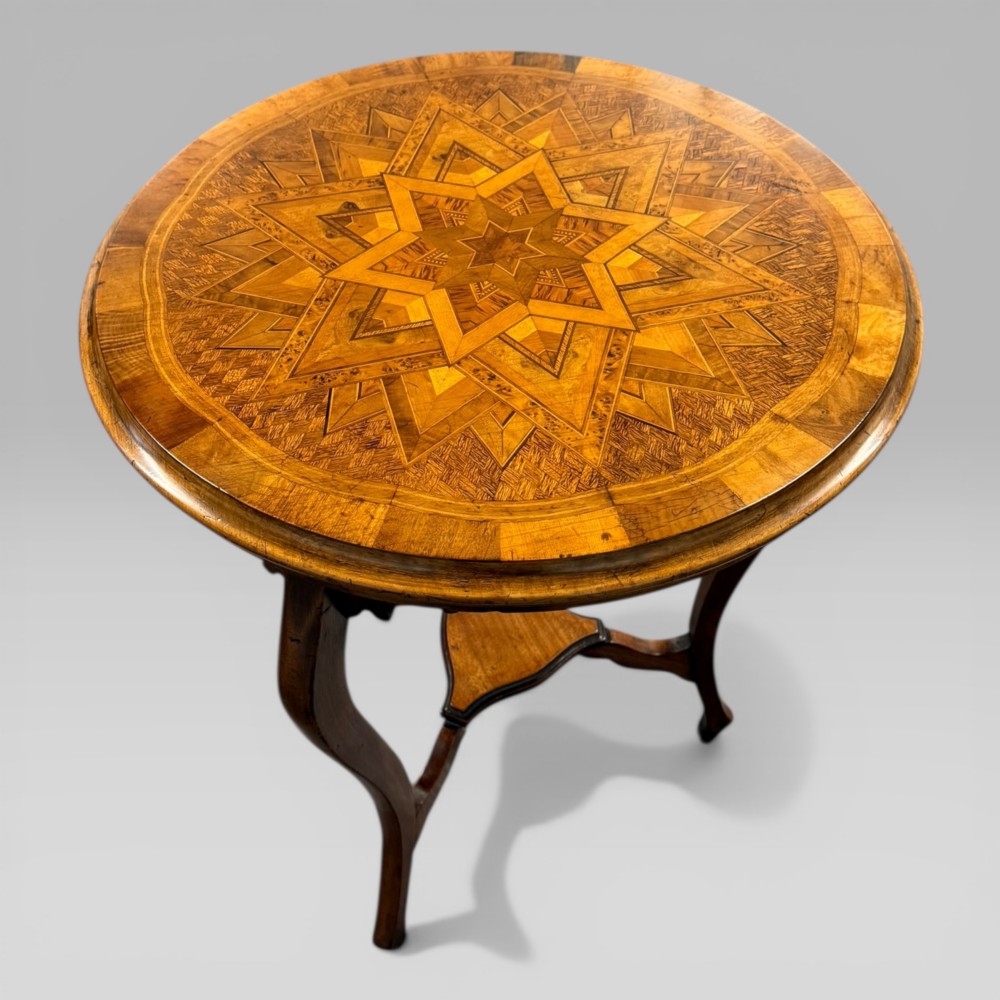
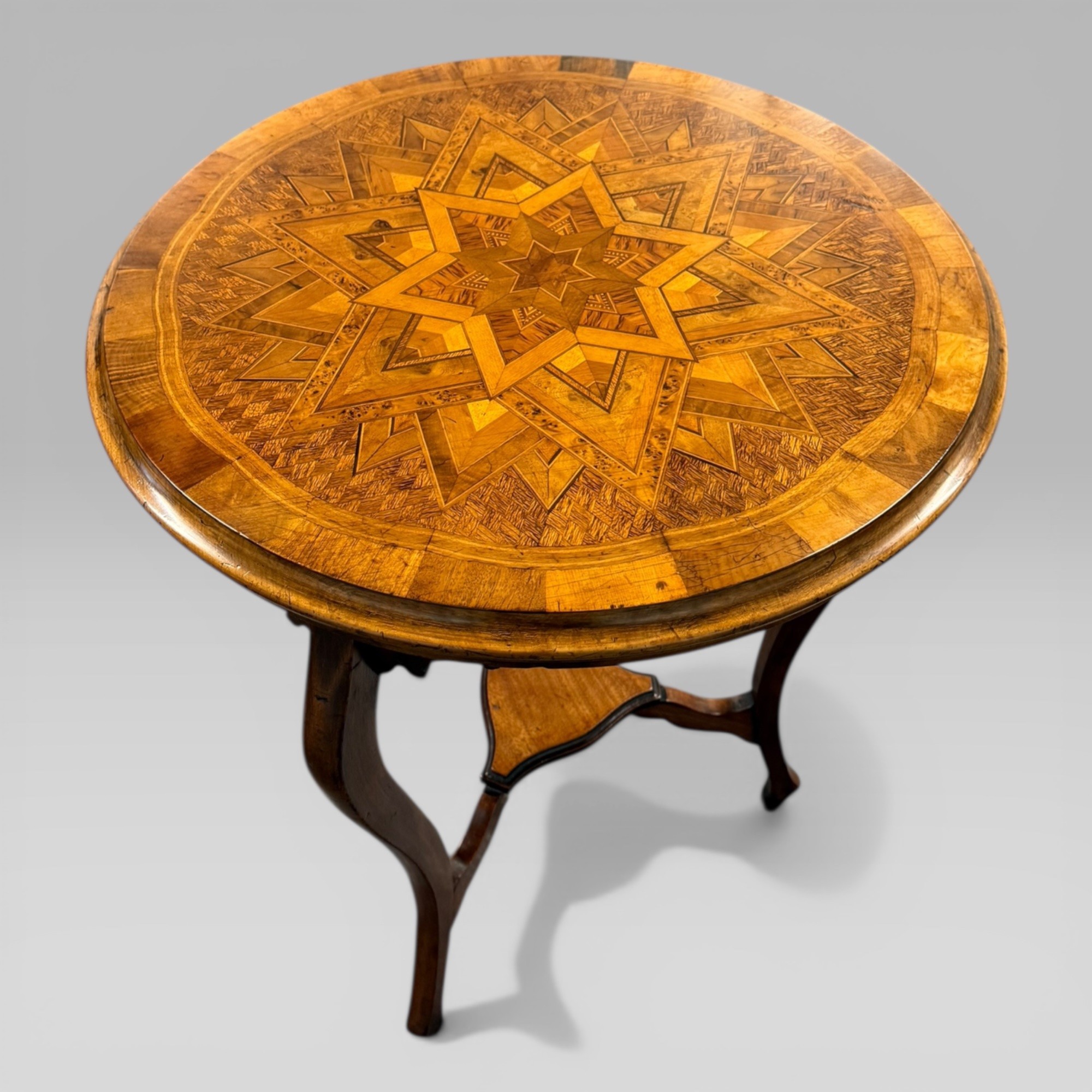
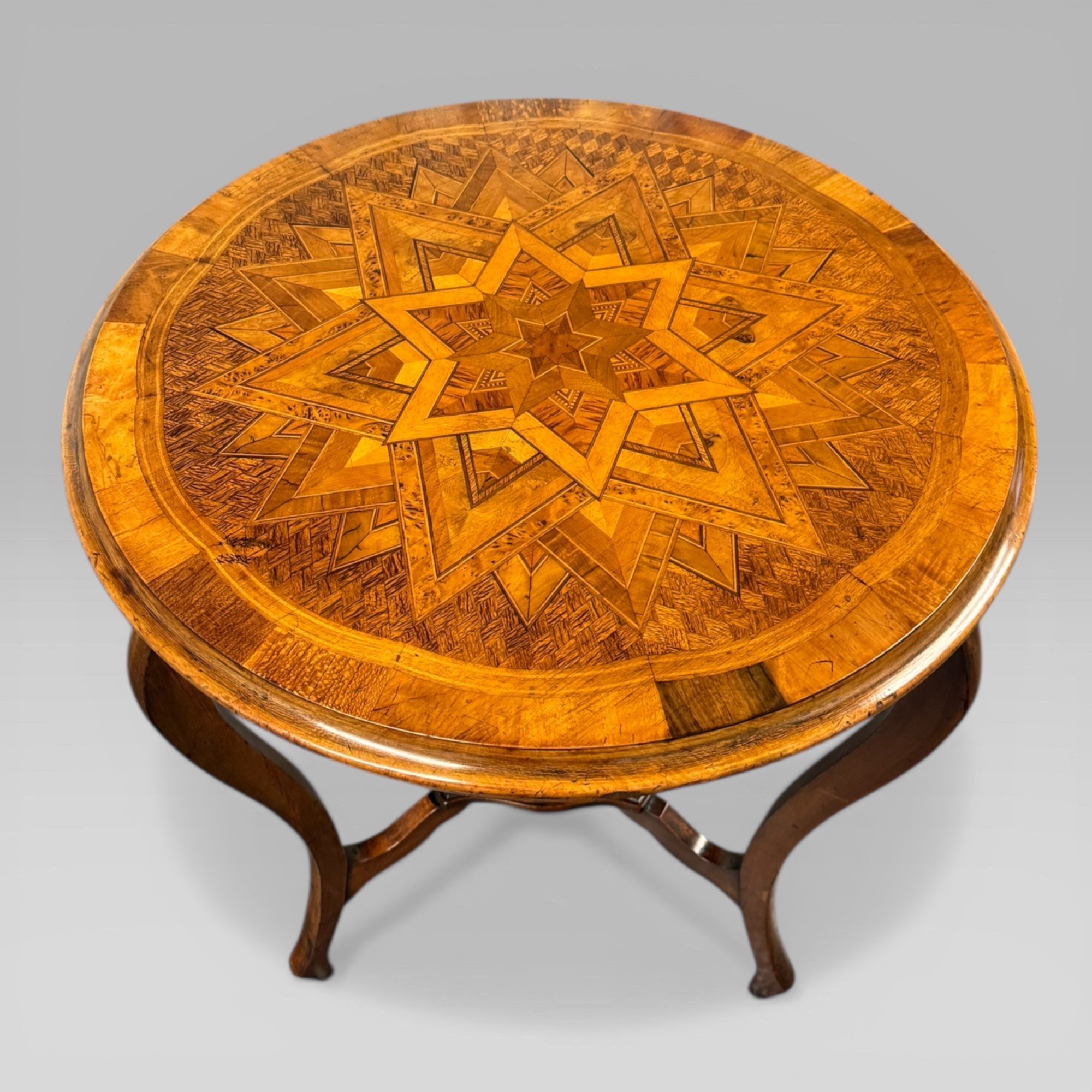
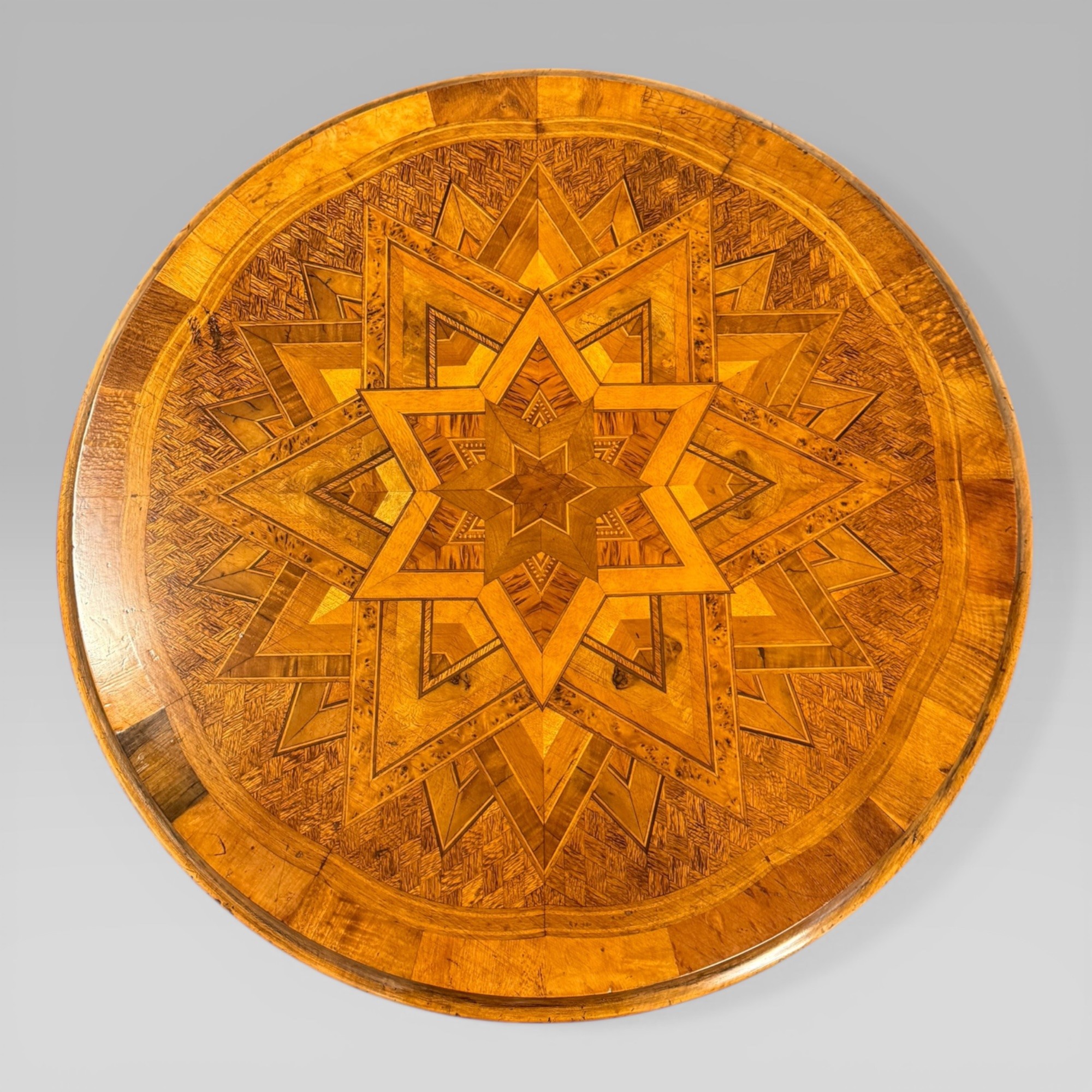
A fine New Zealand specimen wood marquetry occasional card table by Anton Seuffert, raised on a tripod base. The circular top is decorated with finely executed inlaid geometric indigenous New Zealand specimen wood marquetry centred on a radiating multi-pointed starburst design. Carefully arranged contrasting native timbers create a layered symmetrical pattern, framed by concentric banding and a parquetry outer border.
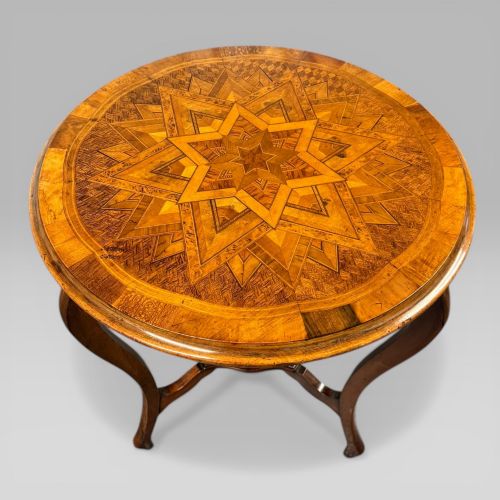
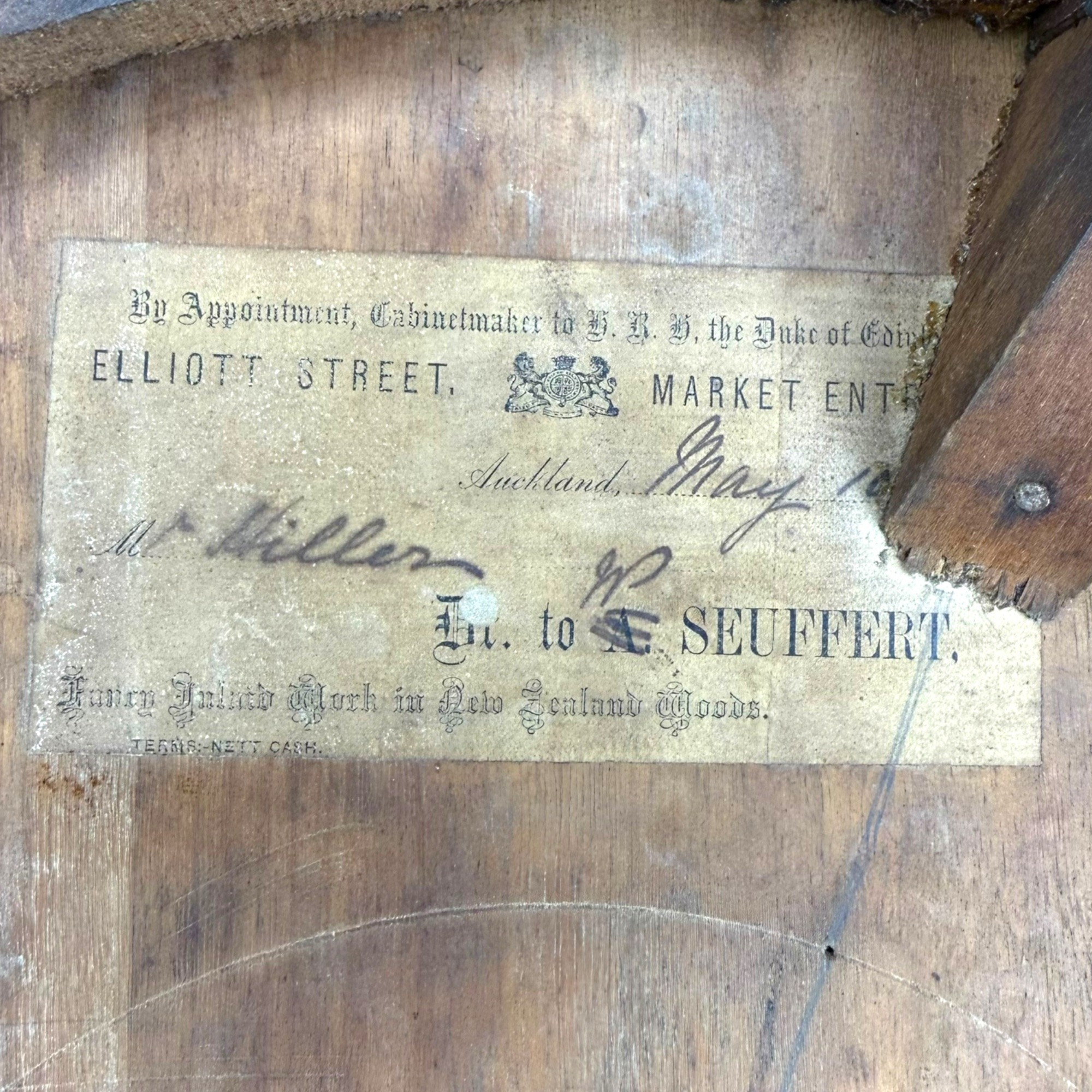
The tabletop dates to circa 1880, which can be identified from the label signed Anton Seuffert. Before 1869 the labels were signed Seufert with one “f”, so we know it must be later than this. William Seuffert also began working to his highest level during his late teens into the late 1870s, and the business label changed in 1882 to Anton Seuffert and Sons, placing the likely date range for this tabletop between 1875 and 1882, thus circa 1880.
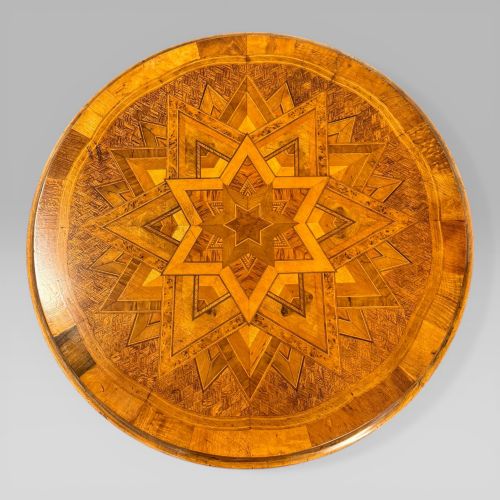
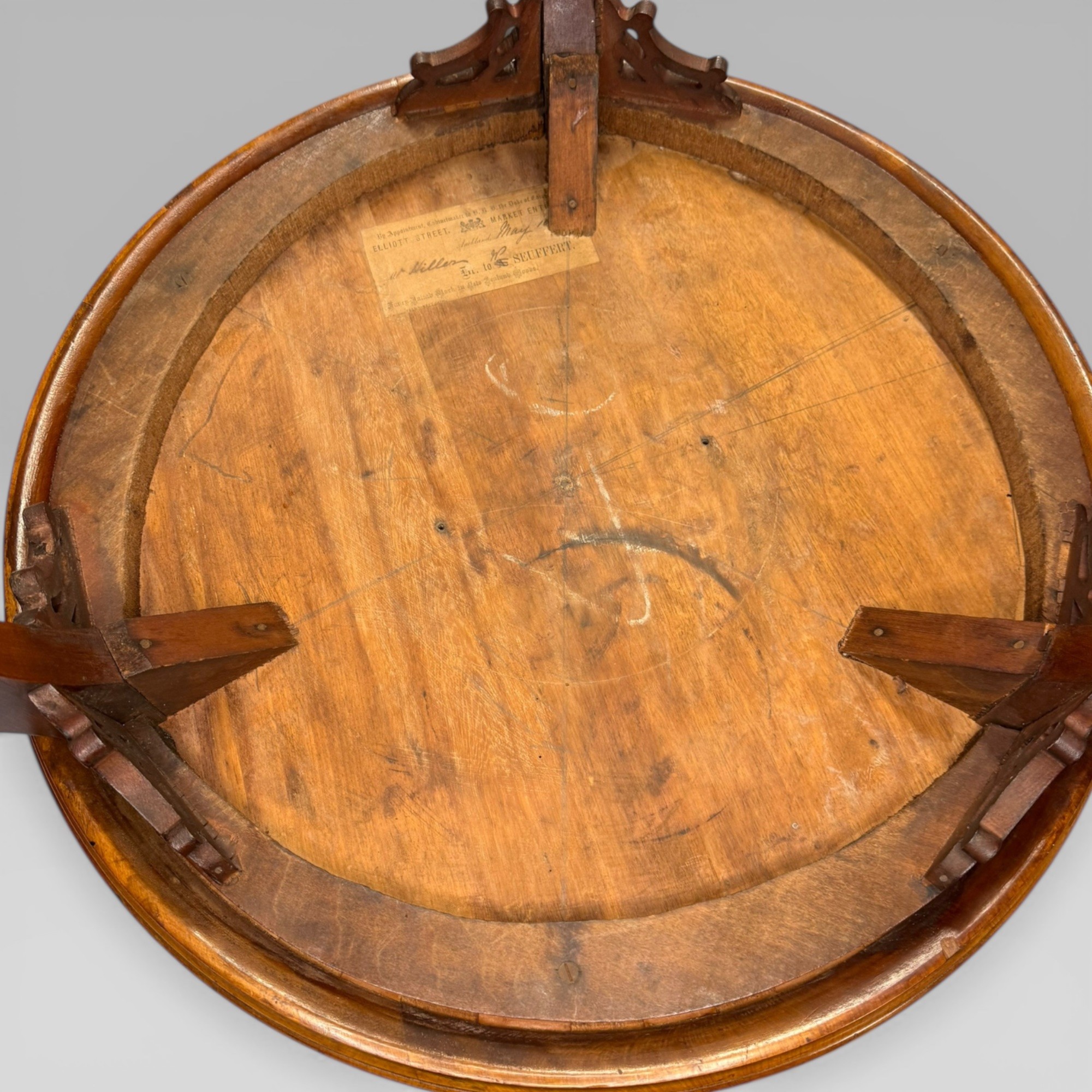
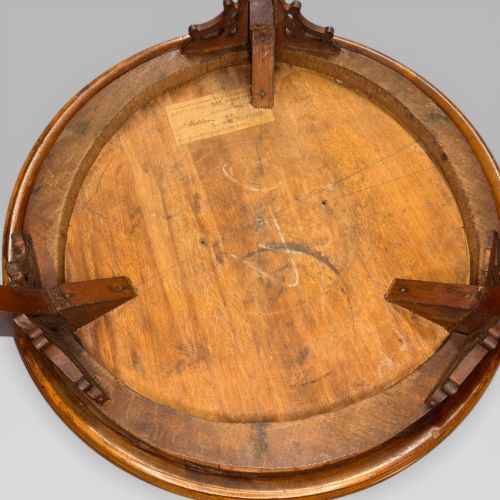
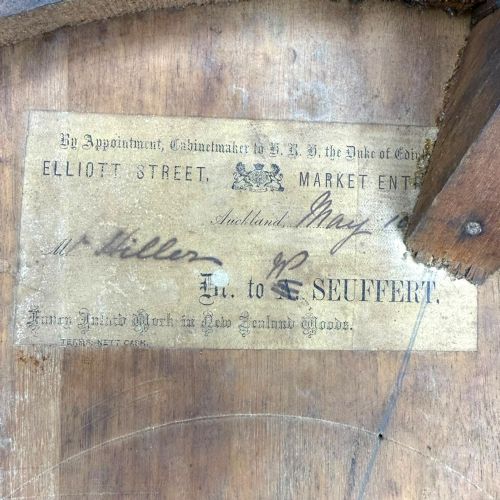
The table retains the maker’s printed label to the underside of the top, although the top corner of the label is covered by the join of the leg support. The label reads “By Appointment Cabinetmaker to the Duke of Edinburgh, Elliot Street Market Entrance, Auckland”, together with the wording “Inlaid Work with New Zealand Woods.” The piece is also stamped A. Seuffert. The initials show an alteration where the “A” for Anton has been crossed out and a “W” written above, suggesting that Anton’s son William either assisted in the making of this piece (the family often worked together on many pieces) or that William completed the piece himself. Previously only two known furniture examples were recorded as being signed by William, and this example appears to represent a newly identified third.
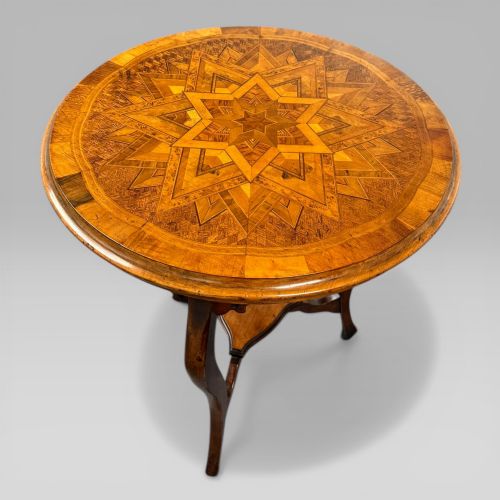
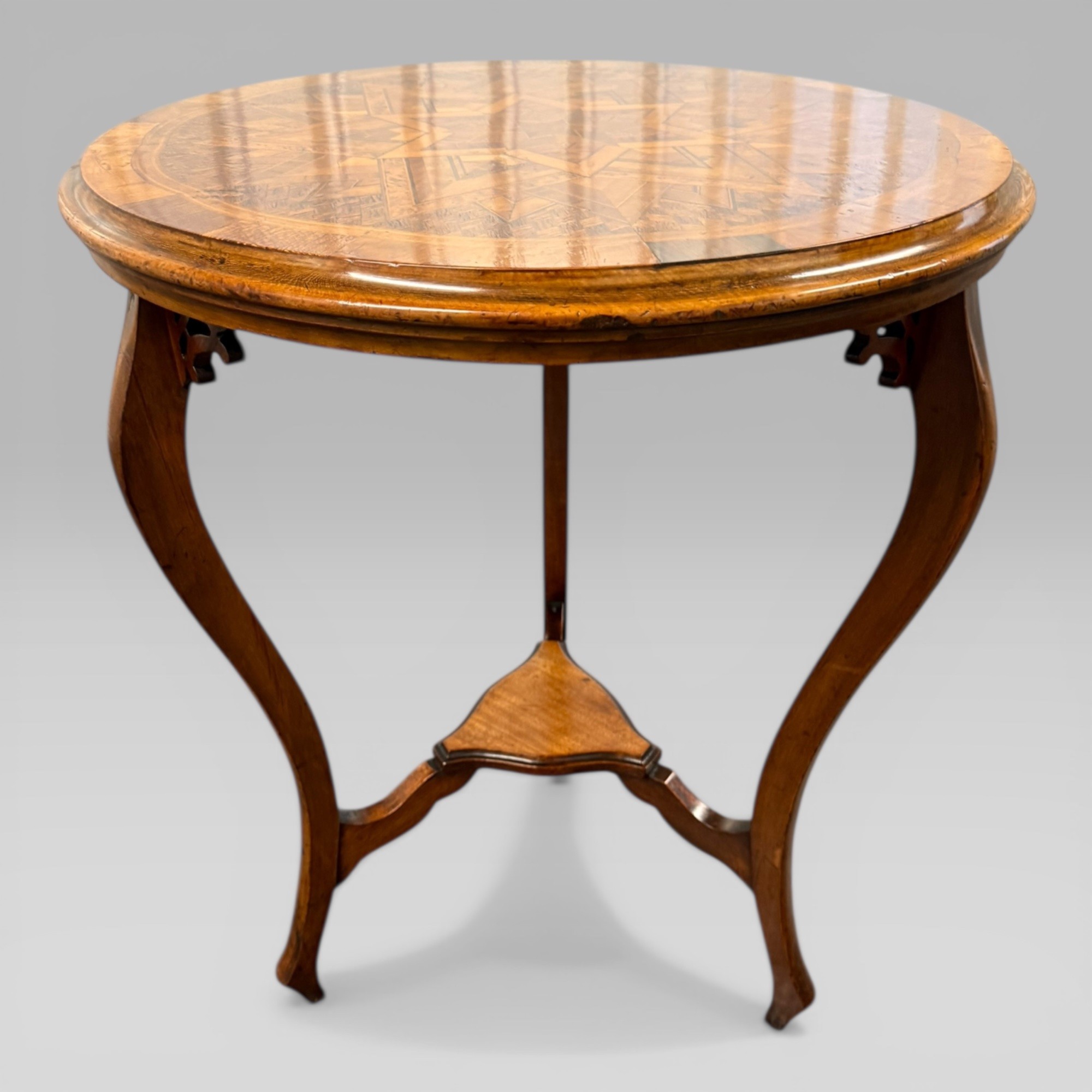
The tripod base is later, dating from the late Victorian to early Edwardian period. Many examples of these tables are known with bases of uncertain origin, as some of the tops were sold separately to travellers returning to England or Australia. Transporting the tops on their own would have been considerably easier than shipping the entire table, and once at their destination they could easily be matched with a locally manufactured base. A letter from Anton Seuffert to a customer in 1867 describes the need to seal these tops in solid zinc containers to ensure safe transport across the long sea voyage from New Zealand to England, which could take approximately three months on a good passage.
About Anton Seuffert

Anton Seuffert (1815–1887) and his three sons William, Albert, and Carl are widely regarded as among the most important cabinetmakers working in New Zealand during the 19th century. Anton trained in Vienna within the prestigious firm of Carl Leistler & Sons, and worked on significant decorative commissions including the interiors of the Liechtenstein Stadtpalais, as well as exhibits shown at the Great Exhibition of 1851 in London.
After emigrating to Auckland in 1859, Anton Seuffert established a workshop producing finely made furniture incorporating native New Zealand timbers. His work gained international recognition, most notably through a celebrated secretaire cabinet made entirely from indigenous New Zealand woods, which was presented to Queen Victoria at the 1862 International Exhibition in South Kensington. This piece is now held within the Royal Collection and is regarded as one of the finest examples of colonial furniture craftsmanship.
Dimensions

Height – 73.5 cm (28.94 in)

Width – 59 cm (23.23 in)

Depth – 59 cm (23.23 in)

Delivery

Free delivery is included within UK mainland.

We are happy to arrange international delivery. Please contact us for a shipping quotation before purchase.

Physical Dimensions
Height
73.9cm (29.09")
Width
59cm (23.23")
Depth
59cm (23.23")
Declaration

Knight Fine Antiques and Collectables has dated this Specimen Marquetry Side Table to the 19th Century.

Reference Numbers
Sellingantiques Reference
SA1219492
Dealers Notes

Delivery:

Free UK mainland delivery (excluding Scottish islands and other UK islands).

International delivery available — please contact us or request a quote.

Description
A fine New Zealand specimen wood marquetry occasional card table by Anton Seuffert, raised on a tripod base.
The circular top is decorated with finely executed inlaid geometric indigenous New Zealand specimen wood marquetry centred on a radiating multi-pointed starburst design.
Knight Fine Antiques and Collectables

Carefully arranged contrasting native timbers create a layered symmetrical pattern, framed by concentric banding and a parquetry outer border.

fig 1. A circular antique side table featuring an intricate multi-timber geometric starburst marquetry pattern on top, set on carved cabriole legs with a triangular lower tier.
fig 1. Antique New Zealand Specimen Marquetry Table by Anton Seuffert

The tabletop dates to circa 1880, which can be identified from the label signed Anton Seuffert. Before 1869 the labels were signed Seufert with one “f”, so we know it must be later than this. William Seuffert also began working to his highest level during his late teens into the late 1870s, and the business label changed in 1882 to Anton Seuffert and Sons, placing the likely date range for this tabletop between 1875 and 1882, thus circa 1880.

fig 2. A circular antique side table featuring an intricate multi-timber geometric starburst marquetry pattern on top, set on carved cabriole legs with a triangular lower tier.
fig 2. Antique New Zealand Specimen Marquetry Table by Anton Seuffert

The table retains the maker’s printed label to the underside of the top, although the top corner of the label is covered by the join of the leg support. The label reads “By Appointment Cabinetmaker to the Duke of Edinburgh, Elliot Street Market Entrance, Auckland”, together with the wording “Inlaid Work with New Zealand Woods.” The piece is also stamped A. Seuffert. The initials show an alteration where the “A” for Anton has been crossed out and a “W” written above, suggesting that Anton’s son William either assisted in the making of this piece (the family often worked together on many pieces) or that William completed the piece himself. Previously only two known furniture examples were recorded as being signed by William, and this example appears to represent a newly identified third.

fig 3. A circular antique side table featuring an intricate multi-timber geometric starburst marquetry pattern on top, set on carved cabriole legs with a triangular lower tier.
fig 3. Antique New Zealand Specimen Marquetry Table by Anton Seuffert

The tripod base is later, dating from the late Victorian to early Edwardian period. Many examples of these tables are known with bases of uncertain origin, as some of the tops were sold separately to travellers returning to England or Australia. Transporting the tops on their own would have been considerably easier than shipping the entire table, and once at their destination they could easily be matched with a locally manufactured base. A letter from Anton Seuffert to a customer in 1867 describes the need to seal these tops in solid zinc containers to ensure safe transport across the long sea voyage from New Zealand to England, which could take approximately three months on a good passage.

fig 4. A circular antique side table featuring an intricate multi-timber geometric starburst marquetry pattern on top, set on carved cabriole legs with a triangular lower tier.
fig 4. Antique New Zealand Specimen Marquetry Table by Anton Seuffert

About Anton Seuffert

Anton Seuffert (1815–1887) and his three sons William, Albert, and Carl are widely regarded as among the most important cabinetmakers working in New Zealand during the 19th century. Anton trained in Vienna within the prestigious firm of Carl Leistler & Sons, and worked on significant decorative commissions including the interiors of the Liechtenstein Stadtpalais, as well as exhibits shown at the Great Exhibition of 1851 in London.

fig 5. A circular antique side table featuring an intricate multi-timber geometric starburst marquetry pattern on top, set on carved cabriole legs with a triangular lower tier.
fig 5. Antique New Zealand Specimen Marquetry Table by Anton Seuffert

After emigrating to Auckland in 1859, Anton Seuffert established a workshop producing finely made furniture incorporating native New Zealand timbers. His work gained international recognition, most notably through a celebrated secretaire cabinet made entirely from indigenous New Zealand woods, which was presented to Queen Victoria at the 1862 International Exhibition in South Kensington. This piece is now held within the Royal Collection and is regarded as one of the finest examples of colonial furniture craftsmanship.

fig 6. A circular antique side table featuring an intricate multi-timber geometric starburst marquetry pattern on top, set on carved cabriole legs with a triangular lower tier.
fig 6. Antique New Zealand Specimen Marquetry Table by Anton Seuffert

Dimensions

Height – 73.5 cm (28.94 in)

Width – 59 cm (23.23 in)

Depth – 59 cm (23.23 in)

Delivery

Free delivery is included within UK mainland.

We are happy to arrange international delivery. Please contact us for a shipping quotation before purchase.

Height
73.9cm (29.09")
Width
59cm (23.23")
Depth
59cm (23.23")
Date of Manufacture

Knight Fine Antiques and Collectables has dated this Specimen Marquetry Side Table to the 19th Century.

Reference Numbers
Sellingantiques Ref
SA1219492
Knight Fine Antiques and Collectables
Sellingantiques verified Since Aug 2024
Dealer Profile

You can view the stock and full dealer information on the Knight Fine Antiques and Collectables Profile Page
PDF SHARE
SAVE
A circular antique side table featuring an intricate multi-timber geometric starburst marquetry pattern on top, set on carved cabriole legs with a triangular lower tier.
1 / 7
Archive I A circular antique side table featuring an intricate multi-timber geometric starburst marquetry pattern on top, set on carved cabriole legs with a triangular lower tier.

Antique New Zealand Specimen Marquetry Table by Anton Seuffert
Archive II A circular antique side table featuring an intricate multi-timber geometric starburst marquetry pattern on top, set on carved cabriole legs with a triangular lower tier. View II
Archive III A circular antique side table featuring an intricate multi-timber geometric starburst marquetry pattern on top, set on carved cabriole legs with a triangular lower tier. View III
Archive IV A circular antique side table featuring an intricate multi-timber geometric starburst marquetry pattern on top, set on carved cabriole legs with a triangular lower tier. View IV
Archive V A circular antique side table featuring an intricate multi-timber geometric starburst marquetry pattern on top, set on carved cabriole legs with a triangular lower tier. View V
Archive VI A circular antique side table featuring an intricate multi-timber geometric starburst marquetry pattern on top, set on carved cabriole legs with a triangular lower tier. View VI
Archive VII A circular antique side table featuring an intricate multi-timber geometric starburst marquetry pattern on top, set on carved cabriole legs with a triangular lower tier. View VII
Enlarged Archival View
Telephone 01553 601578
Location
West Norfolk
United Kingdom
Verified Since Aug 2024
Items For Sale 63
Items Sold 185
Knight Fine Antiques and Collectables
Verified Since Aug 2024
View Dealer Info
Location: West Norfolk, United Kingdom
Verified
Aug 2024
For Sale
63
Sold
185
A circular antique side table featuring an intricate multi-timber geometric starburst marquetry pattern on top, set on carved cabriole legs with a triangular lower tier.
Antique New Zealand Specimen Marquetry Table by Anton Seuffert
Ref: SA1219492
A circular antique side table featuring an intricate multi-timber geometric starburst marquetry pattern on top, set on carved cabriole legs with a triangular lower tier.
Detail View 1
Detail View 2
Detail View 3
Detail View 4
Detail View 5
Detail View 6
Archival Detail
Every single antique dealer on our platform is individually approved by our internal team. We verify their professional trade history, ethical standards, and photographic quality to ensure a secure, high-standard buying environment. Upon joining, every dealer agrees to a strict 9-point code of conduct. While issues can occasionally arise, our dealers typically resolve them swiftly and directly with the buyer. In fact, since our founding in 2002, Sellingantiques has only had to step in to help resolve an issue on roughly five occasions—a true testament to the quality of our dealers and their dedication to your happiness.
Our dealers are highly experienced in packing and shipping fragile, high-value antiques. Because you are in direct contact with the dealer, you will be able to easily go through all available shipping and insurance options together to ensure your item arrives safely.
Antiques are the ultimate green purchase. By choosing historical pieces over newly manufactured goods, you completely eliminate the carbon footprint of modern mass production while preserving exceptional, timeless craftsmanship.

Specimen marquetry furniture features decorative top surfaces composed of various native and timber veneers arranged in complex geometric patterns. Popularised during the 19th century, these pieces demonstrated botanical variety and woodworking craftsmanship, often showcased in occasional tables and writing surfaces.

Cabinetmakers utilised cut veneers from indigenous hard and soft woods, securing them to a solid wood base using traditional adhesives. The process involved hand-cutting precision geometric tessellations, starbursts, or floral motifs, which were then finished with shellac.

Authentic pieces feature hand-cut joinery lines, natural shrinkage lines appropriate to aged timber, and varying wood grain directions across individual inlay segments. The presence of traditional French polish finishes and natural oxidisation on the underside further indicates period construction.

Position the piece as an occasional accent table beside neutral seating or within an empty corner to highlight its intricate tabletop geometry. Contrast the detailed wood patterns against untextured walls or simple contemporary architectural elements.

Keep the item away from direct sunlight, radiators, and strong moisture variations to prevent veneer lifting or cracking. Clean the surface with a soft, dry lint-free cloth, and apply a light coat of natural beeswax polish periodically rather than liquid chemical cleaners.
items
Add keywords to the filter
Price
£100
£250000
Era
Movements
Material
Origin
Stock Location
Freshness
Online Payments
Categories