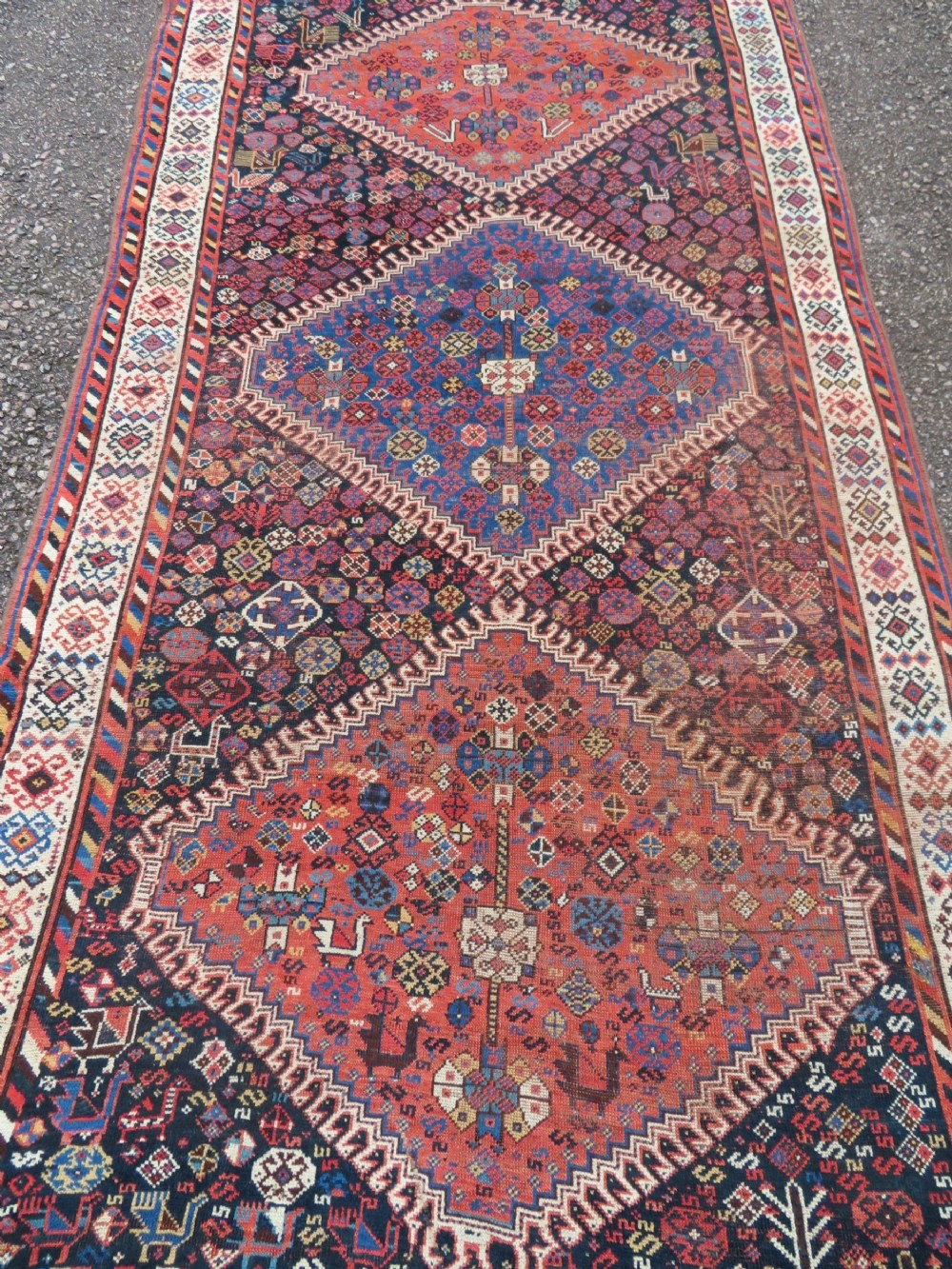
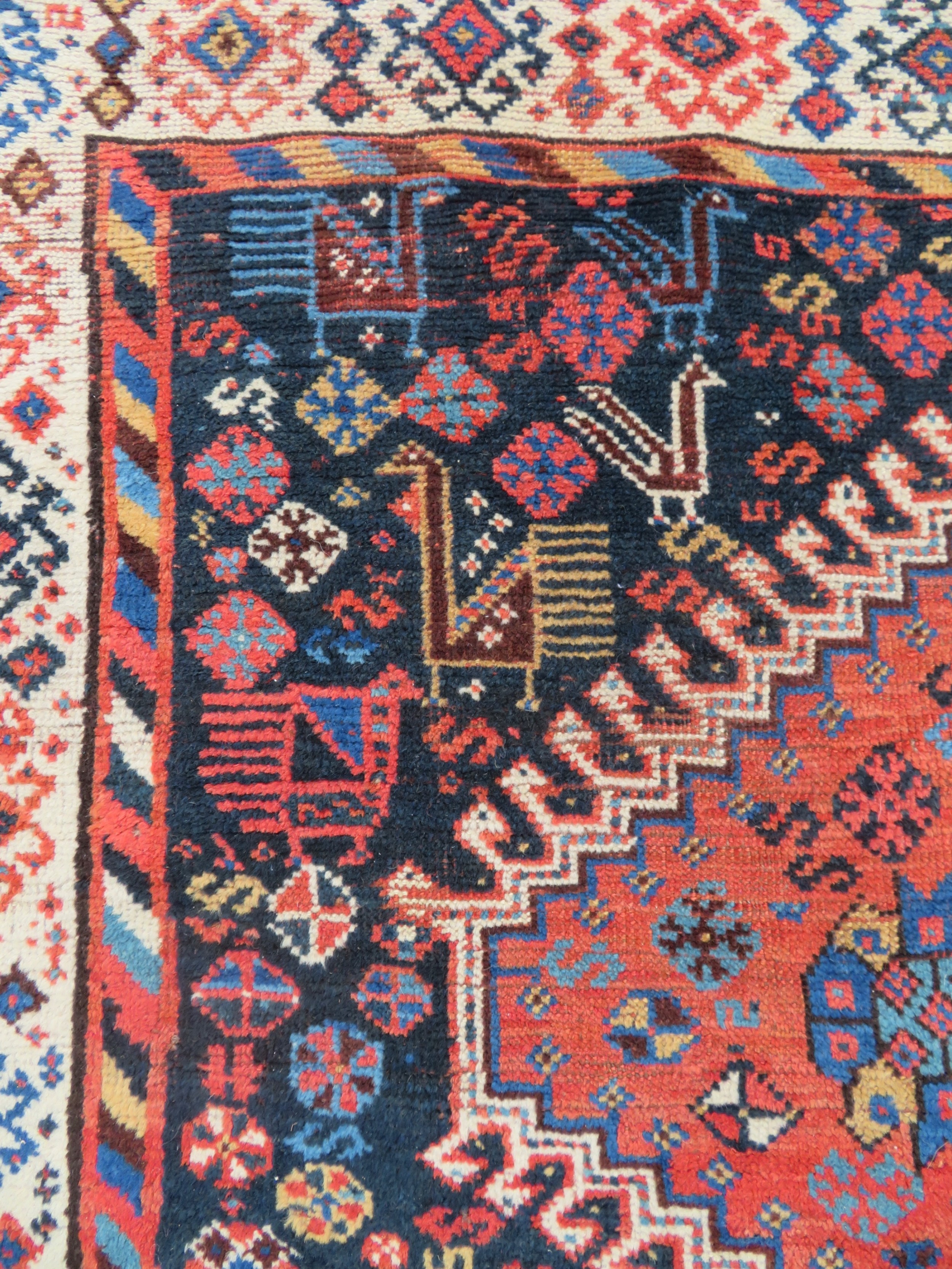
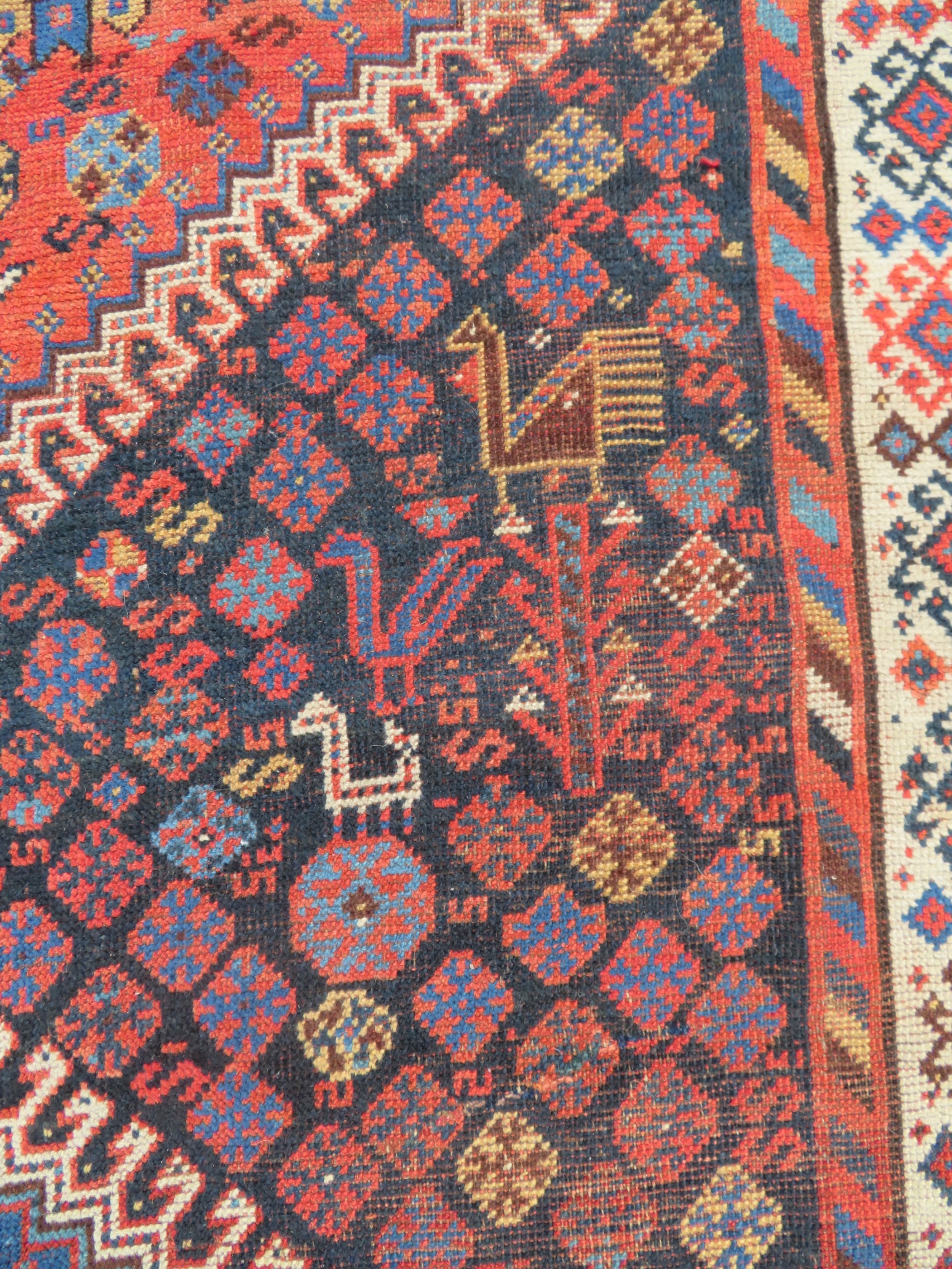
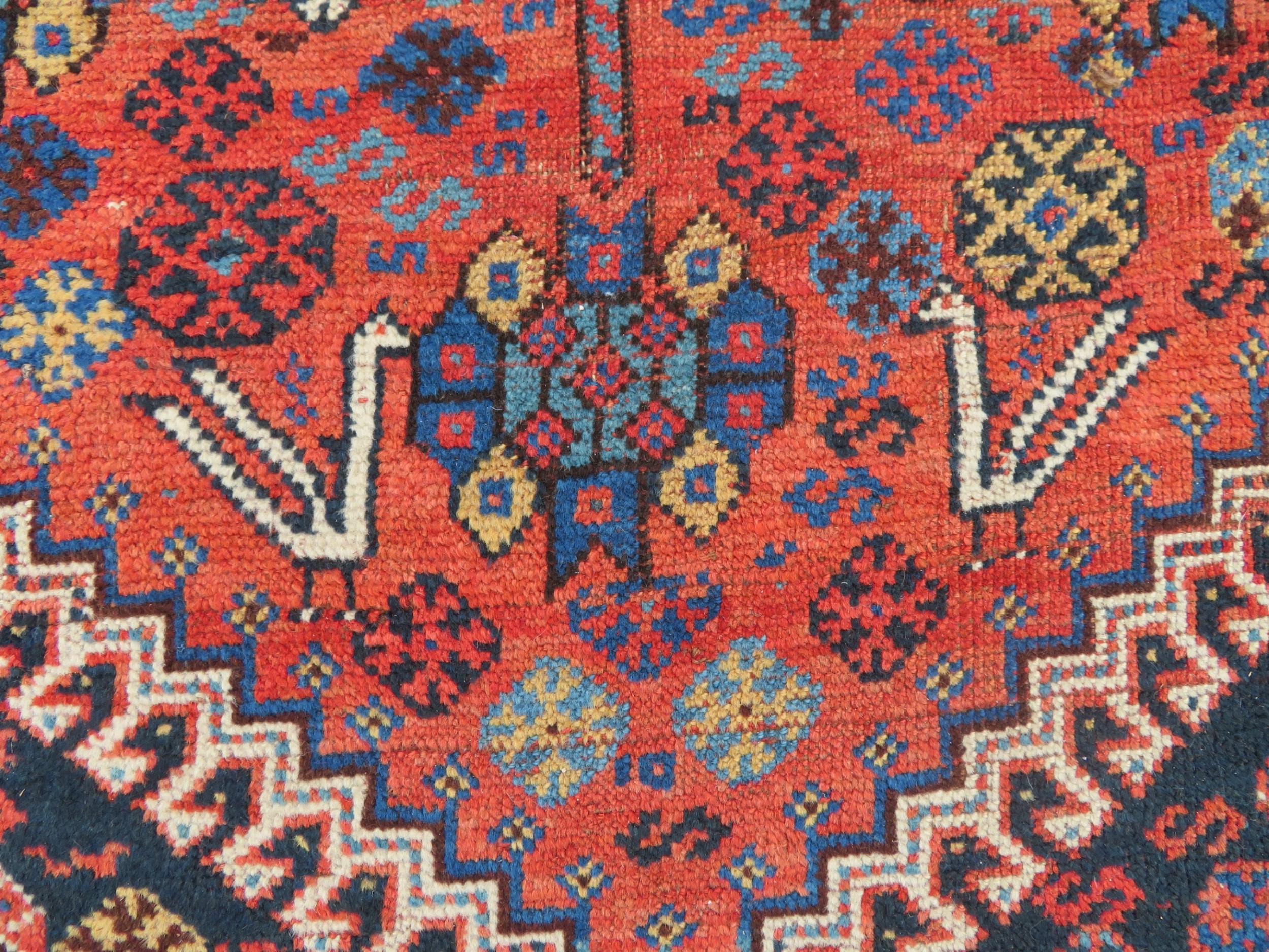
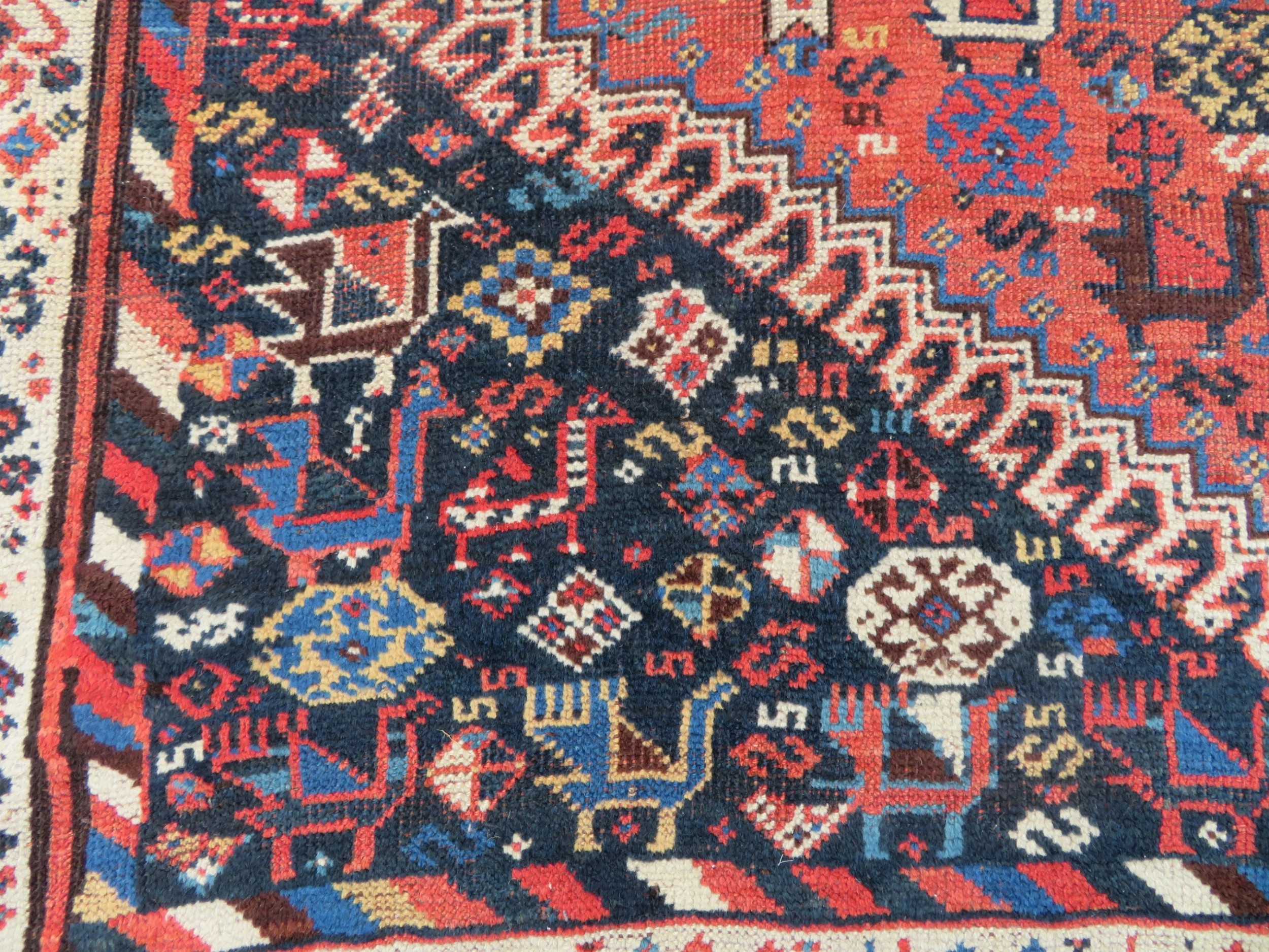
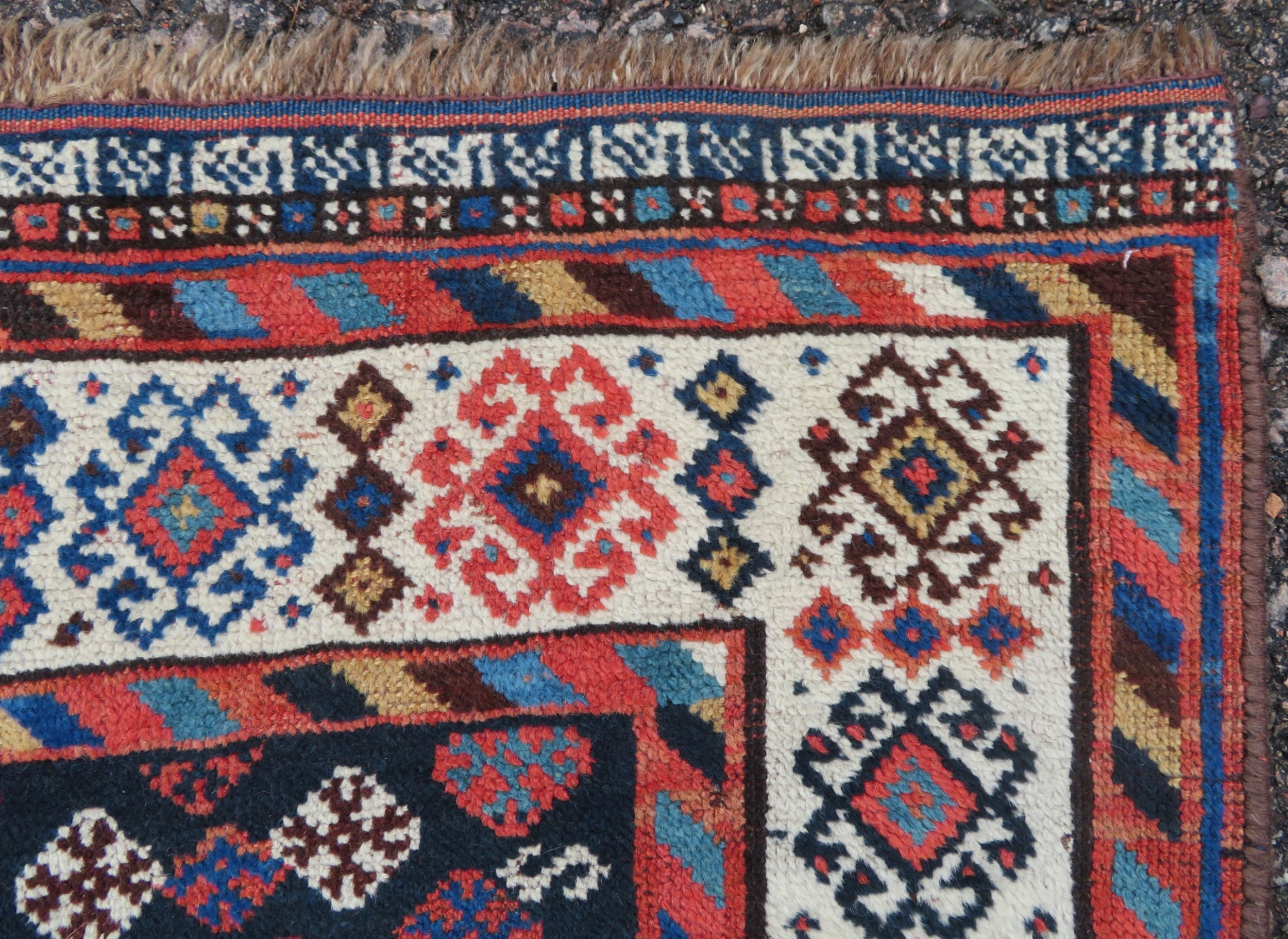
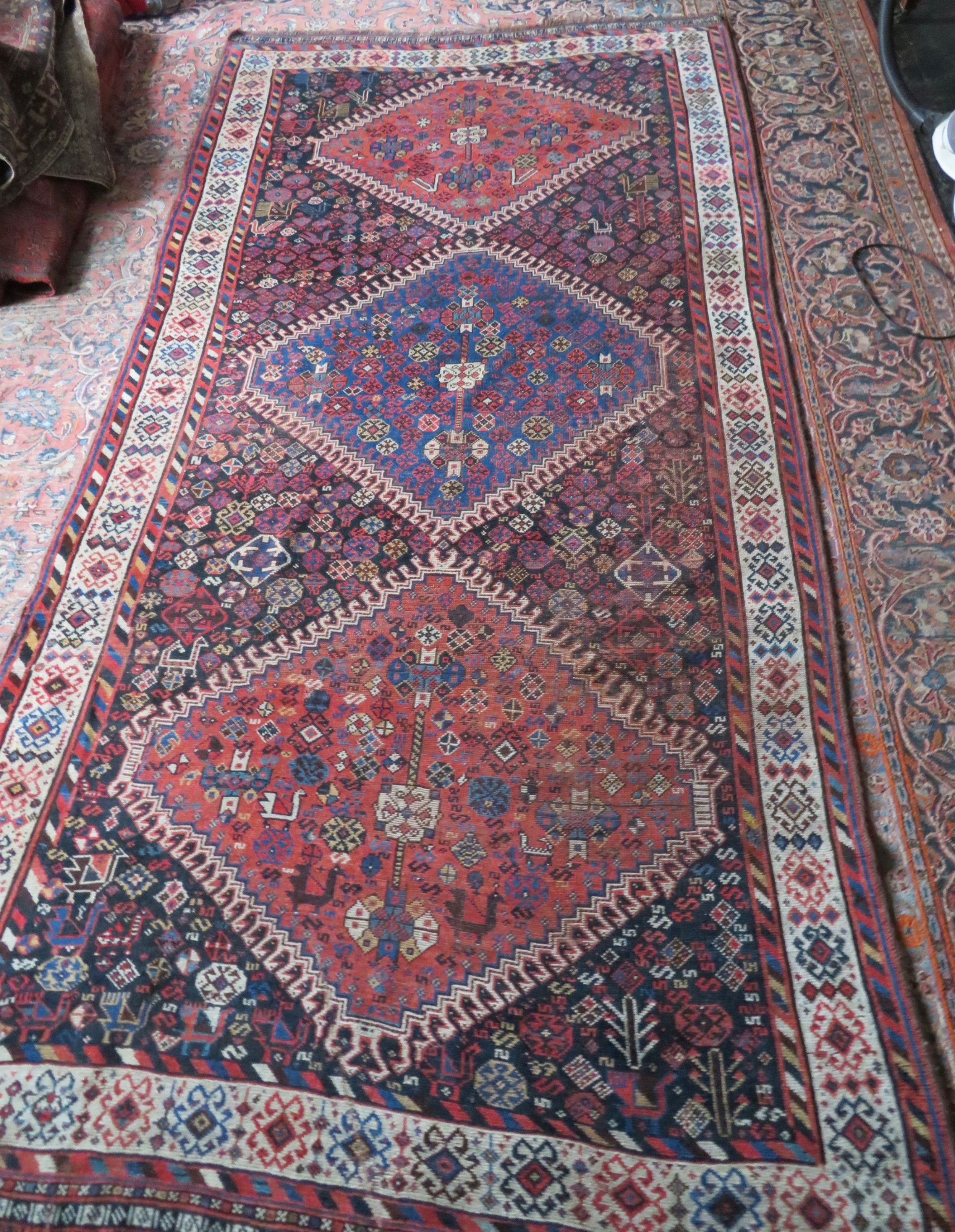
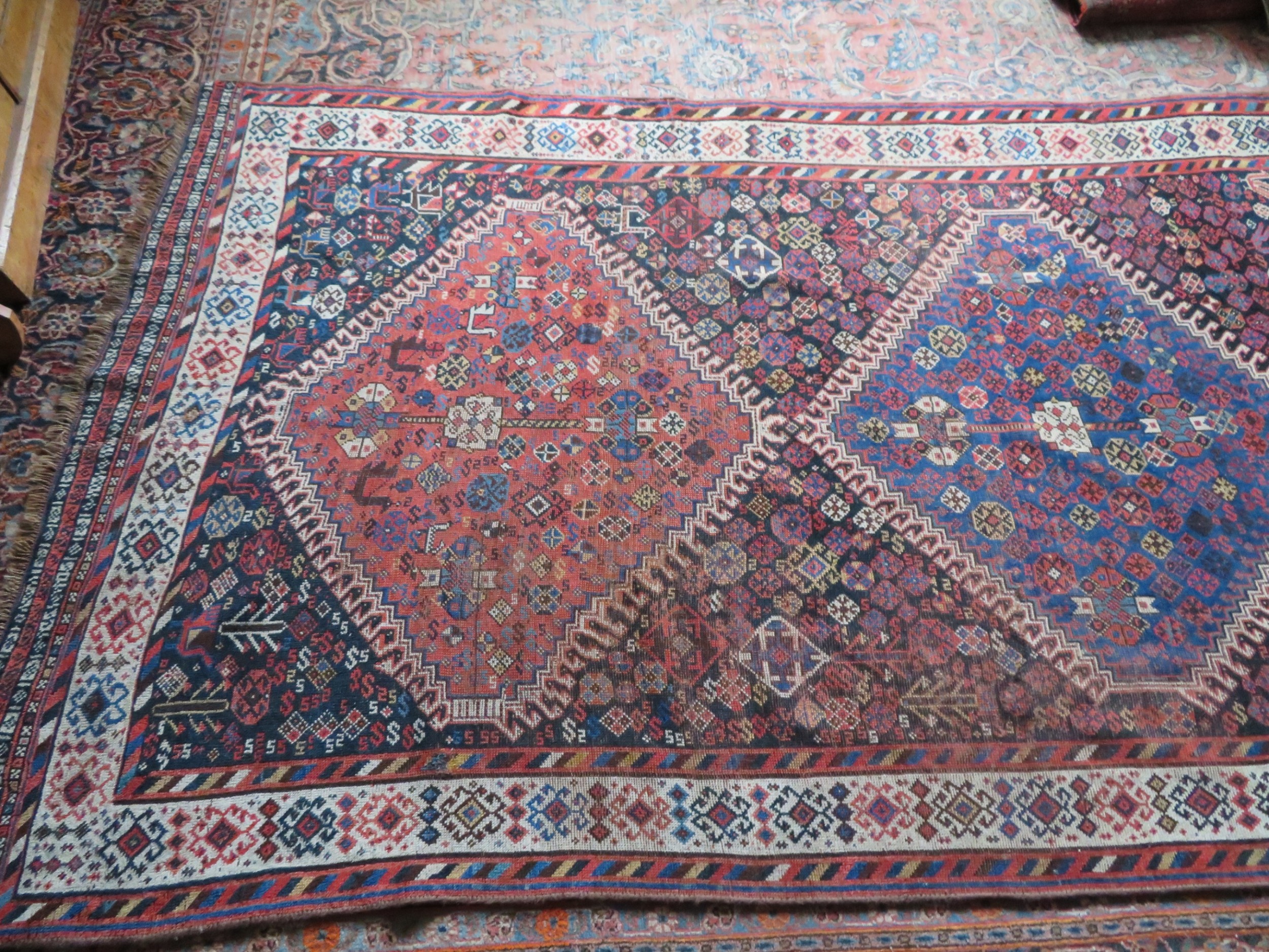
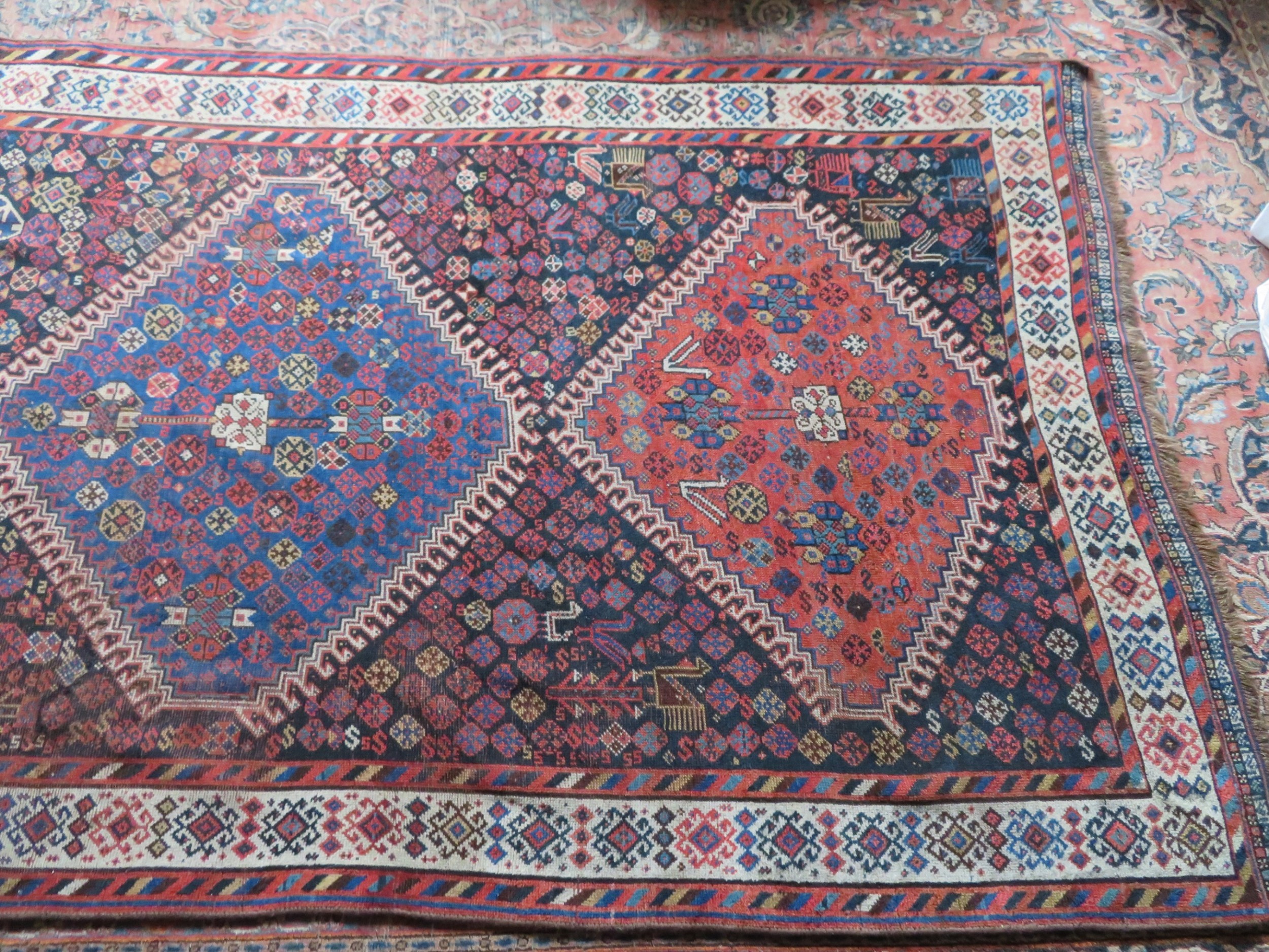
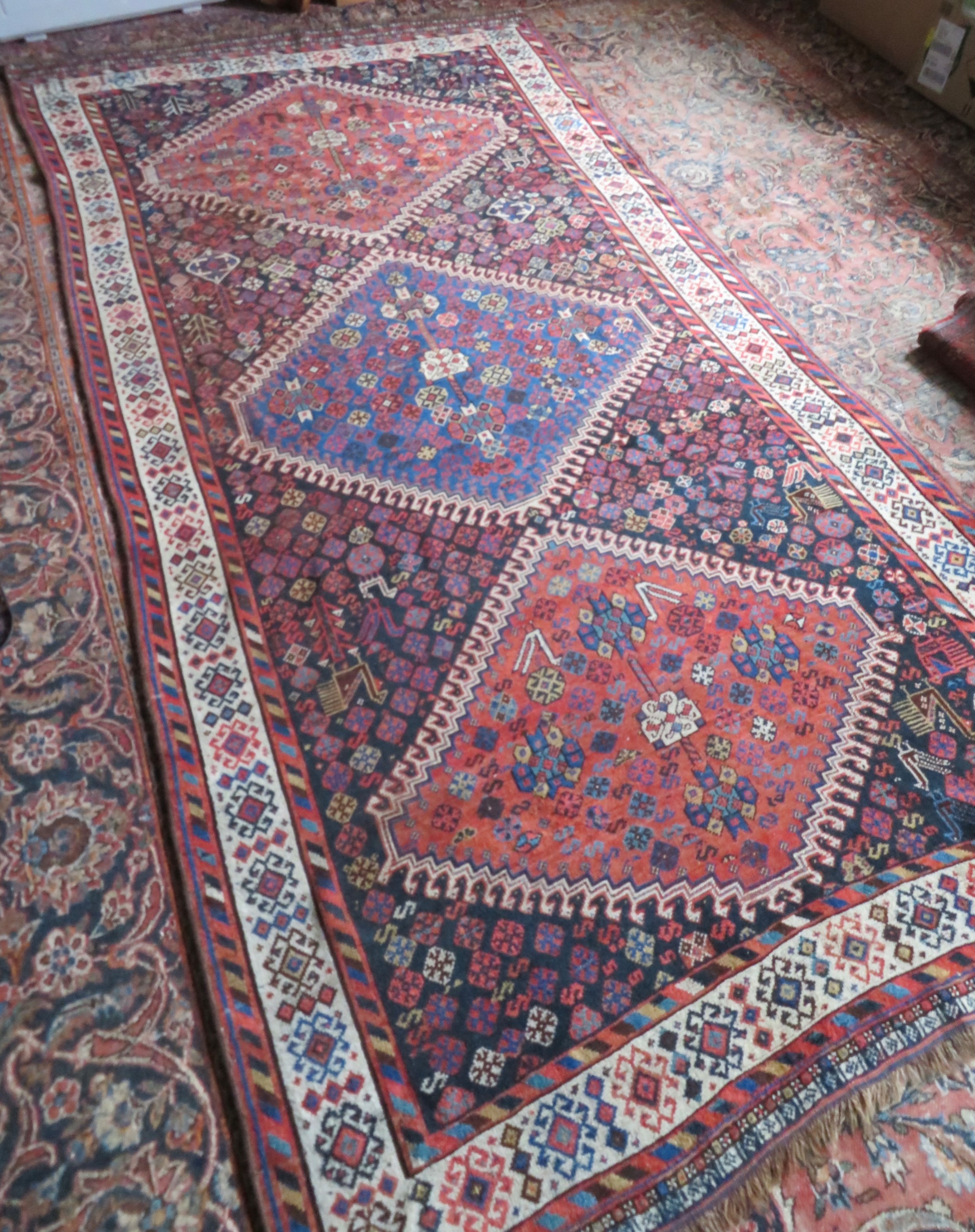
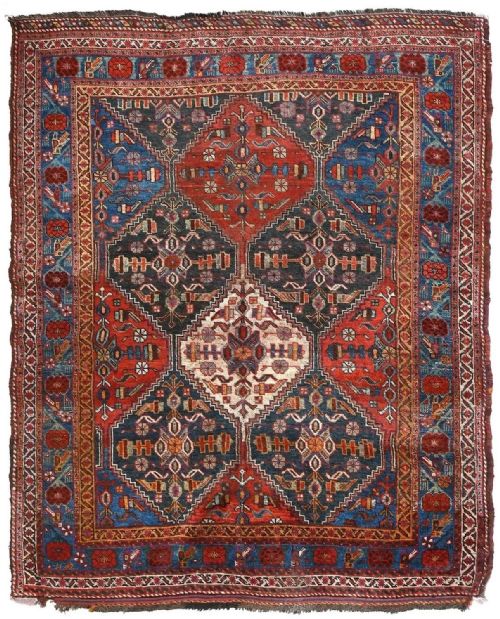
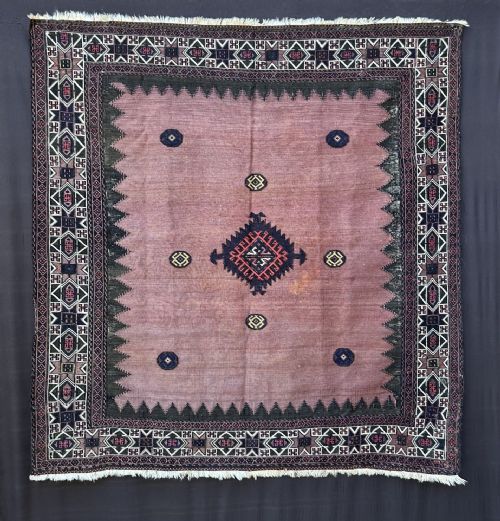
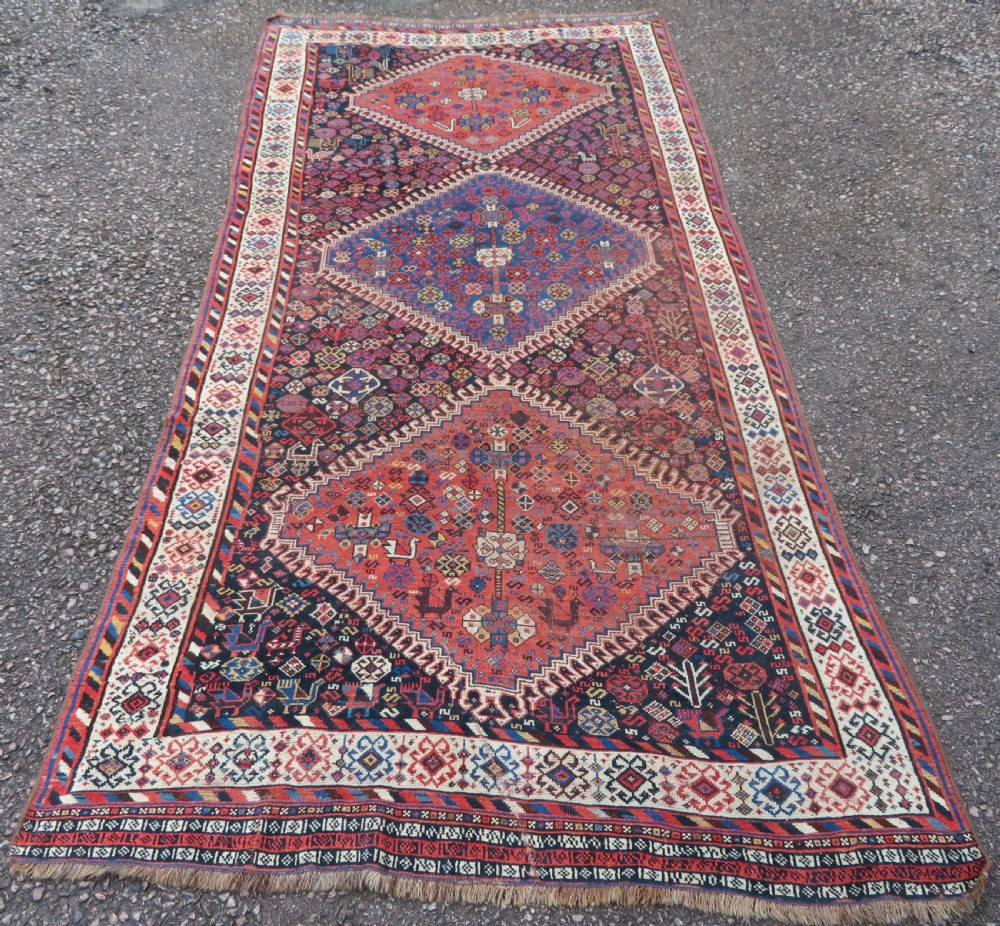
Country House and Eastern Interiors has dated this Antique Luri Tribal Carpet to the 1880s.
Either by the boyer ahmadi or the mamasani.
There is a similar example in tribal rugs,james opie,page 118, colour plate 7.16 &7.17 and page 128,colour plate 7.28,the latter suggesting a mid 19th century date though this example around 1880-1890.
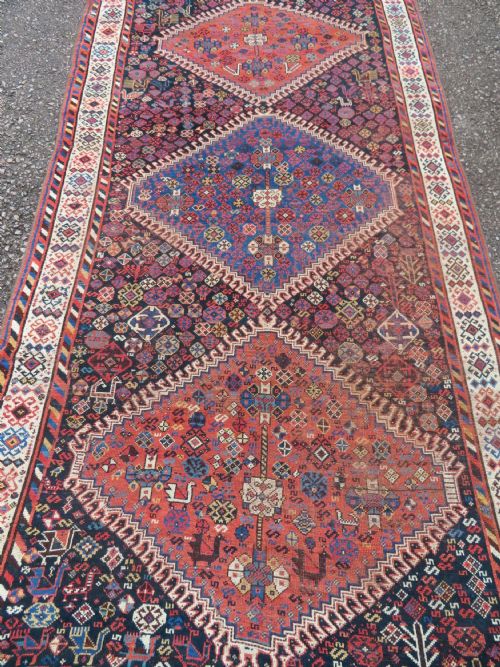
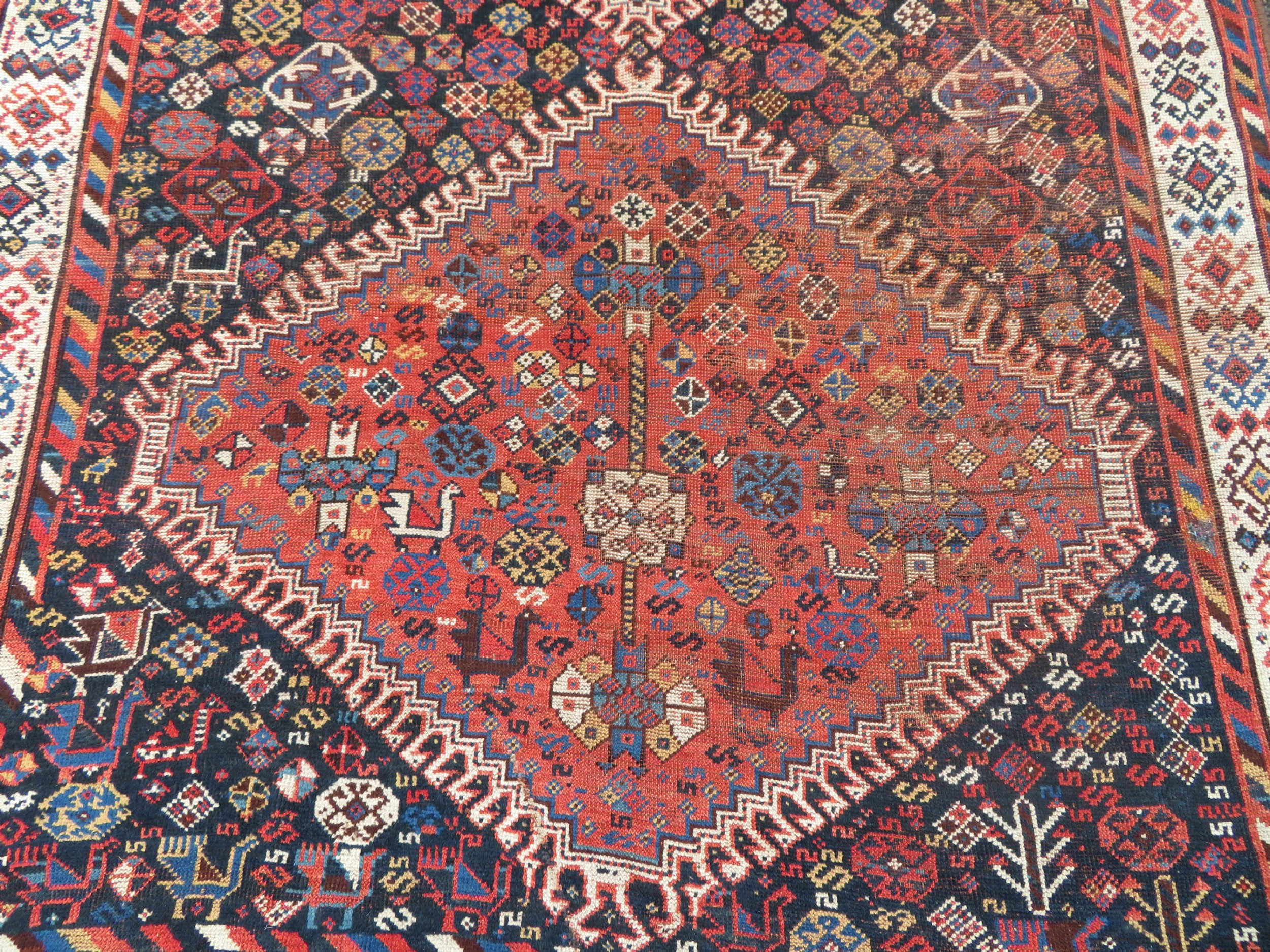
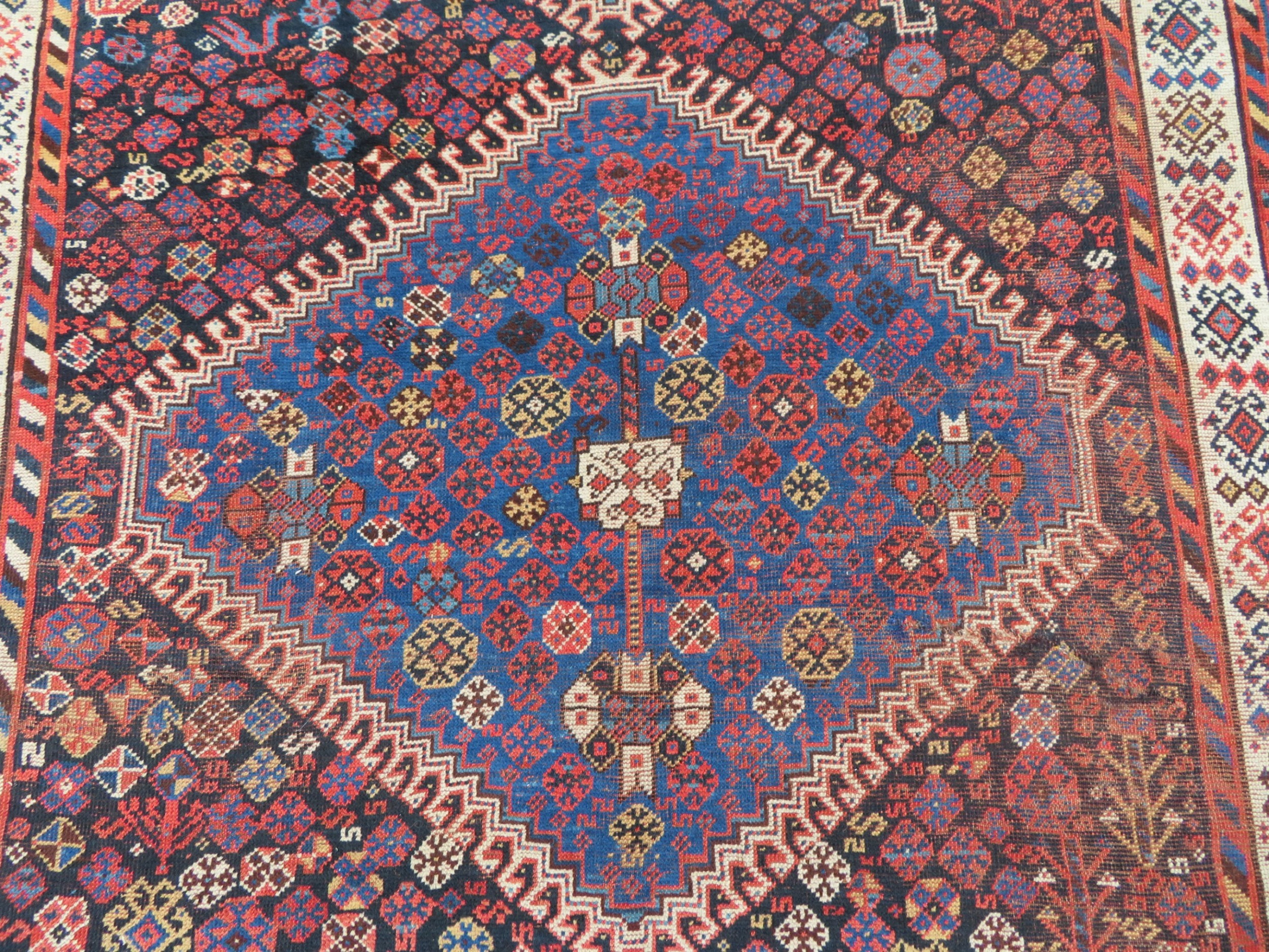
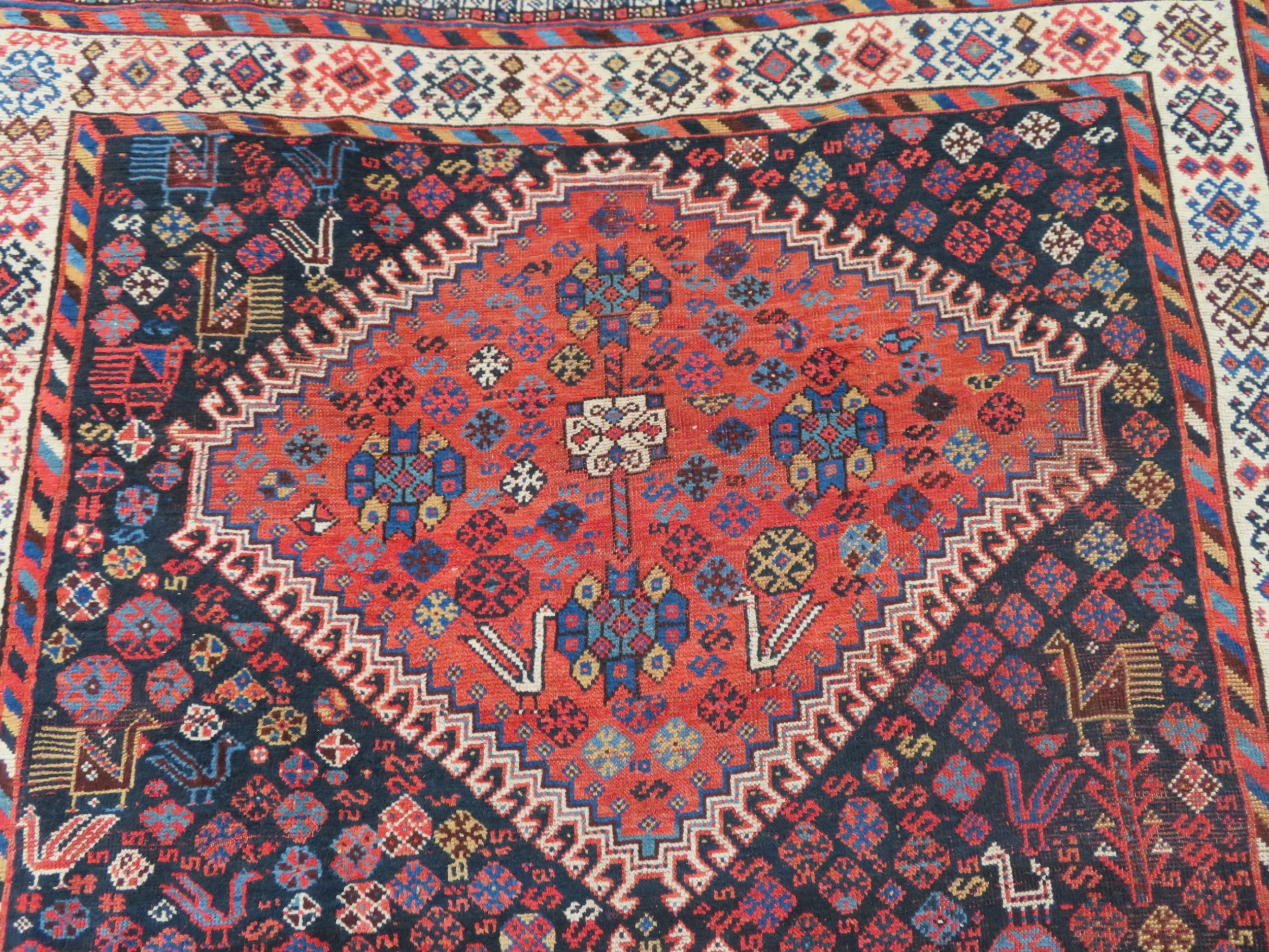
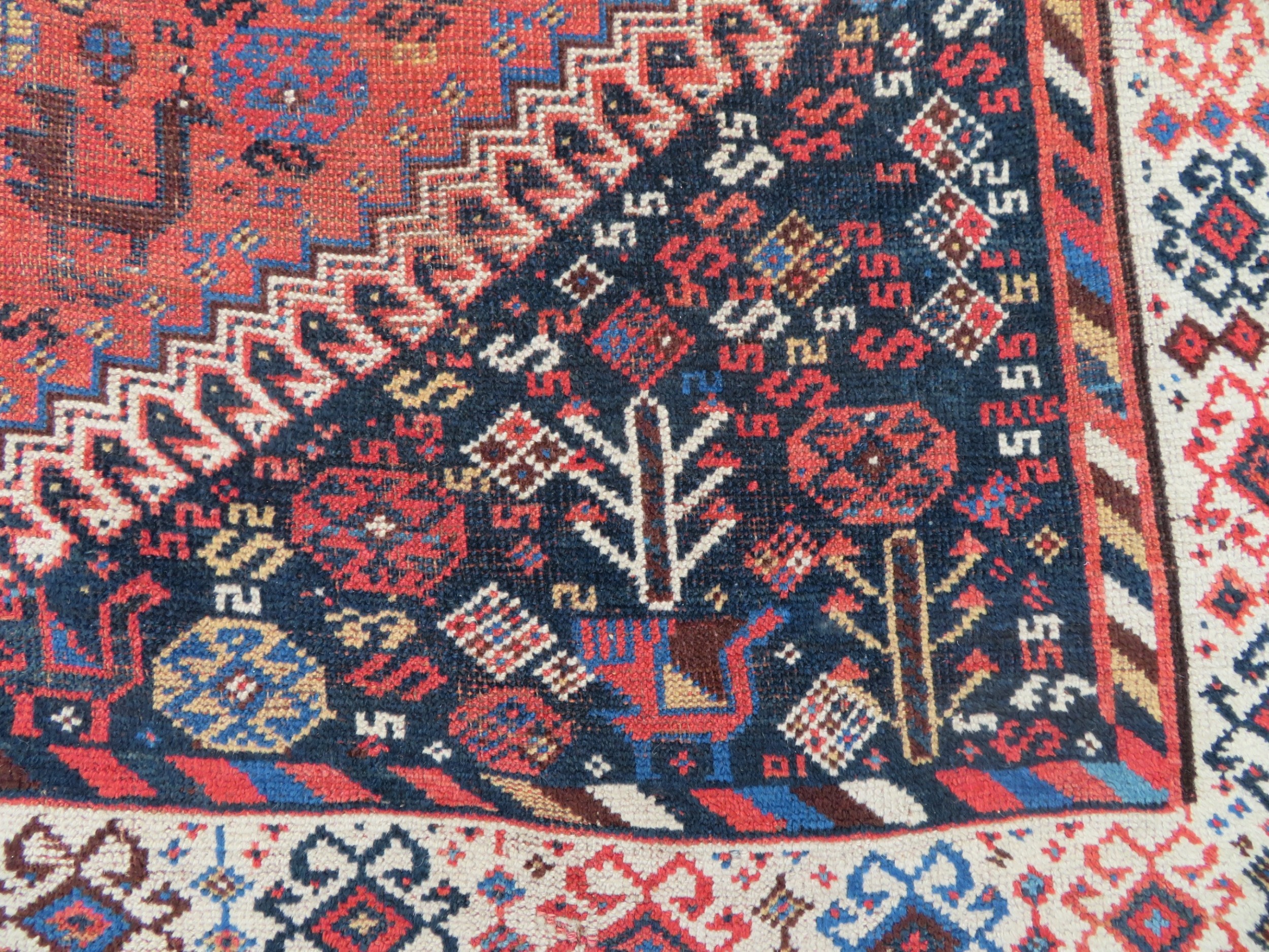
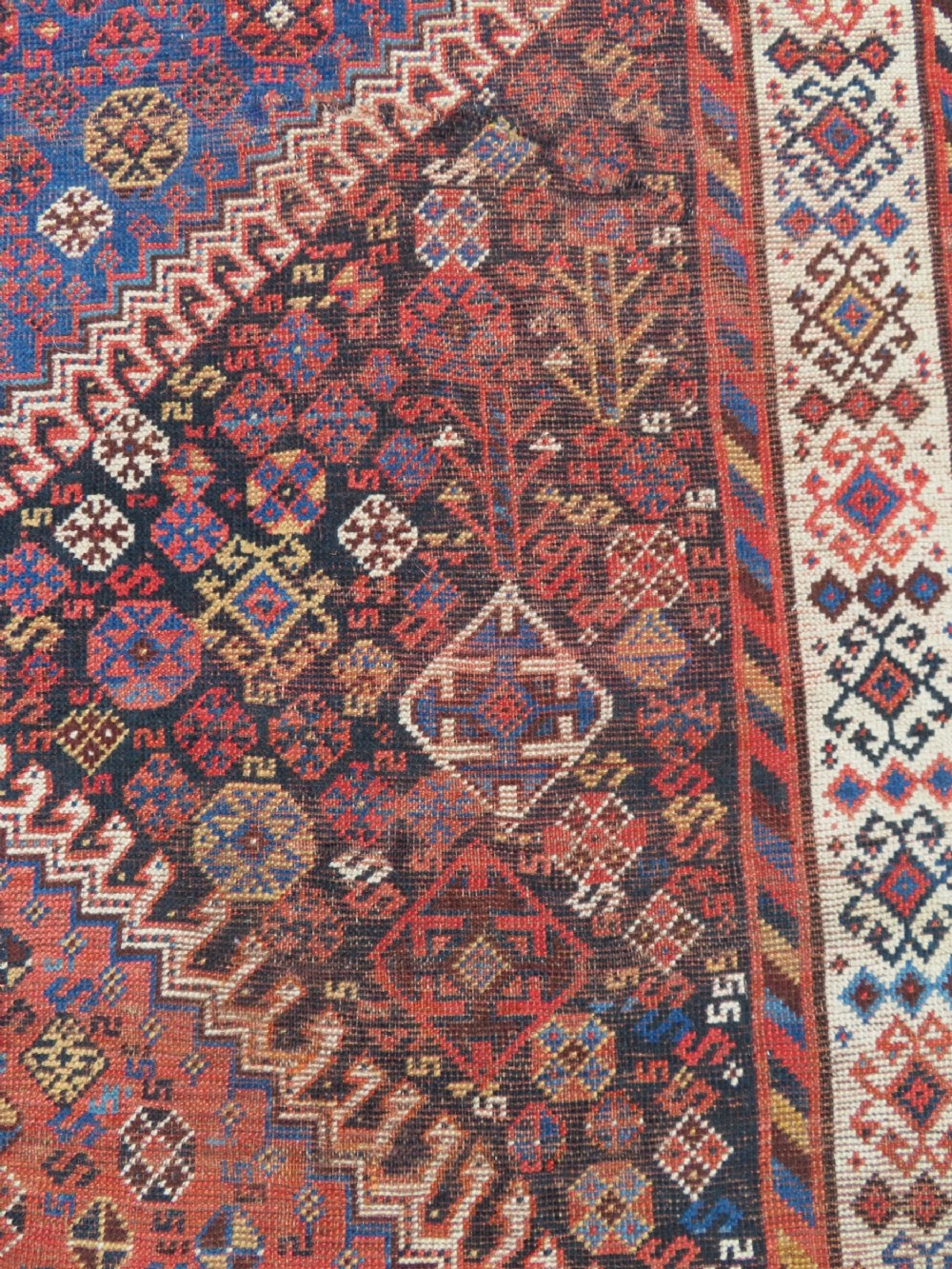
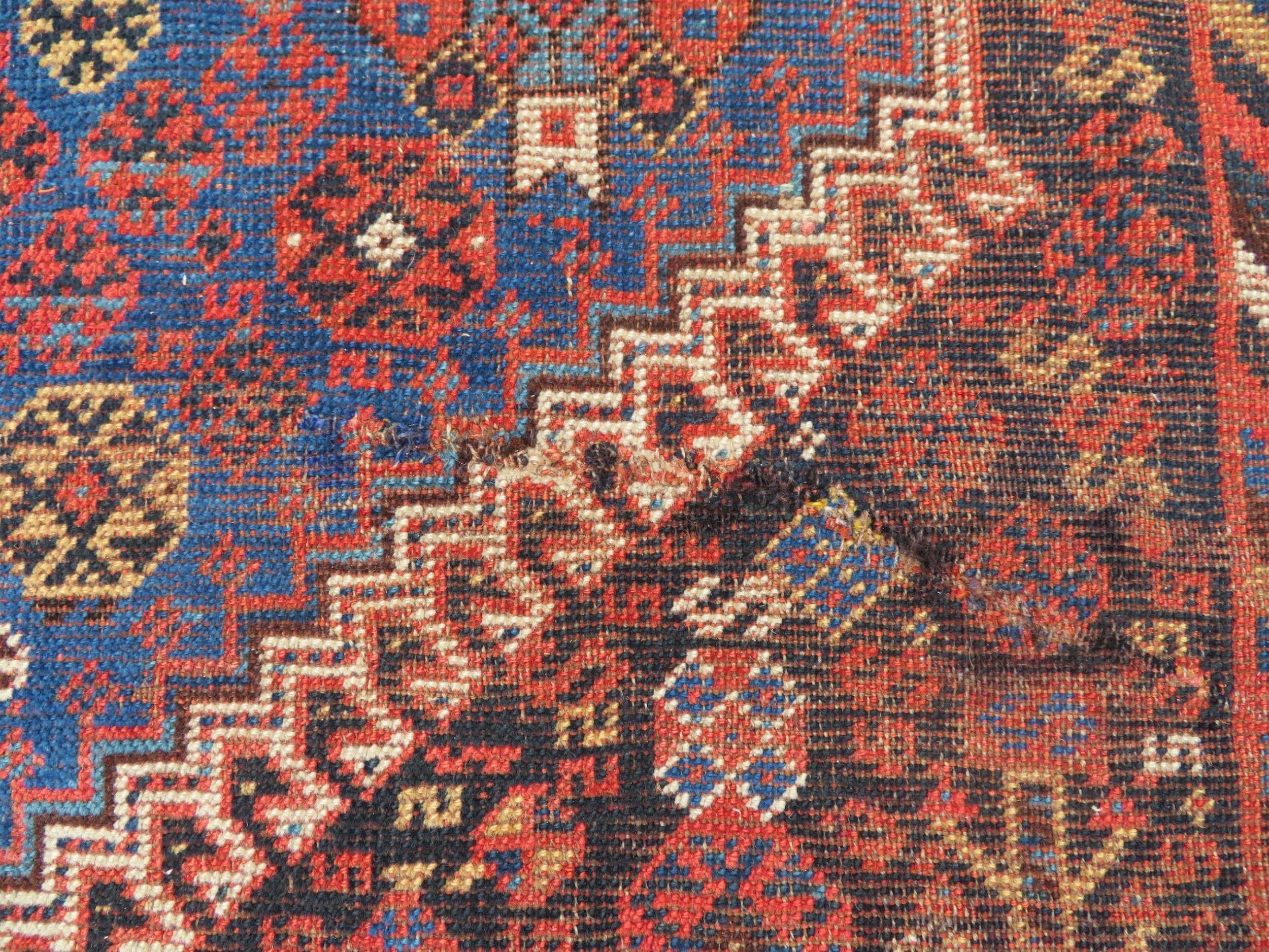
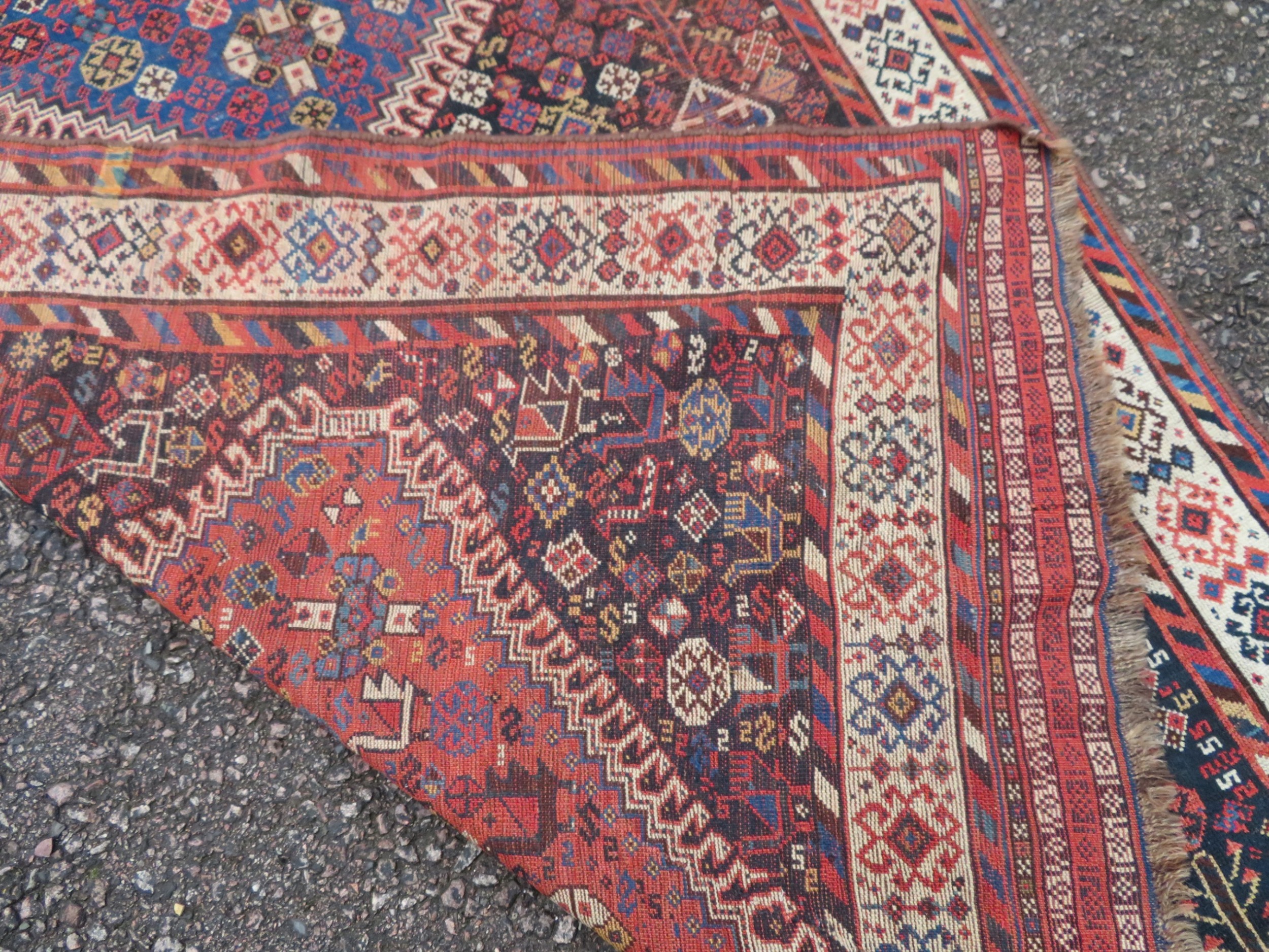
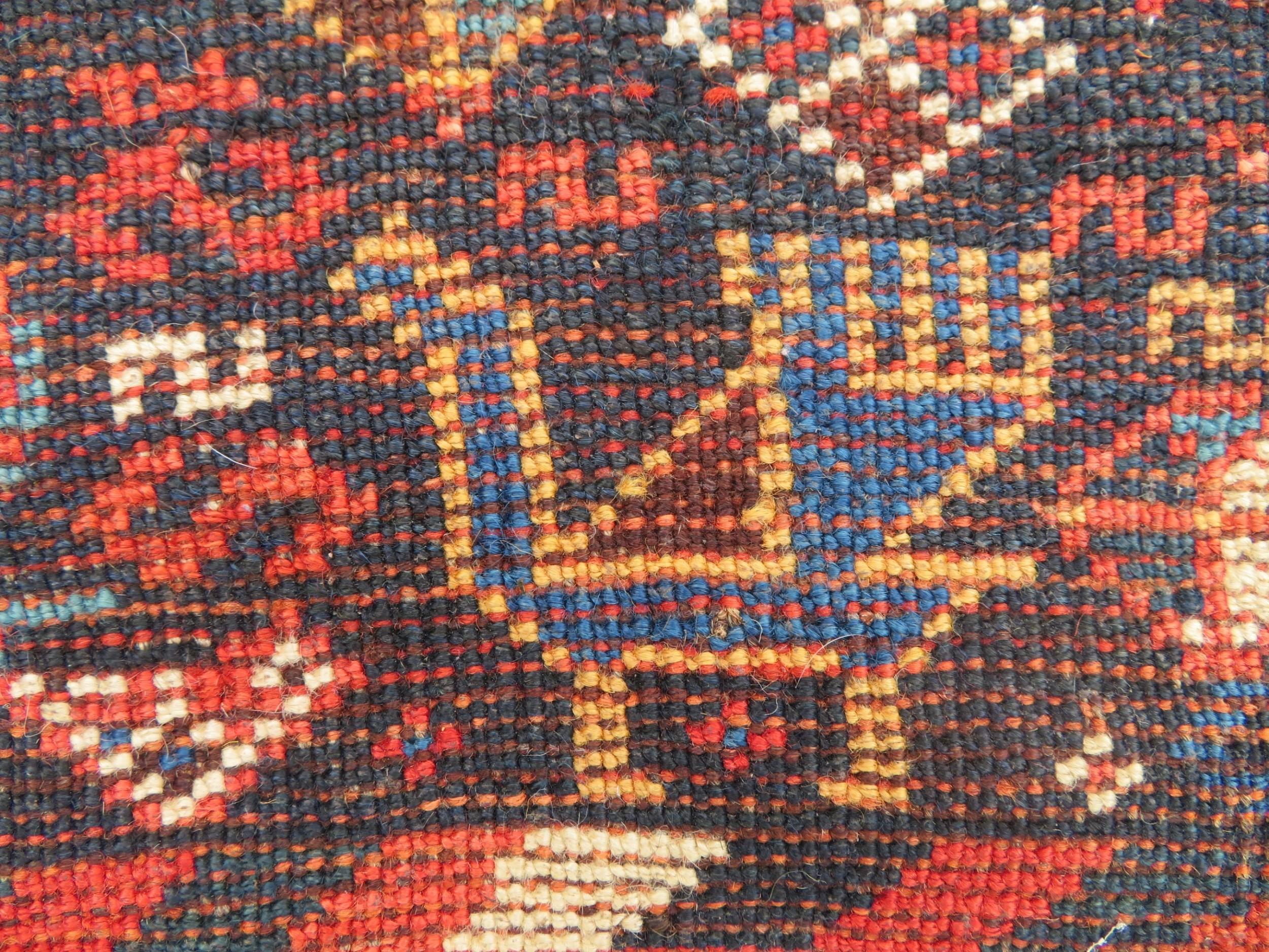
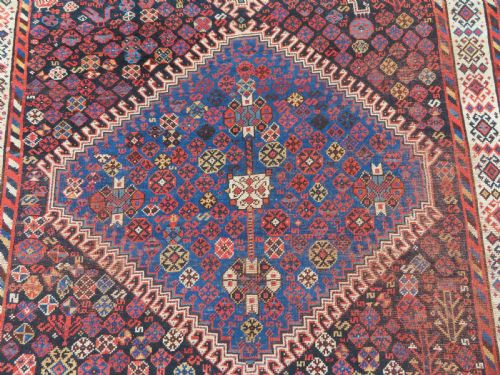
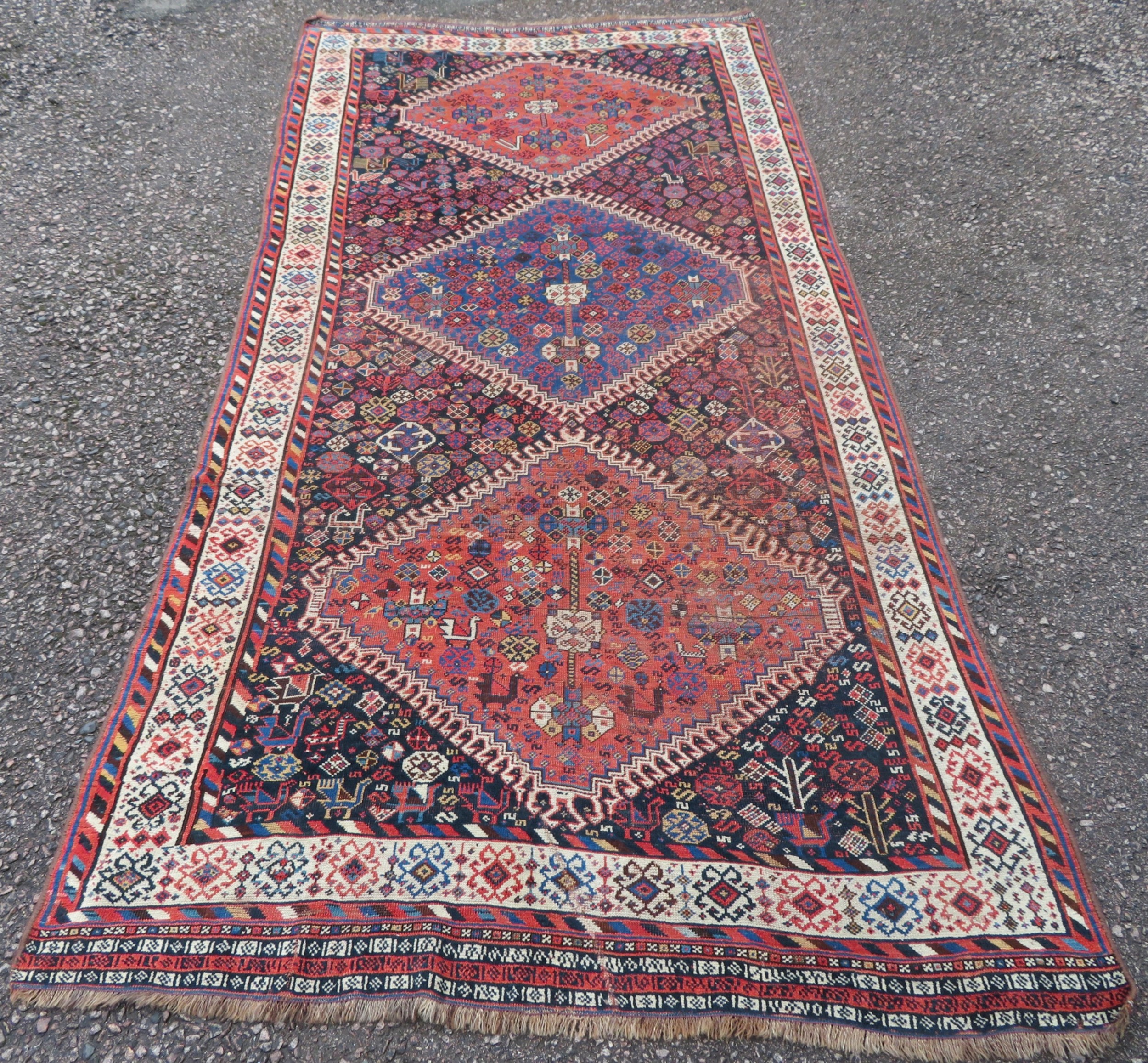
My example is filled with tribal motifs and in particular the peacock motif drawn in five different distinctive styles which I thought was highly imaginative of the weaver plus a couple of animal forms,stylised plants,many s-shaped motifs and the more usual octagons and geometric shapes.
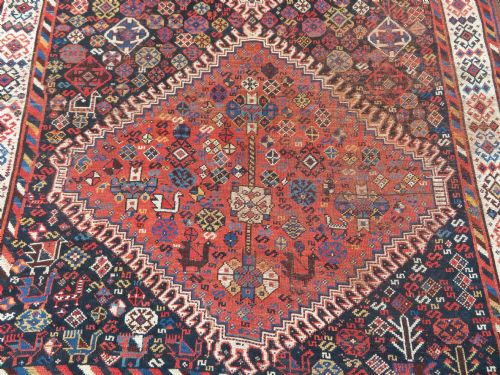
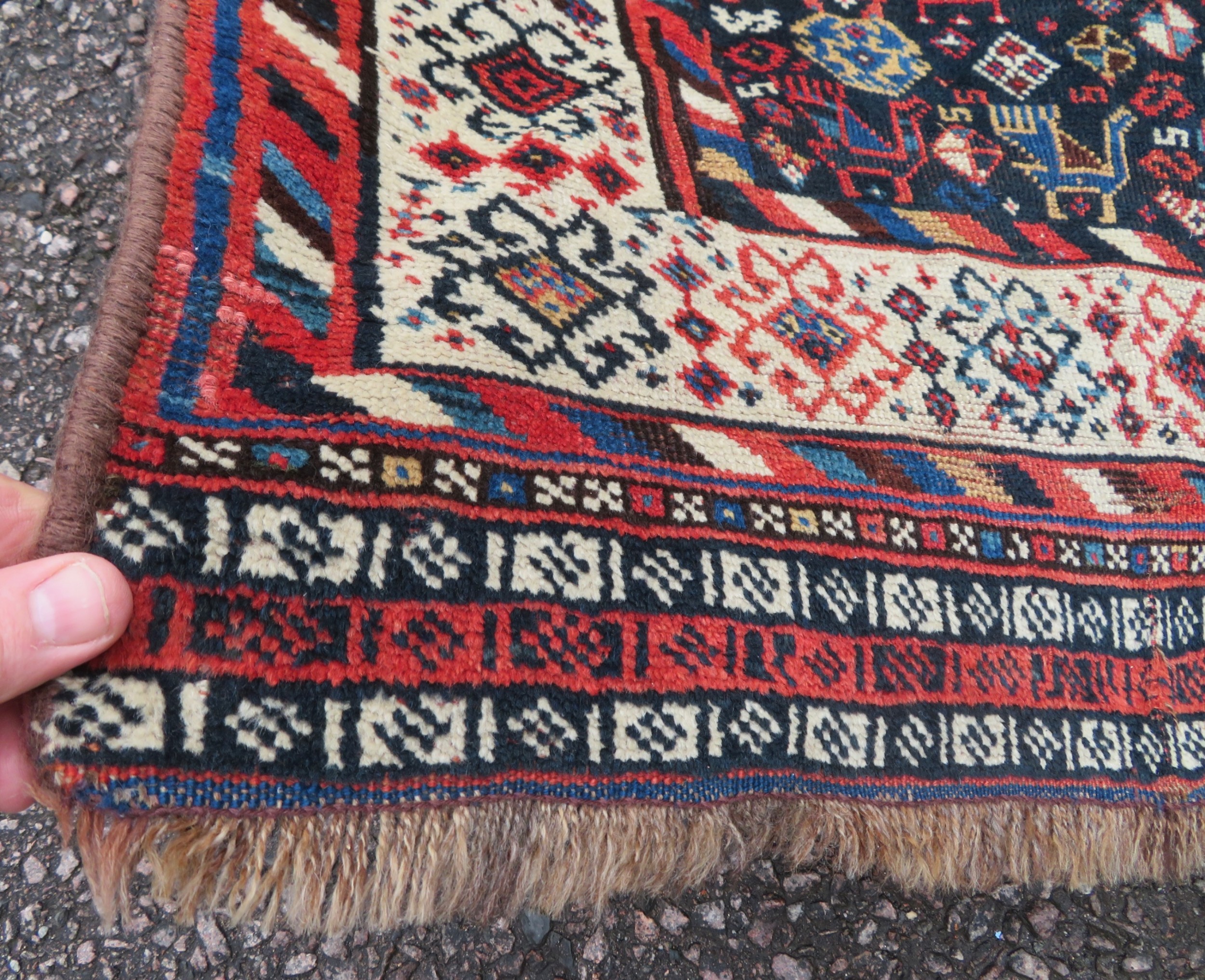
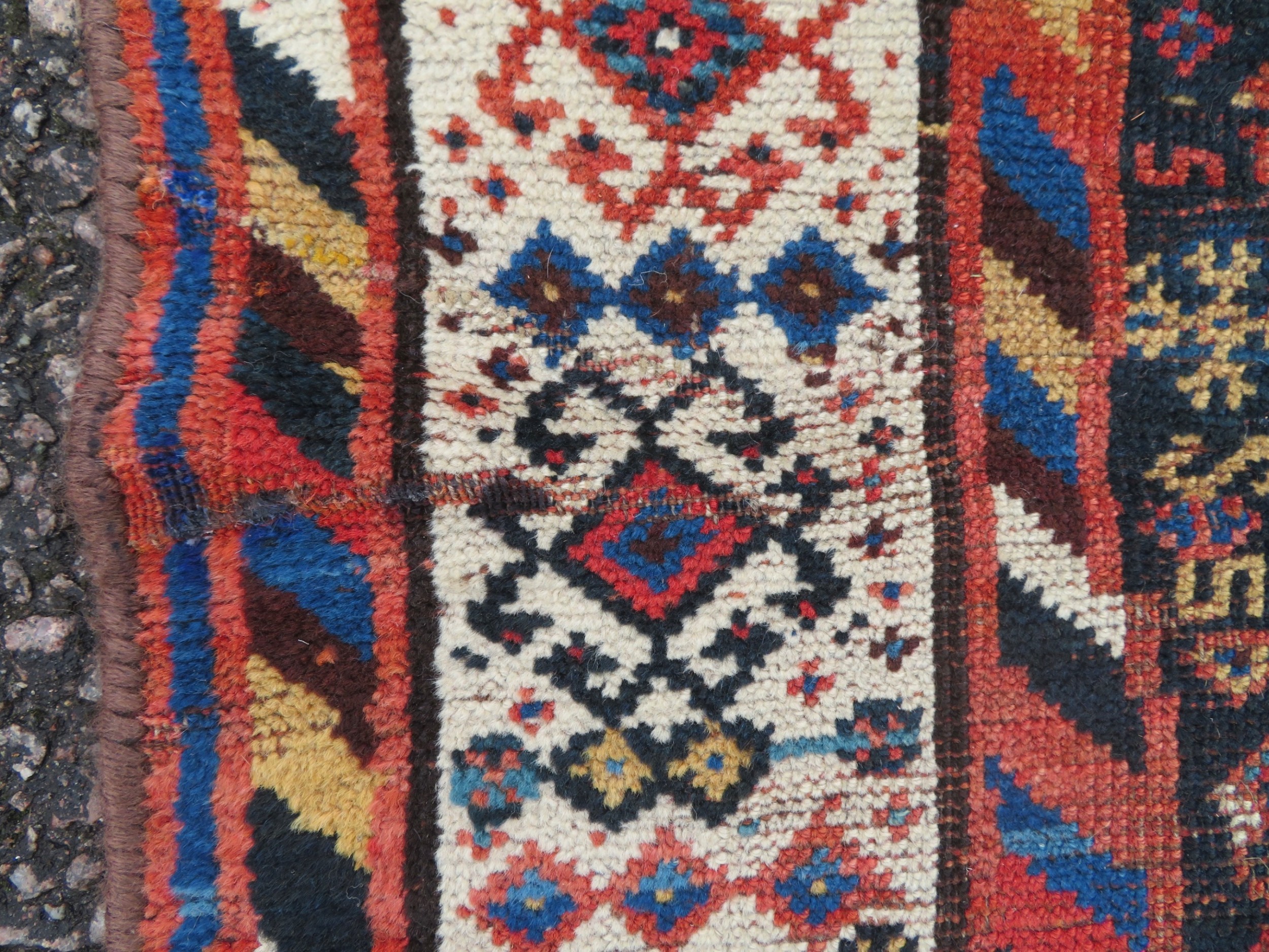
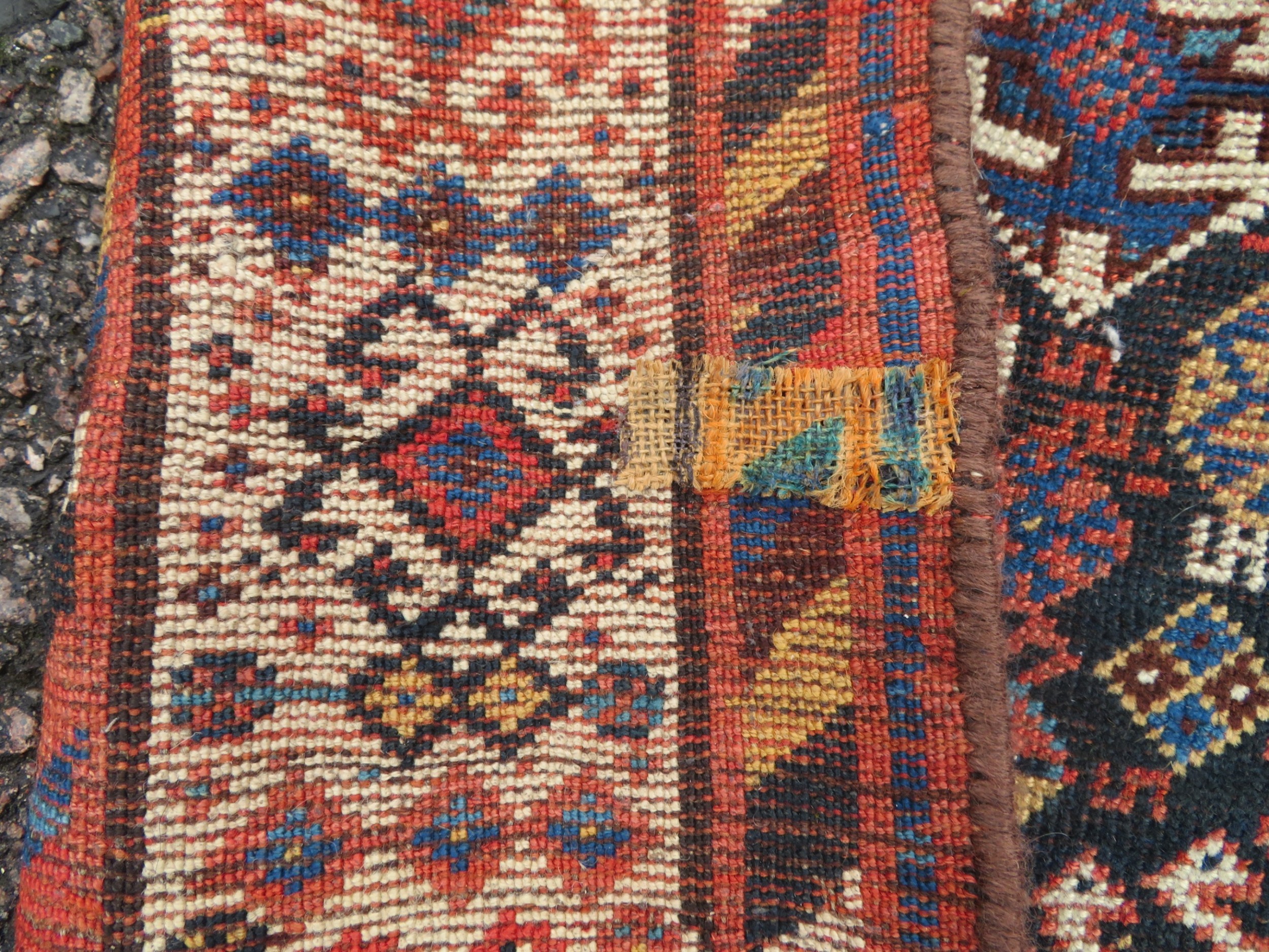
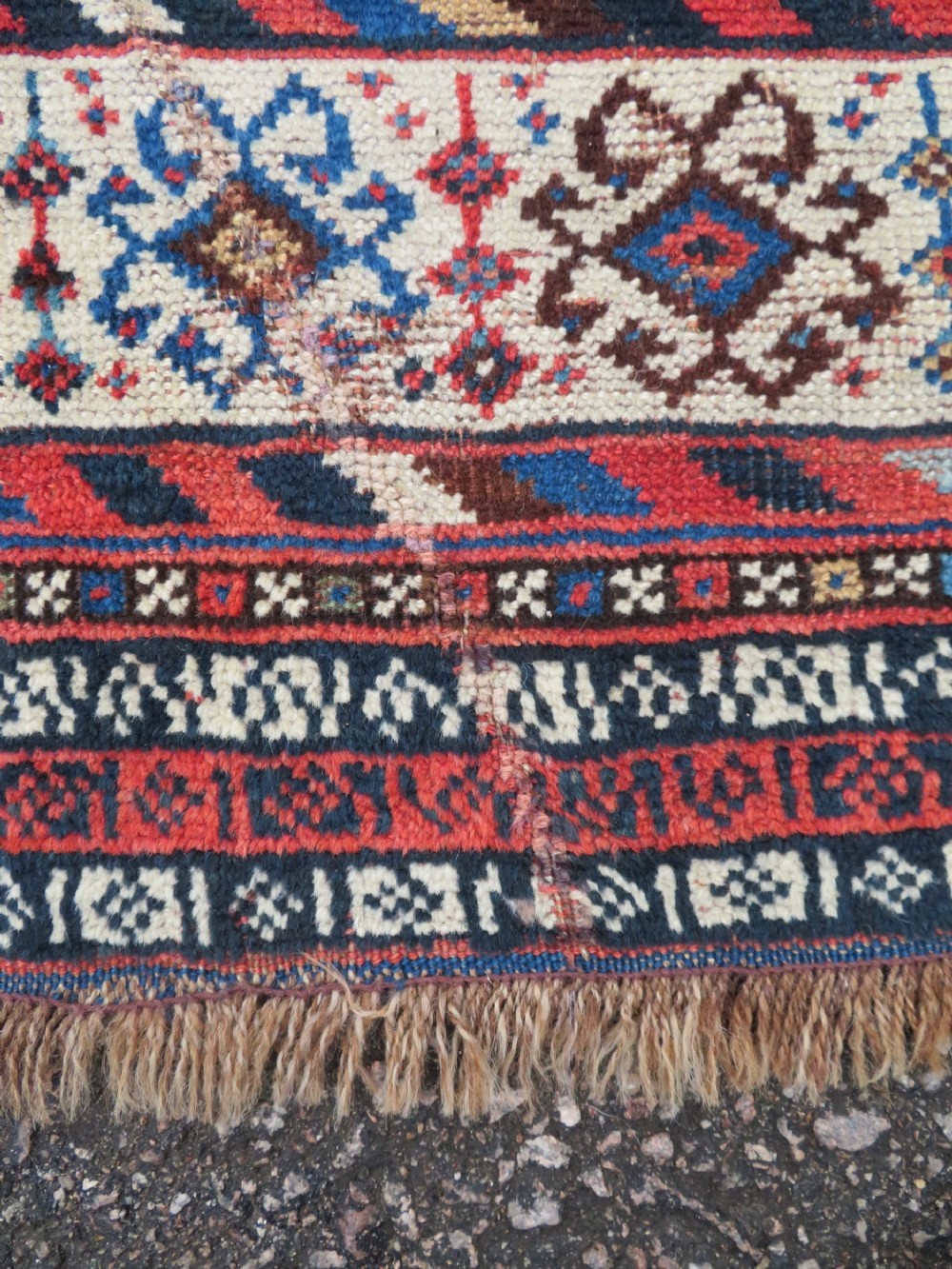
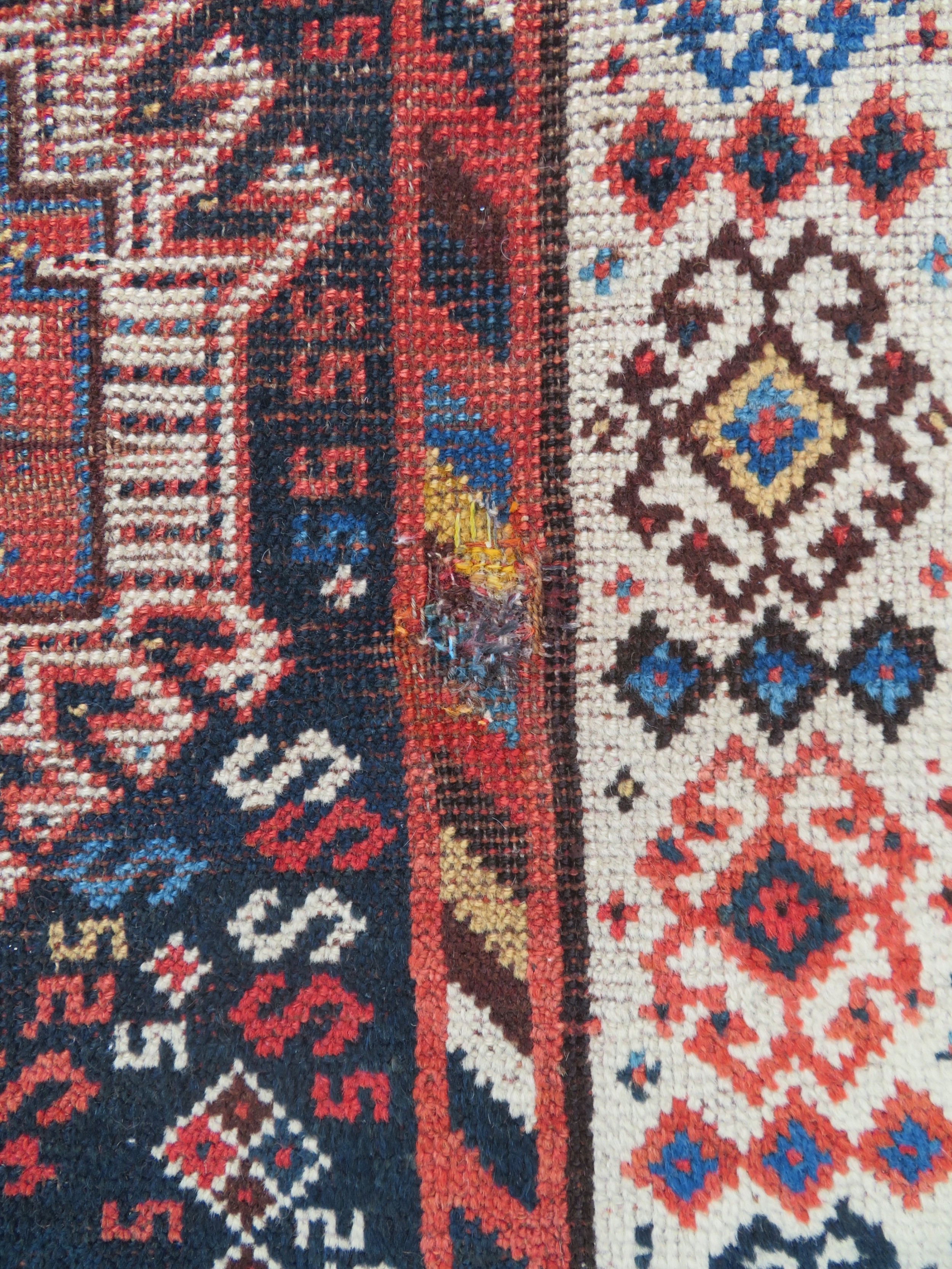
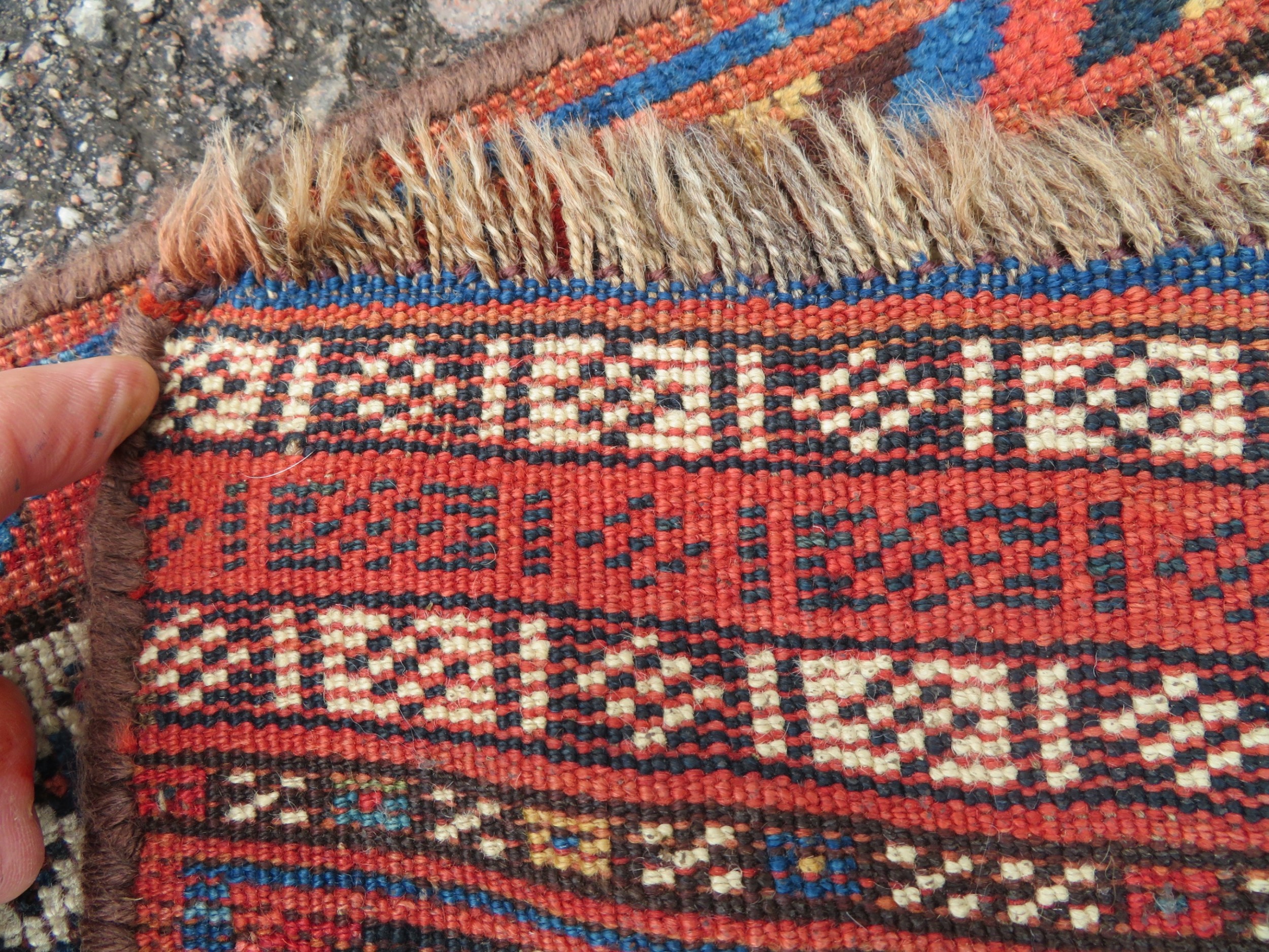
Sides later rebound and ends secured. There is a few scattered repairs,one to the left side edge,one to the right side barbers pole and a hard to see one right side of the central blue medallion,everything imaged.
That said it is priced accordingly and for its large size.
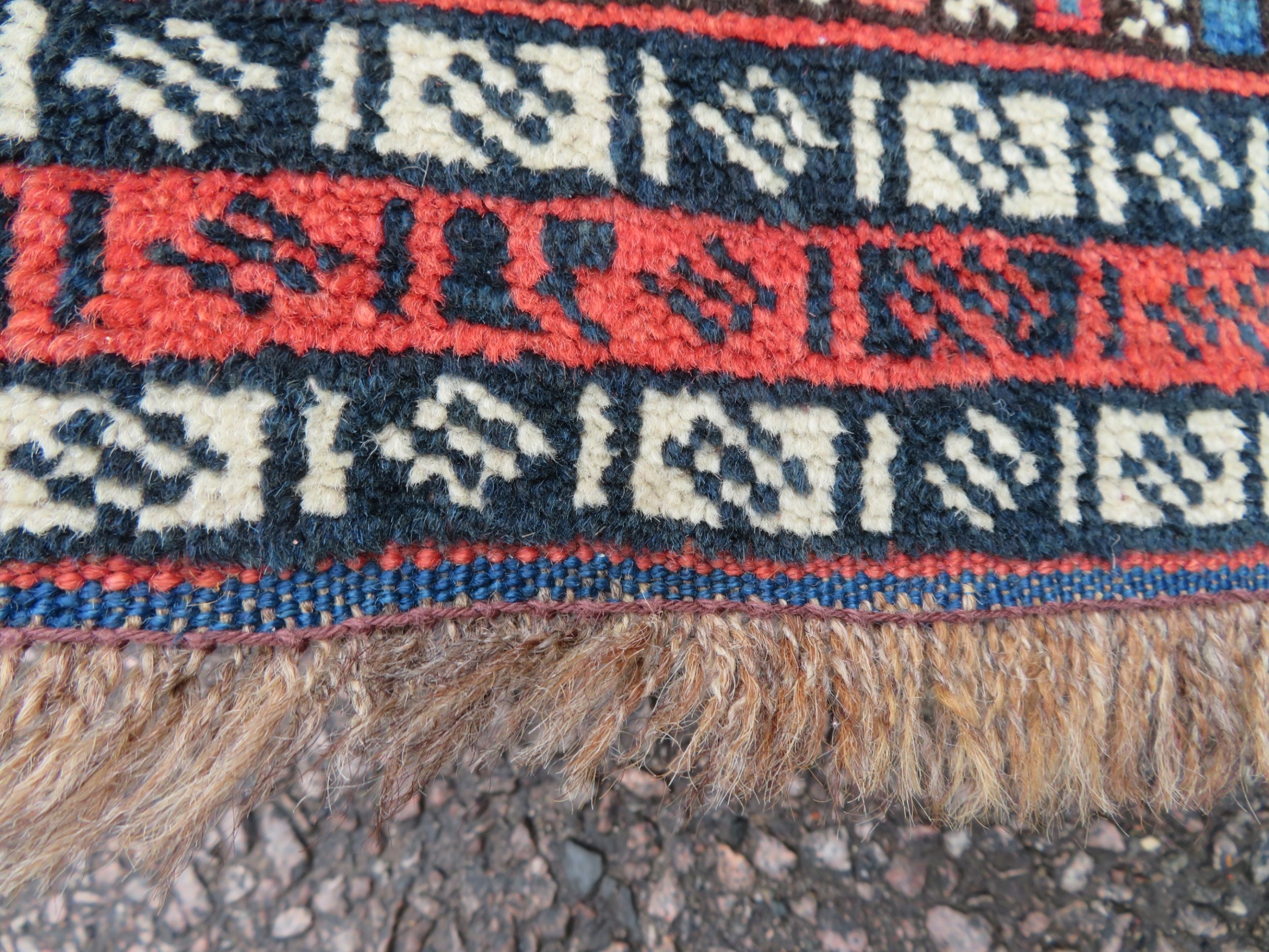
10 foot 5 inches by 5 foot 3 inches. 316cm X 160cm. At widest points. All wool construction with the wefts dyed terracotta.
Note; luri rugs are emerging from decades of neglect to assume a significant place in the study of iranian tribal rugs. They represent an exciting frontier for scholars and collectors whose interests and tastes lean toward authentic nomadic work.
Now selling a range of authentic nomadic luri/afshar/qashqai and khamseh weavings from south and west persia.
Tak 115
Country House and Eastern Interiors has dated this Antique Luri Tribal Carpet to the 1880s.
Constantly sourcing scarce tribal rugs & carpets,some howard & sons seating
You can view the stock and full dealer information on the Country House and Eastern Interiors Profile Page
ANTIQUE LURI TRIBAL CARPET. 316CM X 160CM.